Inspiration
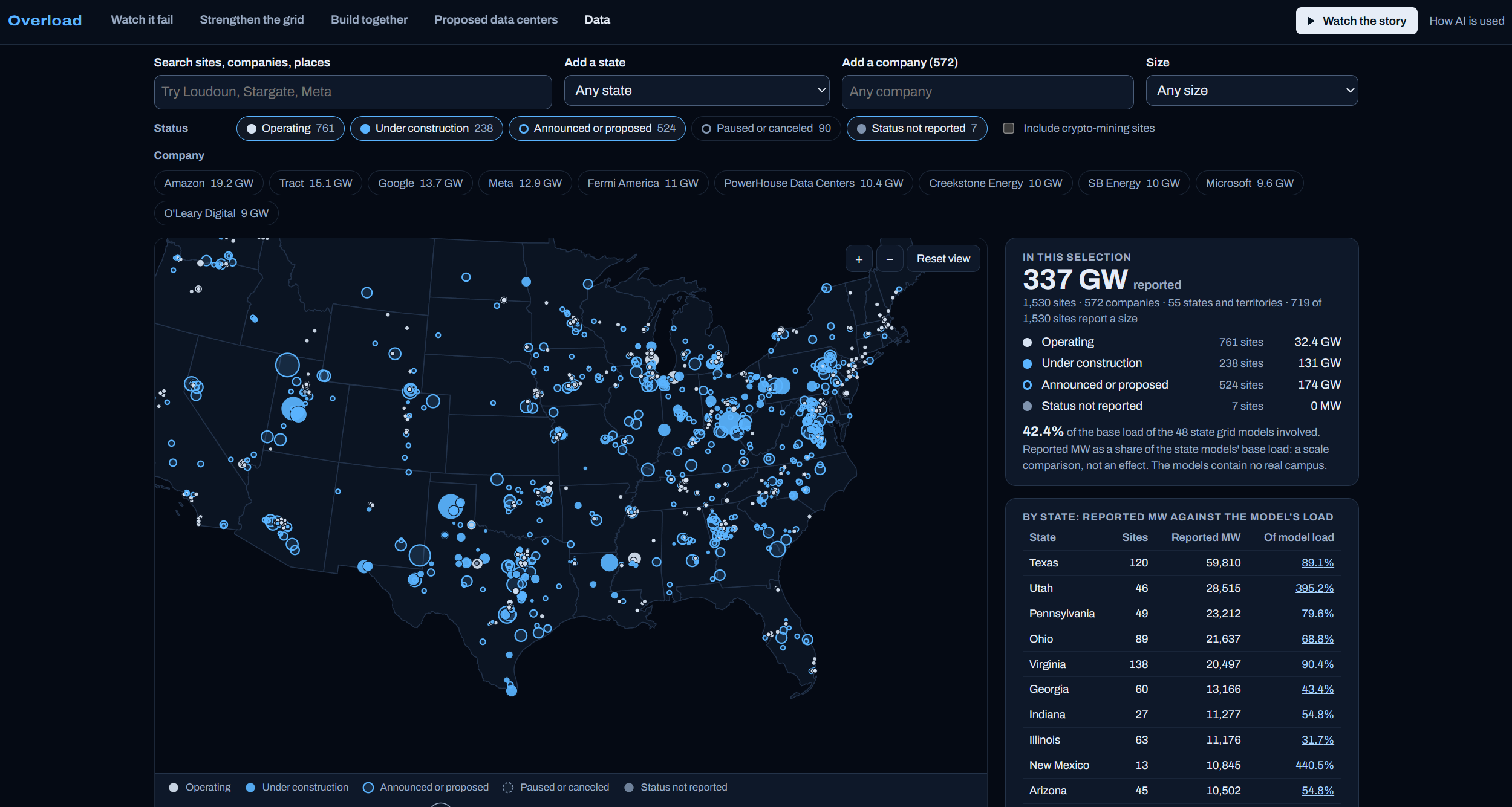
When the next AI data center asks for as much power as a mid-sized city, someone's grid has to absorb it. Right now, the people who'd lose power have no way to check what a proposal actually does before it's approved. I wanted to put that check in anyone's hands: a resident, a reporter, a county commissioner facing a real proposal.
What it does
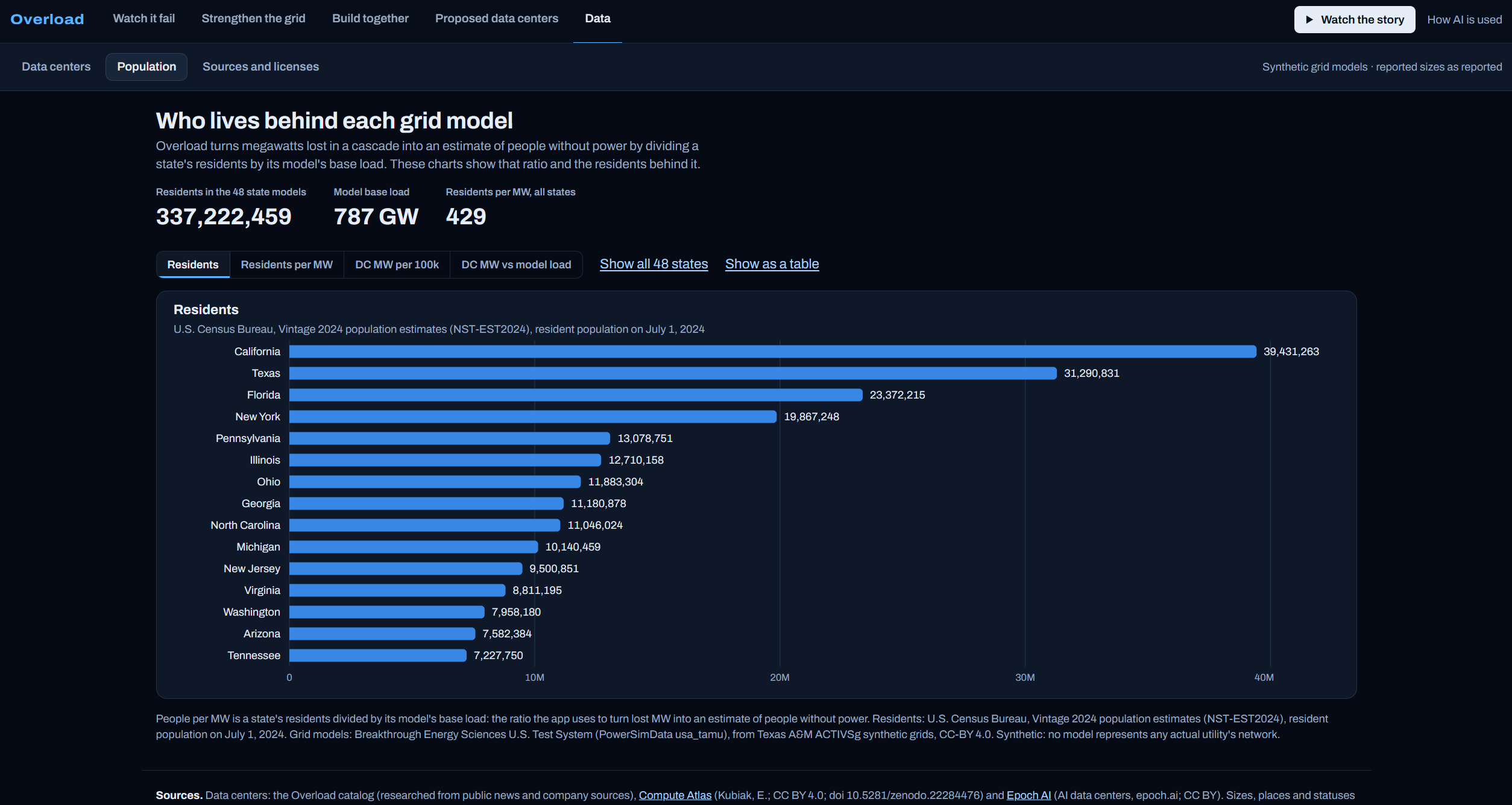
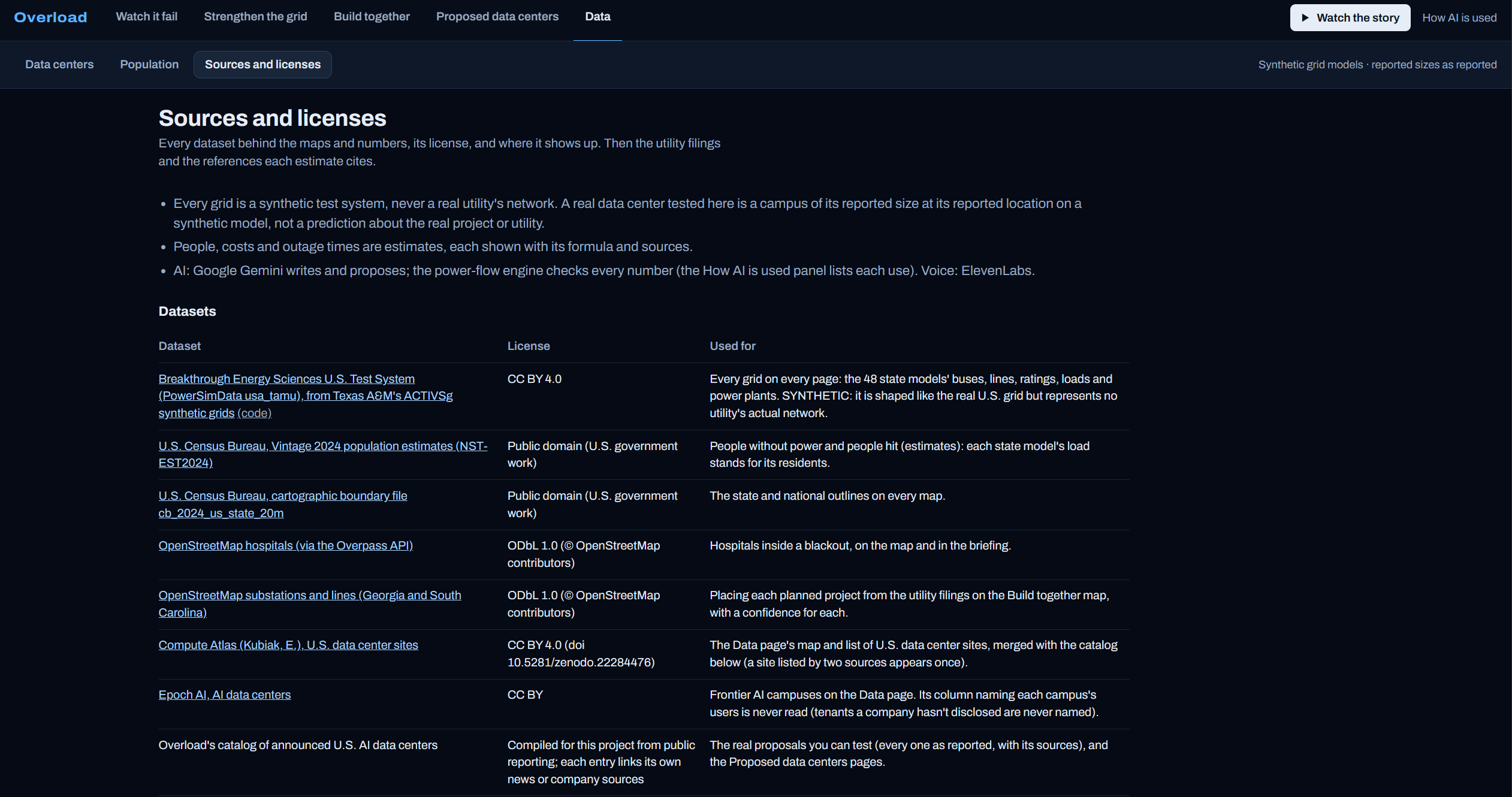
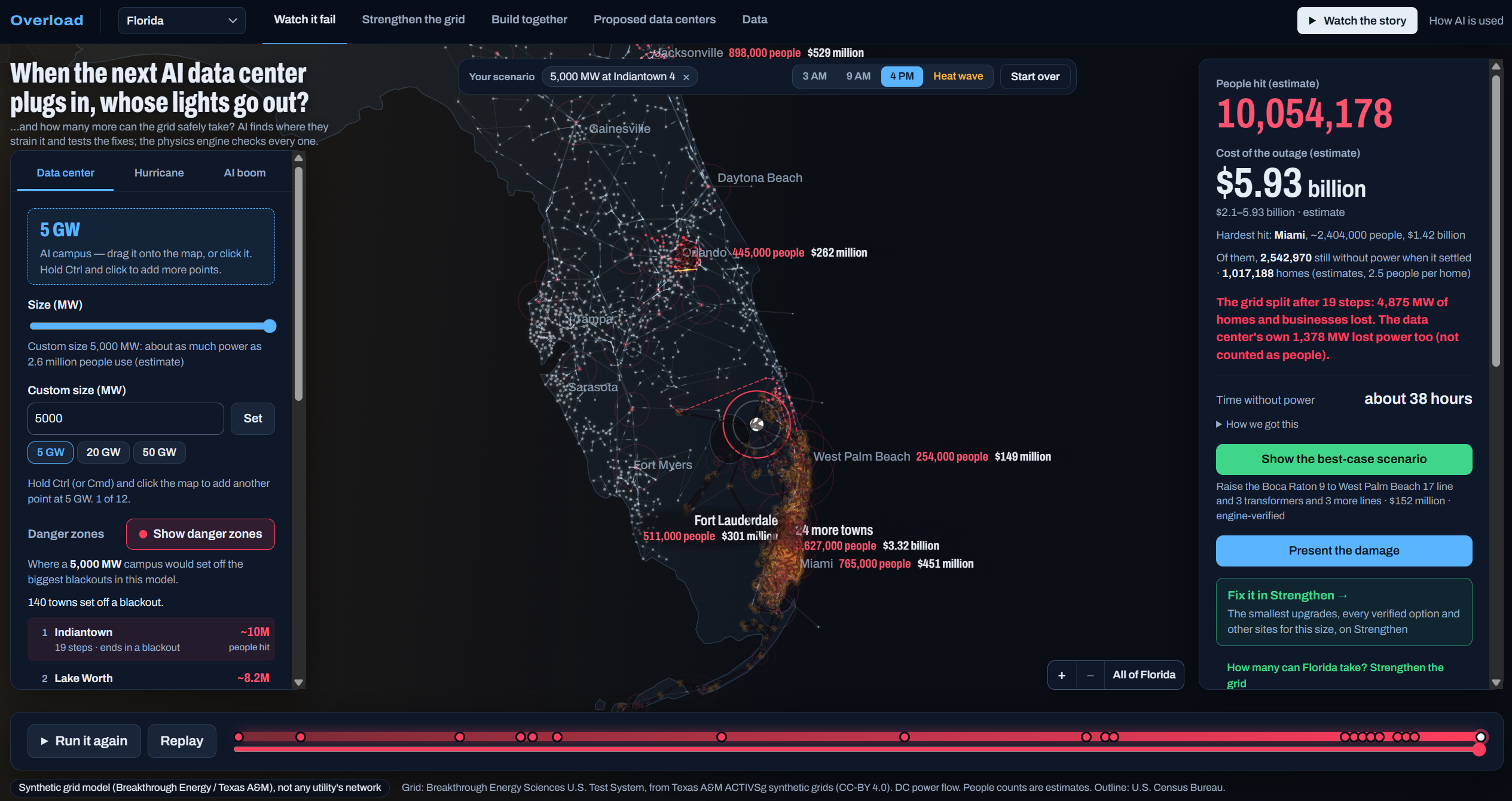
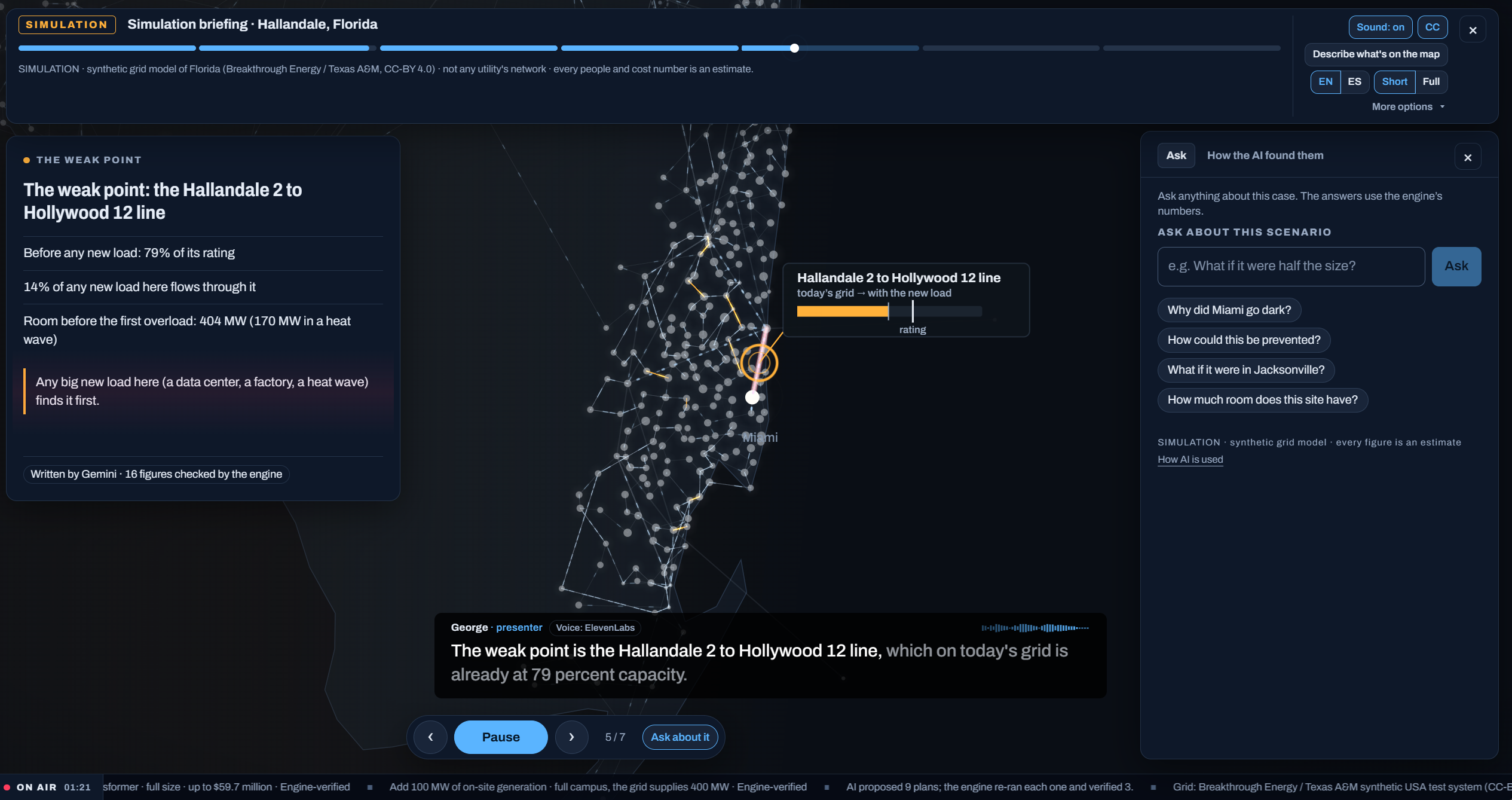
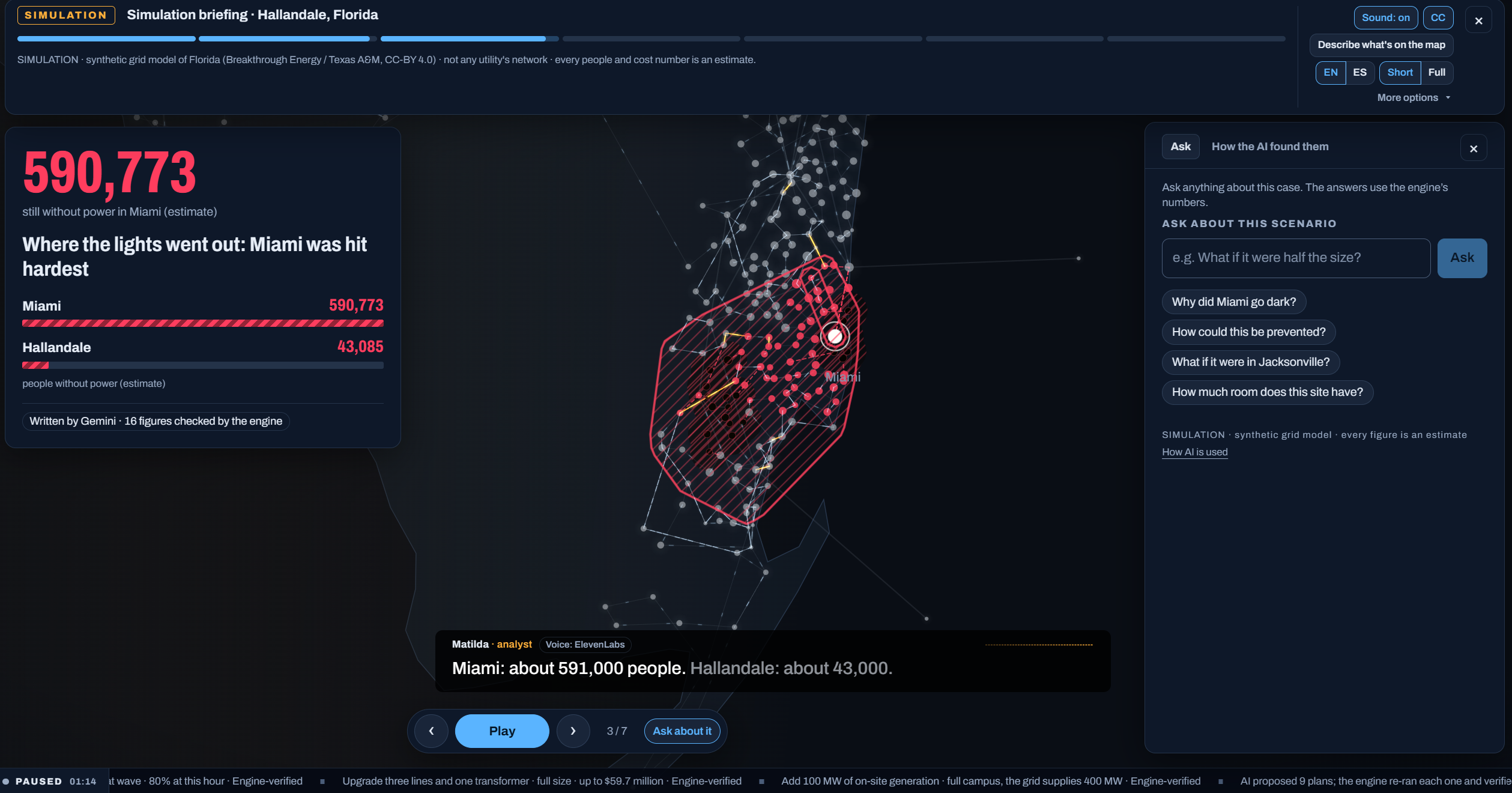
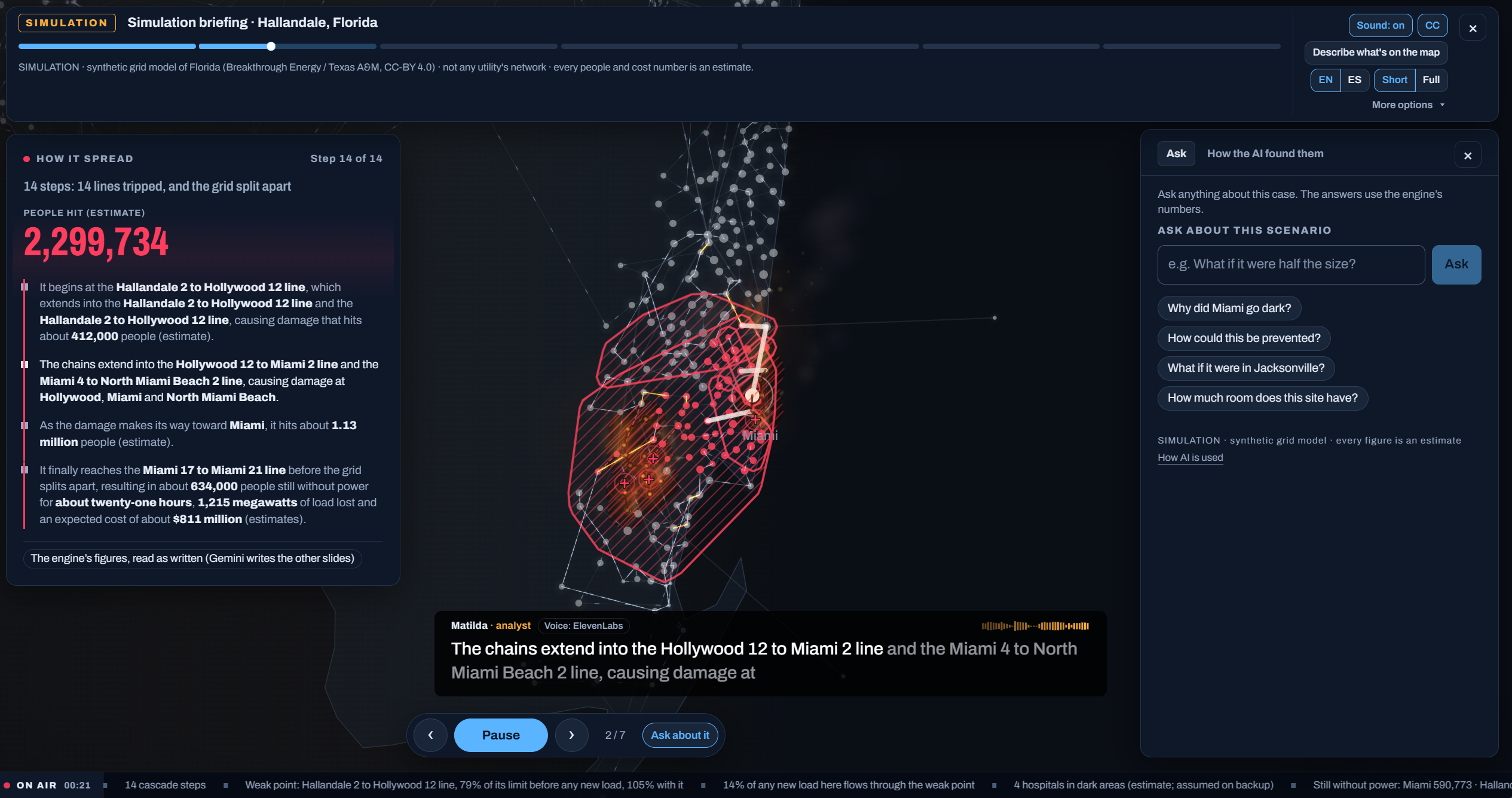
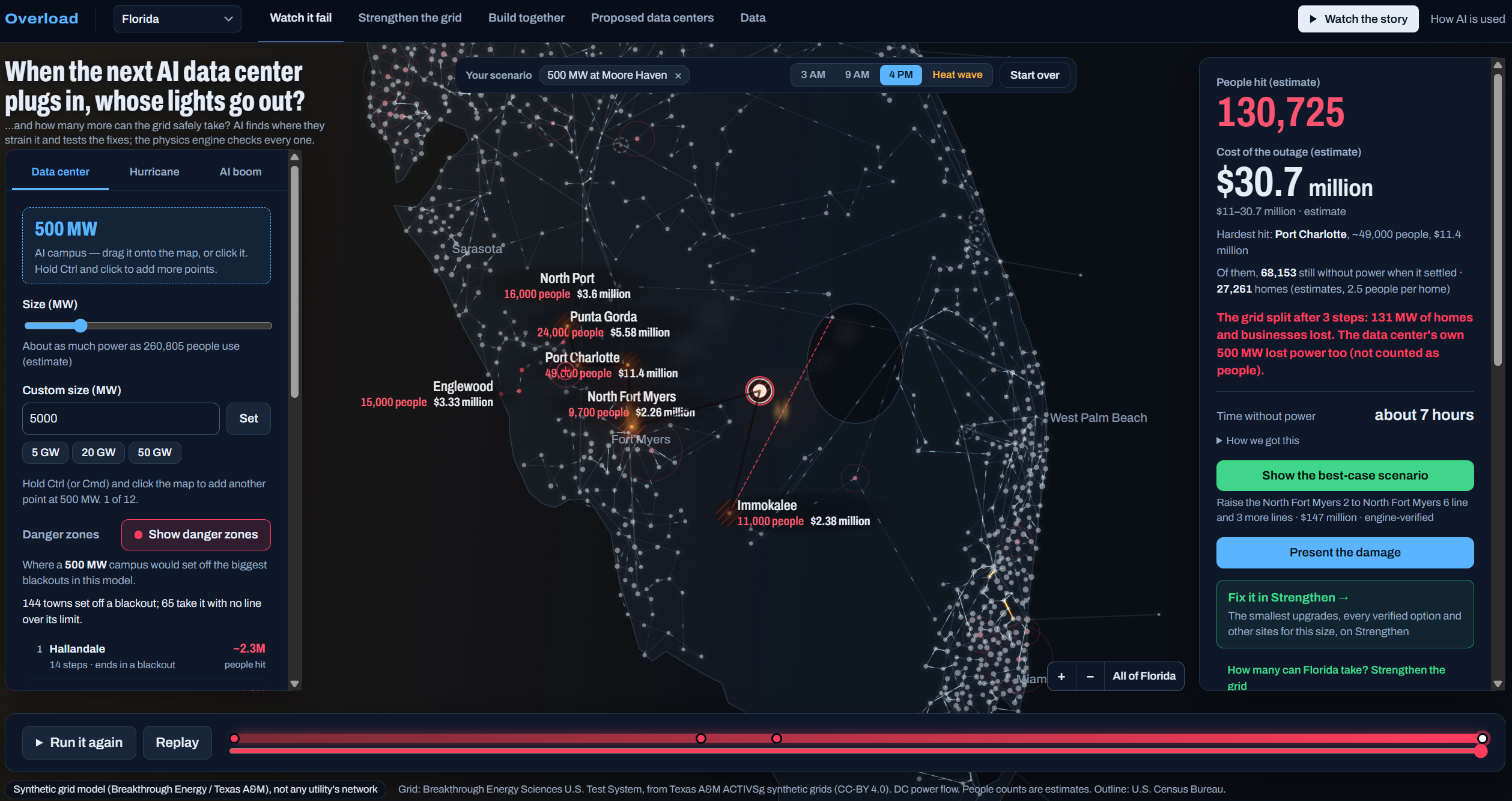
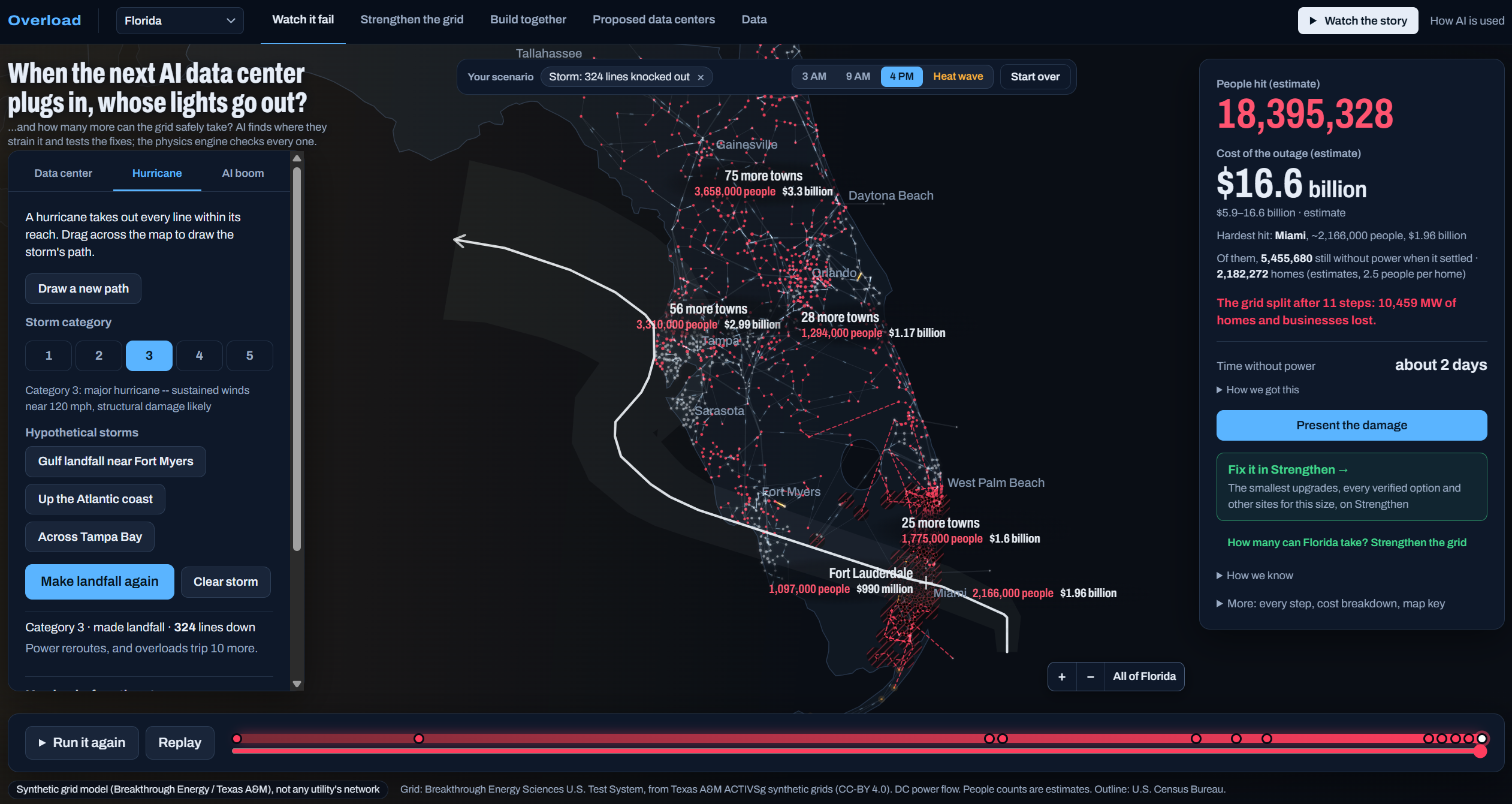
Overload runs a synthetic model of a state's power grid: real towns, real plant sites, invented wiring, CC-BY research data, never a claim about a real utility. Drop a data center of any size on the map and a DC power flow shows every line's loading in under a second. Run the cascade and watch a failure trip, redistribute, and spread until the grid settles or a region goes dark, with a real-time estimate of people affected.
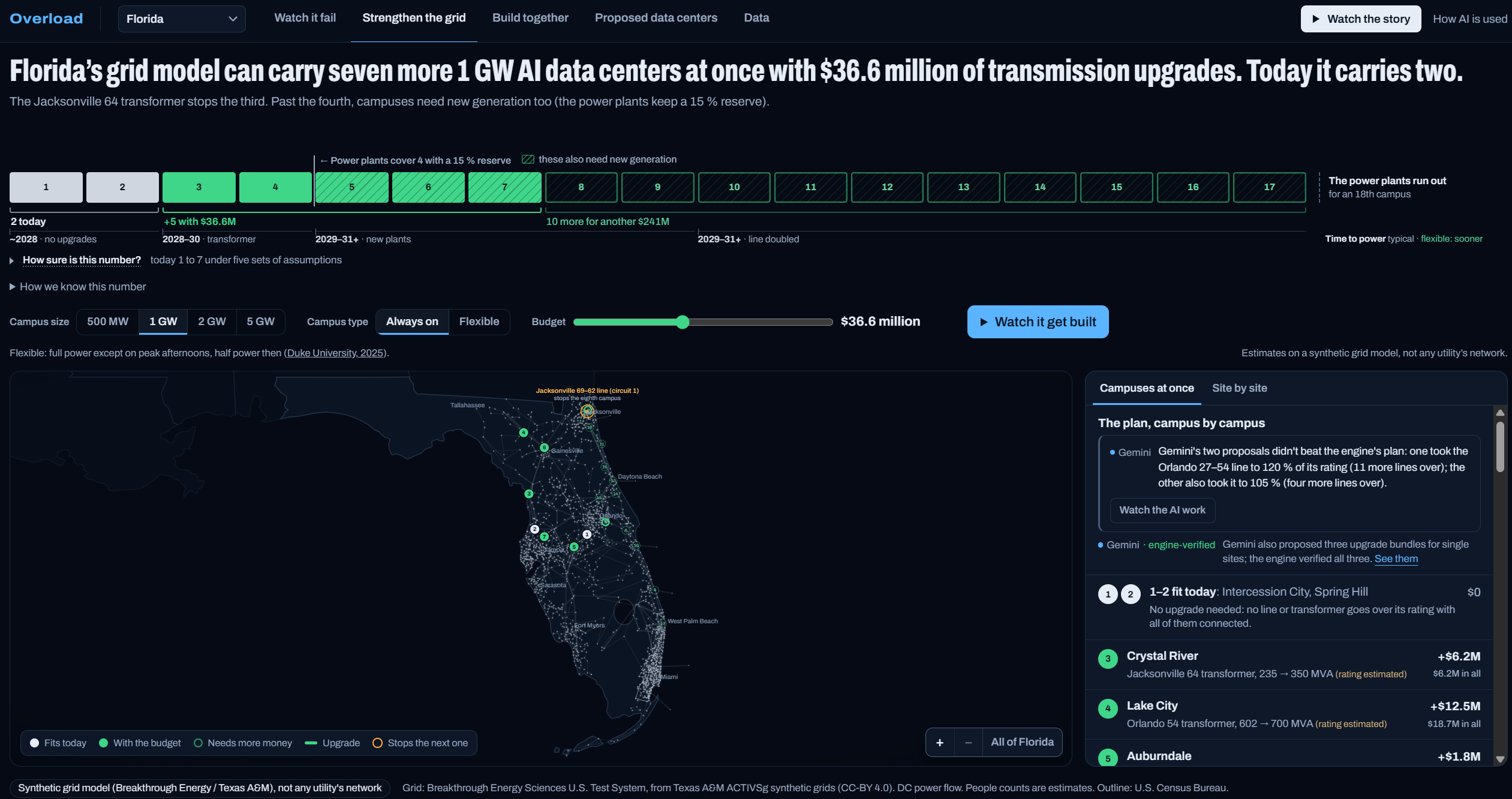
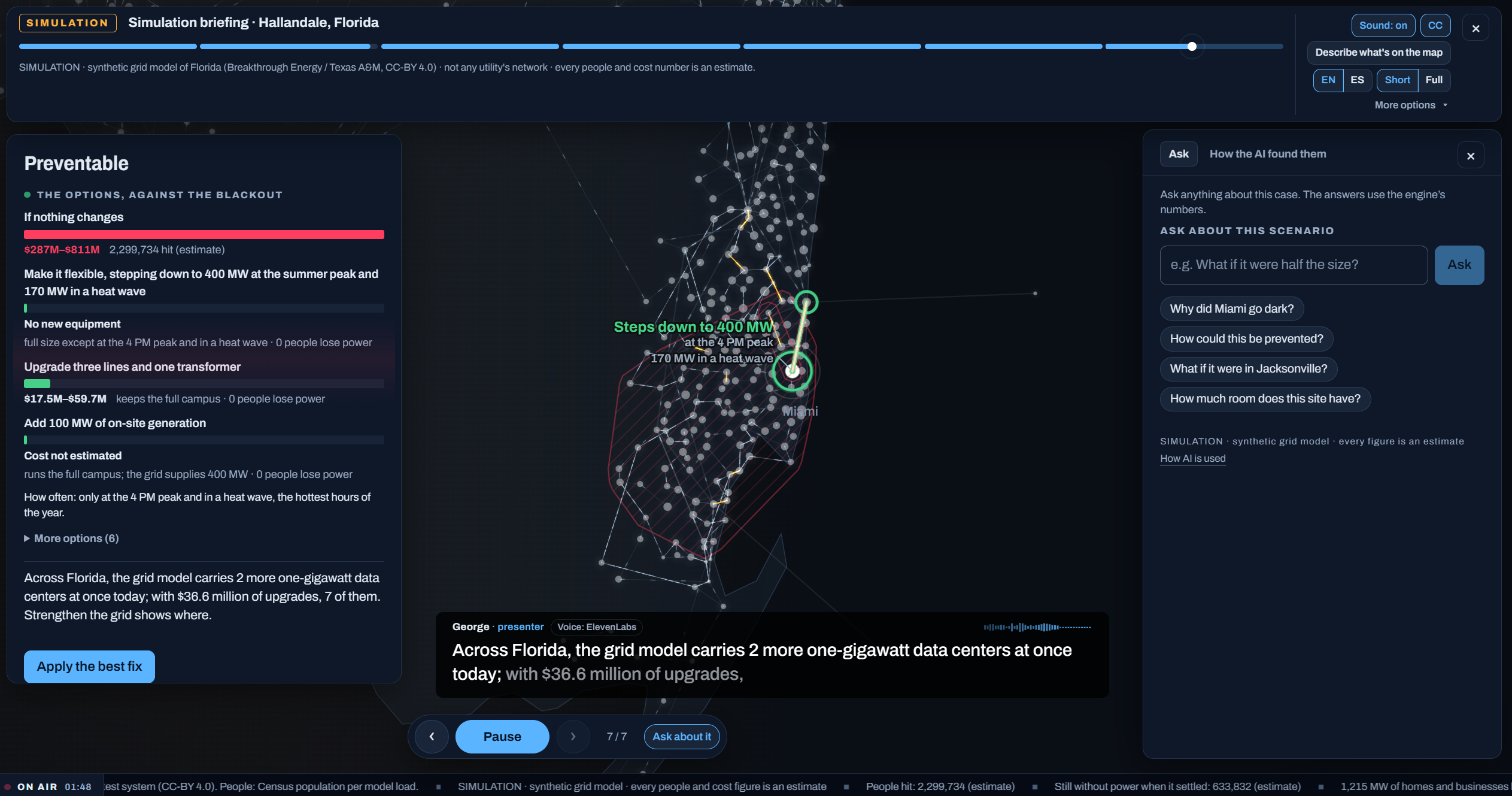
Then see the verified fixes: the smallest upgrade that makes it hold, an operating rule that lets the campus flex instead, or the honest answer that "no fix exists" for a catastrophe, with a computed restoration plan instead. Strengthen the grid answers the inverse question statewide: how many more data centers can this grid safely take, and what does it cost to add capacity.
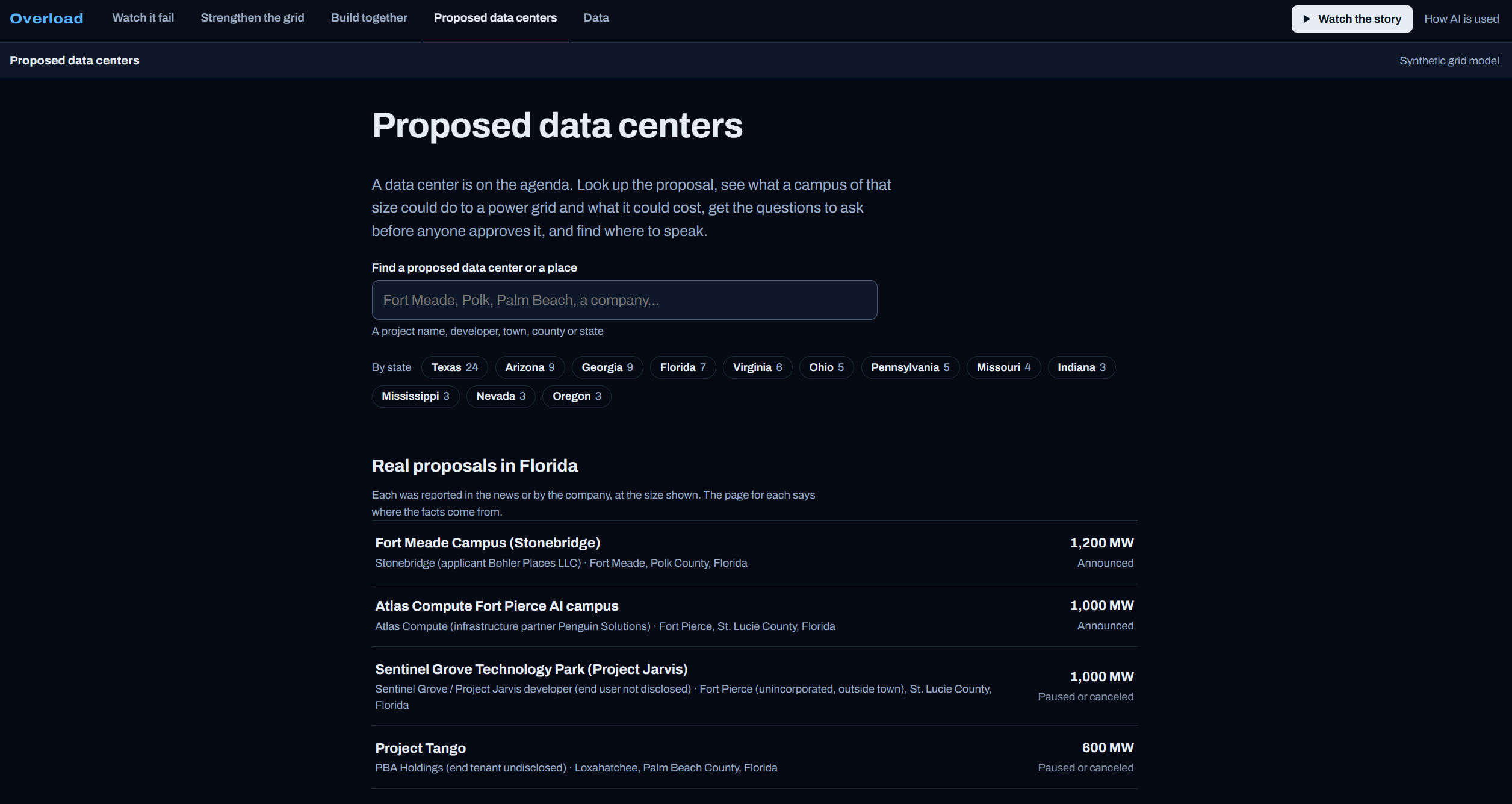
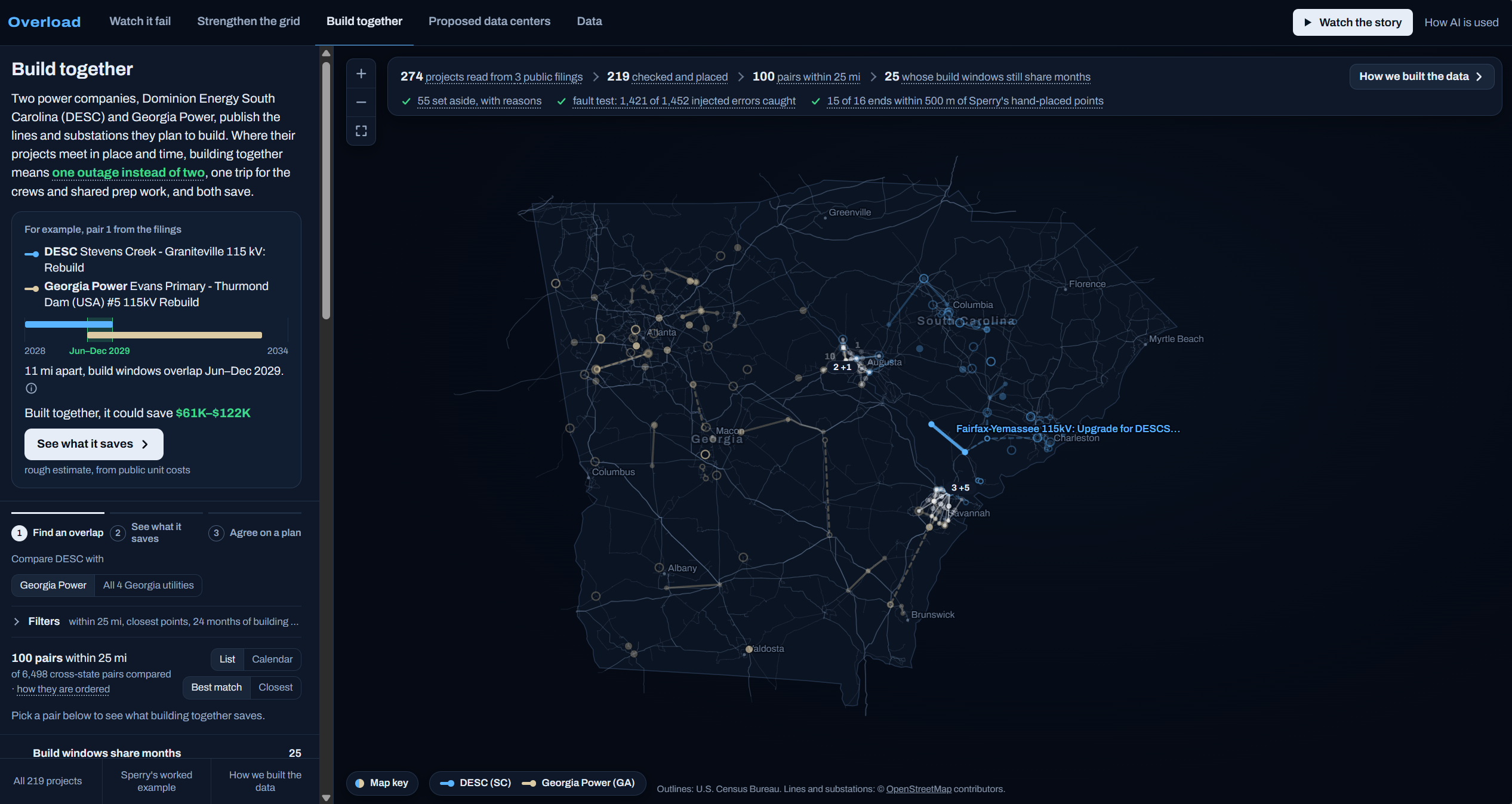
For Sperry Tech's GridLock challenge, Build together reads two real utilities' public construction filings and flags where combining their planned projects would save money and one outage instead of two.
How I built it
FastAPI backend, React and Vite frontend. The physics is a sparse linear solve (SciPy) for the power flow, a few milliseconds per solve, and a linear program (HiGHS) for restoration planning when no fix exists. No dense matrices, so it fits in a small deployment.
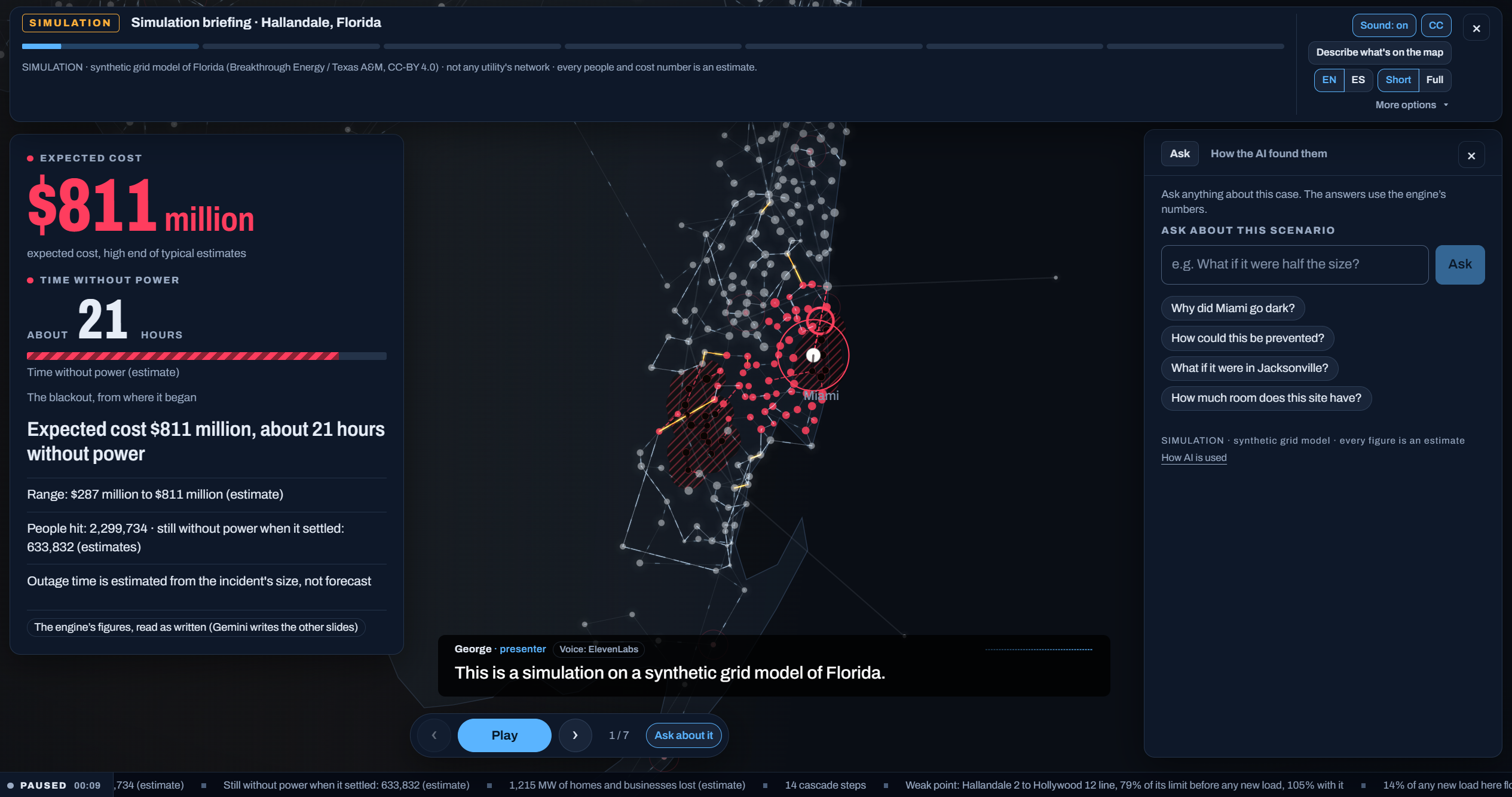
Gemini writes and proposes across the app: narration, fix plans, coordination agreements, answers to typed questions. It never sets a number itself. The physics engine verifies every claim before it's shown, and every AI surface has a labeled fallback if Gemini is unavailable. ElevenLabs voices the incident briefing, synced to on-screen captions.
Challenges I ran into
Keeping the AI honest was the hardest part. Every sentence Gemini writes is checked against a fact sheet before it's shown, and anything that fails a check reverts to a template instead. I also had to make sure a long physics solve could never stall the backend under load, and that a blackout estimate stayed an honest, sourced range instead of an invented precise number.
Accomplishments that I'm proud of
The engine's DC power flow matches the dataset's own solved flows to a correlation of $0.9999$. Every proposed fix is re-run through the full cascade before it's shown as verified, never just animated. The core simulation runs with zero internet dependency; only the AI narration needs a connection, and it degrades honestly when it doesn't have one.
What I learned
"AI writes, physics verifies" is a much stronger trust story than either alone. Being disciplined about labeling every estimate as an estimate, everywhere in the app, makes it more credible, not less impressive.
What's next
Real transmission ratings and an AC study under a utility partnership, hourly load instead of a single snapshot, and a shared upgrade plan several utilities can comment on together.

Log in or sign up for Devpost to join the conversation.