-
-

Logo-fotor
-
Page 2
-
Page 3
-
Page 1

Inspiration
This project is personal.
I have PCOS. Throughout my life, I have watched every woman around me — mothers, sisters, friends — suffer through the same invisible battle. Pain dismissed by doctors. Blood tests that showed nothing. Years of being told it was stress, or diet, or simply being a woman. The condition was real. The proof was never accepted.
That dismissal is not just personal — it is systemic.
Menstrual health affects roughly 1.8 billion people worldwide, yet remains one of the most underresourced areas in clinical AI. Two conditions in particular carry devastating diagnostic delays in the UK:
- PCOS affects approximately 1 in 10 women, with diagnostic delays of 2–3 years
- Endometriosis affects 1 in 10 women of reproductive age, with delays of 7–10 years
The English NHS gynaecology waiting list reached 586,013 patients in December 2024. The cost of menstrual-condition absenteeism to the UK economy is estimated at nearly £11 billion annually. Lower-income and ethnic-minority women carry the longest waits — compounding lost economic participation, mental health burden, and reduced fertility options.
The technology to begin closing this gap already exists. Wearable devices now stream high-frequency physiological signals — heart rate, HRV, skin temperature, and electrodermal activity. At-home hormone tests such as Mira and Inito make longitudinal endocrine sampling feasible outside clinics. Transformer architectures and explainability methods such as SHAP make it practical to fuse heterogeneous data streams while preserving interpretability.
Ovara aligns directly with the UK Women's Health Strategy and the NHS 10-Year Health Plan, both of which prioritise reducing gynaecology waiting times and addressing health inequity.
We built Ovara because women's pain has waited long enough.
What it does
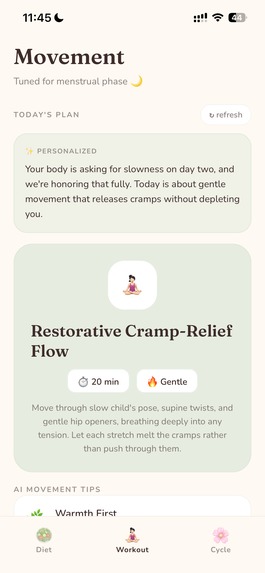
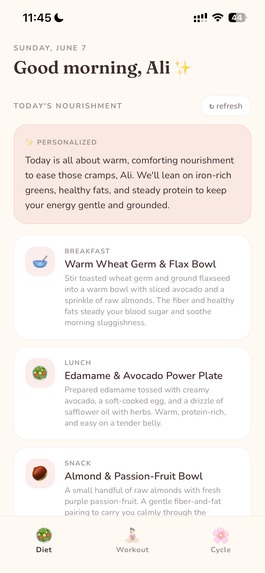
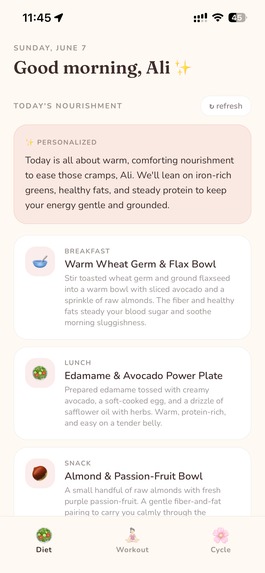
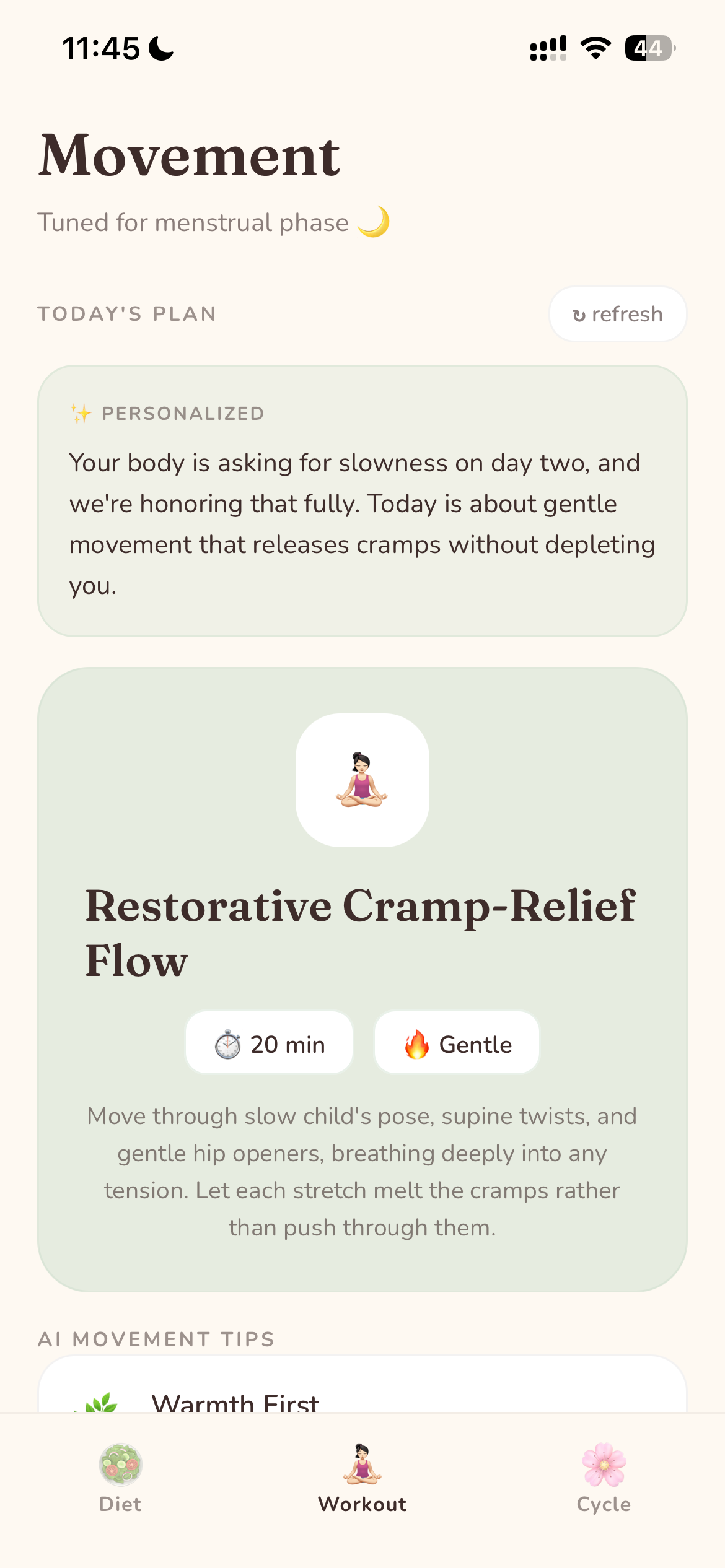
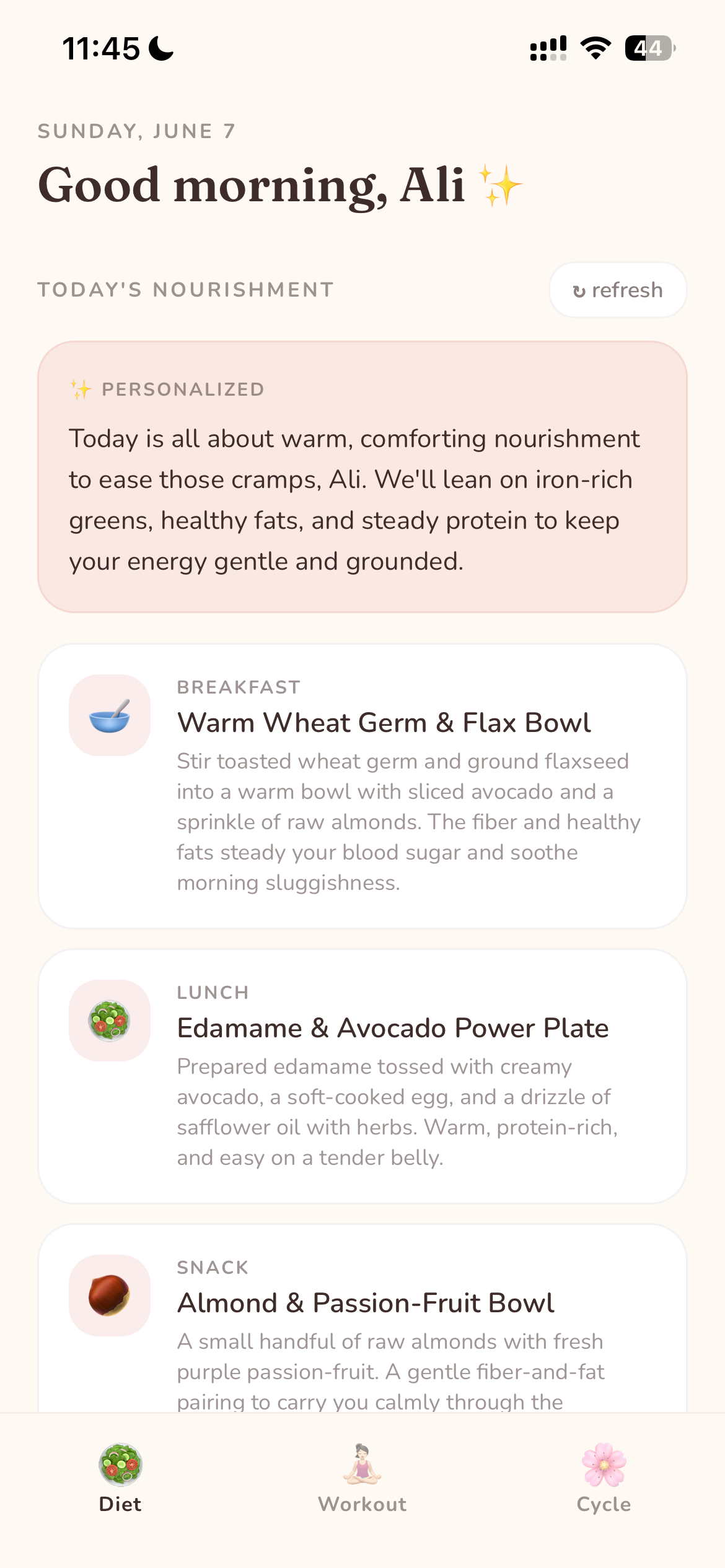
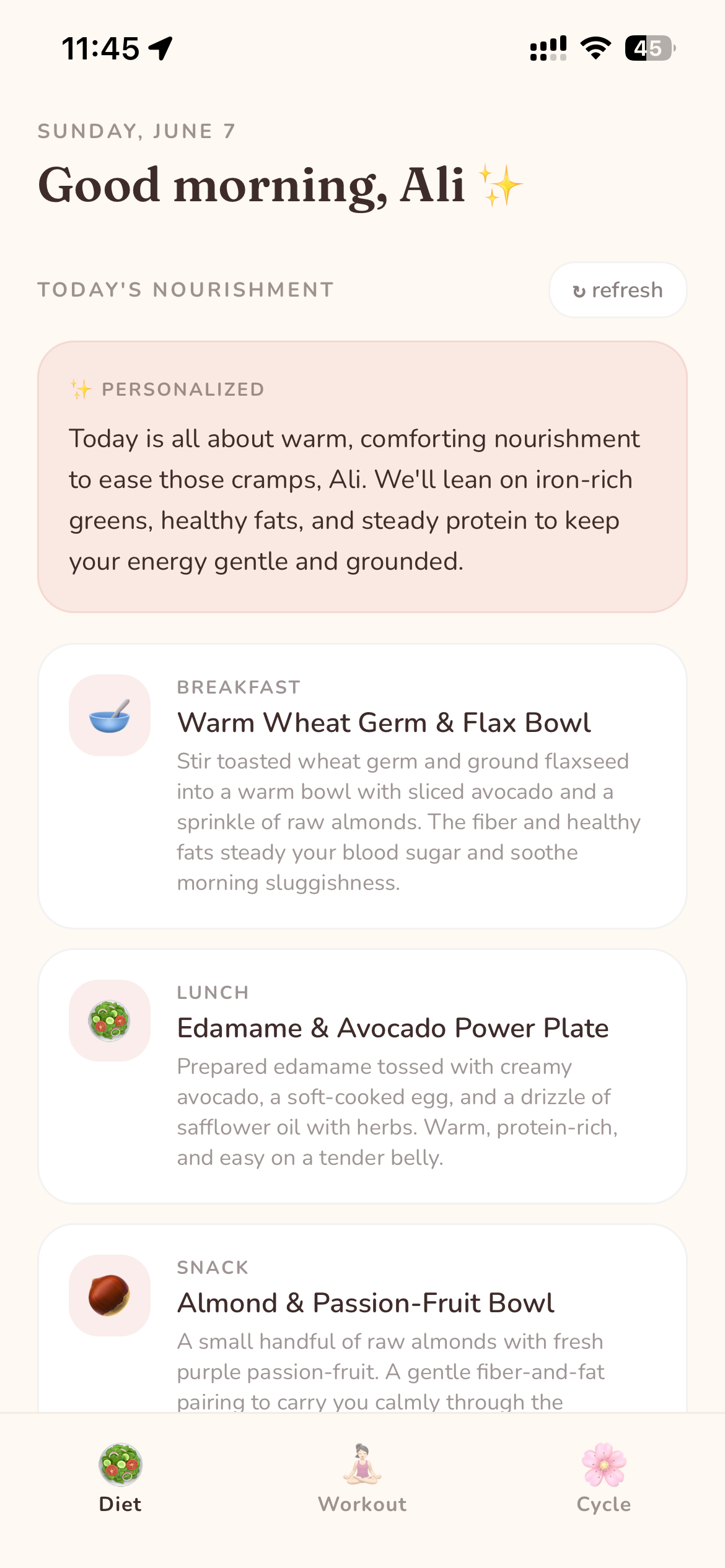
Ovara is an AI-powered health companion for women managing PCOS and Endometriosis. Beyond cycle tracking, Ovara delivers adaptive, personalized plans across diet, workout, and menstrual health — learning from real behavior every single day.
Every recommendation is evidence-based and adjusts in real time. If you had an extra coffee, Ovara already knows and updates your plan accordingly. Ovara is equipped with deep PCOS and Endometriosis knowledge, helping users build a lifestyle that prevents symptoms from worsening and gradually supports menstrual health regulation.
Three core pillars:
- 🥗 Diet — Anti-inflammatory, hormone-balancing meal plans that adapt from food photos and daily logs
- 🏃♀️ Workout — Cycle-synced movement plans, low-impact during flares and progressive during the luteal phase
- 🌙 Menstrual cycle — Phase tracking used to contextualise every plan and prediction
Users interact with Ovara through text, voice, photos, or quick-tap inputs — making it effortless to stay on plan and get real-time guidance throughout the day.
How we built it
We are a team of four — developers and researchers — who came together around a shared belief that AI should serve the people most underserved by traditional healthcare.
We built everything using AI-assisted tools, end to end:
- Research — literature review, clinical paper analysis, and evidence synthesis
- Dataset collection, curation, and cleaning — sourcing, standardising, and preparing PCOS and Endometriosis data for model training
- App development — multimodal AI architecture powering real-time adaptive planning
- Branding and marketing — naming, visual identity, and product storytelling
Every layer of Ovara was built with AI as a collaborator, not just a tool.
AI Models & APIs We use Z.AI GLM-5.1 as our primary plan generator (via VibeHack API distribution) with Anthropic Claude Opus 4.8 as fallback provider — together powering real-time adaptive recommendations grounded in our curated PCOS dataset.
Frameworks & Libraries Expo SDK 54, React Native, React 19, Expo Router, TanStack Start/Router, Vite, Tailwind CSS, shadcn/ui, Radix UI, Vercel AI SDK, pandas, numpy.
Fonts & Design Google Fonts (Fraunces + Nunito via @expo-google-fonts). Web prototype generated with Lovable. Build and deploy via EAS (Expo Application Services).
Honesty notes The three datasets share no patient key and are used as independent reference layers only. The PCOS health score is original literature-grounded work, not a pre-existing model. The base mobile codebase (cycle wheel, calendar, period logging) was pre-existing teammate work — PCOS scoring, clinical onboarding, and AI integration were built on top during the hackathon.
Dataset & Data Pipeline
Building Ovara's data foundation meant solving a problem the industry has largely ignored — there is no single, clean, PCOS-ready dataset. We built one from scratch.
Datasets used:
- Kaggle PCOS dataset (541 patients) — clinical anchor
- USDA FoodData Central — public domain nutrition data
- PhysioNet mcPHASES v1.0.0 — wearable/cycle data (42 participants)
Food & Nutrition We sourced from the USDA food database — 87,990 rows that contained mostly lab samples and provenance junk. After filtering to real, consumable foods and resolving nutrient ID inconsistencies across database releases, we scored each food from 0–100 for PCOS diet quality. Foods were ranked by their balance of beneficial nutrients (fiber, protein, unsaturated fat) against harmful ones (sugar, saturated fat, refined carbs, sodium). The final curated food bank contains 252 real whole foods across 7 dietary roles — with processed items, supplements, and anything that gamed the per-100g math deliberately excluded.
PCOS Health Score Using validated clinical literature, we built a transparent 0–100 PCOS health score anchored to the Rotterdam diagnostic criteria. The score separates diagnosed from undiagnosed patients with an AUC of 0.914 — strong discrimination from clinical knowledge alone, with no outcome training required. Every sub-score moved in the clinically expected direction.
Cycle Data We constructed a canonical 28-day physiological curve — cramps, resting heart rate, HRV — from menstrual onset data across 42 participants, using only statistically validated signals.
Architecture decision Because no dataset shares a patient key, we deliberately built independent reference layers that never pretend to be linked. The user's score is computed on-device from their own inputs using the same audited rubric — transparent, honest, and hallucination-free.
Rather than letting the model invent food advice, Ovara composes meals only from a bank of real, PCOS-scored whole foods — keeping every recommendation safe, evidence-aligned, and grounded in data.
Challenges we ran into
The hardest challenge was the data.
Women's bodies are not studied nearly enough. Research into menstrual health conditions is not funded at the same level as other areas of medicine. The datasets that do exist are fragmented, inconsistent, and often too small to be clinically meaningful on their own.
We had to gather data from multiple sources — cleaning, curating, and combining them into a dataset usable for our specific use case. It was painstaking and time-consuming work. But it also made our mission clearer.
Beyond data, we also navigated the challenge of building a model that is medically responsible — one that supports and empowers users without overpromising outcomes or replacing clinical care.
Accomplishments that we're proud of
- Building a working, interactive AI health companion from the ground up in a short timeframe
- Curating a PCOS and Endometriosis dataset from fragmented sources that did not previously exist in one place
- Designing an experience that feels warm, non-judgmental, and genuinely built for women — not just about them
- Grounding every recommendation in real clinical evidence while keeping the experience simple and accessible
- Building entirely as a team of four using AI tools across research, development, design, and marketing
What we learned
We learned that building for women's health means confronting a field that has been historically underfunded, understudied, and undervalued.
We learned that the gap between what AI can do and what it has been asked to do for women's bodies is enormous — and that closing even a small part of that gap matters deeply.
We learned that transparent, explainable AI is not optional in health — it is essential. Women who have spent years being dismissed by doctors need to understand why a recommendation is being made, not just receive it.
And we learned that a team of four, armed with the right tools and the right motivation, can move faster and further than we ever imagined.
What's next for Ovara
The work does not stop here.
- Wearable integration — connecting with devices to stream real-time physiological data (HRV, skin temperature, sleep) directly into Ovara's adaptive model
- At-home hormone test integration — partnering with platforms like Mira and Inito to bring longitudinal endocrine data into the planning engine
- Expanded condition coverage — broadening beyond PCOS and Endometriosis to cover thyroid conditions, perimenopause, and other underserved hormonal health areas
- Clinical partnerships — working with NHS gynaecology teams to validate Ovara's pattern recognition and support earlier diagnosis
- Open dataset initiative — publishing our curated PCOS and Endometriosis dataset openly to encourage further research into women's health
- Equity focus — ensuring Ovara is accessible to lower-income and ethnic-minority women who carry the longest diagnostic delays and the greatest unmet need
Women's health has been an afterthought for too long. Ovara is our answer to that.
Built With
- cursor
- expo.io
- fotor
- glm
- html
- nextjs
- python
- typescript
- z.ai

Log in or sign up for Devpost to join the conversation.