Inspiration
Cold outreach works, but running it is messy. Teams jump between lead tools, LinkedIn, web search, ChatGPT, email, spreadsheets, and CRMs just to send a few good messages.
We built outreachOS because the real problem is not just writing emails. It is finding the right targets, understanding why they matter, following up consistently, and keeping the whole pipeline clean.
What it does
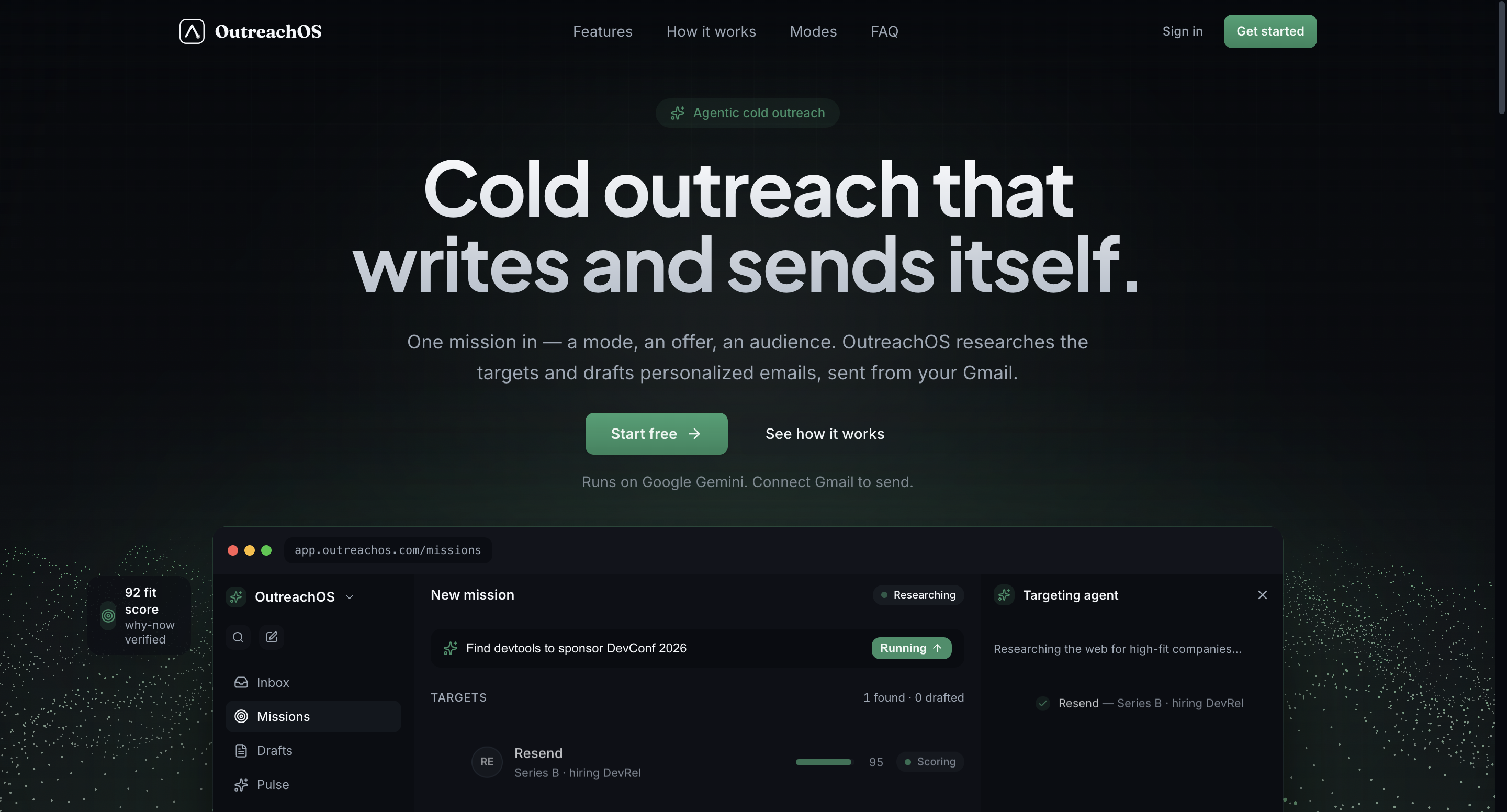
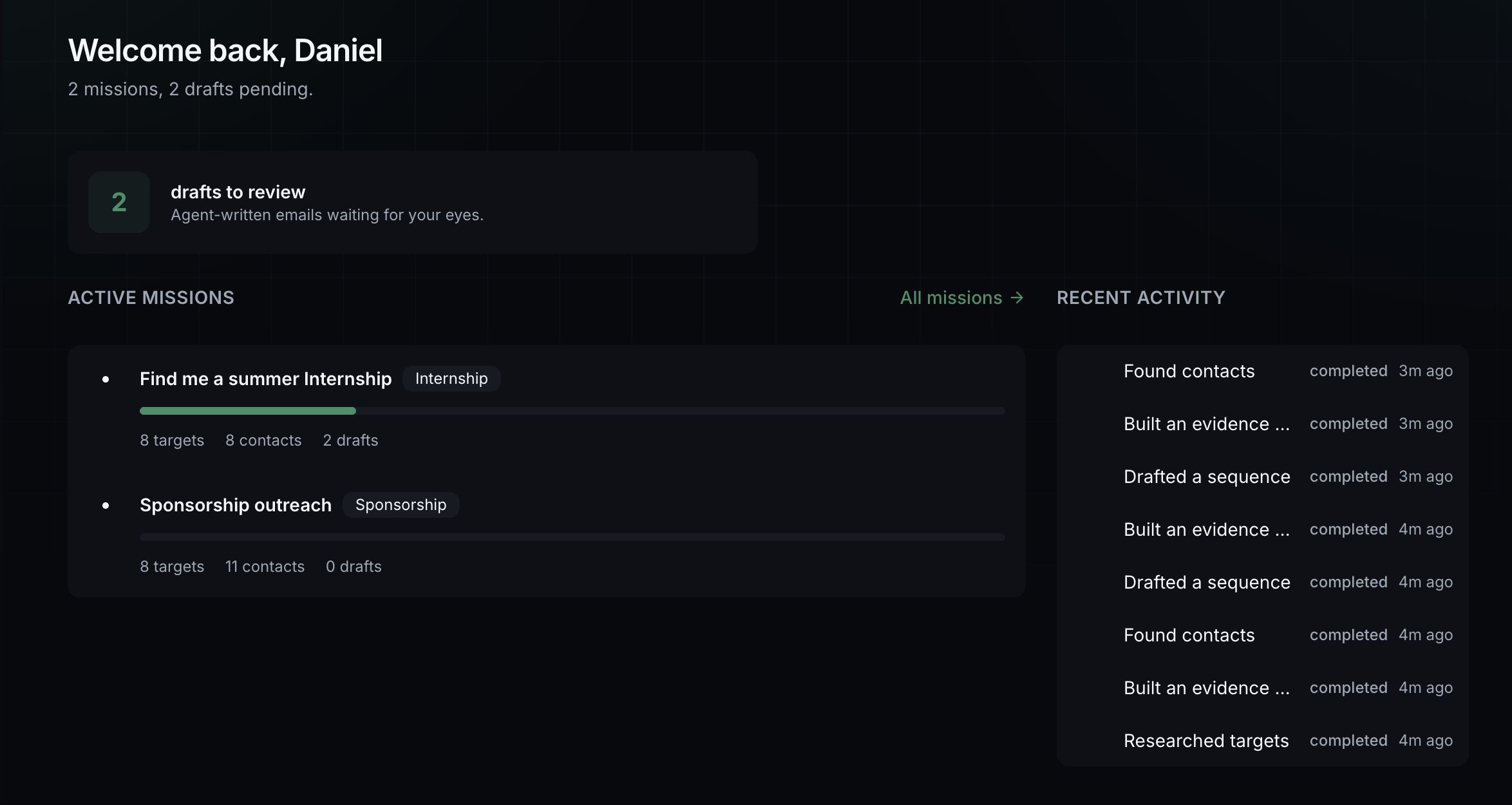
outreachOS is an agentic cold outreach platform that automates outreach end-to-end.
It can:
- Discover and rank targets
- Find the right contacts
- Research each account
- Build evidence-based personalization
- Generate outreach sequences
- Manage follow-ups
- Route replies
- Update a CRM or spreadsheet automatically
It supports multiple outreach modes, including sponsorships, internships, business development, recruiting, and early-stage sales, so the strategy changes depending on the user’s goal.
How we built it
We built outreachOS as a modular agent system.
Each agent handles one part of the workflow:
- Target discovery
- Contact finding
- Account research
- Angle selection
- Sequence generation
- Deliverability checks
- Reply routing
- CRM updates
- Learning loops
The system uses structured outputs so agents can pass clean data between steps instead of producing random text. We also designed the workflow around approval gates, confidence scores, and sourced evidence packs to keep outreach accurate, useful, and safe to send.
Challenges we ran into
One major challenge was making the system feel reliable instead of like a simple email generator. Cold outreach has a lot of moving parts, so we had to think carefully about state, sequencing, and how one agent’s output affects the next.
Another challenge was personalization. We did not want generic AI fluff, so we focused on evidence-first outreach where every message is based on real signals, such as sponsorship history, hiring activity, company news, developer programs, or community fit.
Accomplishments that we're proud of
We are proud that outreachOS feels like a real operating system for outreach rather than just a writing tool. It can reason through who to contact, why they are worth contacting, what angle to use, and what should happen after they reply.
We are also proud of the mode-driven design. Sponsorship outreach, internship outreach, recruiting, and business development all require different asks, proof points, and follow-ups, and outreachOS reflects that instead of treating every email the same.
What we learned
We learned that the hardest part of cold outreach is not the first email. It is the workflow around it: research, qualification, timing, follow-ups, reply handling, and tracking.
We also learned that agentic systems work best when each agent has a clear job, measurable output, and structured handoff. Instead of asking one model to do everything, breaking the process into smaller agents made the system more reliable and easier to improve.
What's next for outreachOS
Next, we want to expand integrations with tools like Gmail, Outlook, Google Sheets, Notion, HubSpot, and Apollo imports.
We also want to improve the learning agent so outreachOS can analyze reply rates, cluster objections, run A/B tests, and automatically improve future campaigns.
Long term, outreachOS could become the default outreach engine for student teams, startups, recruiters, and organizations that need to turn cold opportunities into real conversations.
Built With
- atlas
- firebase
- gemini
- google-cloud
- google-gmail-oauth
- mongodb
- react
- ts
- vertex
- vite
- voyage

Log in or sign up for Devpost to join the conversation.