Inspiration
Creative teams are good at producing visible variety. They are less well equipped to notice when different executions—different images, headlines, and formats—still rely on one repeated metaphor or strategic mechanism. This creates false confidence in the range of options being reviewed.
What it does
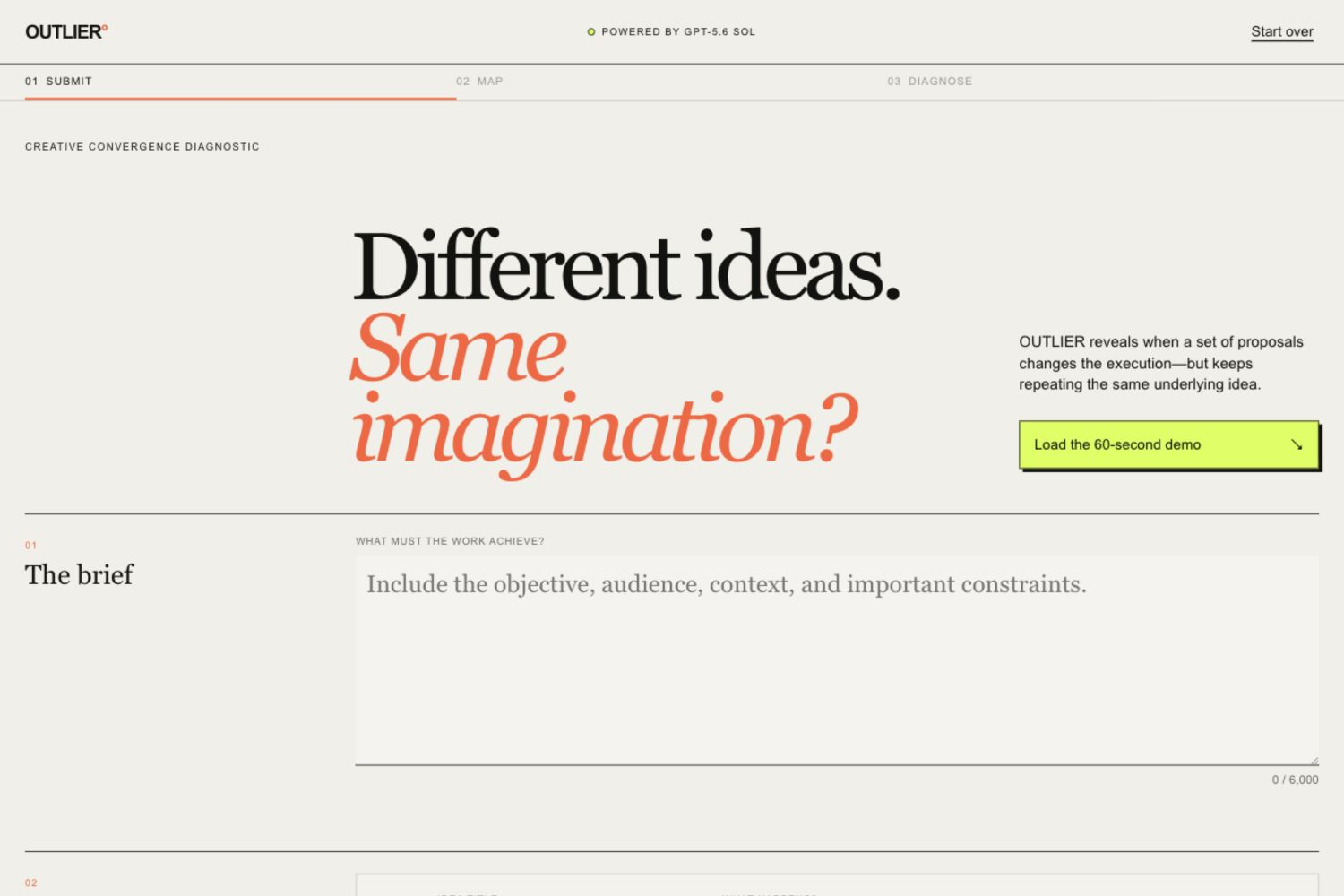
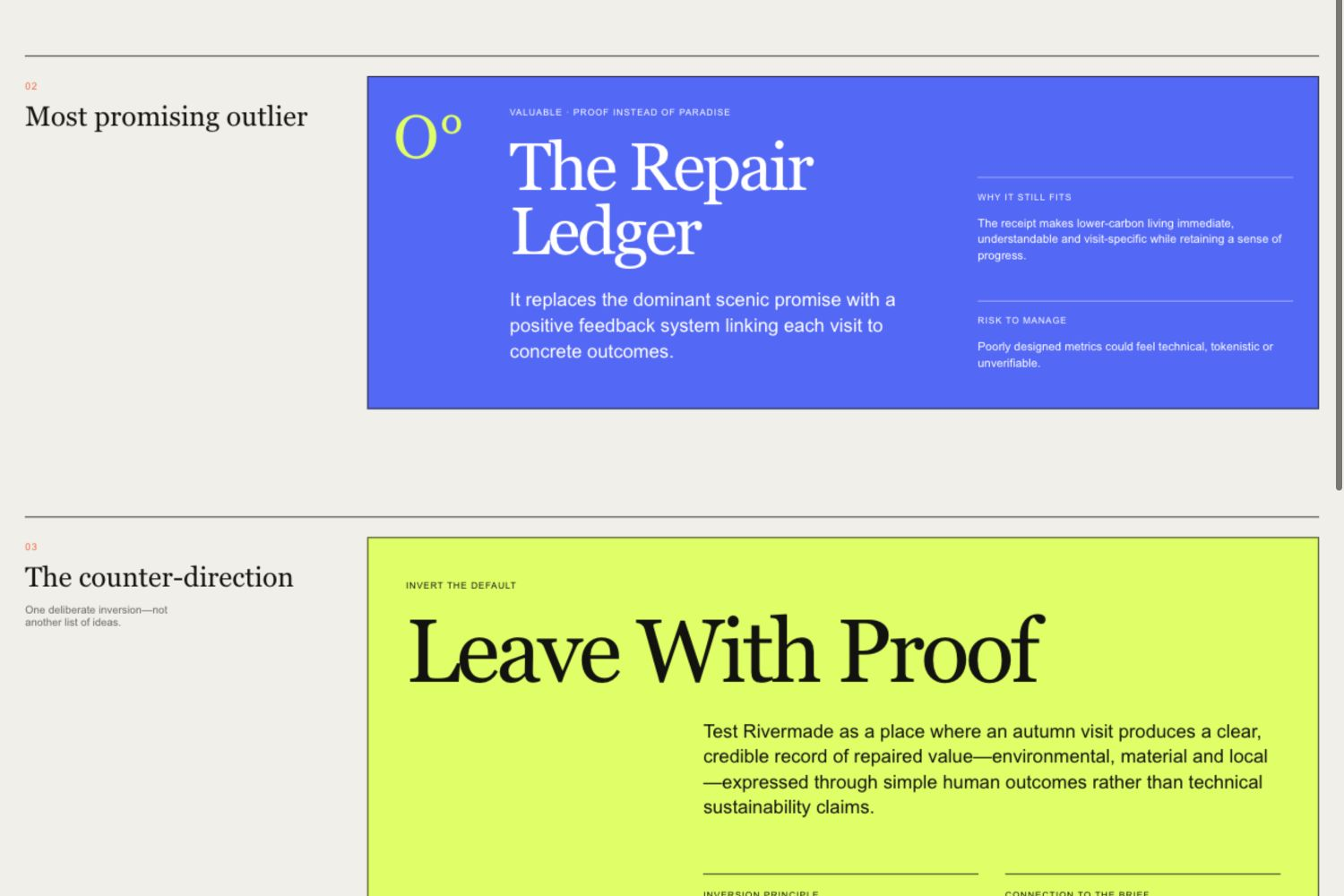
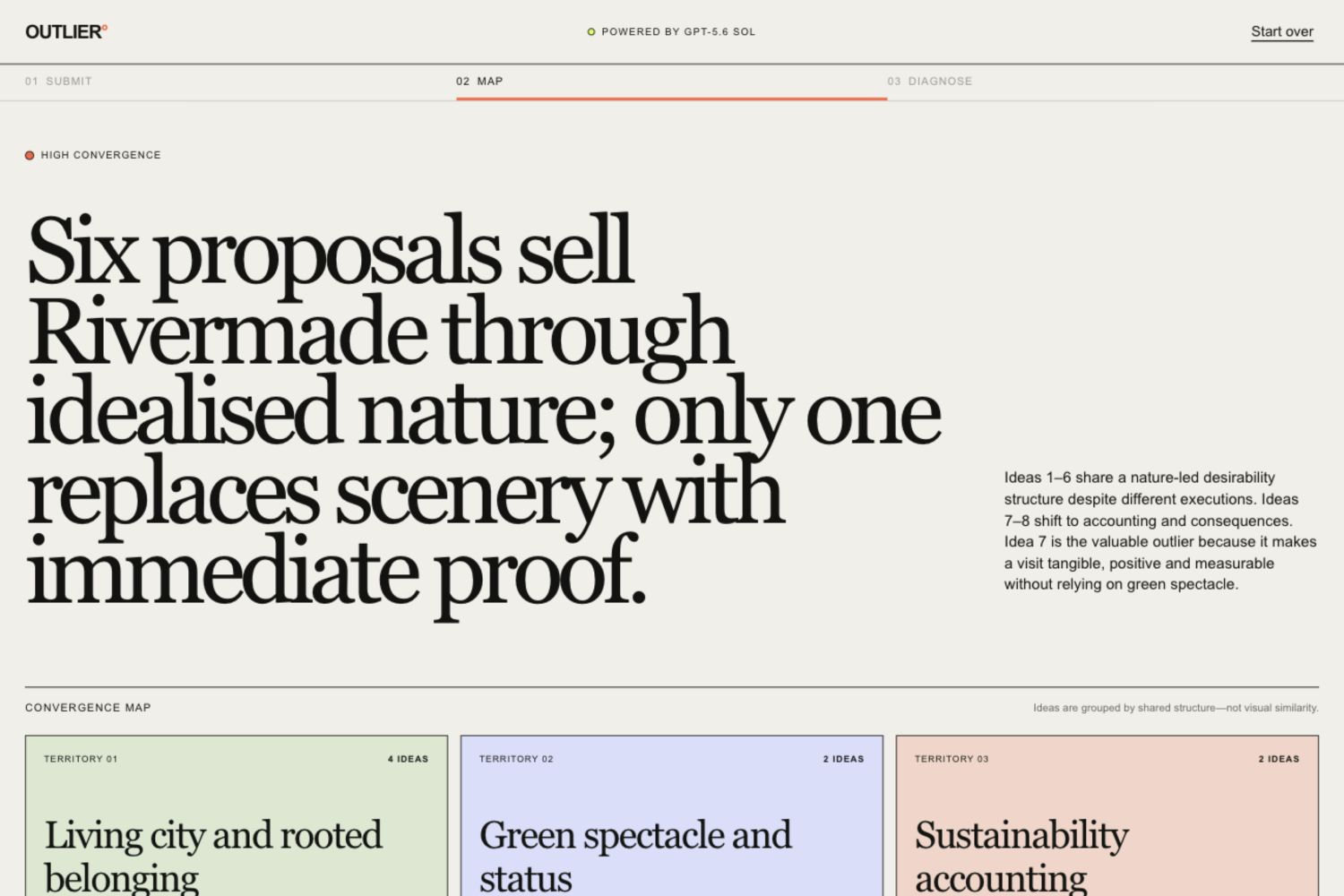
OUTLIER accepts a creative brief and 6–12 campaign proposals. GPT-5.6 Sol examines every idea across five structural dimensions, maps genuinely similar ideas into territories, explains the dominant creative logic, and distinguishes a valuable outlier from a merely off-brief deviation.
It then creates one counter-direction by reversing the dominant logic and recommends the smallest experiment needed to decide whether that direction deserves further investment.
How I built it
I built OUTLIER as a Next.js and TypeScript application using the OpenAI Responses API with gpt-5.6-sol. Structured Outputs enforce a complete diagnostic schema, while application-level checks ensure the model only references ideas submitted by the user. The product requires no accounts or database, and the API key remains securely on the server.
Codex acted as my product, design, and engineering collaborator. It helped me reduce the scope to a focused three-step experience, research the competition requirements, translate the creative method into a structured GPT-5.6 contract, implement the interface, write tests, document the architecture, and prepare the deployment.
I made the central product decisions: the five-dimension framework, the distinction between useful divergence and off-brief rarity, the focus on creative decision-makers, and the decision to avoid creativity scores or scientific claims.
Challenges
The main challenge was making an interpretive AI analysis useful and structured without pretending it was scientific. I removed numerical creativity scores, separated brief alignment from structural difference, allowed the system to report that no valuable outlier exists, and made every result traceable to the submitted ideas.
What I learned
The most important distinction is not similarity versus difference; it is surface variation versus structural change. A rare idea is not automatically valuable, and a beautiful execution can still belong to a crowded strategic cluster.
What's next
Future versions could compare multiple review rounds, accept visual boards, let teams challenge the model's clustering, and build an organization-specific memory of repeated creative codes. These features were intentionally excluded from the Build Week MVP.
OUTLIER does not measure creativity. It is a diagnostic and decision-support tool that helps human teams see when apparent variety is hiding a narrow range of thinking.
Built With
- api
- codex
- gpt-5.6
- next.js
- openai
- outputs
- react
- responses
- structured
- typescript
- vercel
- vitest
- zod

Log in or sign up for Devpost to join the conversation.