Inspiration
Broken everyday items are often replaced or discarded before anyone attempts a repair. For NUS students, the barrier is rarely just a lack of concern about waste: it is uncertainty about whether repair is safe or worthwhile, limited repair knowledge, and no easy way to ask peers for help. We built Outlast around one concrete sustainable habit: Give a personally owned broken item one informed, peer-supported repair attempt before replacing it.
What it does
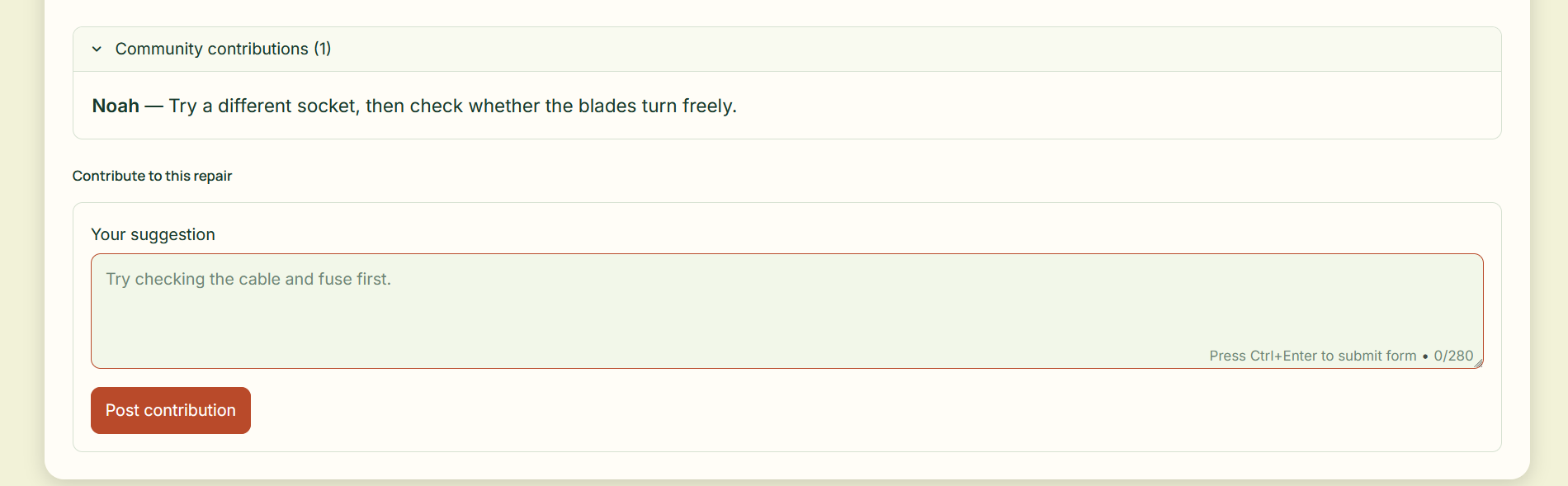
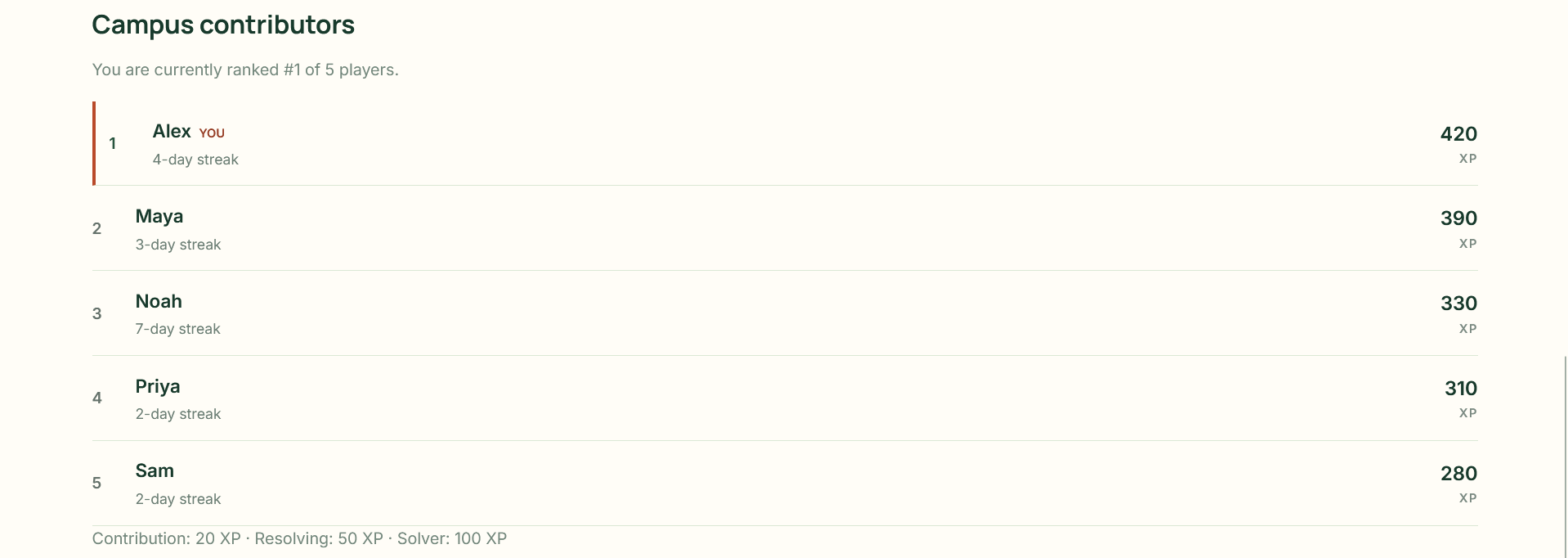
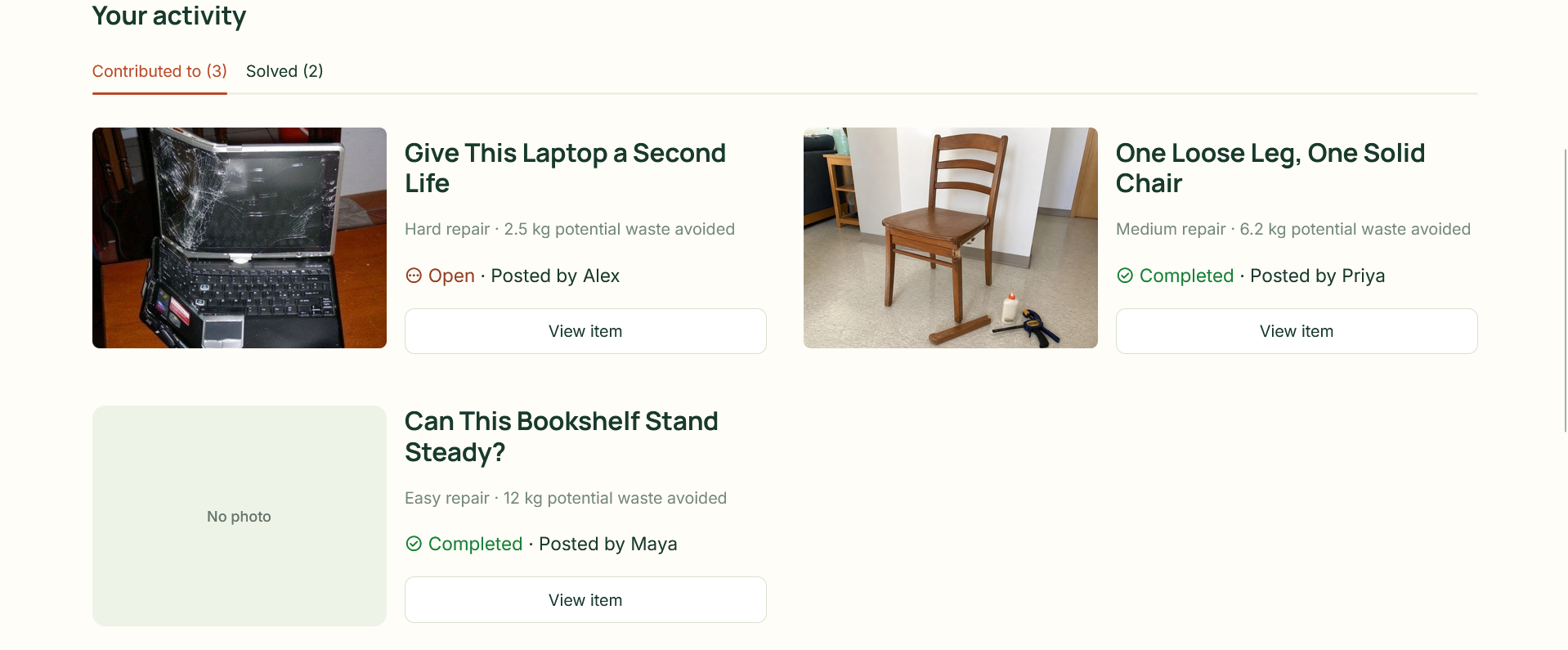
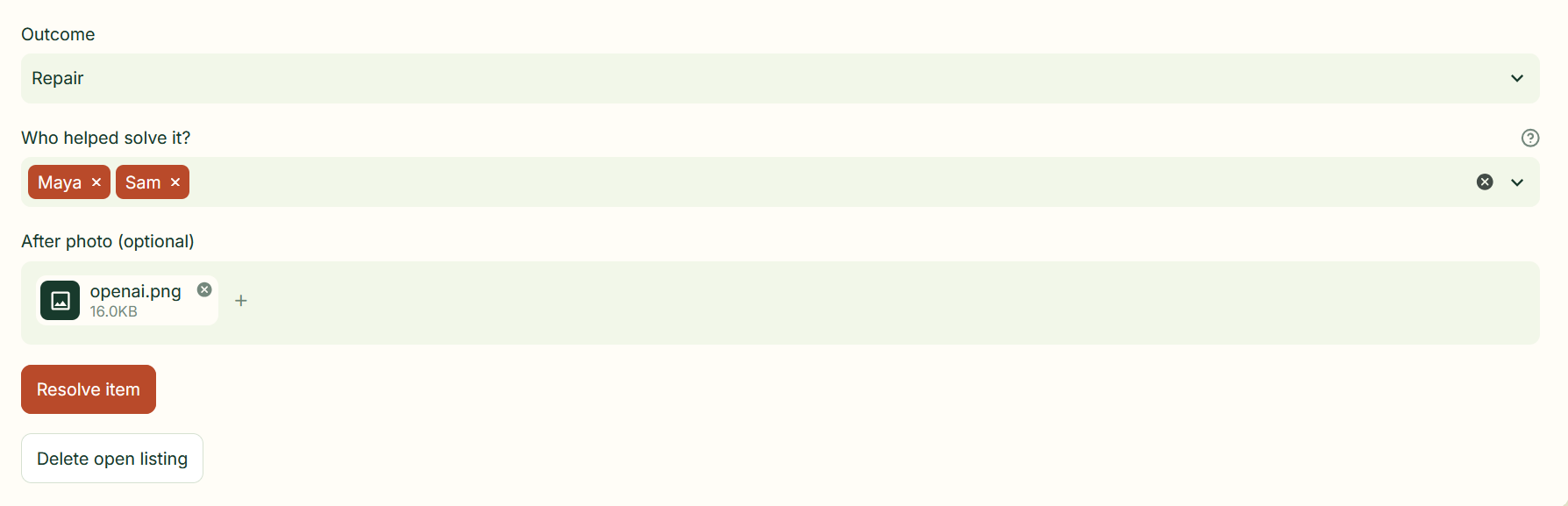
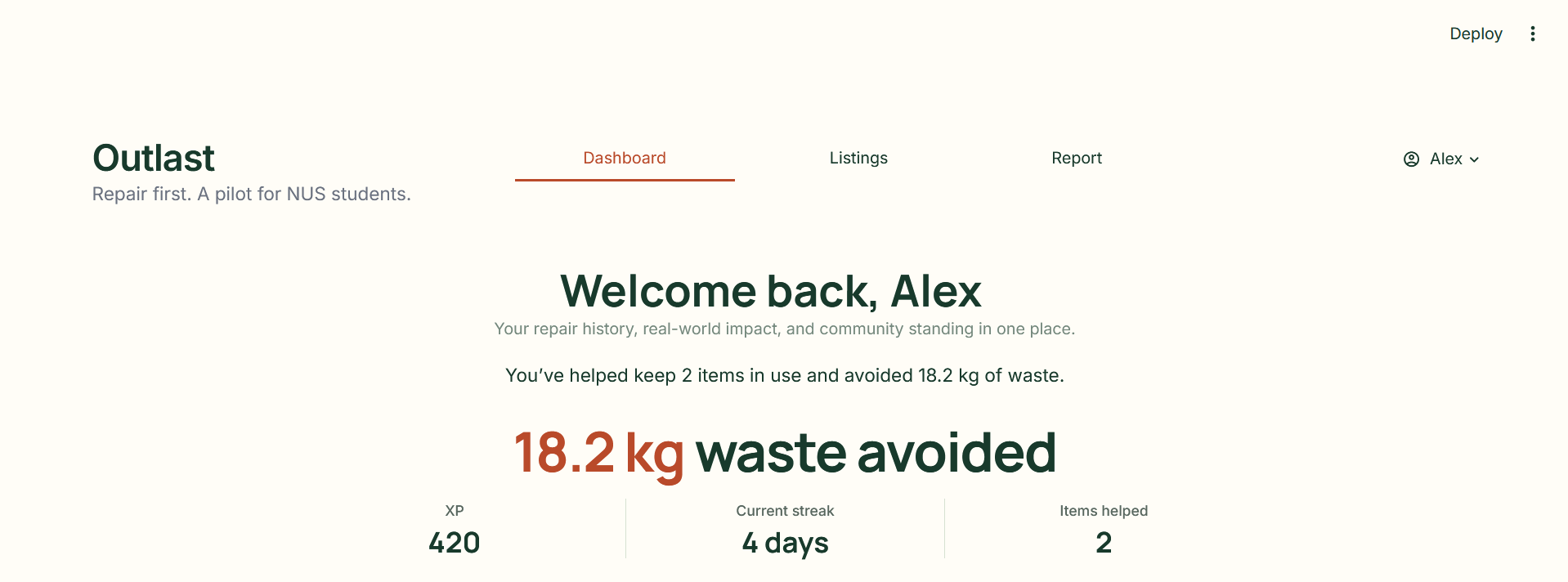
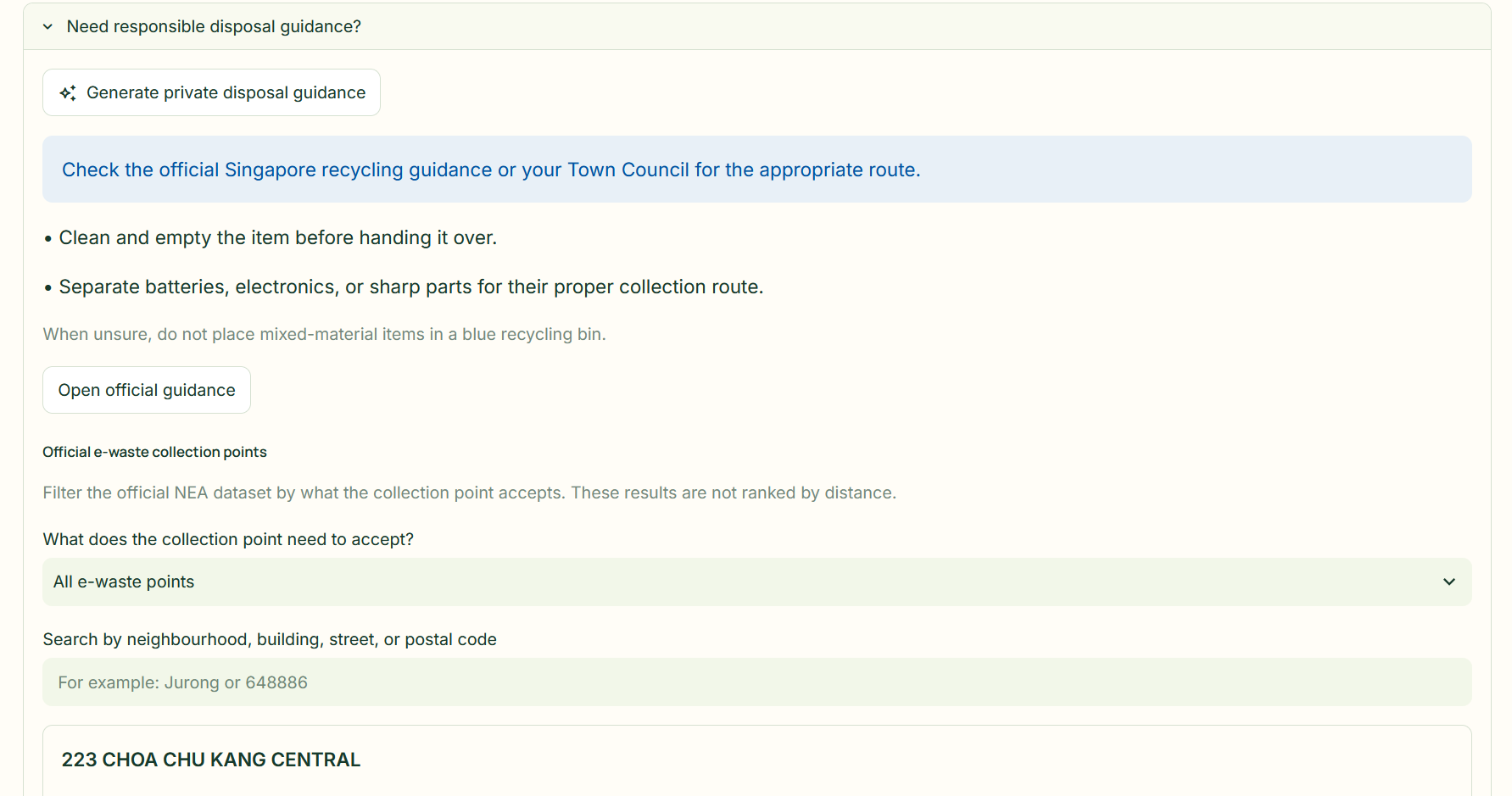
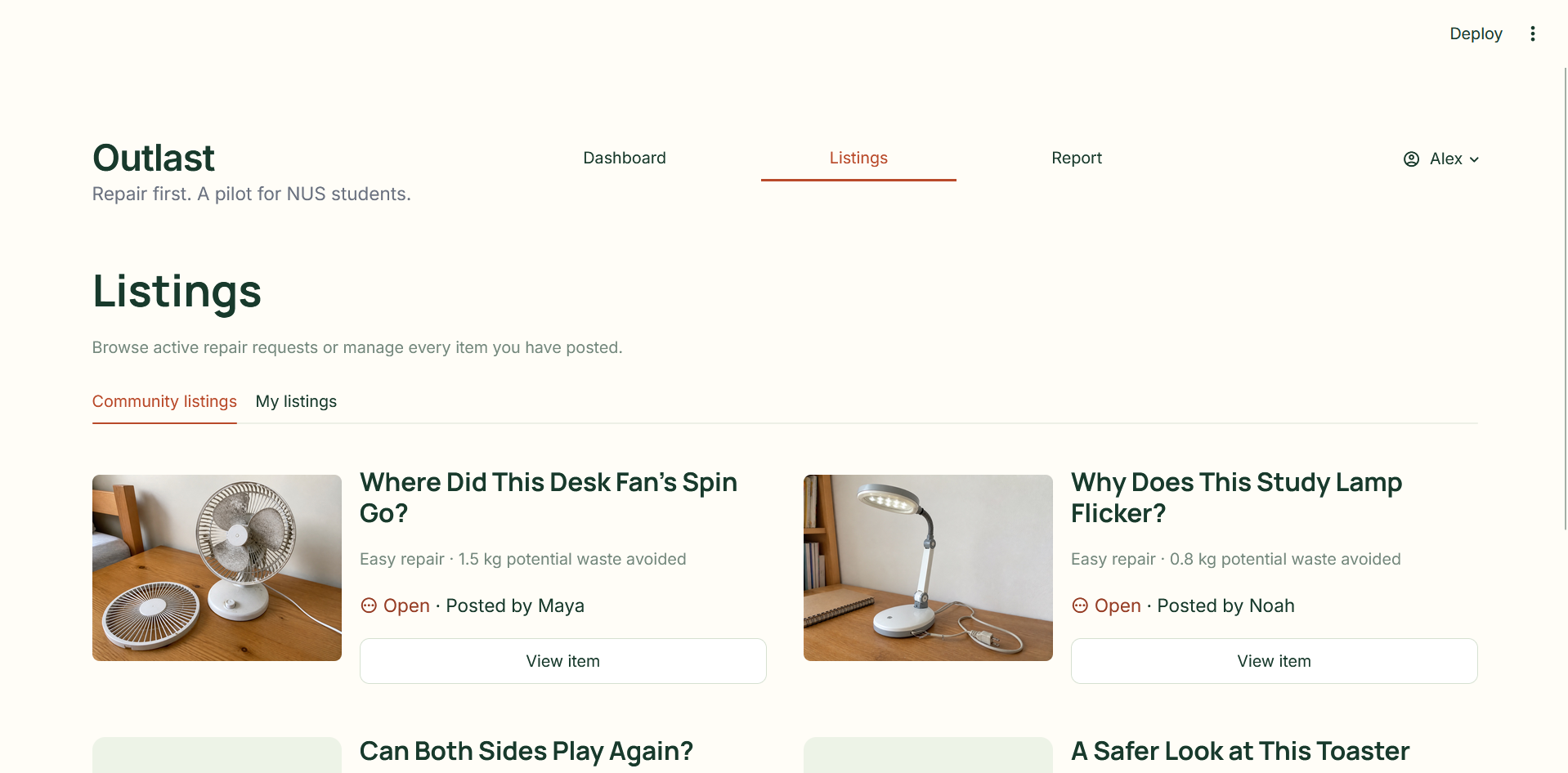
Outlast is a campus-first social repair platform for NUS students. A student reports a broken item with a description and optional photo. The app gives private, safety-first guidance on whether the item is worth a repair attempt, or needs a responsible disposal route because repair may be unsafe or impractical. For items suitable for repair, the owner can post a request to the public community board. Other students provide useful suggestions underneath called "contributions". When the owner resolves the item report, they can recognise the helpers whose advice made a difference, or indicate they themselves fixed their item. Outlast makes participation rewarding through baseline XP for contributions and solutions, daily streak multipliers for consistent contributions, individual rankings in a public leaderboard, and a shared impact view that tracks completed repairs and estimates waste avoided. If repair is not appropriate, the owner receives Singapore-specific AI-generated disposal guidance coupled with a search feature for the NEA's dedicated waste collection points scattered around Singapore. The item report resolution also gives owners the opportunity, if disposed, to provide an accompanying image proof of the disposal at the collection point for extra XP.
How we built it
We built Outlast as a Python and Streamlit web app. We used the OpenAI Responses API for optional image-and-text item assessment and the specifically-tailored waste disposal guidance, along with structured outputs validated by Pydantic. The prototype has an offline fallback so the entire demo works without API credentials. The data model supports cloud persistence with Supabase for repair requests, contributions, completion records, XP, and activity history. We also included NEA/ALBA e-waste collection-point data to make responsible disposal more actionable.
Challenges we ran into
The main challenge was keeping the project focused on behaviour change rather than building a generic repair directory or an overly ambitious hardware system. We narrowed the MVP to one decision point: what should a student do when a personal item breaks? Safety was equally important. Outlast does not encourage risky DIY repair. It separates items that are suitable for one informed community repair attempt from items that should be passed on, professionally assessed, or responsibly disposed of. We also needed a meaningful social loop. The prototype uses clearly labelled demo profiles to demonstrate the owner-and-helper workflow; a future campus pilot would replace these with verified university accounts and strict authentication measures to prevent abuse and potentially dangerous advice.
Accomplishments that we're proud of
We built a complete, safety-conscious journey from assessing a broken item to seeking help, recognising contributors, and recording the outcome. We are especially proud that the prototype remains fully demonstrable offline while being ready for AI-assisted assessment and cloud persistence. We also turned repair into a shared campus activity rather than an individual chore, connecting practical action with recognition and visible community impact. Most of all, we have embodied the social competitiveness aspect that was especially emphasised by the problem statement across our application.
What we learned
We learned that sustainability tools need to make the desired action easy, timely, and socially rewarding. Data about waste alone does not change habits. By combining a small commitment, peer support, recognition, and safe exit paths, Outlast turns “I should repair this” into a practical next step.
What's next for Outlast
Next, we want to pilot Outlast with NUS students using verified university accounts and real repair cases. Their feedback would help us refine the safety guidance, validate the reward system, and understand which kinds of items benefit most from peer support. We would also complete the full-scale Supabase deployment, improve impact estimates with real usage data, and expand partnerships and guidance for professional repair, donation, reuse, and responsible disposal.
Built With
- github
- openai-api
- postgresql
- pydantic
- pytest
- python
- ruff
- streamlit
- supabase

Log in or sign up for Devpost to join the conversation.