Inspiration
Every friend group has that one hero who books the karaoke room, pays the full $100, then spends three weeks in the group chat going "hey, did you send your $20?" Some pay late. Some never do. Nobody signed up to be the bank.
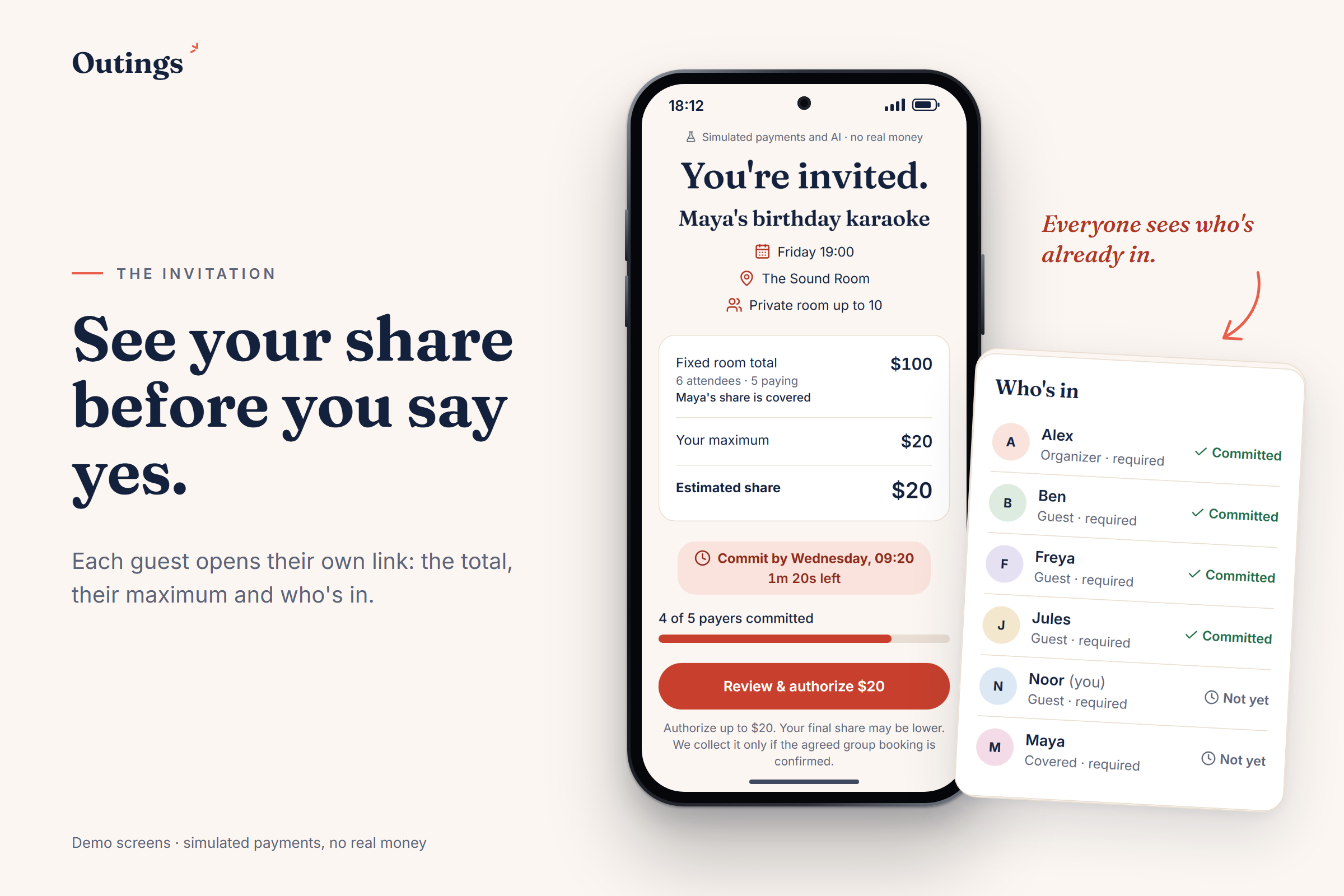
So I thought: what if paying was the RSVP? You say "I'm in for up to $20", and money only moves if the whole crew is actually in.
What it does
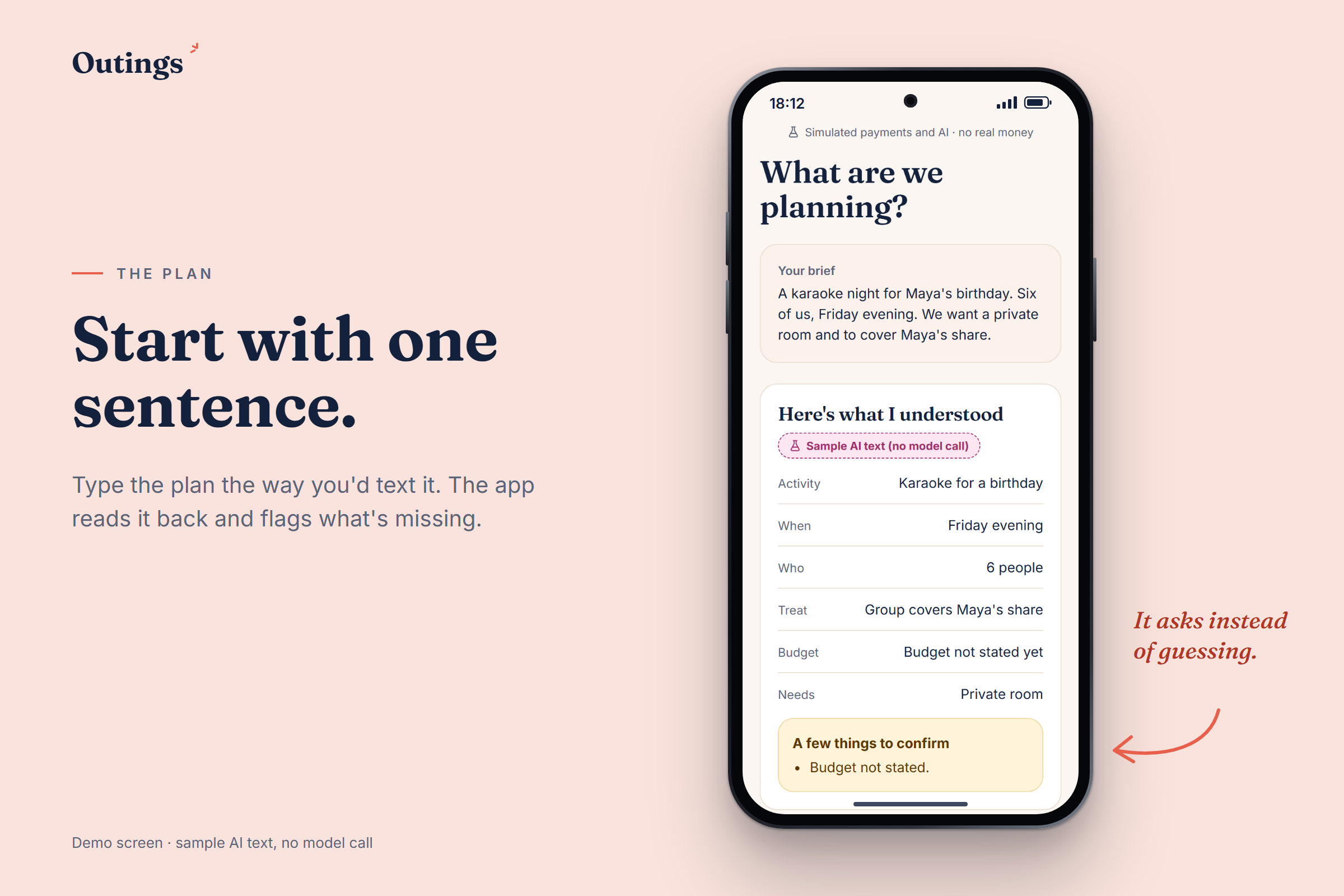
- Describe the plan. Type it like a text: "karaoke for Maya's birthday, six of us, Friday." Claude figures out the details.
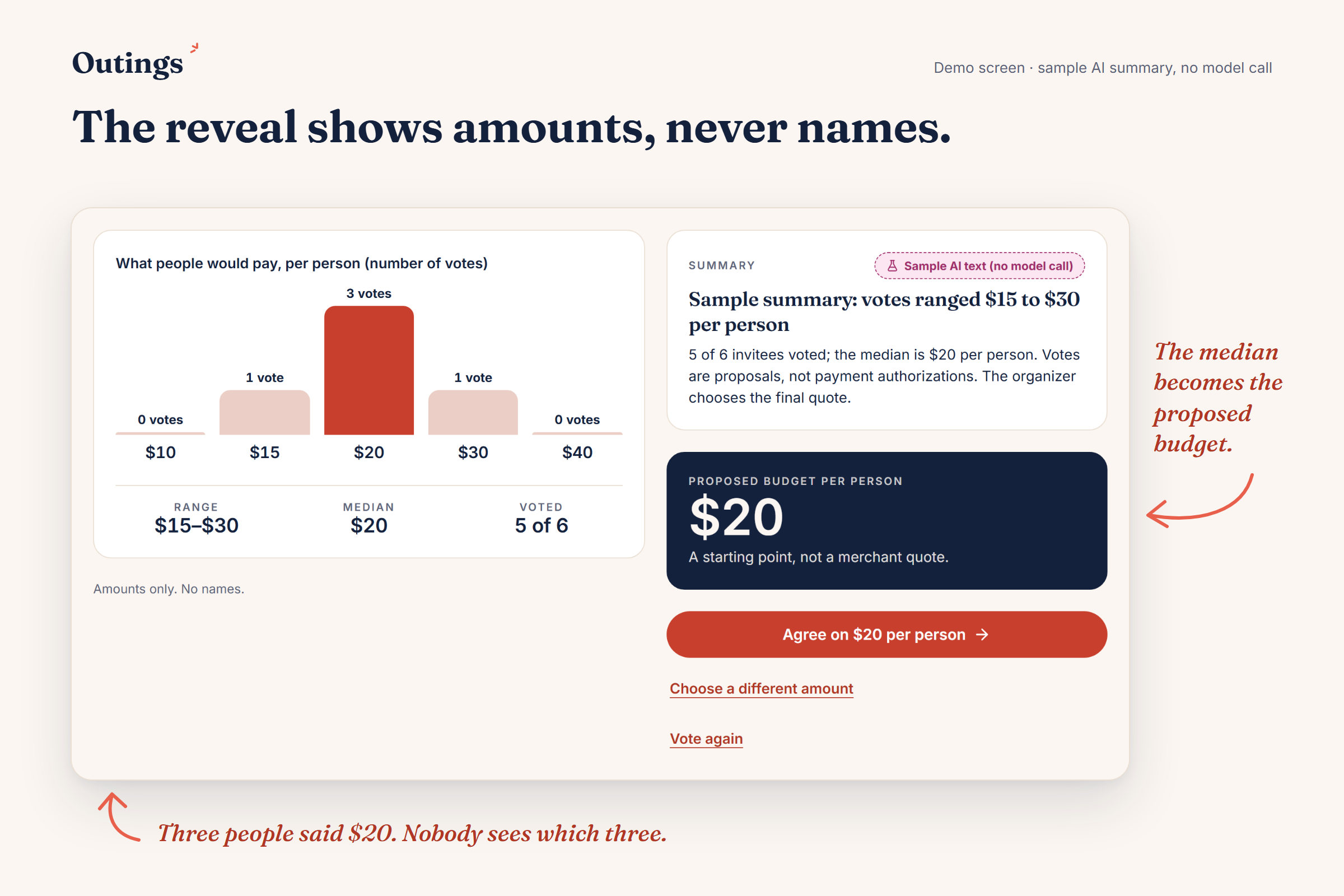
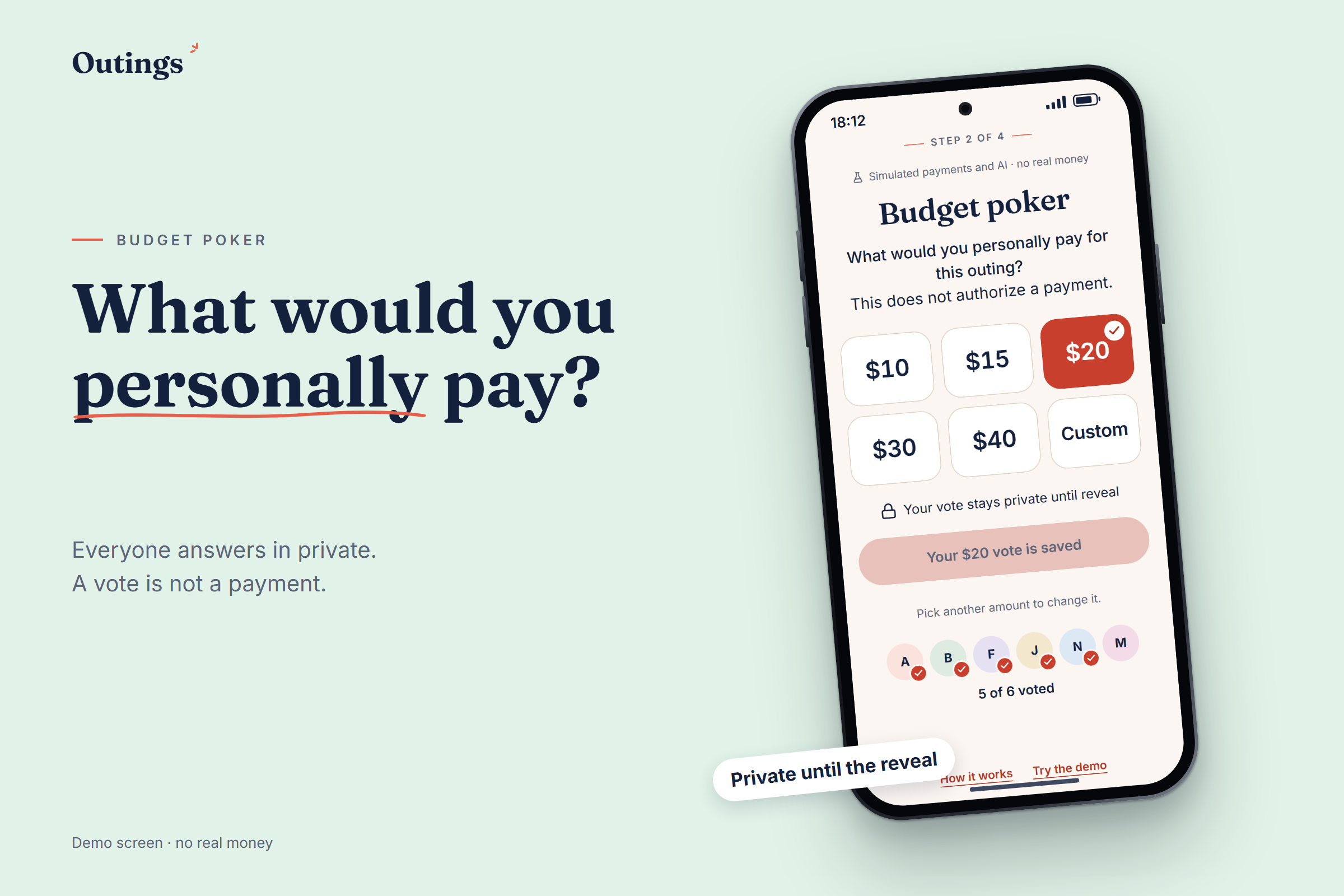
- Budget poker. Everyone secretly answers one question: what would you pay for this? Once 3 in 4 have voted, the spread is revealed with no names, so nobody gets outed as the cheap one. Votes all over the place? Vote again.
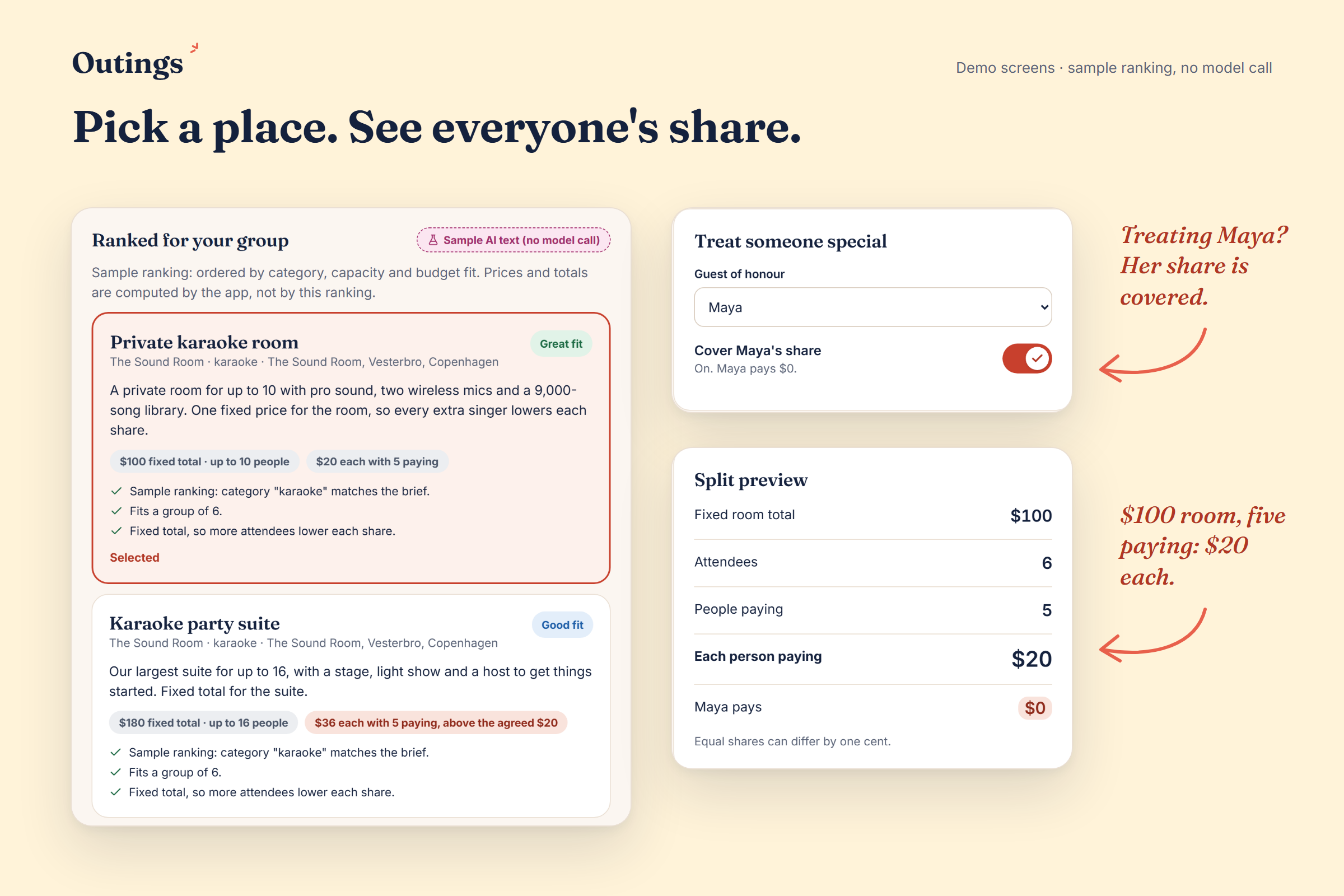
- Pick a venue. The app shows what each person would really pay at each place. Claude ranks them, plain code does the maths.
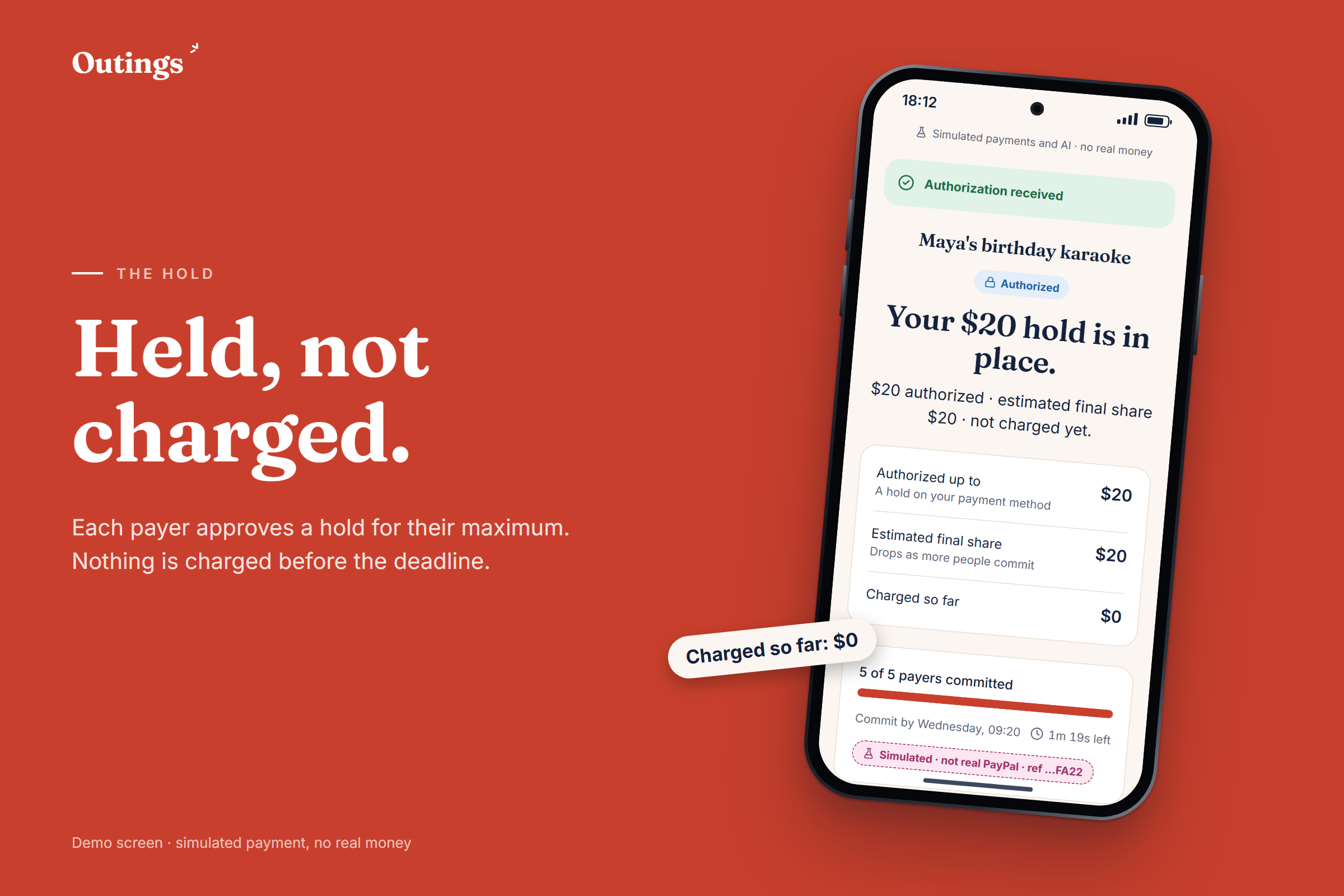
- Hold your share. Everyone approves a PayPal hold for their max. $100 for 5 people is $20. More friends join? Your share drops. The hold never goes up.
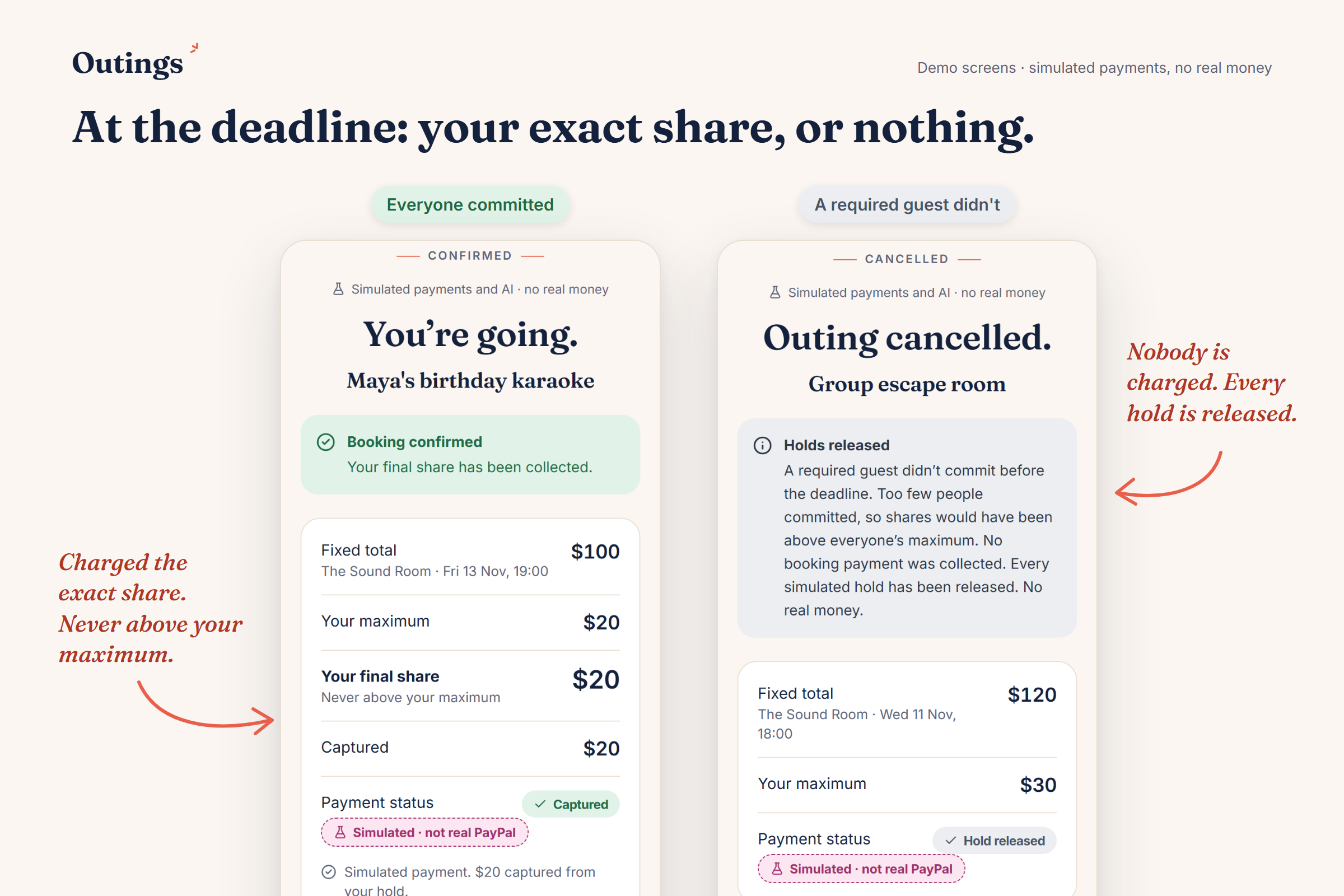
- The deadline decides. Everyone in? Each person pays their exact share, to the cent. Anyone missing who had to be there? Every hold is released and nobody pays a thing.
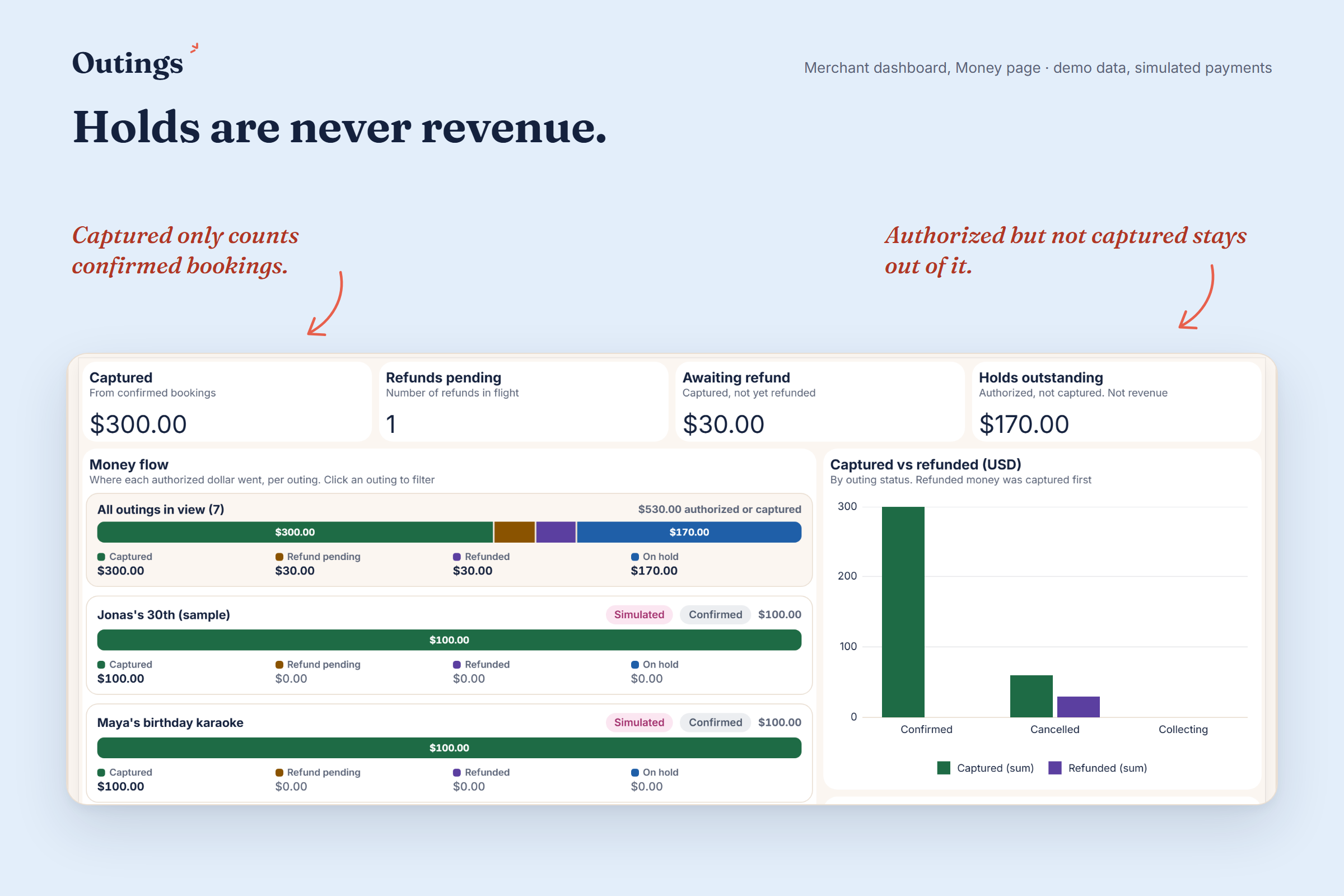
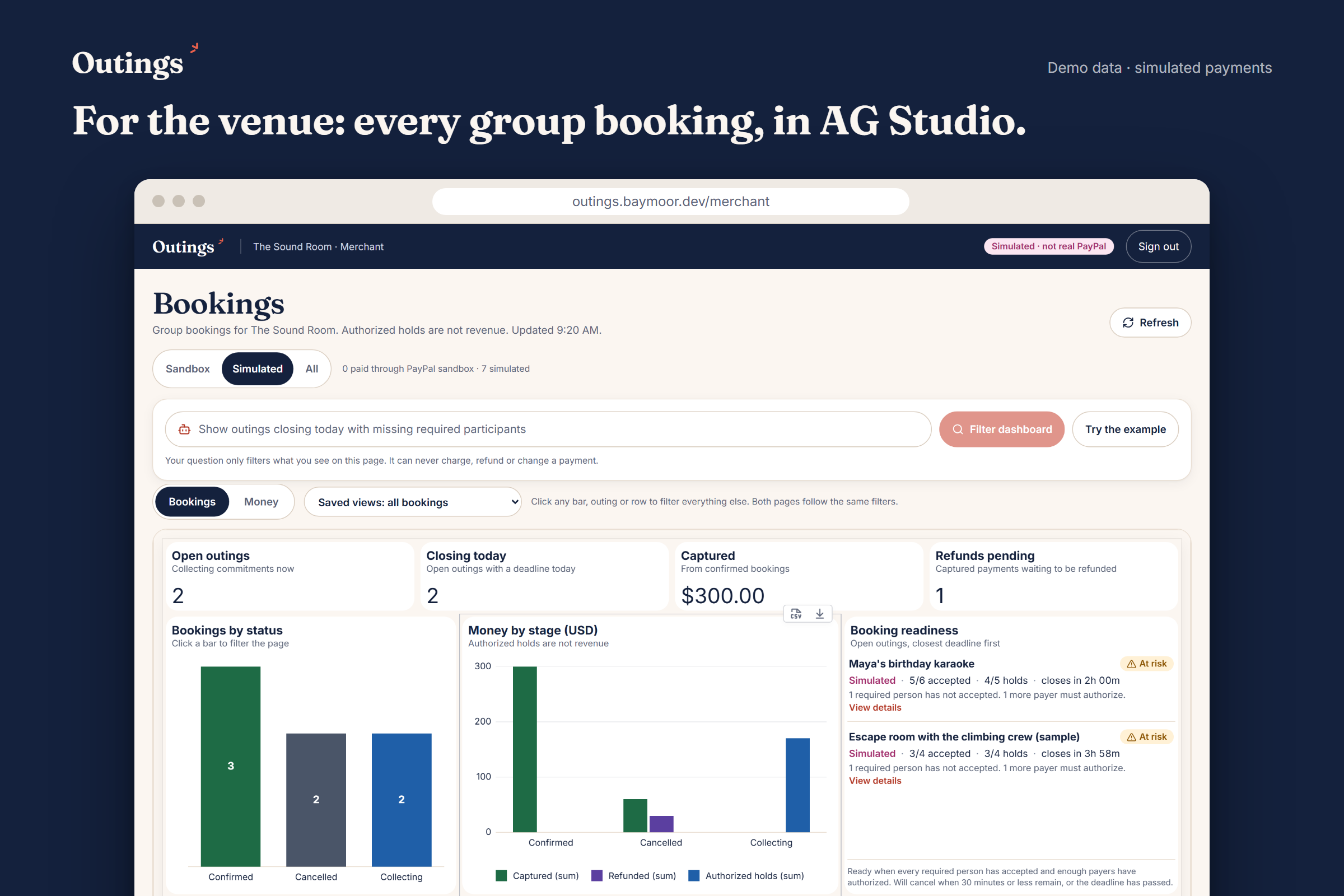
The venue gets a dashboard built on AG Studio: bookings, outings at risk, the money, and a search box that understands plain questions but can't touch a single dollar.
How we built it
Next.js, TypeScript and Postgres. The PayPal sandbox for holds, charges, voids and refunds. Claude for reading plans and ranking venues, with every answer checked before it's used. AG Studio for the venue side. All of it runs on a small DigitalOcean server that settles outings at their deadline on its own.
The money rules are boring on purpose: small plain functions, no AI, tested to death. AI helps with words. It never decides who pays or how much.
I built this solo with AI coding agents, mainly Claude Code. I set the rules, steered, and reviewed.
Challenges we ran into
- PayPal has no "charge the whole group at once" button. If charge number three fails, one and two already went through. So it stops, releases the rest, refunds what was taken, and tells you honestly.
- Timeouts. If PayPal goes quiet, did the money move? We ask PayPal before trying again. No guessing.
- What should people even vote on? A group total breaks for cinema seats. "What would you pay?" works for everything.
- Making it not look like every other AI-made app. That took a few rounds, and I'm still not quite sure I got there.
Accomplishments that we're proud of
- Fair to the cent. $100 for 3 people doesn't split evenly, so the organizer pays $33.34 and the other two pay $33.33. The venue gets exactly $100, and you see the same numbers from the first preview to the final charge.
- Proving in the PayPal sandbox that a $20 hold can be charged at $10, with PayPal releasing the rest. That's the magic that lets your share shrink.
- A full outing through the real PayPal sandbox, settled at the deadline with nobody clicking anything.
- Over 580 automated tests and 9 browser tests.
- Honest labels. If a payment is simulated, the screen says so.
What we learned
- A hold beats paying up front, as long as you're honest that it's real money on someone's card until it's released.
- Ask people about their own wallet, not the group's.
- AI is great at reading a messy group chat. I don't want it anywhere near deciding who gets charged.
What's next for Outings
- Real venues on PayPal, not demo ones.
- Booking per-seat stuff like cinemas.
- Invites by text or email.
- More currencies.
Built With
- ag-grid
- ag-studio
- anthropic-api
- caddy
- claude
- digitalocean
- docker
- drizzle-orm
- github-actions
- next.js
- node.js
- paypal
- paypal-orders-api
- paypal-payments-api
- paypal-webhooks
- playwright
- postgresql
- react
- tailwindcss
- typescript
- vitest
- zod

