-
-
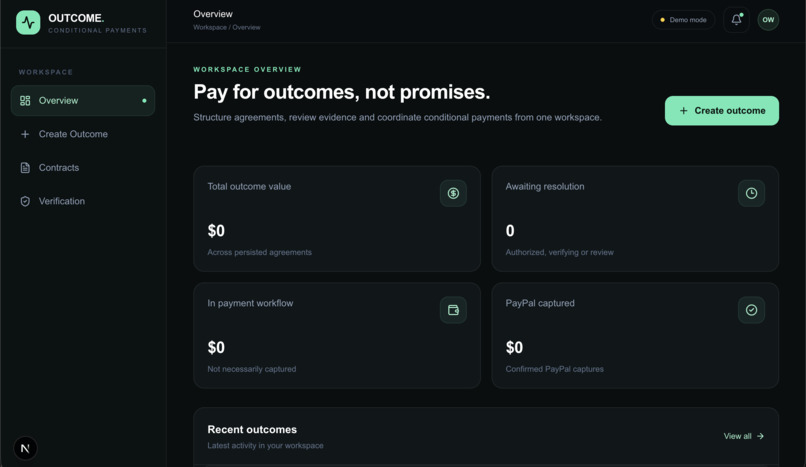
Overview
-
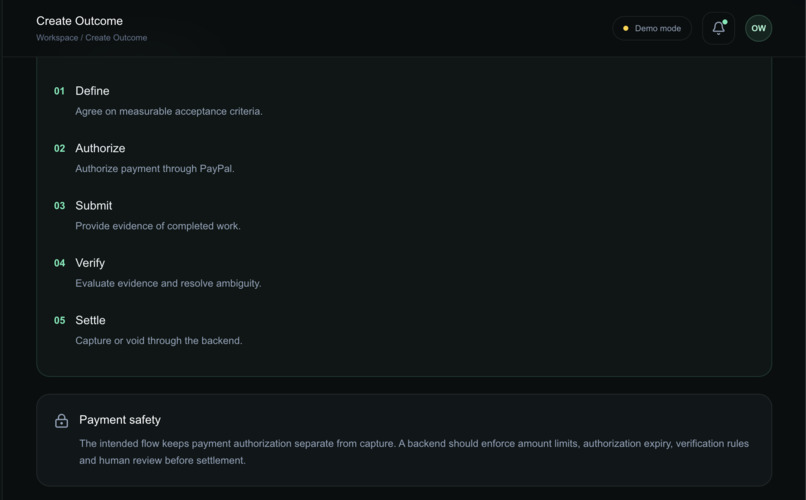
Flow
-
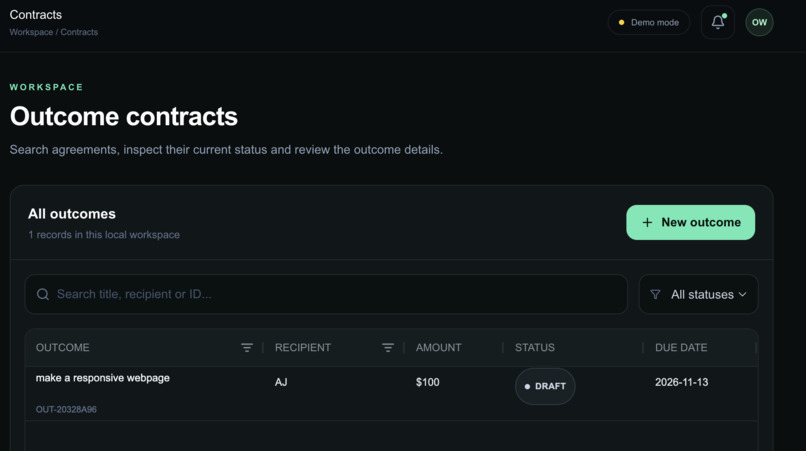
Outcome
-
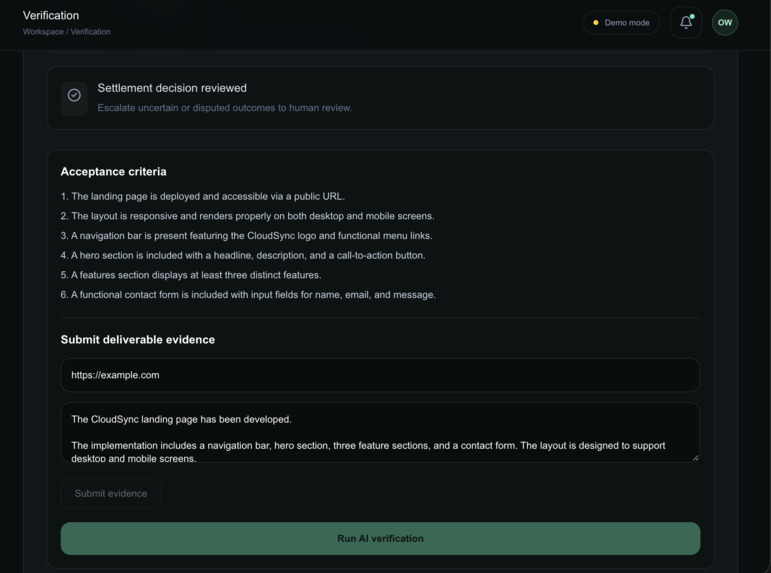
Verification
-
Contract creation
The Inspiration
Every online transaction involves a degree of trust. Whether you're hiring a freelancer, commissioning a design, or paying for a software deliverable, there's often a gap between making a payment and receiving the promised outcome.
What happens when the work doesn't meet the agreed requirements? What if a client pays upfront but receives incomplete work? Or a freelancer delivers everything but struggles to get paid?
We wanted to explore a different approach: what if payments were connected to clearly defined, verifiable outcomes rather than promises?
That idea became OUTCOME.
Our guiding principle is simple: Don't pay for promises. Pay for verified outcomes.
What We Built
OUTCOME is an AI-powered outcome verification and payment workflow that connects deliverables, evidence, and payment decisions.
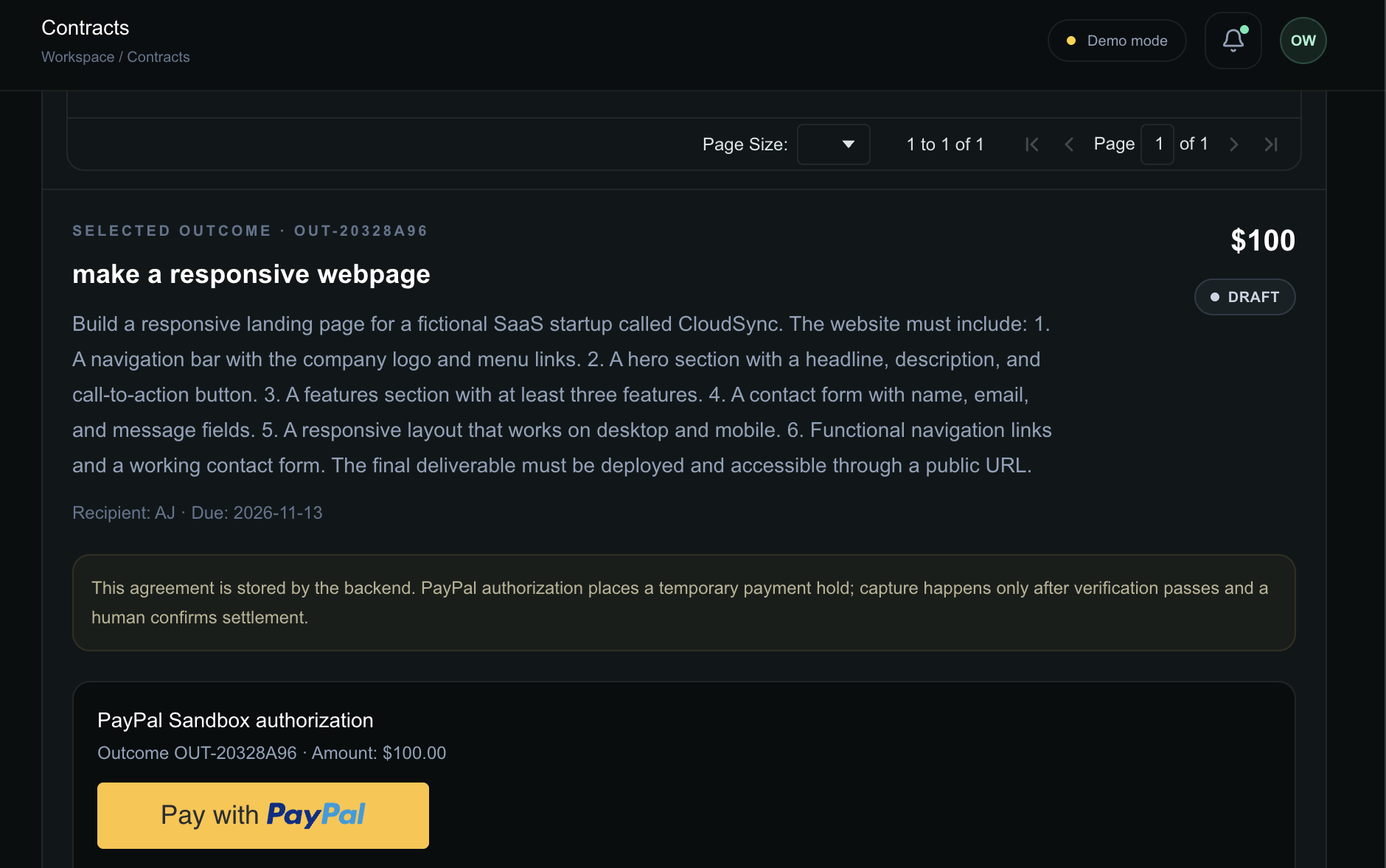
Instead of relying entirely on subjective descriptions, users can describe a task in natural language. AI transforms that description into structured acceptance criteria, giving both parties a shared understanding of what successful completion means.
The workflow then connects those criteria to payment:
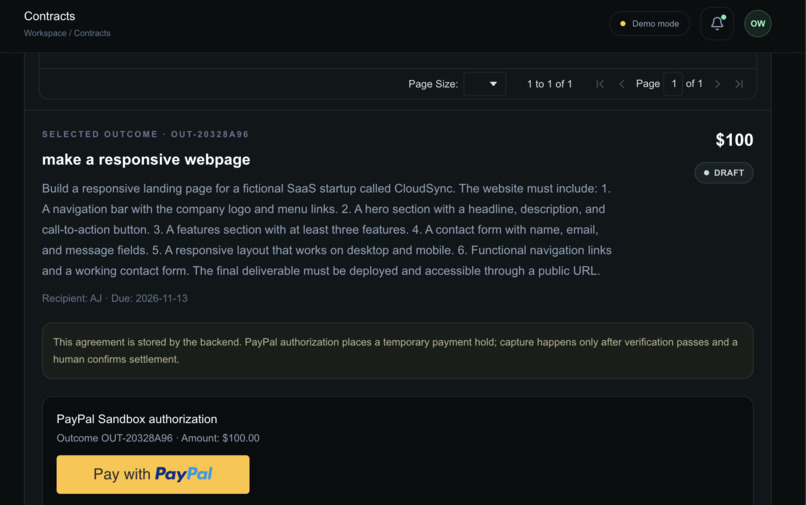
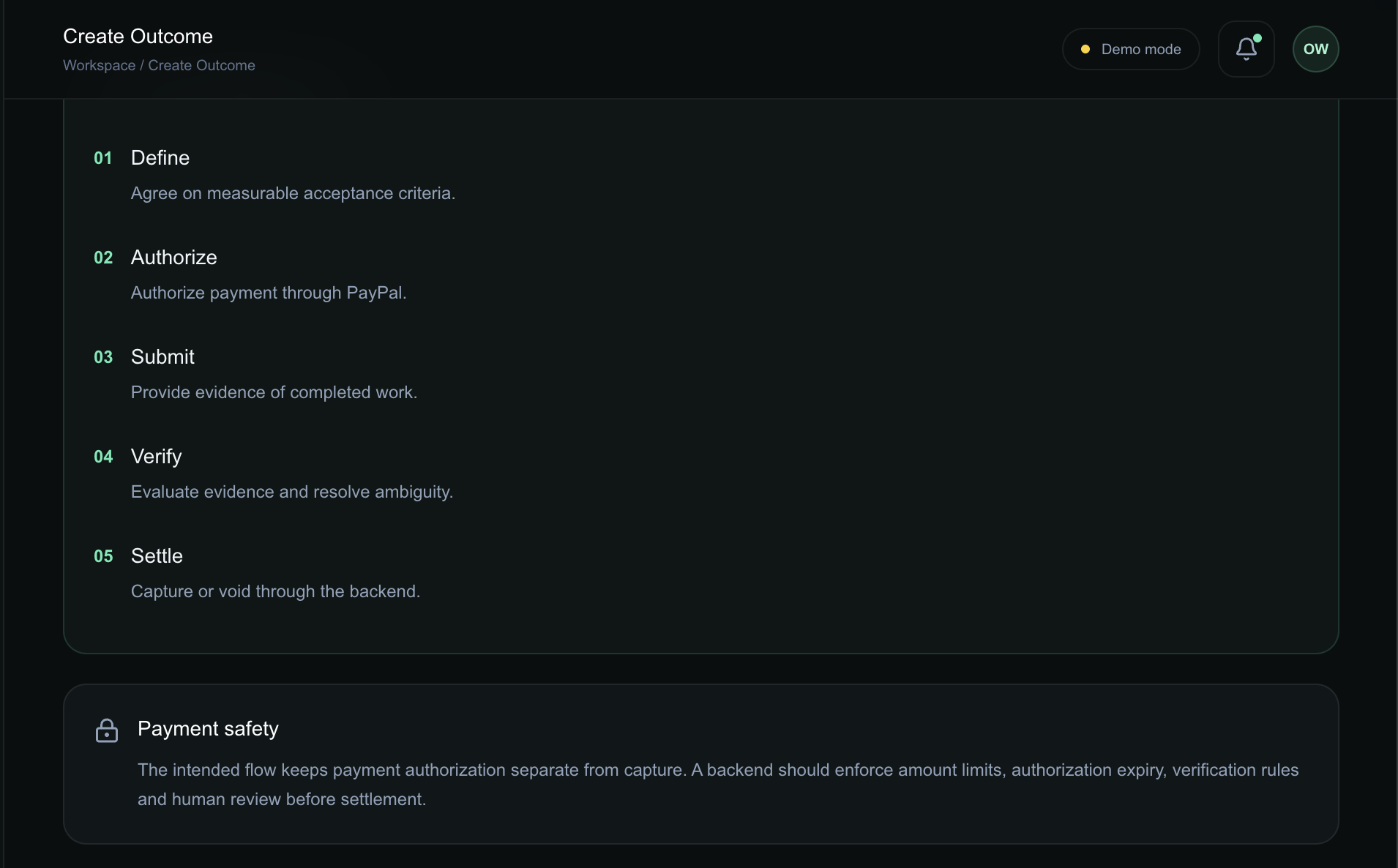
- Define: A user describes the task, deliverables, and expected outcome.
- Structure: Gemini converts the description into measurable acceptance criteria.
- Authorize: PayPal authorizes the payment without immediately capturing it.
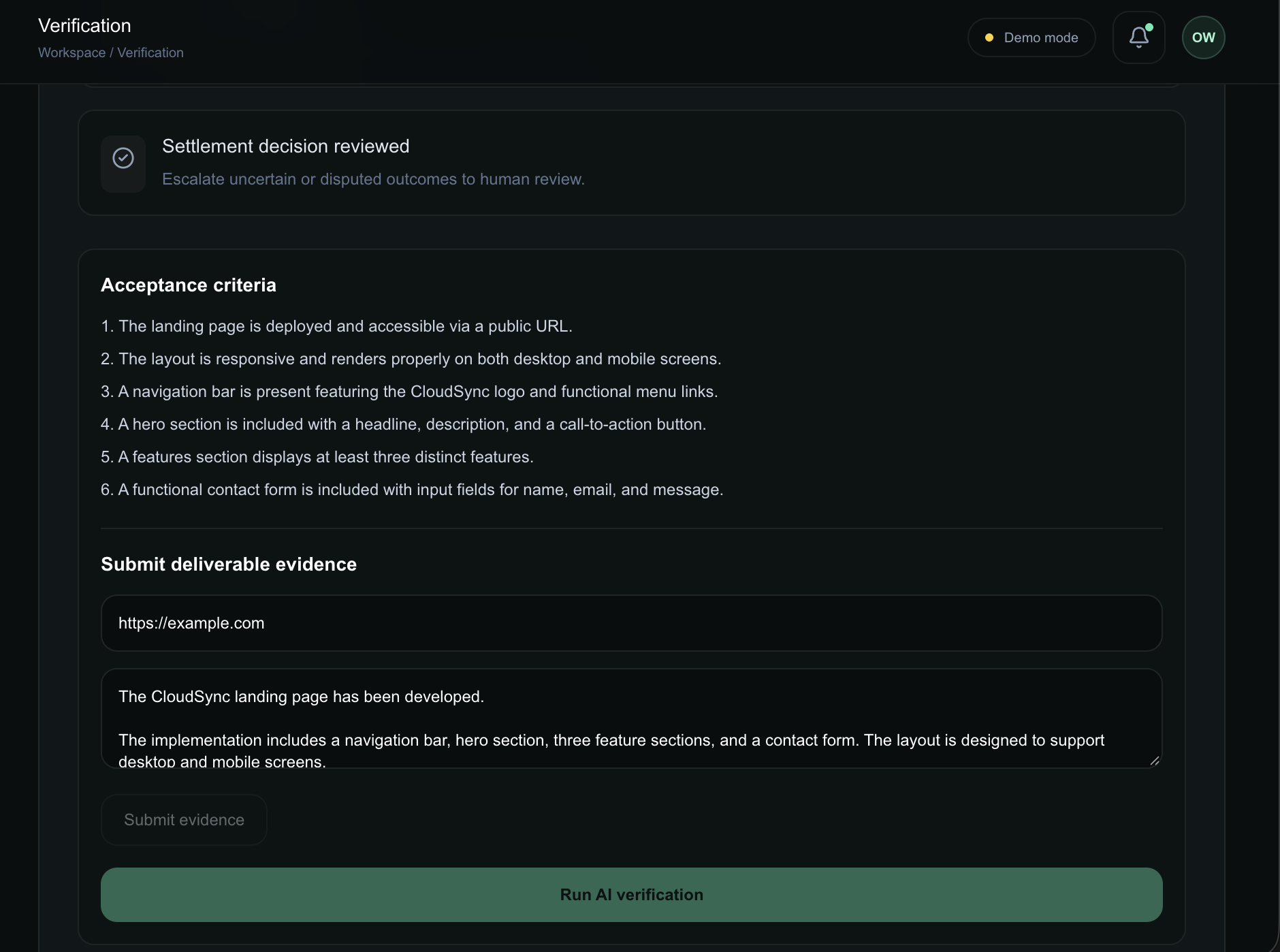
- Submit: The recipient provides evidence of completed work, such as URLs, notes, and structured test results.
- Verify: AI evaluates the submitted evidence against the original criteria and produces a PASS, FAIL, or REVIEW result.
- Settle: Following verification and operator confirmation, the authorized payment can be captured through PayPal. If the outcome is not accepted, the authorization can be voided, subject to PayPal's rules.
OUTCOME does not operate as a traditional escrow service. It uses PayPal's payment authorization and capture capabilities to connect payment decisions to an evidence-based workflow.
How We Built It
We built OUTCOME using a full-stack TypeScript architecture with Next.js, React, and a set of integrated services.
- Next.js and React: Power the application interface, API routes, and outcome management dashboard.
- Google Gemini: Generates structured acceptance criteria and evaluates submitted evidence.
- PayPal REST APIs: Handle payment authorization, capture, and void operations.
- SQLite: Persists agreements, evidence, payment states, and audit events.
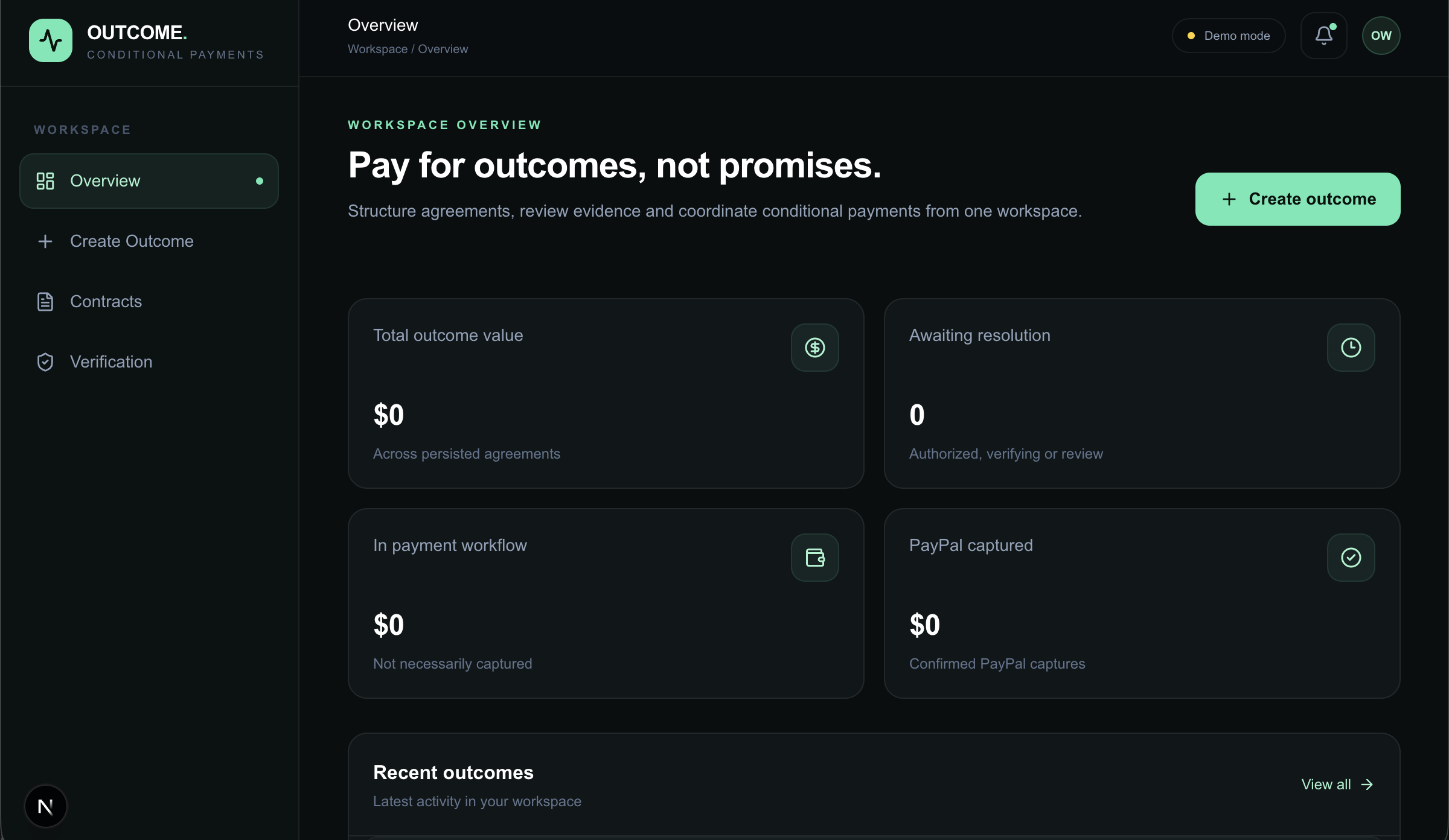
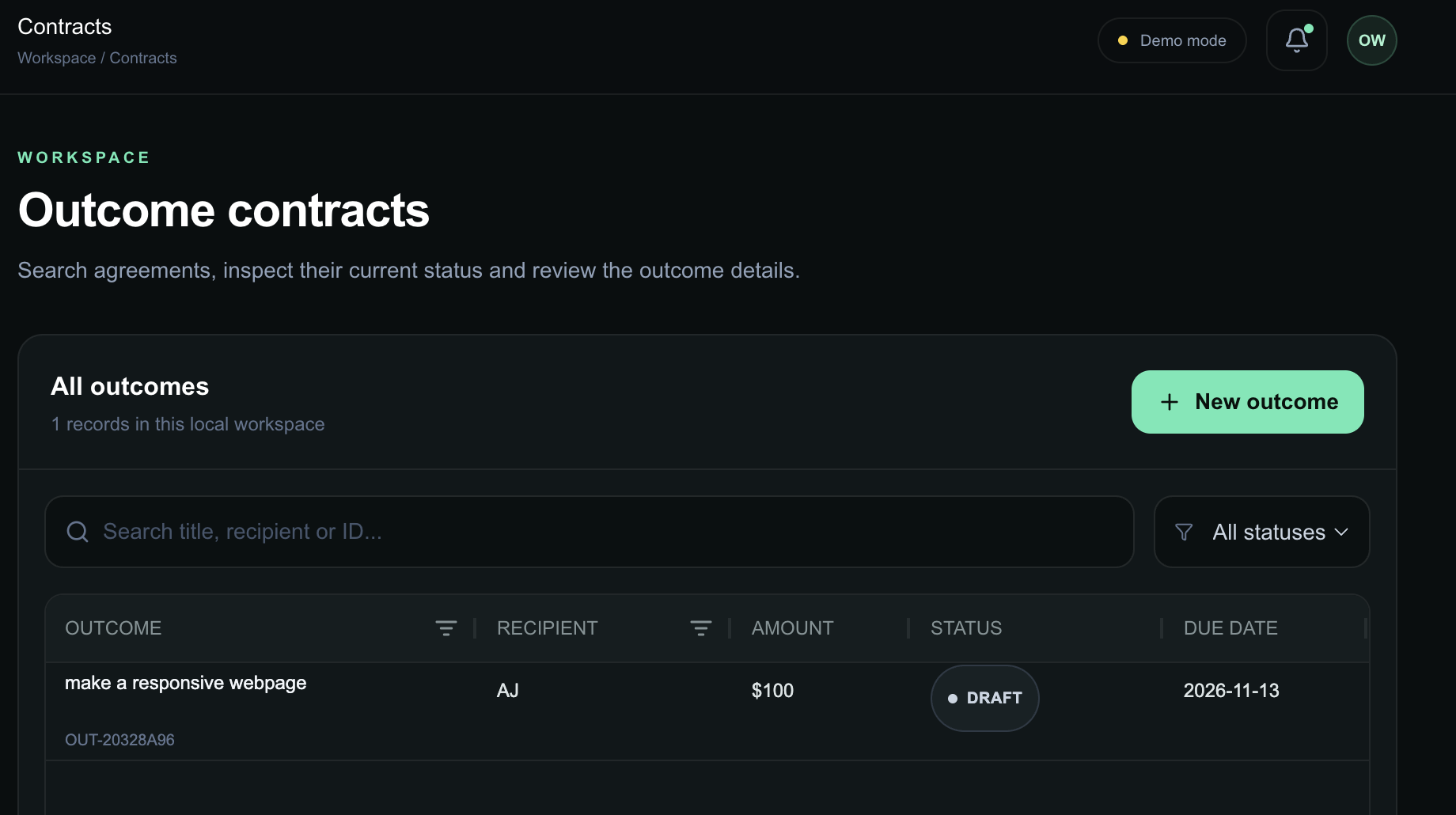
- AG Grid: Provides a structured dashboard for managing and monitoring outcomes.
- Elastic and Zapier: Extend the workflow through evidence indexing and event-based integrations.
- Postman and KERNEL: Provide integration points for submitting API test results and browser-agent evidence.
A key architectural decision was to keep payment execution separate from AI verification. AI can evaluate evidence and recommend an outcome, but it does not independently move money. Payment capture and void operations are protected by operator authentication and explicit confirmation.
This separation makes the workflow more controlled and auditable.
Challenges We Faced
One of the biggest challenges was connecting AI-generated decisions to real payment operations.
Generating a verification result is relatively straightforward. Building a workflow where that result influences a real financial action requires much more care.
We had to think about several important edge cases:
- What happens when submitted evidence is incomplete?
- How should the system handle ambiguous AI verification results?
- How do we prevent AI from directly triggering payment capture?
- What happens when a PayPal authorization expires?
- How do we keep payment states and application records consistent?
We addressed these concerns by introducing a human-review state, separating verification from payment execution, protecting sensitive operations, and maintaining an audit trail.
Integrating multiple services also introduced configuration and debugging challenges, particularly around API credentials, server-side execution, and the payment lifecycle.
What We Learned
Building OUTCOME taught us that adding AI to a financial workflow is not simply about connecting an LLM to an API.
The important part is designing the boundaries between automated reasoning, evidence, human judgment, and financial execution.
We learned how to work with PayPal's authorization and capture lifecycle, structure natural-language requirements into machine-readable criteria, evaluate evidence using an LLM, and design a state-driven backend workflow.
Most importantly, we learned that trust is not created by AI alone. It comes from transparent requirements, verifiable evidence, controlled execution, and accountability.
What's Next?
We see OUTCOME as a foundation for a broader outcome-based transaction infrastructure.
Future improvements include deeper browser-based verification, automated API and deployment testing, milestone-based agreements, richer evidence storage, and stronger dispute-resolution workflows.
Our vision is to make digital transactions more accountable by connecting what was promised, what was delivered, and when payment should happen.
OUTCOME: Don't pay for promises. Pay only when AI verifies the outcome.
