-
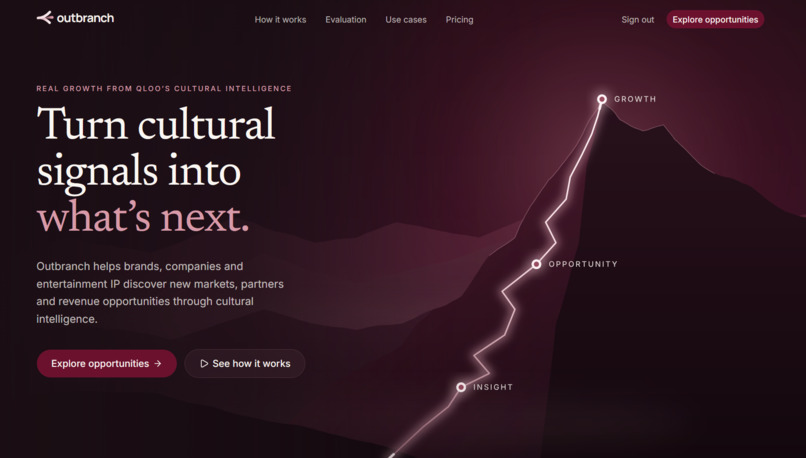
Landing page
-
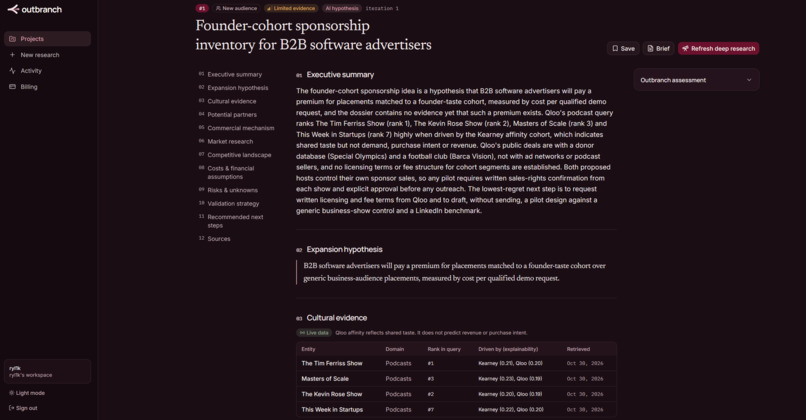
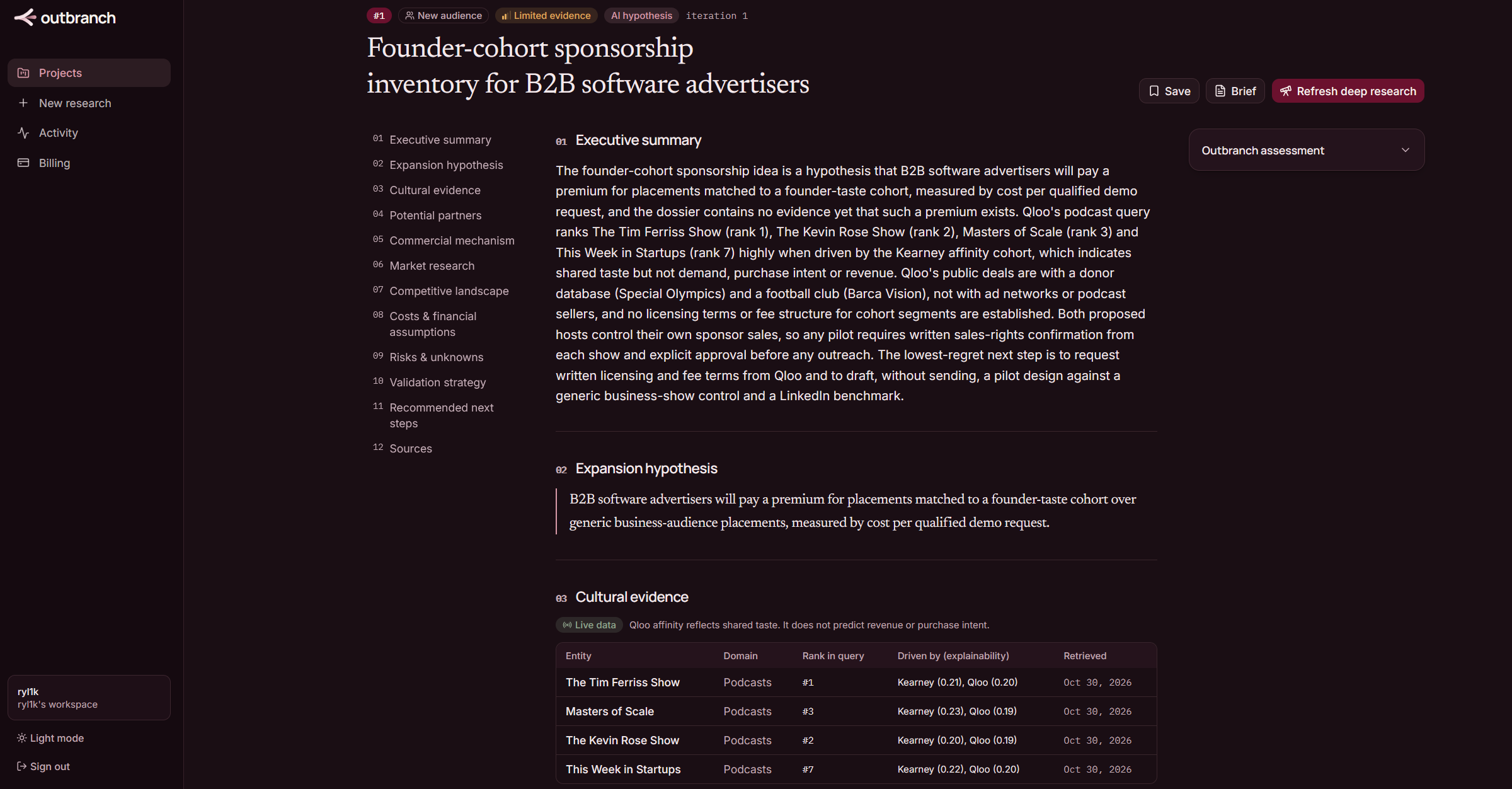
Opportunity proposition for Qloo
-
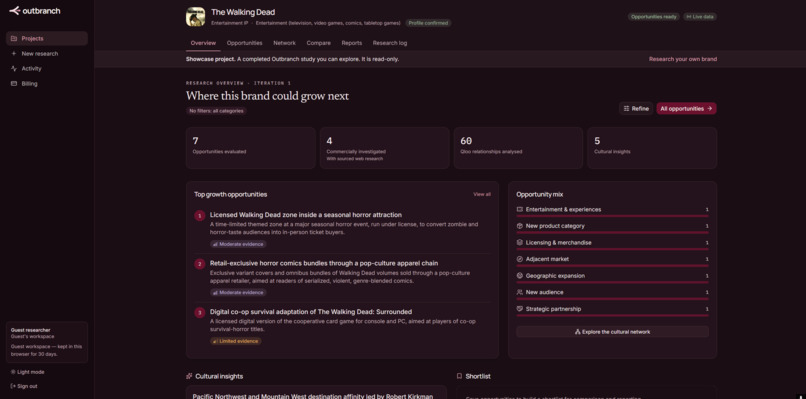
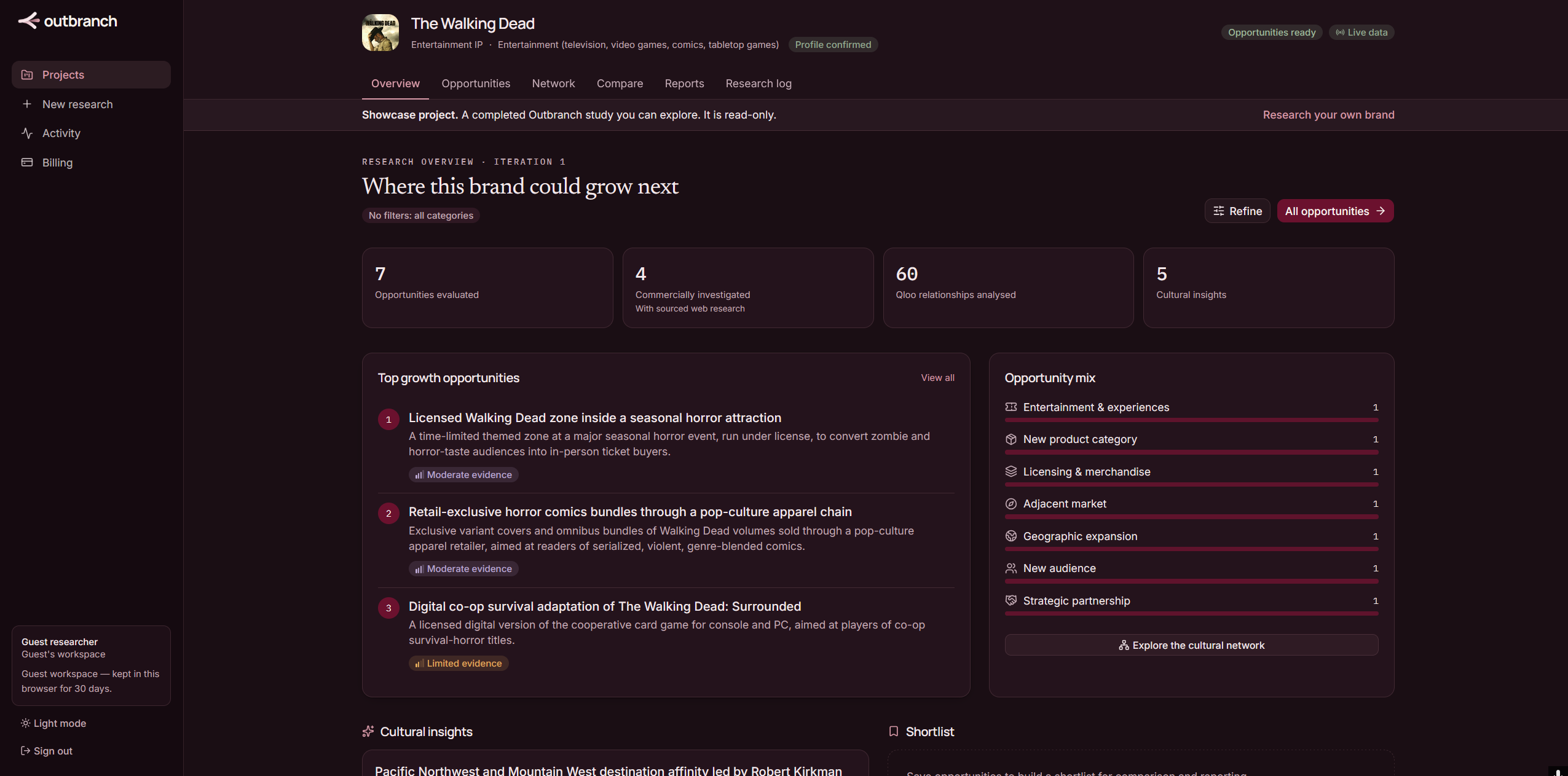
Brand growth overview
-
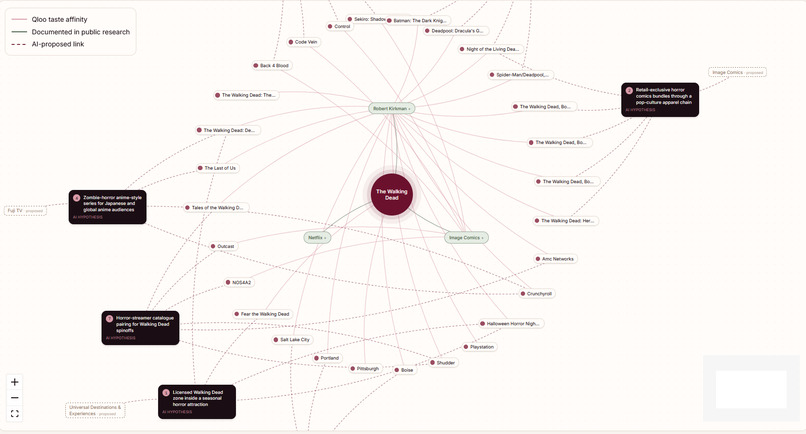
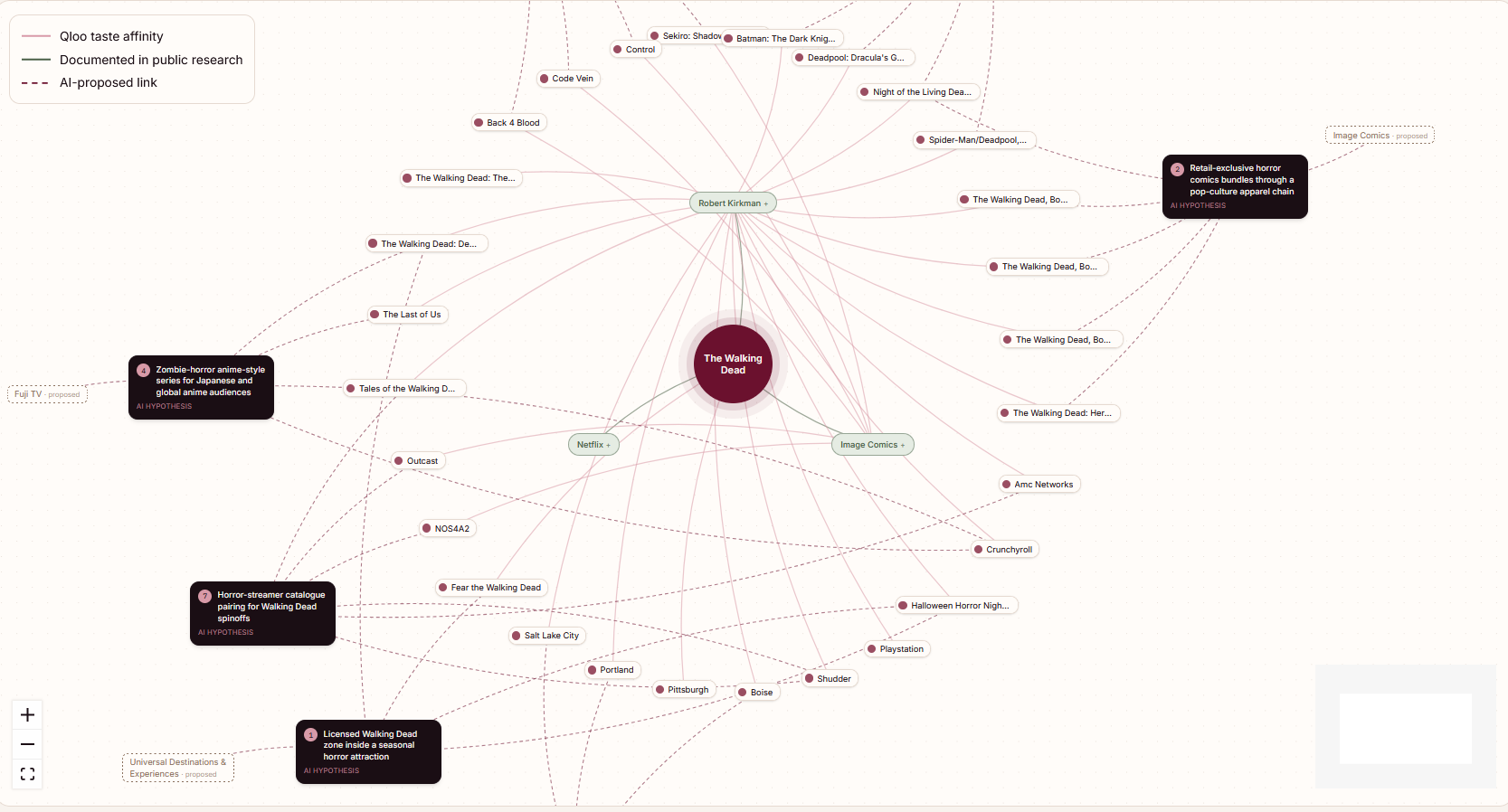
Brand growth network
-
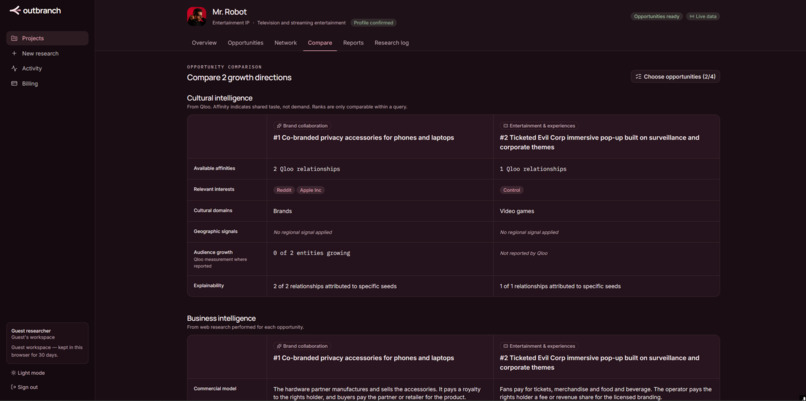
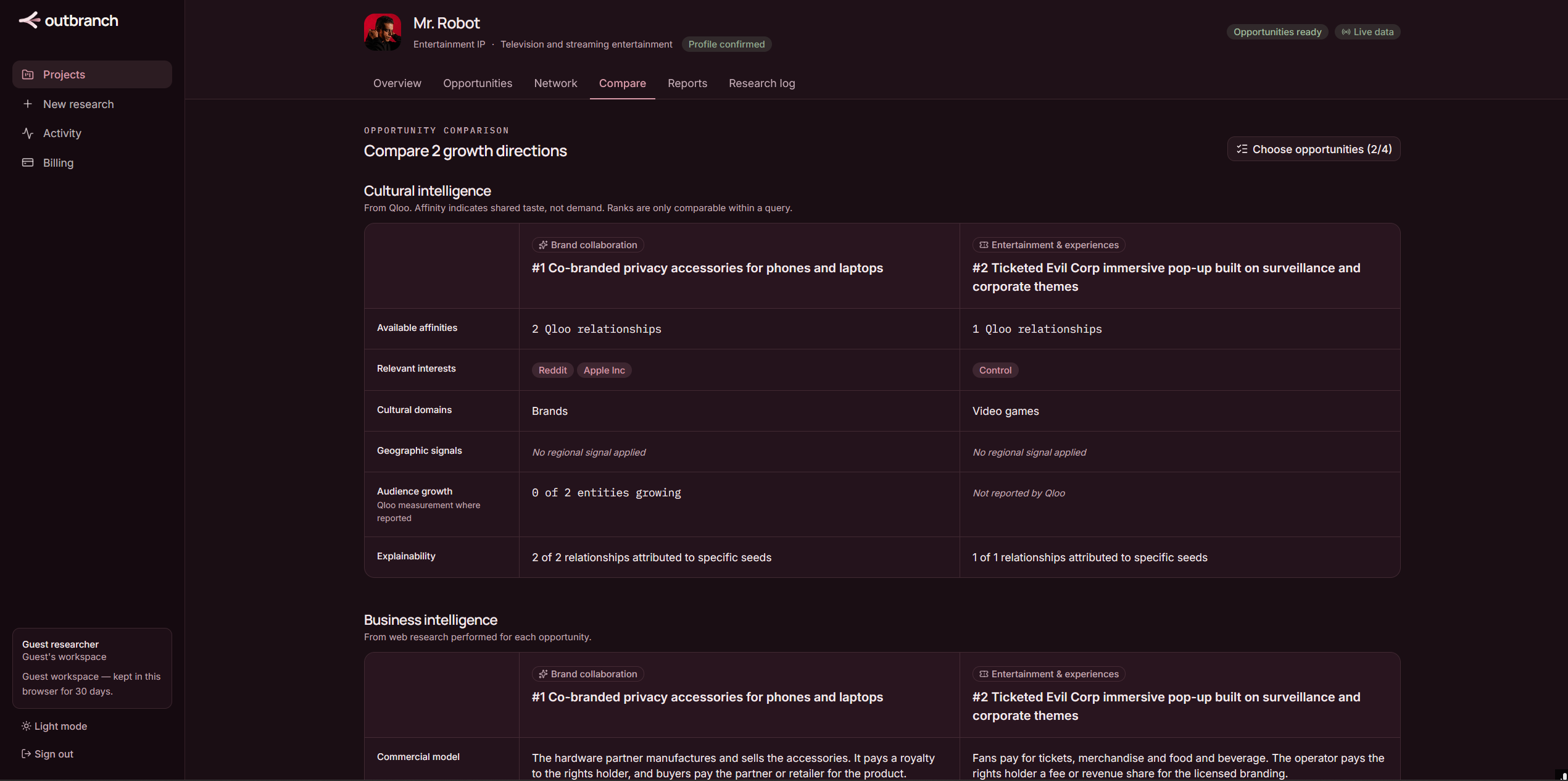
Compare two opportunities
-
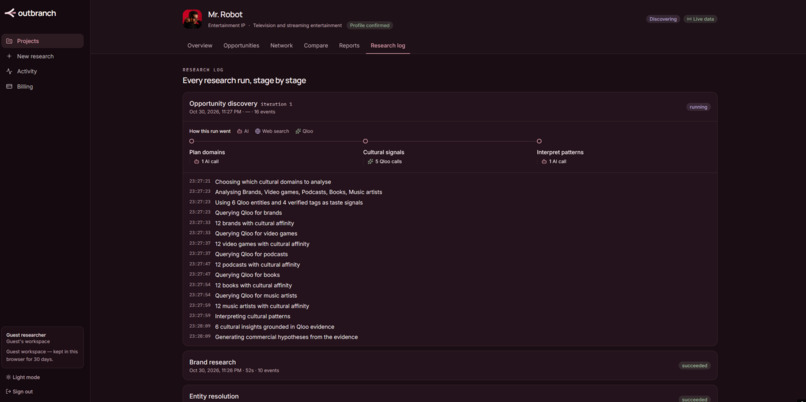
Transparent research flow
-
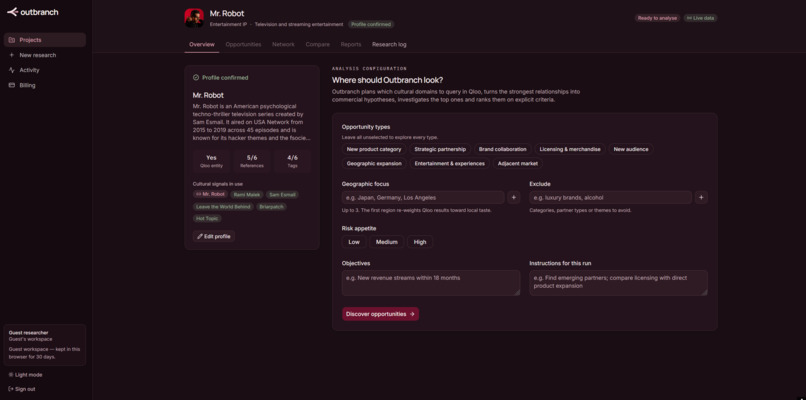
Decide where you want to look
Inspiration
Every brand eventually asks the same question: where should we grow next? The answer usually comes from a strategy deck, a consultant's intuition or a competitor's last move. Yet the strongest signal already exists, and almost nobody uses it: what a brand's audience loves outside the brand.
People who love Aesop also love particular Paris boutique hotels, Liberty London, Le Labo and certain alt-pop artists. Each of those affinities is a door: a partner, a product line, a city, a retail channel. Qloo's Taste API can see those doors across music, film, dining, fashion, travel and brands. We built the agent that walks through them and comes back with a business case.
Who it's for
Brand partnership, licensing and expansion leads at consumer brands, entertainment studios and the agencies that serve them. Today they answer "who should we partner with, and where next?" with trend decks, consultant workshops and gut feel: slow, expensive and impossible to audit. Outbranch gives them a shortlist in minutes, where every idea shows the taste data and sources behind it, so they can defend it in the room and decide what to test first.
What it does
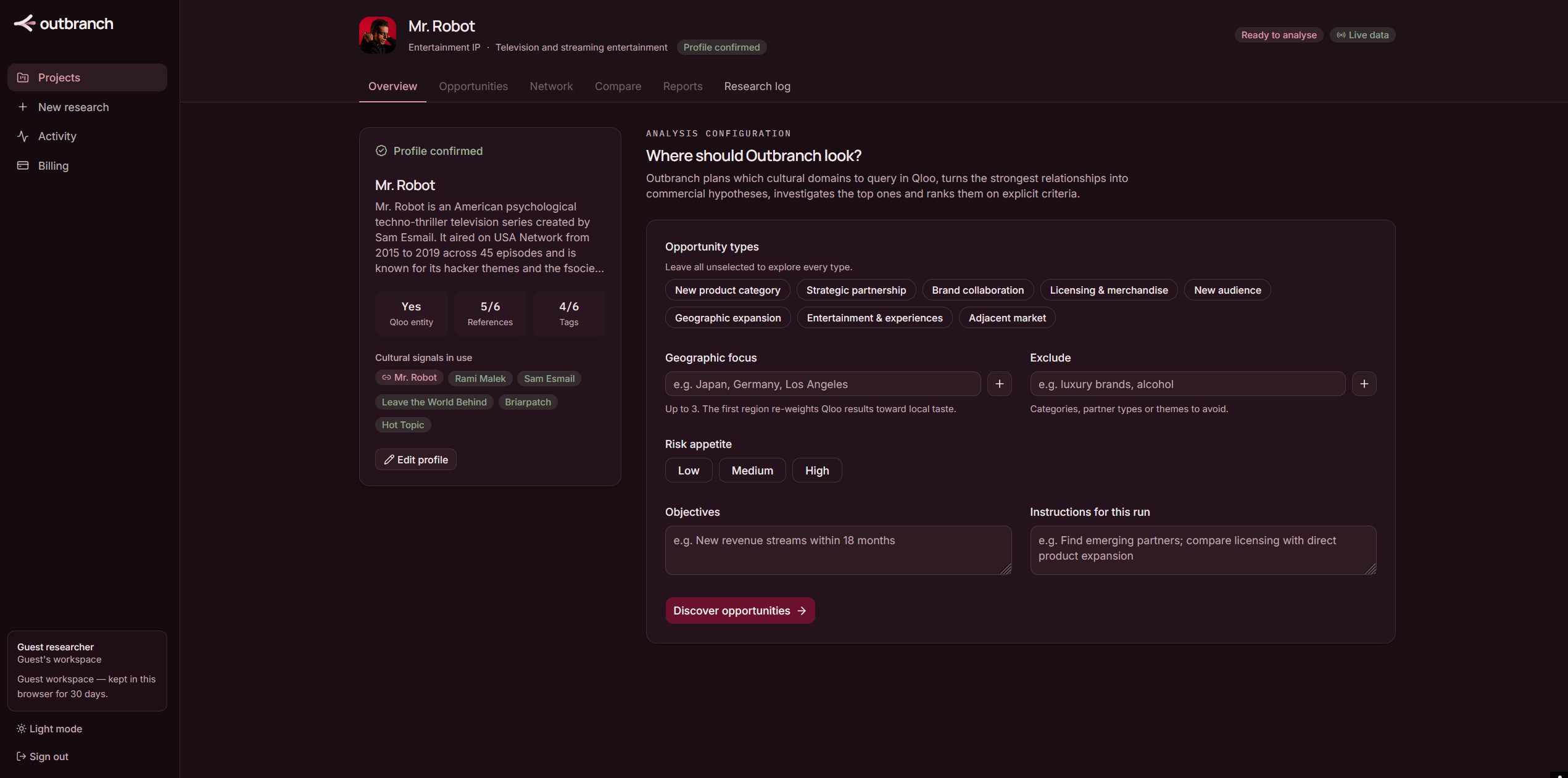
Outbranch is a research agent for brand, partnership and expansion teams. You type one thing (a brand, a company, a product, an entertainment IP or a website) and it runs a full study:
- Identifies the entity. It resolves the name with web search. Ambiguous names and parent companies ask you to pick the right scope ("Disney the company, or Pixar?").
- Researches the brand and asks you to verify it. It builds a profile in which every claim is labelled Verified (with its source), Inferred or Uncertain. You correct it and confirm it. Nothing else runs until you do.
- Maps the brand's culture with Qloo. It resolves the brand and its documented associations to Qloo entities and tags, plans which cultural domains matter, then queries Qloo Insights with explainability across brands, artists, places, destinations, books, games, TV and film.
- Generates hypotheses that must cite Qloo. Claude proposes opportunities, and each one has to name the Qloo relationships behind it and state a revenue mechanism: who pays whom, for what. A hypothesis without Qloo evidence is discarded.
- Tests the commercial case. The top hypotheses get sourced web research on competitors, costs, licensing, precedent and evidence against the idea.
- Ranks and explains. Eight explicit criteria (cultural relevance, strategic fit, business-model clarity, commercial potential, differentiation, feasibility, risk, uncertainty), each marked measured, model assessment or no data. The ranking and evidence strength are computed in code from what was actually collected, not asked of the model.
Then you work with the result:
- Opportunity portfolio with categories, evidence strength and the Qloo entities behind each idea.
- Interactive cultural network: one brand at the centre, Qloo affinities around it, opportunities on the outside. Selecting an opportunity traces its evidence chain back to the brand.
- Side-by-side comparison, including Qloo's taste-overlap analysis between the entities behind two directions.
- Strategic deep dives: market research, competitive landscape, financial assumptions (marked as estimates), key risks, a validation plan and reversible next steps.
- Refinement: exclude ideas, narrow markets or categories, and rerun discovery as a new iteration.
- Reports: printable briefs and Markdown export that only restate saved research.
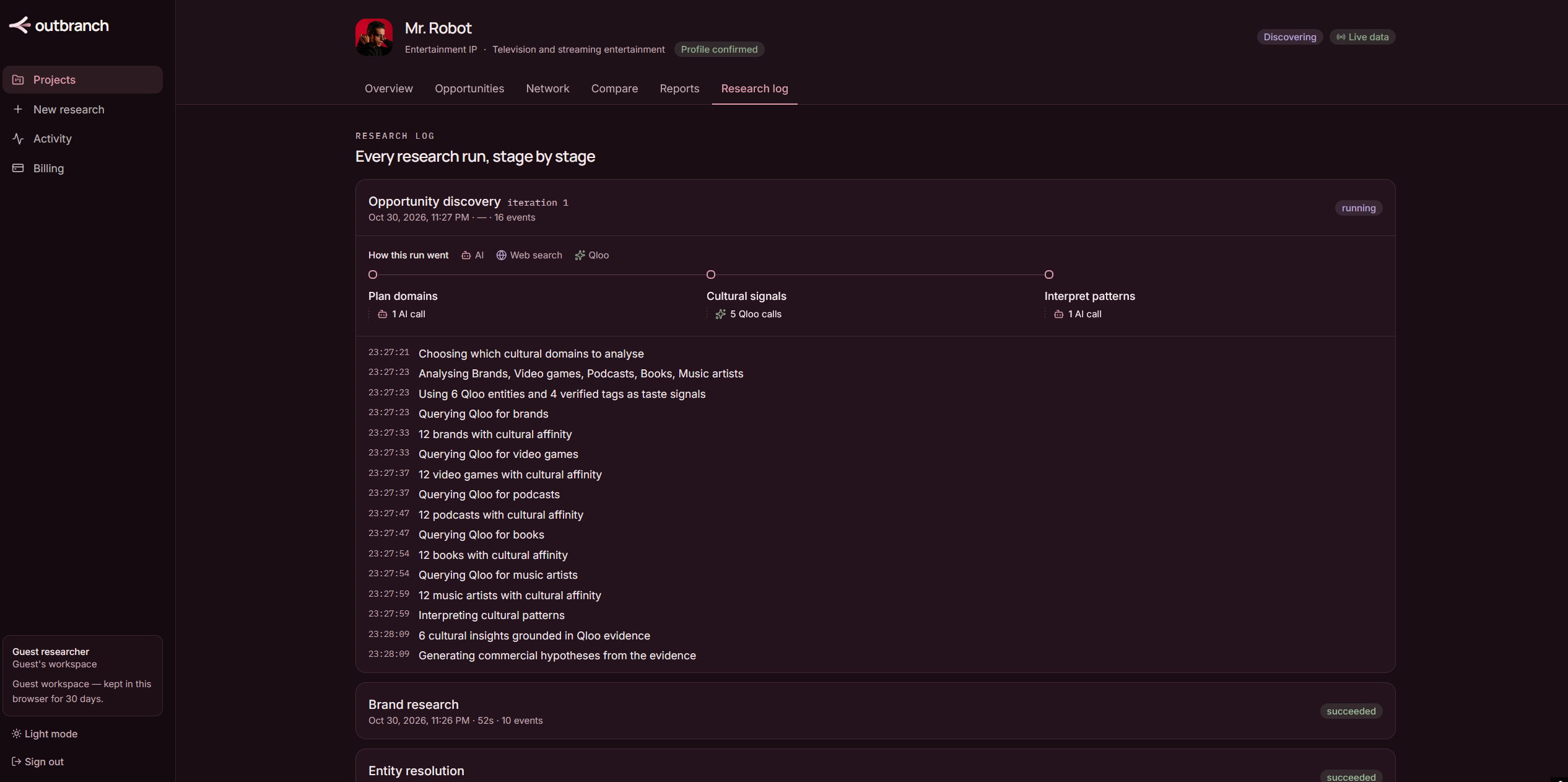
- Research log: every run drawn as a graph of the AI calls, web searches and Qloo requests it made, with failures and cache hits.
Why Qloo is essential, measured
The hackathon brief says: "If your submission would work the same without Qloo, you're building the wrong thing." So we tested it. Our ablation script (method and results) gives the same model, prompt and confirmed brand profile to two arms, one with Qloo relationships and one without:
| Liquid Death, measured | With Qloo | LLM only |
|---|---|---|
| Named entities verified as real audience affinities | 66% (21 of 32) | 2% (1 of 48) |
| Opportunities with at least one verifiable cultural link | 7 of 7 | 1 of 8 |
| Distinct verified cultural domains | 4 | 1 |
Without Qloo, the model still writes confident cultural claims; almost none of them can be checked. With Qloo, every opportunity stands on a taste relationship you can inspect. We also state what this does not prove: the metric measures groundedness, not commercial success.
Built With
- auth.js
- claudeapi
- inngest
- neon
- next.js
- postgresql
- prisma
- qloo
- reactflow
- revenuecat
- shadcn/ui
- tailwind
- vercel


Log in or sign up for Devpost to join the conversation.