-
-
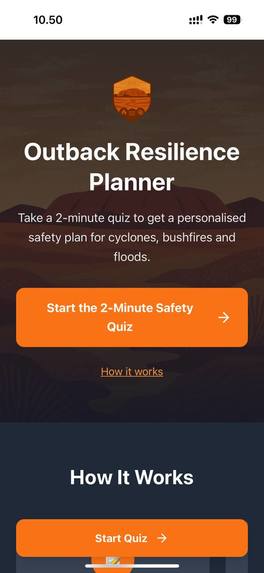
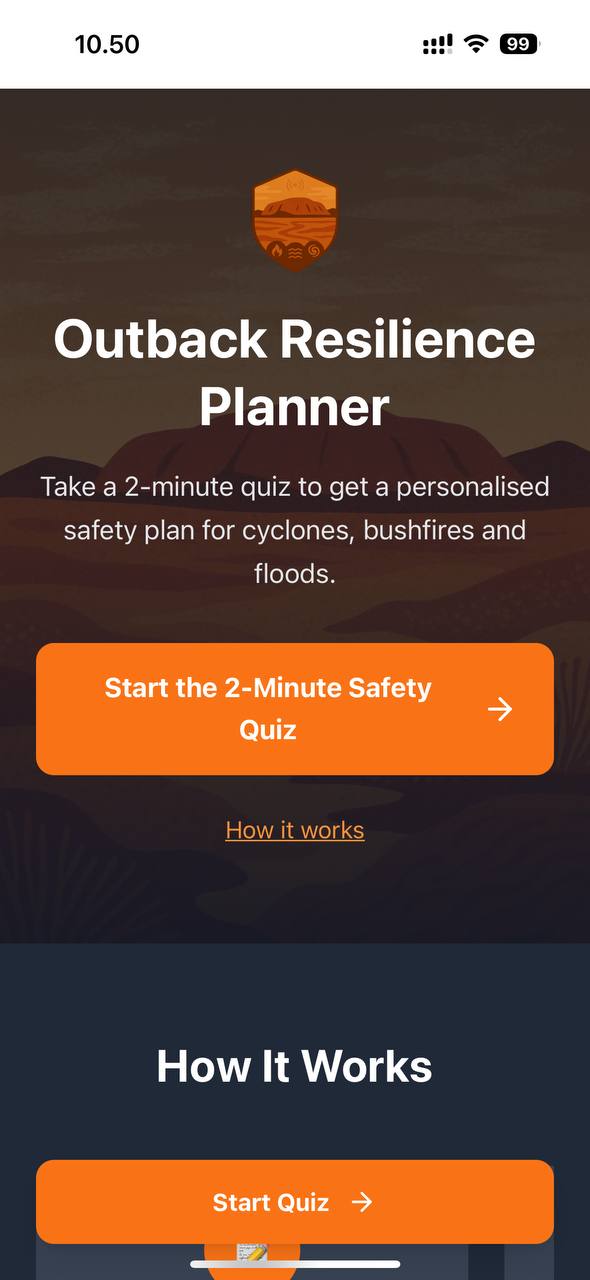
Welcome screen of the App
-
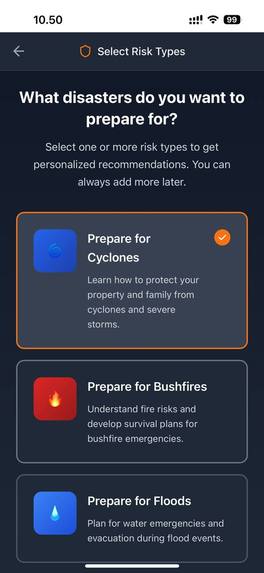
Select hazard types
-
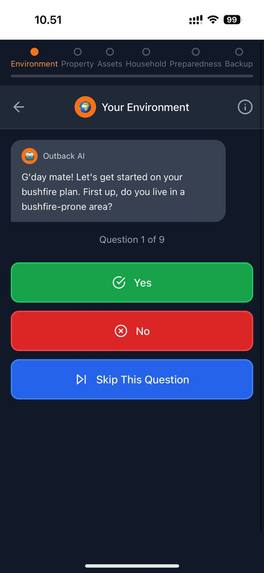
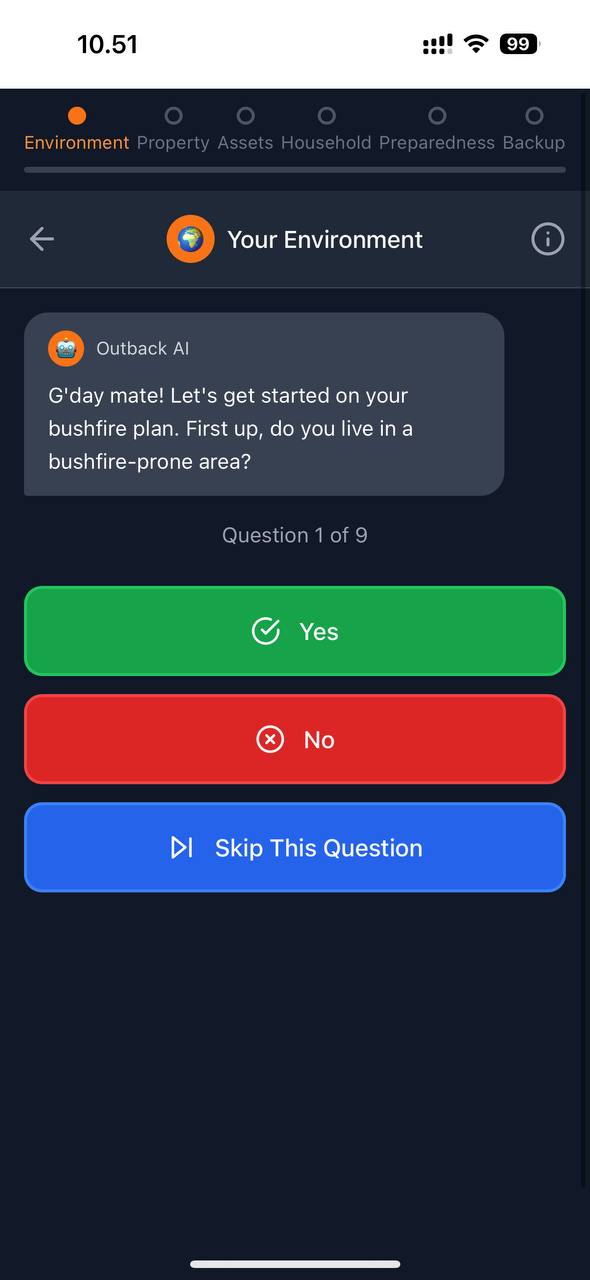
Answer questions to get personalized recommendations
-
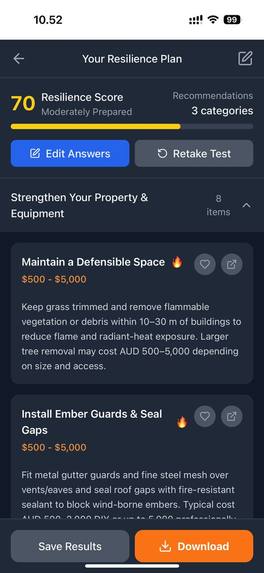
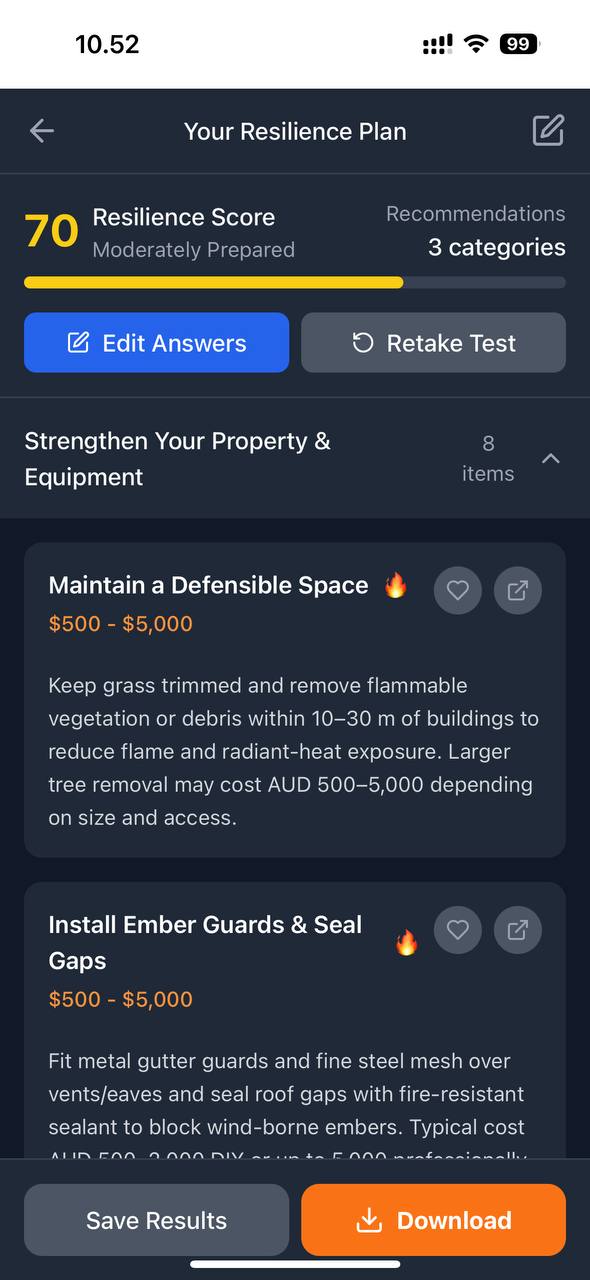
Resiliance action to take as recommendations
-
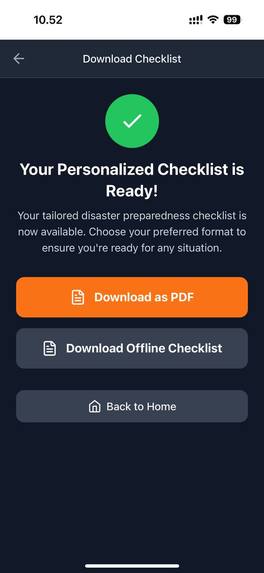
Download the final report as a PDF


Inspiration
Outback Australians live with recurring disasters like bushfires, floods, and cyclones. With climate change, these events are only becoming more frequent and severe. On the ground, that means people can lose their homes, their livelihoods, and sometimes their lives. We wanted to create something quick, practical, and supportive to help people prepare better and feel more resilient.
What it does
Outback Resilience Planner is a fast, easy tool where residents answer a few questions about their household, property, and preparedness. In just two minutes, they receive tailored recommendations and links to practical resources that can help them strengthen their homes, protect their families, and improve disaster readiness.
How we built it
First, our team’s disaster preparedness expert, Anne, researched and mapped the key risks in the Australian outback using resilience planning frameworks. Based on that, we designed the quiz logic so that each user’s answers would generate a personalized final report with practical recommendations.
Daniel then drafted the user interface, choosing a clear and approachable chat-style question flow. This makes the experience feel conversational, and it lays the foundation for a future expansion into a real chatbot.
For implementation, we used ChatGPT and UI design tools to sketch layouts and refine the content. Finally, we developed the working version of the tool with the help of an AI coding agent, translating our logic and design into a functional prototype within the short timeframe of the hackathon.
Challenges we ran into
The hardest part was time. We had to decide what to include and what to leave out in such a short experience, while still keeping the advice relevant and useful. It was also a challenge to balance realism with simplicity, making sure users get value without drowning in detail.
Accomplishments that we're proud of
We’re proud that we turned a big, complex topic into something approachable. We also loved how our two different backgrounds complemented each other; technical development and resilience planning came together to create something more impactful than either of us could have built alone.
What we learned
We learned how powerful it can be to simplify risk and resilience thinking into an interactive tool. We also discovered how much language and flow matter, even small changes can decide whether someone drops out or actually completes the experience. And finally, we added a download/print option at the end, so users can keep their recommendations handy and share them with family, making the advice more practical and usable.
What's next for Outback Resilience Planner
While we started with the outback, our vision is bigger. The same approach could support people in seaside cities, rural towns, or anywhere facing climate-driven hazards like storms, floods, and heatwaves. We want to expand the tool so it adapts to different geographies while keeping the same core mission: helping people feel more prepared, more connected, and more resilient in the face of a changing climate.
Since the tool is already built in a chat style, we also plan to expand it into a full chatbot that can provide direct, personalised recommendations. This opens up the possibility of a sustainable model where suggested products or local services could be recommended as part of the resilience pathway, creating impact while also supporting monetisation.
Built With
- bolt
- chatgpt
- github
- netlify

Log in or sign up for Devpost to join the conversation.