-
-
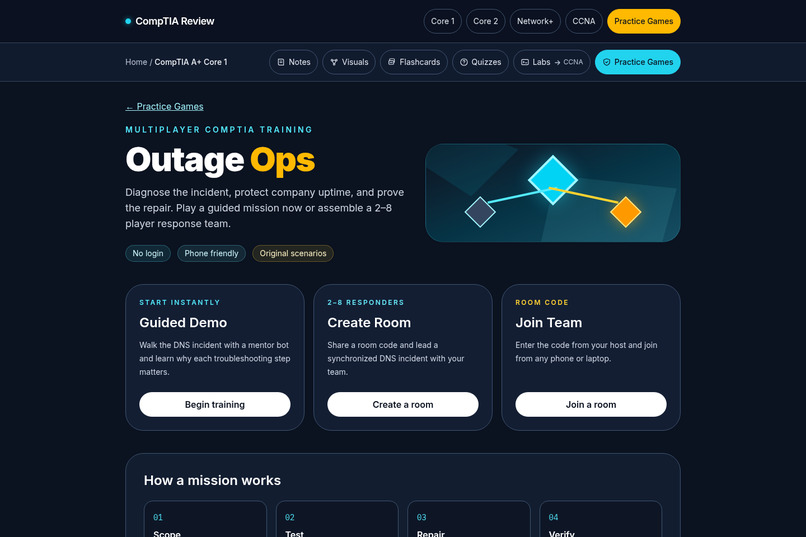
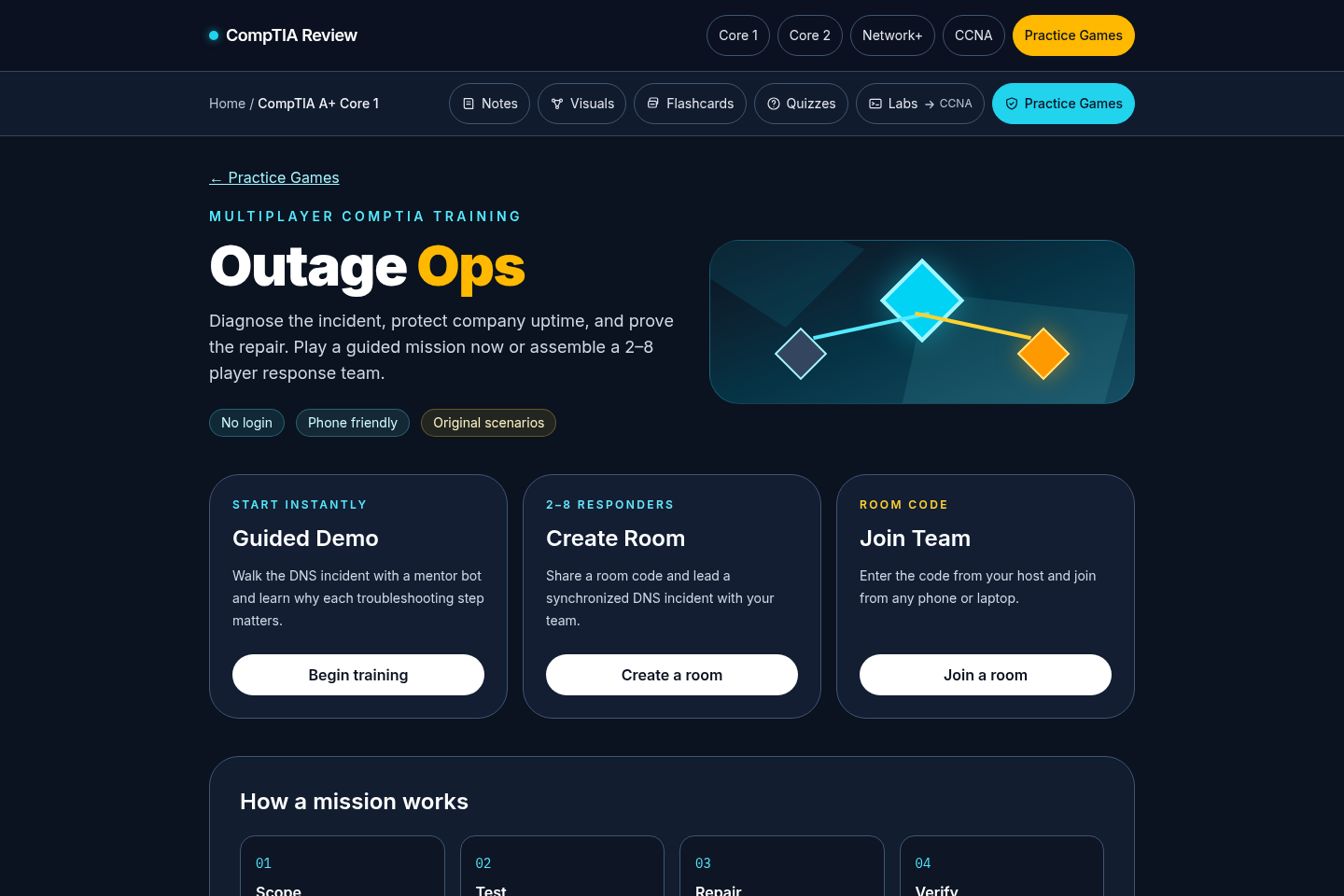
Outage Ops connects CompTIA study material to troubleshooting practice. Guided Demo starts a solo incident without a login.
-
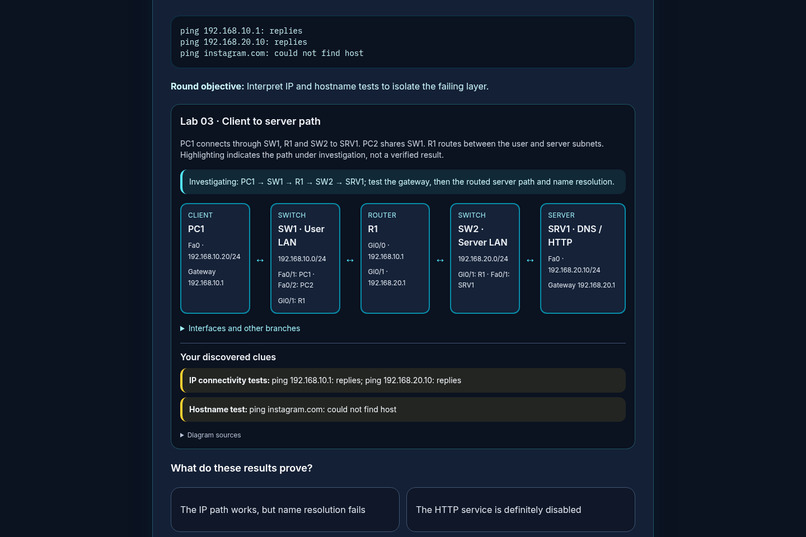
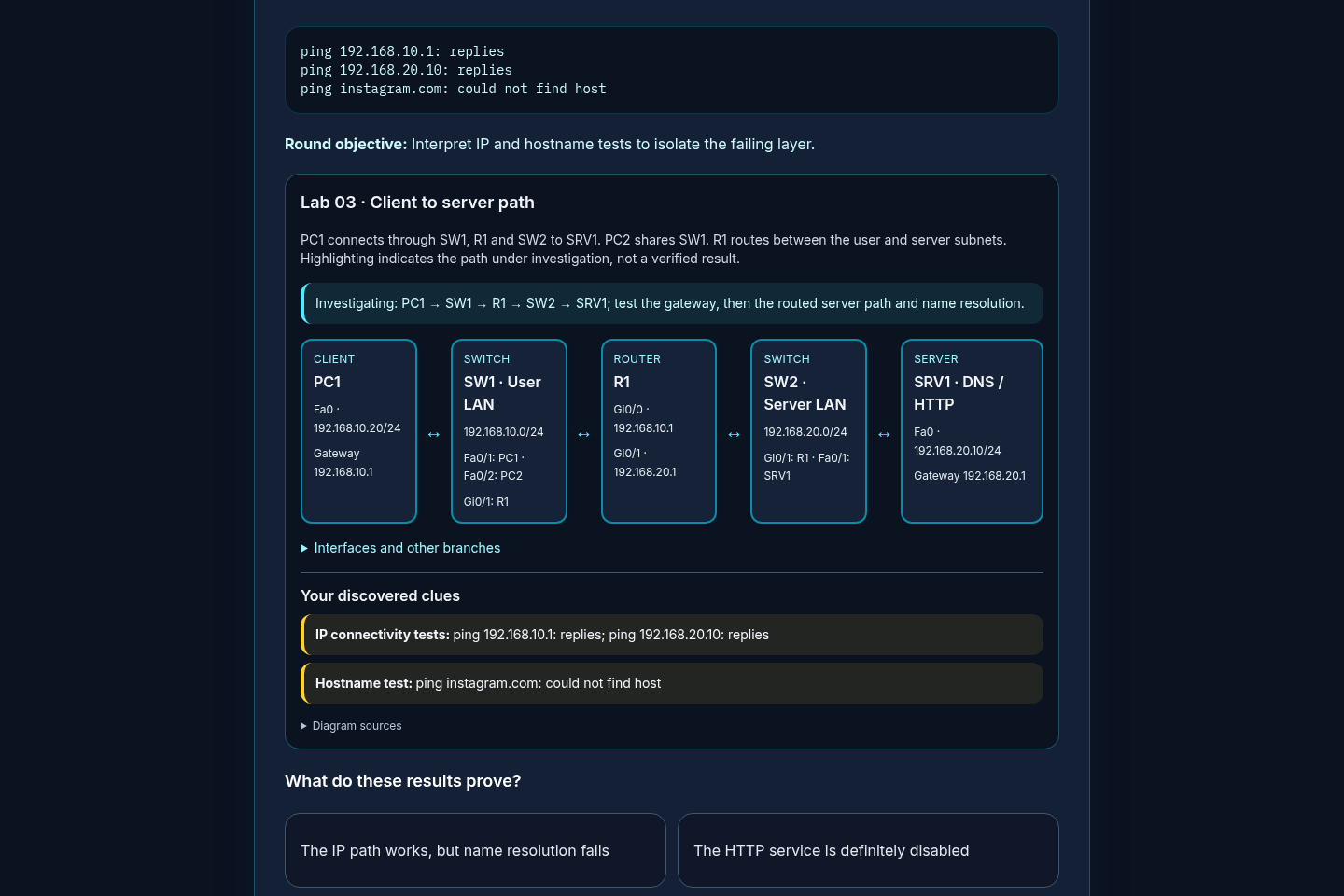
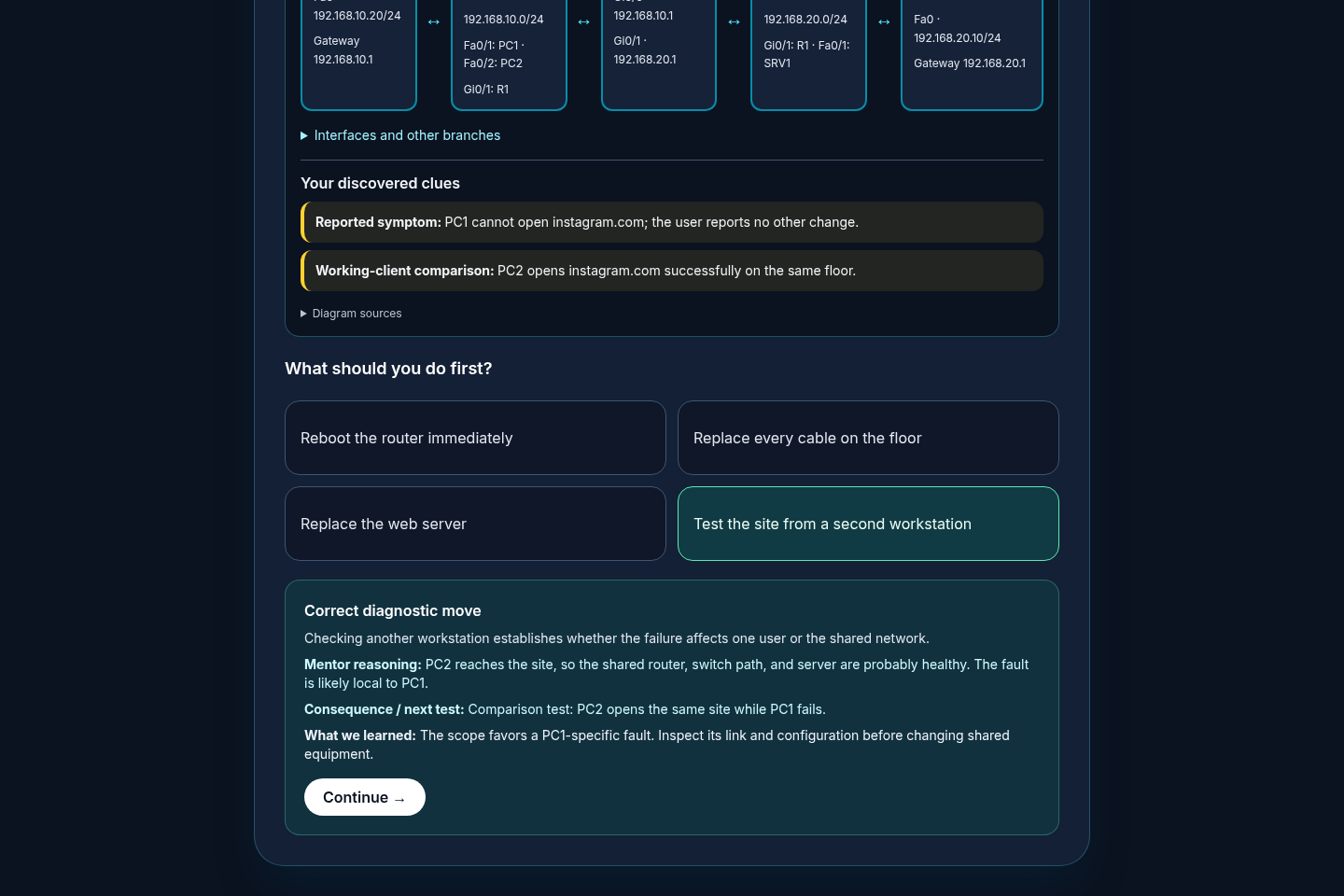
Solo Guided Demo presents IP-vs-hostname test evidence beside the client-to-server network path, helping learners justify a DNS diagnosis.
-
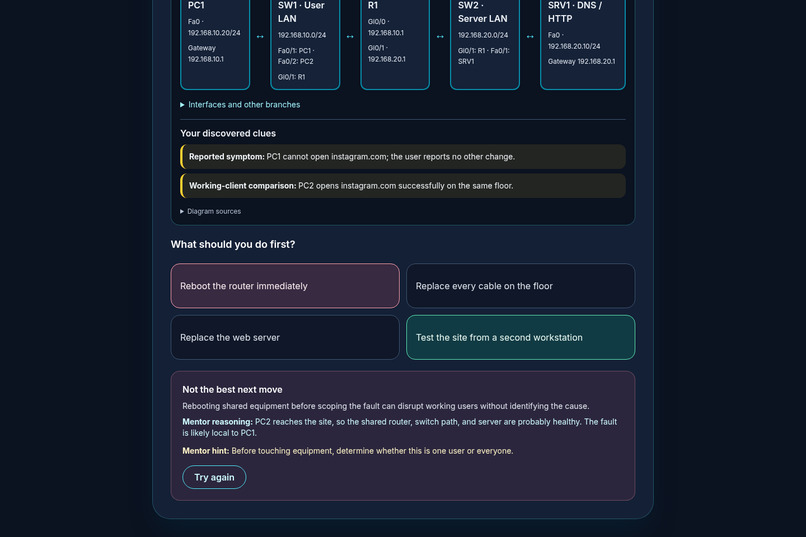
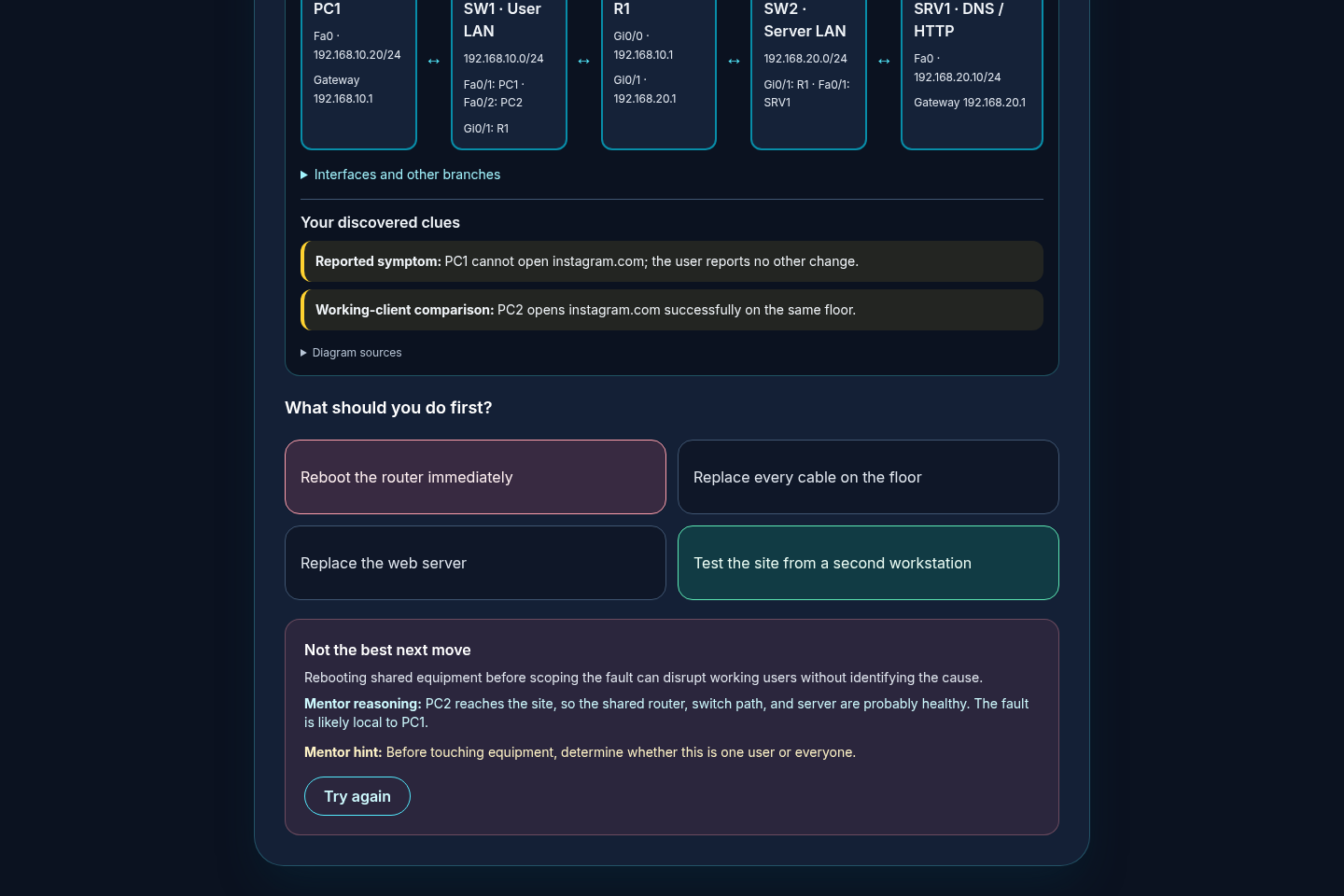
An unsupported router reboot receives an explanation and mentor hint. The learner can retry rather than get stuck.
-
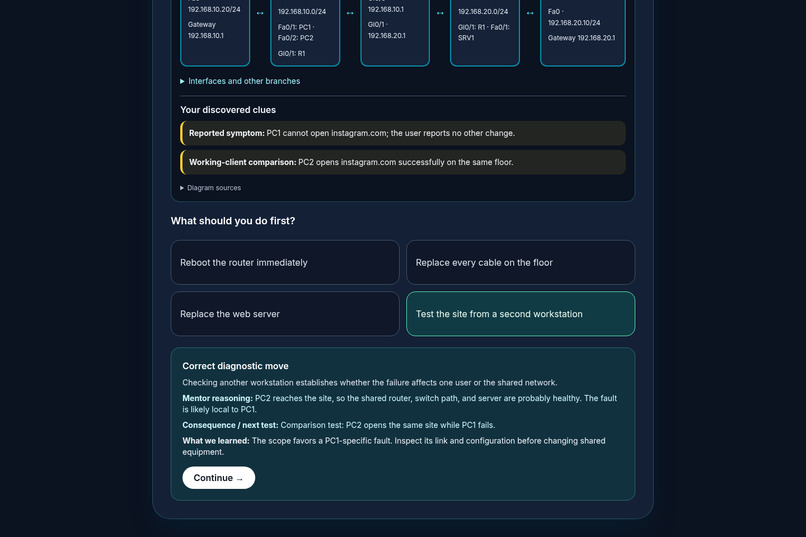
A supported scoping decision reveals why it fits the evidence, the next test, and what the learner should take forward.
-
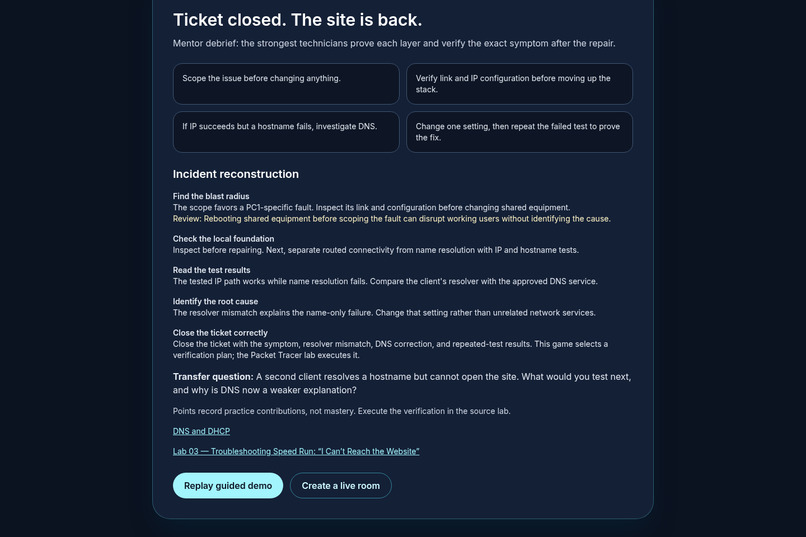
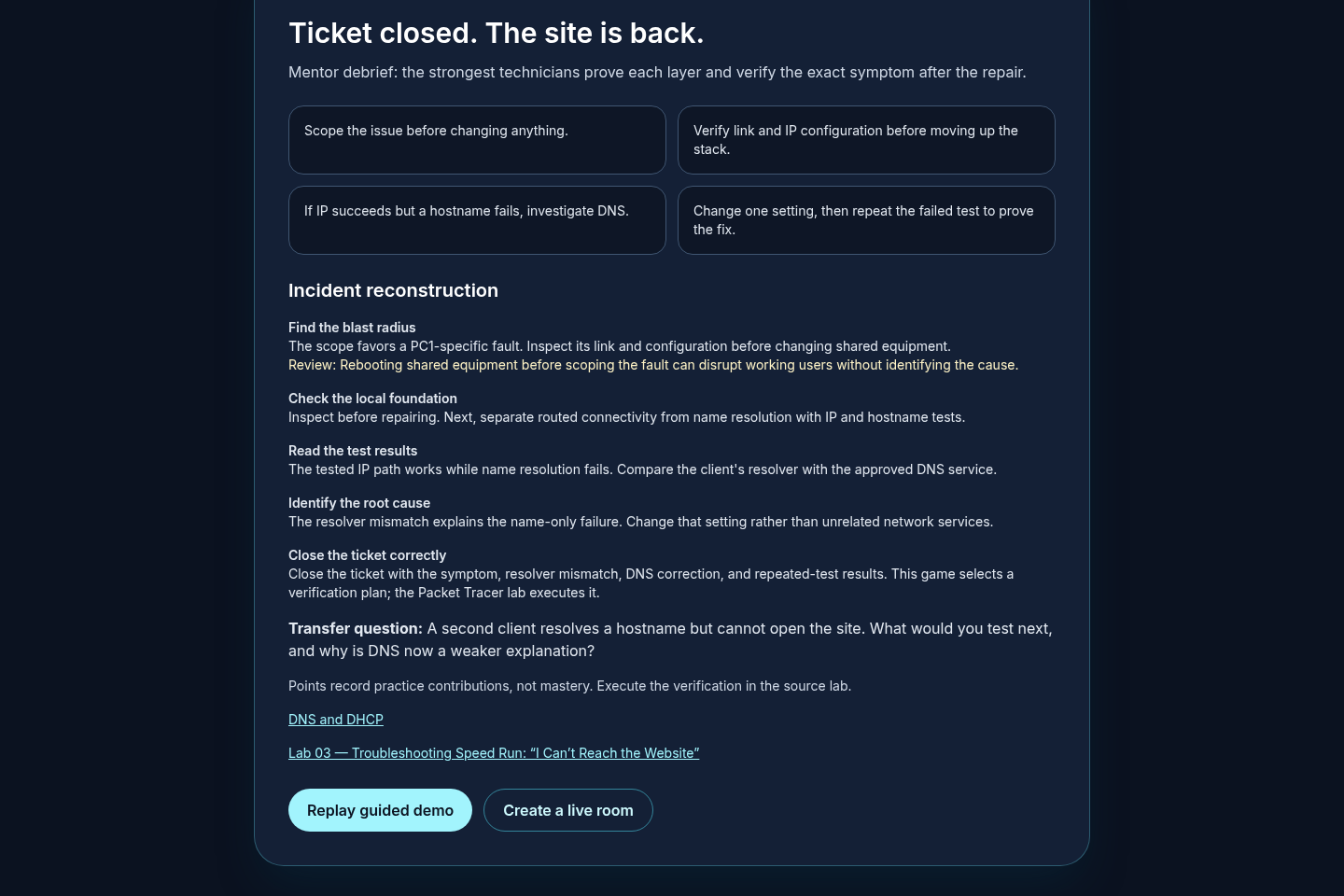
The solo debrief reconstructs the incident, records the misconception, and links to notes and the lab.
Inspiration
While studying for CompTIA certifications, I wanted a way to move beyond memorizing definitions and practice applying networking concepts. I started building a review website with notes, flashcards, quizzes, and labs, then expanded it into Outage Ops: a troubleshooting game for individual and cooperative practice.
The project serves students learning IT fundamentals by connecting study material with scenarios that ask them to investigate evidence, make decisions, and understand their mistakes.
What it does
Outage Ops offers a local Guided Demo and a multiplayer room system. Players investigate networking incidents involving concepts such as DNS and DHCP, discover evidence, choose troubleshooting plans, and receive explanations.
Cooperative gameplay adds shared findings, team scoring, individual contributions, and roles. A final debrief reconstructs the incident and connects decisions to relevant study material.
How I built it
I built the website with Next.js, React, TypeScript, and Tailwind CSS. The multiplayer architecture uses server-side room APIs and Twilio Sync, with deployment on Vercel.
I used AI coding agents as development collaborators, giving them specialized instructions for reviewing content, auditing gameplay, and testing multiplayer behavior. I directed the work, reviewed changes, and used regression tests and browser replays to evaluate functionality.
AI assistance was part of my development process; the troubleshooting scenarios are based on study content rather than generated live for players.
Challenges
The hardest challenge was keeping multiplayer progression reliable. Players could become blocked when evidence assignments were unavailable or teammates disconnected before completing a required action.
Addressing these problems required consistent server-side validation, visible recovery controls, reconnect handling, and protection against duplicate scoring.
Another challenge was making points and interactions support learning. Feedback needed to explain why a decision was useful or incorrect, rather than simply reveal an answer.
What I learned
I learned about shared application state, server-authoritative scoring, asynchronous updates, and testing complete user journeys.
I also learned that a passing build is not enough to establish playability. Testing both players independently exposed problems that were difficult to see from one screen.
Validation and current limitations
Local browser testing completed Guided Demo and a two-player campaign through the final debrief, including incorrect-answer recovery, evidence timeouts, lobby recovery, and reconnect behavior.
These tests used real local application routes with mocked Sync transport. They do not establish live Twilio behavior or physical laptop-and-phone compatibility.
What's next
I want to add simulated diagnostic tests, clearer network diagrams, and assessed follow-up questions that help learners apply concepts to a different problem.
Future challenges could include computer-component matching, packet-routing sequences, and verified VLSM allocation exercises.
Built With
- codex
- github
- next.js
- node.js
- openai
- playwright
- react
- tailwind-css
- twilio-sync
- typescript
- vercel

Log in or sign up for Devpost to join the conversation.