-
-
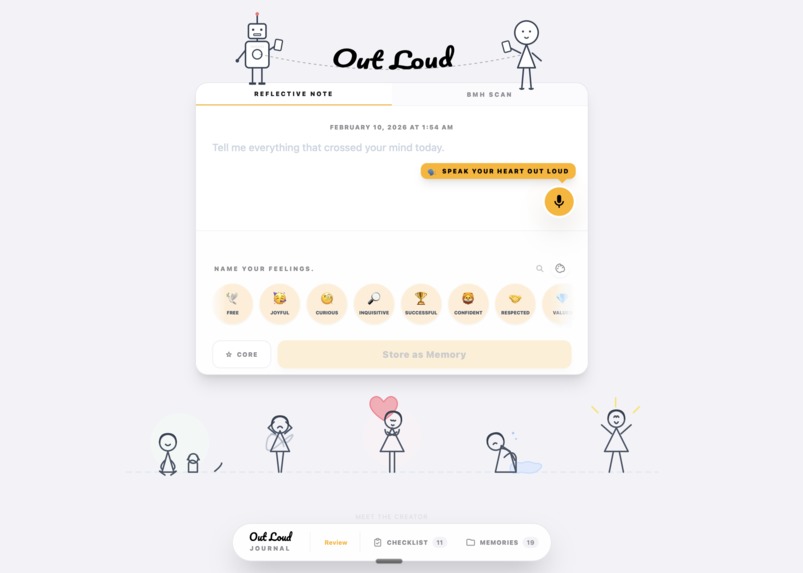
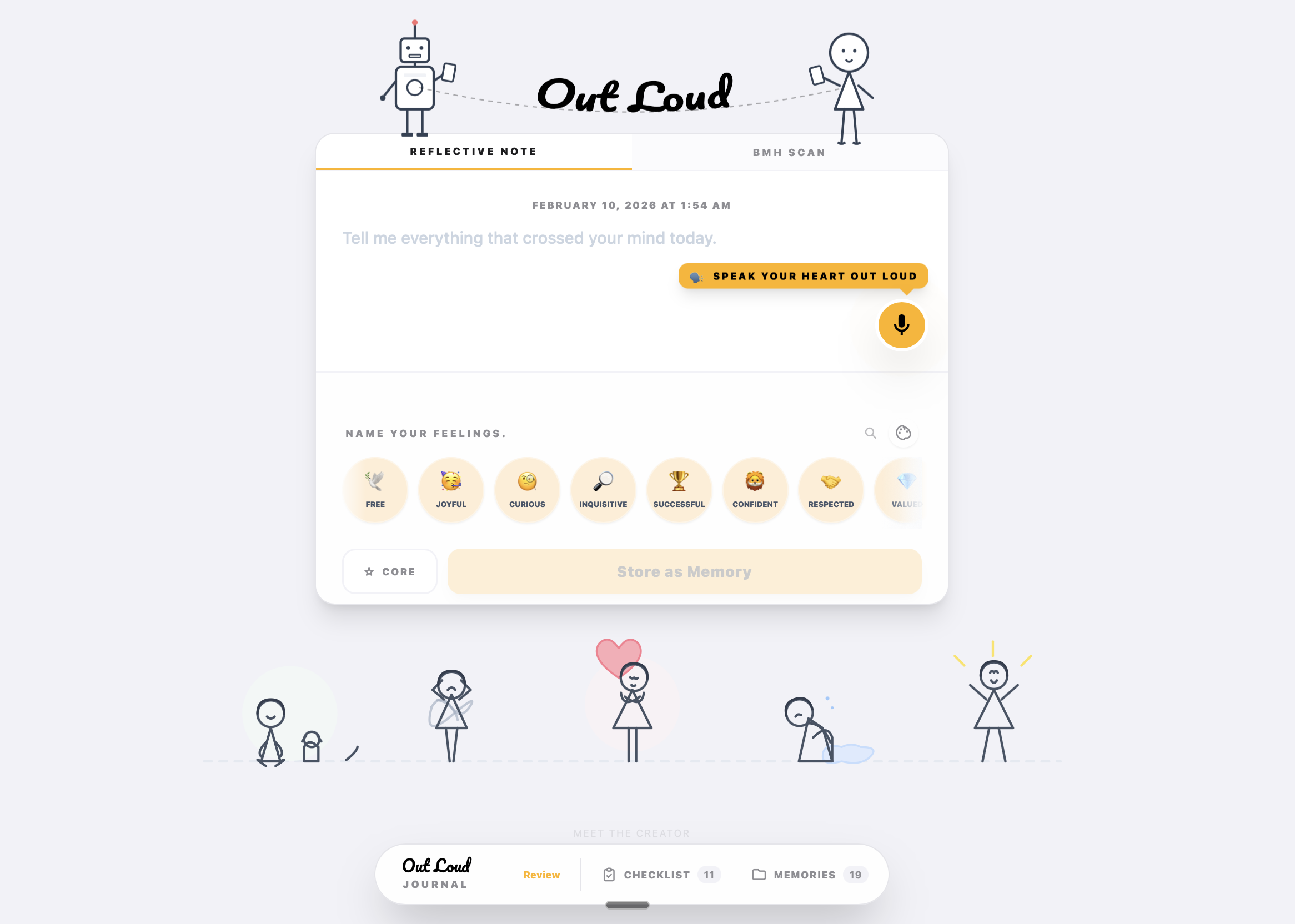
landing page
-
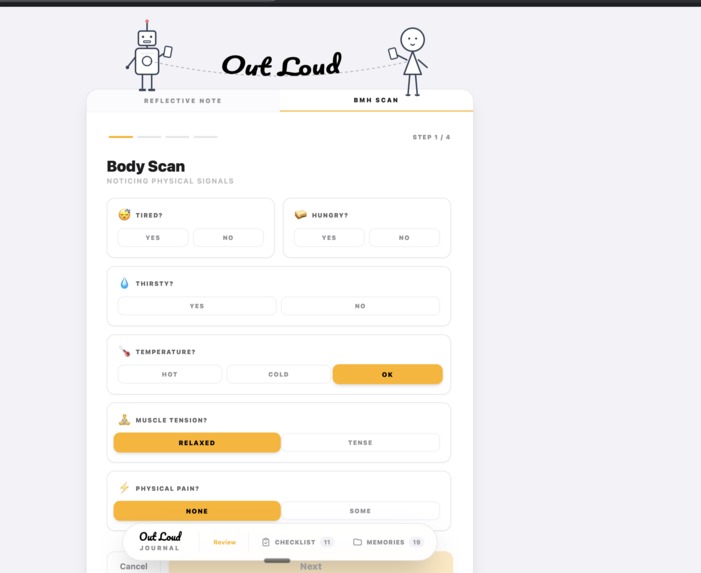
BMH scan
-
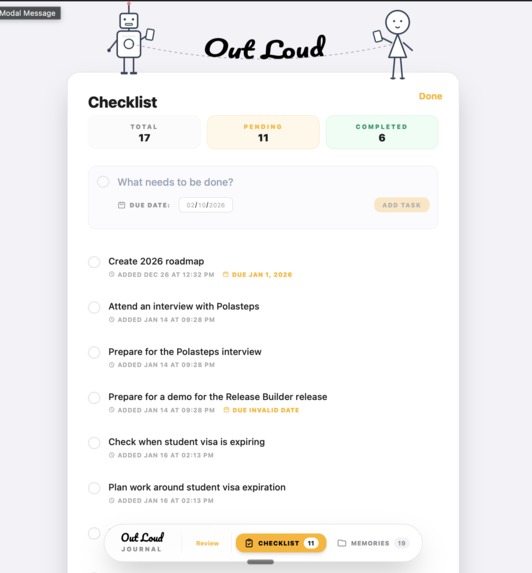
checklist
Inspiration
Outloud started from a simple observation: many people find it easier to talk than write, especially when processing emotions. Traditional journaling often requires structure, time, and emotional clarity, which is exactly what people lack when they need it most.
Through personal experience and conversations with others (including therapists), I noticed a gap between having thoughts and being able to reflect on them. Outloud was created to bridge that gap by letting users speak freely, reflect safely, and build awareness over time without judgment.
The goal was not to build therapy, but a gentle self-reflection companion that lowers the friction of journaling while respecting privacy and emotional boundaries.
What Outloud Does
Outloud is a voice-first journaling app that works through real-time speech-to-text transcription.
Users can:
- Speak their thoughts out loud
- Review transcribed entries
- See AI-generated reflection prompts and emotional suggestions
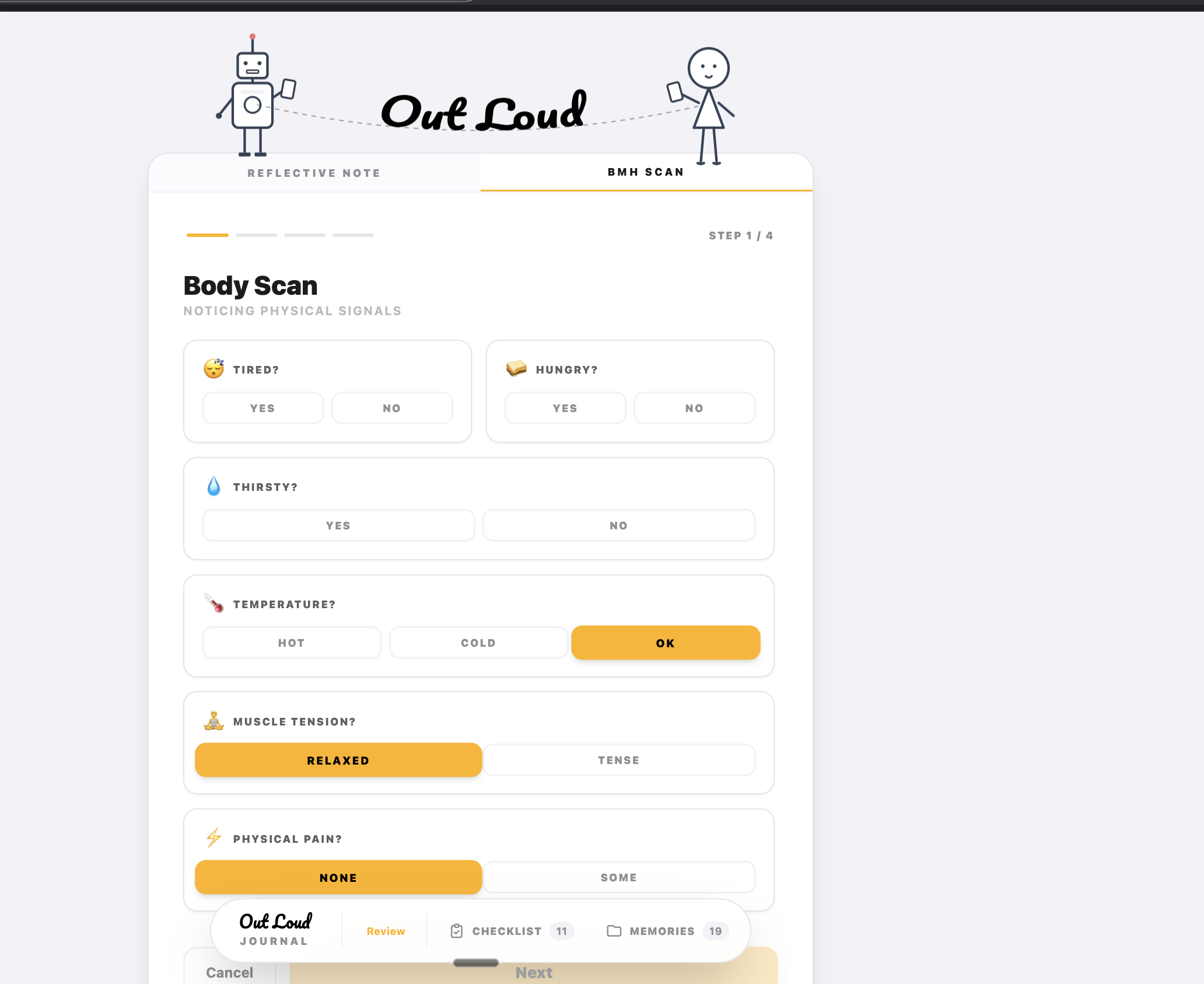
- Perform a simple Body–Mind–Heart (BMH) scan
- Save selected entries into a personal Memory Box
- Receive a weekly reflection summarising patterns they chose to keep
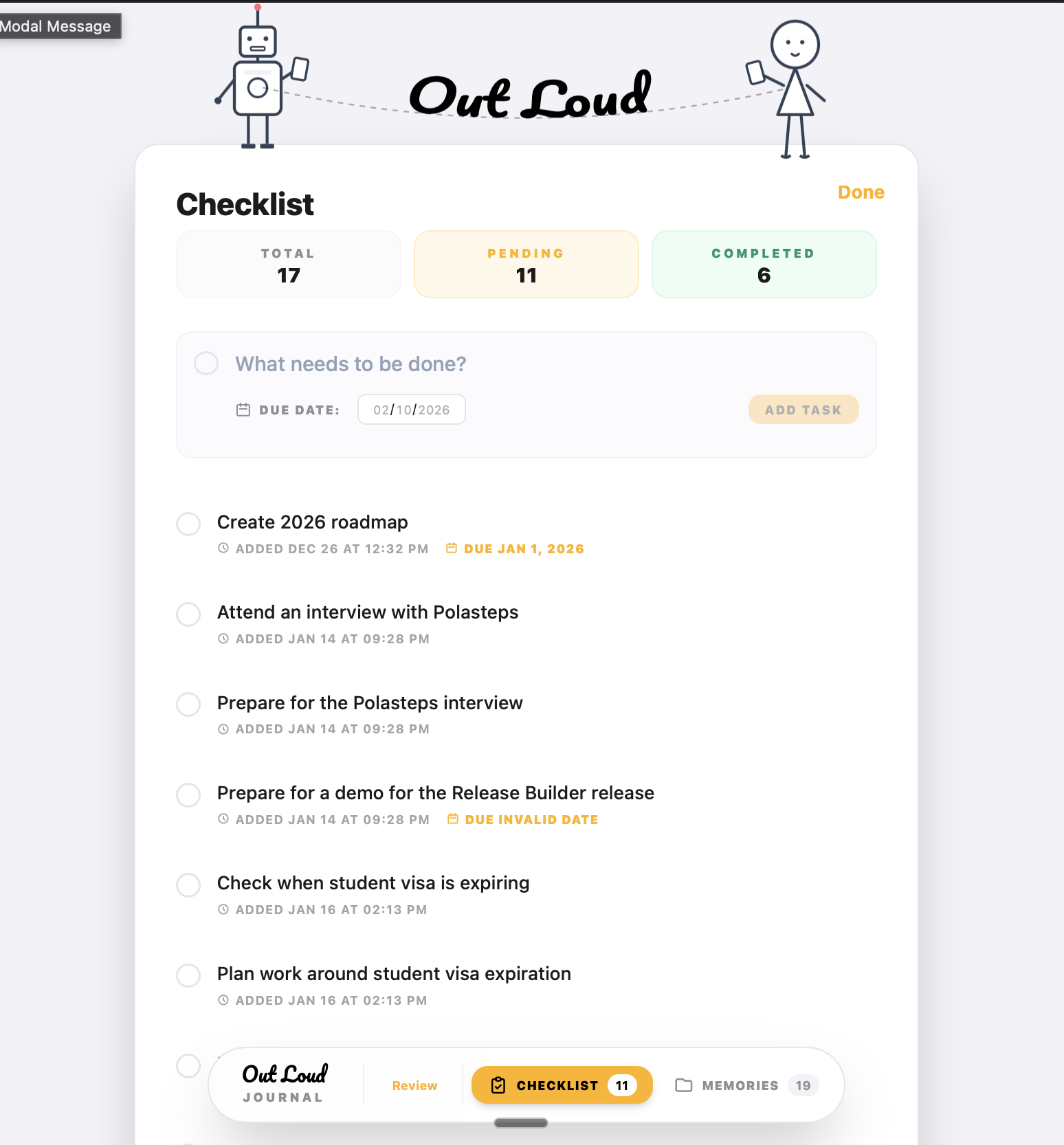
- Convert user-approved future-oriented statements into optional to-do reminders
Importantly:
- No audio recordings are stored
- Only transcribed text and user-approved summaries are saved
- All insights are presented as suggestions, not facts
How It Was Built
Outloud is designed with privacy-first architecture.
- Speech is transcribed in real time and discarded immediately
- Emotional reflections are generated from textual language patterns, not vocal tone or biometric signals
- Users must explicitly approve anything saved or converted into reminders
- All stored data is editable and deletable by the user
The system intentionally avoids diagnosis, scoring, or behavioral nudging. The AI acts as a mirror, not an authority.
Ethical & Safety Considerations
Because Outloud works with personal and emotional content, ethics were treated as a core design constraint rather than an afterthought.
Key principles:
- Outloud is not therapy, diagnosis, or treatment
- Emotional insights are AI-generated interpretations, not truths
- Users always retain control over what is saved or discarded
- No raw voice data is retained or analyzed
- The app does not attempt to intervene in crisis situations and instead encourages external human support when appropriate
These considerations shaped not only the UX but also the technical decisions behind the product.
Challenges & Learnings
One of the biggest challenges was designing emotional reflection features without crossing ethical or legal boundaries. This required careful language, explicit user control, and strict data minimisation.
Another challenge was balancing usefulness with restraint. It is easy for AI systems to overstep; it is much harder to design something that knows when not to act.
Building Outloud reinforced the idea that in sensitive domains, trust, clarity, and user autonomy matter more than clever features.
What’s Next
Future iterations will focus on:
- Improved reflection quality with stronger user feedback loops
- On-device processing where possible
- Clearer explainability of AI-generated insights
- Continued collaboration with mental health professionals for guidance (not diagnosis)
Outloud is an ongoing exploration of how AI can support reflection without replacing human judgment or care.
Built With
- ai
- gemini-3
- google-ai-studio

Log in or sign up for Devpost to join the conversation.