Inspiration
I was fascinated by the concept of self-modifying code and artificial life systems from the early days of computing-programs like Core War and Tierra that could evolve and adapt. I asked myself: what if combine this with modern technologies like WebAssembly, blockchain governance, and quantum computing? What if it is possible to create a digital organism that truly lives and evolves, governed not by a single authority but by decentralized consensus, fed by quantum randomness and real-world sensor data? OuroborOS-Chimera was born from this vision - a self-modifying entity that bridges retro computing aesthetics with cutting-edge technology.
What it does
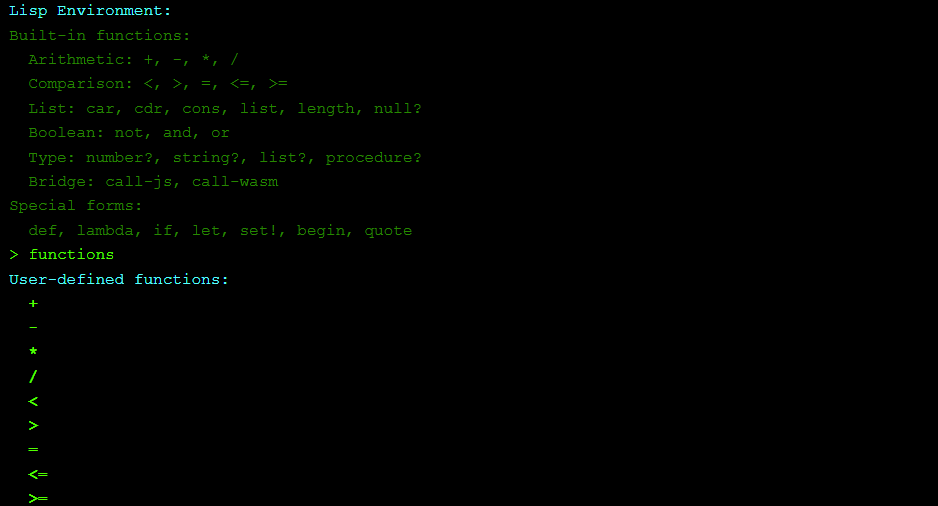
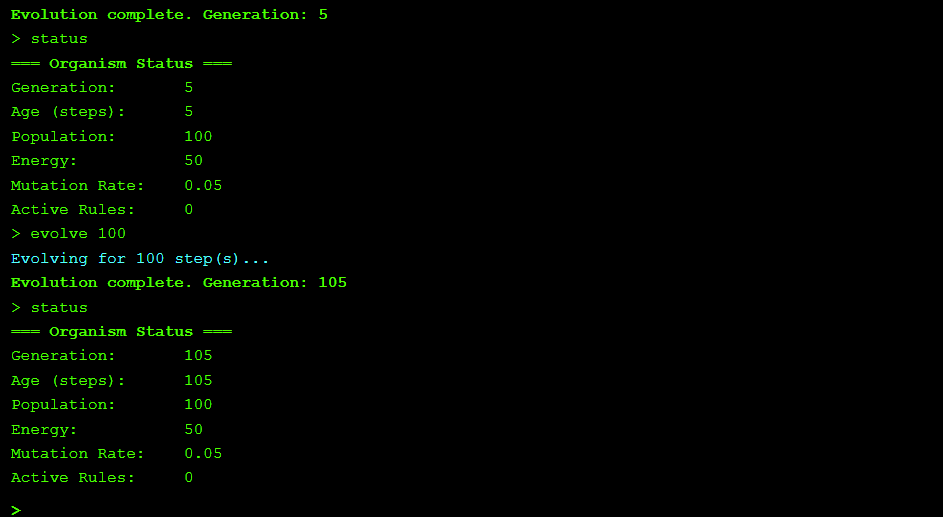
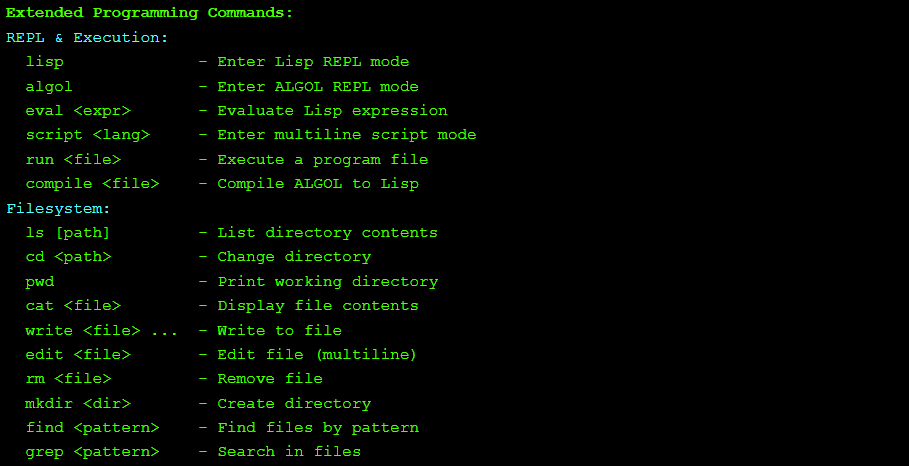
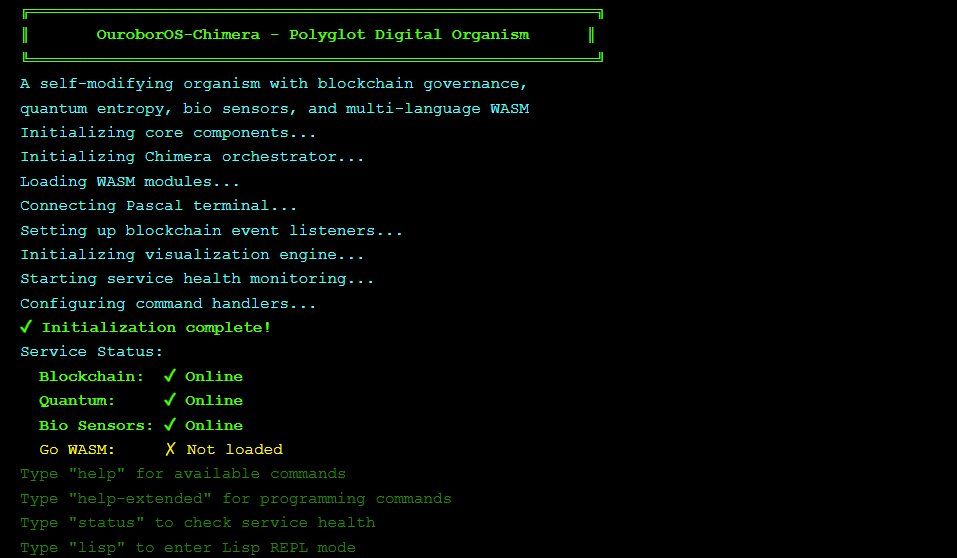
OuroborOS-Chimera is a self-modifying digital organism that runs entirely in your browser. It can literally rewrite its own behavior rules at runtime using a Lisp interpreter, while users can program it using a readable ALGOL-style DSL. The organism makes evolutionary decisions based on multiple entropy sources: quantum random number generation via Qiskit, physical sensors (light, temperature, motion from Raspberry Pi), WebGPU noise, and WebCrypto APIs.
What makes it unique is its blockchain governance layer - mutation proposals are submitted as Ethereum smart contracts, and the community votes on which changes the organism should adopt. The system visualizes its internal state through real-time graphs and fractals, all rendered in a retro Pascal-style green-on-black terminal UI. It demonstrates true polyglot WebAssembly interoperability by combining different programming languages (Rust, Fortran, Go, Pascal, Lisp, and Solidity) working together seamlessly.
How we built it
I built OuroborOS-Chimera using Kiro as a multi-layered system:
Core Architecture: JavaScript orchestrates everything through a message bus pattern, coordinating between different WASM modules and external services.
WebAssembly Modules: I compiled Rust (orchestrator logic), Fortran (numeric computations), Go (neural clusters), and Pascal (terminal UI) to WASM using wasm-pack, Emscripten, TinyGo, and Free Pascal respectively.
Self-Modification Engine: I implemented a sandboxed Lisp interpreter in JavaScript that can safely modify its own evaluation rules at runtime, plus an ALGOL DSL compiler that generates Lisp code for more readable organism programming.
Blockchain Layer: Solidity smart contracts deployed via Hardhat handle mutation proposals and voting, with ethers.js bridging the browser to Ethereum.
Entropy Sources: Python services provide quantum entropy (Qiskit quantum circuits) and biosensor data (Raspberry Pi GPIO), with graceful degradation to WebCrypto/WebGPU when services are unavailable.
Build System: Vite bundles everything into a static web app that can be deployed anywhere, with Docker Compose orchestrating the optional external services.
Challenges we ran into
Multi-Language WASM Interop: Getting six different languages to communicate through WebAssembly was incredibly challenging. Each compiler (wasm-pack, Emscripten, TinyGo) has different conventions for memory management and function exports. I spent days debugging segfaults and memory corruption issues.
Safe Self-Modification: Creating a Lisp interpreter that can modify itself without crashing or creating security vulnerabilities required careful sandboxing and validation. I had to implement multiple safety layers to prevent infinite loops and resource exhaustion.
Quantum Service Integration: Qiskit quantum circuits are computationally expensive and can't run in the browser. I had to architect a Python service that generates quantum entropy in batches while keeping the core app functional when the service is offline.
Blockchain Synchronization: Coordinating organism state with blockchain mutations while maintaining real-time performance was tricky. I implemented an event-driven architecture with optimistic updates and rollback capabilities.
Cross-Platform WASM Builds: Different operating systems and toolchains produced incompatible WASM binaries. I had to standardize our build process and create comprehensive documentation for reproducible builds.
Accomplishments that we're proud of
True Polyglot System: I successfully integrated six programming languages into a cohesive system that actually works. This demonstrates WebAssembly's potential for language interoperability in ways few projects have attempted.
Self-Modifying Code That's Safe: I created a system where code can rewrite itself at runtime without compromising security or stability - a notoriously difficult problem in computer science.
Blockchain Governance That Makes Sense: Unlike many blockchain projects that force the technology where it doesn't belong, our use of smart contracts for mutation voting is a natural fit for decentralized autonomous systems.
Quantum Integration: I made quantum computing accessible and practical by using it for true random number generation, showing a real-world application beyond theoretical demonstrations.
Fully Static Core: Despite the complexity, the core system runs as a static web app with zero server requirements, making it incredibly portable and resilient.
Retro Aesthetic Meets Modern Tech: I successfully married vintage terminal UI design with cutting-edge technologies, creating something that feels both nostalgic and futuristic.
What we learned
WebAssembly is Ready: WASM has matured to the point where serious polyglot applications are feasible, though tooling still needs improvement.
Self-Modification Requires Discipline: Allowing code to modify itself is powerful but demands rigorous safety mechanisms and clear boundaries.
Blockchain Isn't Always the Answer: I learned when blockchain adds value (governance, immutable audit trails) versus when it's unnecessary overhead.
Graceful Degradation is Essential: Building systems that work fully offline but enhance with optional services creates better user experiences than all-or-nothing architectures.
Documentation is Critical: With this many technologies, comprehensive documentation isn't optional - it's the difference between a usable project and an abandoned experiment.
Emergence is Real: Watching the organism develop unexpected behaviors from simple rules taught us that complexity truly can emerge from simplicity.
What's next for OuroborOS Chimera
However, there are various ways of further enhancements. Let me list some of them below.
Enhanced Neural Networks: Integrate the Go neural cluster modules more deeply, allowing the organism to learn from its mutation history and predict successful adaptations.
Advanced Visualization: Add 3D WebGL visualizations showing organism structure and behavior in immersive ways, plus VR support for exploring the organism's "mind."
Mobile Biosensor Network: Create a mobile app that turns smartphones into biosensor nodes, crowdsourcing environmental data from users worldwide.
Educational Platform: Develop tutorials and interactive lessons teaching WebAssembly, blockchain, quantum computing, and artificial life through hands-on organism programming.
Performance Optimization: Profile and optimize the WASM modules for faster evolution cycles and support for more complex organisms.
Plugin Architecture: Allow community developers to add new languages, entropy sources, and visualization modes through a standardized plugin system.

Log in or sign up for Devpost to join the conversation.