Inspiration
What it does
How we built it
Challenges we ran into
Accomplishments that we're proud of
What we learned
What's next for Our Place
Inspiration
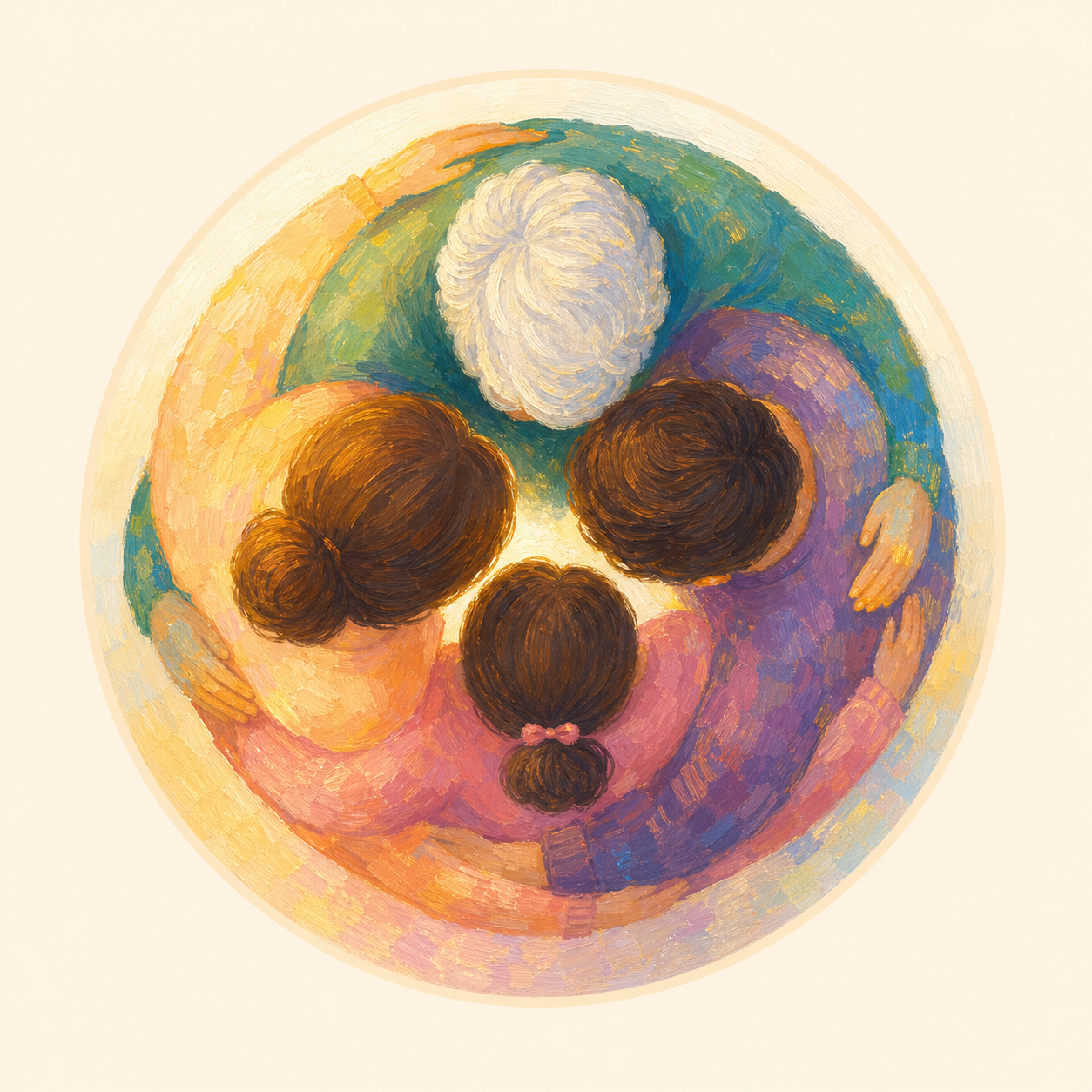
Families love one another, but the texture of an older relative's ordinary days can disappear between phone calls. Our Place makes those small moments easier to share without asking an older adult to learn a complicated dashboard or treat an AI as a substitute for human companionship.
What it does
The elder experience begins with one large action: Talk about my day. Three gentle prompts invite the person to describe how today felt, what stayed with them, and anything they want their family to understand or help with. Before anything is shared, Our Place reflects the person's words back and asks whether it stayed close to what they meant.
GPT-5.6 then turns the approved check-in into a short, fact-grounded family update. It separates ordinary life updates, memories, practical requests, and possible concerns, with a supporting quote for every extracted item. The family side encourages a reciprocal loop: receive what was said, reflect what was heard, respond personally, and claim concrete help. A memory archive turns passing stories into invitations for the next real conversation.
Our Place is intentionally not medical software. It does not diagnose, assess cognitive decline, or claim to monitor wellbeing. Obvious urgent language follows a deterministic safety path that recommends direct human or emergency contact without pretending that the app dispatched help.
How we built it
We used Next.js 16, React 19, Vinext and Cloudflare tooling, D1 and Drizzle schemas, and the OpenAI Responses API with gpt-5.6-sol. GPT-5.6 handles the narrow task where language understanding creates real value: turning free-form answers into a warm but factual update. Its output follows a strict JSON Schema, every extracted item requires a source quote, and the API key stays server-side.
The contest build includes deterministic synthetic fixtures, so judges can experience the complete loop without credentials, a microphone, an API key, or private family data.
Codex was our primary development partner. It helped focus the original mission into a contest-sized golden path; designed the architecture and data model; implemented the elder, family, invitation, and archive experiences; built the GPT-5.6 structured-extraction route; reviewed safety and privacy boundaries; generated and integrated the visual identity; and repeatedly ran build, lint, and server-render verification.
Challenges
The hardest design problem was making AI useful without letting it become an interpreter of a person's inner life. Our Place uses tentative reflection, source-quote grounding, explicit correction, and user approval to preserve the speaker's authorship. The second challenge was creating an elder-friendly interface that feels emotionally warm without becoming visually busy or patronizing.
Accomplishments
- A complete two-sided emotional loop rather than a one-way monitoring dashboard
- A one-button elder experience that works without accounts or permissions
- User correction and approval before family sharing
- Quote-grounded extraction with a deterministic urgent-language boundary
- Reciprocal family responses, named help commitments, and an invitation-driven memory archive
- A warm, accessible, responsive interface
What we learned
The highest-value use of AI here is not companionship or diagnosis. It is connective tissue: helping one person's unstructured words arrive as something another person can understand and act on, while keeping the original speaker in control.
What's next
The next production slice is real speech capture and transcription, durable encrypted check-ins, household-scoped authentication, expiring family invitations, deletion controls, delivery observability, and a synthetic safety evaluation suite. Medical integrations, passive monitoring, AI avatars, and generalized chat remain deliberately out of scope.
Built With
- gpt-5.6
- next.js
- openai


Log in or sign up for Devpost to join the conversation.