-
-
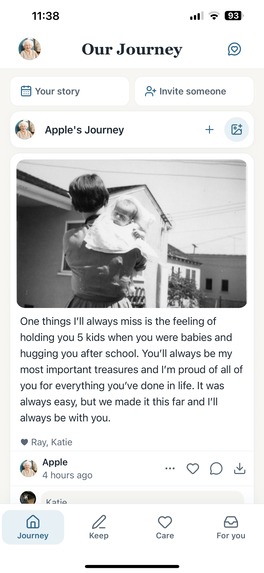
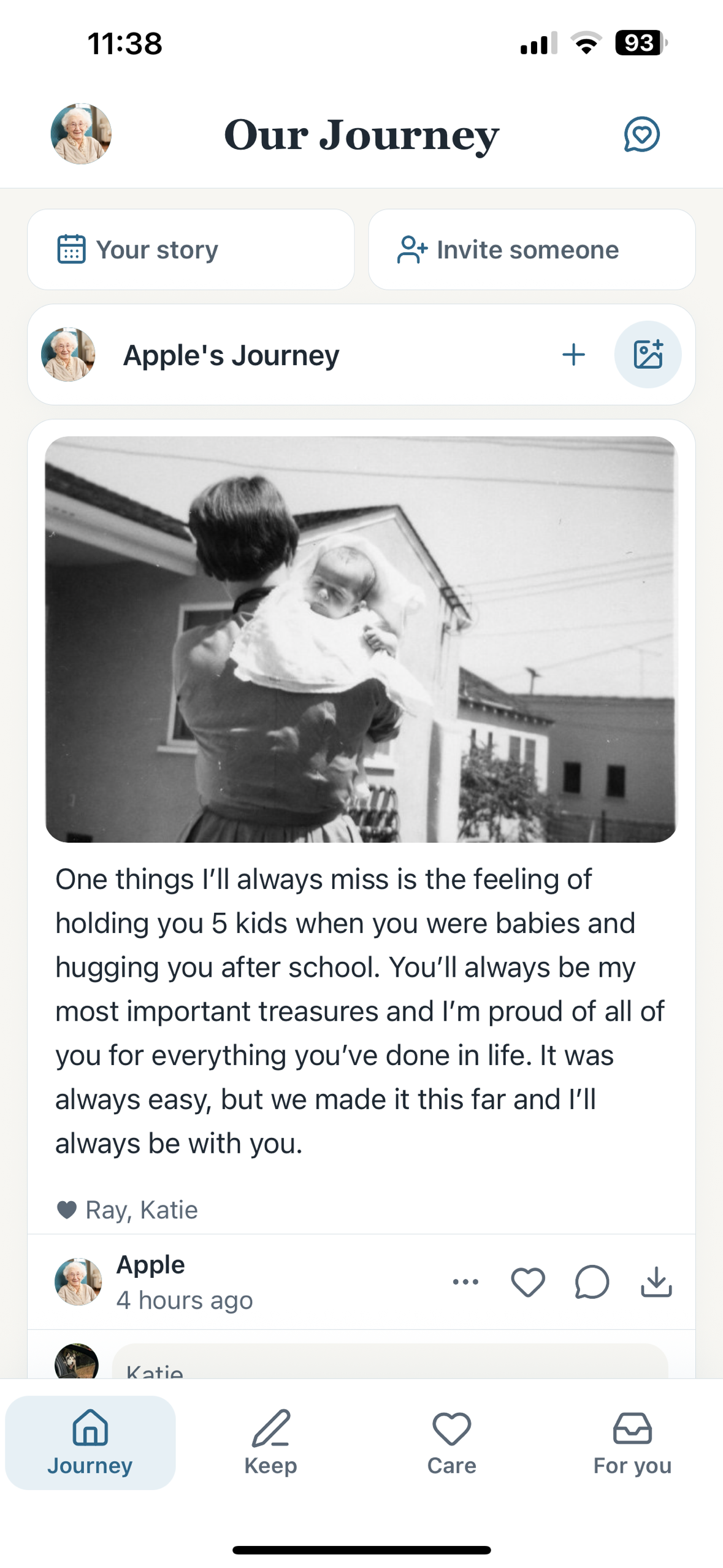
Private home feed where family share a memory, photo, and encouragement with the Captain.
-
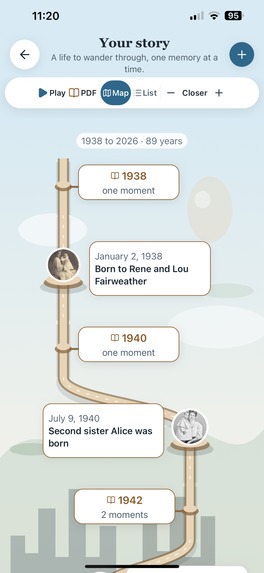
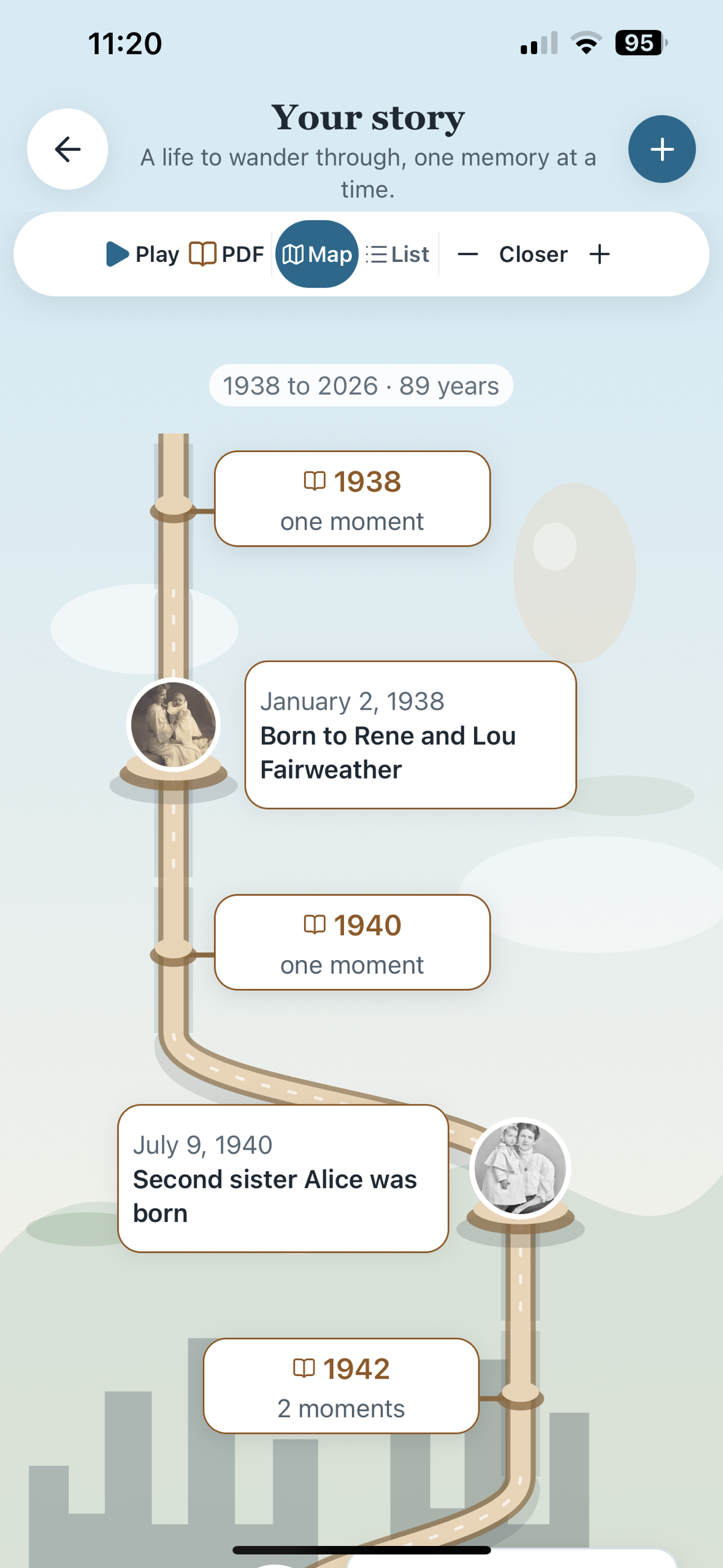
A living story timeline maps meaningful moments across a lifetime, with memories the family can add together.
-
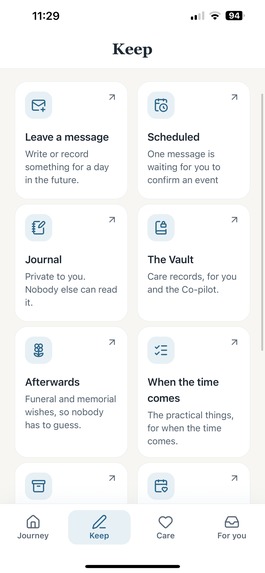
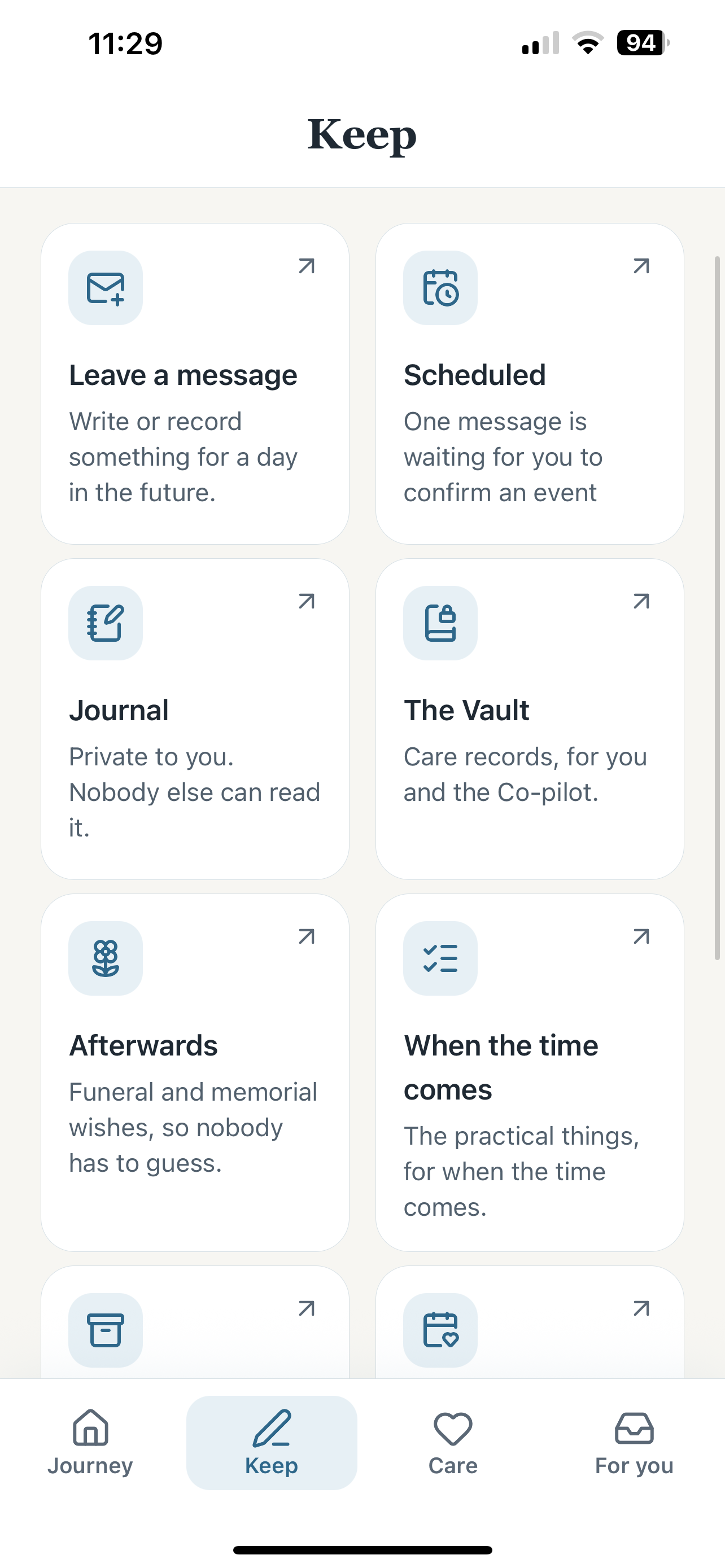
Keep hub for leaving messages, scheduling them, journaling, protecting the Vault, and planning Afterwards and When the time comes.
-
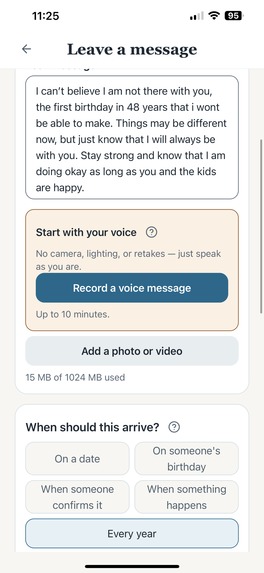
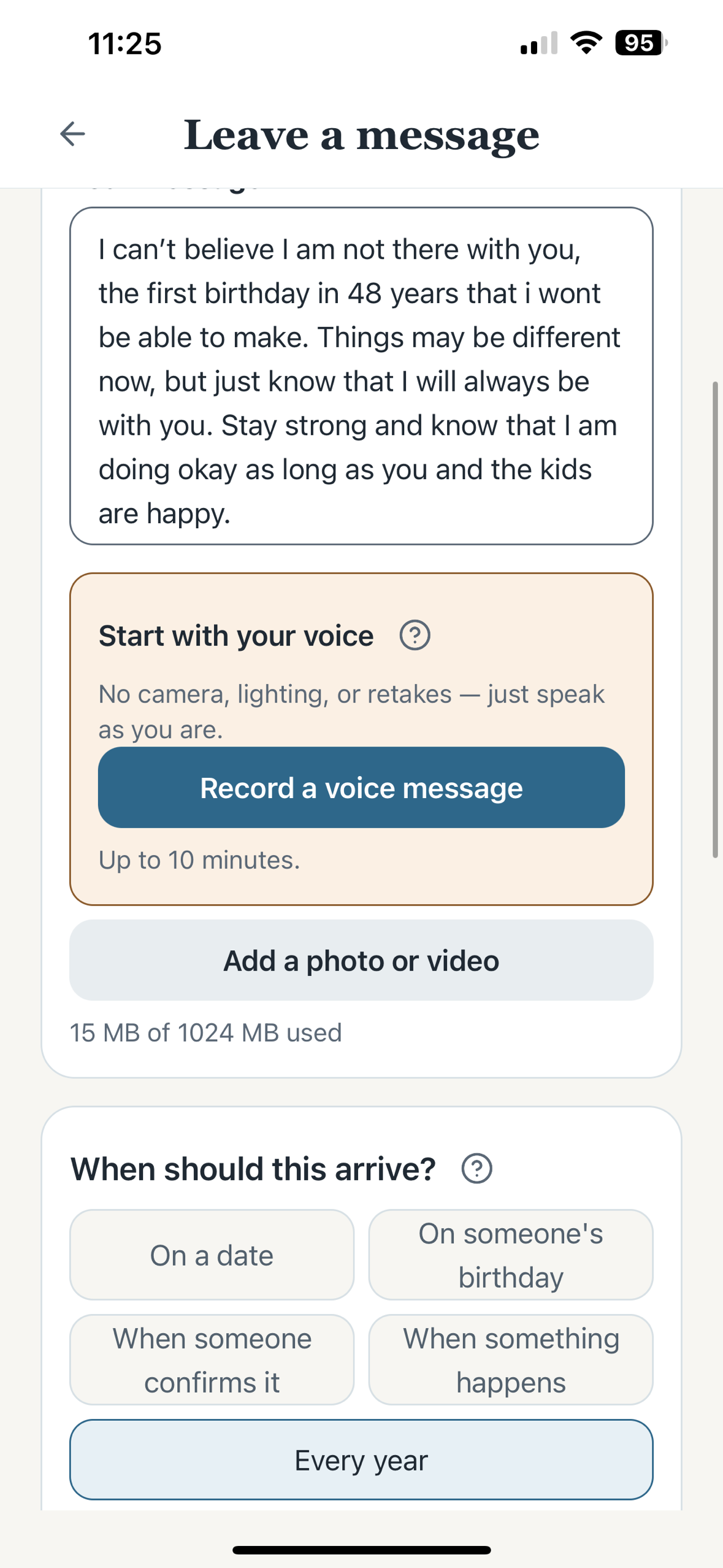
The Captain composes a private letter with text, voice, and a future date for delivery.
-
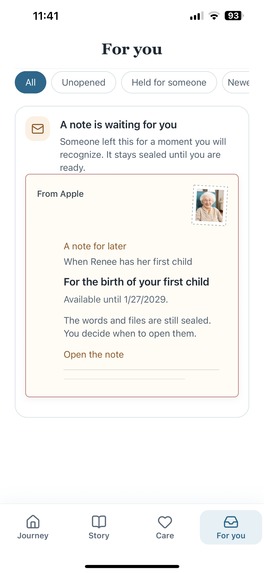
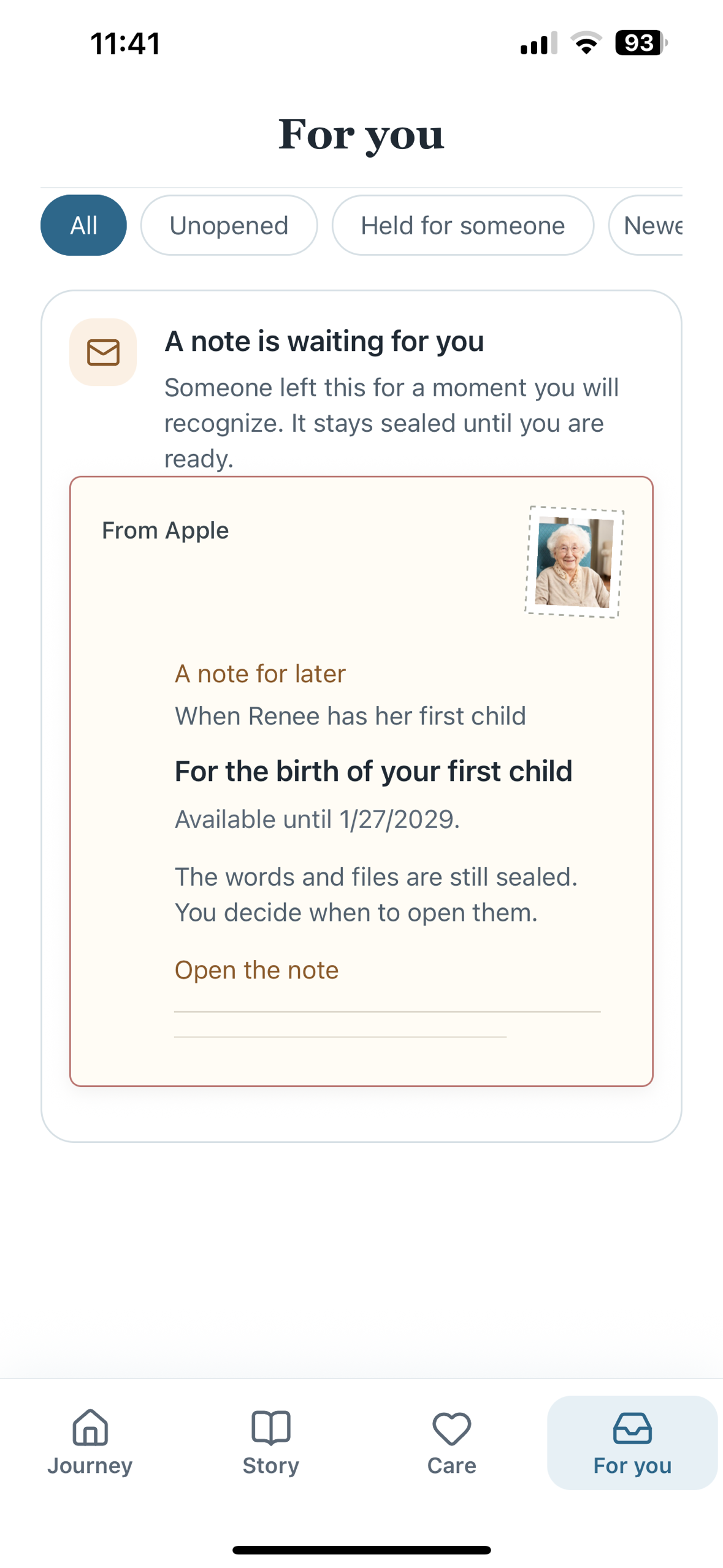
For You shows a sealed message held for a grandchild to open when she has her first baby.
-
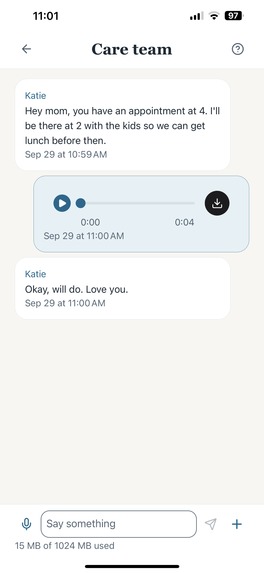
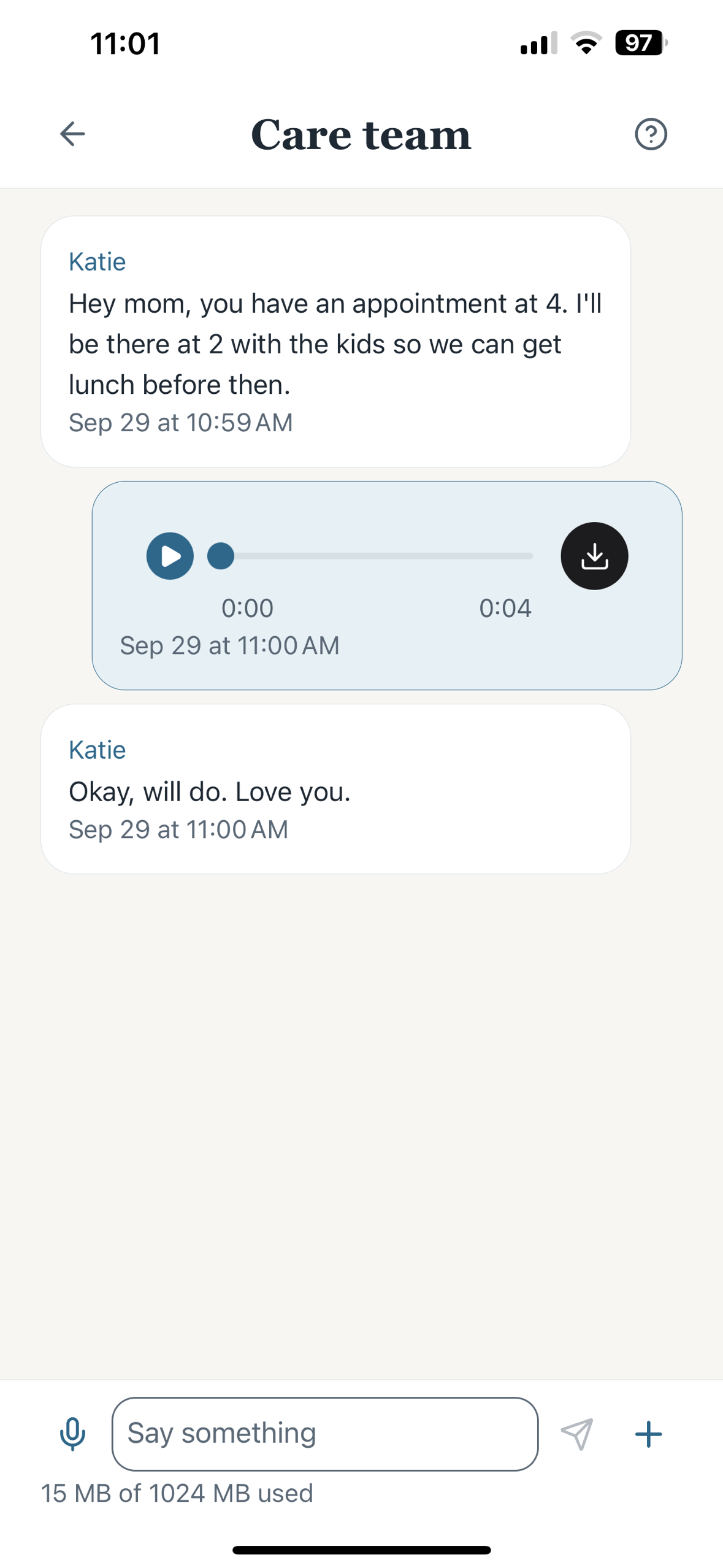
A private care-team conversation between a mother and daughter, sharing updates and support
-
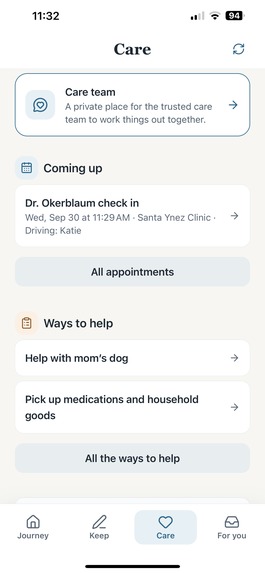
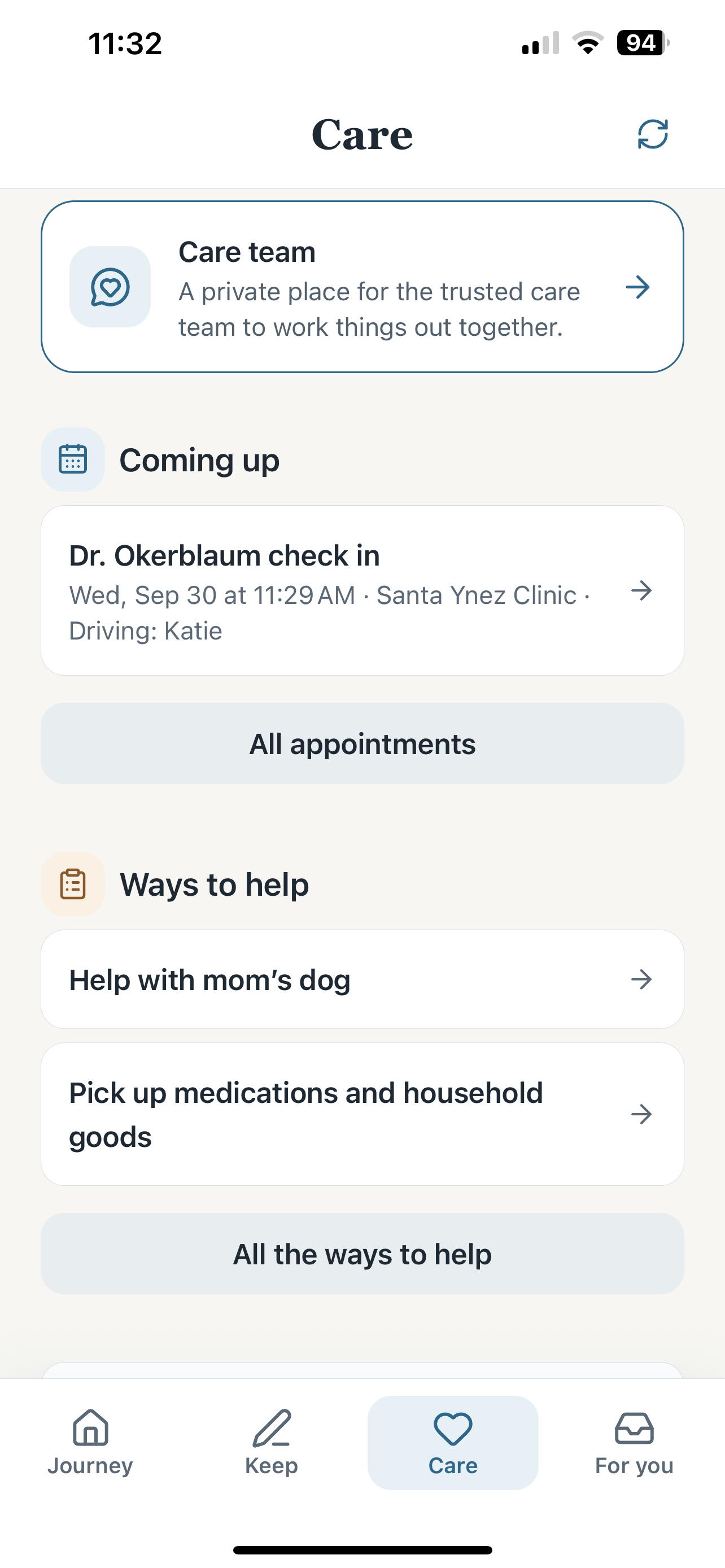
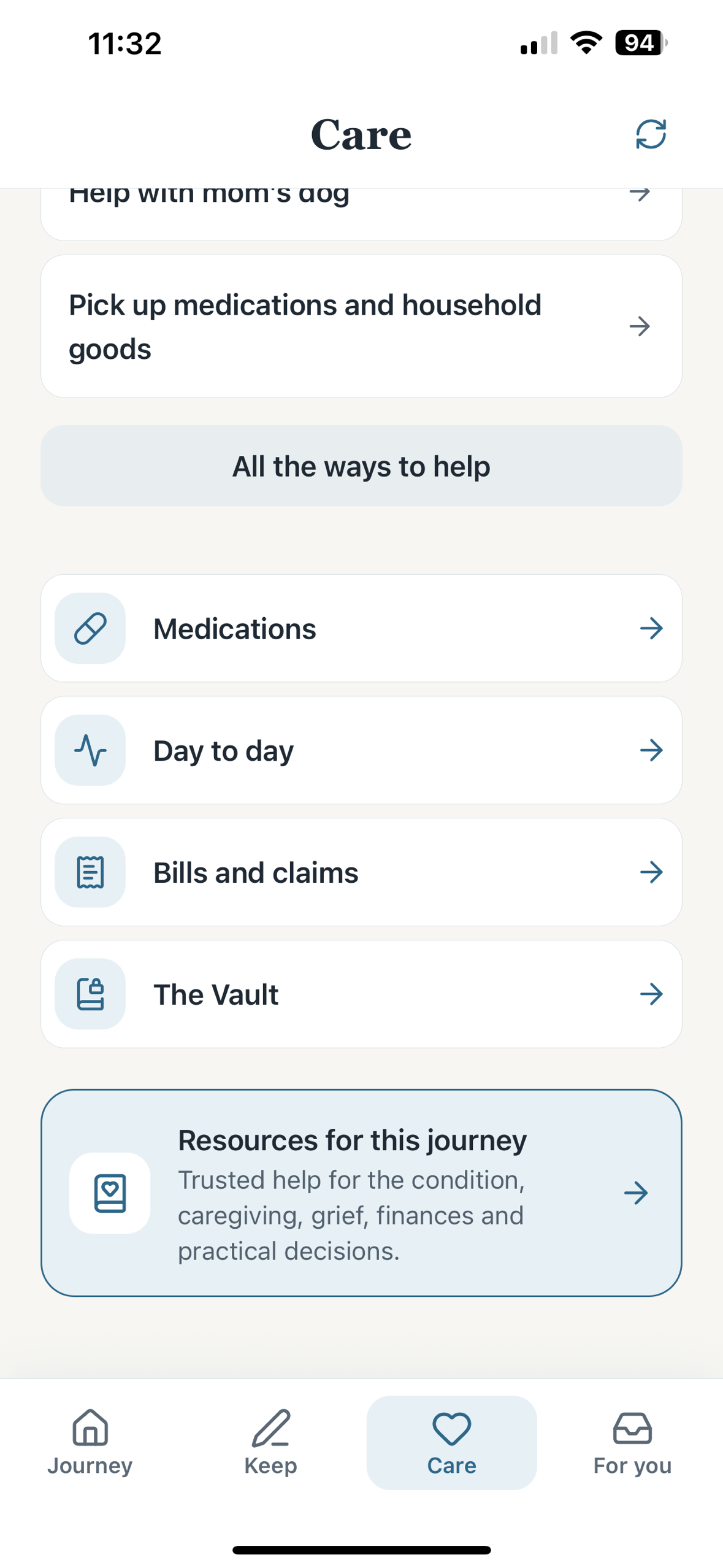
Care overview with an upcoming appointment and two ways family members can volunteer to help.
-
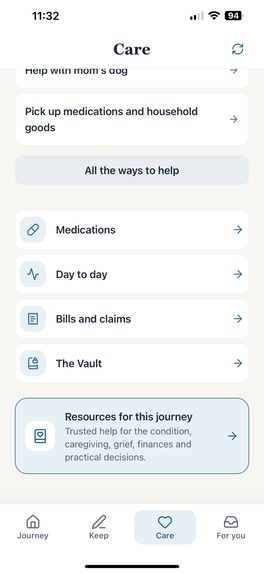
Care tools for medications, day-to-day support, bills and claims, the private Vault, and trusted resources for the journey.
-
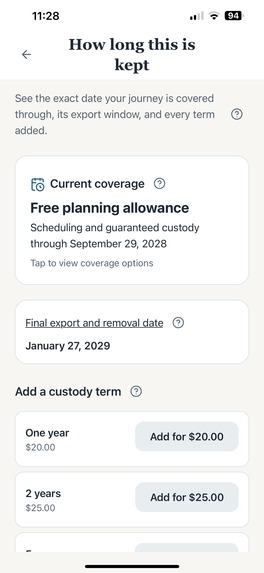
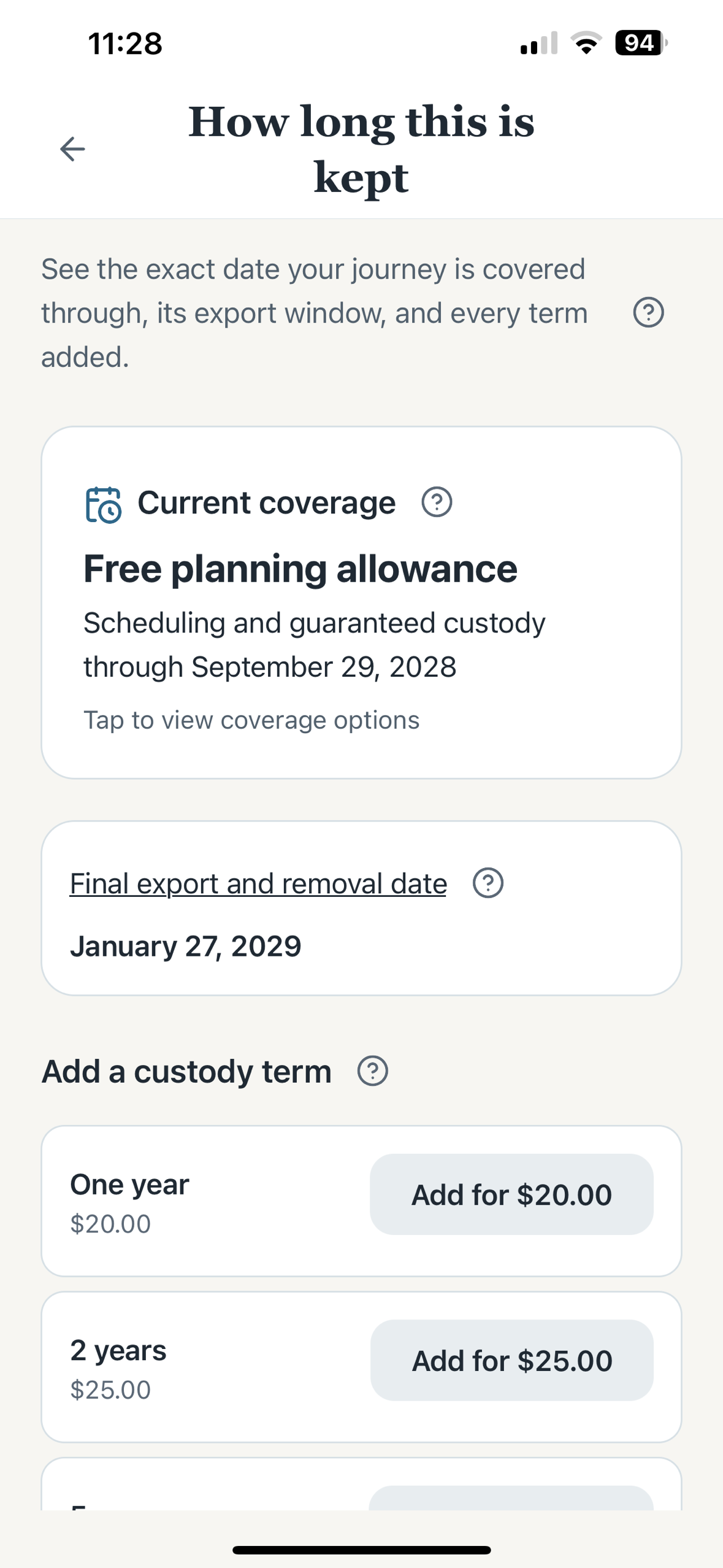
Coverage overview showing the journey’s current term, export date, and custody options through the two-year term.
-

Our Logo and App Icon

Why we built Our Journey
Our Journey began when my mother-in-law was diagnosed with pancreatic cancer.
She is my wife’s only parent and her best friend. As a family, we were thinking about our three daughters and the future moments she might not be here to see: birthdays, first days of school, graduations, weddings, and the difficult days when they would need her voice.
But we were also thinking about what this experience might feel like for her. She knows she may miss those moments. She may worry about leaving words unsaid, memories unshared, or her family carrying pain and regret after she is gone. We wanted to give her a way to remain present in their lives for as long as possible, while also leaving pieces of herself that could reach them later.
We also realized that serious illness can make someone feel isolated even when people love them deeply. The people around them may be busy coordinating care, working, parenting, and coping with their own grief. They should have more than just a storage box for future messages—they should feel and know that their are others still with them as they continue down the last part of their life's journey, which doesn't end but just branches off into the journeys of those whose lives they've impacted.
What we built
Our Journey is a private, invite-only family space for presence, care, and legacy.
The home feed gives the Captain and their invited circle a place to share updates, photos, voice notes, encouragement, reactions, and everyday moments. It is intentionally small and private: no strangers, no public audience, and no algorithm deciding what the family should see. The goal is to help the Captain feel supported and connected, not forgotten or alone.
The care tools help families share the practical weight of serious illness through tasks, appointments, medications, bills, claims, resources, and private care-team messaging.
The legacy tools let someone preserve written messages, voice recordings, photos, videos, memories, and life stories. Messages can be sealed until a chosen date, event, or life moment, such as a graduation, wedding, birthday, or a day when someone needs encouragement.
Family members can also add memories to a shared story timeline and export it as a keepsake book. This means the person’s story is not only something they leave behind—it is something the family continues creating together.
Role-based permissions keep the Captain in control while allowing co-pilots, care partners, friends, and family members to help in appropriate ways. A person may be trusted to coordinate an appointment without automatically seeing private legacy messages, and a family member may contribute a memory without being able to alter someone else’s story.
How we built it
The mobile app is built with Expo, React Native, TypeScript, and Expo Router for iOS and Android. Supabase provides authentication, PostgreSQL data storage, row-level security, scheduled delivery functions, and background processing. Media is stored through Cloudflare infrastructure, and RevenueCat powers the native custody purchases and one-time coverage terms.
We also built notification delivery, media compression, account deletion requests, exports, purchase verification, refund reconciliation, and a small website for support, privacy, continuity, and gifting information.
The app supports English, Simplified Chinese, and Japanese foundations, with localization designed to make the experience feel gentle and understandable rather than clinical.
The hardest parts
The most difficult problem was designing for a future that may be years away. Scheduled delivery has to be reliable, but families also need exports and continuity guidance so important material does not exist only inside one company’s servers.
The second challenge was permission design. A family member may be trusted to help with appointments but not to read private legacy messages. A contributor may be able to add a memory but not delete someone else’s story. We implemented these boundaries in the database as well as in the interface.
The third challenge was emotional. This is an app about love, illness, caregiving, and passing. We wanted it to feel warm without being sentimental in a way that felt artificial, and practical without becoming cold or medical.
What we learned
We learned that the most important feature is reducing friction today. A two-minute voice recording made now may matter more than a perfect recording that never happens. We also learned that “forever” is not a responsible product promise. A better promise is clear coverage, verified delivery, independent exports, and honest continuity guidance.
Our Journey is built around a simple idea: when someone cannot be present for a future moment, their words, voice, and stories should still have a way to arrive.
Built With
- cloudflare
- expo.io
- javascript
- postgresql
- react-native
- revenucat
- supabase
- typescript
