Inspiration
In Botswana, traditional debit and credit cards come with security risks such as fraud, scam calls, stolen PINs, and lost or stolen cards. Bio Pay eliminates these vulnerabilities through biometric authentication, ensuring that only the rightful owner can authorize payments using their fingerprint. This makes transactions significantly safer and reduces the risk of unauthorized access. Beyond security, Bio Pay enhances efficiency by removing the need to carry a physical card, which is especially beneficial in high-traffic areas like malls, taxis, and retail stores. Additionally, users no longer need to withdraw cash, minimizing reliance on ATMs and reducing exposure to theft. Given Botswana’s frequent network issues, Bio Pay introduces offline authentication, allowing transactions to be processed even without connectivity through an offline database. Once the system is restored, transactions sync seamlessly, ensuring uninterrupted service across all Point of Sale (POS) machines and devices. By combining security, convenience, and reliability, Bio Pay transforms banking into a secure, touch-first experience, redefining how FNB clients in Botswana interact with their finances.
What it does
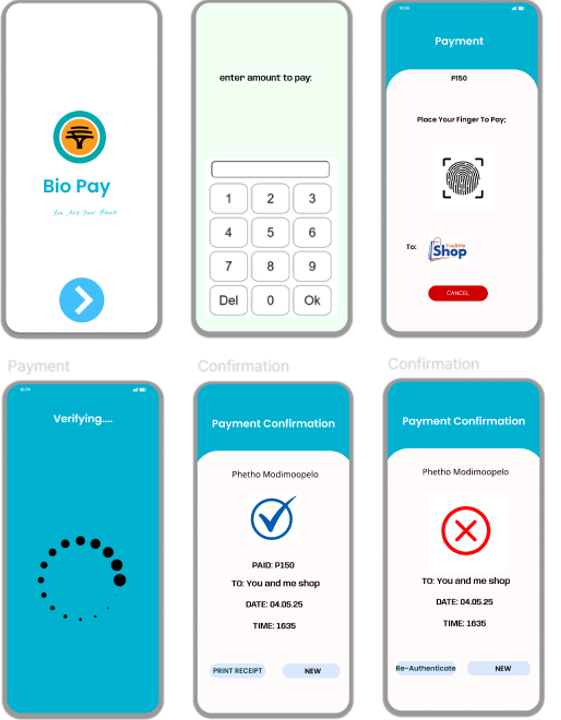
As with all FNB banking services, customer details—including account numbers and balances—are securely stored within the bank’s database. At any Bio Pay-enabled Point of Sale (PoS) device, instead of swiping a card, the transaction process follows these steps:
1.The FNB client places their finger on the PoS device for biometric authentication.
2.The fingerprint data is instantly converted into a unique 16-digit hash, ensuring privacy and security.
3.The hash is matched against FNB’s secure database, verifying account details and available funds. If sufficient funds are available, the transaction is authorized, and the new balance is recorded.
In cases of network downtime, Bio Pay enables offline authentication, deducting the payment from the last recorded balance. Once connectivity is restored, the system syncs seamlessly, ensuring accurate transaction updates across all PoS devices.
How we built it
we attempted to build a functional mobile/web app using python
Challenges we ran into
Time constraints and preparation were two of the largest obstacles; given our skill set, creating a fully functional prototype in a short amount of time was difficult. Effective teamwork and careful prioritisation were necessary to balance design, development, and integration while guaranteeing a flawless user experience.
Creating a distinct 16-digit hash for authentication while incorporating fingerprint scanning into the system was another significant challenge. why was it a significant challenge? because we needed to ensure secure biometric processing while preserving privacy and adhering to security standards without storing raw fingerprint data on the PoS device .
our file was also too big to be added into our repository on time :)
Accomplishments that we're proud of
*we tackled a real prominent security issue with biometric solutions. *even under time constraints, we used every team members strengths and time effeciently and accordingly. *we clearly articulated our ideas, and it allowed an effective , smooth pitch. *we were creative enough to create a tailored solution suited to botswana and surrounding countries (using FNB's needs)
What we learned
*we learned the importance of security in banking and its current set backs and impact, in this era. *we understood, accepted and tackled the issue of network, making us having us having to adapt. *we learnt to work and collaborate with other people from other fields with other skillsets.
What's next for Bio Pay
- to not only have PoS machines running it but having a separate Bio Pay PoS application that can run in the phone to run it. once that can be accomplished we could conduct pilot programs and expand its usability to taxis and other informal sectors.



Log in or sign up for Devpost to join the conversation.