-
-
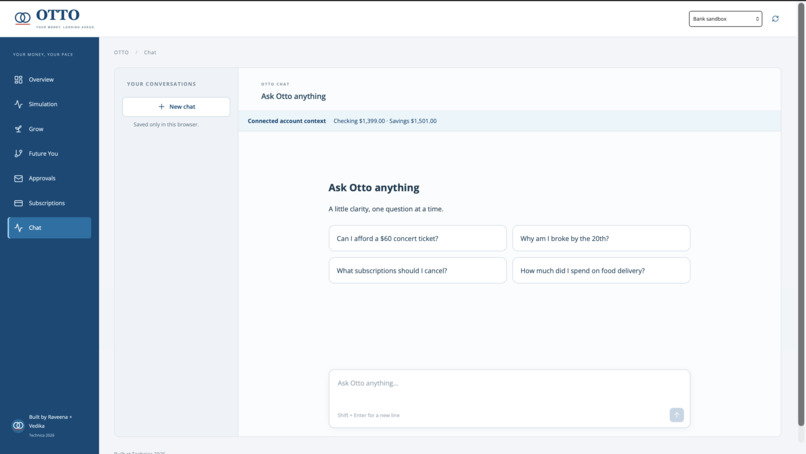
AI Chat Box
-
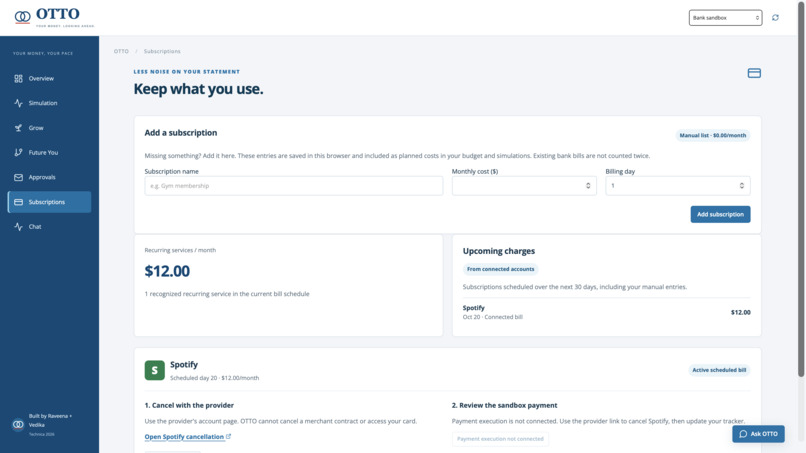
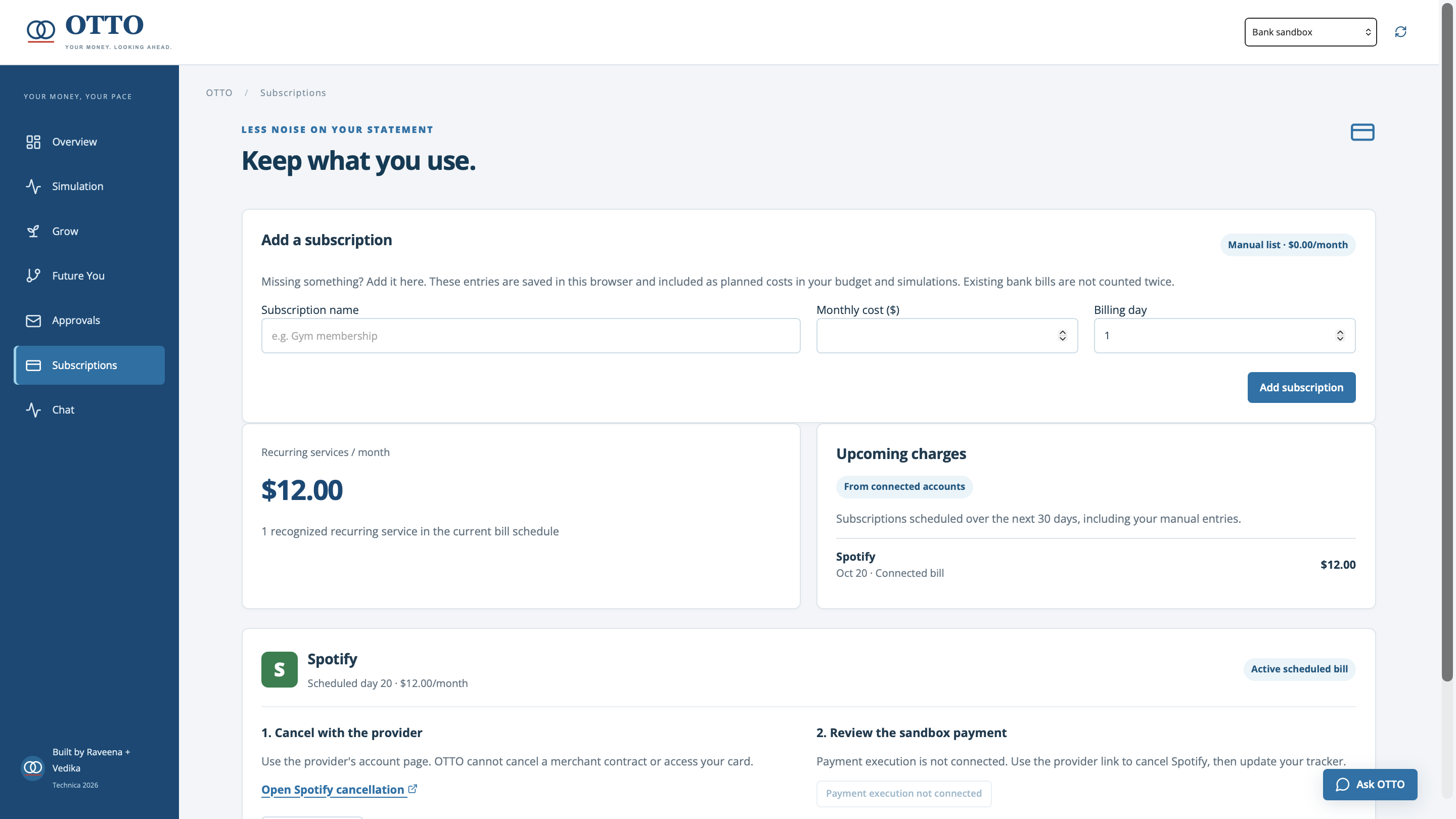
Subscription Tab
-
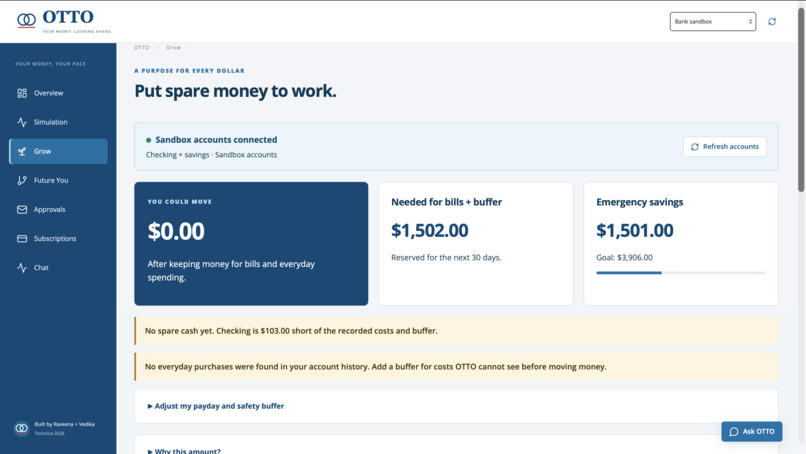
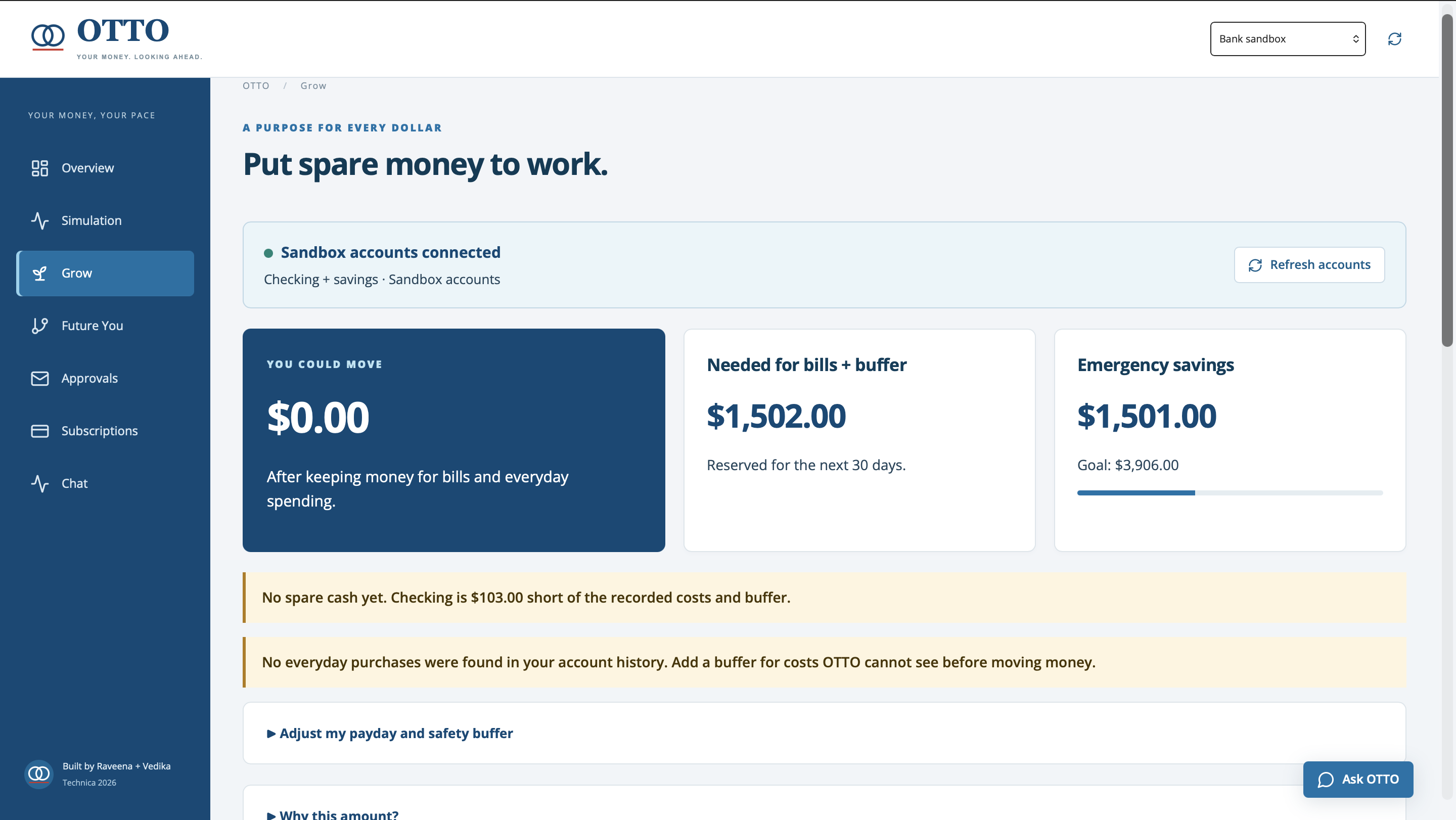
Grow Tab
-
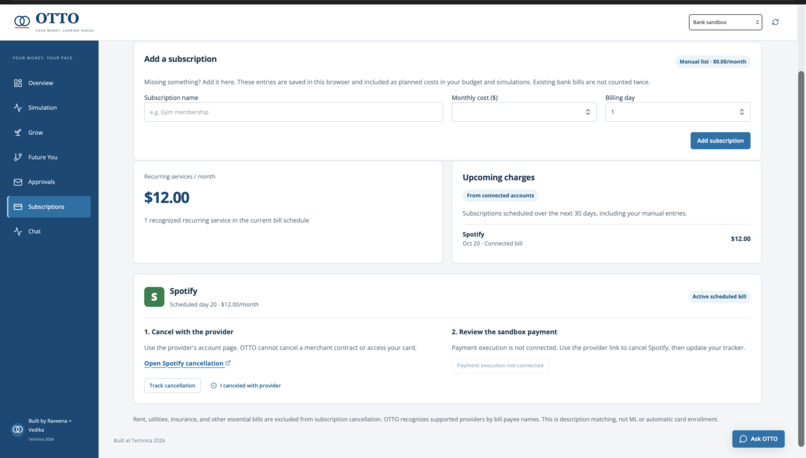
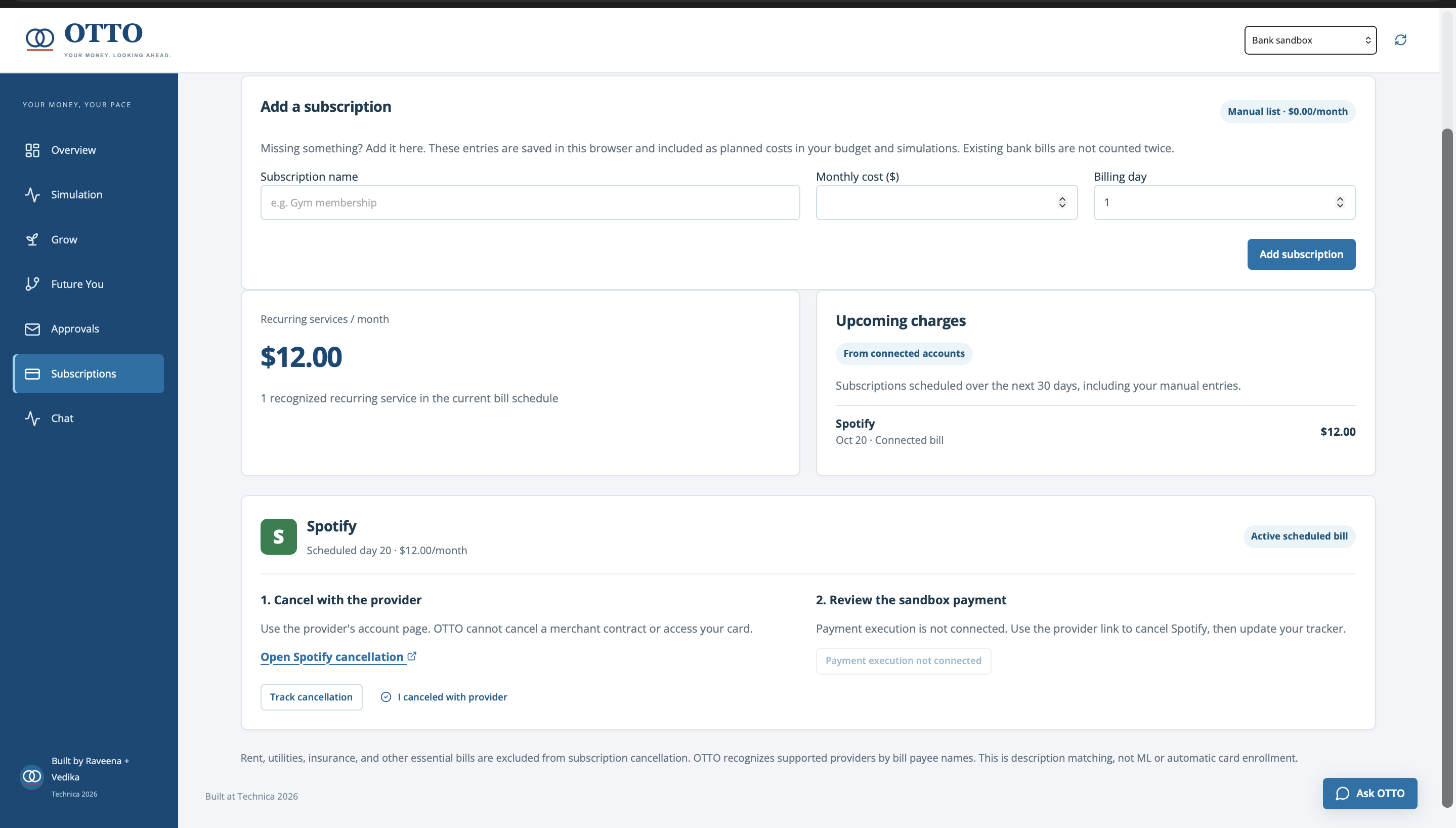
2nd Part of Subscription Tab
-
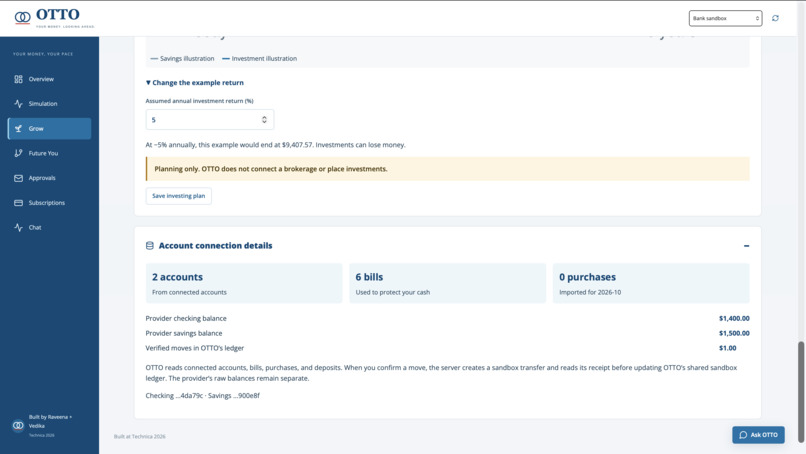
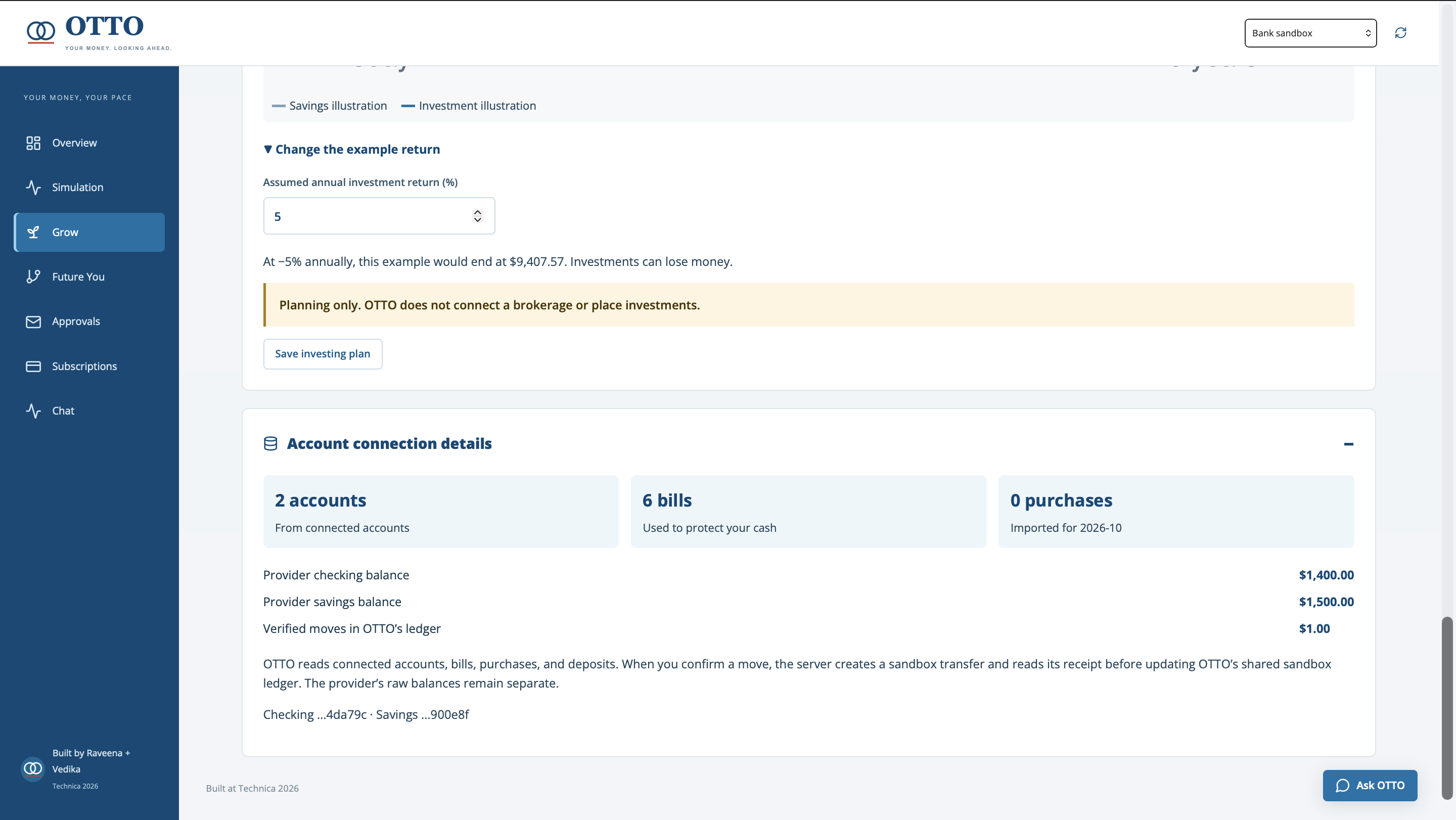
6th Part of Grow Tab
-
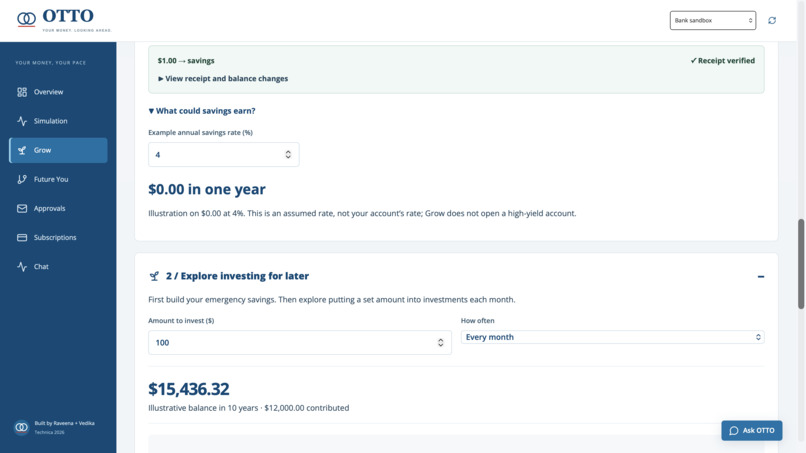
4th Part of Grow Tab
-
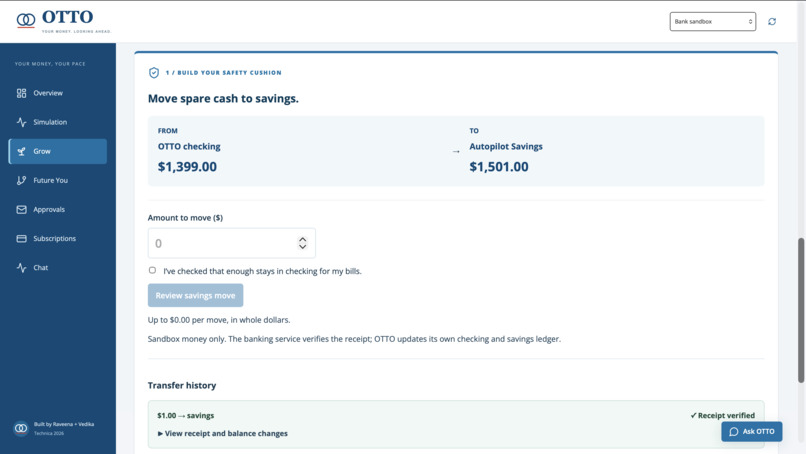
3rd Part of Grow Tab
-
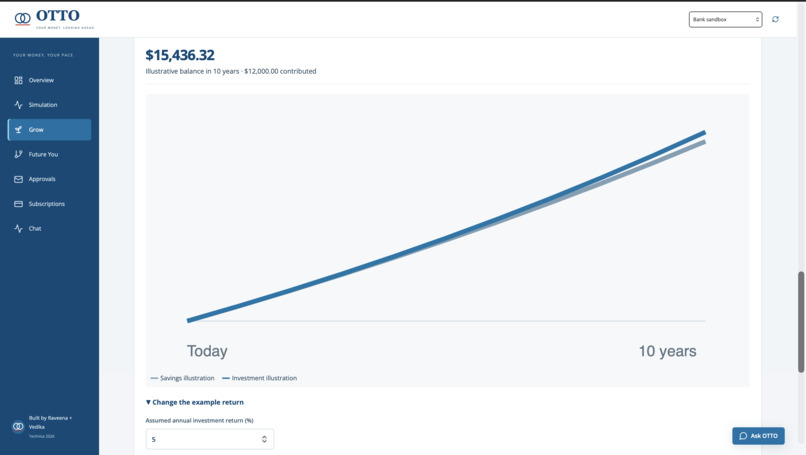
5th Part of Grow Tab
-
2nd Part of Simulation Tab
-
2nd Part of Grow Tab
-
2nd Part of Overview Tab
-
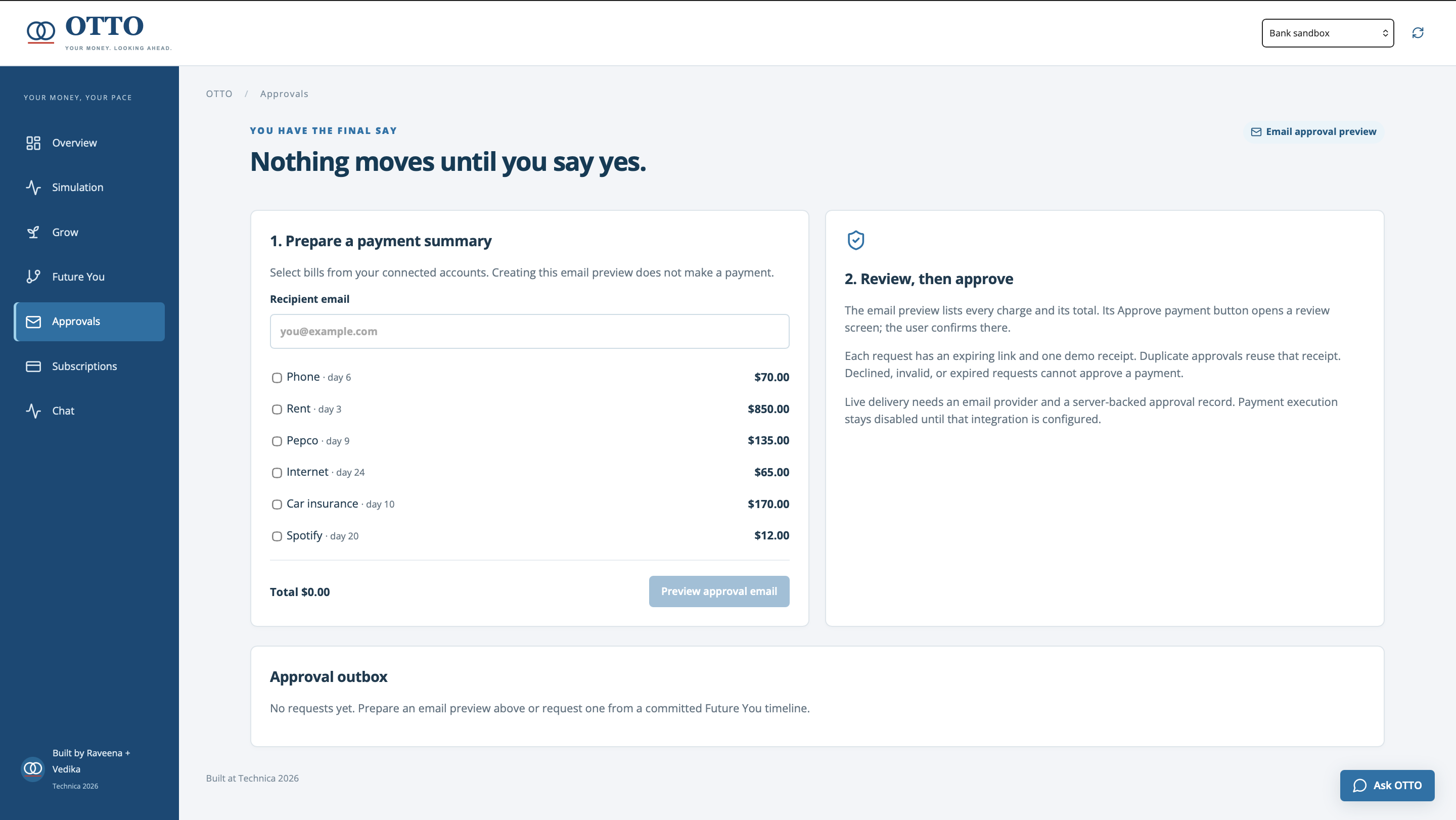
Approval Tab
-
7th Part of Grow Tab
-
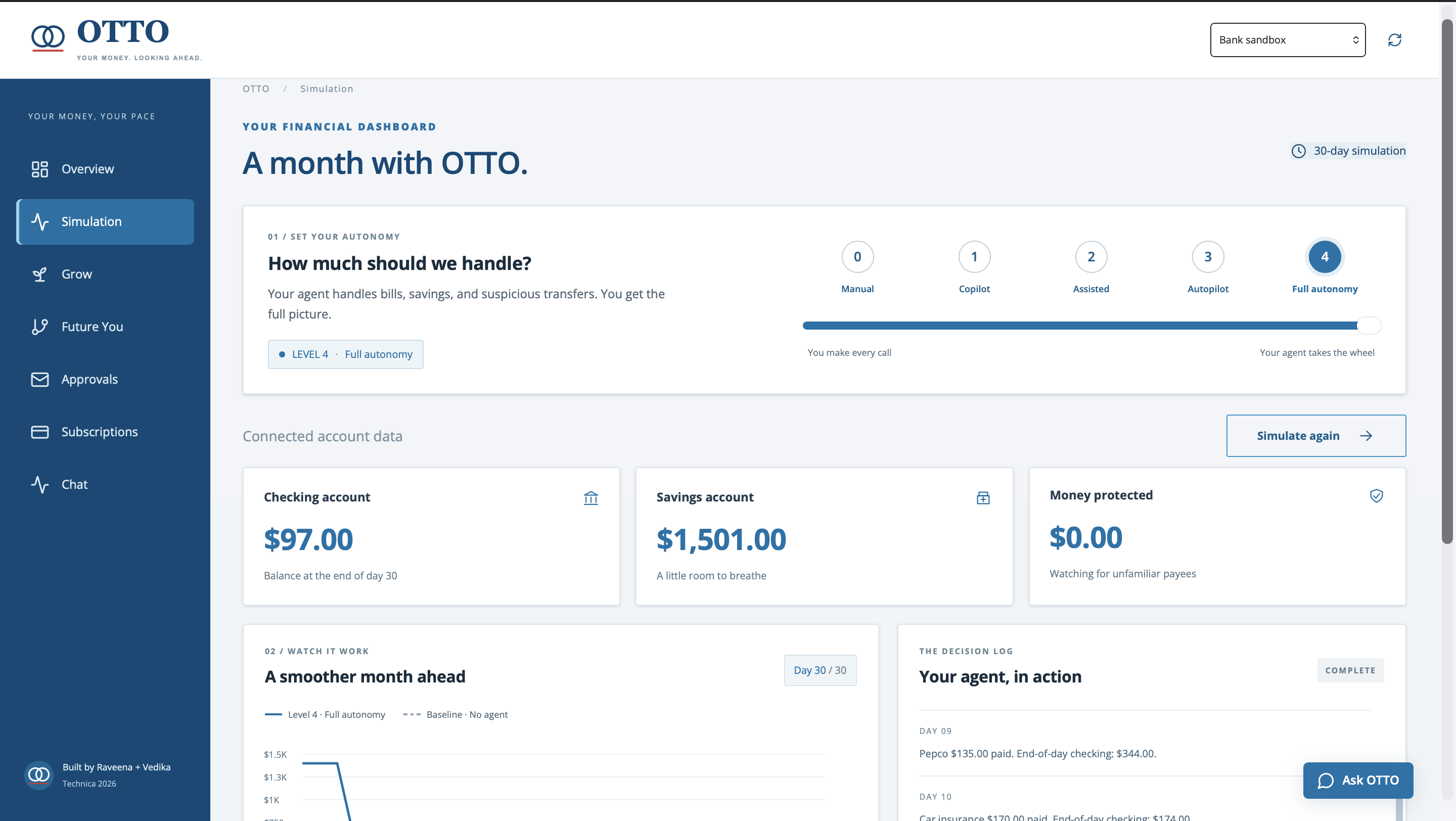
Simulation Tab
-
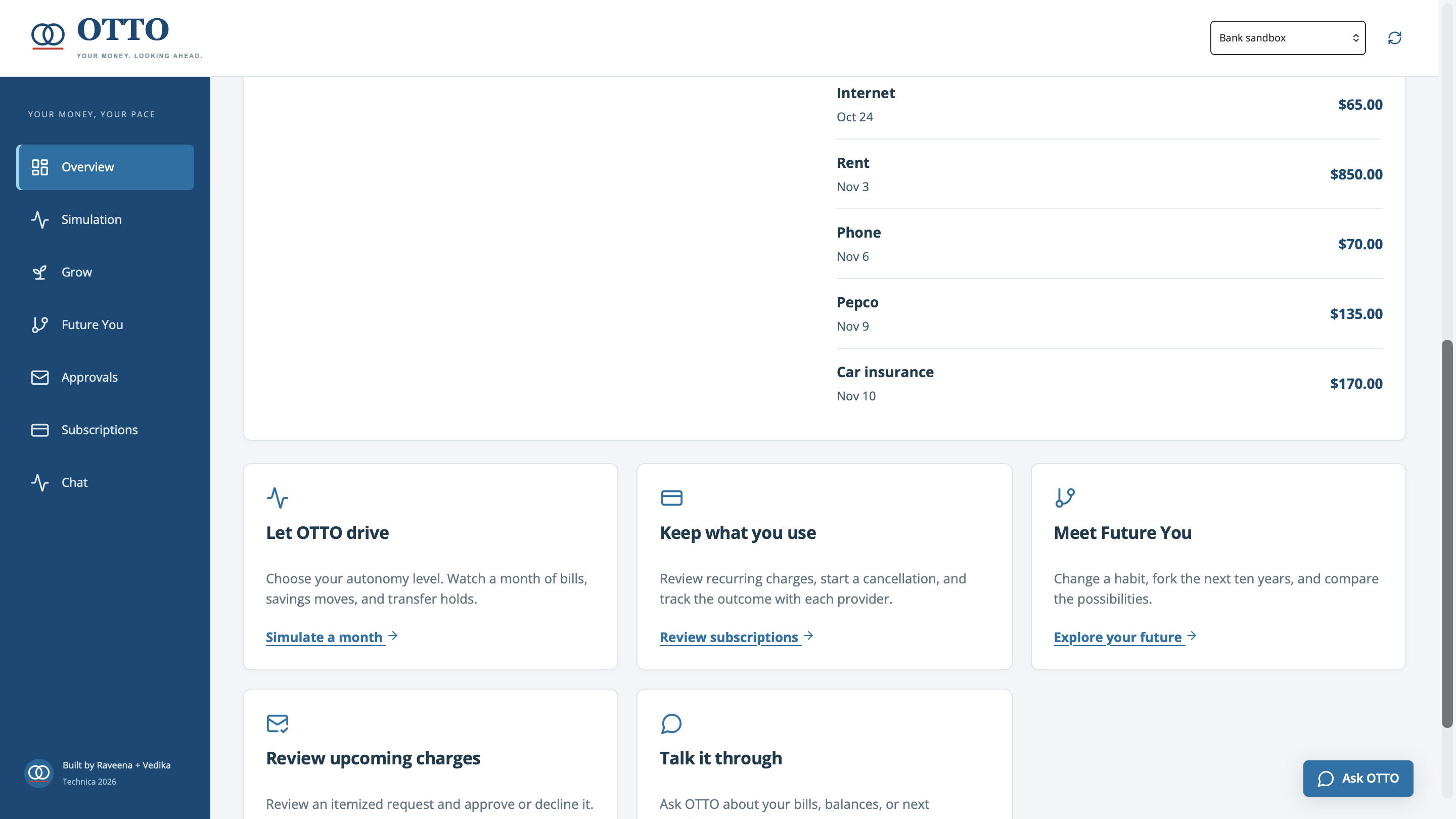
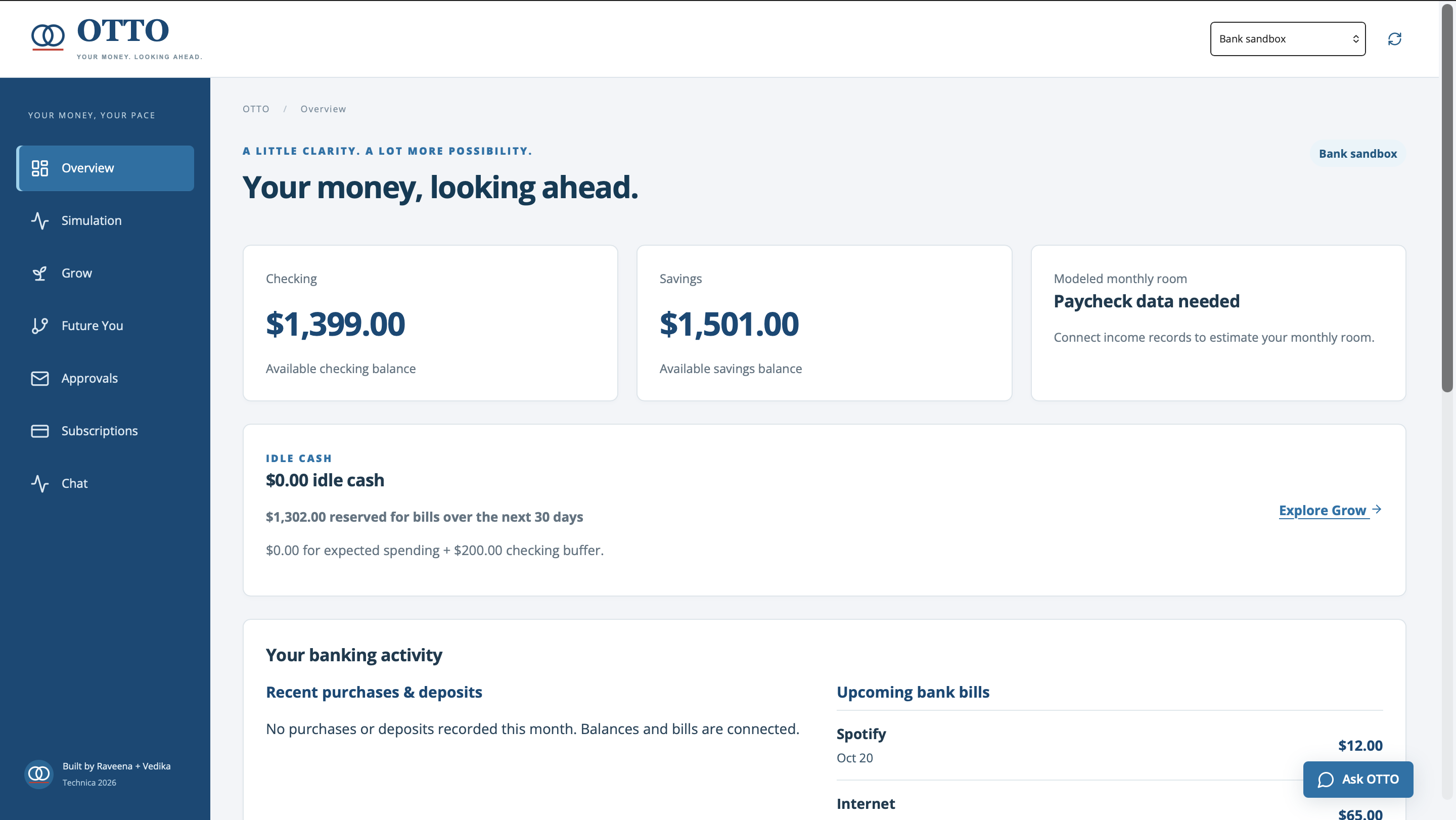
Overview Tab

Inspiration
Your bank account balance could appear to be normal until your rent, phone bill, and insurance unexpectedly due at the same time. You can't always drive, but you can always know your money. You're much more than your balances. That's the question we set out to solve. We asked ourselves: can you manage your money better than choosing your self-driving car's level of autonomy? You choose how much help you need, ranging from warnings and nudges to full-blown simulations. Your bank balance appears comforting, but not when you have the rent, insurance and phone bill all due on the same day. That's why we designed OTTO To know not only your account balances but a time and place to pay attention. And what's around the bend? We wondered what if managing your money was as easy as adjusting the autopilot of an autonomous vehicle? OTO provides a trade-off between partial support (warnings and suggestions) and complete simulated autonomy.
What it does
OTTO consolidates your daily decision-making and goals into one financial tool:
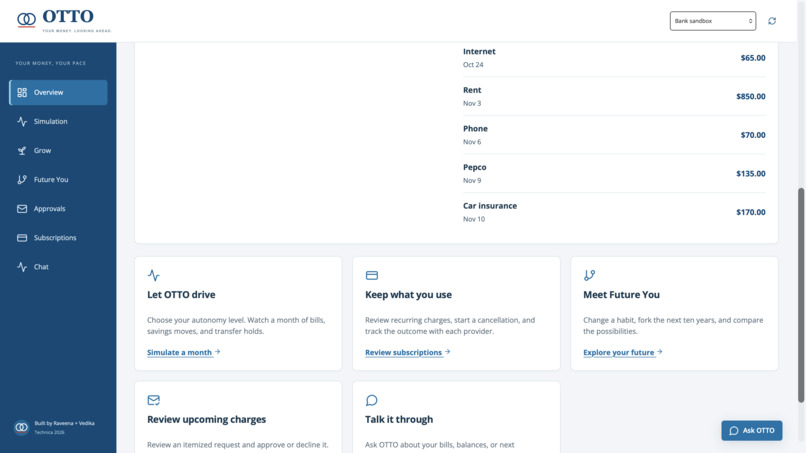
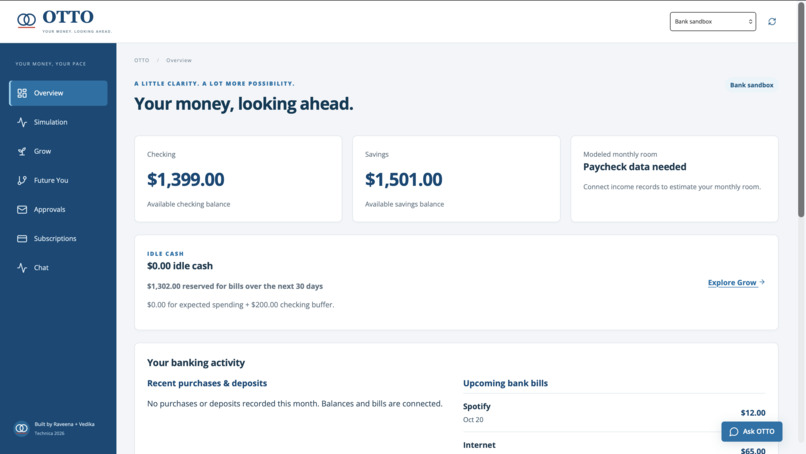
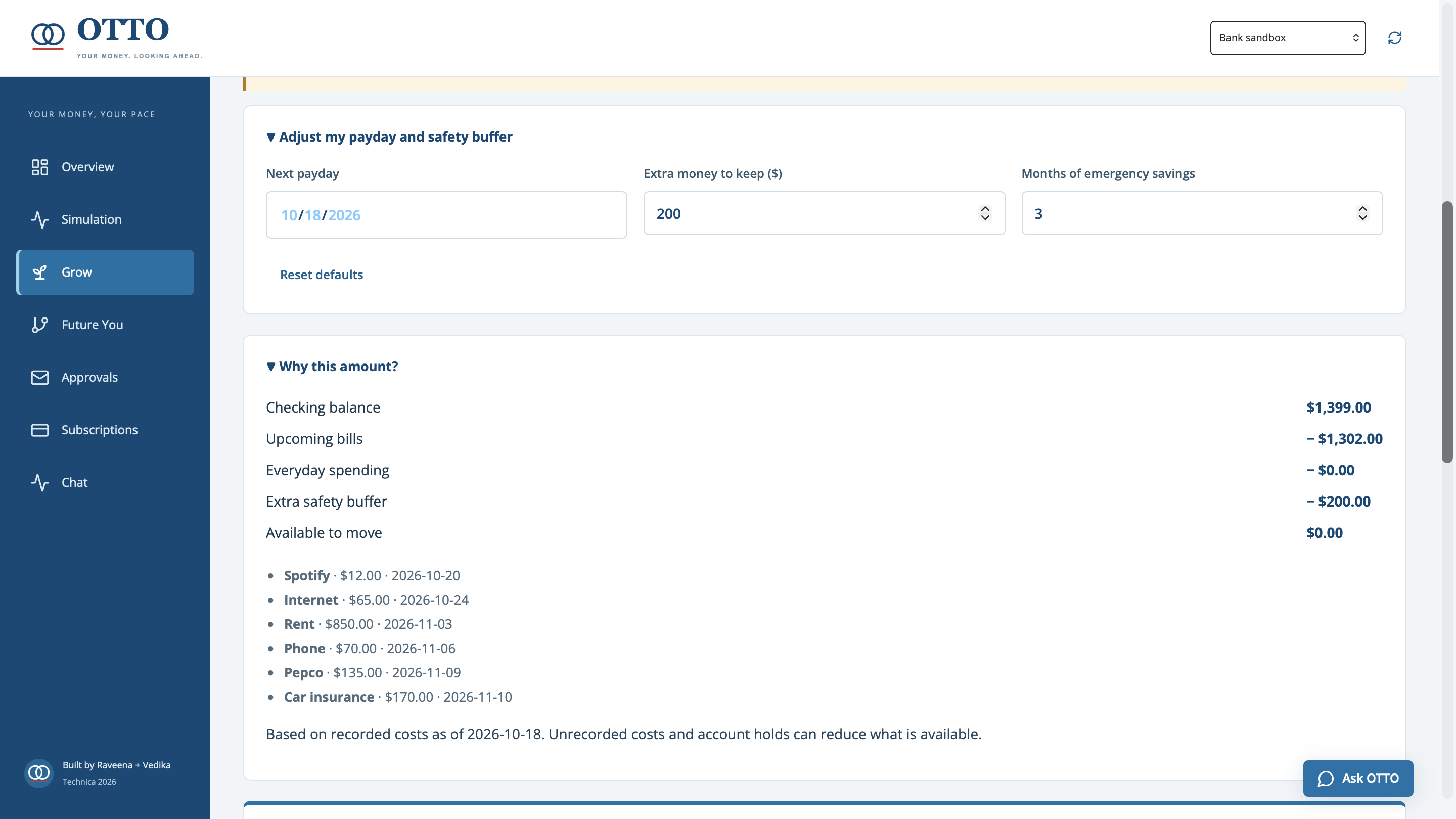
- Summary: Displays balances, bill due dates, and can estimate the idle money remaining after the scheduled bill payments.
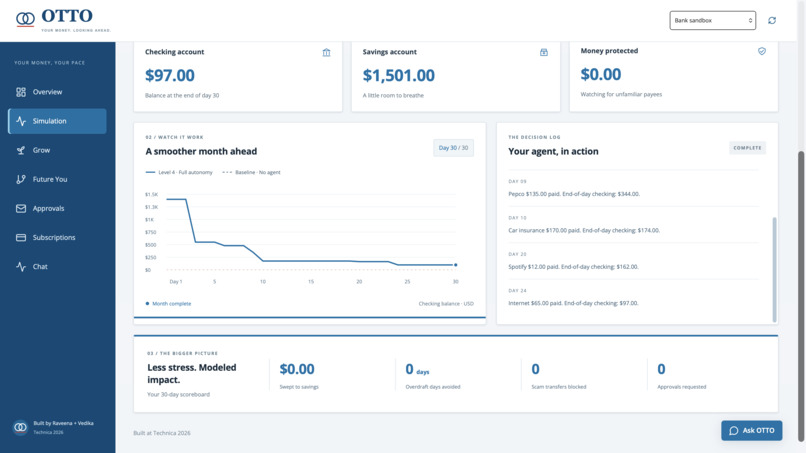
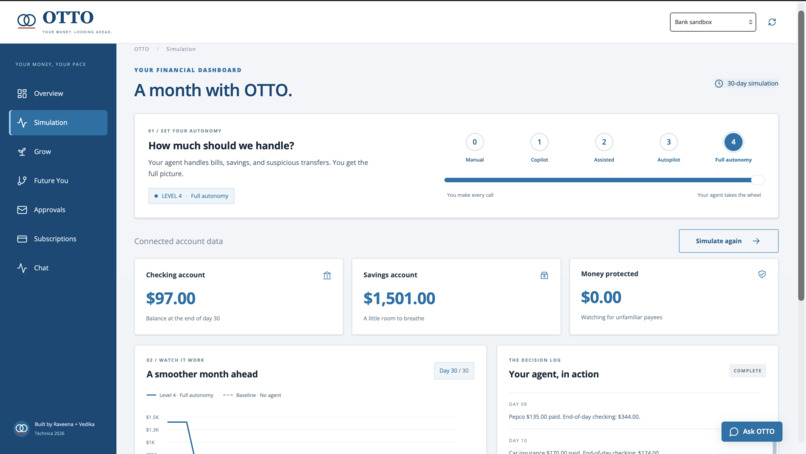
- Simulation: runs a one month simulation and compares five different levels of autonomy. OTTO models rescheduling a bill, transferring money out of savings, flagging suspicious transfers and sweeping idle cash to savings.
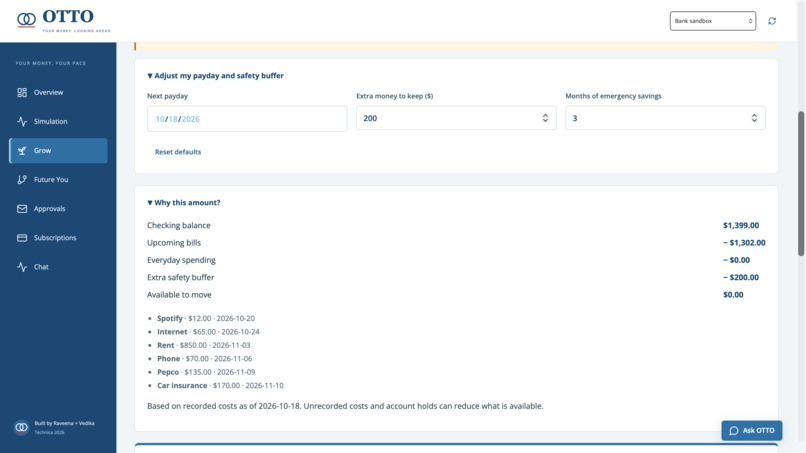
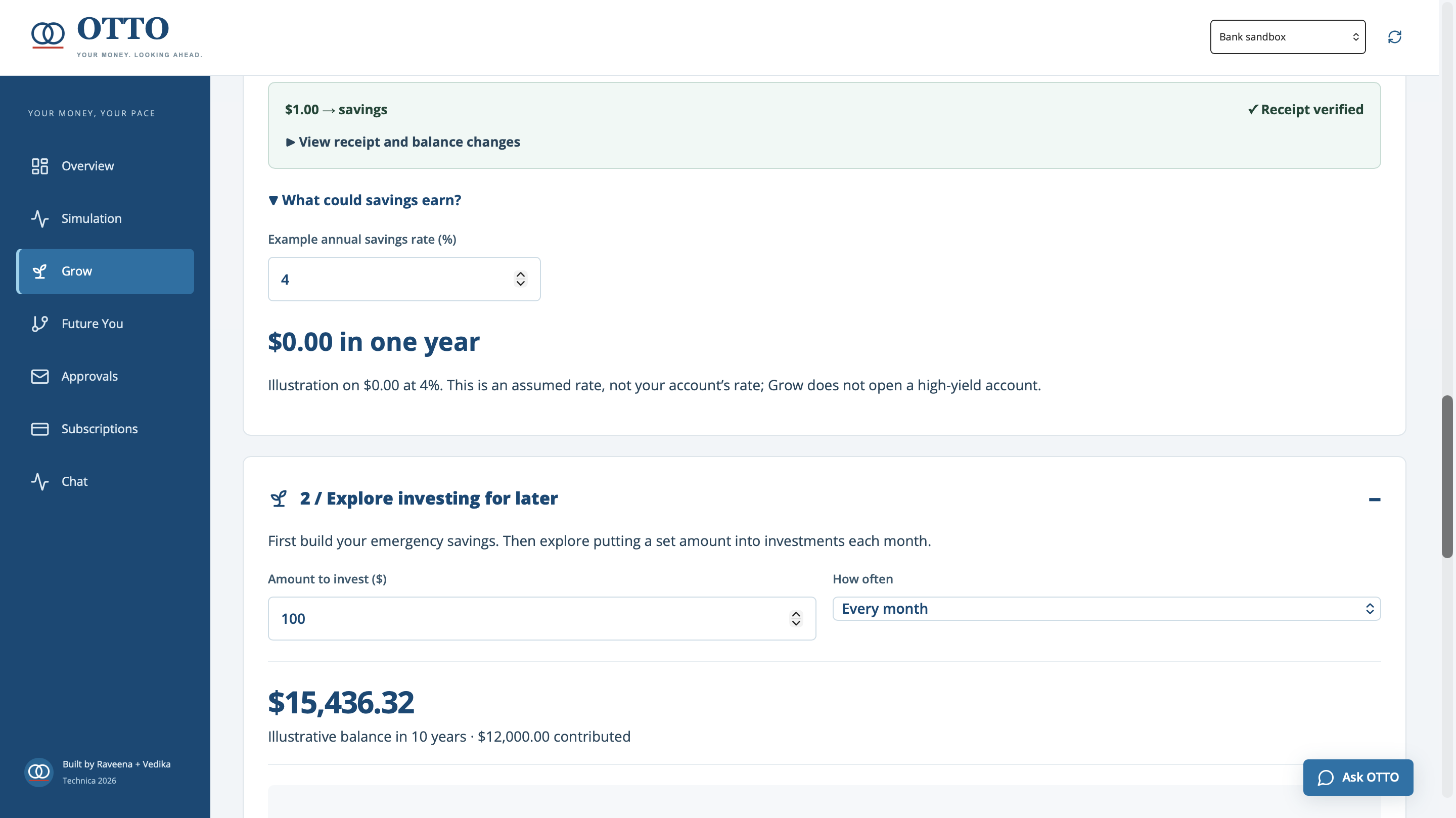
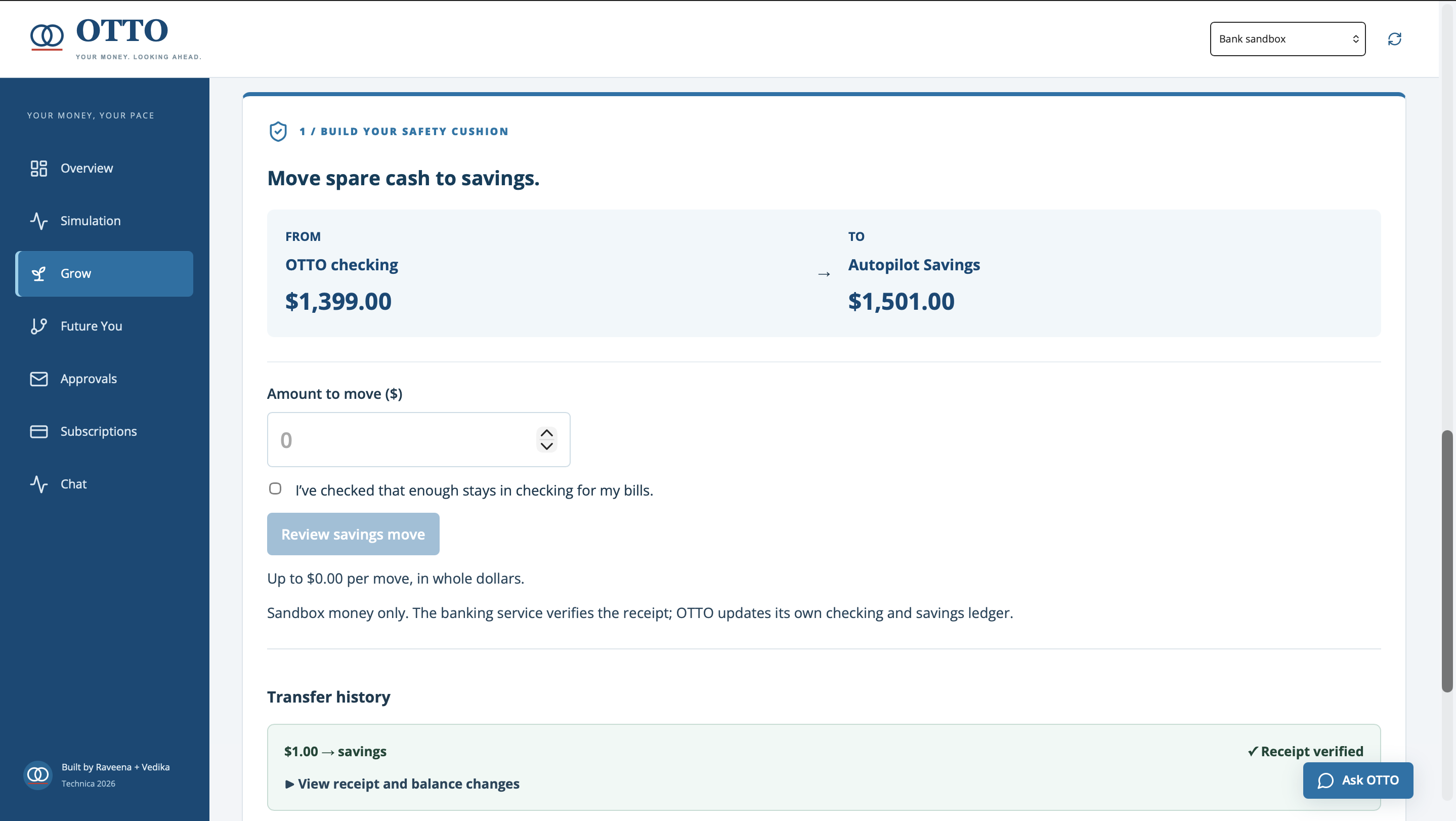
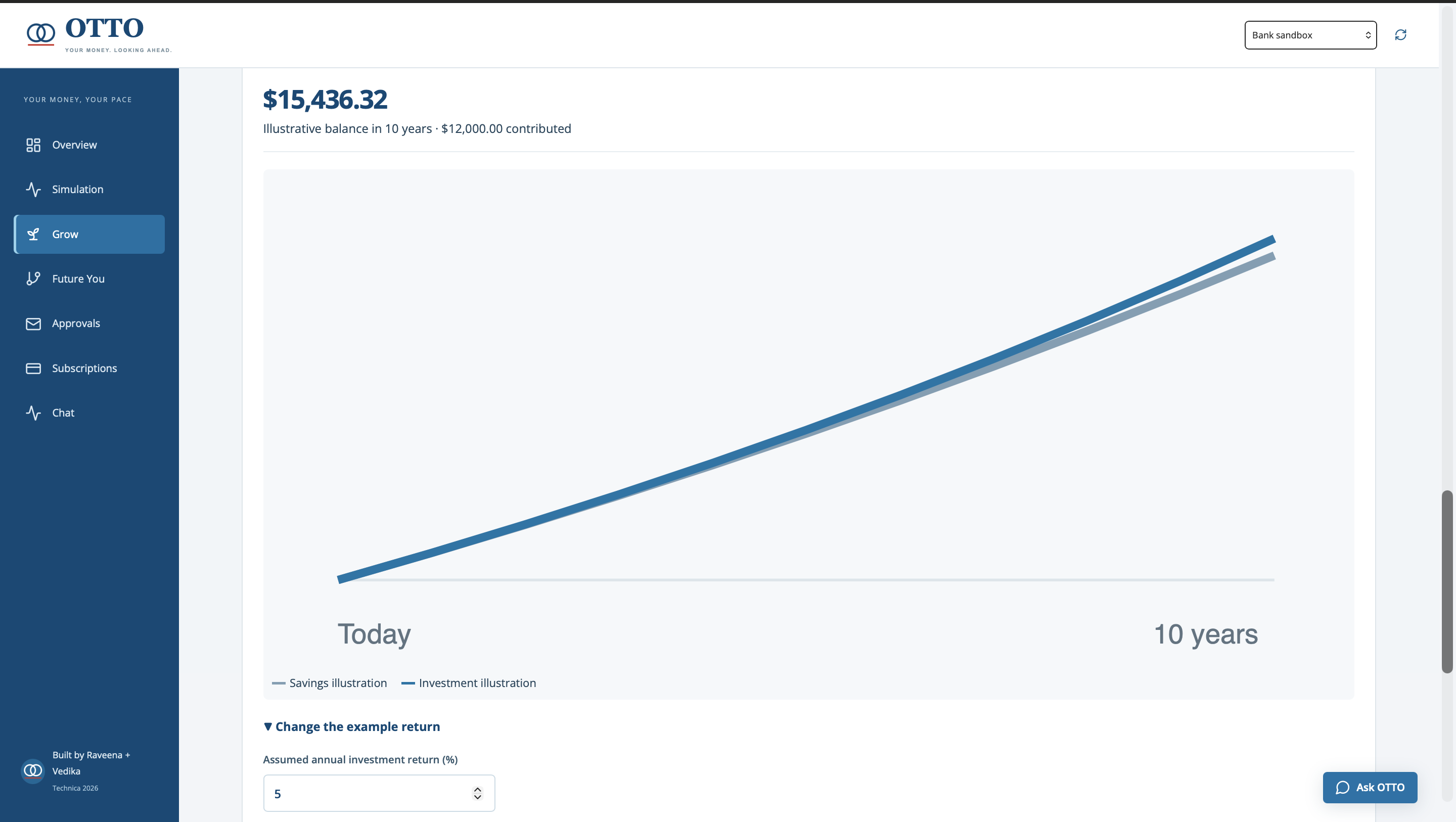
- Grow: Allows users to build an emergency cushion, explore their investing scenarios, and access a Nessie sandbox savings transfer.
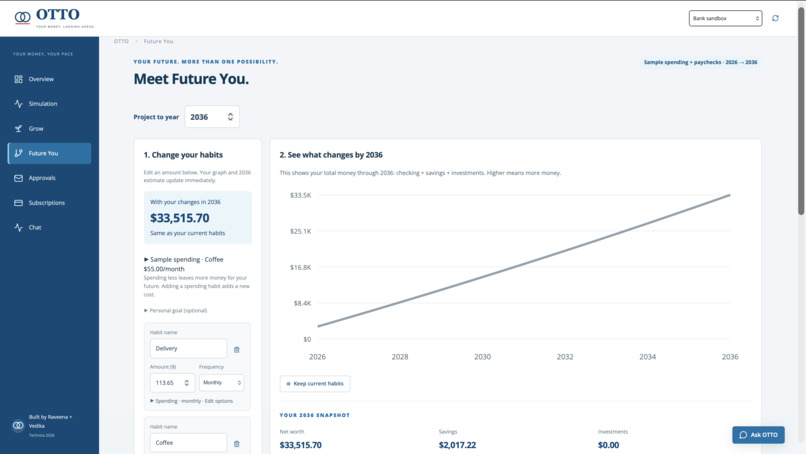
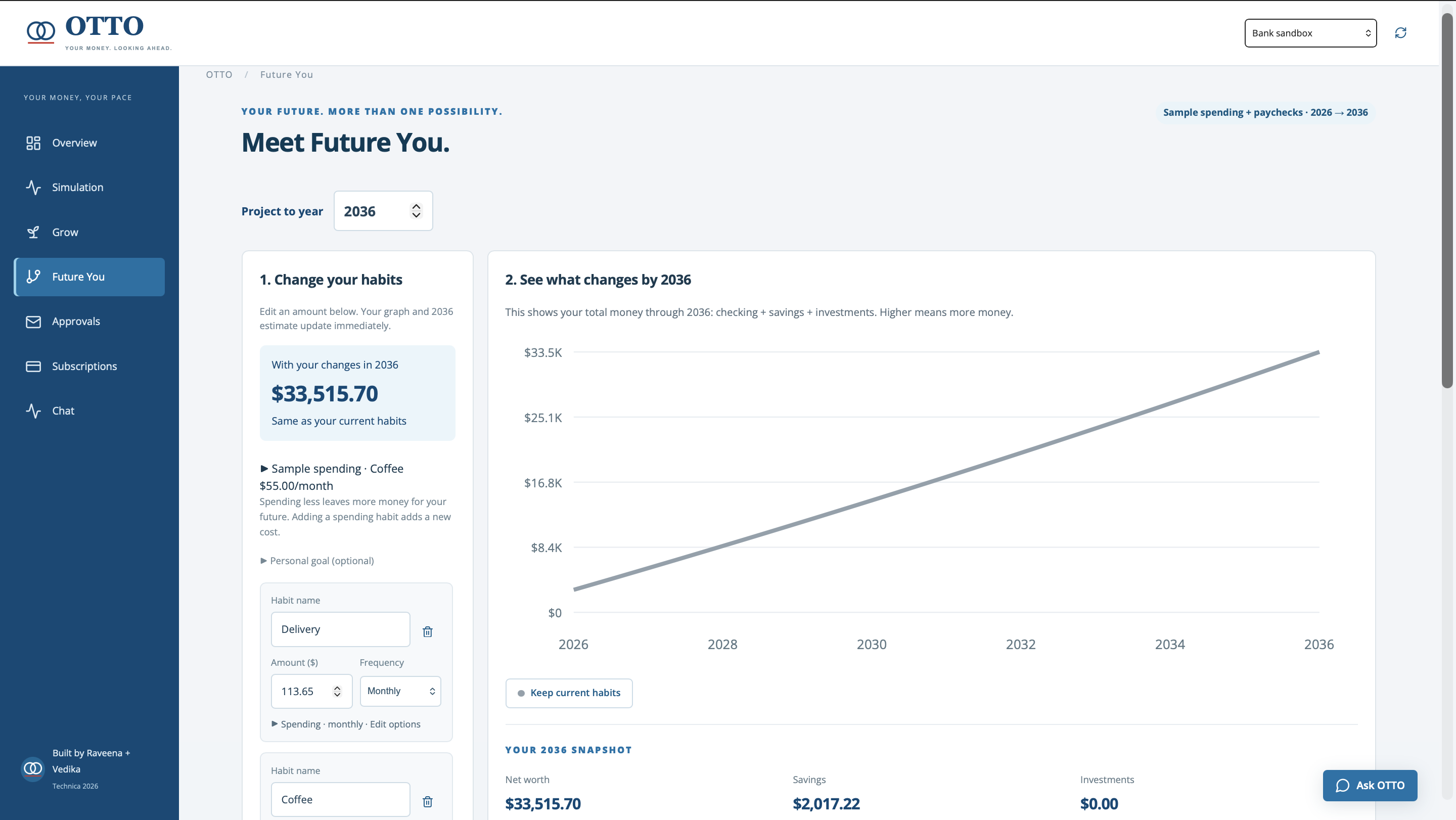
- Future You: shows the effects of a spending, saving and investing habits. User will be able to change target year, able to edit habits and compare saved scenarios.
- Subsciptions: Displays supported subscription services based on the bill payee names and lets user add subscription services not supported manually.
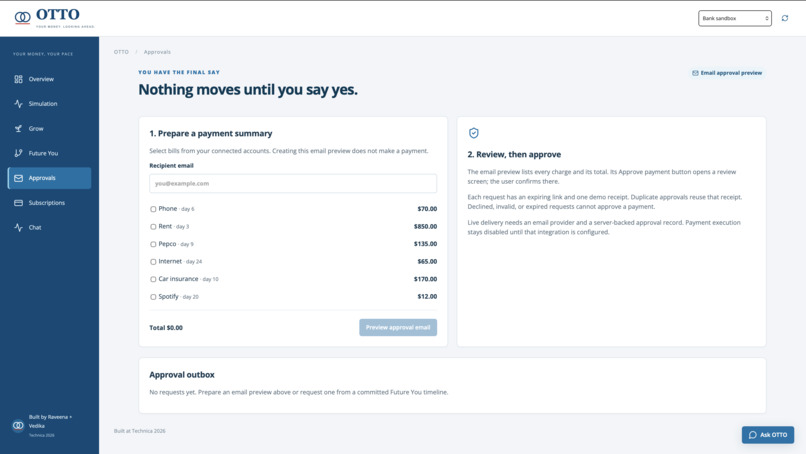
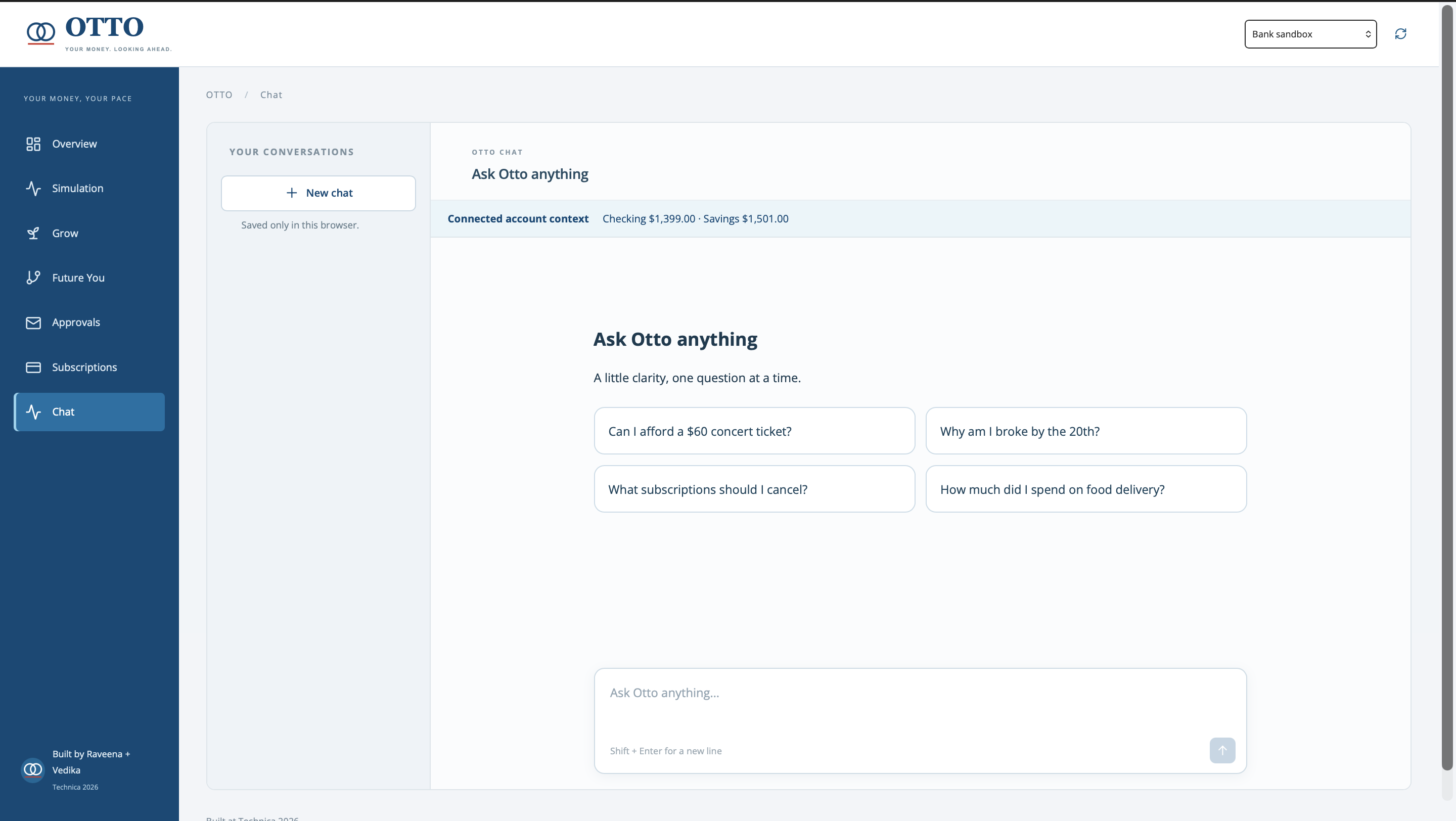
- Approvals and Chat: Show itemized payment review and introduce a rule based financial assistant based on the data at hand. ## How we built it Made with React, Typescript, and CSS The server side banking APIs are managed with Cloudflare Workers D1 The shared sandbox transfer ledger Browser storage is used for conversations and personal plans.
The financial engine is a set of deterministic rules. It looks ahead at future expenditure, conserves cash buffers and records the thought process of each pass through of a model so decisions can be repeated.
Nessie: connecting data to decisions.
Access checking and savings account balances, payee names, and bill records through the Capital One Nessie API. By bill amount and bill due date (bill records), we are predicting cash flow, and by payee name, we are identifying subscription services. API key is server-side.
Grow movement Nessie grow start move and gets receives it back into our lives back receipt back receipt back receipt back. OTTO ensures possible verified moves so our counts.
We've selected a sample month for demo, illustrating some scenarios that we can't see in your connected account history, e.g. Stacked bills in the days leading to pay day, and unusual transfer. Simulation decisions are stored locally on the device and will not spend any bills or make any payments on Nessie.
Challenges we ran into
One problem was balancing the figures on the dashboard, chat, projections and banking data modes. We also needed to separate current balances from future transfers and ensure suspicious transfers were not included in idle-cash reserves. Handling of transfers demanded special care. We tested for duplicate submissions, stale review, parallel access and receipt verification so that multiple clicks didn't lead to multiple actions.
Accomplishments that we're proud of
We've built a single, connected financial experience leveraging Capital One's Nessie API. OTTO taps into the Nessie API to power budgeting, cashflow analytics and subscription tracking, using Nessie account balances, bill amounts, payee names and due dates. This documentation covers not only reading your banking transactions but also creating sandbox transfers. Grow confirms the cash exists, creates a Nessie transfer, checks that it has been received, and then records the move in OTTO's book. We also constructed five levels of autonomy, decision explanation logs and interactive financial projections that allow users to see the consequences of their choices without losing decision-making authority. And last but not least, we're proud of our focus on reliability. OTTO succeeded in 595 automated tests along with user interface testing on validation, duplicate submissions, receipts, and mobile page layout.
What we learned
We also discovered we need financial calculations with clear explanations for how they have increased. Easy to read assumptions and approval rules are just as vital as the calculations. And testing also transformed our design. The latest set of designs ran 595 test cases, both automated with randomly-generated financial values and in real-time interactively.
What's next for OTTO
We want to incorporate more detailed transaction categorization, server-enabled email approvals, and smarter transfer-risk signals. Investments and automated merchant cancellation are two features that will be integrated in the future. It's our aim to make clear what your money needs to do now, and help you see what your choices might make possible for tomorrow.
Built With
- cloudfare
- css
- nessie
- react
- typescript
- vite


Log in or sign up for Devpost to join the conversation.