-
-
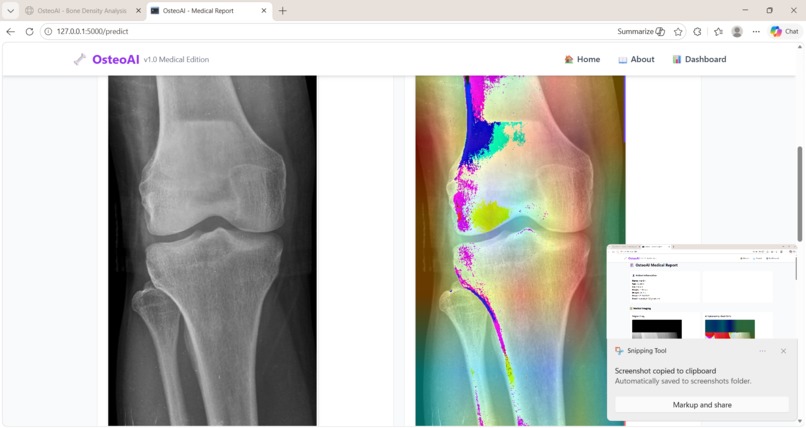
bone analysis
-
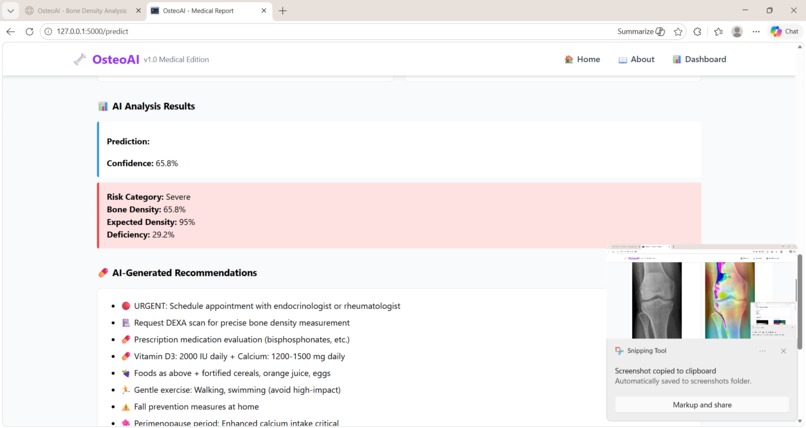
suggestion
-
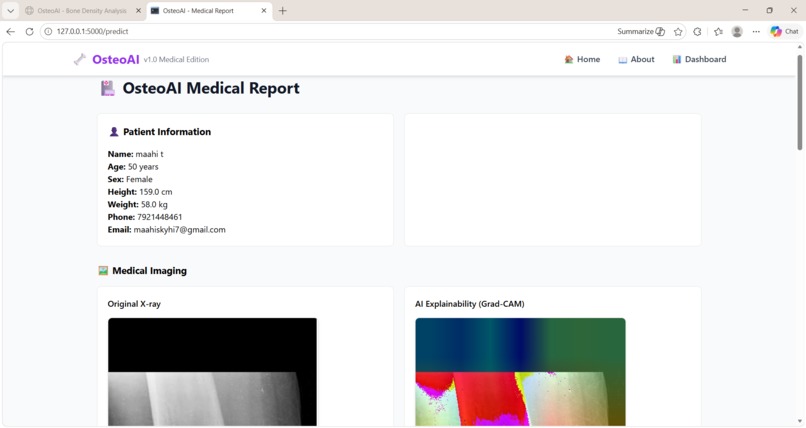
results
-
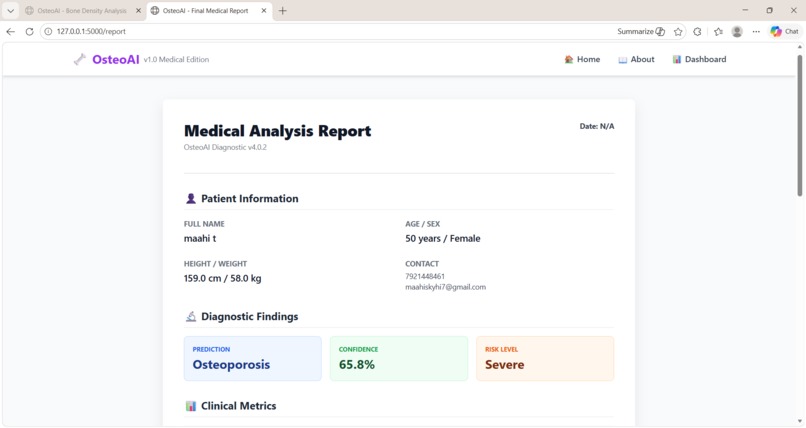
report
-
density prediction
-
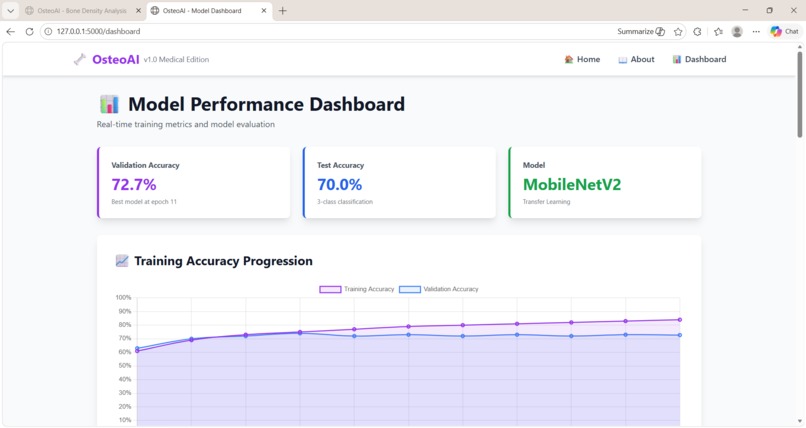
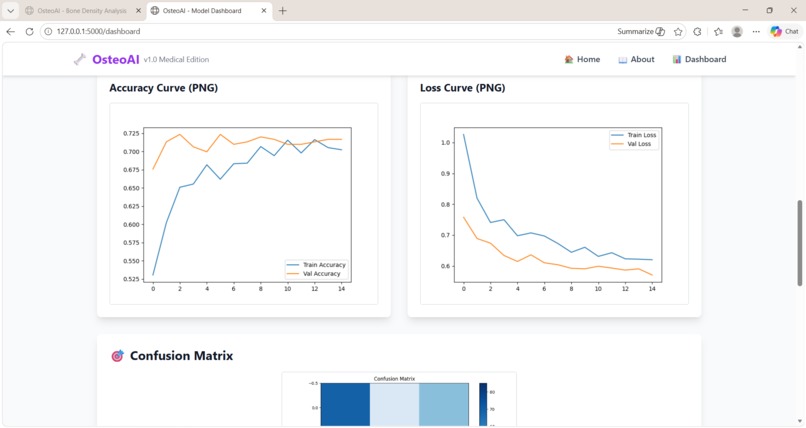
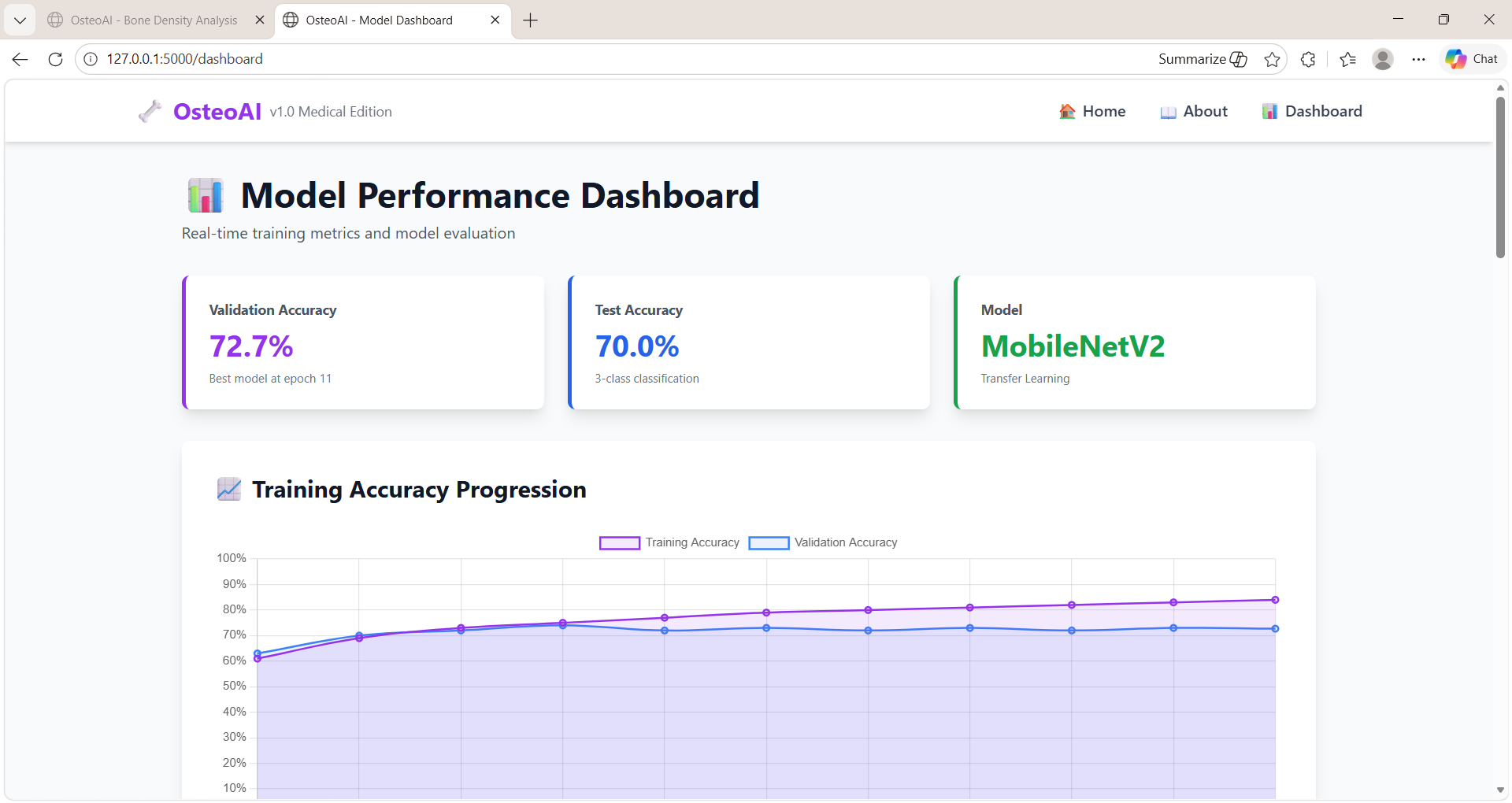
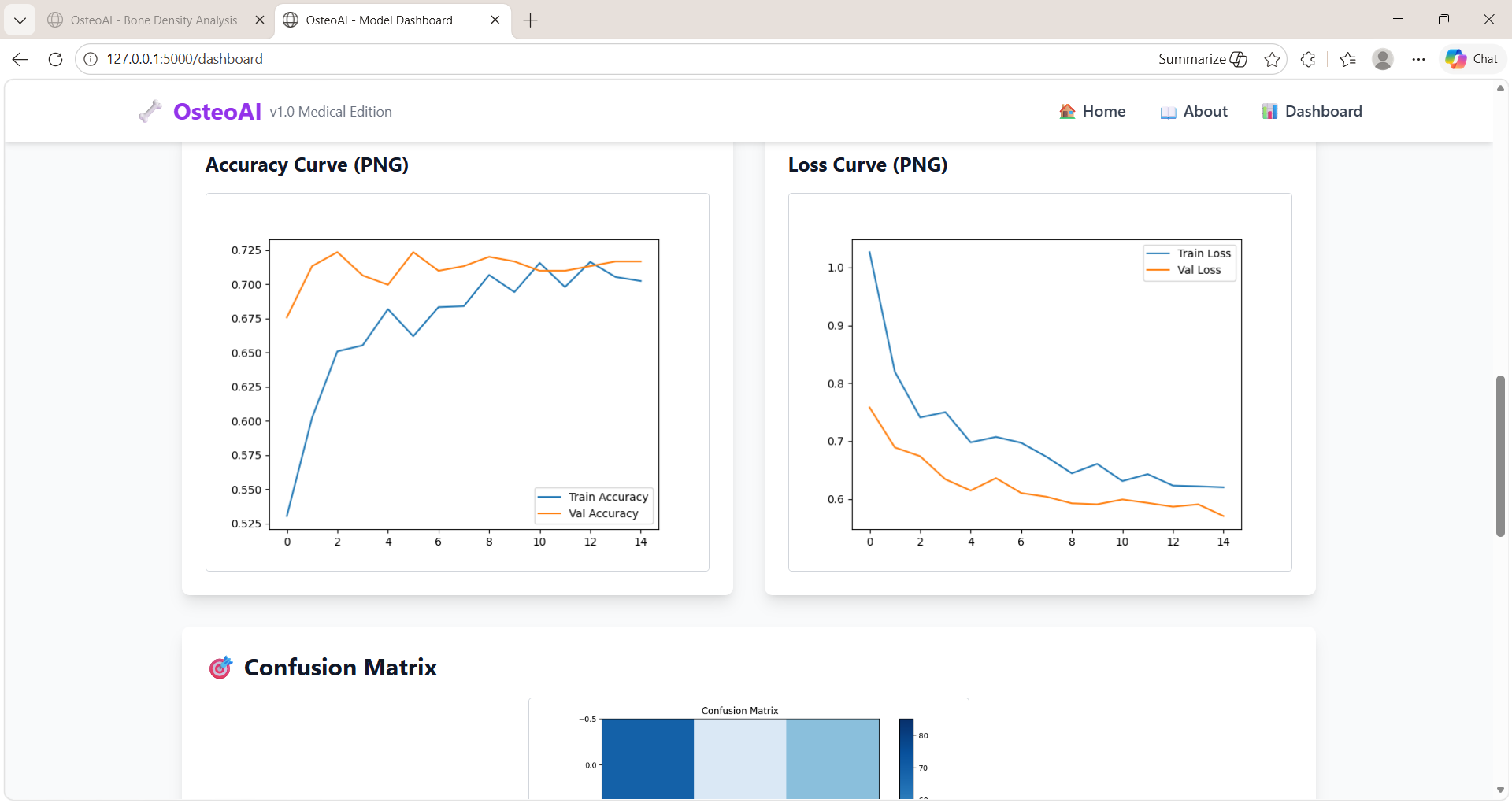
dashboard
-
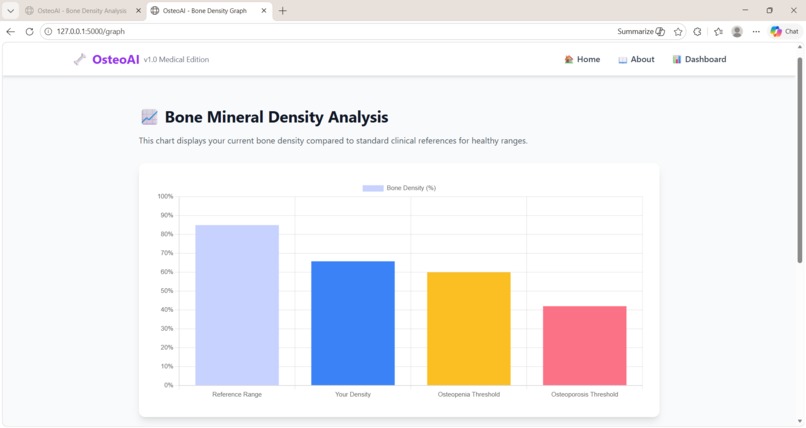
graph
-
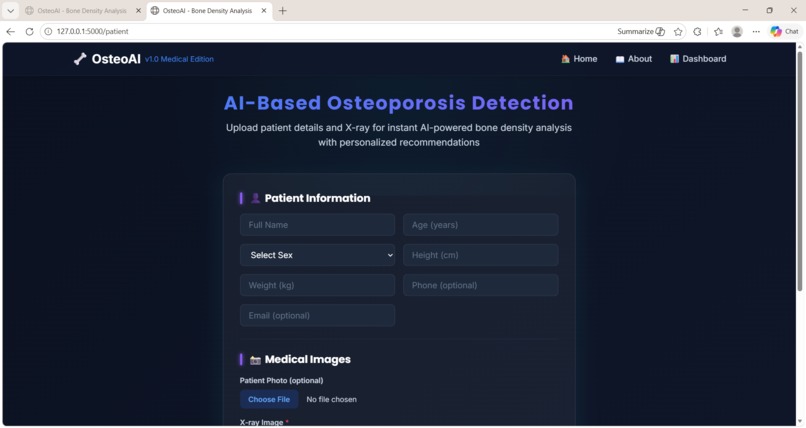
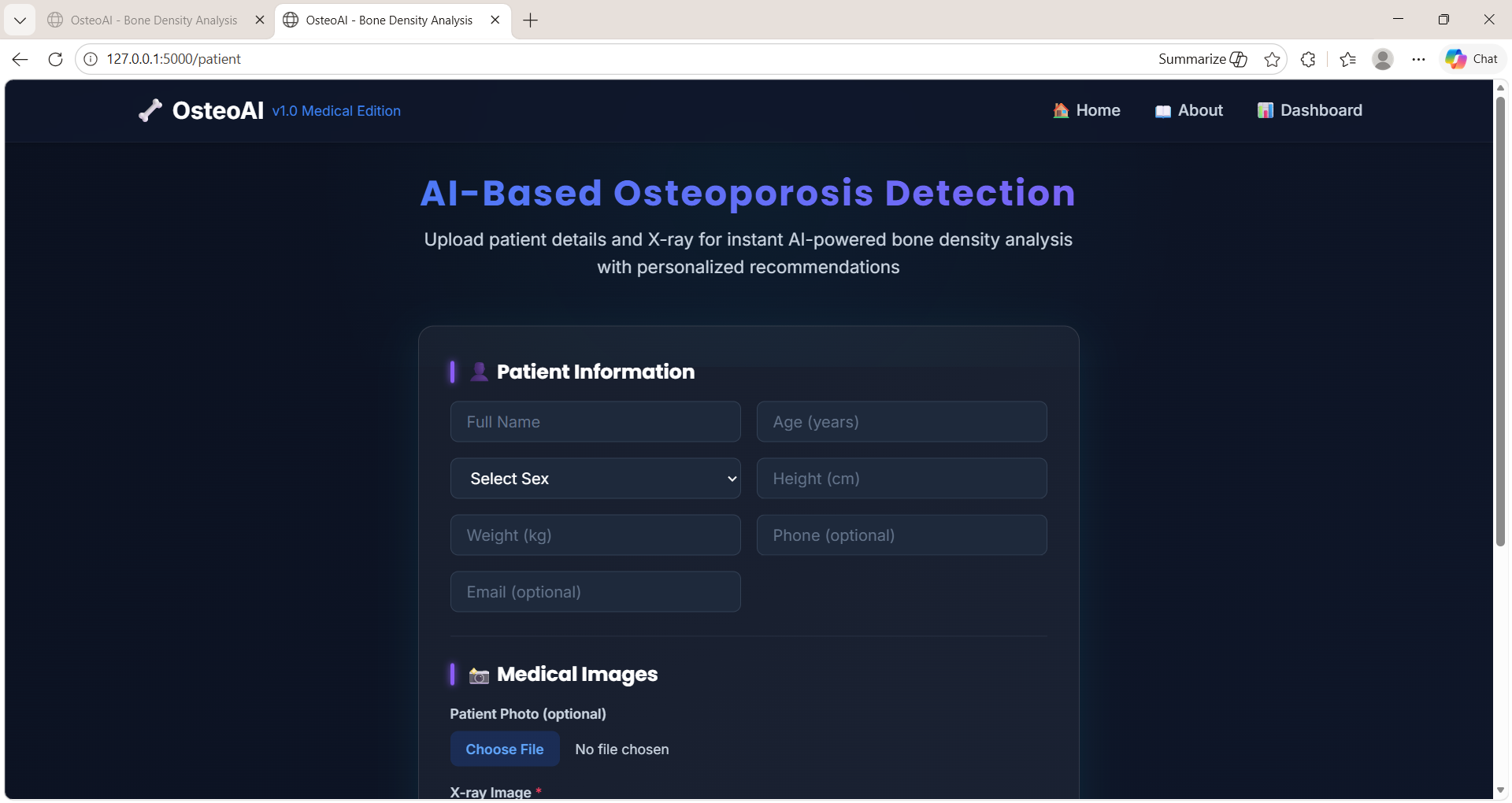
entering patient details with xray img
-
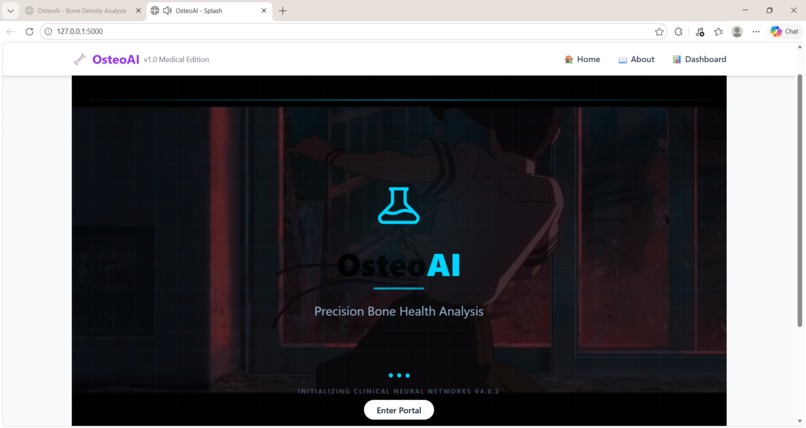
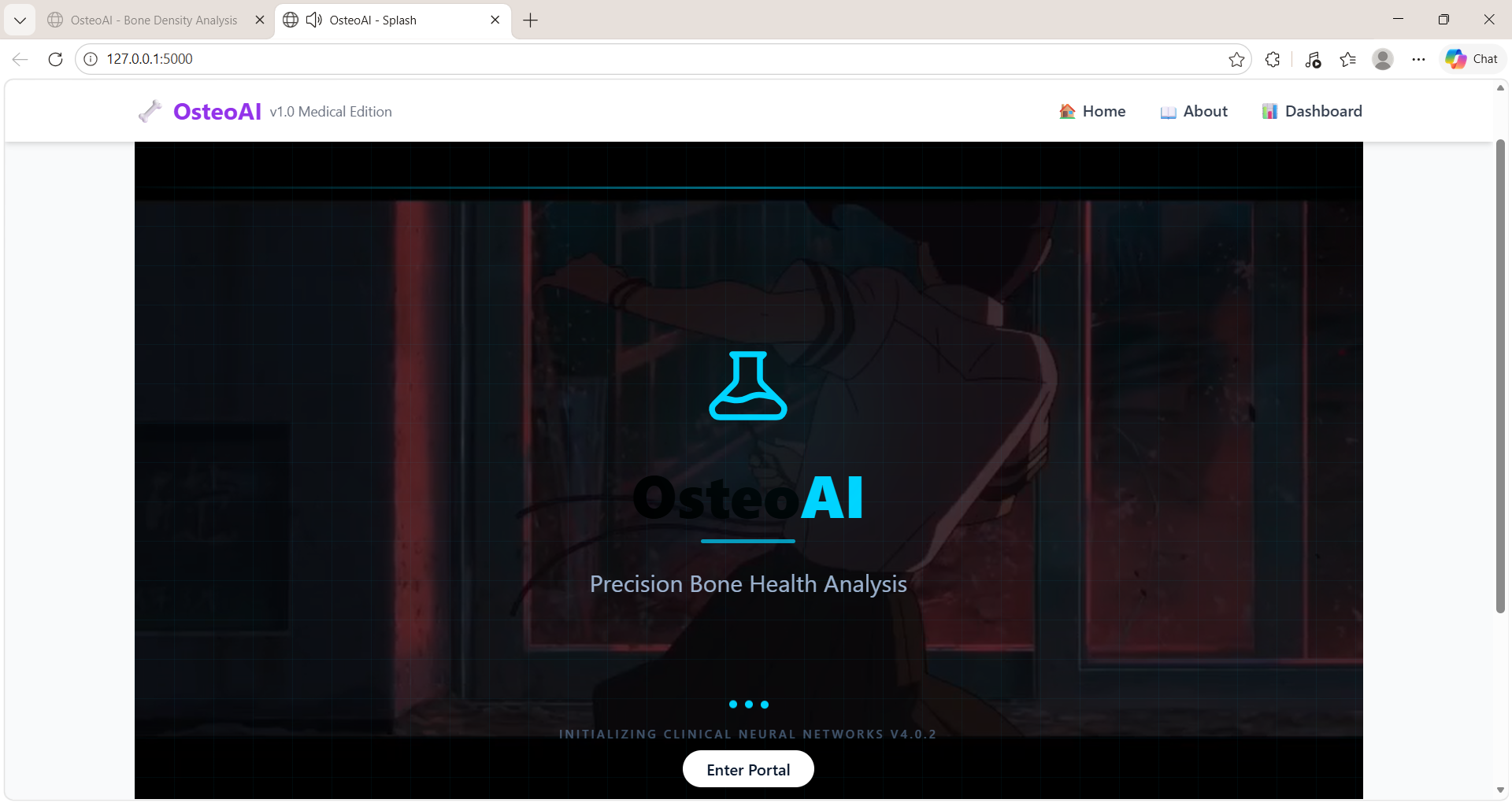
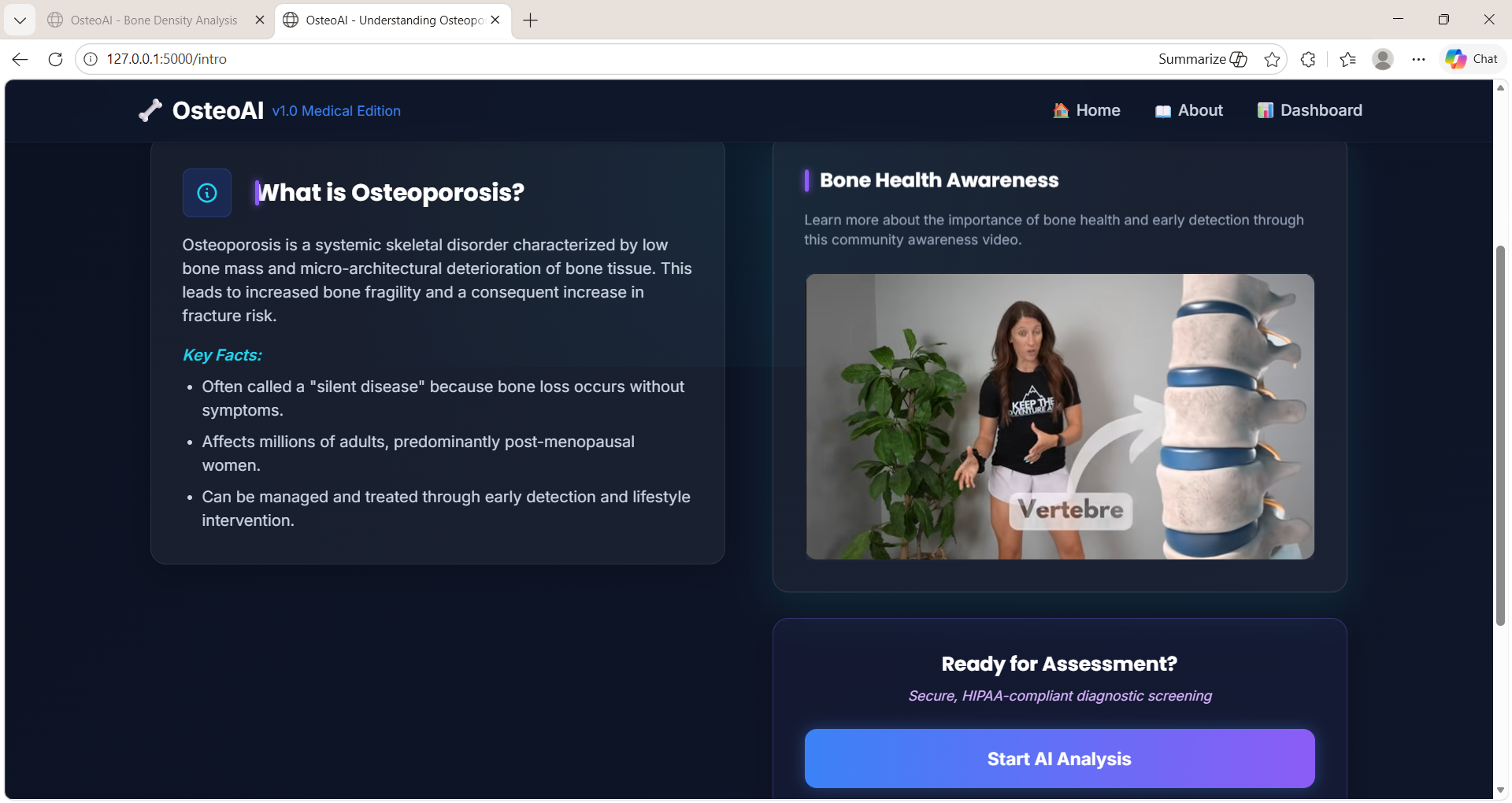
intro
-
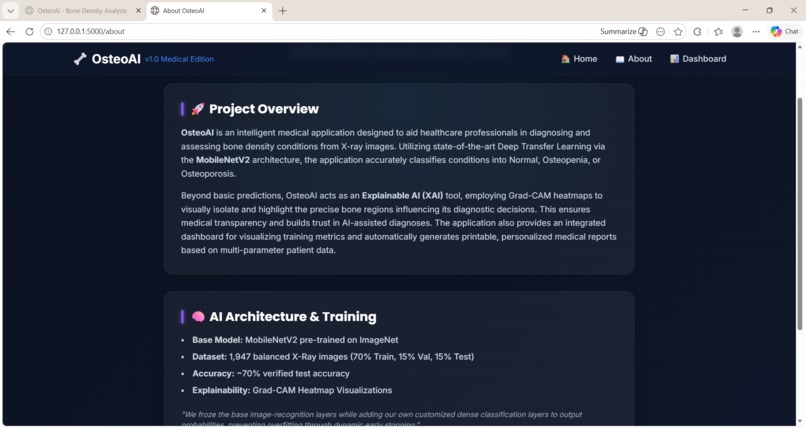
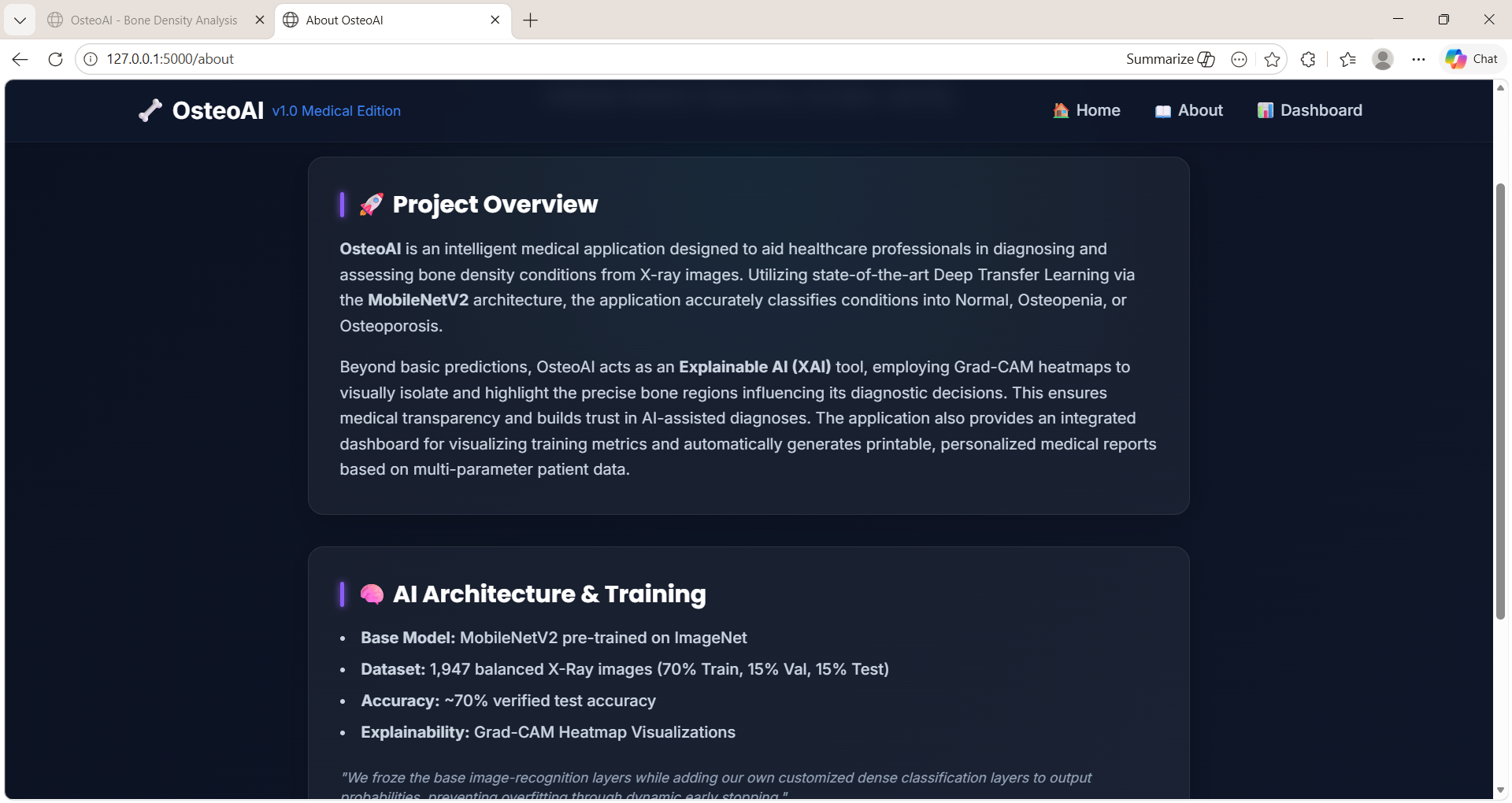
about
-
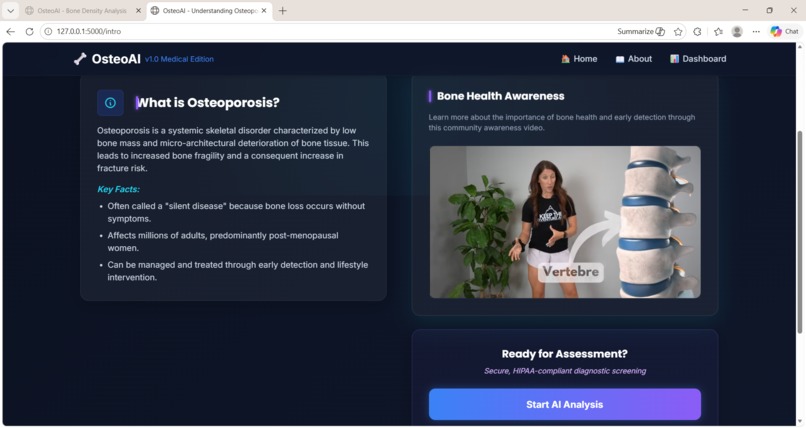
first brief intro
Inspiration
Osteoporosis is a silent disease that weakens bones and significantly increases fracture risk. These fractures are closely linked to falls, mobility issues, and cognitive decline, especially in aging populations.
Early detection is critical, yet diagnostic methods like DEXA scans are expensive and inaccessible in many regions.
We explored how AI can enable early osteoporosis screening using standard X-rays, while also addressing its connection to neuro-motor function and fall risk, enabling more holistic preventive care.
What it does
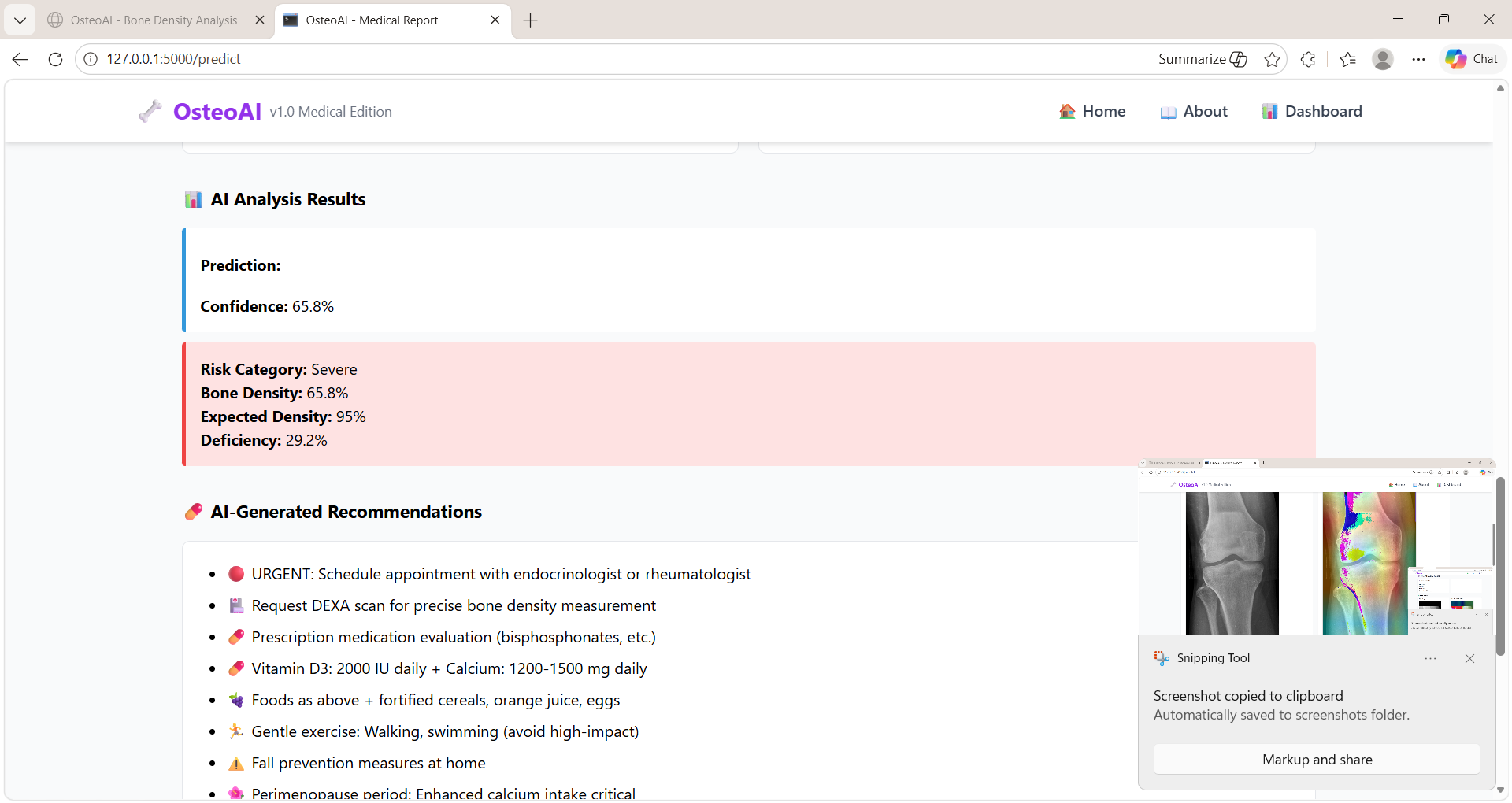
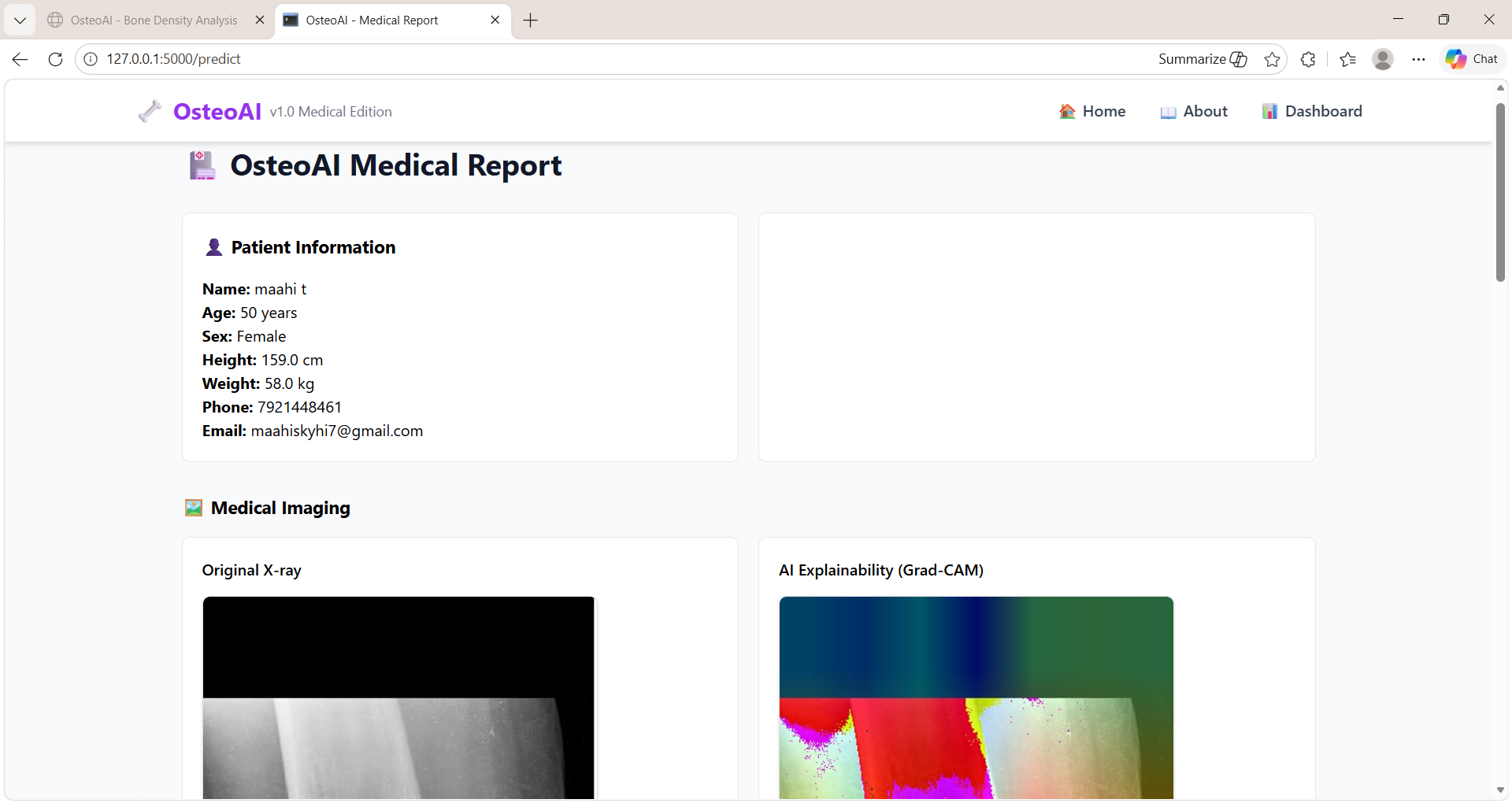
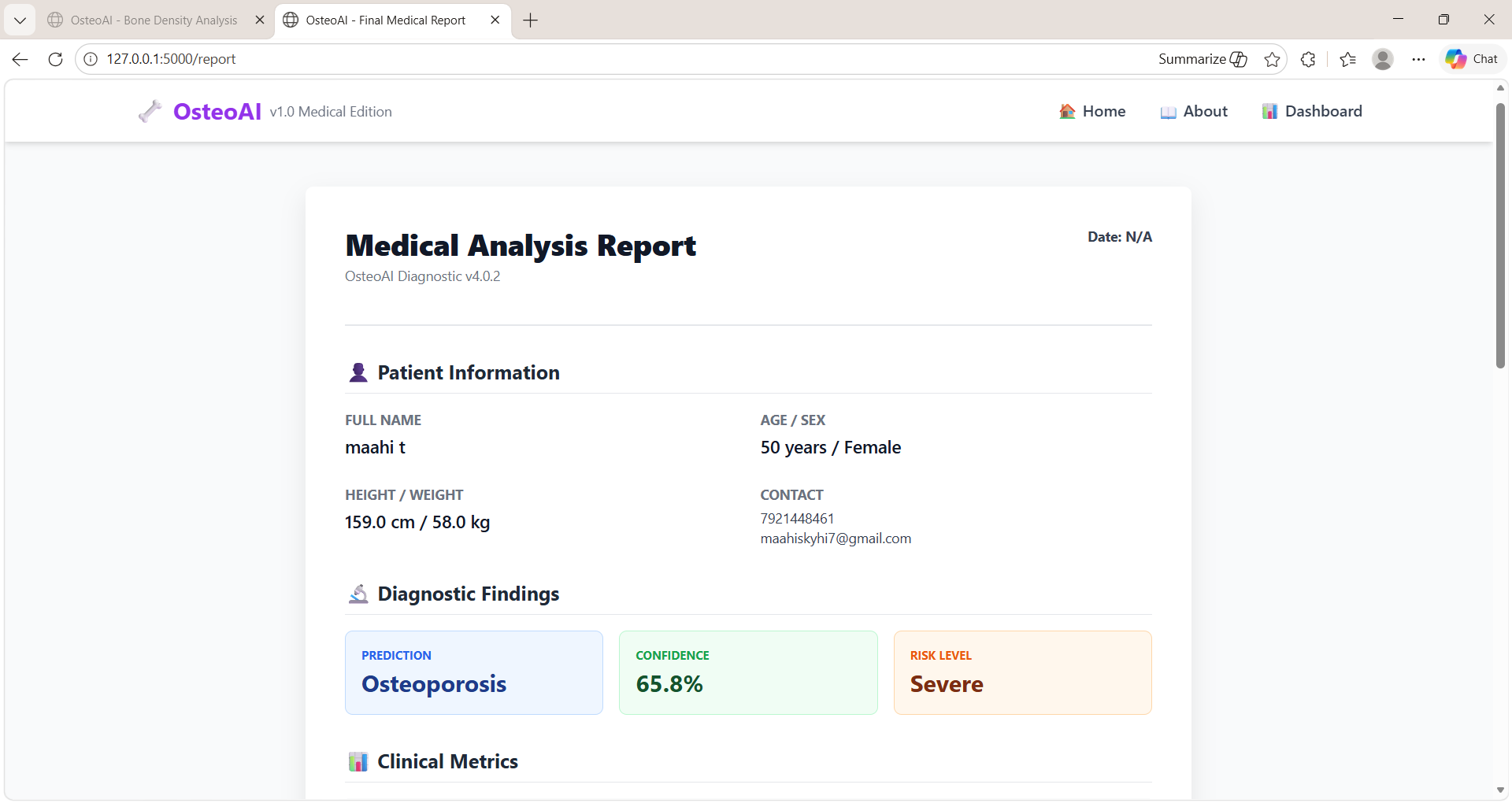
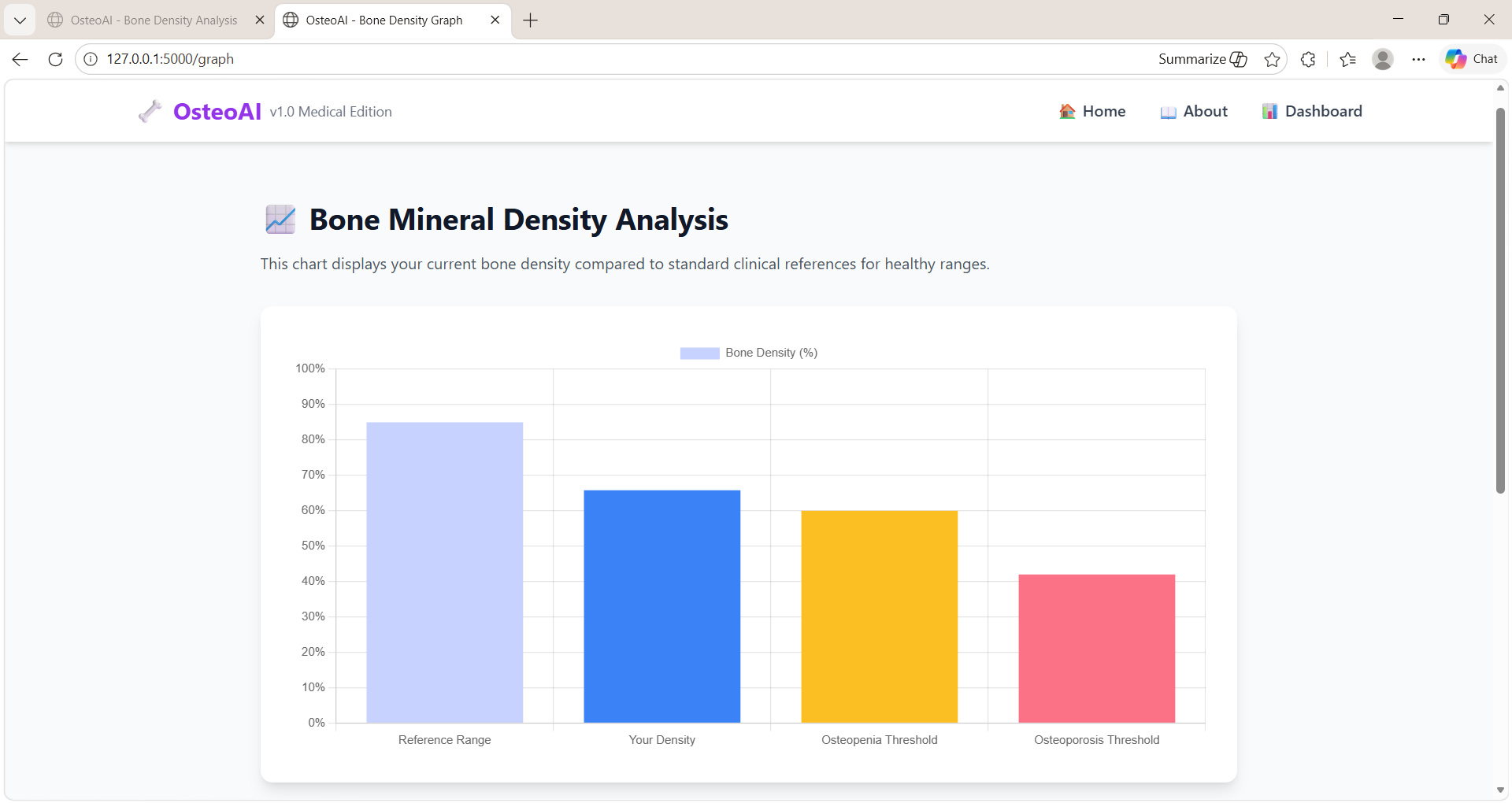
OsteoAI is an AI-powered neuro-musculoskeletal screening system that analyzes bone X-ray images to predict bone health and assess risk factors linked to mobility and cognitive decline.
The system classifies X-ray images into:
• Normal • Osteopenia • Osteoporosis
Key capabilities: AI-powered X-ray image analysis Deep learning classification using MobileNetV2 Explainable AI (Grad-CAM heatmaps) Automated diagnostic-style PDF reports Bone health risk scoring Fall-risk and cognitive health awareness insights Interactive web dashboard
👉 The system supports early detection of bone deterioration and associated neuro-motor risks.
How we built it
OsteoAI was developed using deep learning, medical imaging, and full-stack web technologies.
AI Model Transfer learning with MobileNetV2 Input size: 224×224 Multi-class classification Training Setup Framework: TensorFlow / Keras Optimizer: Adam Loss: Categorical Crossentropy Technologies Used
ML: Python, TensorFlow, Keras, NumPy, OpenCV Visualization: Matplotlib, Seaborn Backend: Flask Frontend: HTML, CSS, JavaScript
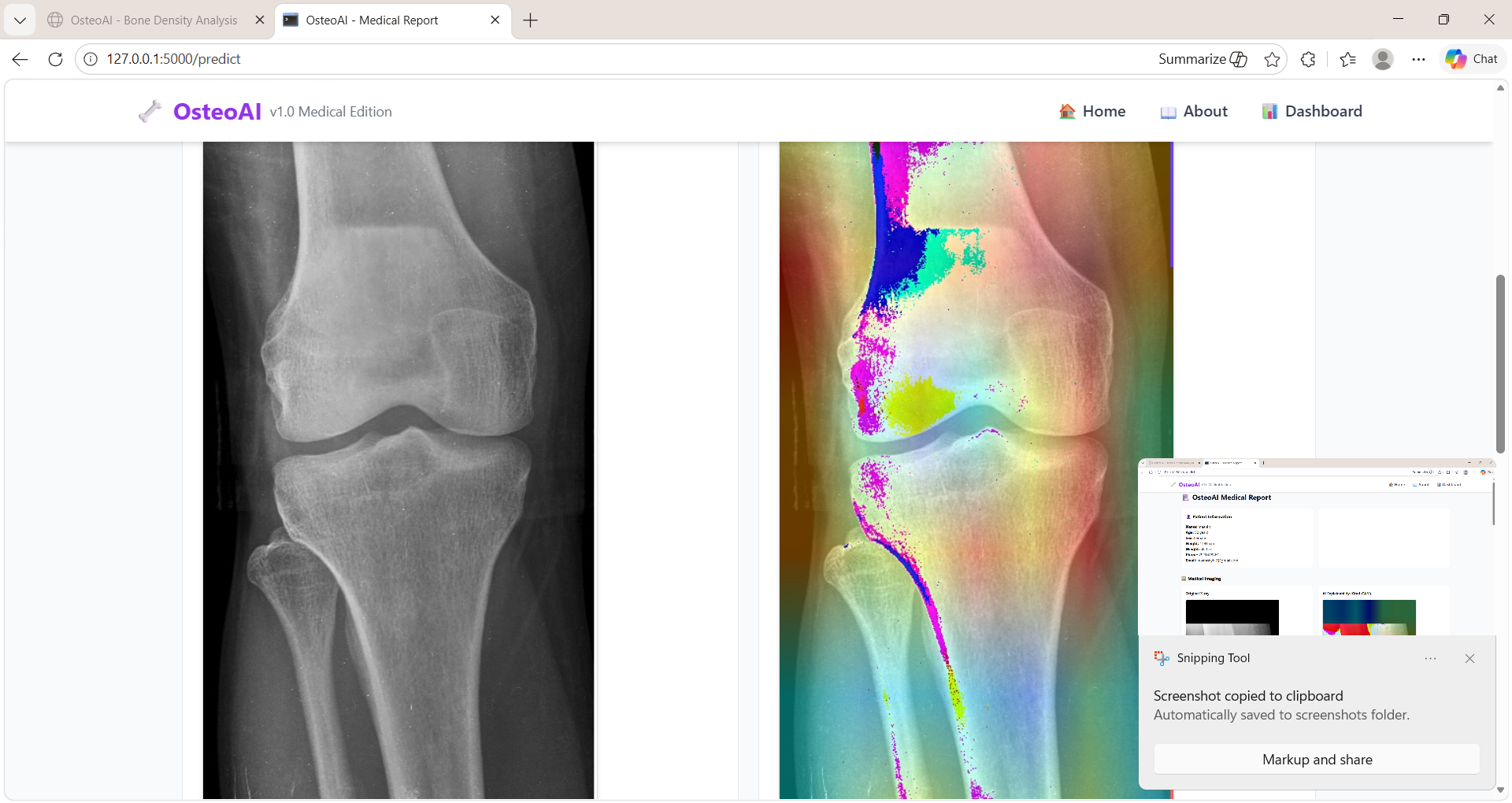
We integrated Grad-CAM to improve model transparency and trust.
Challenges we ran into Preparing medical imaging datasets Training efficient deep learning models Handling multi-class classification Integrating AI with a web system Generating automated reports
Additionally, aligning clinical relevance with AI outputs required careful design.
Accomplishments that we're proud of Built a complete AI-powered screening system Implemented multi-class medical classification Added explainable AI for transparency Designed a clean and interactive dashboard Integrated automated reporting system Extended the system toward neuro-motor risk awareness What we learned Applying deep learning to medical imaging Using transfer learning (MobileNetV2) Building end-to-end AI healthcare systems Integrating ML with web applications Understanding the link between physical and neurological health What's next for OsteoAI Expand dataset for better accuracy Explore EfficientNet / DenseNet Improve explainability tools Add cognitive & fall-risk assessment modules Deploy as a mobile AI health assistant
👉 Long-term goal: Build accessible AI systems that combine physical and neurological health insights for preventive care.


Log in or sign up for Devpost to join the conversation.