


OsteoAI: AI-Based Osteoporosis Risk Detection
Inspiration
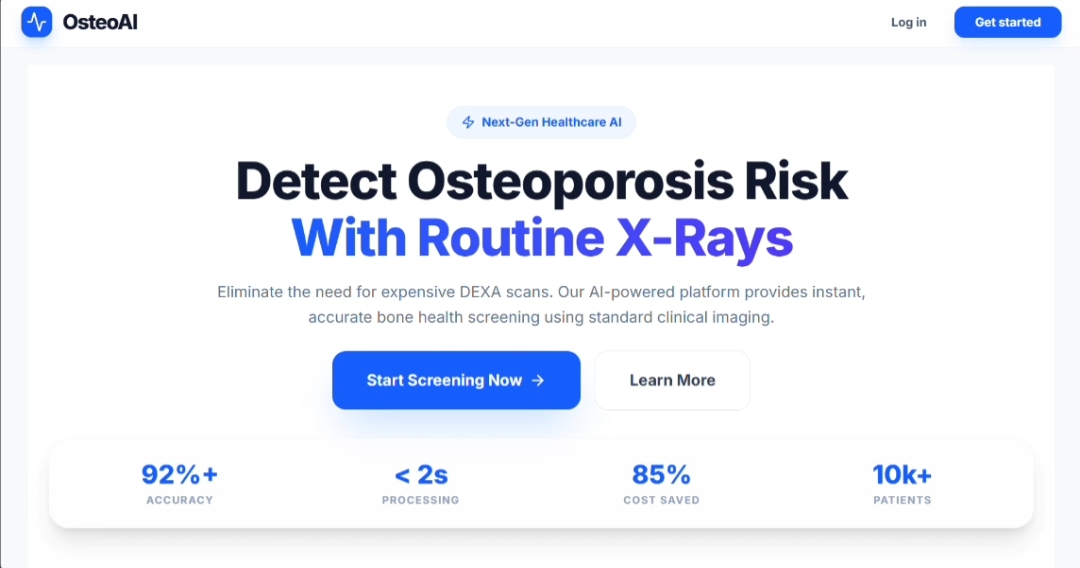
Osteoporosis is often called a “silent disease” because many patients are diagnosed only after suffering serious fractures. We were inspired by the fact that millions of people, especially in low-resource areas, cannot access expensive DEXA scans for early diagnosis. We wanted to create a solution that could leverage existing hospital X-ray infrastructure to make osteoporosis screening affordable, scalable, and accessible.
What It Does
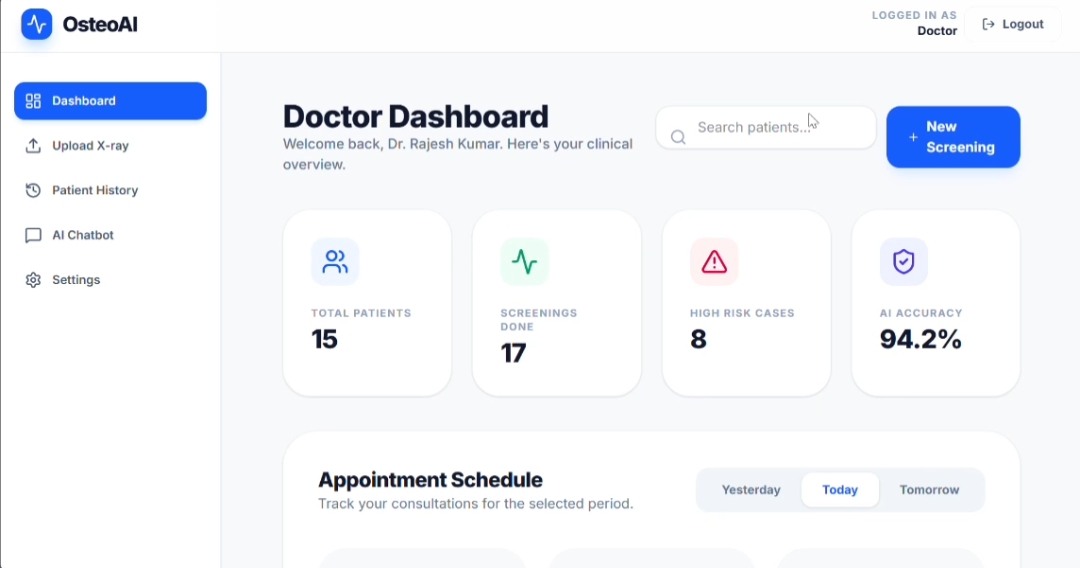
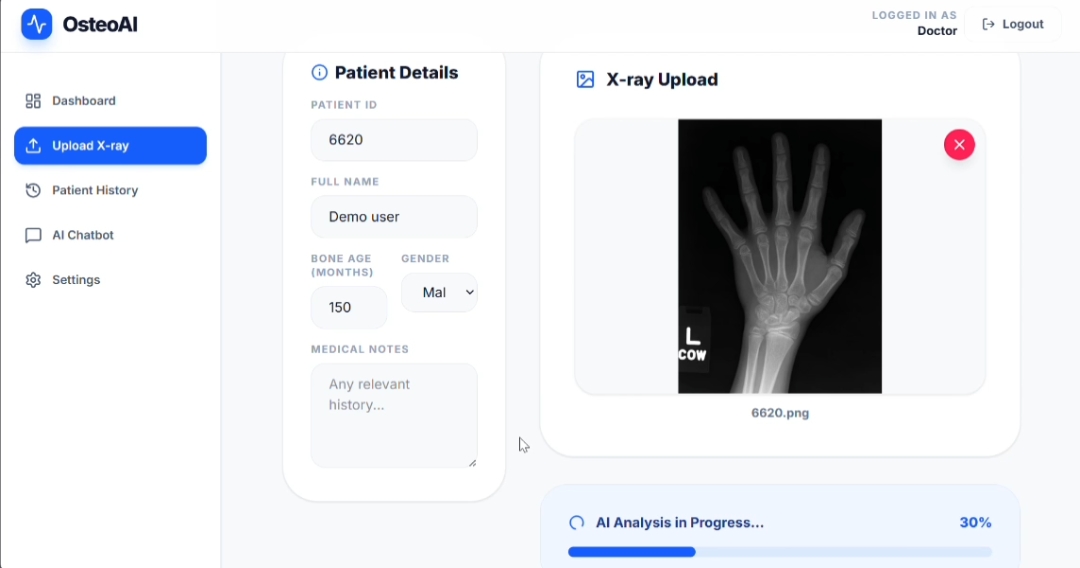
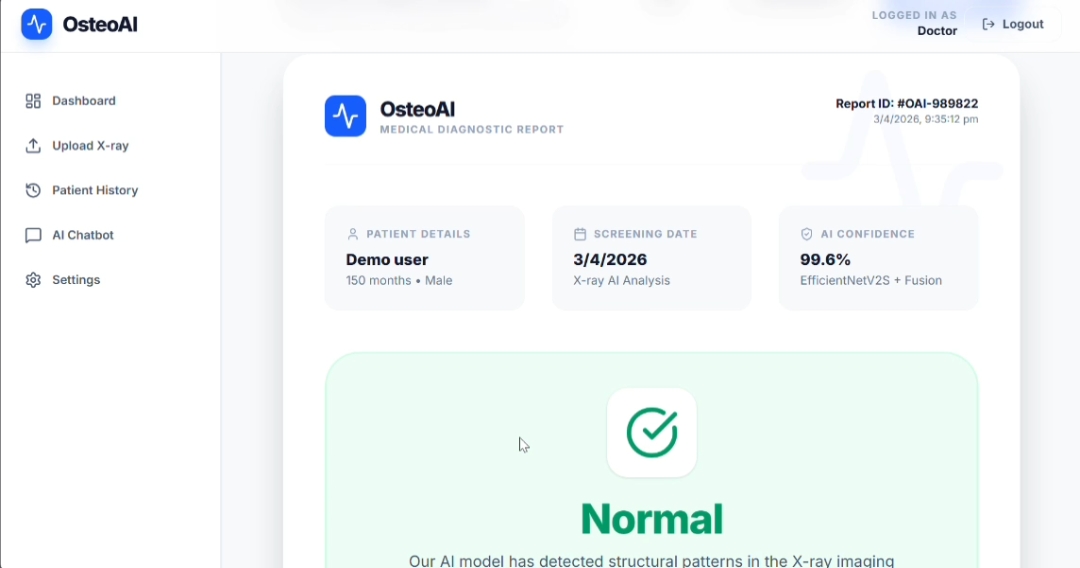
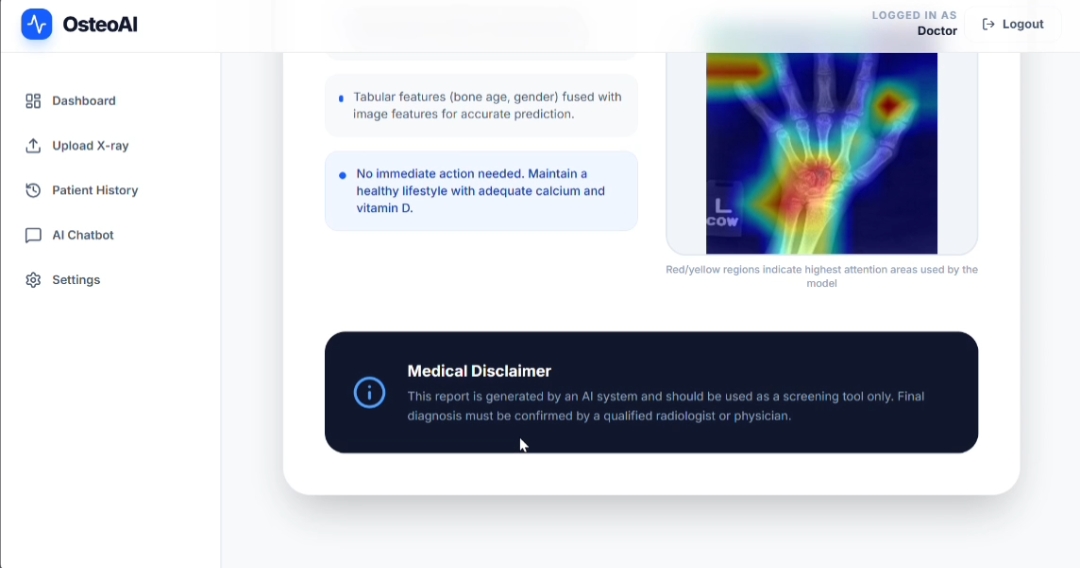
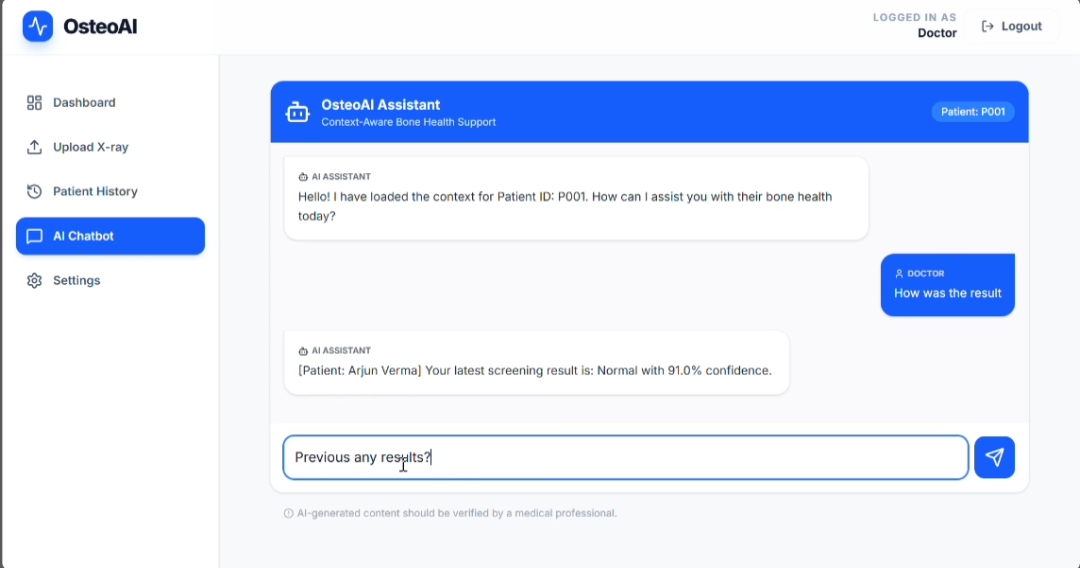
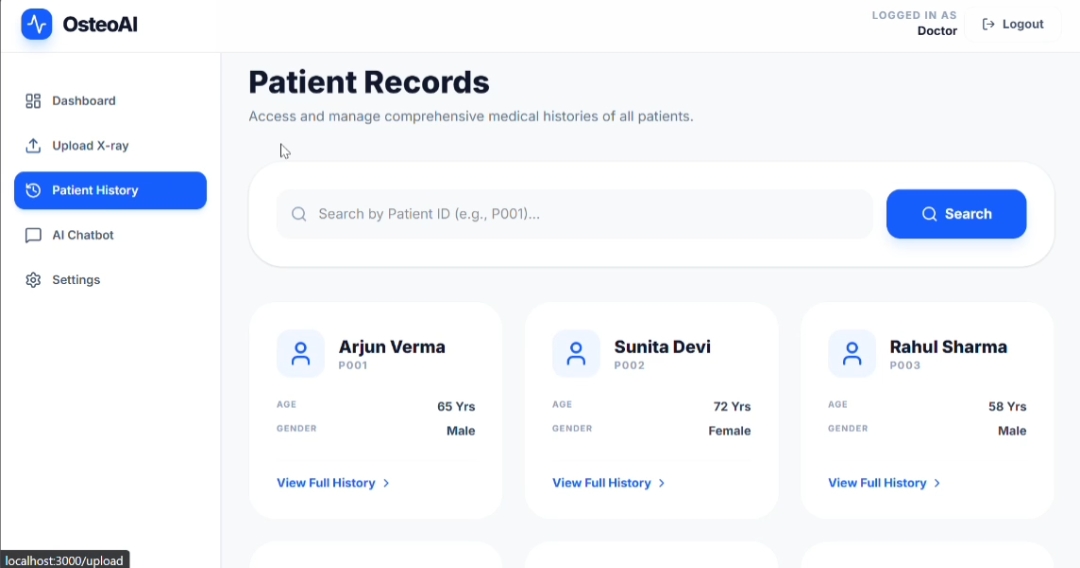
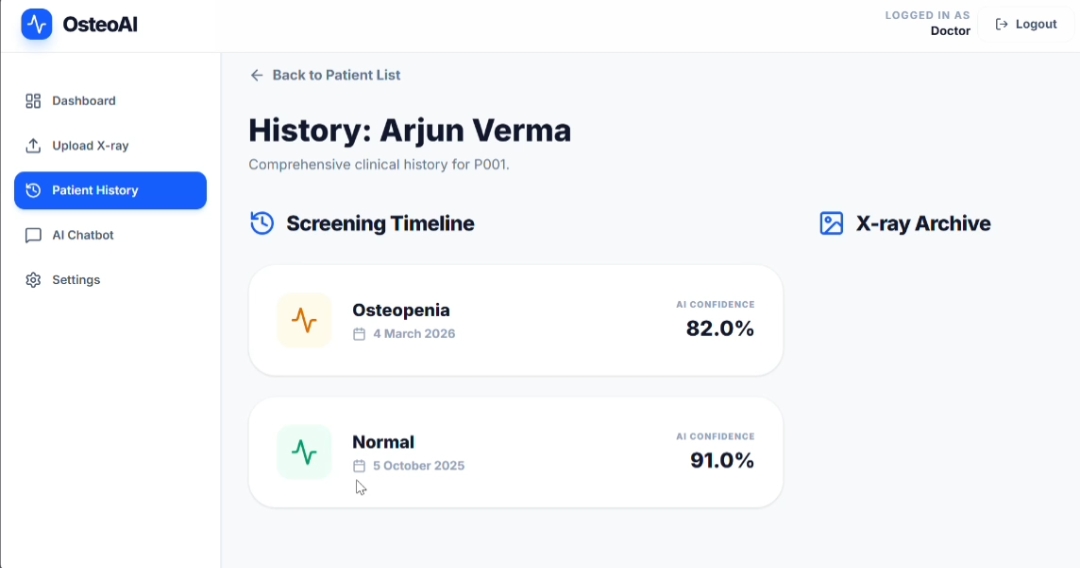
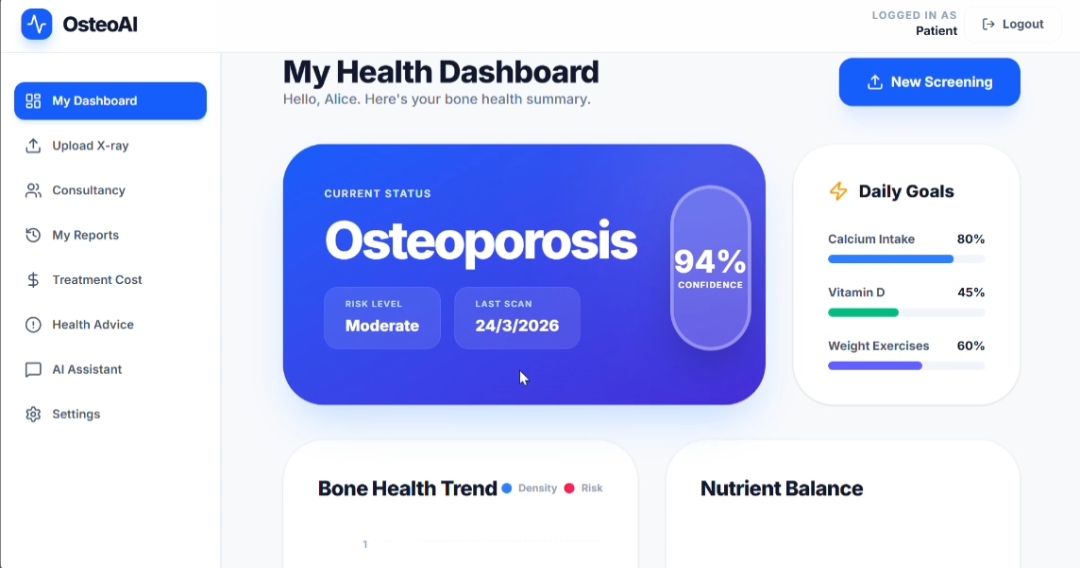
OsteoAI is an AI-powered osteoporosis risk screening system that analyzes routine hand/wrist X-ray images along with patient metadata such as age and gender. The model predicts osteoporosis risk levels and provides explainable AI heatmaps to help clinicians understand the prediction.
How We Built It
We developed the project using Python, TensorFlow, Keras, OpenCV, and Scikit-learn. The system uses a multi-modal deep learning architecture combining EfficientNetV2S for X-ray image analysis and tabular patient data for improved prediction accuracy. We trained and fine-tuned the model on the RSNA Bone Age dataset using transfer learning, focal loss, and class balancing techniques.
Challenges We Faced
One of the biggest challenges was handling severe class imbalance in medical data, where high-risk osteoporosis cases were limited. We addressed this using focal loss and balanced class weights. Another challenge was making the AI predictions interpretable for non-technical users, which we solved using Grad-CAM explainability heatmaps. Managing large medical image datasets within limited GPU resources was also a major optimization challenge.
What We Learned
Through this project, we gained hands-on experience in medical AI, deep learning optimization, explainable AI, and healthcare-focused problem solving. More importantly, we learned how technology can be used to create impactful, accessible healthcare solutions for real-world problems.
What's next for OsteoAI?
In the future, we aim to improve the model using advanced transformer architectures, validate it with real clinical datasets, and deploy it as a scalable screening tool for hospitals and rural healthcare centers.
Built With
- cnns
- deep-learning
- efficientnetv2s
- google-colab
- grad-cam-explainable-ai
- image-processing
- jupyter-notebook
- keras
- matplotlib
- numpy
- opencv
- pandas
- python
- scikit-learn
- tensorflow
- transfer-learning

Log in or sign up for Devpost to join the conversation.