-
-
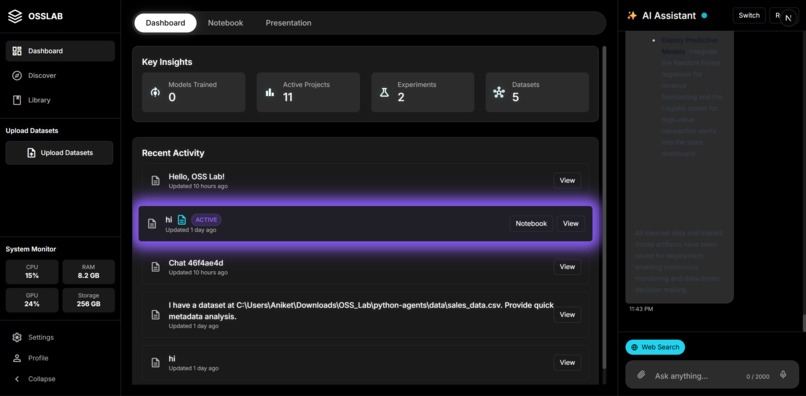
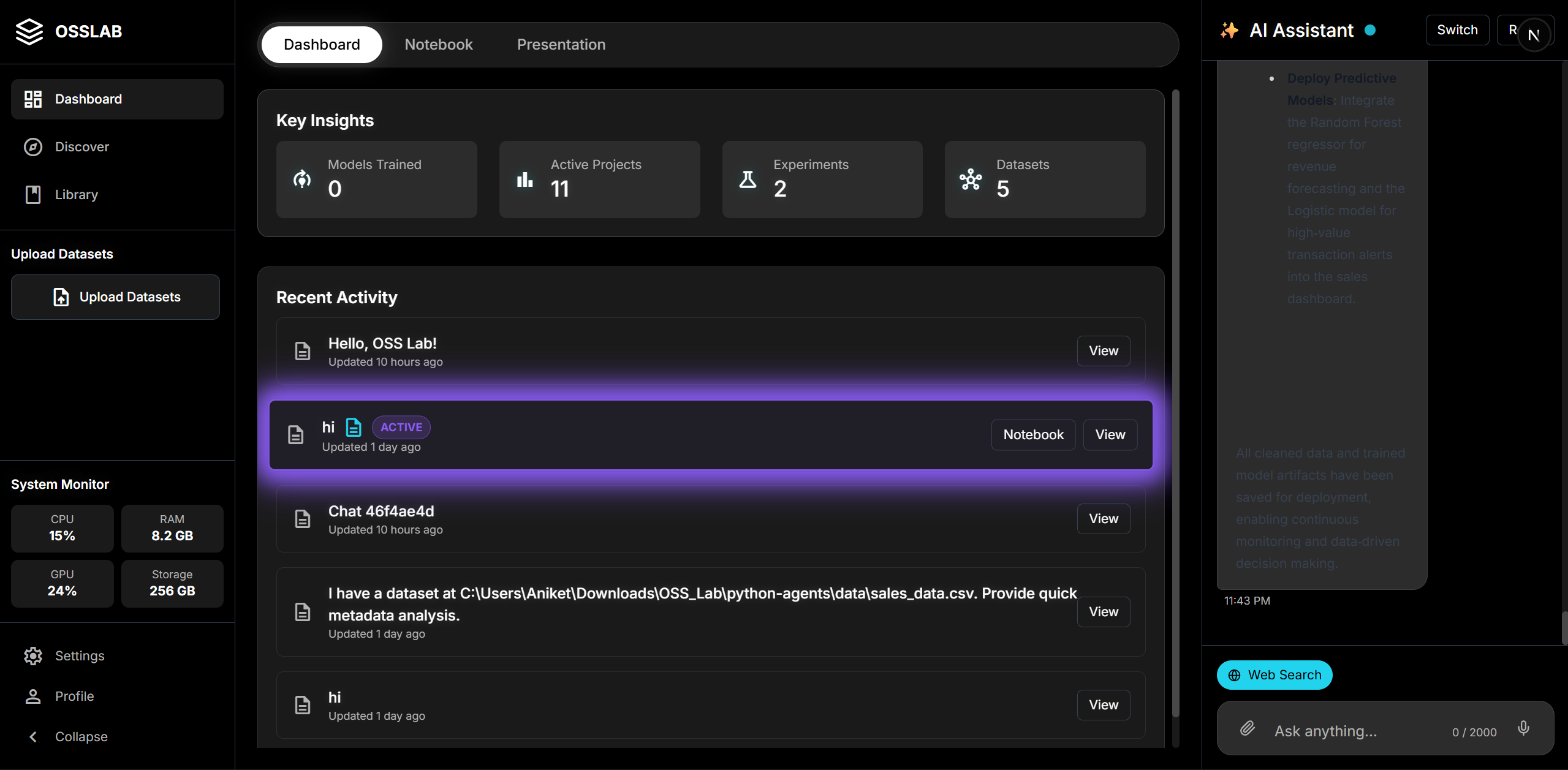
Premium-Main-dashboard
-
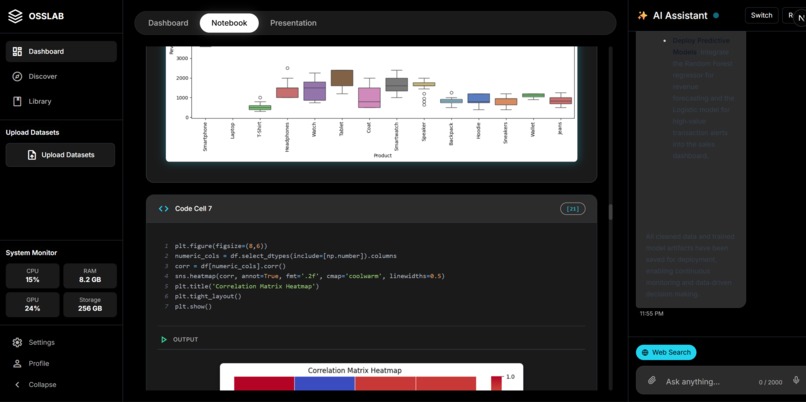
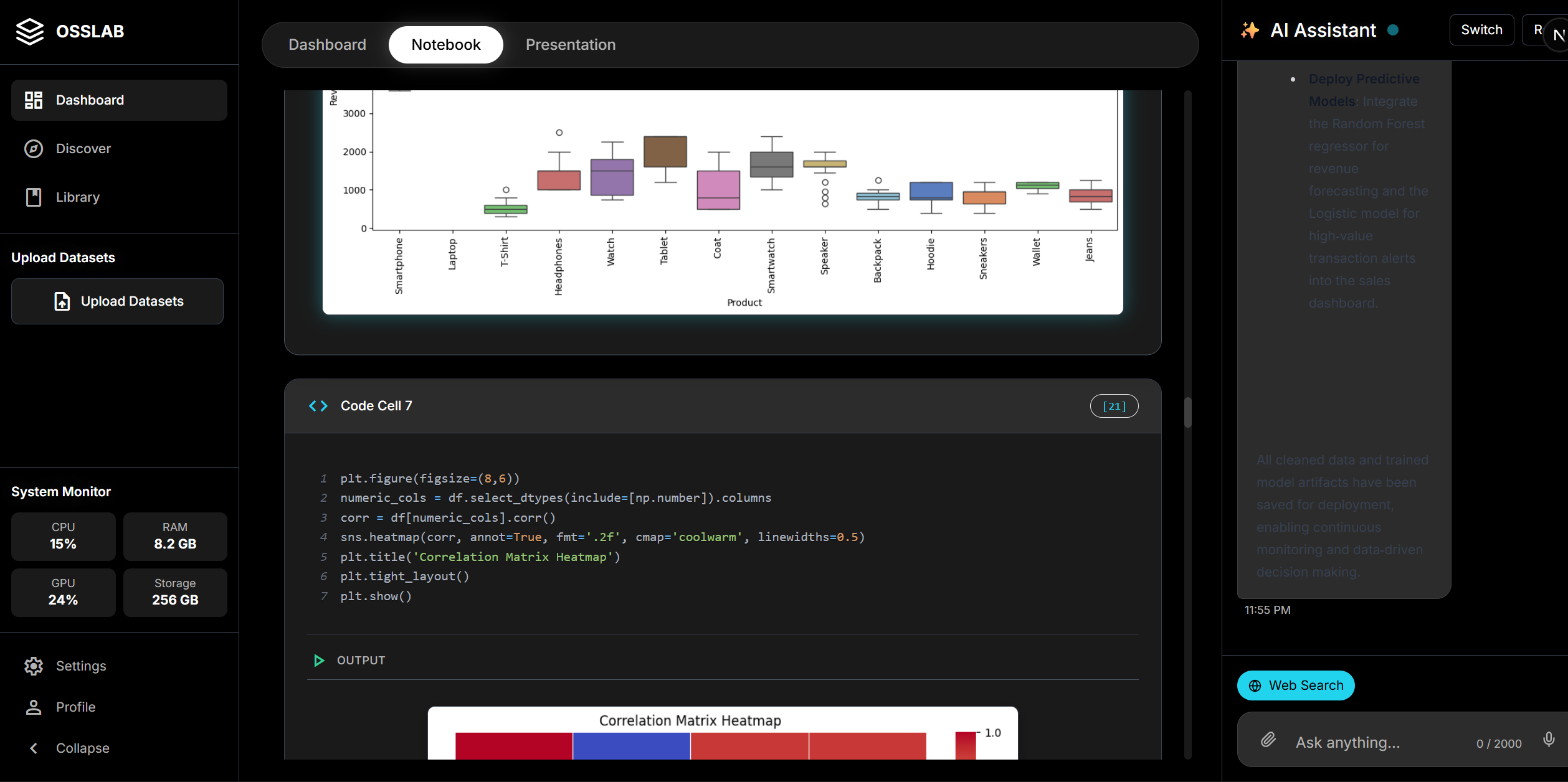
Unique-Notebook-view
-
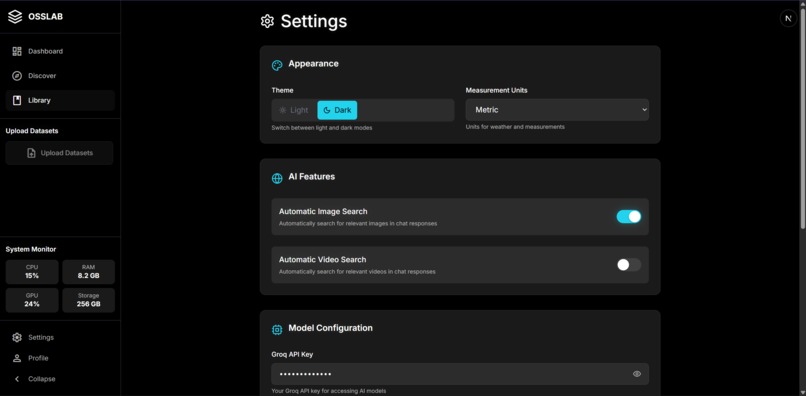
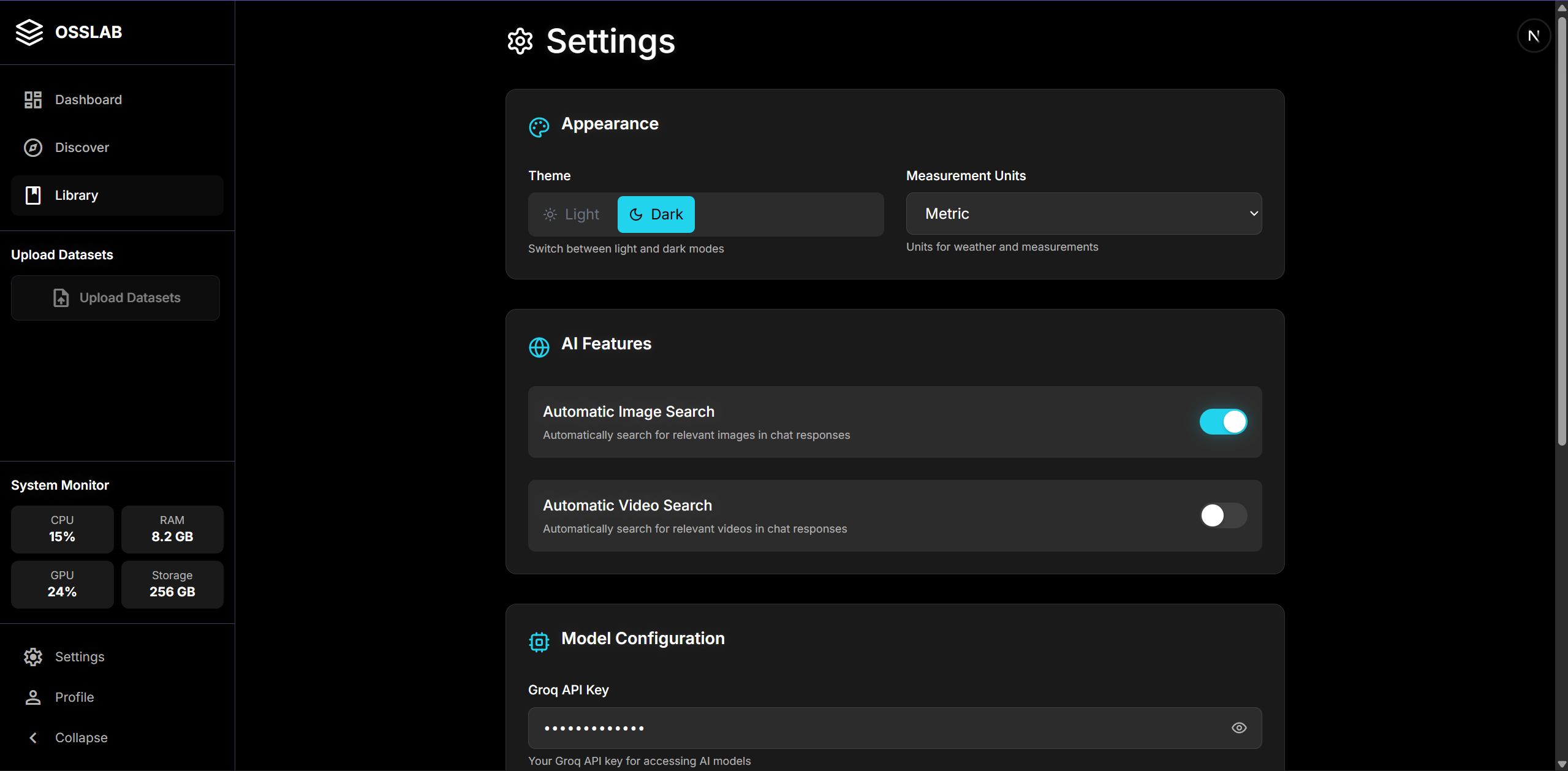
Awsome-Customization-options
-
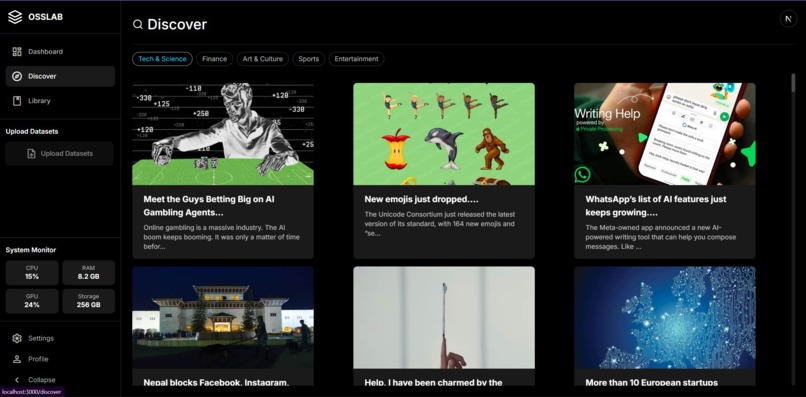
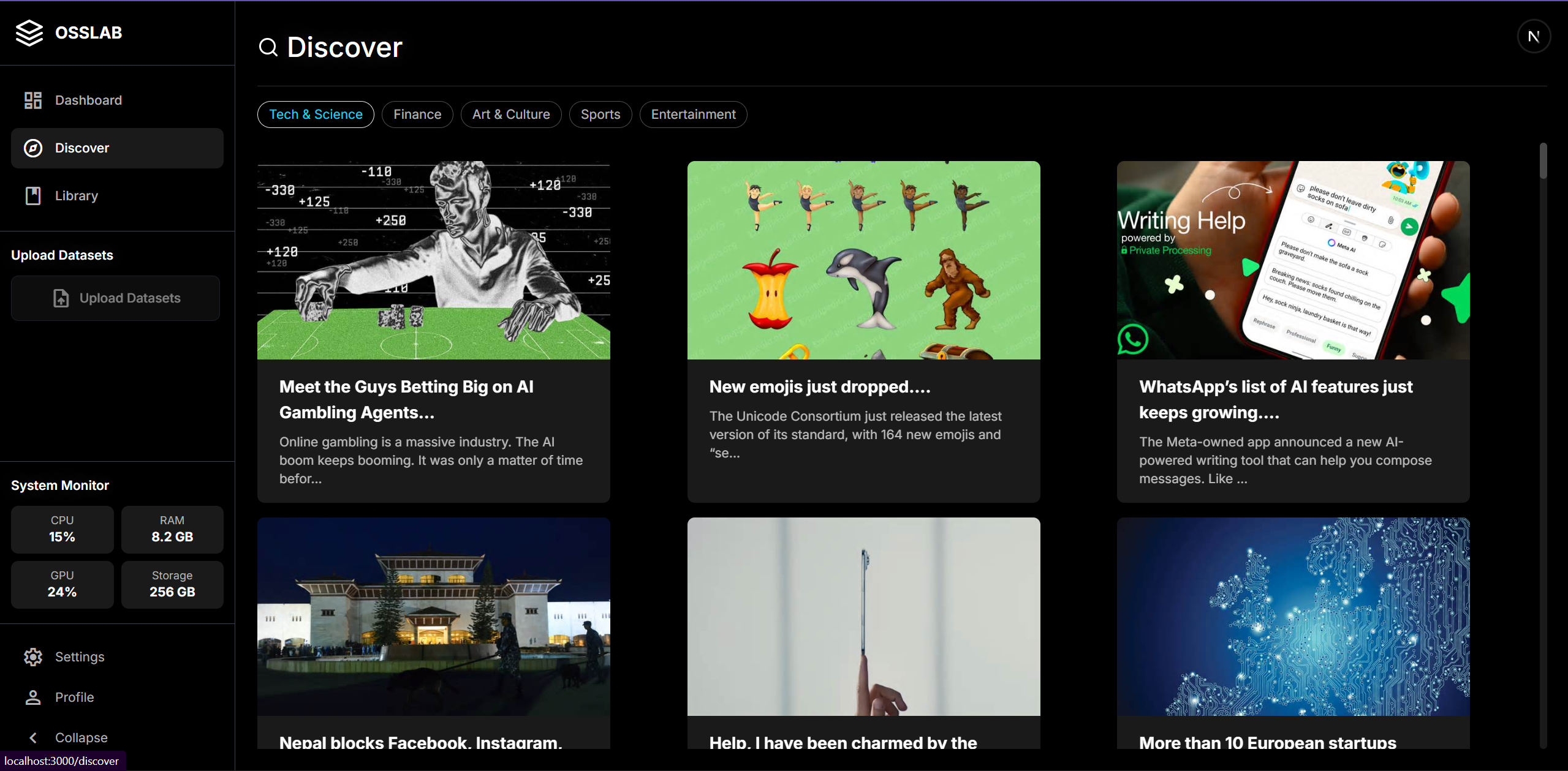
Discover-option(for Ideas Brainstorming from web for zero cost)
-
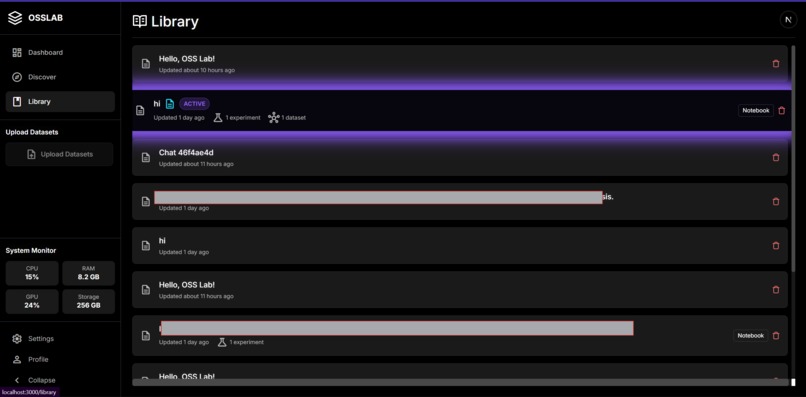
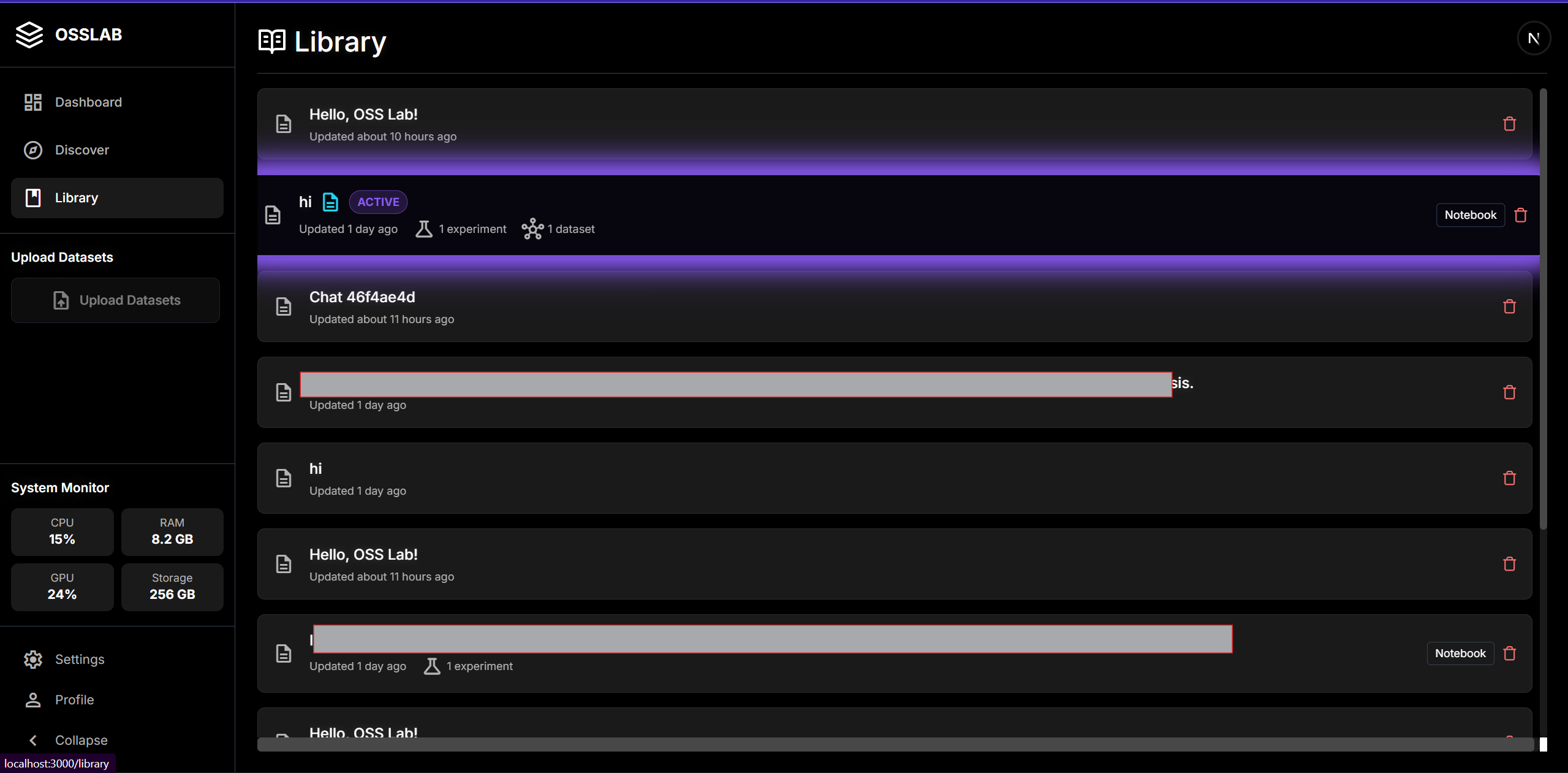
Interactive-chat-history-libaray
🎯 Hackathon Categories
- Best Overall - Complete AI research ecosystem with innovative notebook generation
- Best Local Agent - Fully functional offline research assistant with local model support
- For Humanity - Democratizing advanced AI research tools for everyone
📖 Project Story
💡 What Inspired Us
The AI research landscape is fragmented and inaccessible to many. Researchers struggle with:
- Complex data analysis workflows
- Disconnected tools and platforms
- Expensive proprietary solutions
- Steep learning curves for advanced AI capabilities
We envisioned a unified, open-source platform that democratizes AI research by combining the power of OpenAI's gpt-oss models with intuitive interfaces and automated analysis workflows.
🛠️ How We Built It
OSS_Lab is a sophisticated full-stack platform architected for scalability and user experience:
Backend Architecture:
- FastAPI server with WebSocket support for real-time communication
- gpt-oss-120b integration via Groq API for advanced reasoning
- Custom agent system for autonomous data analysis and notebook generation
- File management system supporting CSV, JSON, Excel, and Jupyter notebooks
- SearXNG integration for enhanced web search capabilities
Frontend Experience:
- Next.js 14 with TypeScript for type-safe development
- Tailwind CSS with custom design system and dark/light theme switching
- Real-time chat interface with streaming responses
- Interactive notebook viewer with syntax highlighting and output rendering
- Comprehensive settings panel with API key management
Key Innovations:
- Autonomous Notebook Generation: gpt-oss models automatically create Jupyter notebooks from conversation context
- Multi-Modal Analysis: Seamlessly handle text, data files, and generate visualizations
- Conversation Persistence: Advanced chat history with notebook linkage
- Intelligent Search Integration: Context-aware web search powered by SearXNG
🧠 What We Learned
- gpt-oss models excel at complex reasoning and can generate production-quality analysis code
- WebSocket architecture enables seamless real-time AI interactions
- User experience is crucial - intuitive design makes powerful AI accessible
- Open-source integration creates compound value when combining multiple tools
🚧 Challenges We Overcame
- Real-time Communication: Implemented WebSocket connections for live streaming of AI responses
- Notebook Integration: Built custom parsers to render Jupyter notebooks with proper syntax highlighting
- File Management: Created robust upload/download system supporting multiple data formats
- Theme System: Developed comprehensive CSS variable system for perfect light/dark mode switching
- Agent Orchestration: Designed autonomous agents that can analyze data and generate insights independently
🛠️ Built With
Core Technologies
- OpenAI gpt-oss-120b - Advanced reasoning and code generation via Groq API
- Python 3.11+ - Backend development with modern async patterns
- FastAPI - High-performance API framework with automatic OpenAPI documentation
- Next.js 14 - React framework with App Router and server-side rendering
- TypeScript - Type-safe development across frontend and backend integrations
AI & ML Stack
- Groq API - Ultra-fast inference for gpt-oss models
- SearXNG - Privacy-focused search engine integration
- LangChain - Agent orchestration and conversation management
- Jupyter Notebook - Interactive computing and analysis output
Frontend Technologies
- React 18 - Modern component architecture with hooks
- Tailwind CSS - Utility-first styling with custom design system
- Lucide React - Beautiful, customizable icons
- React Markdown - Rich text rendering with LaTeX support
- React Syntax Highlighter - Code highlighting for multiple languages
Backend Infrastructure
- Uvicorn - Lightning-fast ASGI server
- WebSockets - Real-time bidirectional communication
- Pydantic - Data validation and serialization
- Pathlib - Modern file system operations
- JSON/CSV Processing - Robust data file handling
Development Tools
- Git - Version control with comprehensive commit history
- ESLint & Prettier - Code quality and formatting
- Python Type Hints - Static type checking
- Environment Configuration - Secure API key management
🌟 Key Features
🤖 Intelligent Chat Interface
- Stream responses from gpt-oss models in real-time
- Context-aware conversations with memory persistence
- File upload support for data analysis
- Web search integration for enhanced responses
📊 Automated Notebook Generation
- AI generates Jupyter notebooks from conversation context
- Interactive code cells with syntax highlighting
- Matplotlib/Seaborn visualizations rendered inline
- Export capabilities for sharing and collaboration
🎨 Professional UI/UX
- Responsive design optimized for research workflows
- Dark/light theme with smooth transitions
- Accessibility-first component design
- Mobile-friendly responsive layout
⚡ High Performance Architecture
- WebSocket connections for real-time updates
- Efficient file processing and storage
- Optimized rendering for large notebooks
- Cross-platform compatibility
🚀 Try It Out
Live Demo
- Frontend:
http://localhost:3000 - Backend API:
http://127.0.0.1:8000 - SearXNG:
http://127.0.0.1:8888
GitHub Repository
- Main Repository: OSS_Lab
- Documentation: Complete setup and usage guides
- License: MIT License for maximum accessibility
Quick Start
# Clone the repository
git clone https://github.com/yourusername/OSS_Lab.git
cd OSS_Lab

# Run the complete stack
./run_osslab.bat    # Windows
# or
./run_osslab.sh     # Linux/Mac

# Access the application
open http://localhost:3000
🎯 Impact & Vision
Immediate Impact
- Researchers can analyze data 10x faster with AI-generated notebooks
- Students gain access to professional-grade research tools
- Small teams get enterprise-level AI capabilities without the cost
Broader Vision
- Democratize AI Research: Make advanced AI tools accessible to everyone
- Open Source Ecosystem: Contribute to the growing open-source AI community
- Educational Impact: Transform how students learn data science and AI
- Research Acceleration: Speed up scientific discovery and innovation
Future Roadmap
- Multi-model Support: Integration with additional open-source models
- Collaborative Features: Real-time collaboration on research projects
- Plugin Ecosystem: Extensible architecture for community contributions
- Enterprise Features: Advanced security and deployment options
🏆 Why OSS_Lab Deserves to Win
Technical Excellence
- Production-ready architecture with comprehensive error handling
- Advanced AI integration showcasing gpt-oss model capabilities
- Full-stack expertise demonstrated across all technology layers
Innovation & Novelty
- First-of-its-kind integrated research platform combining chat, analysis, and notebooks
- Autonomous agent architecture that generates publication-quality analysis
- Novel UI patterns for AI-human collaboration in research contexts
Real-World Impact
- Immediately deployable solution addressing genuine research pain points
- Open-source contribution that benefits the entire AI community
- Scalable architecture ready for widespread adoption
gpt-oss Model Showcase
- Demonstrates advanced reasoning through complex data analysis tasks
- Leverages model strengths in code generation and scientific thinking
- Pushes boundaries of what's possible with open-source AI models
📝 Technical Specifications
System Requirements
- OS: Windows 10+, macOS 12+, or Linux (Ubuntu 20.04+)
- Python: 3.11 or higher
- Node.js: 18.0 or higher
- Memory: 8GB RAM minimum, 16GB recommended
- Storage: 2GB free space for installation
API Dependencies
- Groq API Key for gpt-oss model access
- Optional: OpenAI API for fallback capabilities
Performance Metrics
- Response Time: <2 seconds for chat responses
- Notebook Generation: <30 seconds for complex analysis
- File Processing: Supports files up to 100MB
- Concurrent Users: Supports 10+ simultaneous connections
🤝 Contributing
We welcome contributions! OSS_Lab is built for the community, by the community.
How to Contribute
- Fork the repository
- Create a feature branch
- Make your changes
- Add tests if applicable
- Submit a pull request
Areas for Contribution
- New AI Models: Integration with additional open-source models
- UI Components: Enhanced visualization and interaction patterns
- Analysis Tools: Specialized analysis modules for different domains
- Documentation: Tutorials, guides, and best practices
Built with ❤️ for the OpenAI Open Model Hackathon 2025
Empowering researchers, students, and innovators worldwide with accessible AI tools.
Built With
- agents
- data-analysis
- groq
- multi-agnets
- nextjs
- python
- searxng
- websockets


Log in or sign up for Devpost to join the conversation.