-
-
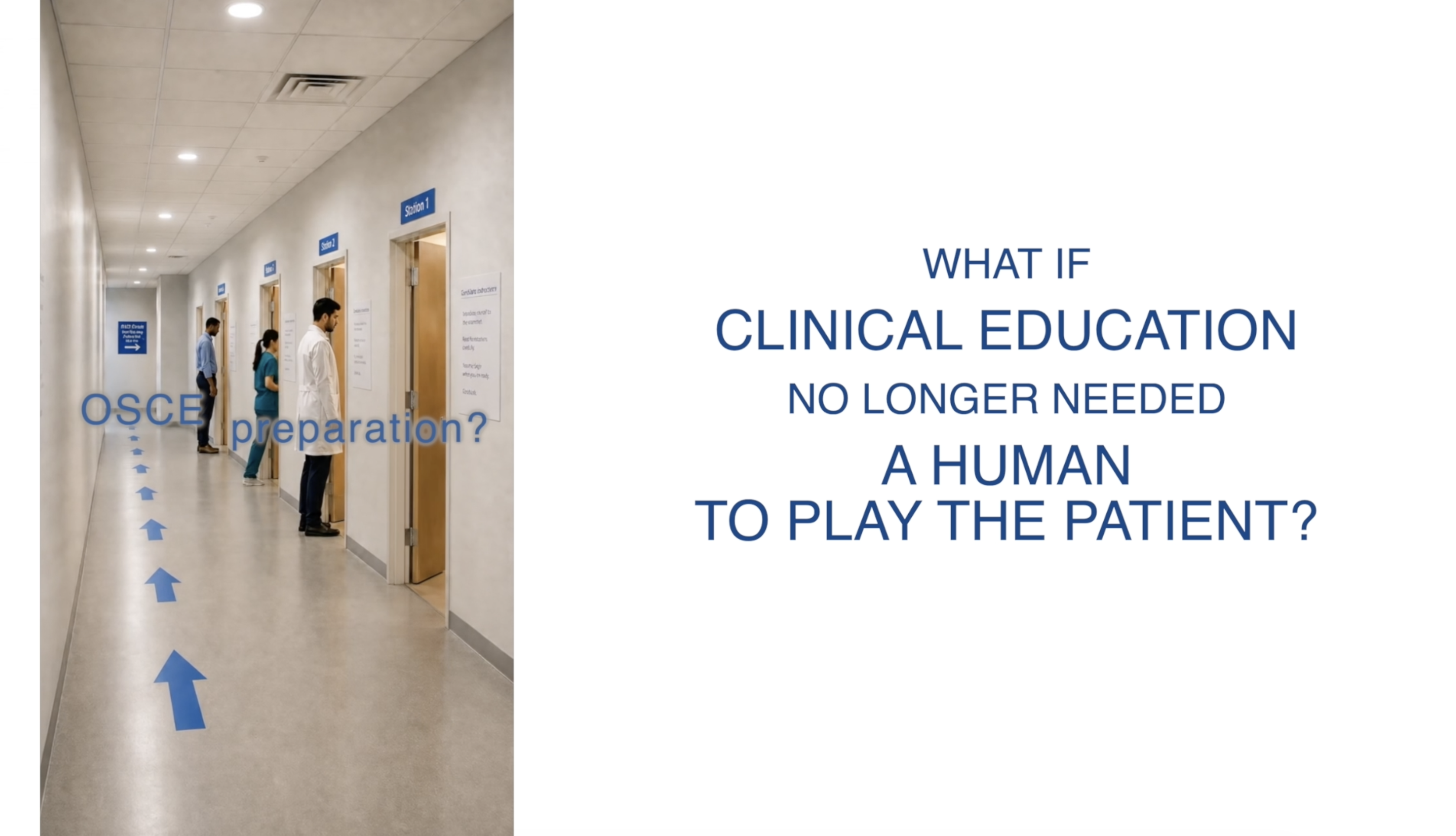
Reimagining Clinical Simulation — what if realistic patient encounters no longer depended on a human role-player?
-
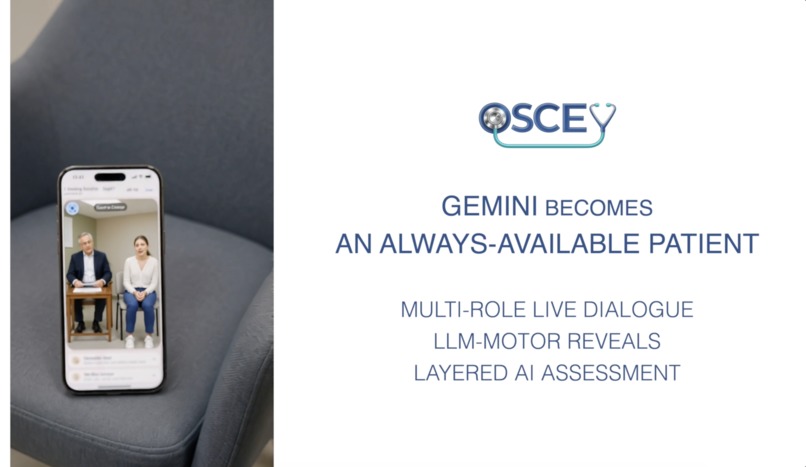
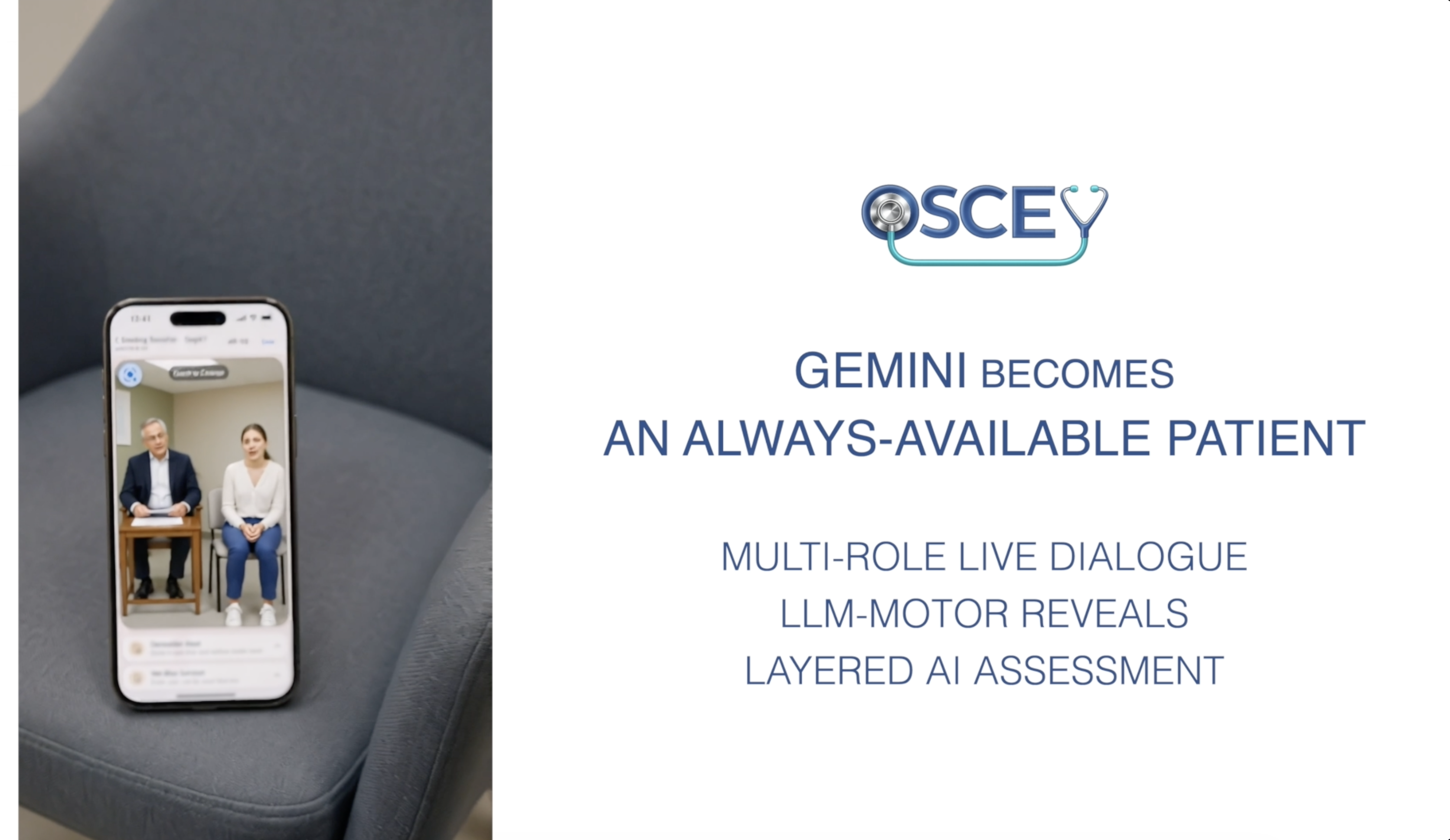
An Always-Available AI Patient — Gemini enables responsive, multi-role clinical dialogue whenever the learner is ready.
-
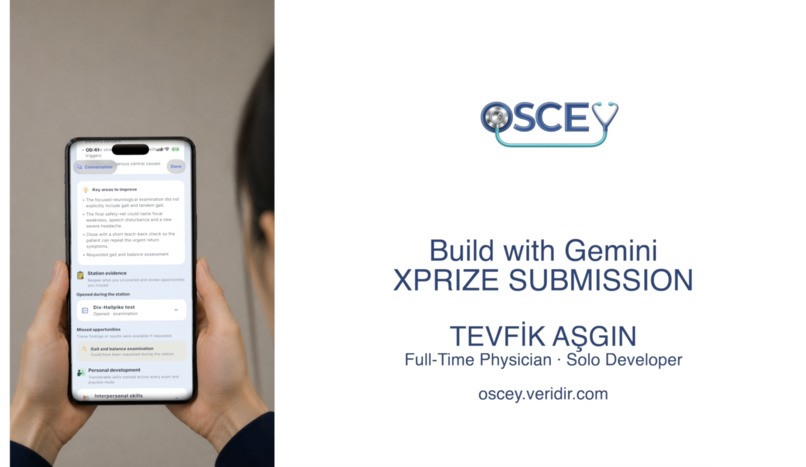
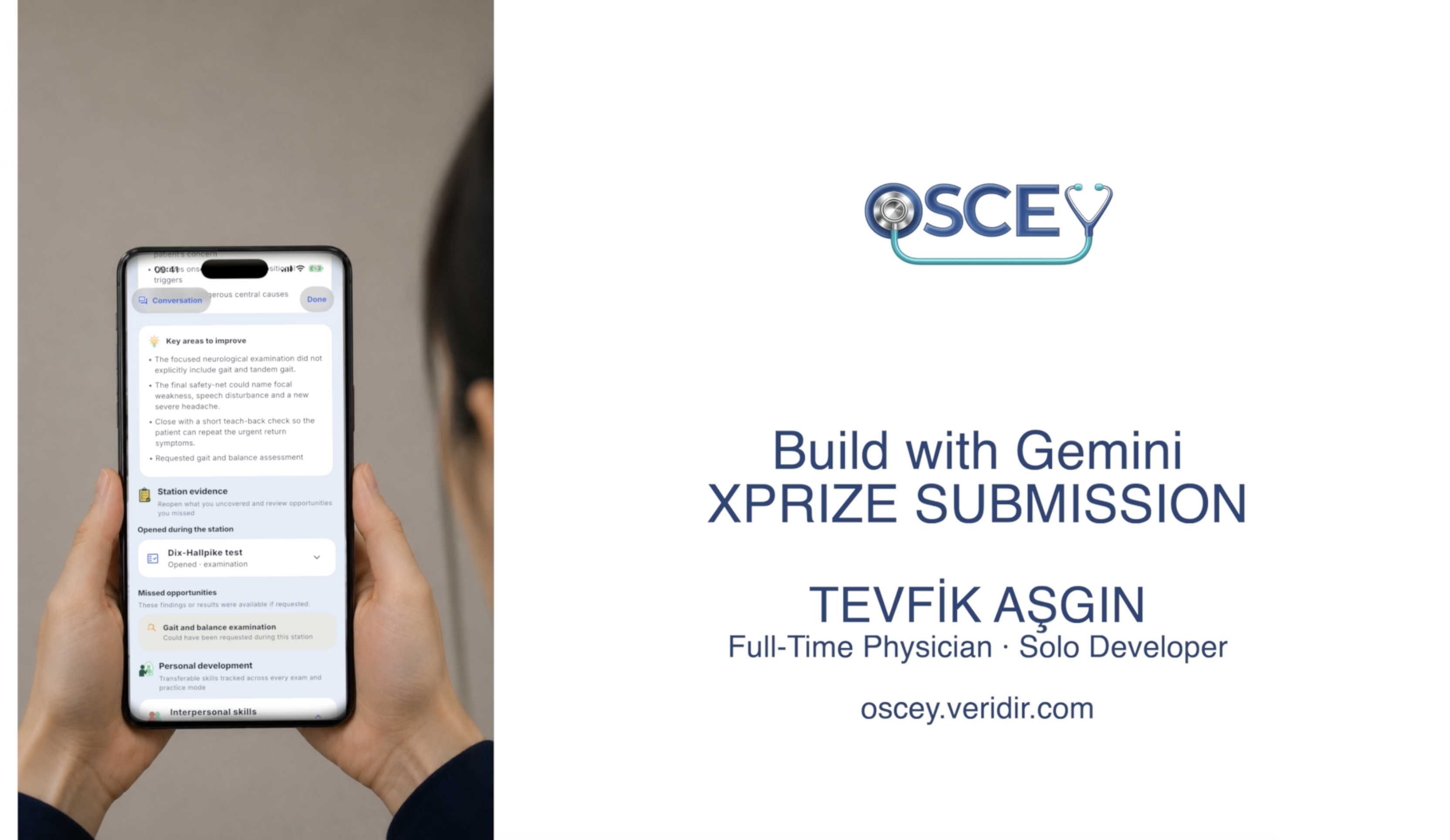
OSCEY — a Build with Gemini XPRIZE submission designed and developed by TEVFIK ASGIN.
-
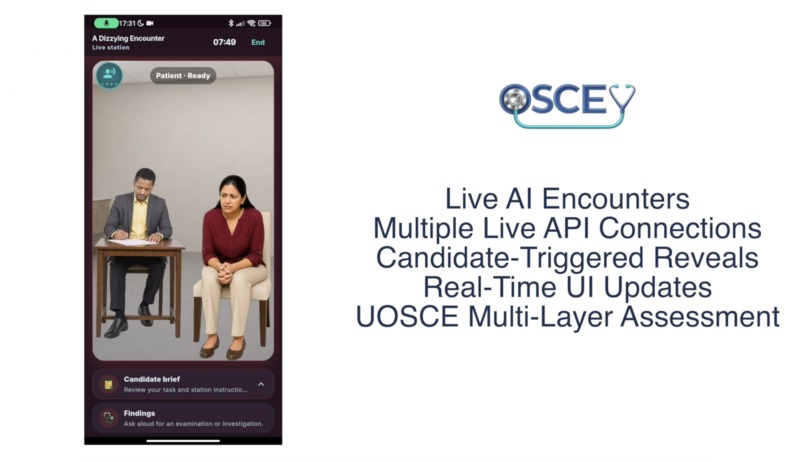
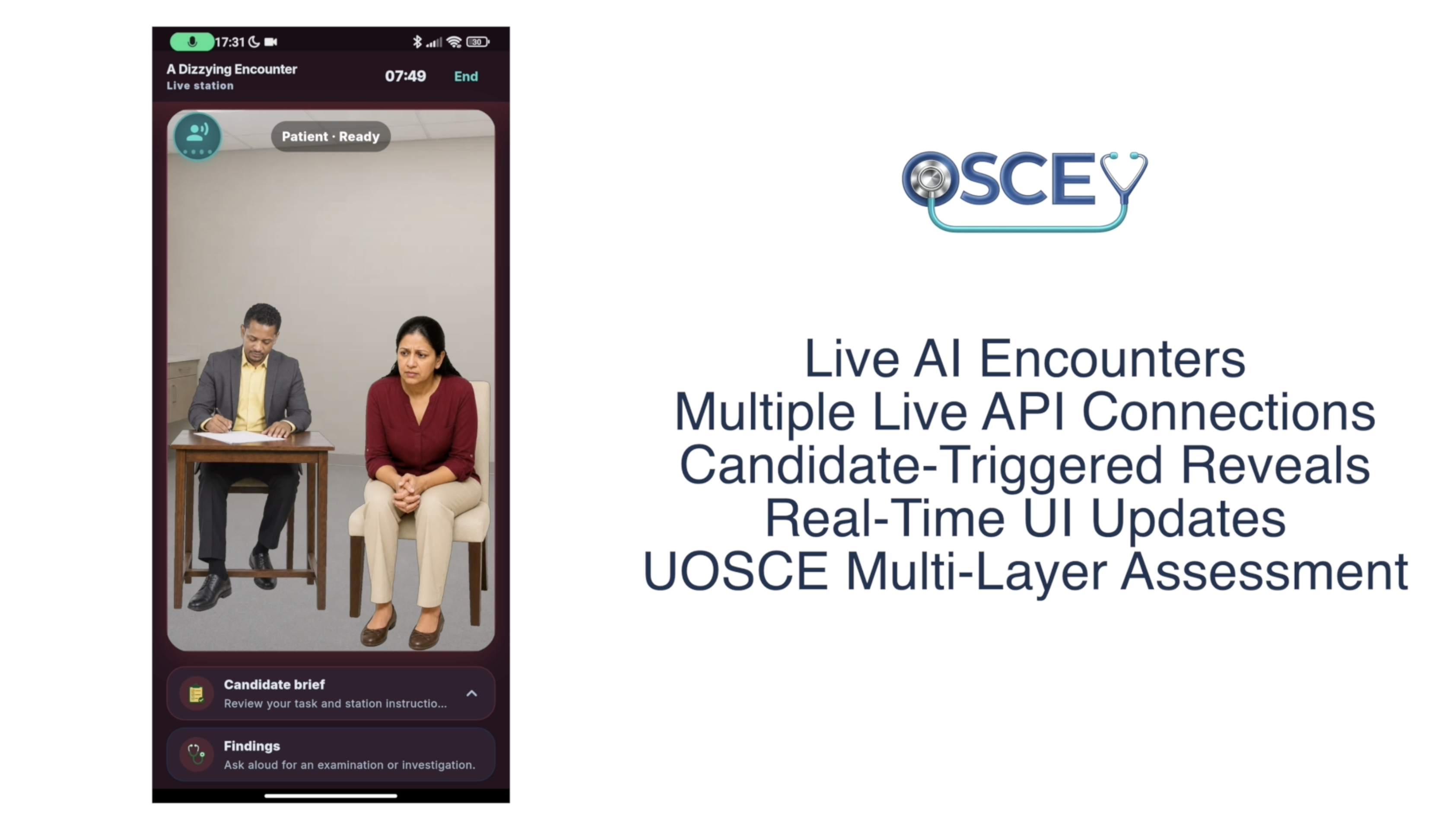
Live AI Encounters — dynamic patient interactions, real-time reveals, and multi-layered assessment in one experience.
-
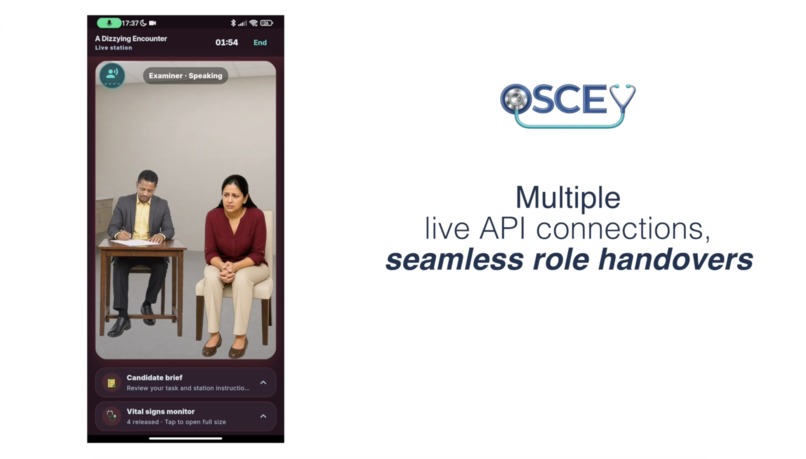
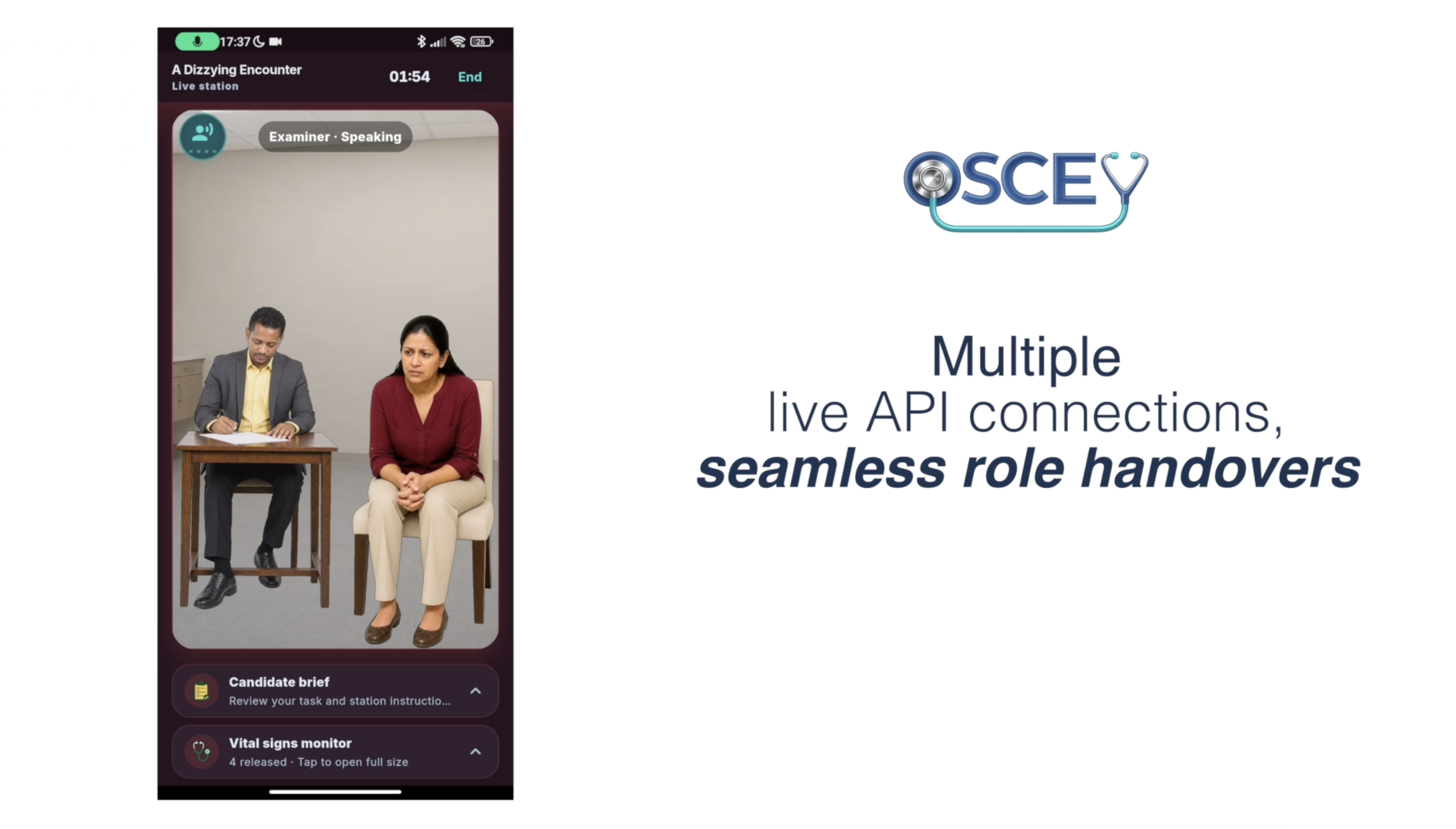
Seamless Role Handover — multiple live AI and API connections working together within a single clinical encounter.
-
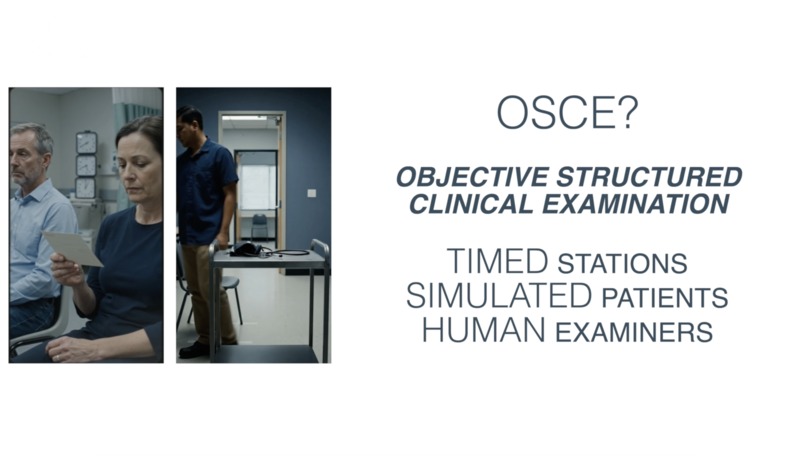
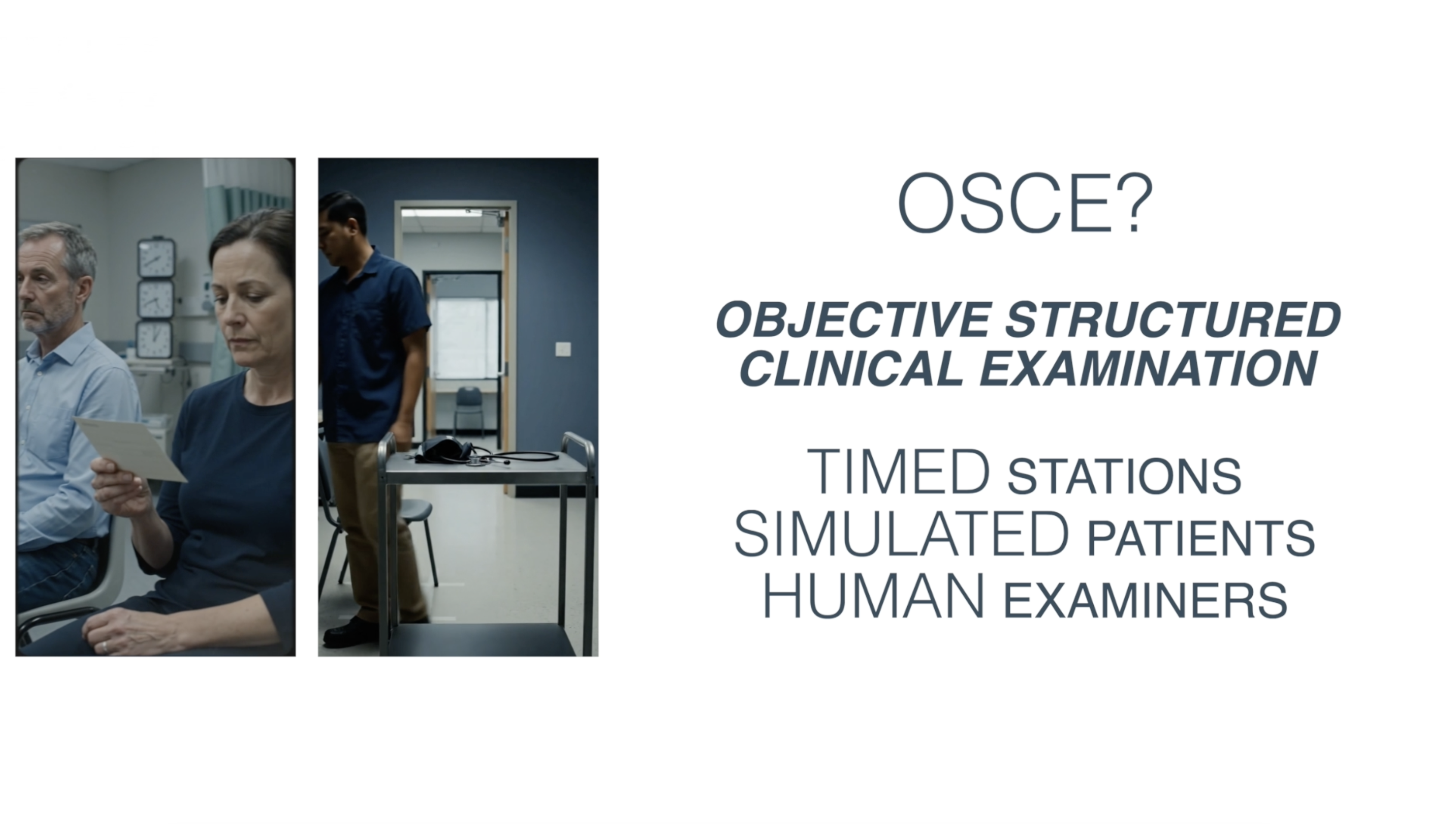
The Traditional OSCE — timed clinical stations built around simulated patients, human examiners, and structured assessment.
-
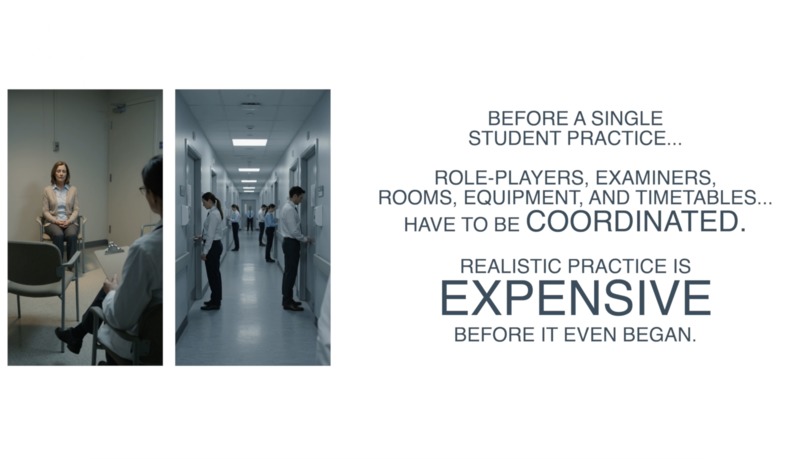
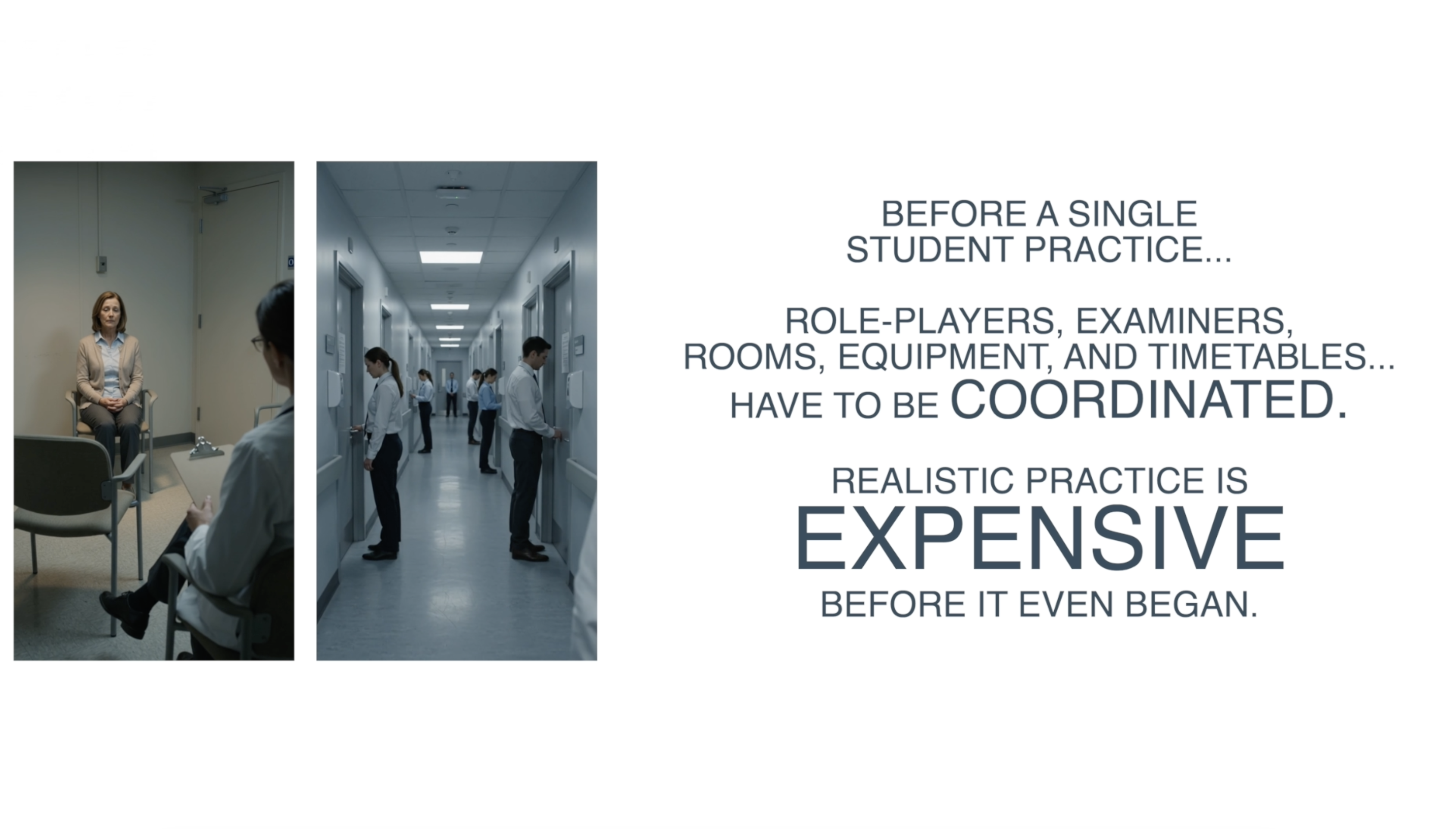
The Traditional OSCE Bottleneck — realistic practice requires extensive coordination of people, rooms, equipment, and schedules.
-
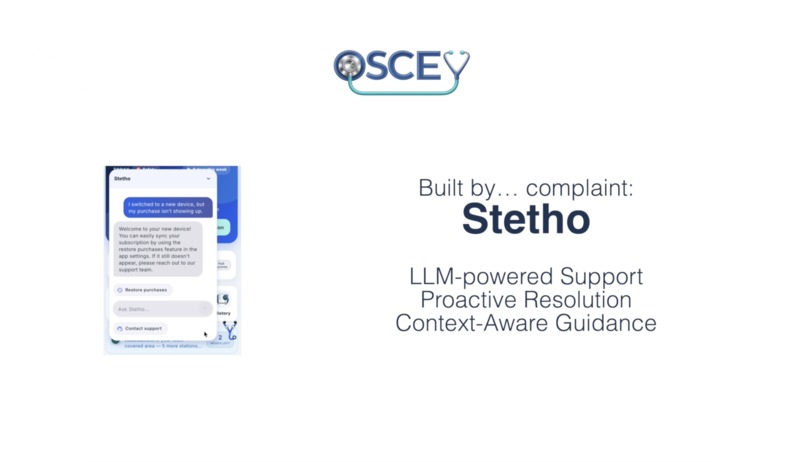
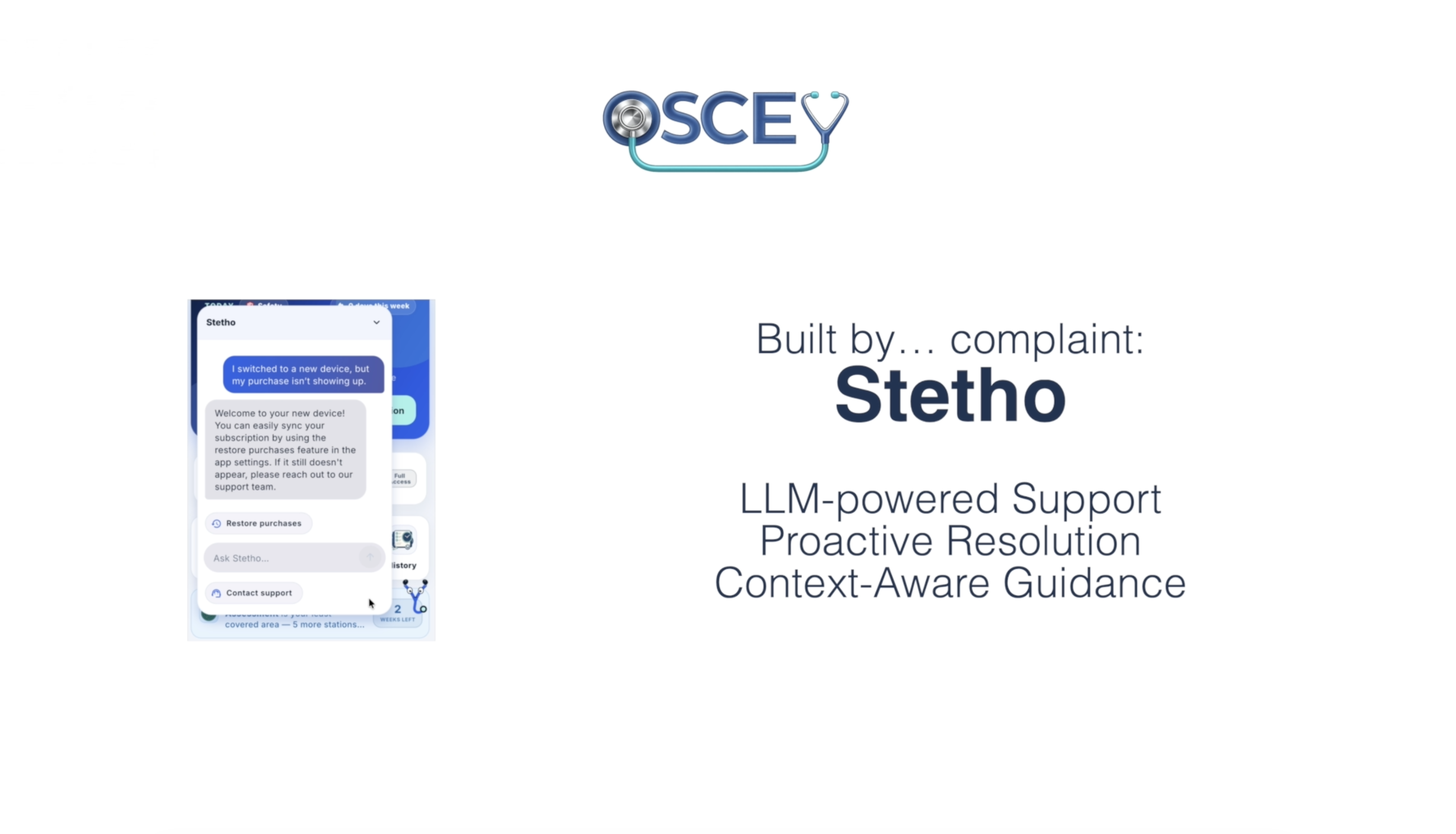
Stetho — AI-powered, context-aware support built directly from real user needs.
-
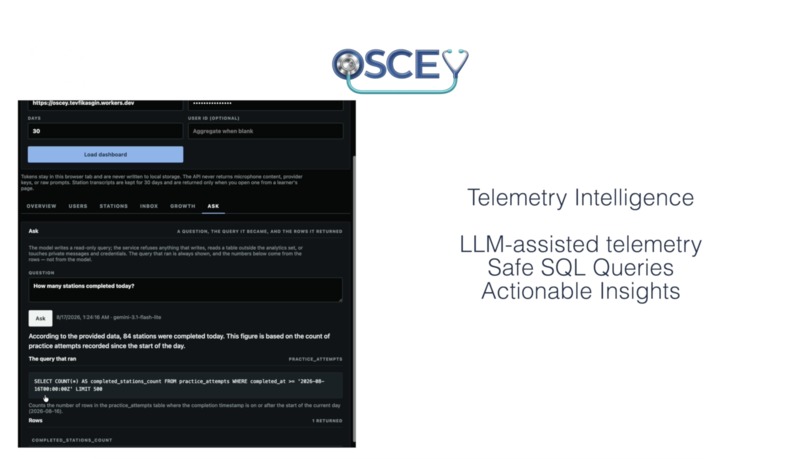
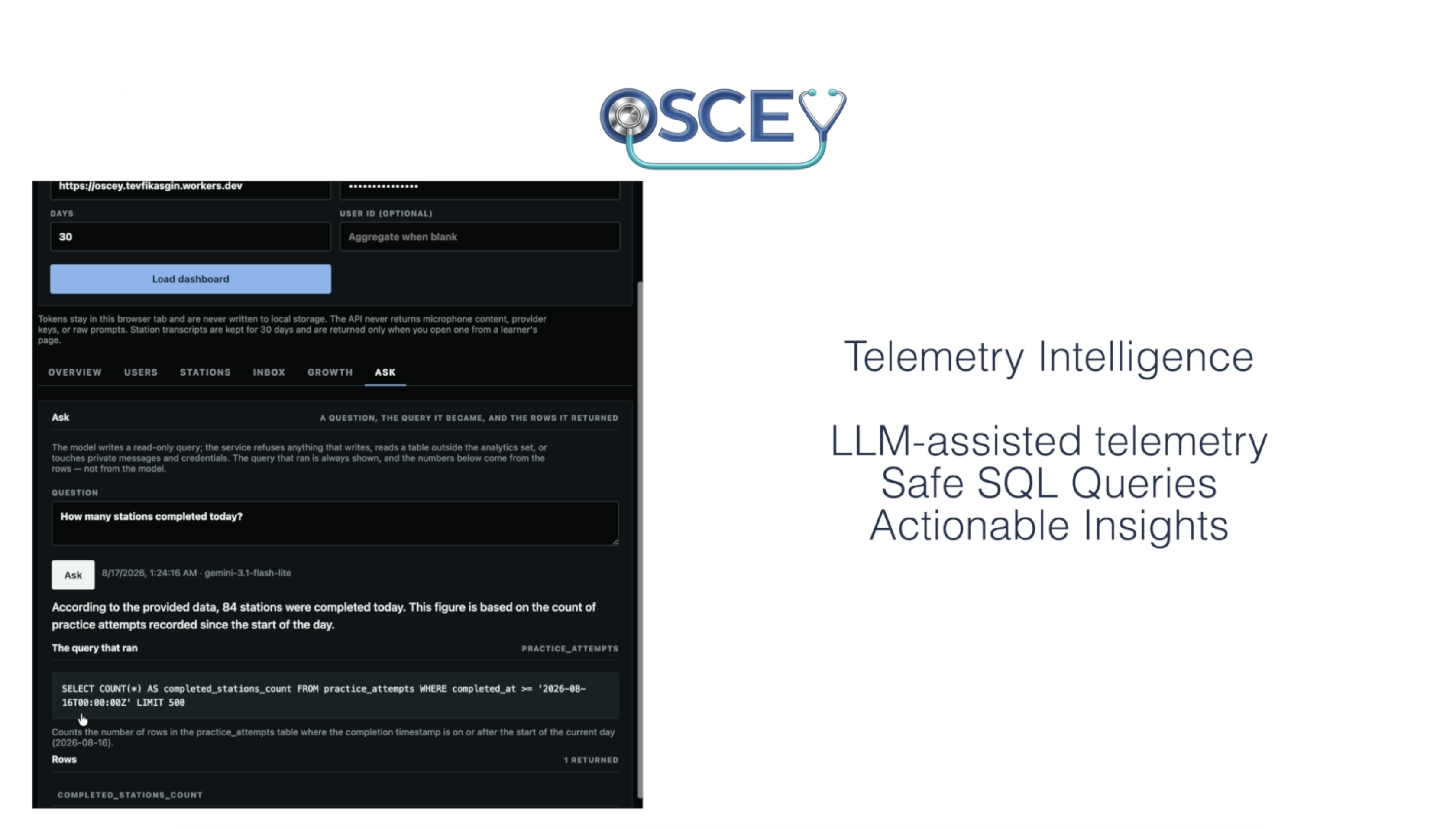
Telemetry Intelligence — turning platform data into safe, actionable insights through natural-language queries.
-
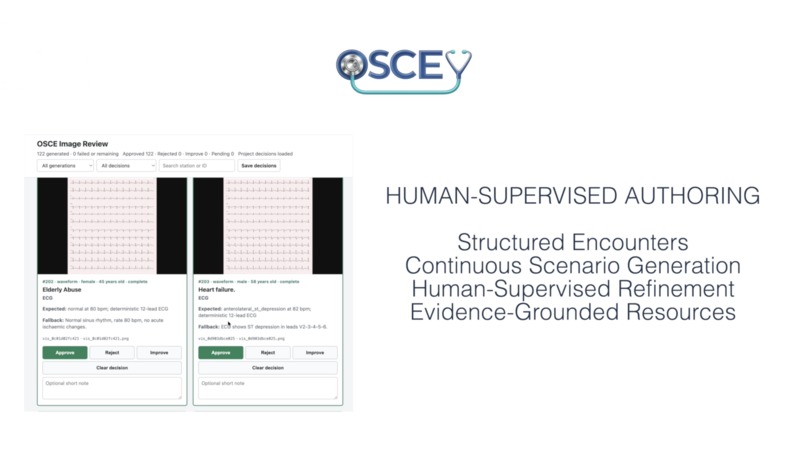
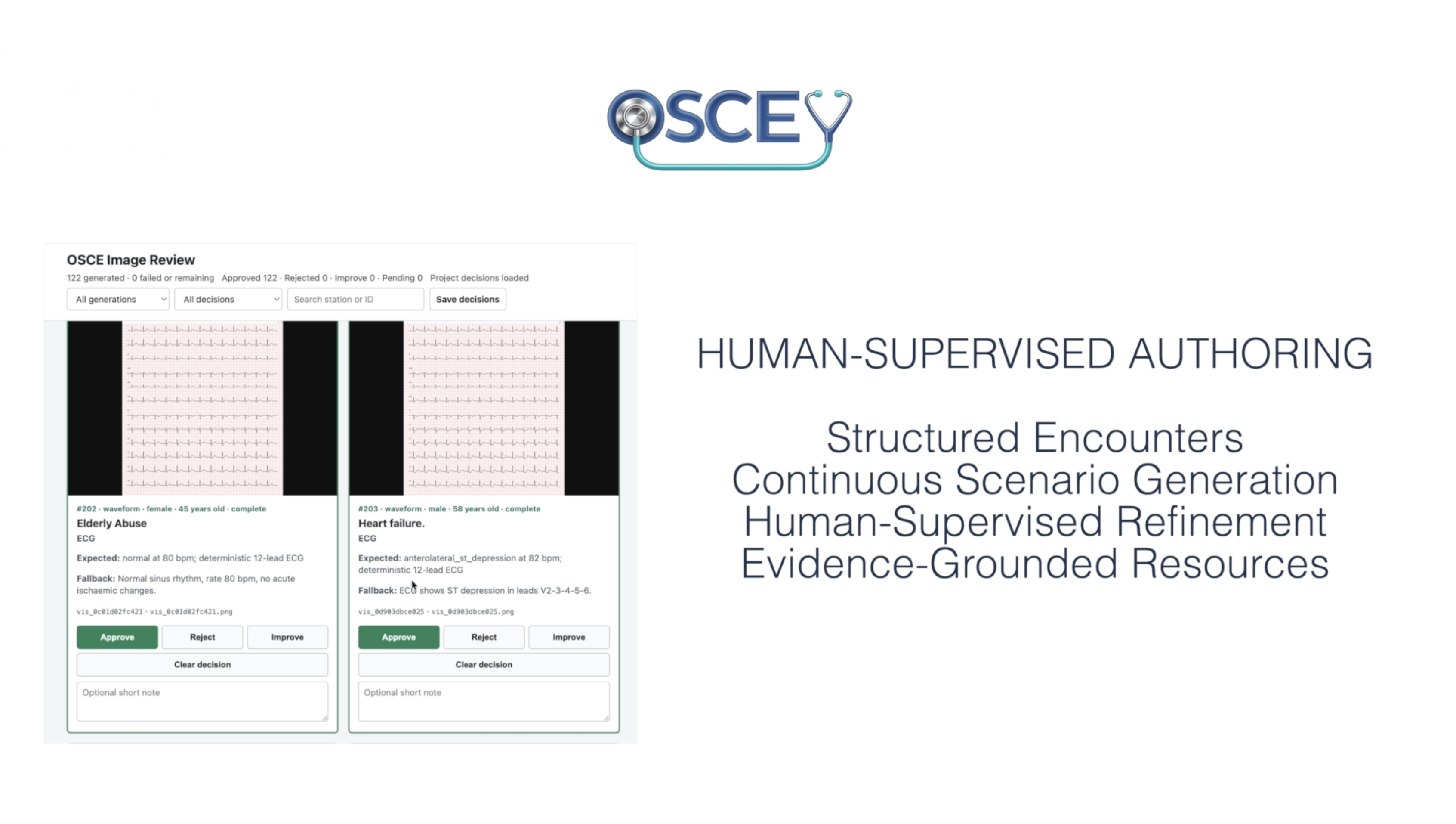
Human-Supervised Authoring — AI-generated clinical scenarios refined and validated by human expertise.
You can find the "Written Narrative (500–1000 words)" at the very end of this page.
Inspiration
The OSCE — the Objective Structured Clinical Examination — is medicine's speaking exam, and it is used worldwide. Locally, medical schools run it in undergraduate finals, on the way to a degree and a licence. And doctors who want to work abroad meet it again, because it sits at the heart of licensing exams like PLAB 2 in the UK, AMC Clinical in Australia, NAC in Canada, NZREX in New Zealand and PRES in Ireland. It does not test what you know. It tests how you use it in a real conversation: communication, reasoning, empathy, safety, decisions — all under time pressure.
I am a doctor. I know how students prepare for this exam, because I lived it. Practice depends on things you cannot control:
- Sessions must be scheduled.
- Partners are often unavailable.
- Scripts are predictable — you end up memorising them.
- Trained role-players are expensive and hard to book.
- Feedback changes depending on who is watching.
- The scenarios that matter most — rare, emotional, safety-critical — are the hardest to reach.
Most study resources test what a candidate knows. An OSCE tests how that knowledge works in a live conversation. So the scarce resource in medical education is not information. It is realistic practice.
Live AI APIs can remove that scarcity — and the OSCE is a perfect fit for them. The exam is made of live conversation, hidden information, several participants, emotional responses, findings that depend on your actions, uncertainty, time pressure and personal feedback. AI can now carry all of that.
So I built OSCEY: realistic clinical role-play, on demand, alone, at any time, as often as needed. I did not put a chatbot inside an old OSCE script. I rebuilt the station itself:
- The fixed script became a live conversation.
- Printed findings became information you must earn.
- Occasional, observer-dependent feedback became instant, evidence-linked assessment.
I believe live APIs will change more than exam preparation. One day they may change how supervised, lower-stakes clinical exams are delivered. But today OSCEY is a formative practice platform. Any use in formal or high-stakes exams would first need independent validation, institutional governance, human oversight and regulatory approval.
What it does
OSCEY turns medical role-play into a live, spoken AI simulation that listens, responds, reveals and assesses in real time.
An encounter works like the real exam:
- You read a timed clinical brief.
- You enter the station and start talking.
- The patient answers with a real voice.
- Findings appear only when your actions earn them.
- Other people join when the case needs them.
- The station hands over to an examiner phase.
- You receive detailed, evidence-linked feedback.
You speak with patients, relatives, colleagues and examiners. Each one is a separate live AI connection with its own identity, purpose, instructions, clinical context, emotional state, knowledge boundary and conversation history. That is why a patient consultation can turn into an examiner discussion or a colleague handover without the station ever breaking.
Nothing is revealed for free. Ask for an ECG properly, and it appears. Ask for the X-ray, and the image opens. Examine the patient, and the findings are released. Miss an investigation, and it stays hidden. An AI reveal layer reads every request, decides whether it is clinically sufficient, finds the matching information, releases only what you earned, and updates the screen immediately. It can reveal physical-examination findings, ECGs, X-rays, lab results, investigation reports, clinical photographs, and new information from the people in the room.
After the encounter, feedback covers what a real examiner marks: communication and empathy, data gathering, clinical reasoning, investigations, management, patient safety, professionalism, and structure and time management. There is no generic praise. Every point shows:
- what you said,
- what you demonstrated,
- what was only partial,
- what was missed,
- what was unsafe — and why it mattered.
The same performance can then be viewed through the lens of your own exam: PLAB 2, UKMLA CPSA, AMC Clinical, NAC OSCE, NZREX Clinical, PRES Level 3, or an undergraduate medical-school OSCE. Everything is labelled as formative, exam-aligned practice. Official results, licensing decisions and pass predictions are never claimed.
How we built it
AI is not one feature inside OSCEY. It runs through every layer:
Clinical idea → AI-assisted scenario → human review → versioned runtime package → live AI roles → reveal decisions → live interface updates → evidence-linked assessment → learner support → telemetry → continuous improvement.
OSCEY is not a chatbot with a microphone. I built a purpose-made LLM orchestration engine that keeps everything in step: role behaviour, emotions, hidden facts, knowledge boundaries, examiner phases, earned findings, timing, state transitions, interface updates and assessment.
Every scenario compiles into a structured, versioned runtime package: who each role is, what they know, what they hide, how they feel, what unlocks each finding, what the examiner asks, when roles change, what is safety-critical, and how the station is scored.
The voices are multiple Gemini-powered live API connections. One connection does not imitate everyone. The patient, the relative, the colleague and the examiner each get their own — synchronised through a shared station state. When the patient hands the encounter to the examiner, your progress, the timer, the earned findings and the context all survive. The examiner does not inherit the patient's secrets.
Different models do different jobs:
- Live audio models carry the spoken conversation.
- Reveal models decide what your actions earned.
- State models manage phases and role transitions.
- Assessment models score performance against structured criteria.
- Support and telemetry models run the business behind the app.
- Scenario models help me structure and refine stations.
Small, low-cost models take the small, bounded decisions. Live audio runs only during an active encounter. That is how realism, safety, speed and cost control live together. And the answer key — hidden facts, reveal rules, scoring criteria — never leaves the server.
Stations come from a human-supervised production platform. It turns clinical ideas into structured stations: role instructions, emotional direction, reveal pathways, examiner phases, safety boundaries, assessment criteria. AI speeds up the writing; I review the medicine. Clinical accuracy, safety and quality are my responsibility, not the model's. I claim no academic validation yet — the assessment stays labelled formative and exam-aligned.
The app is built with Flutter. An edge-deployed backend carries live sessions, scenario delivery, assessment, access control, subscriptions, protected station state and privacy-conscious telemetry. Raw microphone audio is not stored in analytics. Telemetry records bounded facts — counts, durations, outcomes, product events. Completed transcripts are handled separately, kept briefly, then deleted.
The same AI-first idea runs the company behind the simulation. Stetho answers support questions from verified user context, so problems are solved before they become complaints. Telemetry intelligence turns verified product data into plans and insights through schema-bounded, read-only SQL. Scenario intelligence helps stations get built, tested and improved under supervision. Development automation covers testing, debugging and quality control. This is how one physician runs what would normally need engineering, content, support, testing and analytics teams.
Challenges we ran into
The hard part was never making an AI speak. It was making several AI roles behave like one coherent exam.
When a patient hands the station to an examiner, the examiner must not inherit the patient's private instructions, another role's emotions, hidden clinical facts, assessment answers, or anything you have not earned. The handover must feel like one person leaving the room and another walking in — not like a system resetting.
Dynamic findings were just as delicate. For every action, the system must understand the request, judge whether it is clinically enough, match the correct finding, release only that, update the screen instantly, and keep the action as assessment evidence. A wrong reveal does not just hurt realism. It breaks the teaching value of the station.
Beyond those two, there was a long tail of hard problems:
- Mobile audio sessions, interruptions, and echo.
- Natural barge-in — and a stable microphone while the patient speaks.
- Keeping latency at conversation speed.
- Staying clinically consistent across long encounters.
- Patients who must not volunteer; examiners who must not leak answers.
- Feedback without repetition or false certainty.
- Telling apart "not done" from "cannot be heard through audio."
And because I work alone, automation was survival, not luxury. Support, telemetry, testing, scenario production and quality control all run as supervised, repeatable workflows — they do not wait for me.
Accomplishments that we're proud of
OSCEY is not a demo. It is a live product with real learners and paying subscribers.
One uninterrupted spoken encounter now carries live role-play, several AI participants, emotional responses, dynamic findings, ECGs, X-rays and clinical media, examiner interaction, role transitions and structured assessment. Stations can hold emotional shifts mid-consultation, multiple people, branching investigations, handovers and safety-critical decisions.
The architecture behind it is an accomplishment of its own: multiple live AI roles, human-supervised scenario production, a candidate-triggered reveal layer, evidence-linked assessment, proactive LLM support, privacy-conscious telemetry, and one universal assessment structure that can re-organise the same evidence for several different exams.
Most importantly, real demand appeared. After App Store review, OSCEY launched on 14 August 2026. In the first launch window:
- 514 users reached the app — an early snapshot showed 370 organic.
- A small $23 ad test returned $0.24 per install.
- 8 users subscribed at $4.99/week — about 1.56% user-to-paid conversion.
- That is roughly $173 in normalised gross monthly recurring revenue, if maintained.
- Medical-category rankings: #6 Pakistan · #49 Ireland · #67 New Zealand · #91 Australia.
All of this happened before any marketing: no social launch, no influencers, no partnerships, no ambassador programme, no campaign.
One more honest detail. The conversion rate is measured early — most users have not yet used up their free practice, so their decision moment is still ahead. I expect more conversions as free attempts complete. But I treat that as a hypothesis to test, not a promise — measured through trial completion, paywall exposure, activation and renewal cohorts.
These numbers do not yet prove long-term retention or product-market fit. What they do show: organic discovery, cheap first acquisition, international reach, and early willingness to pay — before marketing.
What we learned
Realism is engineered, not prompted. A fluent conversation is easy. A clinically safe, educationally useful one is not. Role boundaries, structured facts, reveal pathways, emotional direction, shared state, safe transitions, evidence-linked assessment and human review must all work together. A model can speak beautifully and still be clinically unsafe.
Orchestration matters as much as the model. Voice, timing, identity, state, screen, findings, handover and assessment must move as one. Even a short gap between them makes the station feel artificial.
Assessment needs restraint. A safe system tells apart: done well, done partly, not done, done unsafely, not observable through audio, and not enough evidence to judge. Collapse those categories, and feedback becomes confident — and wrong.
AI gives the scale. Human supervision protects the standard. If I could keep only one lesson, it would be this one.
What's next for OSCEY: AI OSCE Role-play
The next stage: turn strong early demand into independent evidence and sustainable growth.
I am planning formal validity and reliability studies with medical faculties. OSCEY's formative scores will be compared with the judgements of trained human examiners: agreement between AI and humans, inter-rater and test-retest reliability, improvement across comparable stations, detection of safety-critical omissions, changes in practice frequency and confidence — and whether repeated OSCEY practice produces measurable improvement.
On the product side:
- More realistic animated avatars and visual physical-examination demonstrations.
- Broader scenario coverage and more exam formats.
- More languages and localisation.
- Institutional dashboards and educator controls.
- Better role transitions, more emotional realism, more personalised feedback.
Successful research collaborations can grow into paid pilots and B2B partnerships — with medical schools, exam-preparation providers, healthcare education organisations, and clinical-skills and simulation centres.
Live APIs can change both sides of the OSCE. Preparation becomes on-demand, repeatable without a partner, adaptive instead of scripted, emotionally responsive, evidence-linked and globally accessible. Supervised assessment could one day become easier to run, more consistent and more measurable — with several live roles, dynamic findings, and instant structured evidence for human review. High-stakes use would come only after independent validation, governance, regulation and continued human oversight.
The goal is not to replace educators, role-players or examiners. It is to keep what the OSCE does well — and remove what holds it back.
OSCEY is rebuilding clinical role-play for the Live API era. And it is only getting started.
Written narrative
How I use AI day to day
I am a physician, and I still work full-time in clinical practice. OSCEY runs anyway, because Gemini holds an operational role in every layer of the business — all day, every day.
In the product, AI is the product. Every practice station runs on multiple Gemini-powered live API connections: the patient, the relative, the colleague and the examiner each speak through their own connection, synchronised through a shared station state. Native audio carries tone and natural hesitation, and barge-in keeps the exchange fluid rather than scripted. Beside the voices, a second Gemini engine works as a reveal judge: it reads every learner utterance against the hidden station, demands a verbatim evidence quote and a confidence gate, and releases only the findings — examination results, ECGs, X-rays, images — that the candidate's own actions have earned. When time is up, assessment models score the encounter against a universal 426-criterion framework and write evidence-linked feedback projected into the learner's own exam.
Behind the product, AI runs the company. Stetho, the support agent, answers users from a server-verified snapshot of their real subscription state and refunds failed sessions before they become complaints. Telemetry intelligence turns my questions into schema-bounded, read-only SQL over allow-listed production data, then groups themes and flags learner or station problems. The 868-station library came from an AI authoring pipeline — schema-validated, hash-locked into versioned releases. Development automation covers testing, debugging and quality control. Small, low-cost models take the tightly bounded decisions, and live audio runs only during an active encounter — cost discipline is part of the daily routine, not an afterthought.
My personal method is the part that makes this workable: I use LLMs as agents, deliberately. Work is broken into structured, layered steps; each step checks its own output; every iteration is designed to come out better than the last. That discipline is my day-to-day craft — and the operating system of the business.
What humans do versus what AI does
The division is simple and strict. AI executes the repeatable work at scale. I define the boundaries and remain accountable.
Gemini plays the patient, judges the reveals, scores the encounter, writes the debrief, answers the support inbox and watches the telemetry. I do what must not be delegated: I review the medicine. Every scenario passes through my clinical supervision — role instructions, safety boundaries, reveal pathways, assessment criteria. AI speeds up the writing; I review the medicine. Code computes; Gemini interprets; I decide. And the answer key — diagnoses, scripts, reveal triggers, scoring criteria — never leaves the server, so a student cannot extract it from the model.
Restraint is a human decision too. The assessment distinguishes what was done well, done partly, not done, done unsafely, not observable through audio, and not supported by enough evidence — because collapsing those categories makes feedback confident and wrong. Everything is labelled formative, exam-aligned practice; no official results or pass predictions are claimed, and any high-stakes use would first require independent validation, governance and regulation. AI gives the scale. Human supervision protects the standard.
Jobs and economic opportunities beyond the founding team (actual and potential)
Today, honestly: OSCEY has no employees. But the economic opportunity it creates does not sit inside the company — it sits around it, in widening rings.
For learners, now. In its first three days on the App Store, 514 users reached OSCEY. Licensing OSCEs are economic gates: passing PLAB 2, AMC Clinical, NAC, NZREX or PRES is what lets a doctor enter a health system — often one facing a workforce shortage. Realistic practice used to be rationed by budgets and geography. At the price of an app subscription, OSCEY lowers the cost of that gate, which is economic mobility for exactly the students furthest from well-resourced schools.
First paid roles, defined. Early revenue is earmarked for contracted clinical reviewers to harden the station library, with localisation reviewers to follow as languages expand, and a student-ambassador programme in the planned launch.
Research work, potential. The validity and reliability studies I am planning with university medical-education departments create funded, publishable research collaborations for academics and their teams.
Institutions, potential. The B2B path — institutional dashboards, educator controls, curriculum-mapped station sets — is built to augment educators, not replace them. Role-players and human examiners keep the high-stakes work; OSCEY removes the rationing around it, and paid pilots would bring implementation and teaching work to partner schools, exam-preparation providers and clinical-skills and simulation centres.
The story of building the business this way
Everything that is OSCEY — the 868-station library, the orchestration engine, the reveal judge, the scoring framework, the support agent, the business itself — I created within the hackathon period, while continuing to practise medicine. There is no company and no team behind it: one physician-developer, no salaries, no office.
The economics were designed before scale. Free users get a daily quota and per-station trials; Premium is a weekly subscription at US$4.99, matching the short, intense windows in which candidates actually study. Every user carries a daily provider-spend cap checked before any API call is made, so margins are protected in code rather than in policy.
App Store review consumed two weeks of the runway. I spent the wait shipping review-driven polish and production-ready attribution infrastructure instead of rushing ads. OSCEY launched on 14 August 2026 — three days before this submission — so every figure I can show is a three-day figure: 514 users, 370 of them organic in an early snapshot, a US$23 ad test at US$0.24 per install, eight subscribers, US$44 gross, and roughly US$174 in normalised gross monthly recurring revenue if maintained, with App Store Medical chart entries in Ireland, Pakistan, New Zealand and Australia. All before any coordinated marketing.
That is the story this narrative is really about: with disciplined, supervised AI agents, one clinician can now build, run and grow what used to take a company — and the next step, university validity studies, is how the standard rises with the scale.
Built With
- firebase
- flutter
- gemini
- gemini-live-api
- javascript
- revenuecat

Log in or sign up for Devpost to join the conversation.