Inspiration We started with a simple frustration: every AI assistant has amnesia. Every time you close a chat, it's like meeting a stranger. They don't remember your voice, your preferences, your work style. They don't know that "review the PR" means "check if tests pass and comment on code style" in your workflow.
We wanted to build something different—an AI that actually knows you. An agent that learns your habits, mirrors your communication style, and grows smarter with every interaction. That's how OSAP (Open Stateful AI Platform) was born.
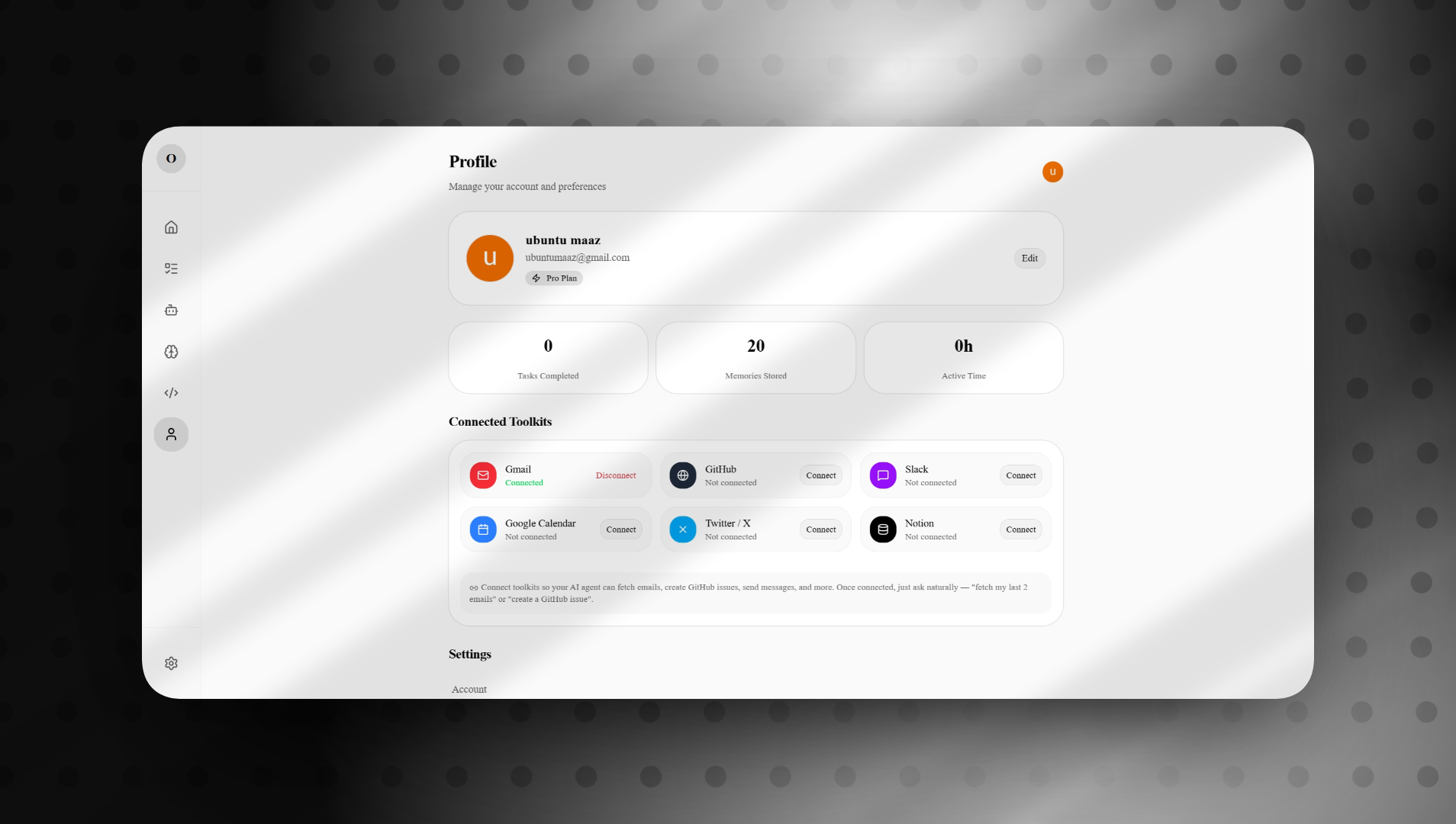
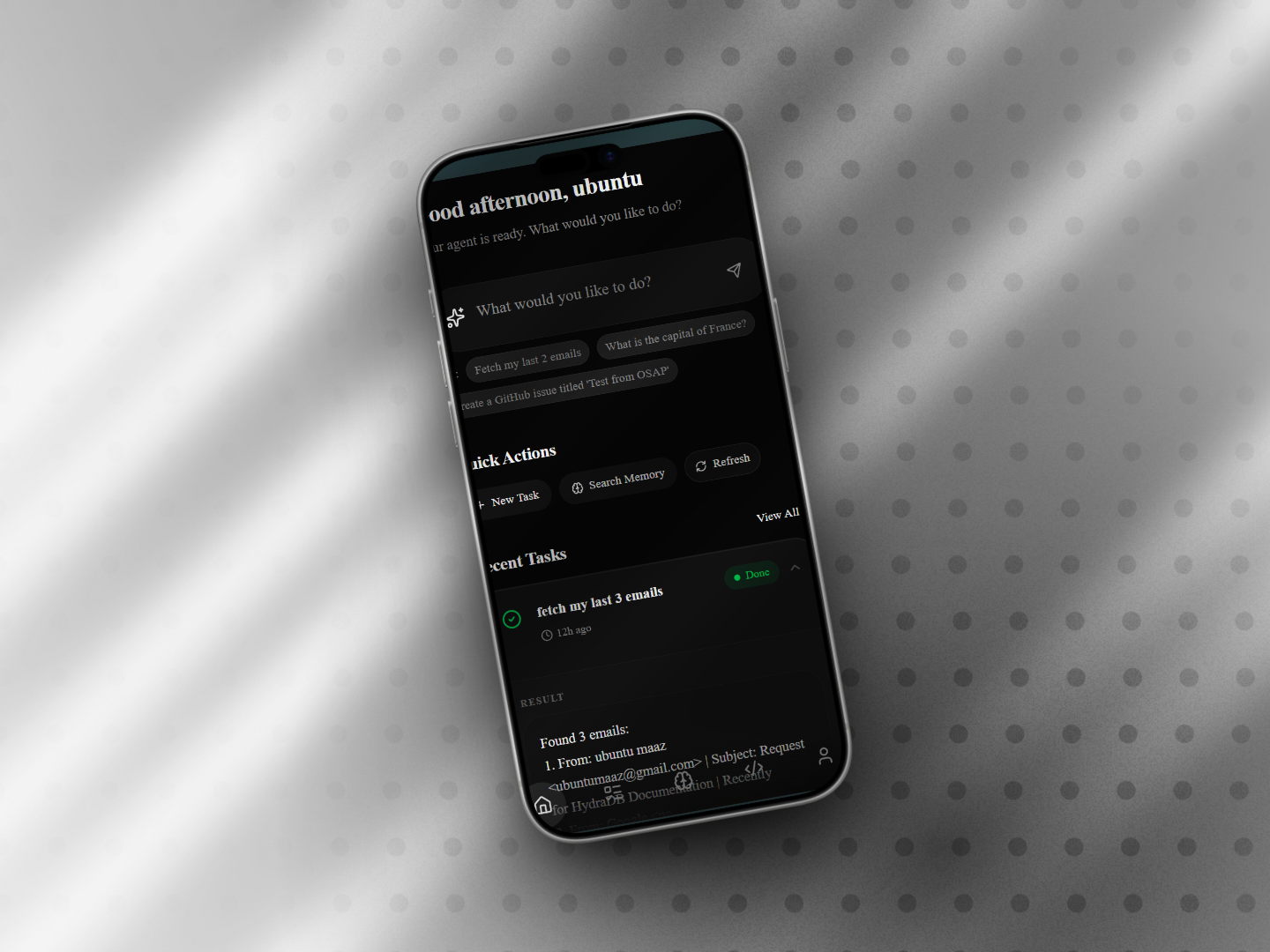
What It Does OSAP is your personal AI command center. It connects to your Gmail, Slack, GitHub, Linear, Notion, and Calendar—then acts as your digital proxy. Tell it to "reply to that urgent email from the CEO" or "create a GitHub issue for the bug Sarah mentioned in Slack," and it handles the cross-app heavy lifting while you stay in one flow.
But here's what makes it special: it remembers.
How We Built It We built OSAP as a modern web application with a mobile-optimized interface:
- Frontend: Next.js 16 with Tailwind CSS and shadcn/ui components
- AI Brain: GLM 5.1 from Zhipu AI for reasoning, planning, and execution
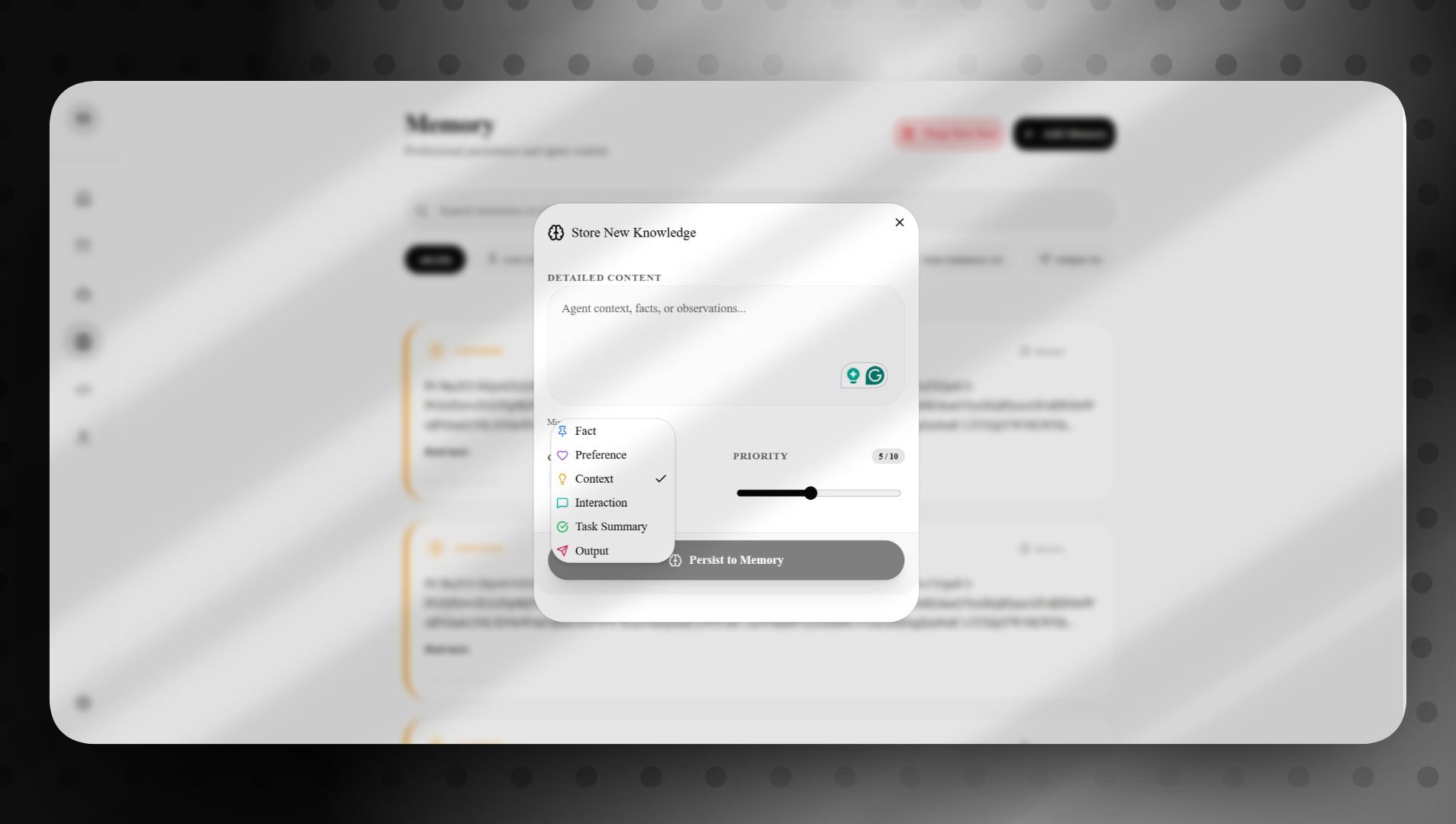
- Memory Layer: HydraDB for persistent semantic memory, preference learning, and context recall
- Auth: Clerk for secure user management
- Knowledge Ingestion: Firecrawl for web scraping and external knowledge storage
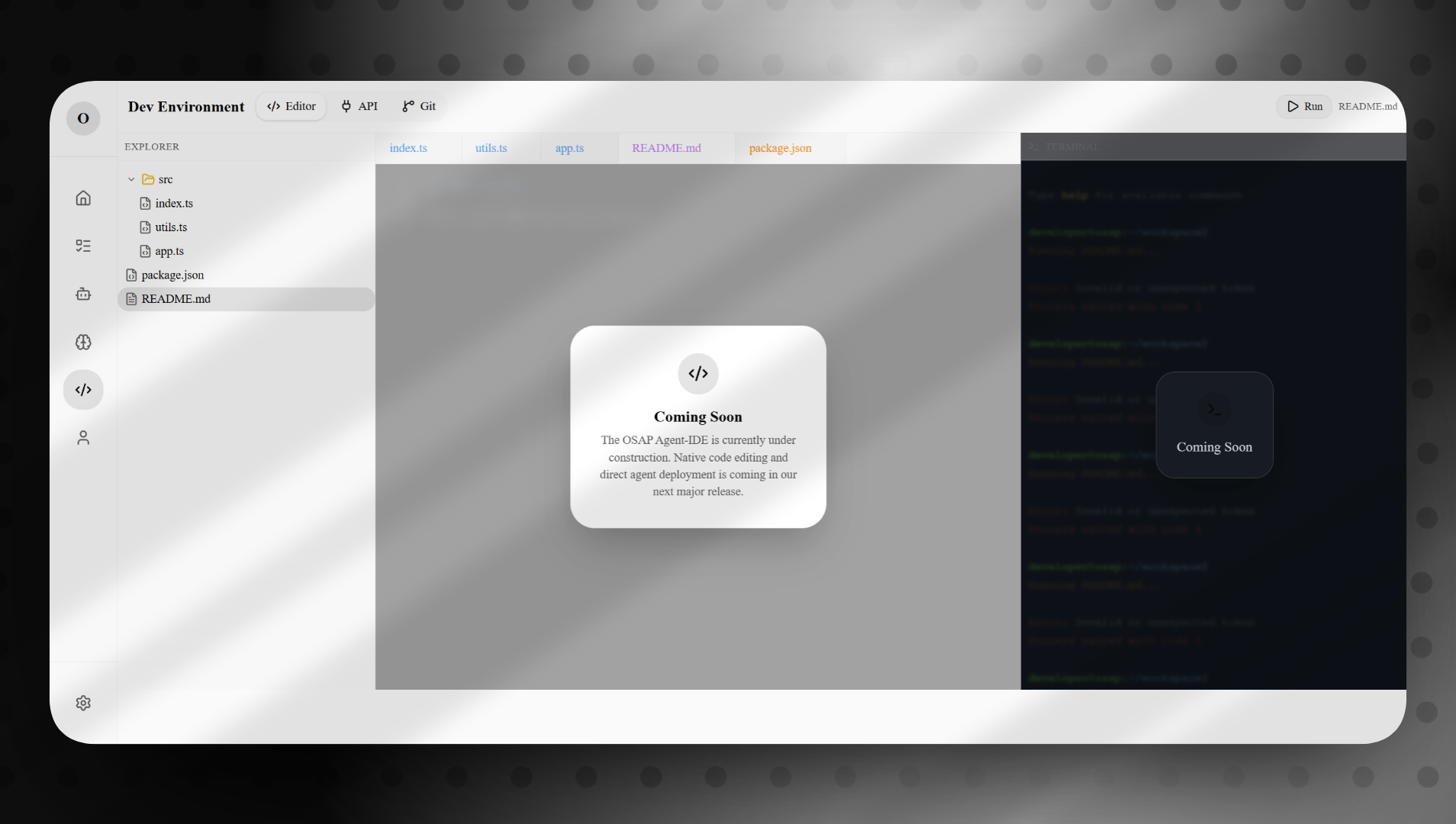
- Developer Tools: Monaco Editor, xterm.js, and API client built into the platform The architecture is designed around a simple principle: every interaction should make the agent smarter. User Input → GLM 5.1 Reasoning → HydraDB Memory Recall → Cross-App Execution → Self-Correction → Learn & Store --- ### The Core Innovation: Why HydraDB Changes Everything Most AI assistants are stateless. They process your request and forget you existed. OSAP uses HydraDB to build a High-Fidelity State of your professional life:
- Voice Mirroring: It learns how you talk—your sign-offs, your tone—so automated replies actually sound like you
- Contextual Recall: It doesn't just search history; it reasons over it. "Show me last week's customer feedback" returns exactly what you need, not a dump of raw emails
- Failure Memory: If an agent task fails, the lesson is stored in HydraDB. Next time, it retries intelligently instead of repeating the same mistake
- Preference Learning: Over time, it learns your workflow—how you prefer to be notified, which apps you use most, what "urgent" means in your context
Features
- 🧠 Persistent Memory: Your agent remembers everything—preferences, context, history
- 🔗 Cross-App Orchestration: Native toolsets for Gmail, GitHub, Slack, Linear, Notion, Calendar
- 🤖 Autonomous Agents: Plan → Execute → Self-Correct → Learn
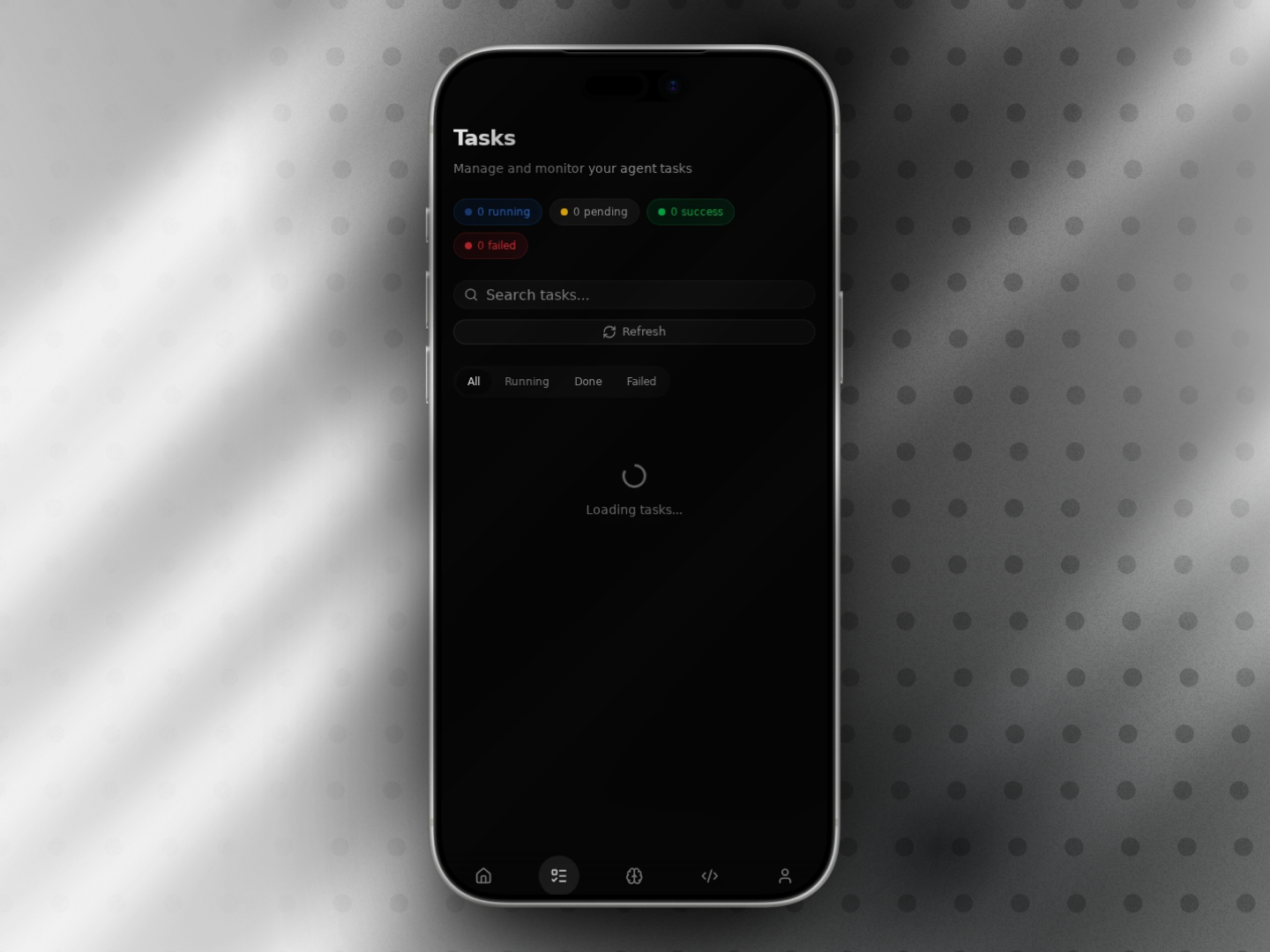
- 📊 Task Management: Background task execution with real-time progress tracking
- 💻 Developer Console: Built-in code editor, terminal, API client, and Git integration
- 🔍 Knowledge Ingestion: Scrape and store external information for contextual retrieval
- ⏰ Multiple Execution Modes: Continuous, timed, or interval-based autonomous operation
Challenges We Faced
- Tool Slug Mapping: GLM 5.1 generates tool names that don't always match the underlying API slugs. We built a normalization layer to bridge this gap.
- User ID Alignment: Connecting user authentication (Clerk) with session management (HydraDB) required careful UUID mapping to ensure memory persistence across sessions.
- Amnesia Problem: The core challenge was ensuring the agent doesn't forget context between sessions. We solved this through HydraDB's semantic recall with weighted relevance scoring.
4. Self-Correction Logic: Building a retry system that learns from failures without getting stuck in loops required careful state management.
What We Learned
- Memory is everything: Without persistent state, AI is just a fancy calculator. The moment we added HydraDB, OSAP went from "tool" to "teammate."
- Agent UX is hard: Autonomous agents need user oversight. We learned to balance "let it run" with "inspect reasoning" and "override decisions."
- GLM 5.1 is powerful: Its ability to reason through multi-step plans and self-correct makes it ideal for agent orchestration.
What's Next
- 🛠️ Agent-IDE: Full Monaco Editor integration for building and debugging agents
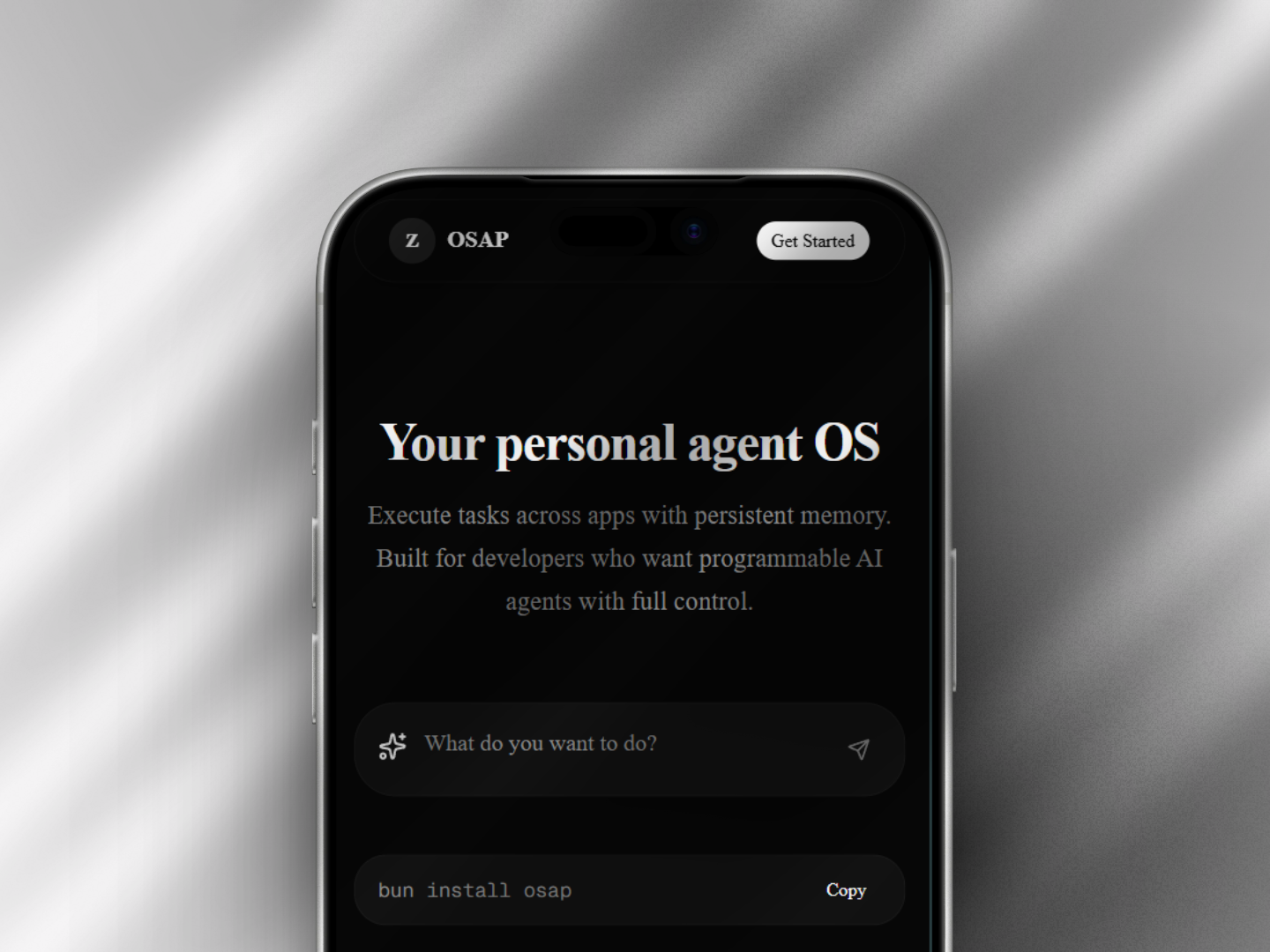
- 📱 Native Mobile App: Bringing OSAP to your pocket
- 🎙️ Meeting Intelligence: Auto-note taking and proactive task extraction
- 🔗 More Integrations: Expanding the toolset beyond current platforms
Built With
- GLM 5.1 (Zhipu AI) - AI reasoning, planning, and execution
- HydraDB - Persistent semantic memory and knowledge storage
- Next.js 16 (Turbopack) - React framework
- Clerk - Authentication and user management
- Tailwind CSS + shadcn/ui - Styling and components
- Firecrawl - Web scraping for knowledge ingestion
- Monaco Editor - Code editing
- xterm.js - Terminal emulation
Try It Out 🌐 Live Demo: http://osap.maazx.dev (http://osap.maazx.dev) 🐦 Twitter/X: https://x.com/maaztwts (https://x.com/maaztwts)
🐙 GitHub: https://github.com/somewherelostt/osap (https://github.com/somewherelostt/osap)
Stop juggling apps. Start living in one screen. OSAP—You, Automated.

Log in or sign up for Devpost to join the conversation.