Inspiration
We wanted to take a familiar concept—block-stacking games—and flip it into something that feels completely new. Instead of controlling the pieces, we asked: what if the player controlled gravity itself? That idea led to Orthogravity, where the challenge comes from constantly rethinking space, direction, and strategy.
What it does
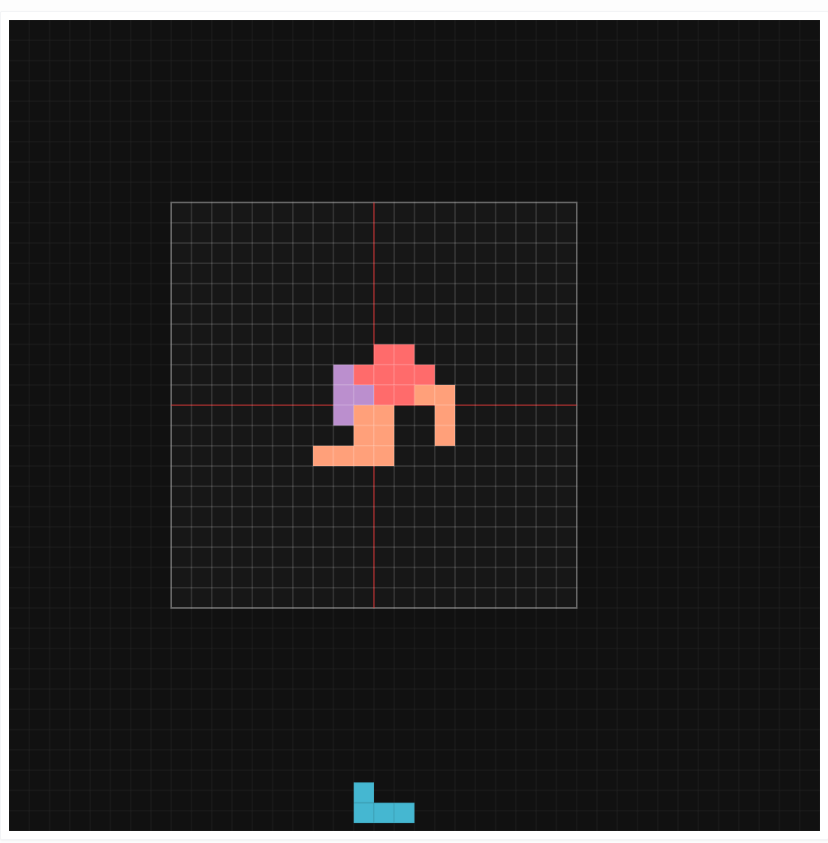
Orthogravity is a desktop web game where players manipulate gravity in four directions to control how blocks fall and settle. Pieces spawn from all sides of the grid, and instead of moving them directly, the player rotates gravity to shift the entire board. The goal is to complete lines and survive as long as possible while the game speeds up and becomes more chaotic.
How we built it
We built Orthogravity using HTML5 Canvas, CSS, and vanilla JavaScript for simplicity and speed. The game is powered by a 2D grid system that acts as the single source of truth. A custom gravity algorithm reflows all blocks in real time whenever the player changes direction. We structured the code into modular components for the game loop, rendering, input handling, and grid logic to keep things maintainable during rapid iteration.
Challenges we ran into
One of the biggest challenges was getting gravity to feel correct. Early versions only rotated the visuals, which made the game confusing and unplayable. We had to rethink the system to actually shift and compress the grid data based on gravity direction. Balancing gameplay was also tricky—too slow felt boring, but too fast became overwhelming quickly. Finally, making the mechanic intuitive for first-time players required clear visual feedback.
Accomplishments that we're proud of
We’re proud of turning a simple idea into a unique and fully playable experience. The gravity-shifting mechanic feels fresh and creates surprising moments during gameplay. We also achieved smooth performance and a clean visual style within a short time, making the game both fun to play and easy to understand.
What we learned
We learned the importance of building mechanics around data, not just visuals. A system that looks right isn’t enough—it has to behave correctly under the hood. We also improved at scoping features for a hackathon, focusing on a strong core mechanic rather than overbuilding. Iterating quickly and testing often helped us refine the gameplay into something enjoyable.
What's next for Orthogravity
Next, we want to expand the game with more features like power-ups, new game modes, and increasing difficulty patterns. We’d also like to improve visuals with animations and effects, add sound design, and potentially explore a mobile version. Long term, Orthogravity could evolve into a more polished release with leaderboards and competitive elements.
Built With
- prompts

Log in or sign up for Devpost to join the conversation.