-
-
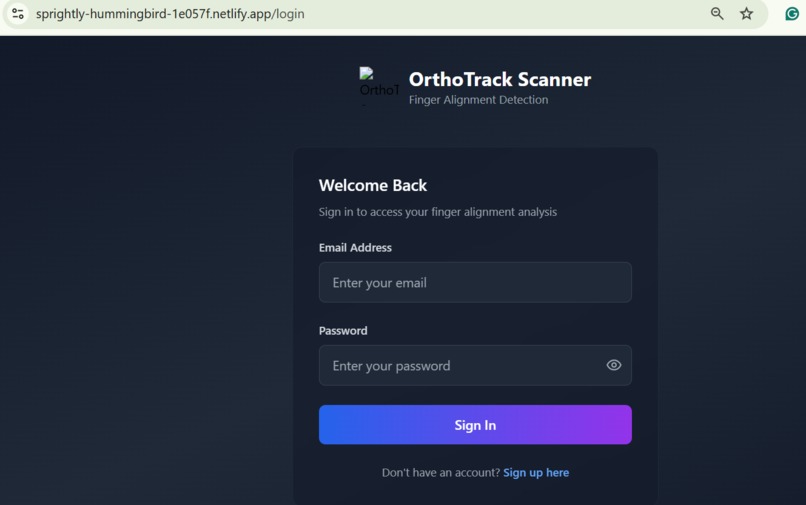
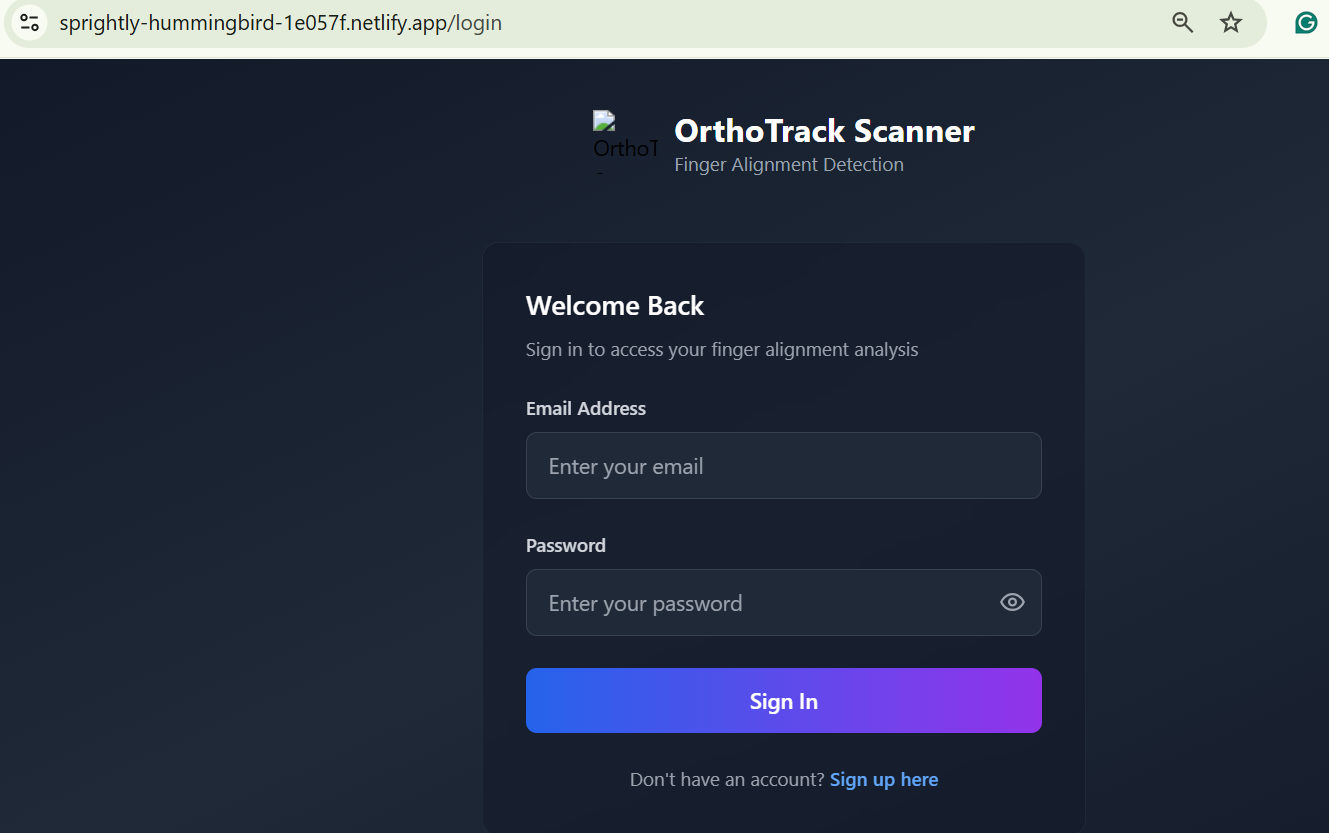
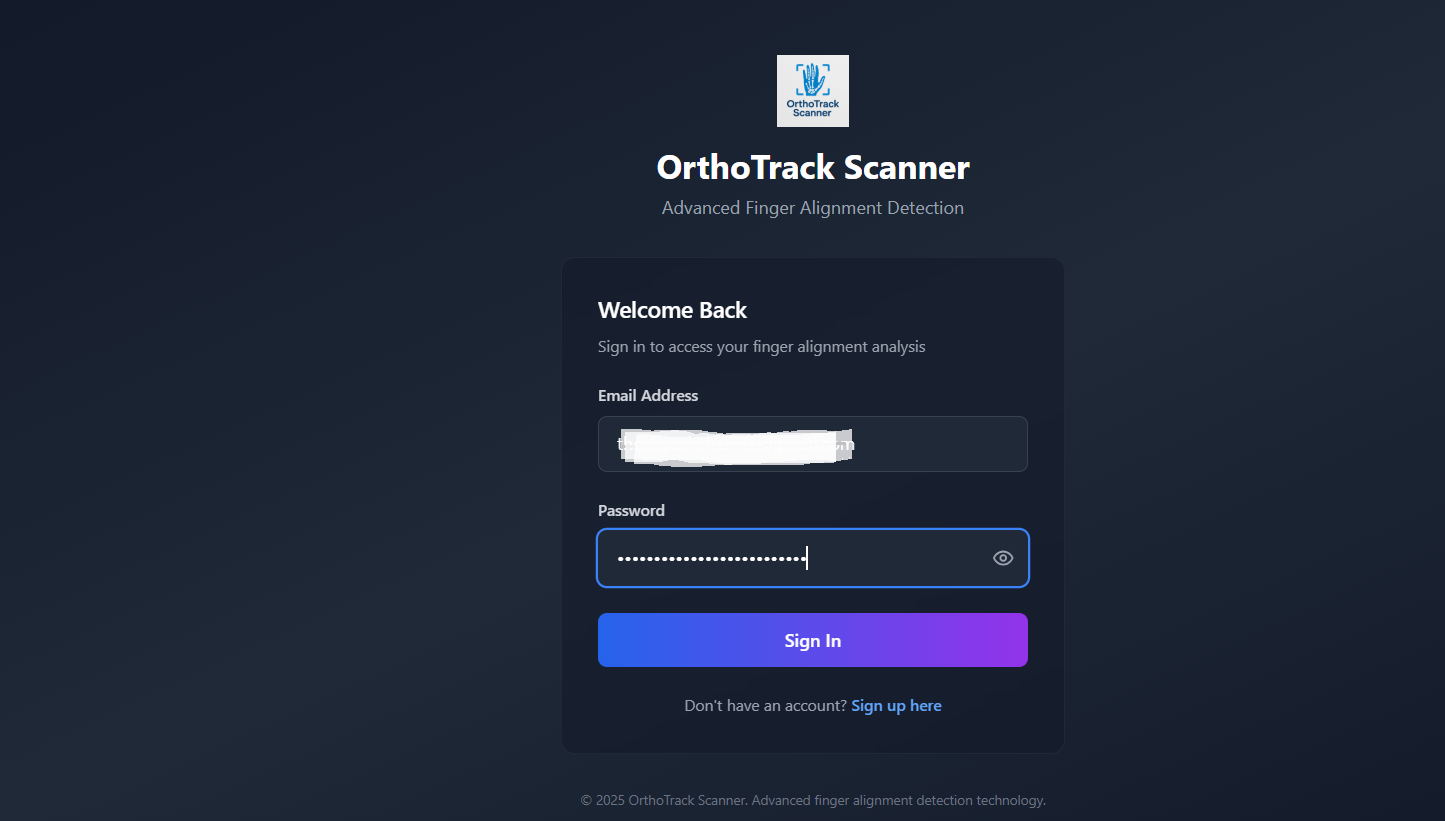
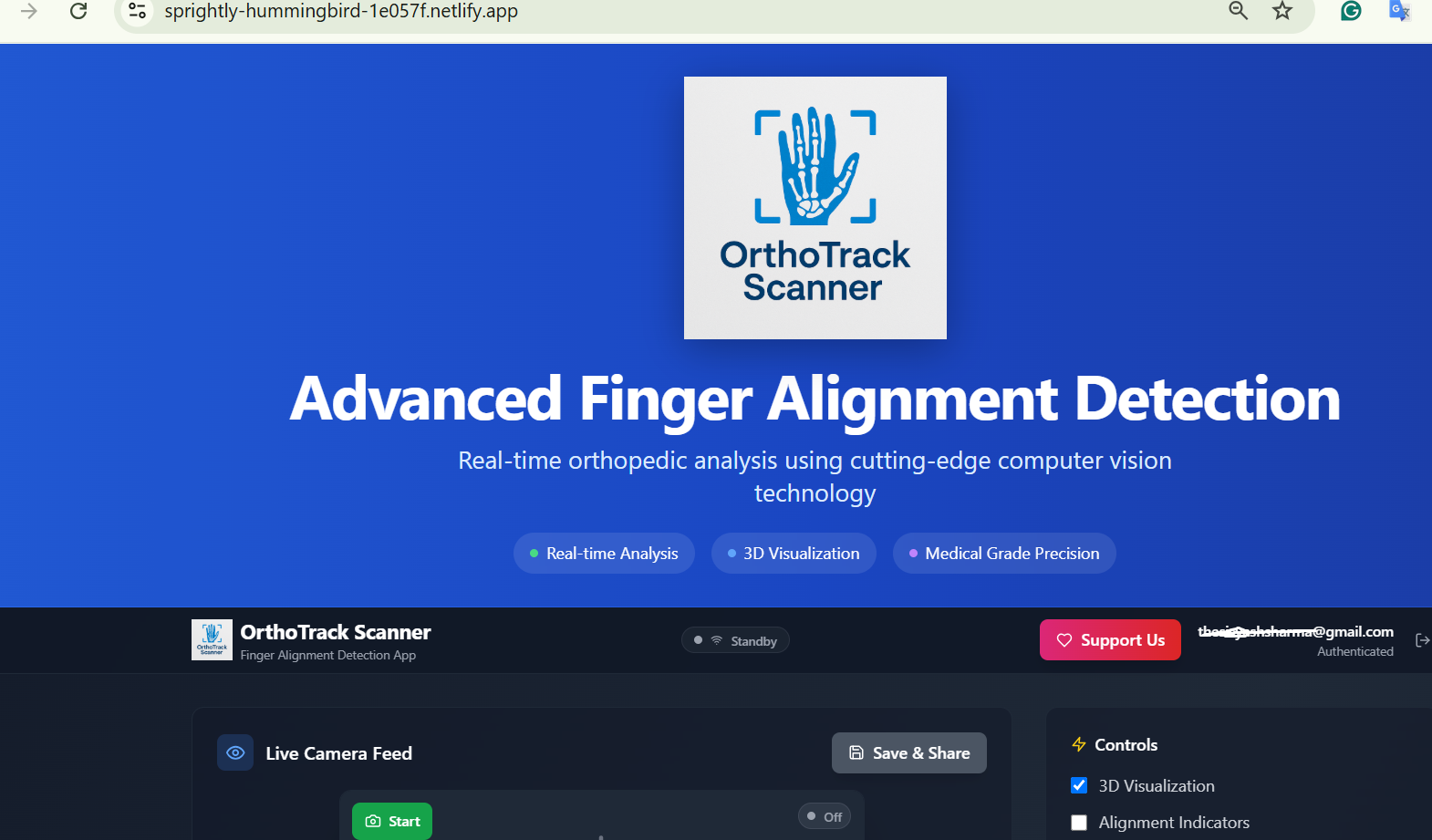
Login or Signup
-
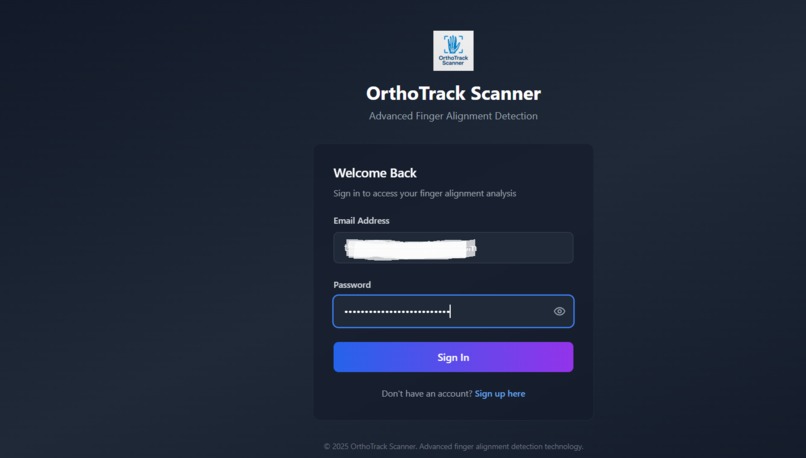
Sign_in
-
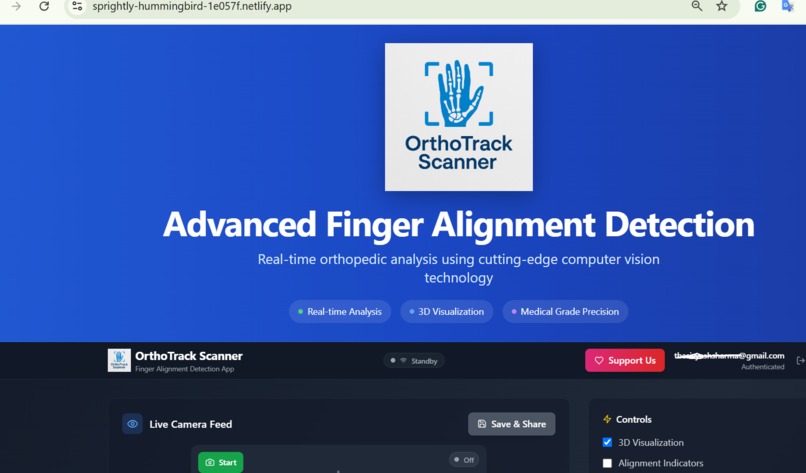
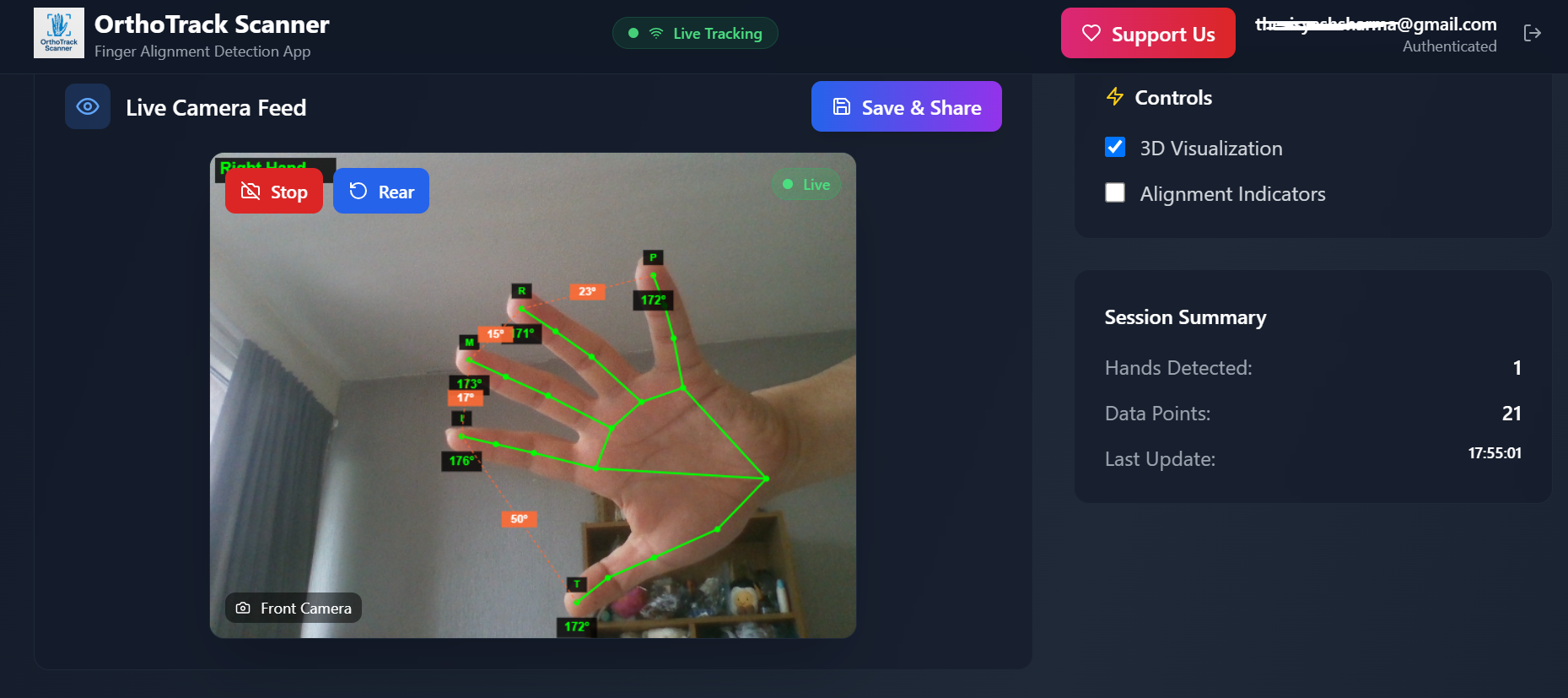
Signed-inStart_camera
-
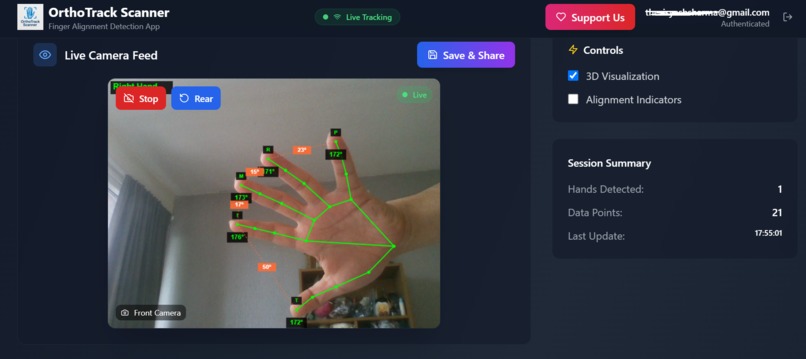
Wait for a 10-20 sec scan will show the Alignment
-
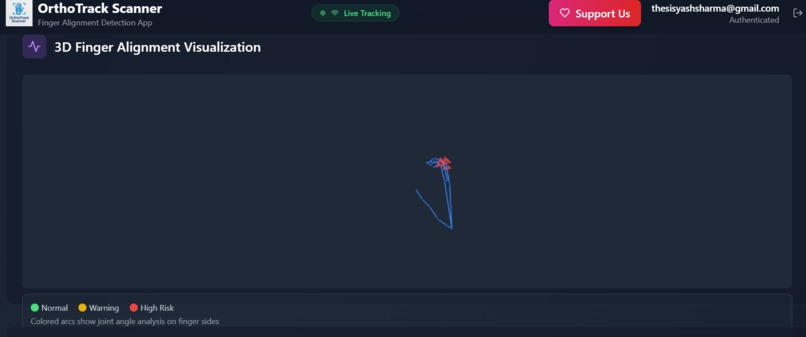
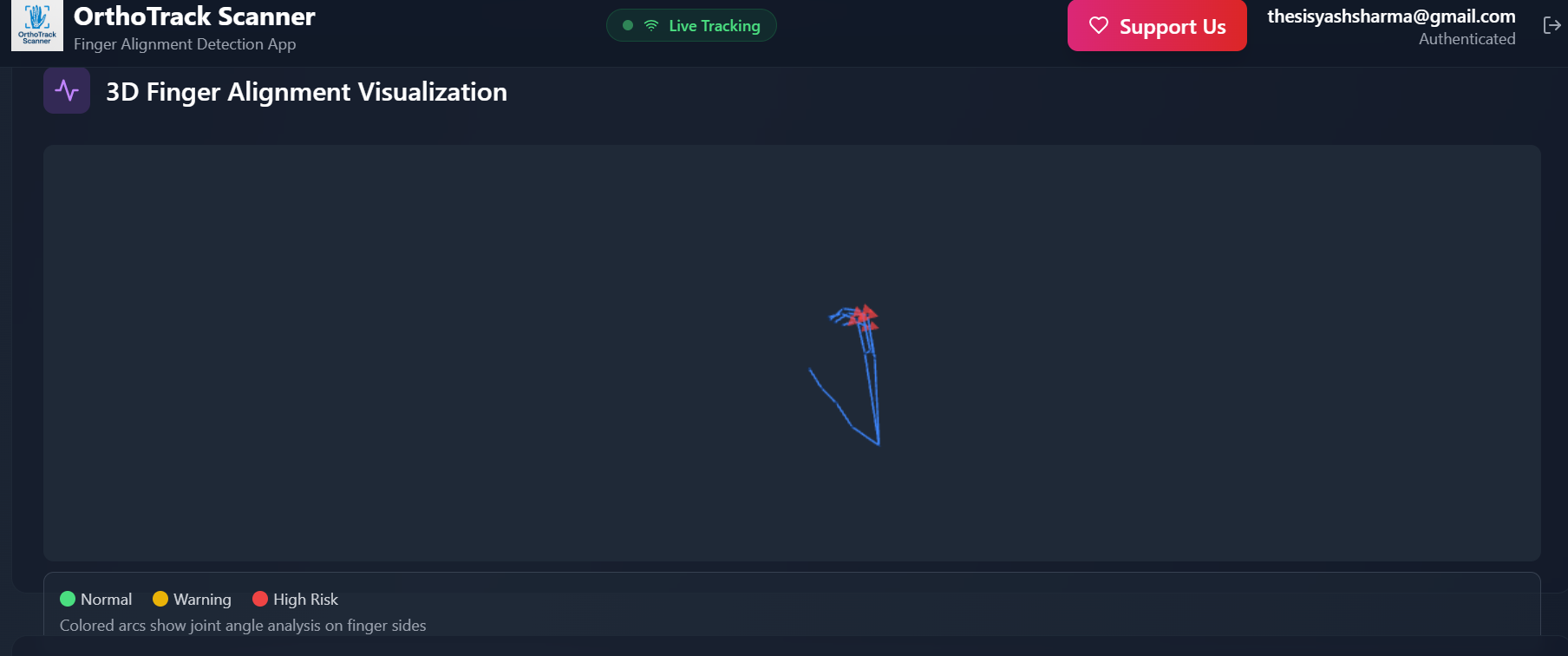
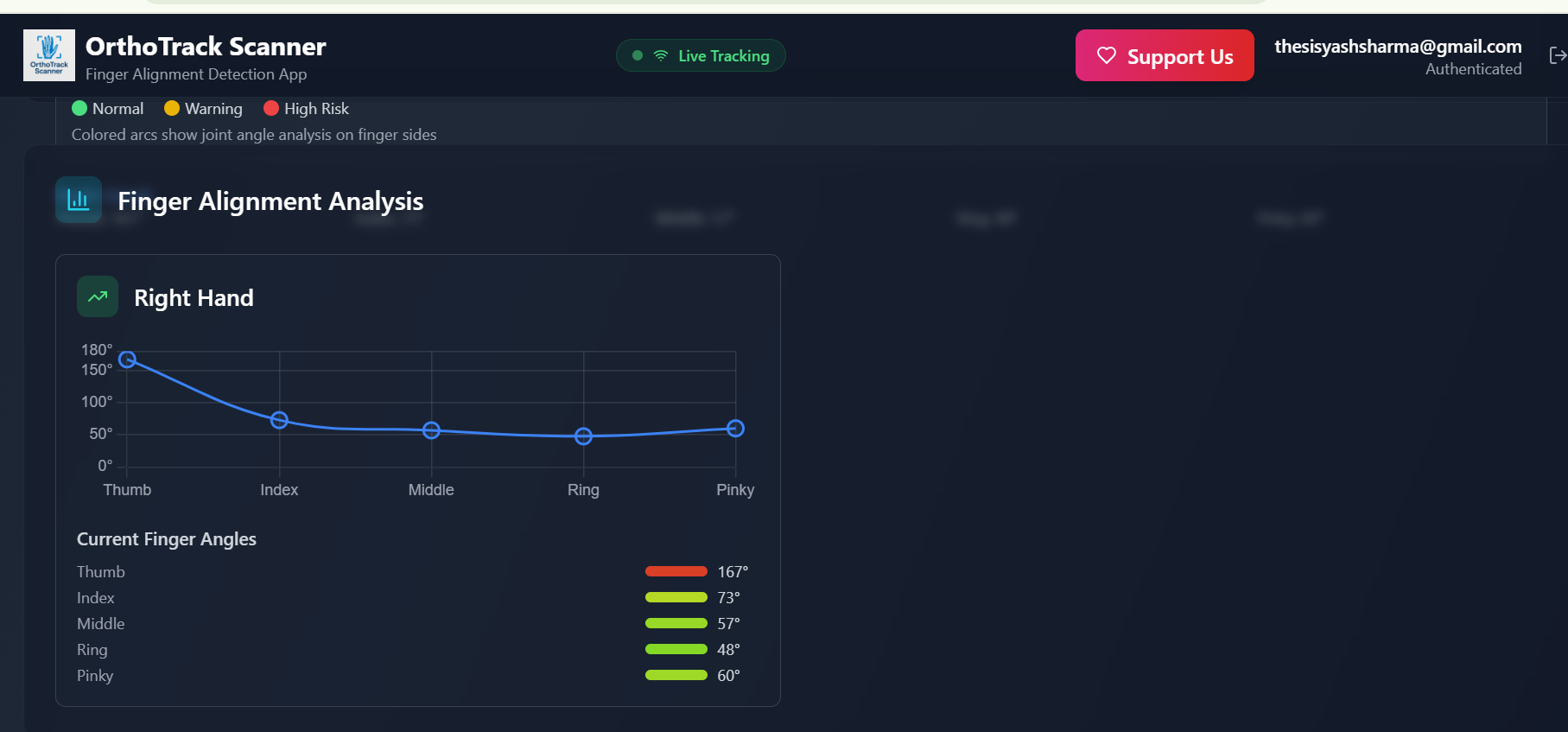
Scroll Down with Scan
-
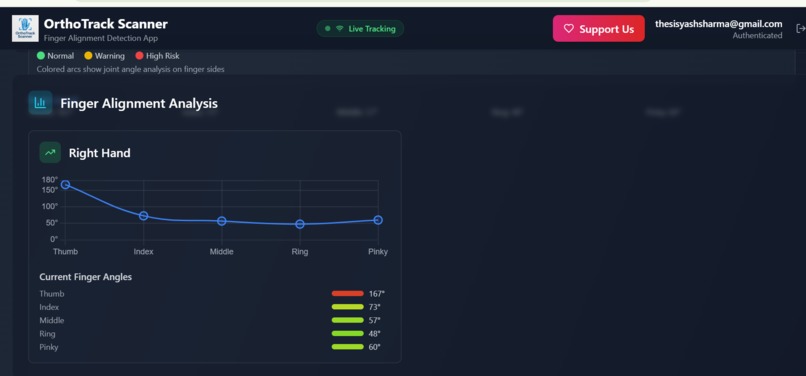
Correlation factor if finger bends or is fine
Inspiration
The idea for this project was inspired by research conducted by several universities, which focused on tracking finger misalignments using physical systems. These systems, while effective, are typically large, rigid, and require customization for each individual user. This limits their flexibility and practicality, especially for widespread testing across different age groups, from children to adults. These traditional systems are also designed to detect orthopedic issues like arthritis or developmental misalignments in children. However, they require users to wear physical gloves or tracking devices, which may not be suitable for all hand shapes and sizes. Motivated by these limitations, I set out to create a more accessible and adaptable solution. This project offers a preliminary, non-invasive way to test for finger alignment issues using technology that doesn’t rely on wearable hardware.
What it does
Ortho Alignment Tracker is a contactless hand assessment tool that uses computer vision to analyze hand and finger positions in real time. It detects potential misalignments, irregular finger movements, or posture abnormalities—all without the need for physical devices like gloves or sensors. The system captures a video feed (from a standard webcam or device camera), tracks finger joint angles and positions using AI-driven hand landmark detection, and flags unusual patterns that may indicate early signs of orthopedic conditions like arthritis, developmental misalignments in children, or motor function irregularities. Designed for use across all age groups—from children to seniors—it serves as a fast, non-invasive, and cost-effective preliminary screening tool. The product can be used at home, in schools, or in clinical environments, making orthopedic pre-checks more accessible and user-friendly.
How I built it
I used a combination of computer vision and the mediapipe library to build the system. The core technology relies on hand tracking using a webcam, which maps the positions and angles of fingers in real-time. Data is then analyzed to assess whether there are signs of misalignment or abnormal positioning.
Challenges I Ran Into
One of the main challenges was running the MediaPipe library in a live environment. While it performed well in static scenarios (like testing with still images), it frequently dropped frames or failed to detect hands during real-time tracking, which made live testing unreliable and inconsistent. Integrating MediaPipe into a Bolt app also posed difficulties. During development, installing the library via npm often led to terminal errors, and resolving these required multiple attempts and configuration adjustments. This slowed down the initial setup and development process significantly. Another challenge was ensuring the app could accurately detect and track hands of different sizes, including small children's hands and larger adult hands. Testing this with both live video and phone-based images revealed inconsistencies in detection performance, especially with varied lighting and hand positioning. Making the tracking system robust across a range of hand sizes and camera inputs required extensive trial and error.
Accomplishments that I am proud of
Developing a fully functional, hardware-free prototype.
Creating a system that works for different age groups without requiring customization.
Making orthopedic testing more accessible and user-friendly.
What I learned
The complexity involved in accurately tracking hand movement using only visual input.
The importance of usability and accessibility in healthcare-related technologies.
How machine learning can be used to complement traditional physical systems in medical applications.
# What's next for Ortho Alignment Tracker
Looking ahead, the next phase of development will focus on expanding the app’s diagnostic capabilities and improving real-world usability. Key areas of improvement include:
Tremor Detection: Introducing a new test case for analyzing hand shaking, which could help identify early signs of conditions such as tremors or neurological disorders like Parkinson’s.
Facial Correlation Analysis: Exploring the integration of facial factor detection to cross-reference emotional or neurological indicators alongside hand motion, providing a more holistic screening approach.
Real-Time Testing with Healthcare Professionals: Collaborating with doctors and clinicians to test the app in real-world medical environments. This will also involve comparing results against available patient datasets to assess clinical relevance and accuracy.
Predictive Analytics: Incorporating machine learning models to predict potential long-term orthopedic conditions based on observed patterns, enabling earlier intervention and personalized care recommendations.
Wrist and Arm Alignment Tracking: Expanding the system’s capability beyond fingers to include wrist and forearm positioning, offering more comprehensive upper-limb alignment analysis.
Ref:
Built With
- bolt
- netlify
- supabase


Log in or sign up for Devpost to join the conversation.