Inspiration
Our team, 00100-Keplers, was driven by a passion for space exploration and awareness. We recognized the potential danger NEOs pose to Earth and wanted to create a user-friendly educational tool to make real-time NEO data accessible to everyone. We aimed to build a web app that not only visualizes these objects in space but also inspires curiosity and awareness about the importance of monitoring space hazards.
What it does
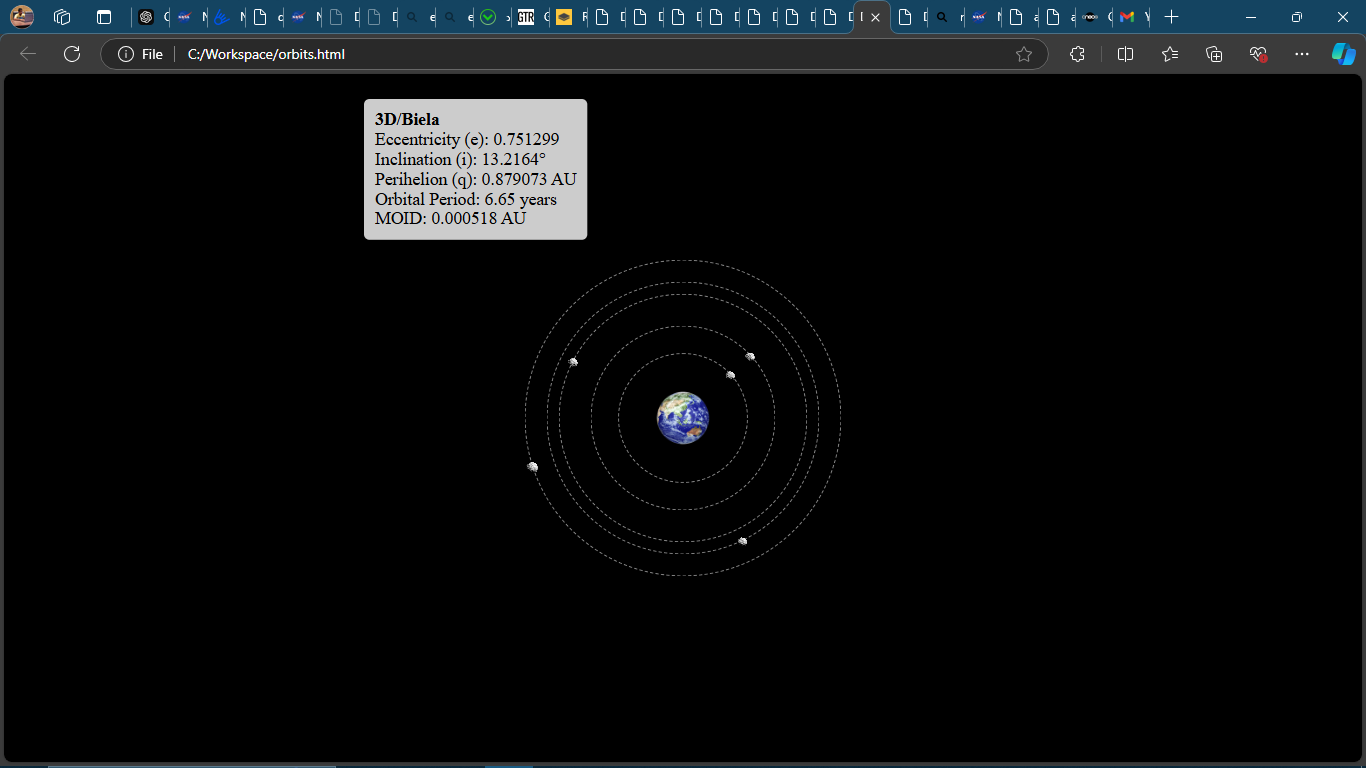
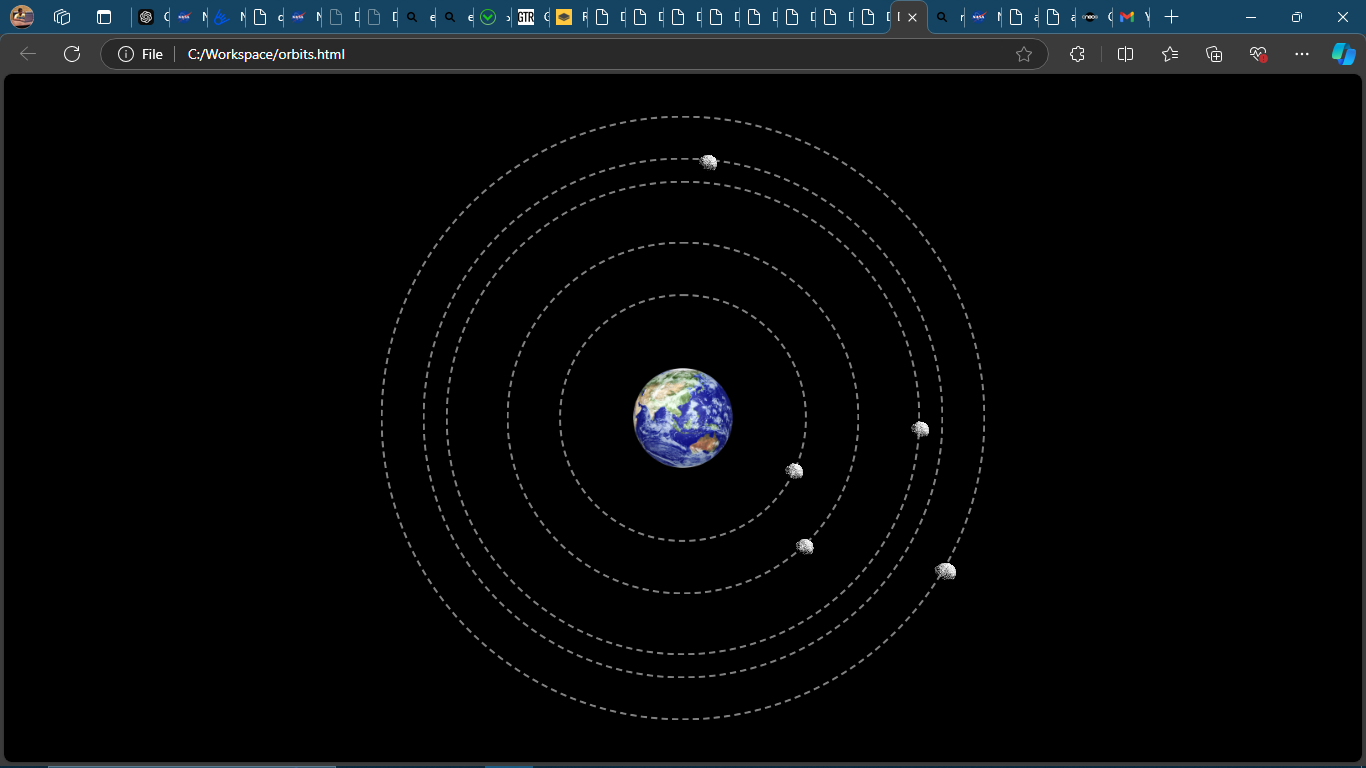
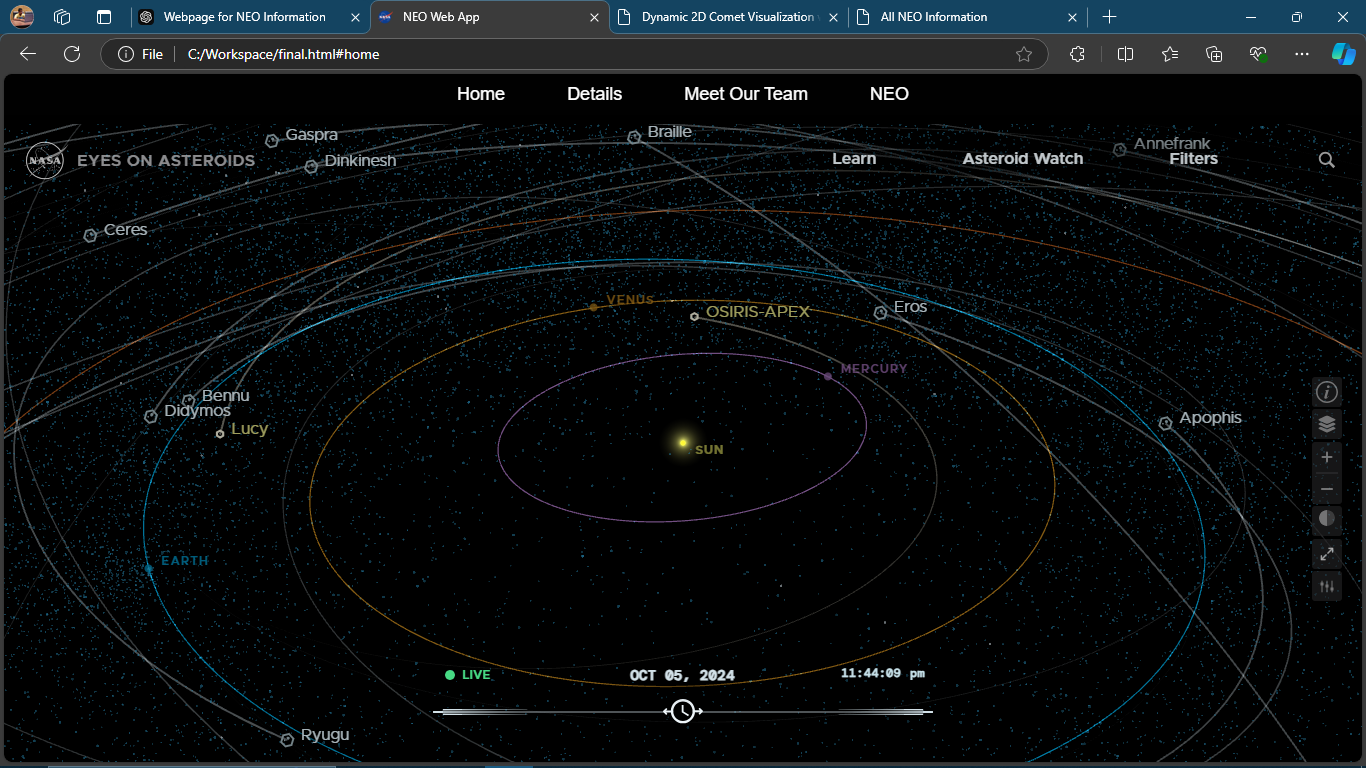
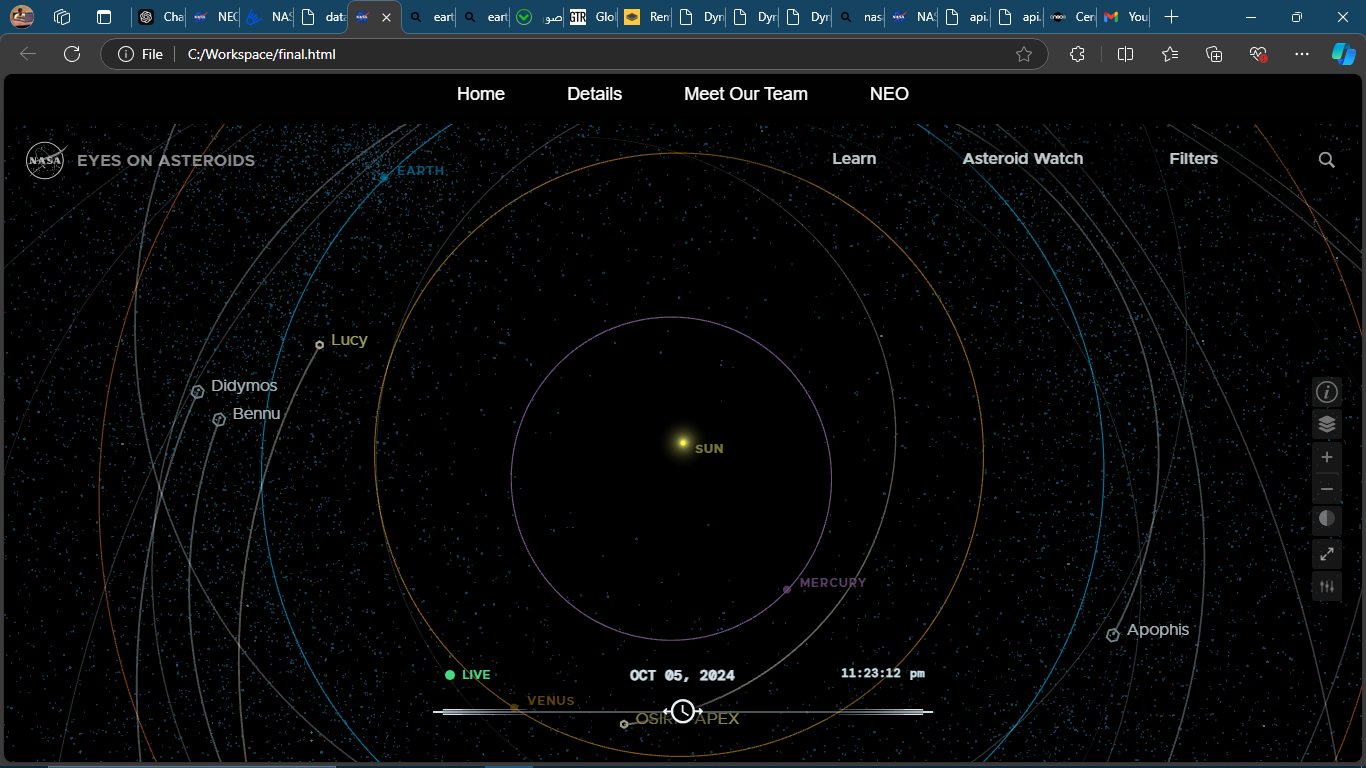
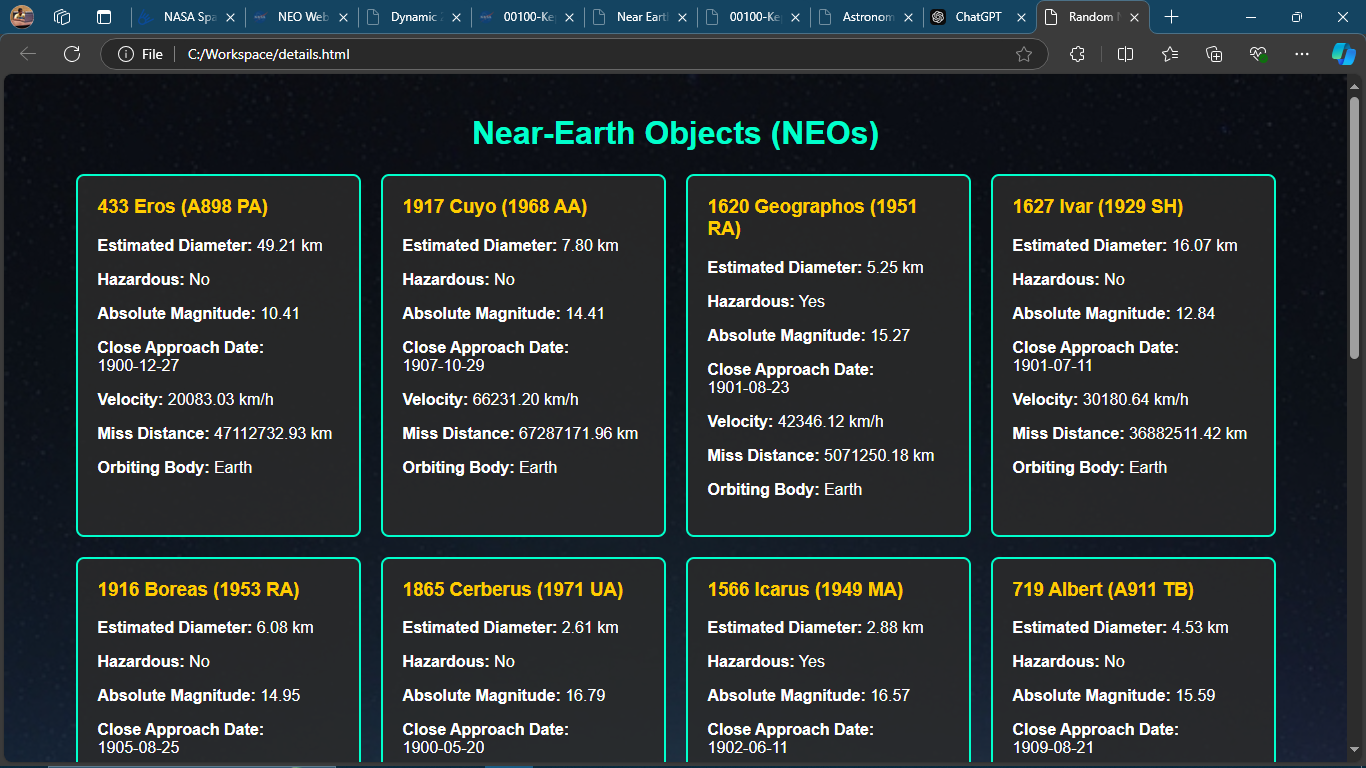
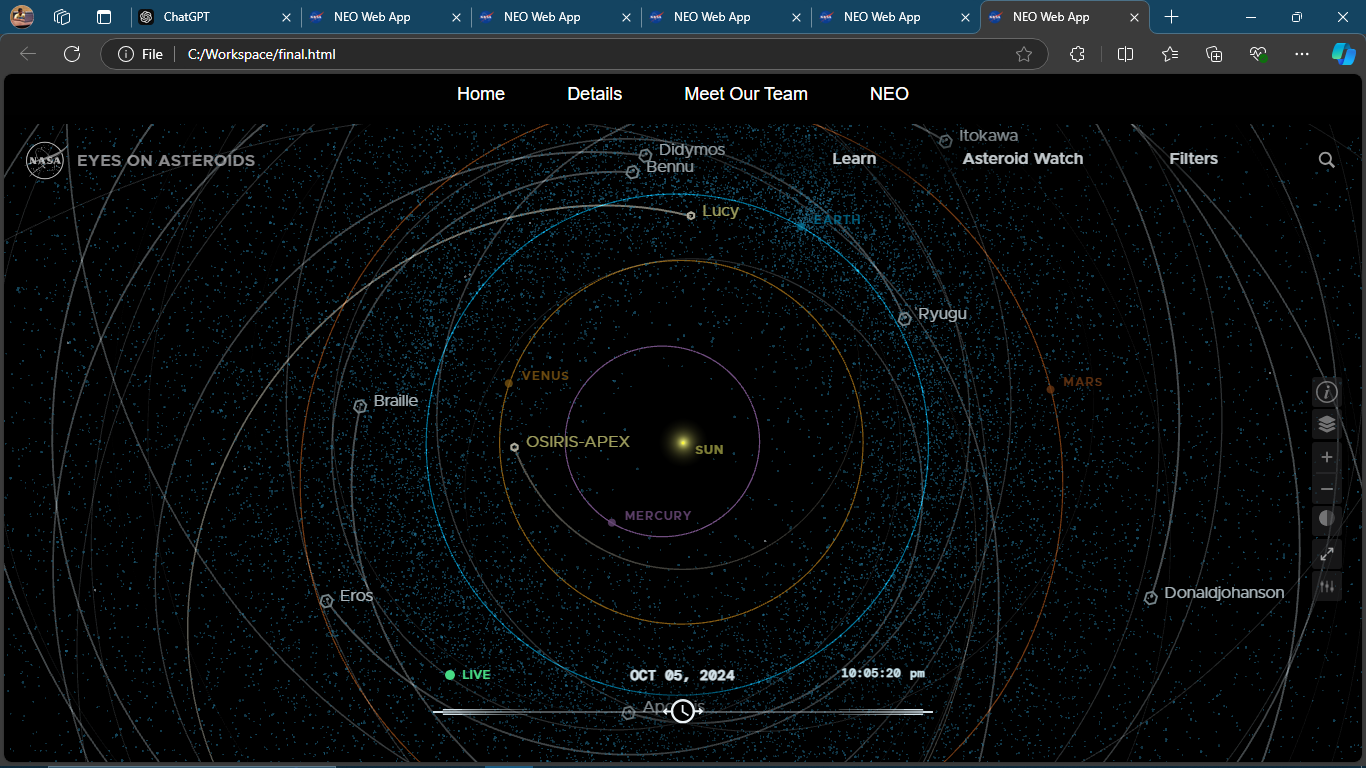
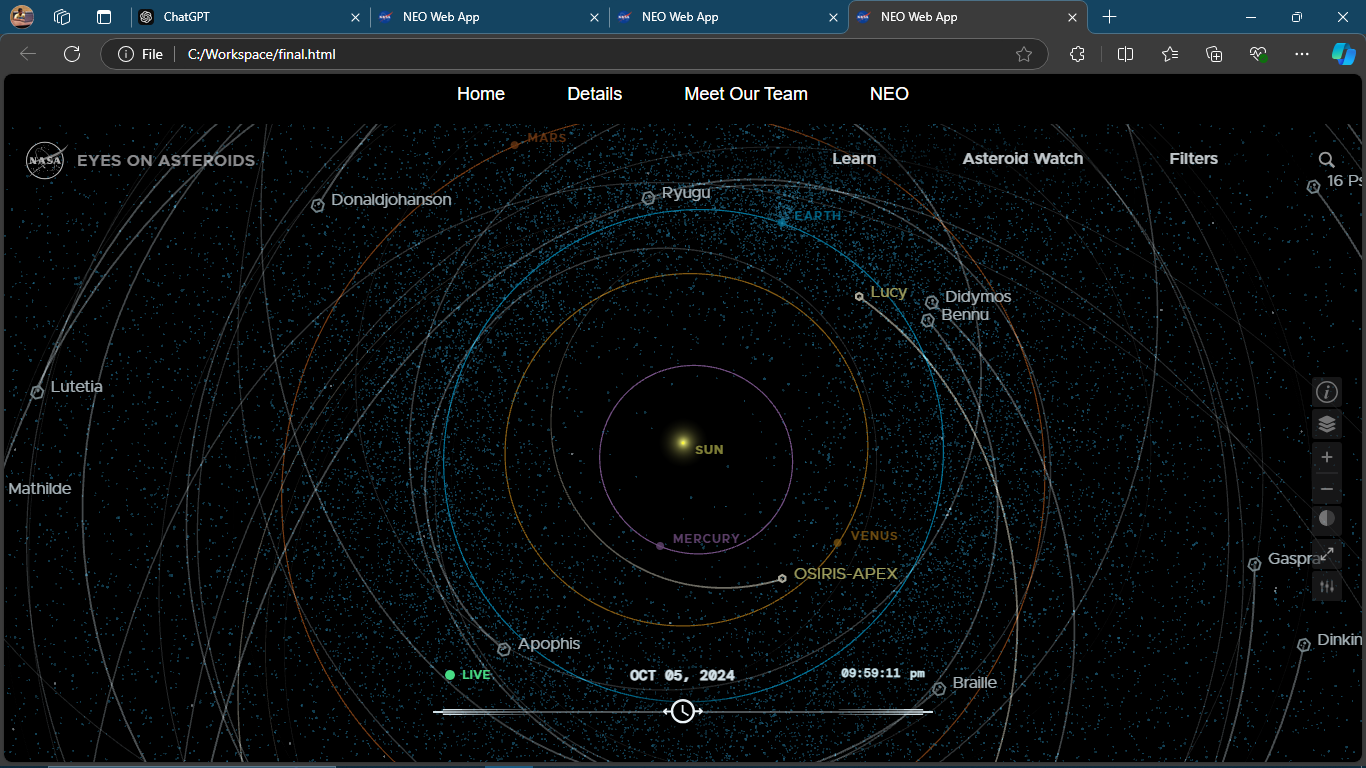
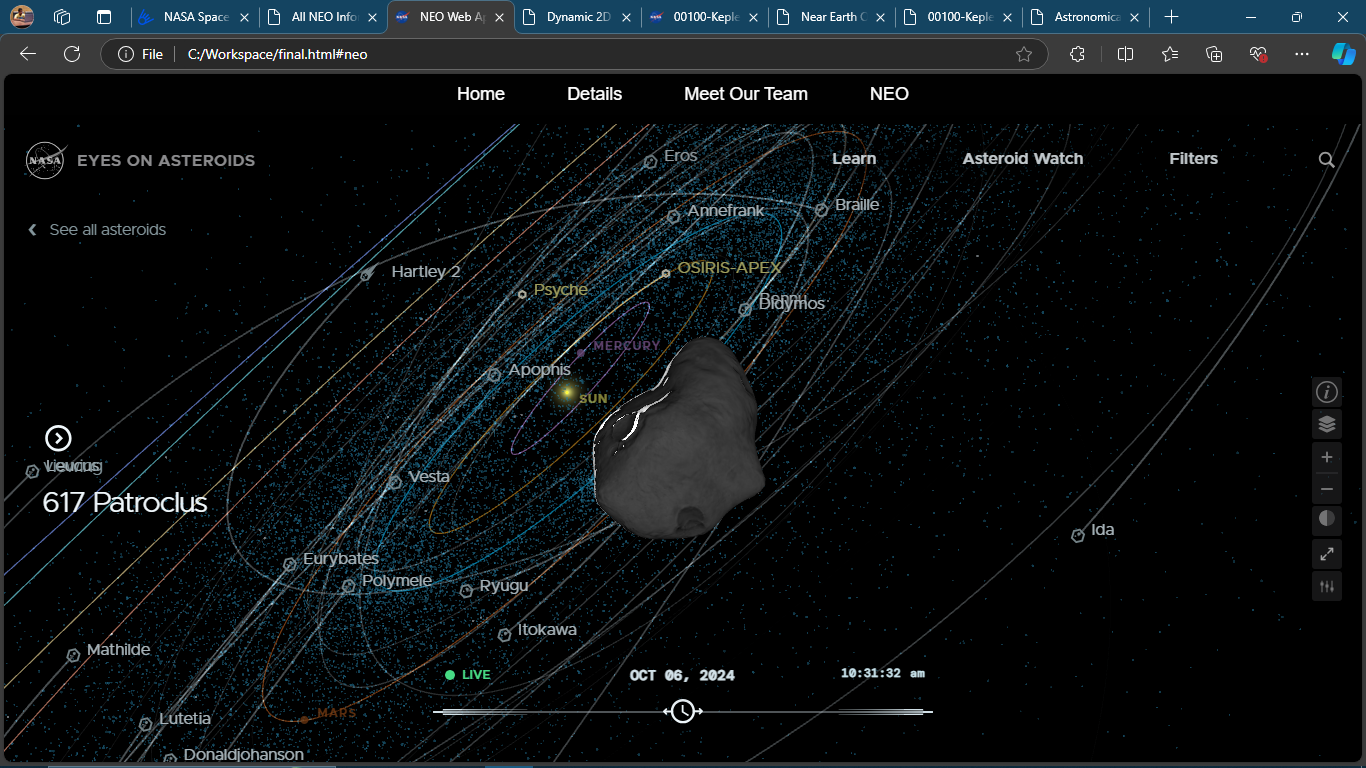
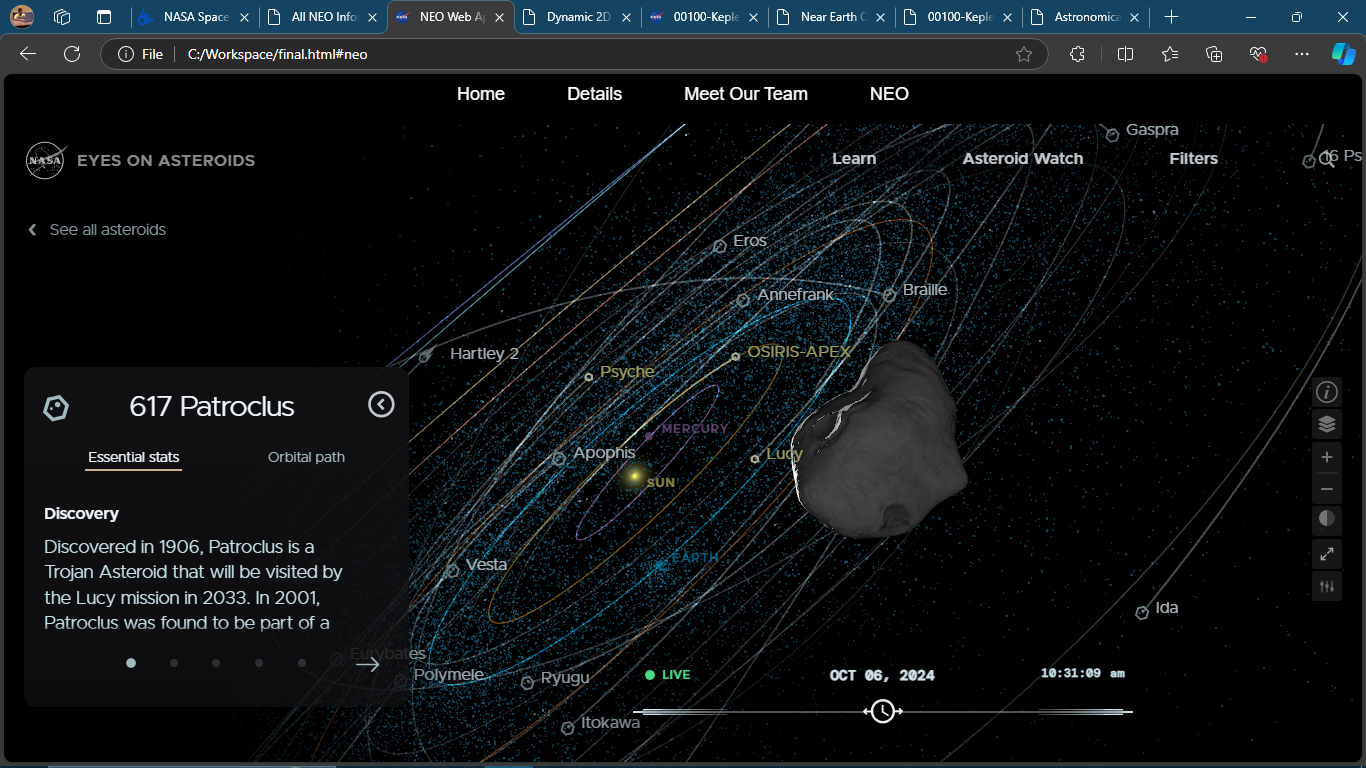
The Orrery Web App visualizes the orbits of NEOs in real-time, providing users with a clear, interactive view of the paths these objects take around the Earth and other planets. Each NEO's detailed information, such as size, distance from Earth, and orbital characteristics, is available within the app. The 3D visualization adds an immersive aspect, helping users grasp the scale and proximity of these celestial objects.
How we built it
Our team utilized a variety of tools and technologies:
- Front-end: HTML, CSS, and JavaScript to create a visually appealing, interactive user interface.
- Back-end: API integration, allowing us to pull real-time NEO data from NASA's APIs.
- Visualization: We used 3D libraries (like Three.js) to render the orbits and provide realistic visualizations of NEOs and their trajectories around Earth. Each member contributed unique skills in coding, design, research, and leadership to make the app functional and engaging.
Challenges we ran into
- Data Handling: Managing and displaying real-time data was challenging, especially considering the volume of NEO data available.
- 3D Visualization: Rendering orbits in 3D space without performance issues required extensive optimization.
- Design and Usability: Striking a balance between scientific detail and user-friendly design was challenging. We wanted an interface that is both informative and easy to navigate for all users.
Accomplishments that we're proud of
- Global Nomination: Our project became a global nominee in the NASA Space Apps Challenge, marking a significant milestone and highlighting the impact of our work.
- Fifth Place Finish: Securing fifth place in the challenge reinforced the value and innovation of our project.
- Teamwork and Collaboration: Our team worked seamlessly, each member contributing unique skills to bring this vision to life.
- Functional and Informative UI: We created a user-friendly interface that makes complex space data accessible and engaging.
What we learned
- Interdisciplinary Collaboration: Working together taught us how to integrate coding, design, and research seamlessly.
- Technical Skills: We deepened our understanding of front-end and back-end development, especially with 3D visualization and data integration.
- User-Centered Design: Building a product for users, especially with scientific data, highlighted the importance of balancing information with simplicity.
What's next for Orrery Web App for Near-Earth Objects (NEOs)
- Enhanced Visualizations: Expanding our 3D visualizations to include additional celestial events, like asteroid flybys and meteor showers.
- Educational Resources: Adding resources and articles to educate users about NEOs, their importance, and the technologies used to monitor them.
- Mobile App Version: Developing a mobile-friendly version to make the app more accessible on various devices.
- Public Awareness Campaign: Partnering with schools and organizations to promote the app and raise awareness about space hazards on a larger scale.
Built With
- and-a-smooth-user-experience:-**languages**:-html
- c++
- css
- enabling-us-to-render-the-orbits-of-neos-in-an-interactive-and-realistic-manner.-**platform**:-oracle-apex-for-database-management-and-back-end-functionality
- helping-us-streamline-data-handling-and-user-interface-components.-**apis**:-nasa's-neo-api-provided-real-time-data-on-near-earth-objects
- html5
- interactive-visualization
- javascript
- nasa-astrophysics-data-system
- python-**frameworks/libraries**:-**three.js**-for-3d-visualization
- three.js


Log in or sign up for Devpost to join the conversation.