-
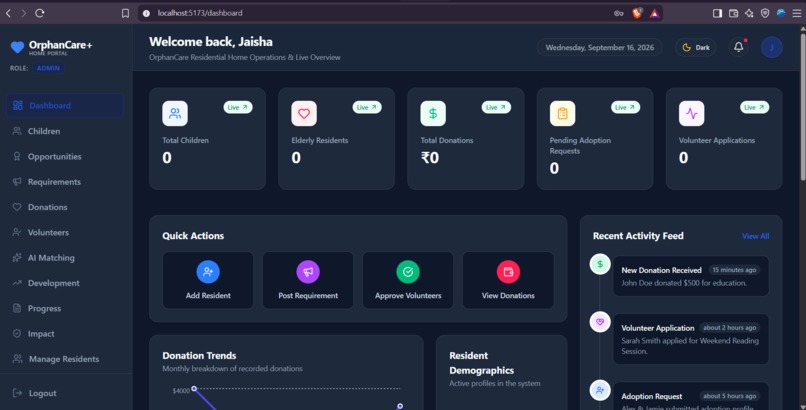
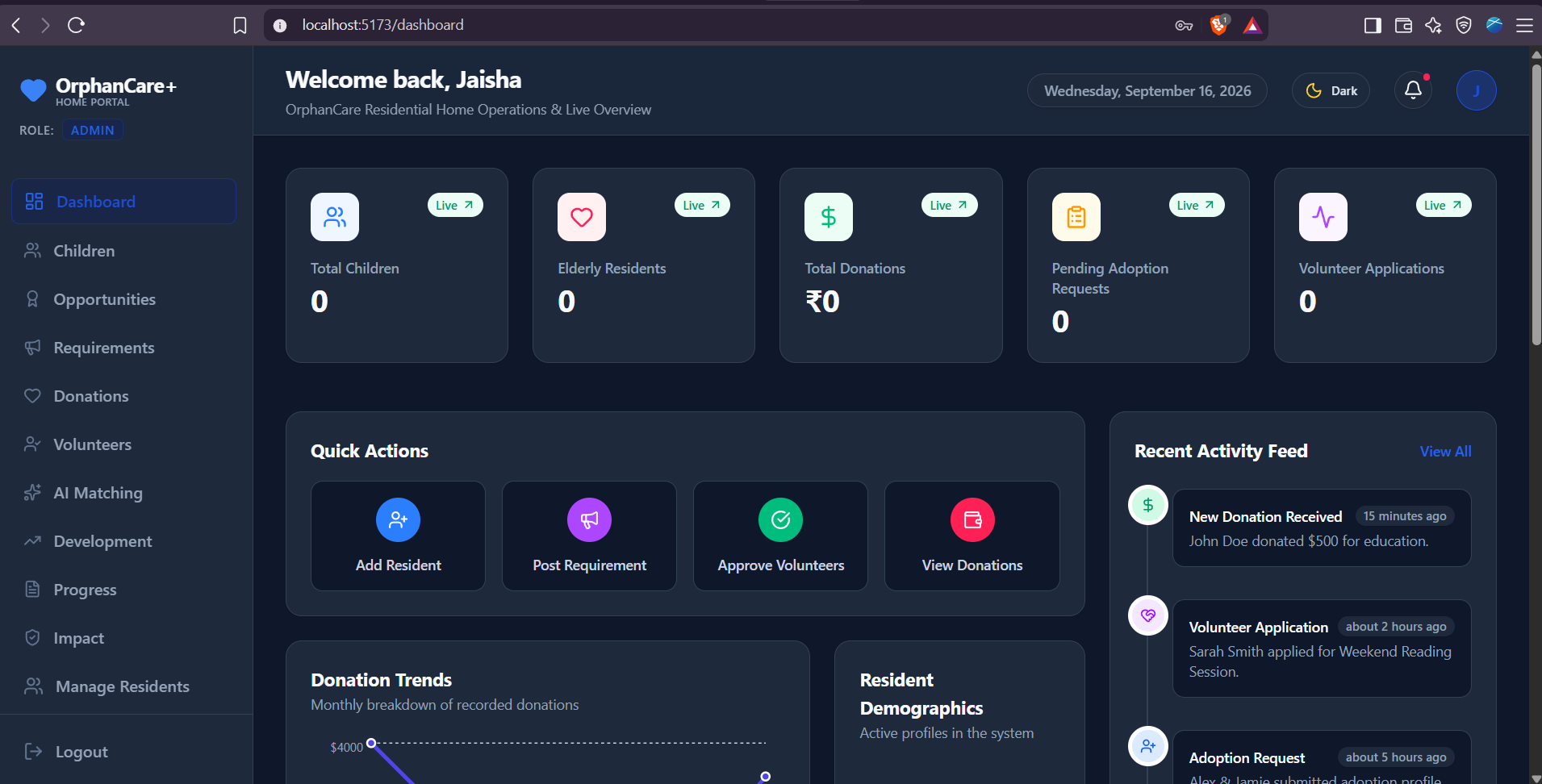
Dash board
-
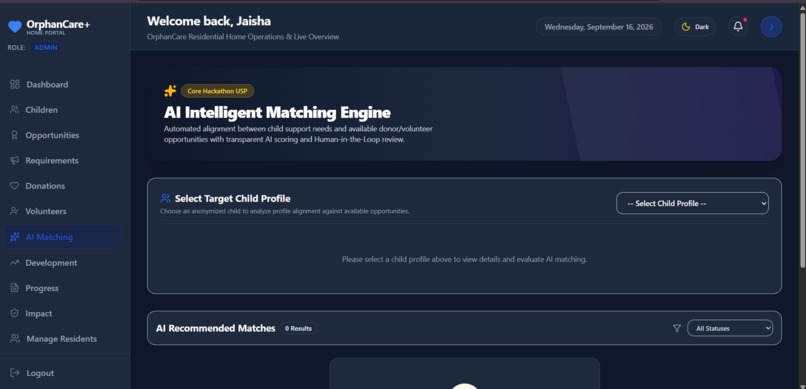
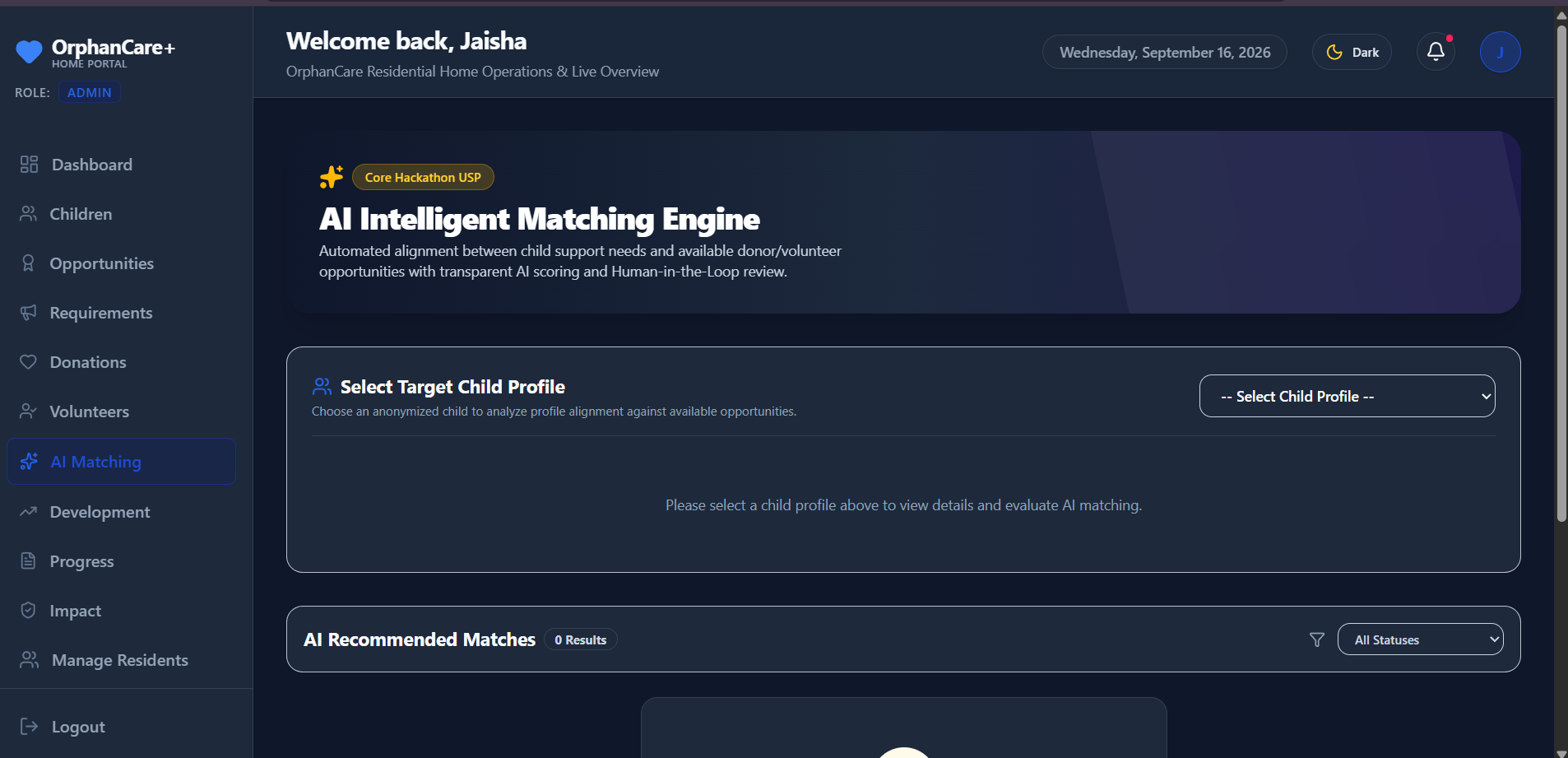
AI-Matching
Inspiration
Children growing up without parental care often receive basic support, but their individual skills, interests, educational needs, and future aspirations may not receive enough personalized attention. At the same time, donors and volunteers may not always know where their support can create the greatest impact.
This inspired us to build OrphanCare AI, a platform that goes beyond basic care and helps children build a better and more independent future.
What it does
OrphanCare AI connects children, guardians, volunteers, donors, and orphanage administrators through a secure role-based platform.
Each child has an anonymized profile containing their education level, interests, skills, aspirations, and identified needs. AI analyzes these needs and helps identify suitable opportunities such as scholarships, mentorship, educational support, medical assistance, and equipment.
The AI matching system connects children with relevant opportunities and provides an explanation of why an opportunity is suitable for that child. Administrators can review and approve these matches before any action is taken.
The platform can then generate personalized development plans with growth and career-oriented goals. Authorized users can record progress and measure the overall impact through an impact dashboard.
The complete workflow is Need, Match, Action, Progress, and Impact.
How we built it
The frontend is built using React, Vite, Tailwind CSS, and JavaScript. The backend uses Node.js and Express.js with MongoDB and Mongoose for data management.
JWT authentication and role-based access control ensure that administrators, guardians, volunteers, donors, and other users have appropriate access to the platform.
The AI layer uses Python-based agents with Gemini integration and deterministic fallback logic for needs analysis, opportunity matching, development planning, and impact analysis.
The platform also includes secure password reset through Gmail SMTP and test integrations for Razorpay and Stripe payments.
Challenges we faced
One of our biggest challenges was protecting children's information while still providing useful personalization. We solved this by using anonymized child profiles and limiting the information that volunteers can access.
Another challenge was organization-level access control. An administrator should only be able to manage information belonging to their own orphanage. Volunteers can view permitted child information and available needs or opportunities and can submit volunteering requests. The relevant orphanage administrator can then accept or reject those requests.
We also wanted AI recommendations to remain explainable and controlled by humans. AI does not automatically approve important decisions. Instead, it provides matching scores and explanations while authorized administrators make the final decisions.
What we learned
Building OrphanCare AI taught us that solving a real social problem requires more than simply adding AI to an application. AI needs to be useful, explainable, privacy-conscious, and combined with responsible human decision-making.
We learned how to build modular backend services, implement role-based authorization, protect organization-specific information, integrate AI services, handle real email delivery, and create measurable progress and impact tracking.
Future vision
Our vision is to expand OrphanCare AI with stronger guardian collaboration, more verified opportunities, intelligent volunteer recommendations, improved progress insights, and deeper impact measurement.
Our goal is simple: Not just caring for children today, but intelligently helping them build an independent tomorrow.

Log in or sign up for Devpost to join the conversation.