-
-
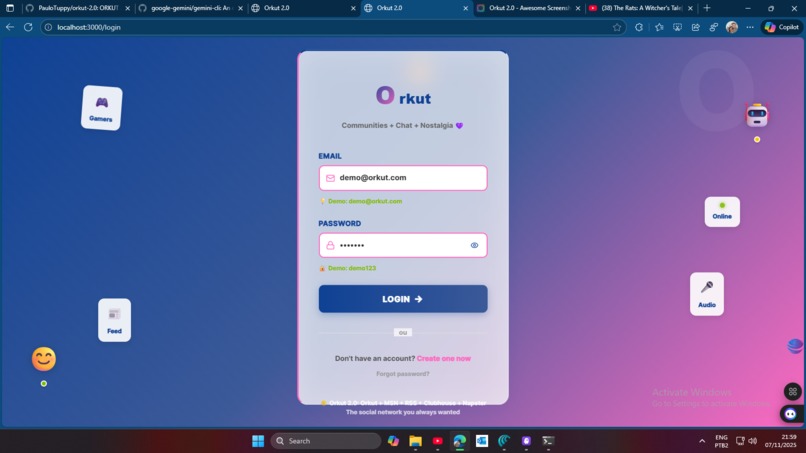
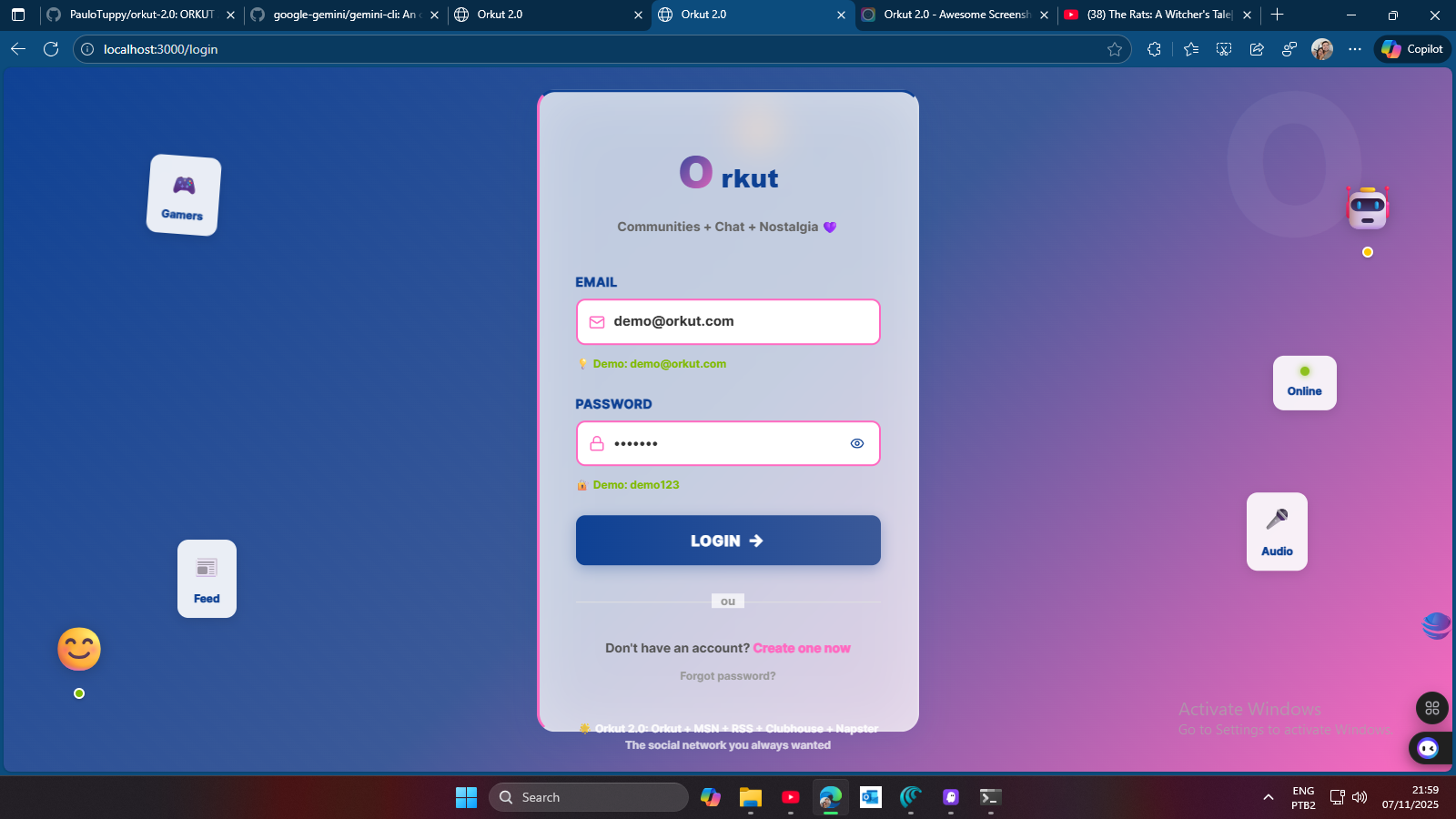
Login Page
-
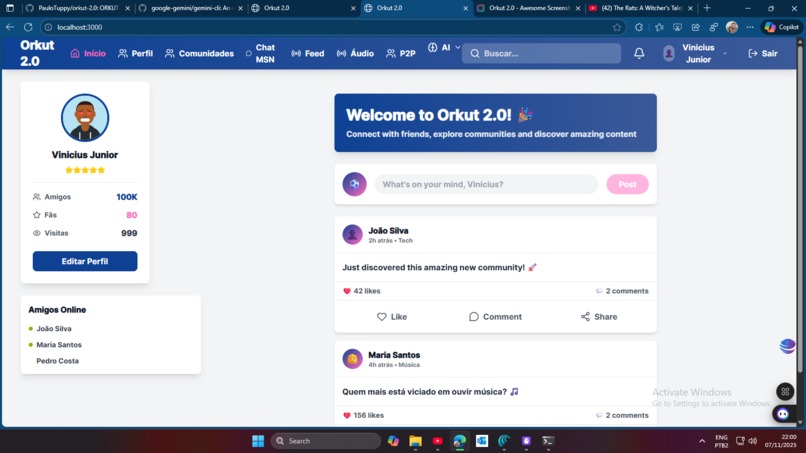
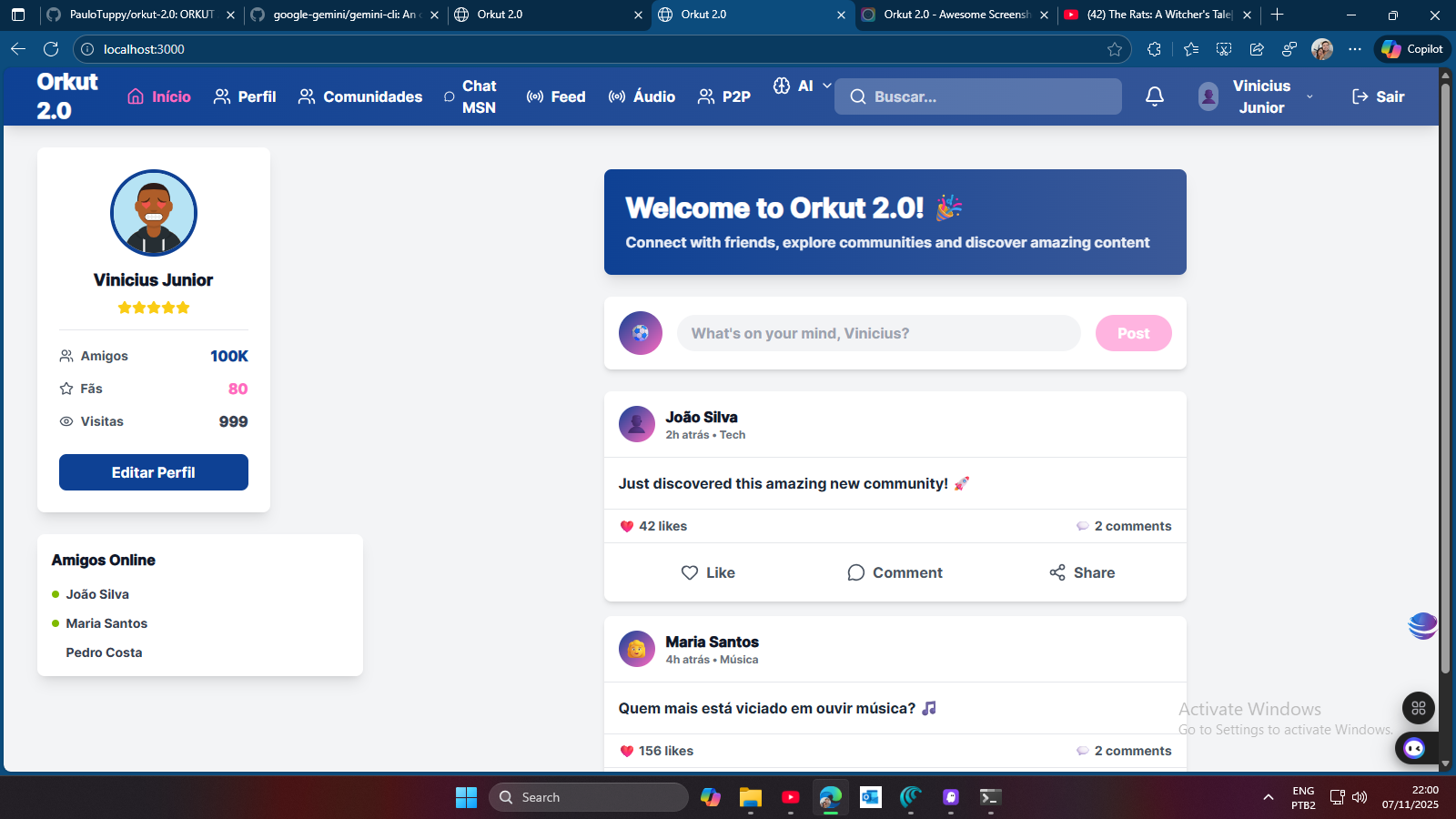
User Page
-
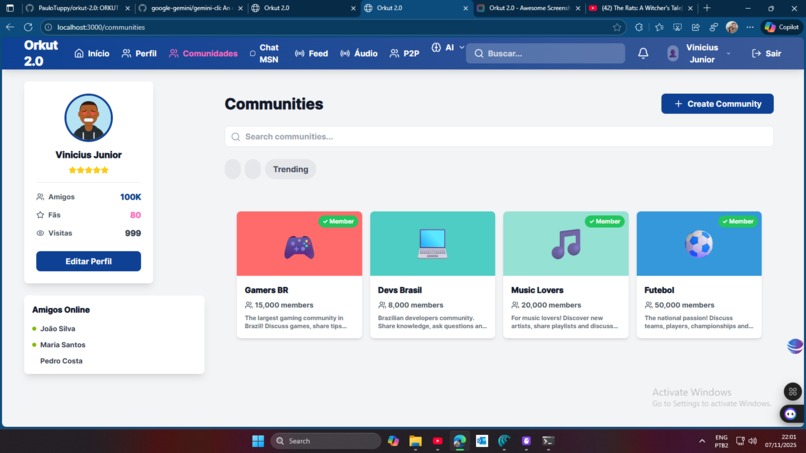
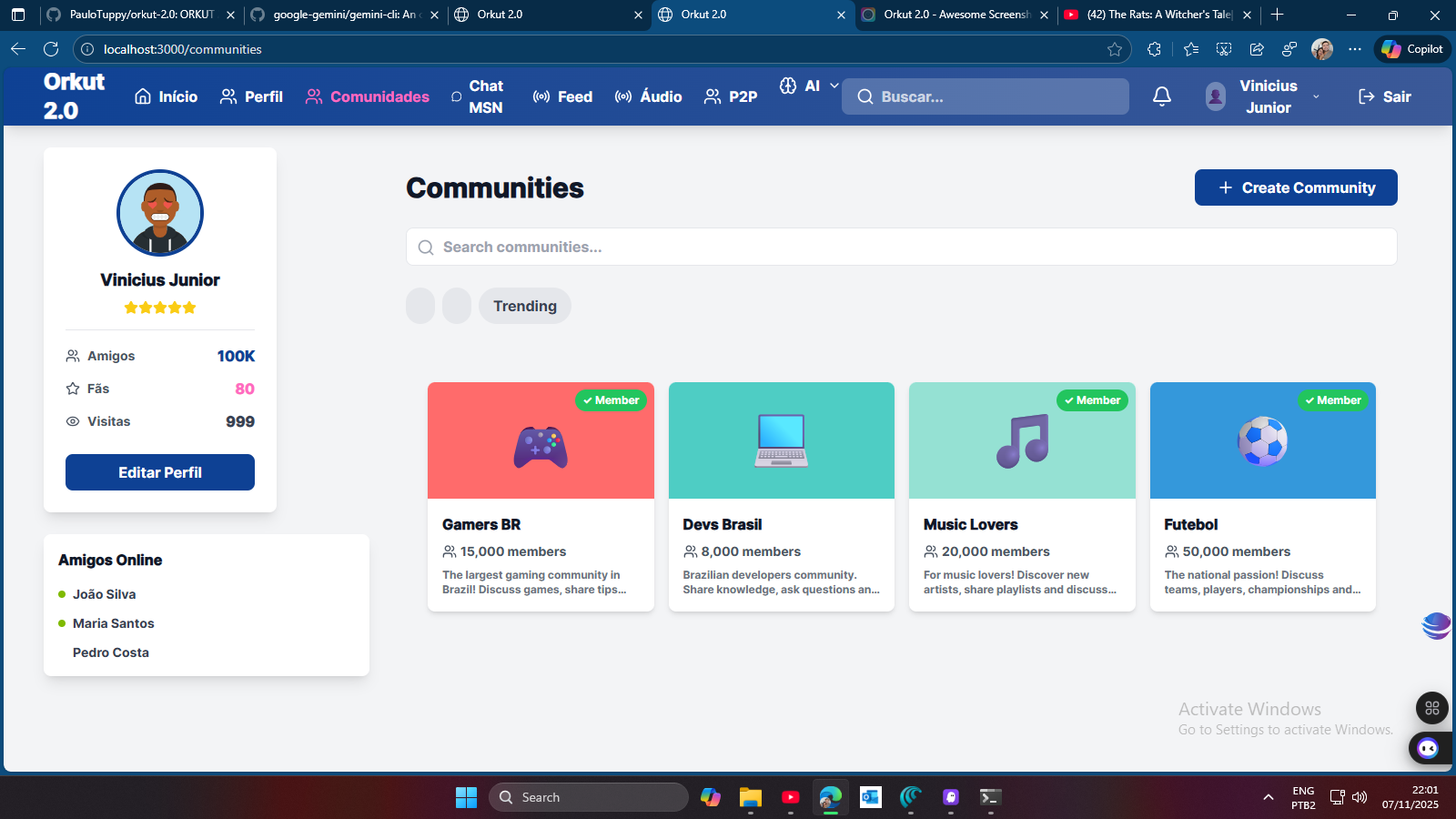
Communities Page
-
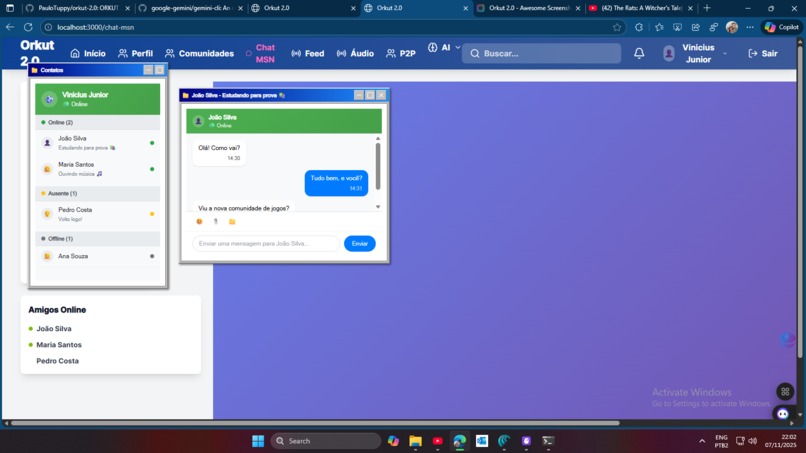
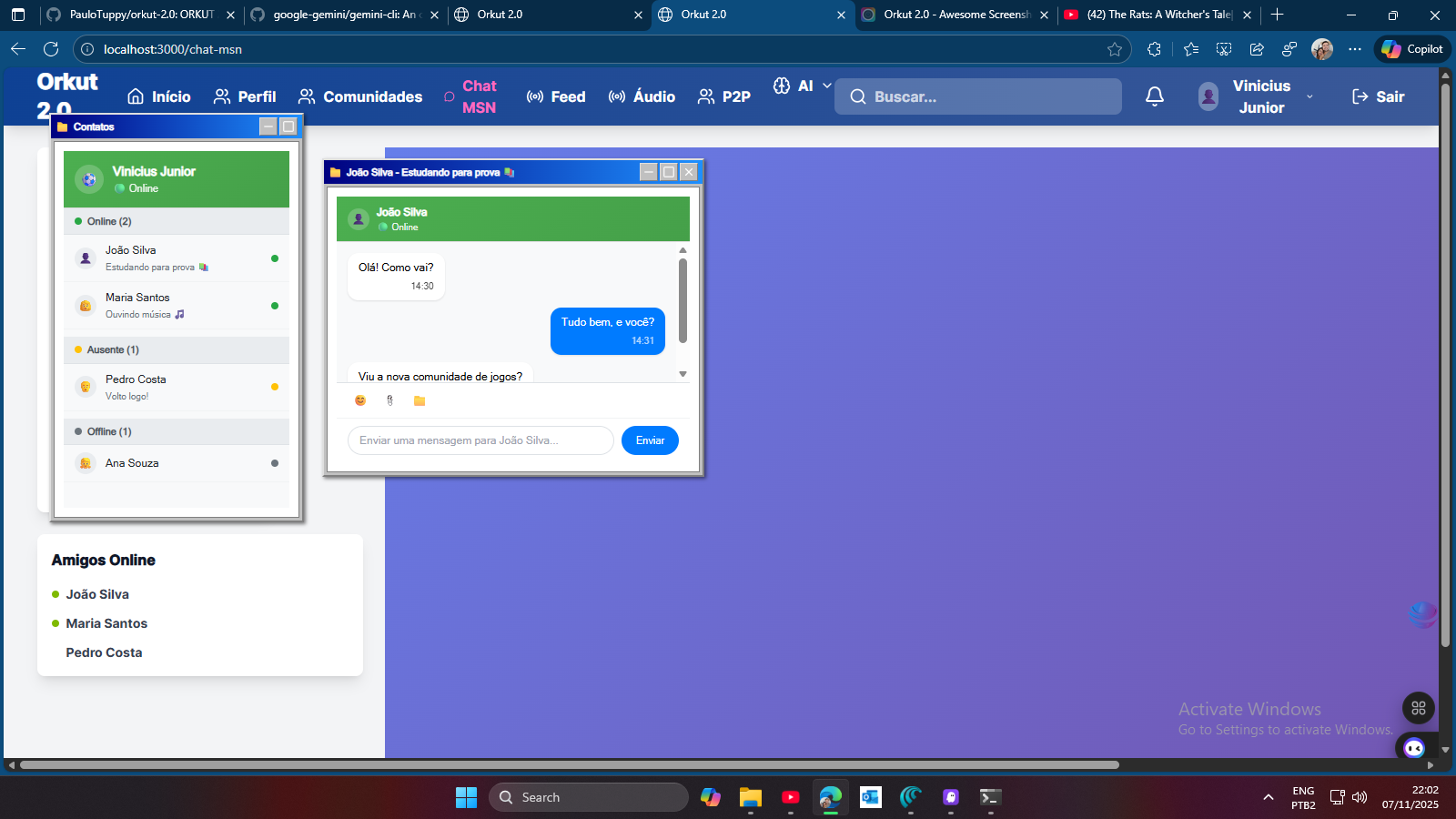
Chat MSN Page
-
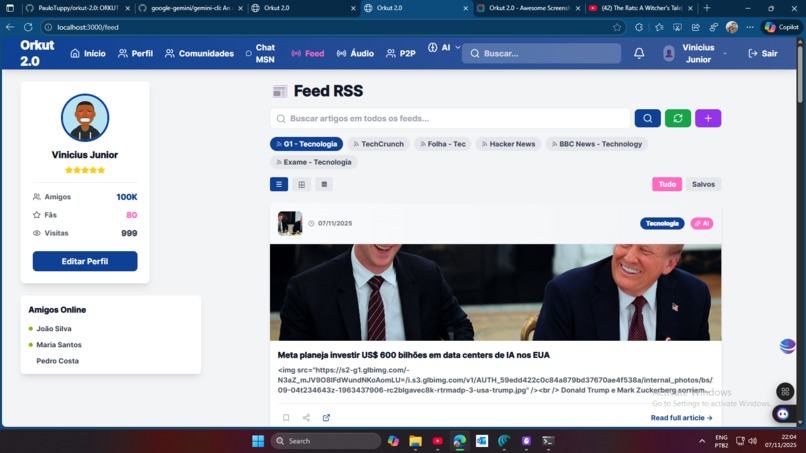
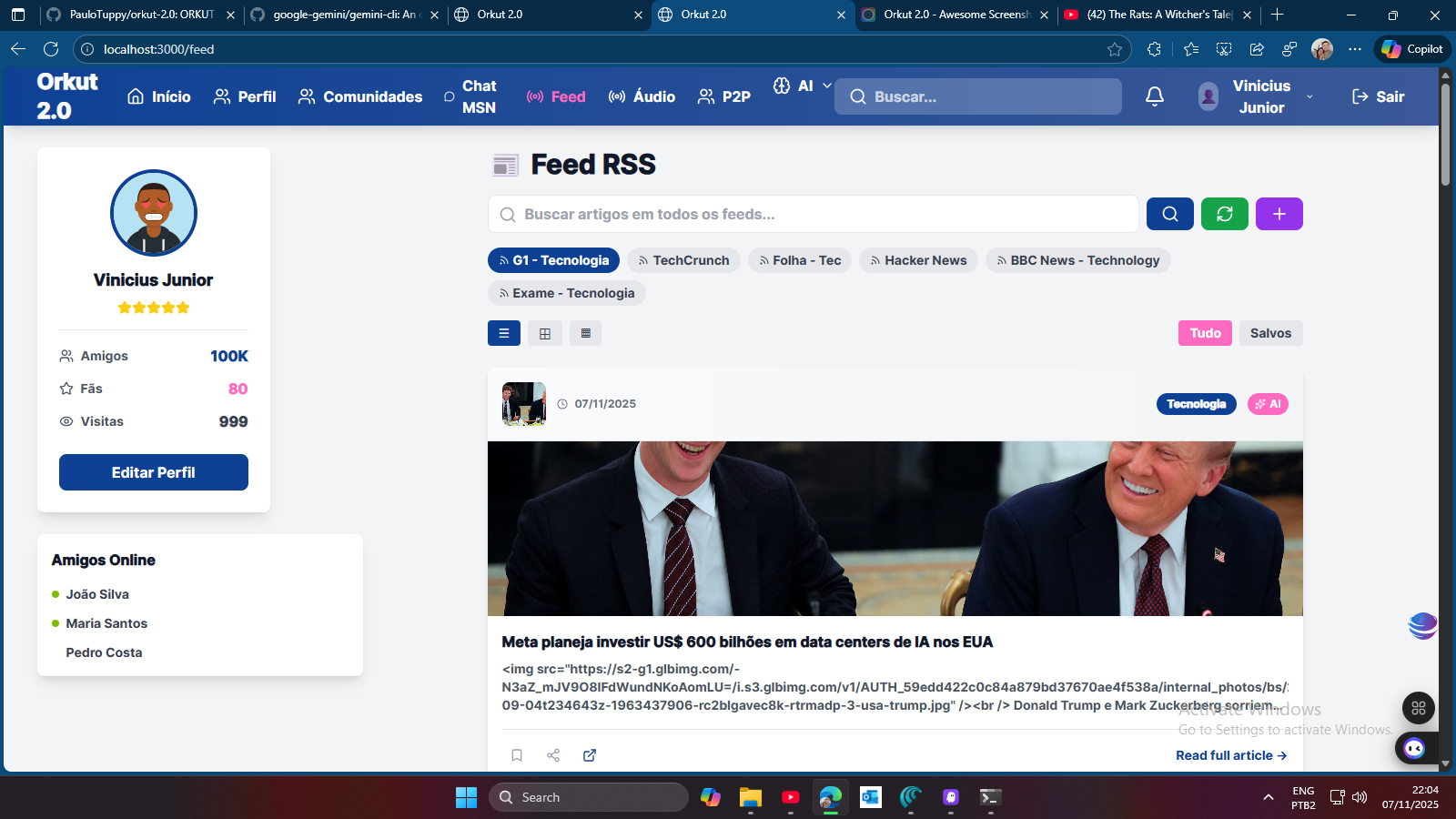
Feed RSS
-
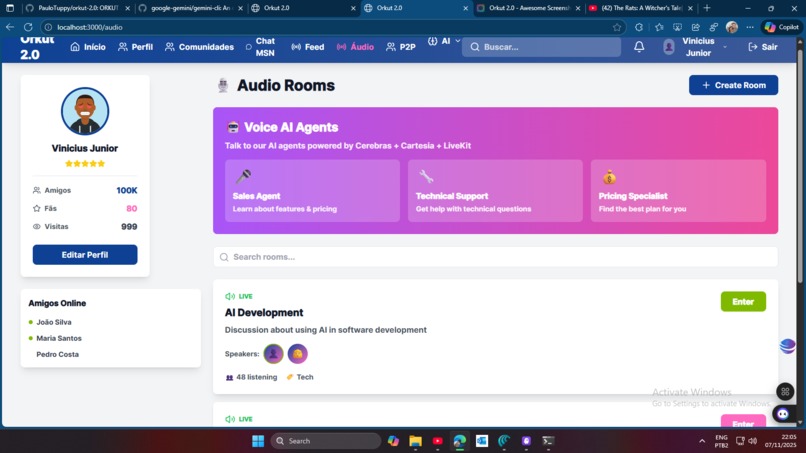
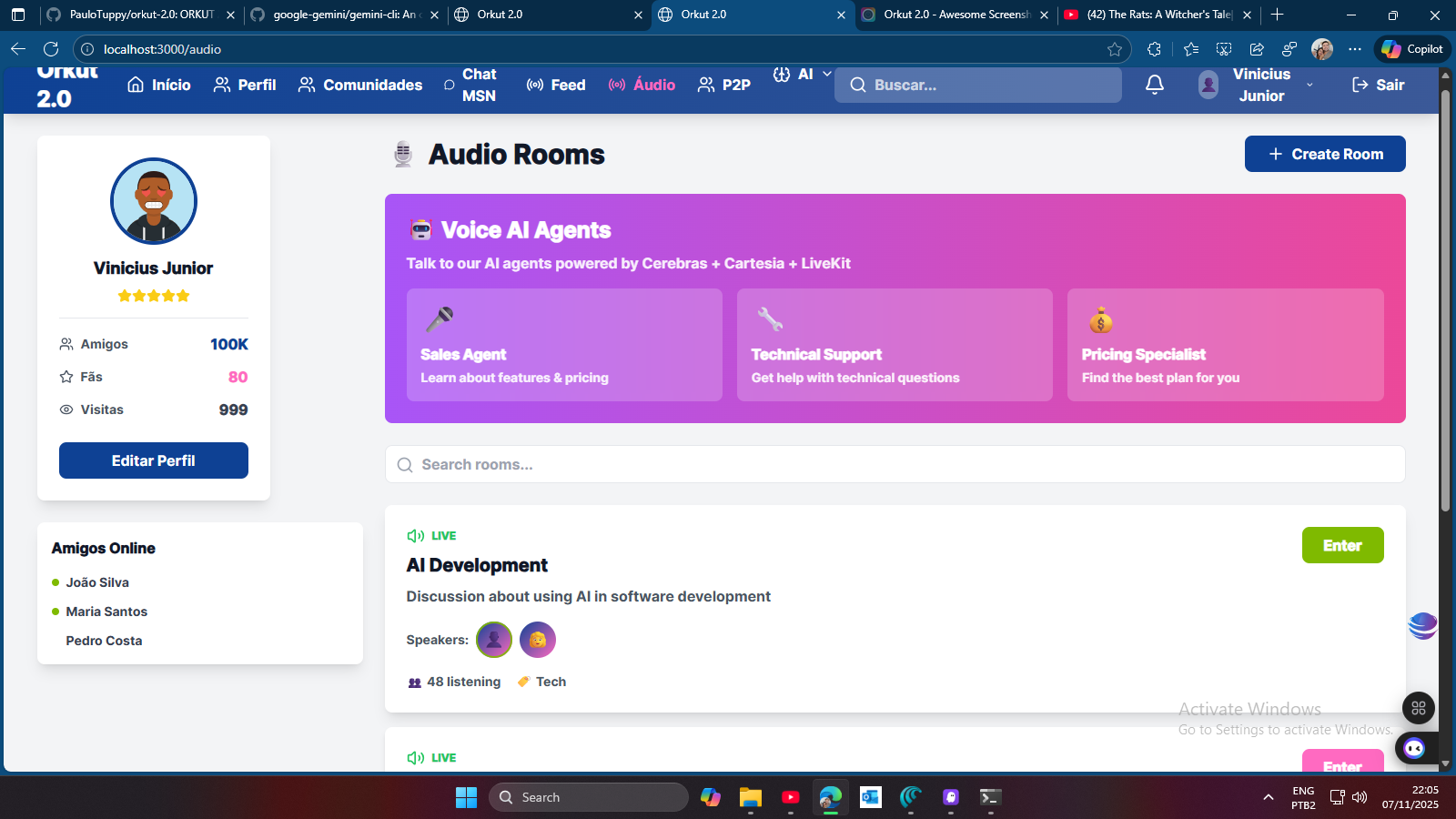
Audio Rooms
-
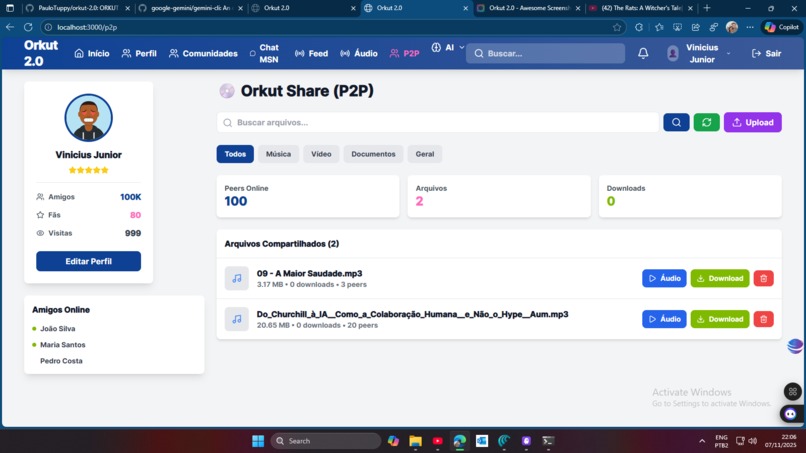
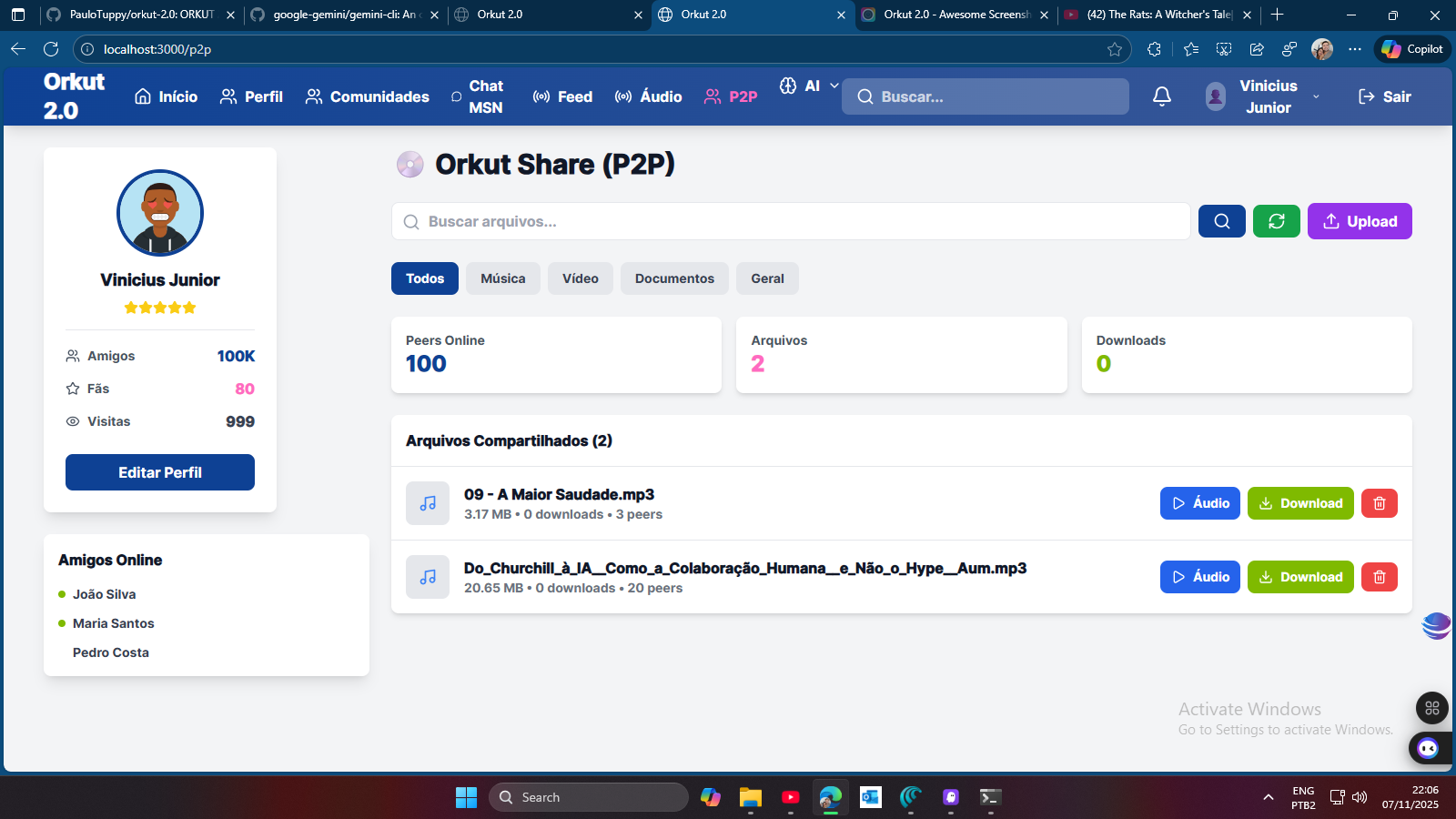
Orkut Share P2P
-
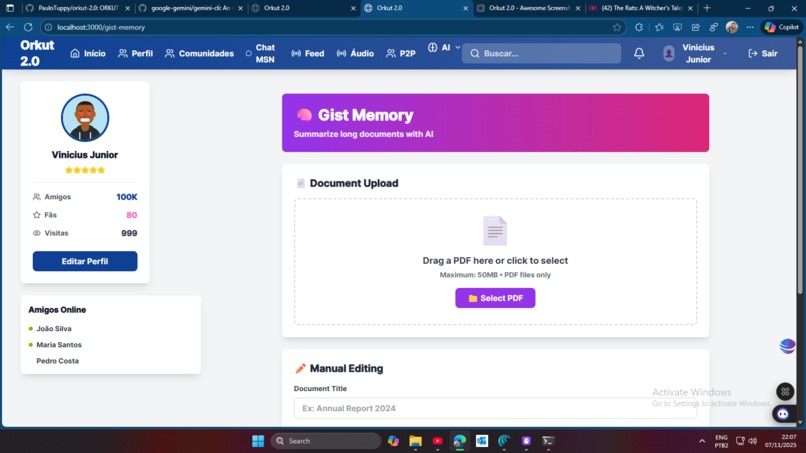
Gist Memory

## Inspiration

Orkut 2.0 was born from the desire to revive the spirit of classic social networks like Orkut and MSN Messenger, blending nostalgia with modern technologies. We set out to create a safe, fun, and innovative environment inspired by legendary communities, chats, and profiles, now enhanced with AI and voice features for a unique experience.

## What it does

The platform connects users through communities, real-time messaging with a retro MSN/Windows XP look, posting, commenting, and classic profile testimonials. Advanced features include smart document analysis (Gist Memory with PDF upload), automated AI-powered summaries, voice chat with intelligent agents, RSS news aggregation, Clubhouse-style audio rooms, and streaming P2P file sharing.

## How we built it

The backend uses FastAPI, PostgreSQL, and KeyDB, integrating AI services like Gemini, Cerebras, and Cartesia (speech/audio). The frontend is built with React 18, TypeScript, and TailwindCSS, featuring Framer Motion animations, Zustand state management, and socket.io for real-time communication. Voice services use LiveKit, and automated deployment through Docker, GitHub Actions, Railway/GCP, and Nginx ensures scalability and uptime.

## Challenges we ran into

- Integrating multiple AI/voice services (Cerebras, Cartesia, LiveKit)
- Building a real-time chat with classic MSN design
- Robust security without sacrificing usability (rate limiting, strict validation, CORS)
- Optimizing document analysis and text extraction for PDF/AI features
- Multi-cloud deployment and automated DevOps for fast scaling
- Blending nostalgic UX with modern features while maintaining simplicity

## Accomplishments that we're proud of

- Secure authentication with JWT and bcrypt
- Dynamic communities and MSN-style real-time chat
- Advanced document analysis and contextual memory via AI
- Live voice chat powered by LiveKit/Cartesia agents
- Full P2P streaming file sharing with privacy features
- A+ security audit and high-performance (KeyDB, connection pooling)

## What we learned

We learned how to integrate multiple AI frameworks, the importance of modular architecture, and well-planned DevOps to scale complex products. Nostalgia can drive innovation—merging classic design with AI and audio features delivered a fresh experience. Continuous testing, monitoring, and automation were key to maintaining quality and stability.

## What's next for Orkut 2.0

- OCR for scanned PDFs
- Mobile app using React Native
- Integrated video calls
- Stories and multimedia posting
- Multi-language global support
- Custom dark mode
- Advanced analytics and marketplace system
- New APIs for external integrations

Orkut 2.0 — The nostalgic, secure, and future-ready social network!
Built With
- alembic-**frontend:**-react-18
- audio
- bcrypt
- built-with**-**languages:**-python-3.12+
- cartesia-(speech-to-text
- cerebras-(llama-3.3-70b)
- clubhouse-style
- dompurify-**other:**-rss-feed-integration
- framer-motion-**state-management:**-zustand-**real-time-communication:**-socket.io
- github-actions
- google-cloud-platform-(gcp)-**security:**-jwt
- javascript-**backend:**-fastapi
- livekit-(voice/video)-**ai/ml:**-gemini-api-(google-ai)
- multithreaded)-**devops/cloud:**-docker
- nginx
- p2p-file-sharing
- pydantic-(backend-validation)
- railway
- sqlalchemy
- tailwindcss
- text-to-speech)-**database:**-postgresql-**cache:**-keydb-(redis-compatible
- typescript
- vite
- zod-(frontend-validation)

Log in or sign up for Devpost to join the conversation.