-
-
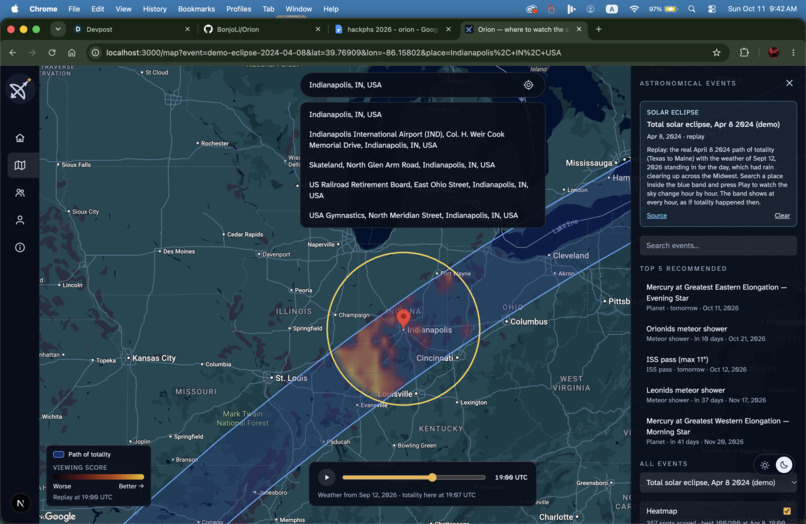
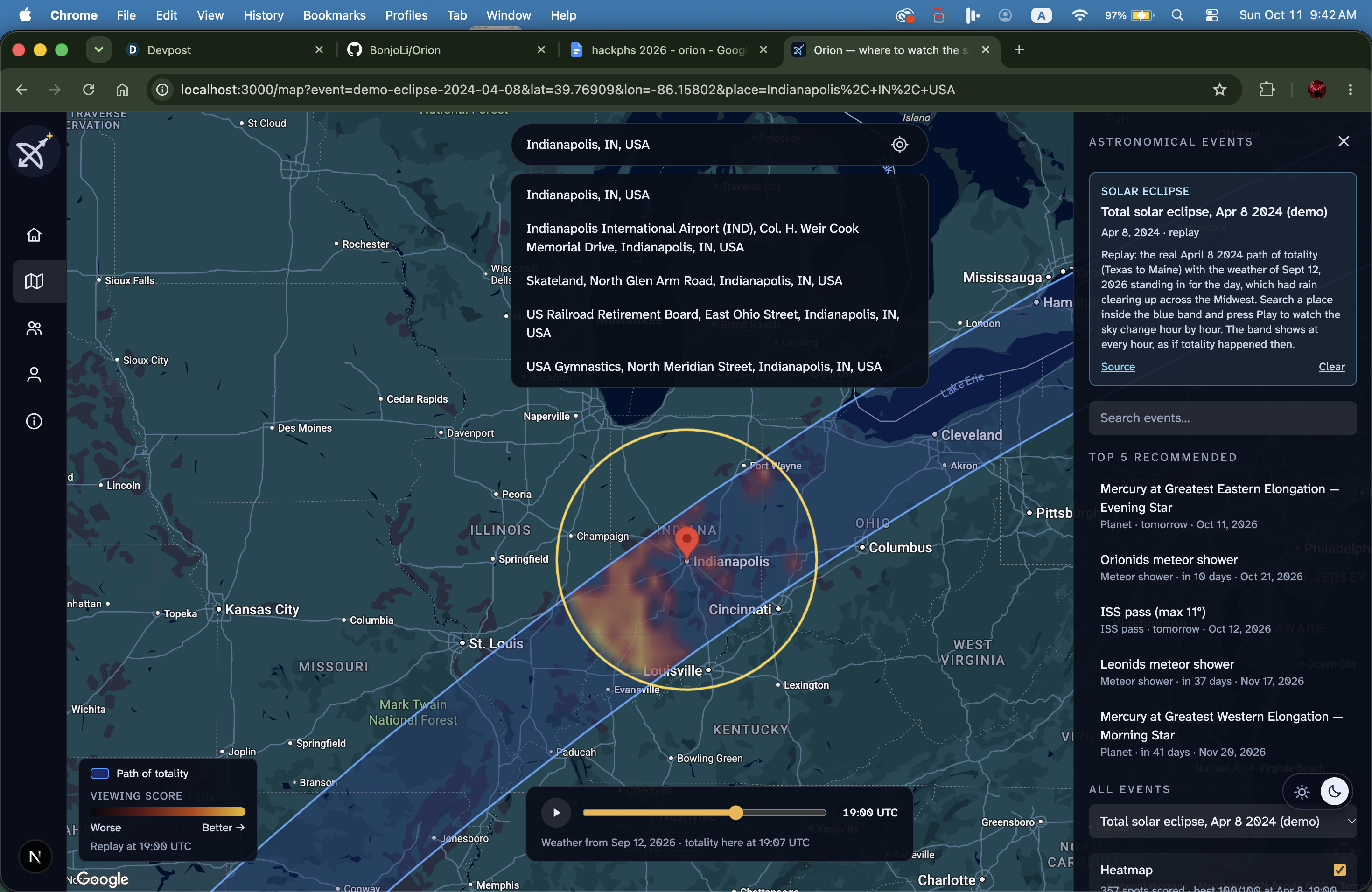
Actual map
-
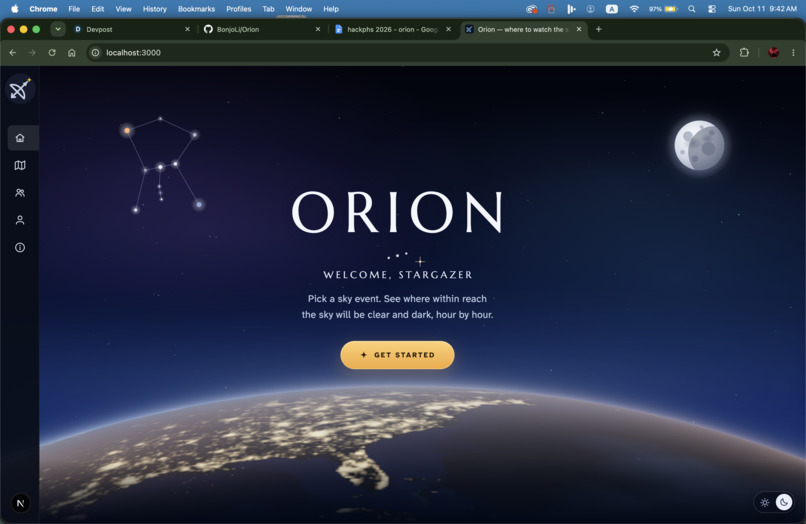
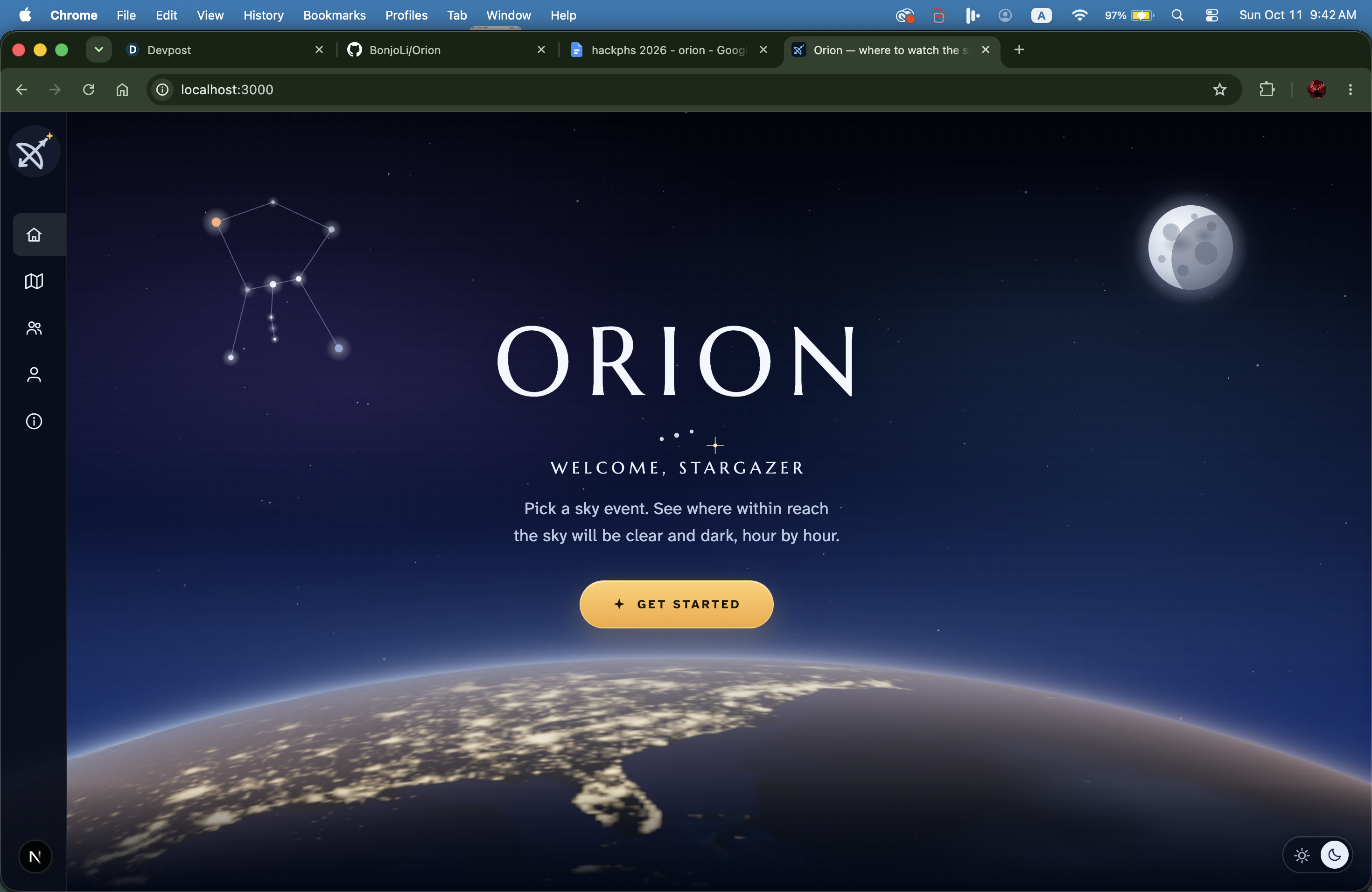
Homepage
-
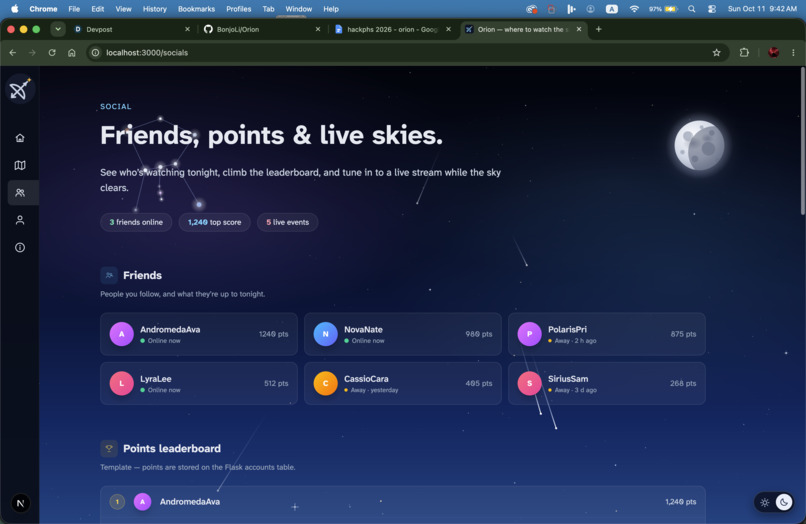
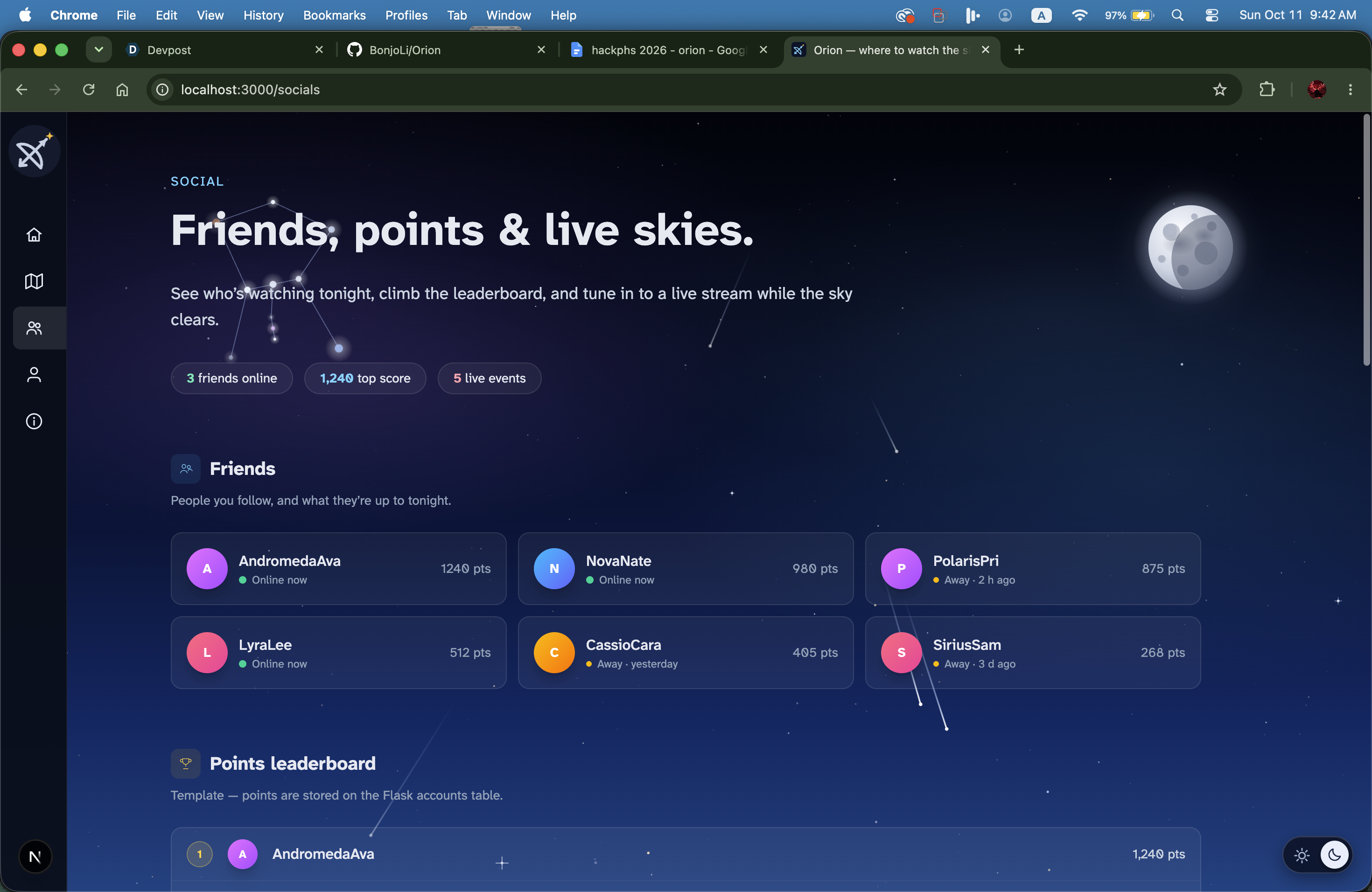
Friends System
-
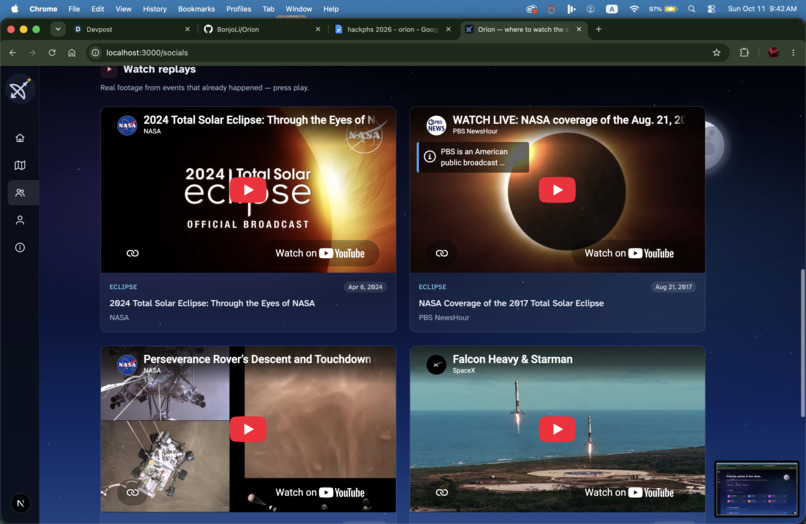
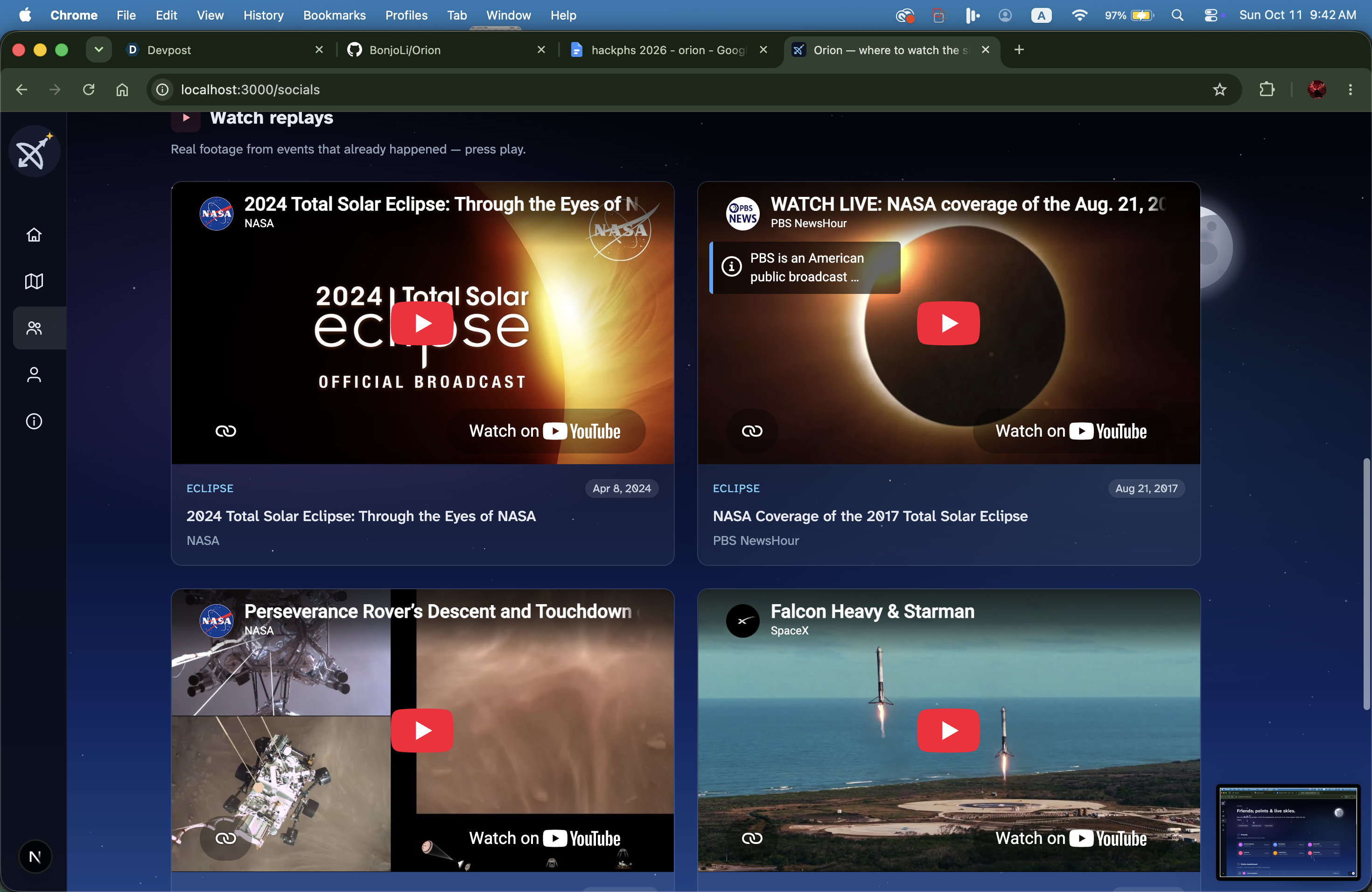
Livestreaming System
-
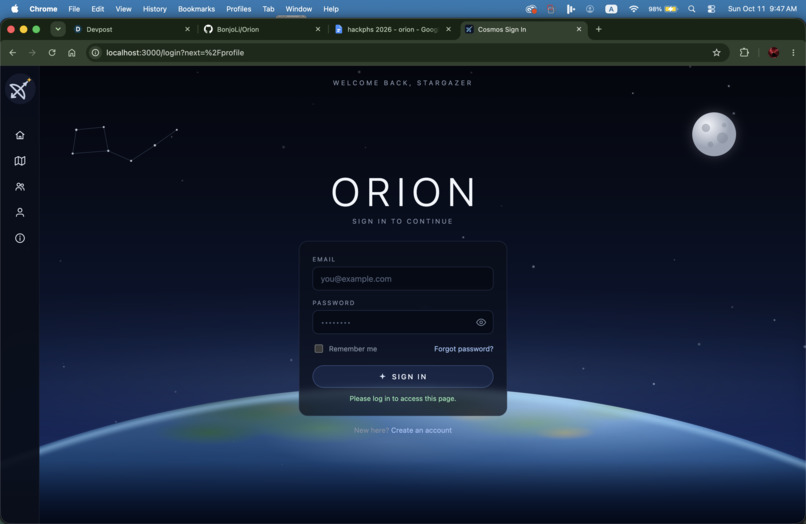
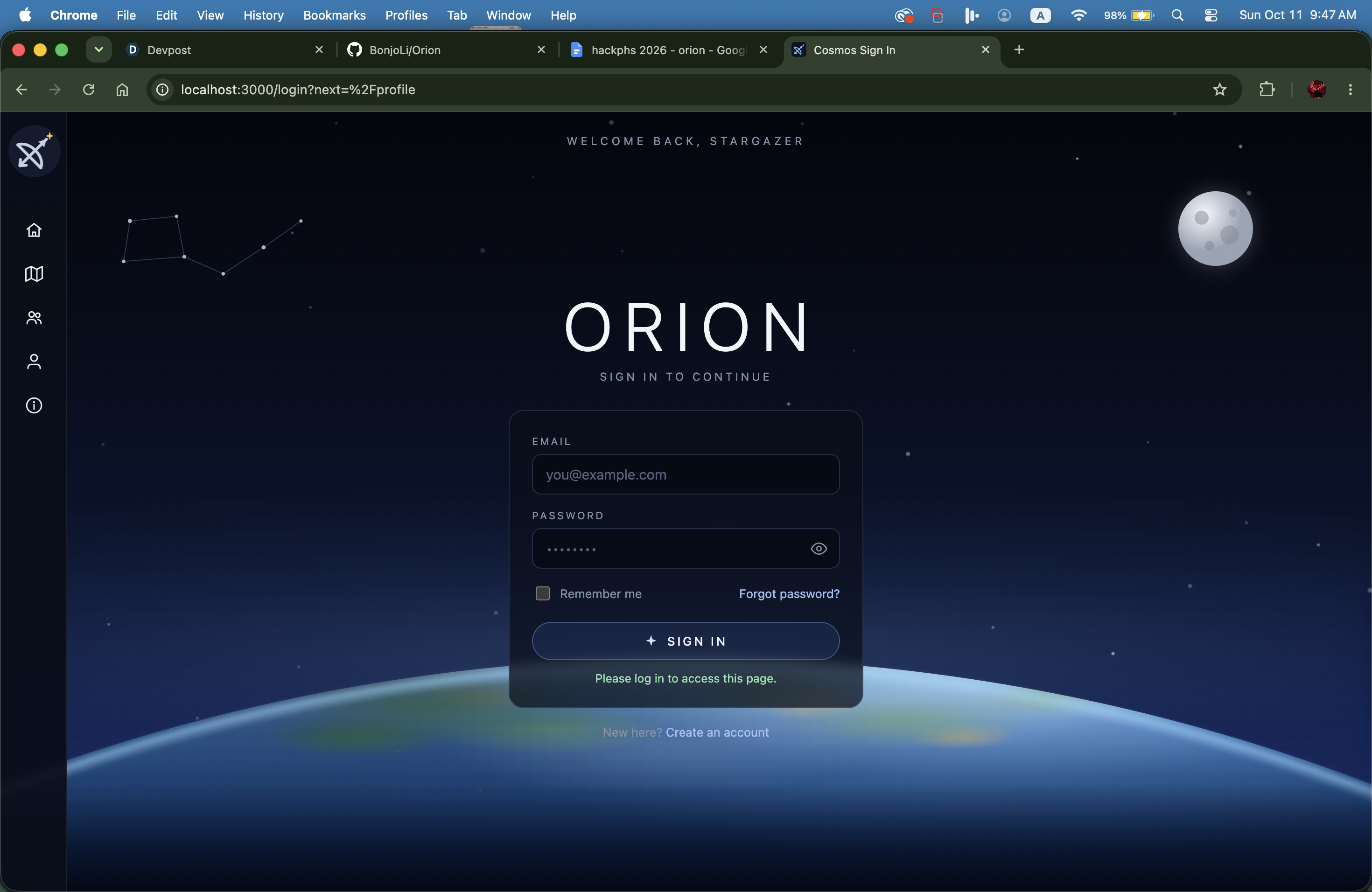
Account Sign Up/Login Page
-
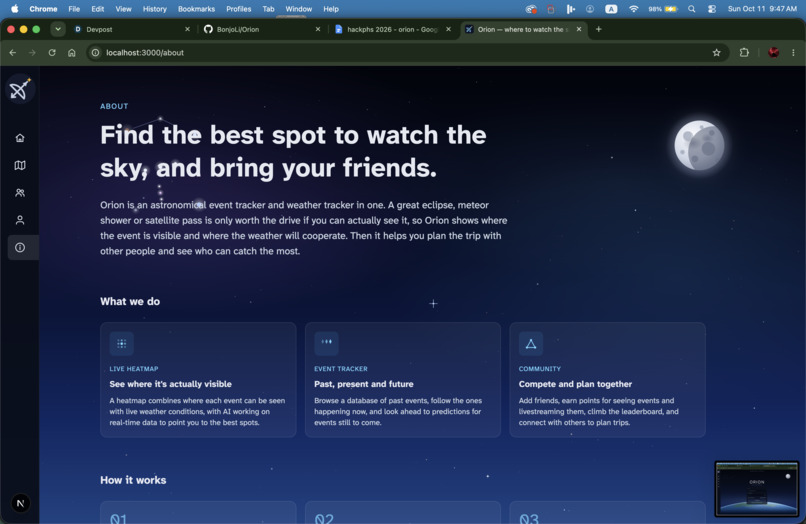
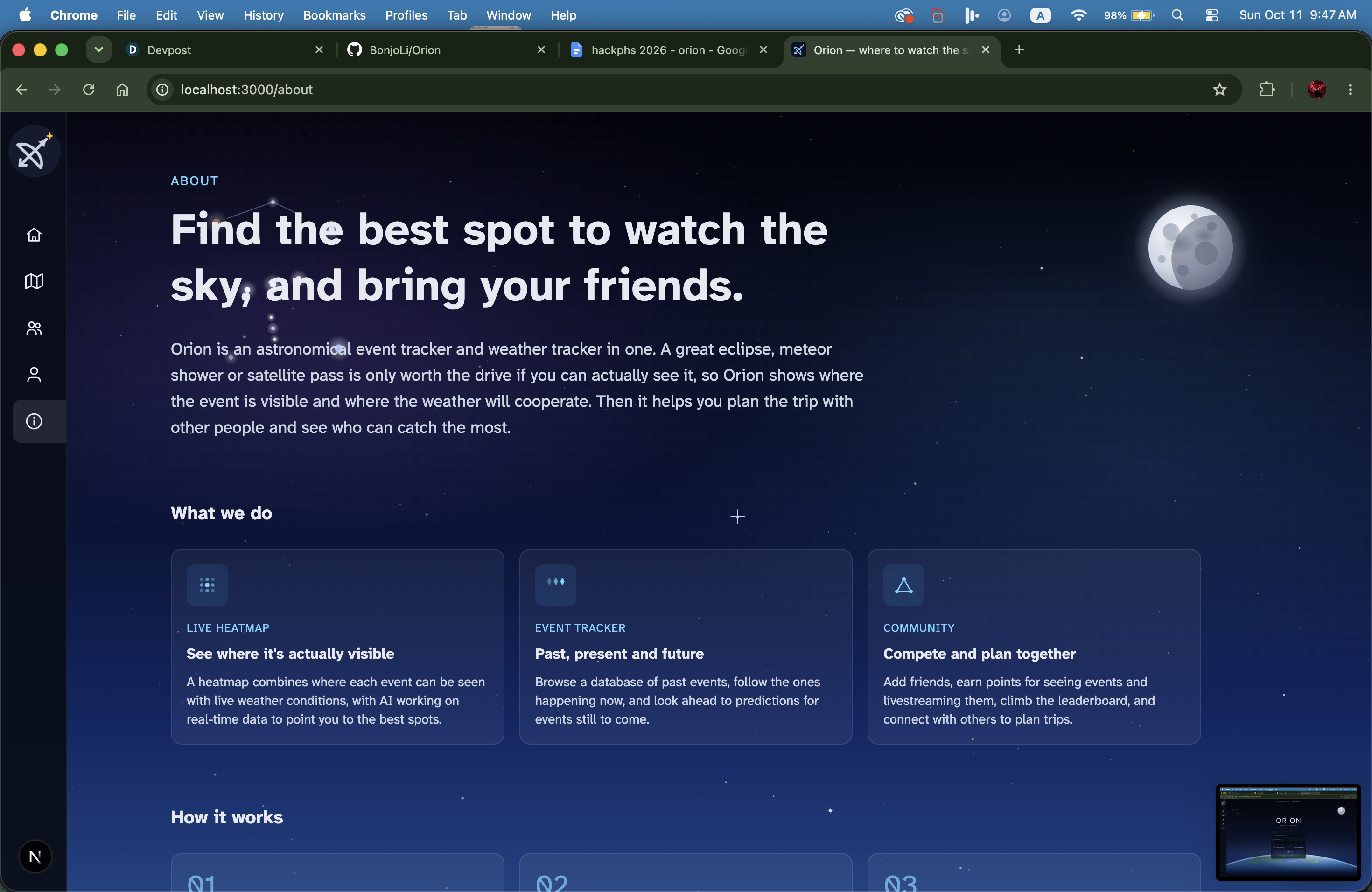
About Page
Inspiration
Princeton New Jersey always finds a way to have cloudy weather whenever a cool astronomical event is happening, such as a blood moon or a meteor shower. And even if you wanted to find an area where you could watch the event, all you would be able to find online is either a general heatmap showing all the places the event will be taking place over, or a weather map simply showing if its cloudy or not in some town, but never a mix of both. Our goal was to combine these and put them into one website to make viewing perhaps once in a lifetime events much easier.
What it does
Our main feature is a heatmap that allows you to view where an astronomical event will be generally visible as well as the viewing conditions in a location of your choice. Although, what happens if you still aren't able to reach an area where the event is actually visible? A live streaming feature (not active due to our incapacity to actually live stream an astronomical event at this moment,) allows people to share their view of the skies to earn points and help you feel included and see the beauties of space. You can compete with friends to see and share more cool space events.
How we built it
Backend and accounts is mostly python using flask and sqlalchemy. Some api's for maps required typescript and node.js, although the rest of the pages were designed with html. We used a multitude of APIs like Open-Meteo, 7Timer! ASTRO, Google Maps Platform, and so many more to combine the weather map and the zone where you can actually see the astronomical event you selected.
Challenges we ran into
Next.js and flask run on different ports, so switching between the ports caused errors at times. In the process of developing the heatmaps, one of our teammates who was working with claude to make its development quicker would constantly hit his user limit. This would force him to pause for at least an hour before continuing work on heatmaps. This caused a long delay in progress.
Accomplishments that we're proud of
Many of us have minimal experience using important components of the backend, such as flask, and we were able to learn very quickly how to implement all our components properly
What we learned
Team programming can be very difficult at times
What's next for Orion
Live streaming capabilities and enough users to have a good friends system.

Log in or sign up for Devpost to join the conversation.