-
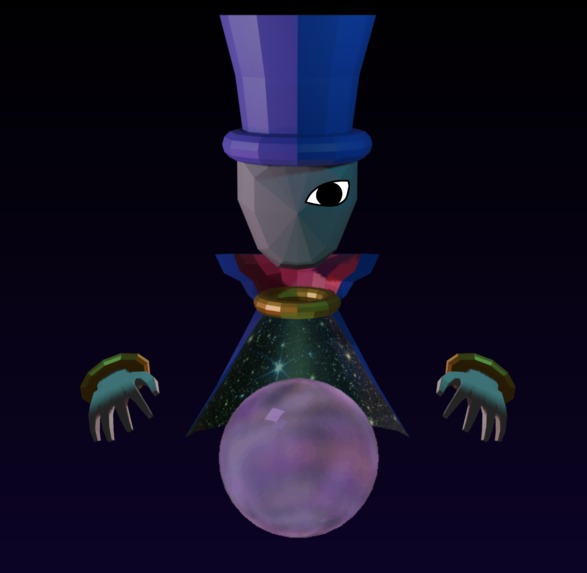
An image of ORION with his orb, ready to make fun predictions.
Inspiration
Looking at our inspirations in a more specific sense, we were inspired by two prompts in particular proposed by Durhack Sponsors - Marshall Wace's "Bridging Worlds" as well as G-Research's "Create a crystal ball that can predict something unique…". These prompts provided guidance amongst the backdrop of the more open-ended DurHack X theme, "Legacy", which we were also inspired by in our visual design.
What It Does
Orion makes predictions based on user data, extrapolating by looking at data featuring similar trends but without much regard for if said extrapolation is necessarily sensible. This leads to funny results, such as one's heartrate being compared to the price of gold at a particular point in time, or working out the elevation the rest of your hike based on IBM's stocks - Orion sees where the real data went and makes a prediction for the future of the user's data. This "knowledge" is delivered to the user through the character of Orion, a wielder of an orb holding immense knowledge of data trends around the world, with a retro PS1-era inspired visual style to tie the experience together. Orion lets you use a crystall ball to make unique predictions, bridging worlds far apart in concept through data.
How We Built It
Orion was made with a diverse software stack. On the front-end we employed Svelte and Plotly.js, and on our back-end we used FastAPI and data analysis technology such as Numpy and Scikitlearn. For the visuals of our website we used Blender's large breadth of features.
Challenges We Ran Into
We encountered some challenges when developing Orion. One challenge we ran into was on the back-end, as it was difficult to collect data and develop the right algorithms to allow Orion to make predictions. Another was refining the idea down to what ended up becoming Orion; we went on a bit of a detour getting to the final idea, and settling on one decided vision wasn't too easy.
Accomplishments That We're Proud Of
Our team is proud of the whole final product that we have created, but in particular:
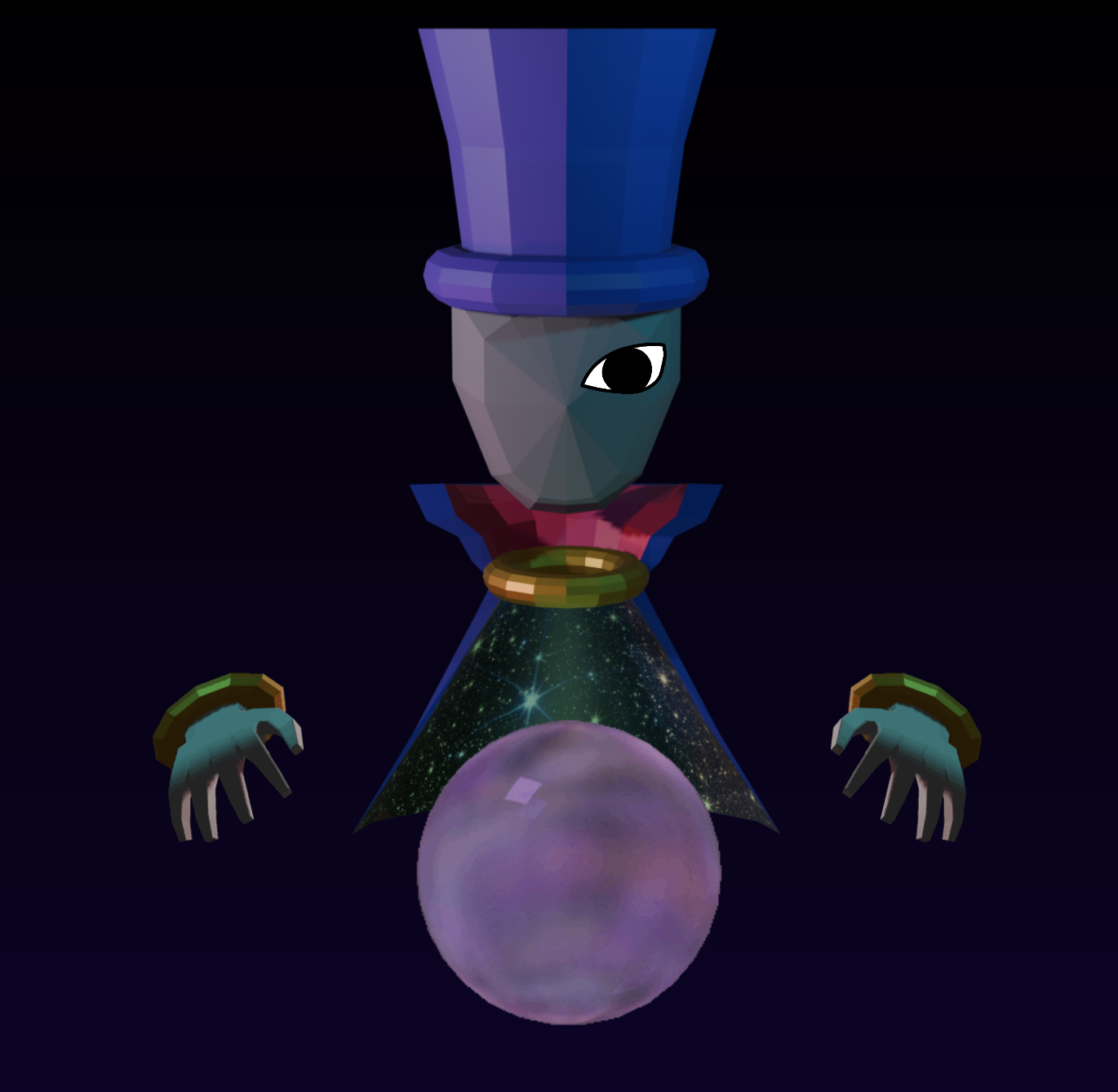
- 3D modelling work, in order to create the character of Orion. We utilised Blender and its suite of functions to bring him to life in a retro, legacy style.
- Character rigging, which was new for our modeller, allowing Orion to pose his hands/fingers in different ways.
- Shader work, to make our orb as mistifiying as possible. Also in Blender, noise textures, procedural shader textures, and simulated refractions were all part of the equation.
- Back-end work, which involved handling large amounts of data, turn that into appropriate data sets as the basis for our prediction algorithm.
What We Learned
Our group members have developed many new skills as mentioned previously (such as character modelling and character design, shader technologies, and character rigging), as well as refined our skills in developing both to multiple themes and under time pressure as well.
Built With
- blender
- fastapi
- javascript
- python
- svelte


Log in or sign up for Devpost to join the conversation.