Life is full of small administrative tasks that quietly consume our time: booking appointments, finding service providers, checking availability, managing calendars, and coordinating schedules. Each task may seem simple, but together they create a constant mental load.
We asked ourselves: What if AI could do more than remind us about these tasks? What if it could actually help get them done?
That question inspired LifeAdmin, an AI-powered personal administration assistant designed to turn everyday requests into actionable workflows.
What It Does
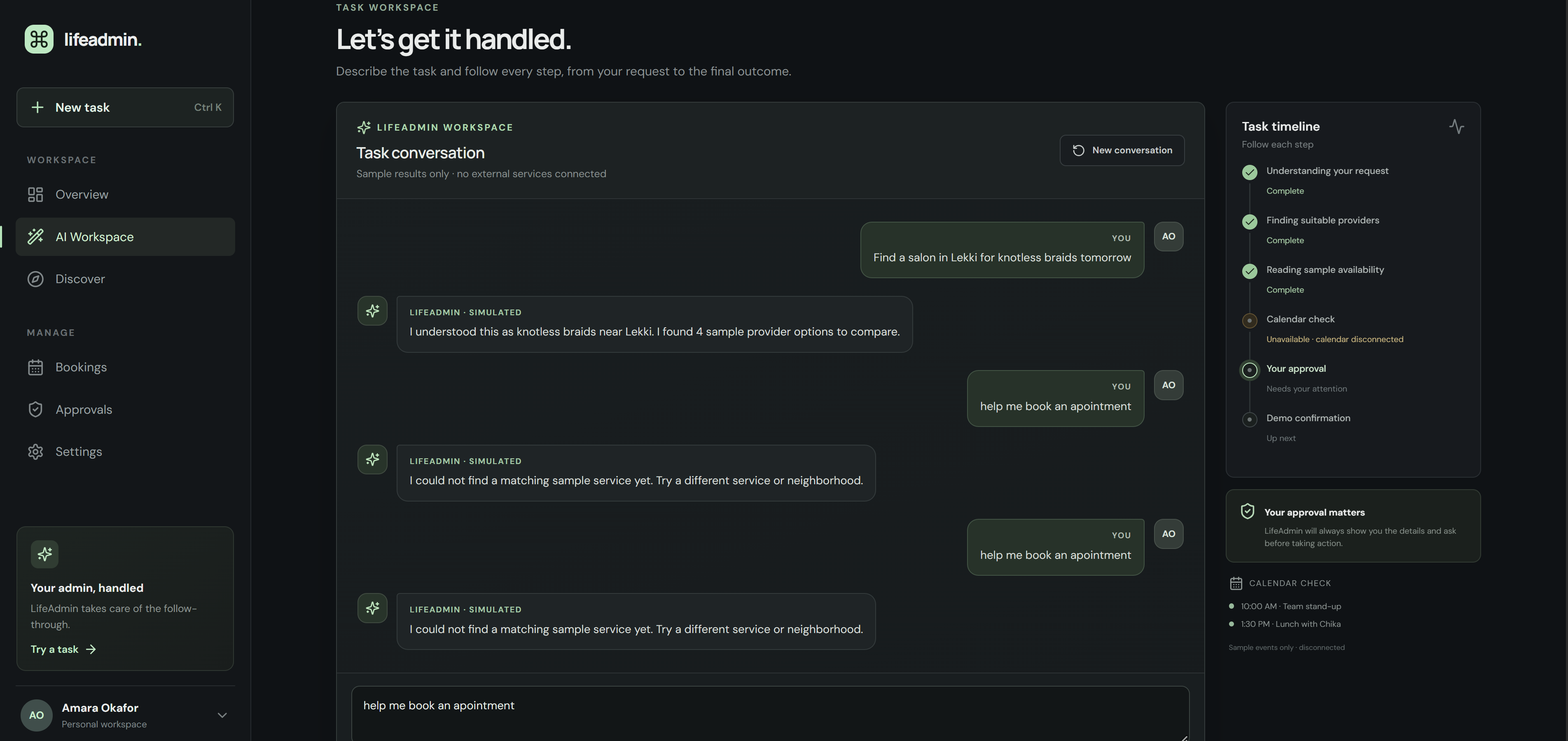
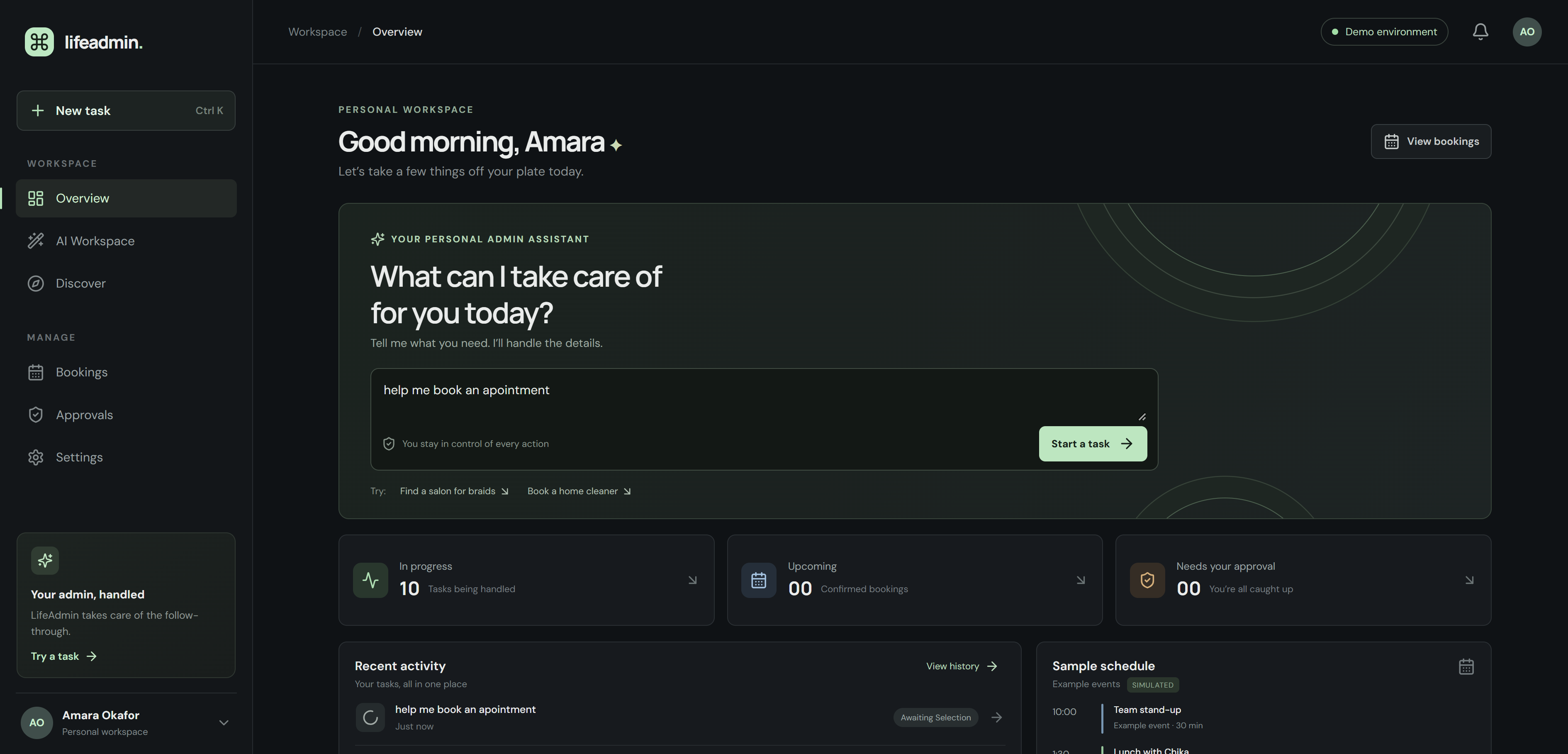
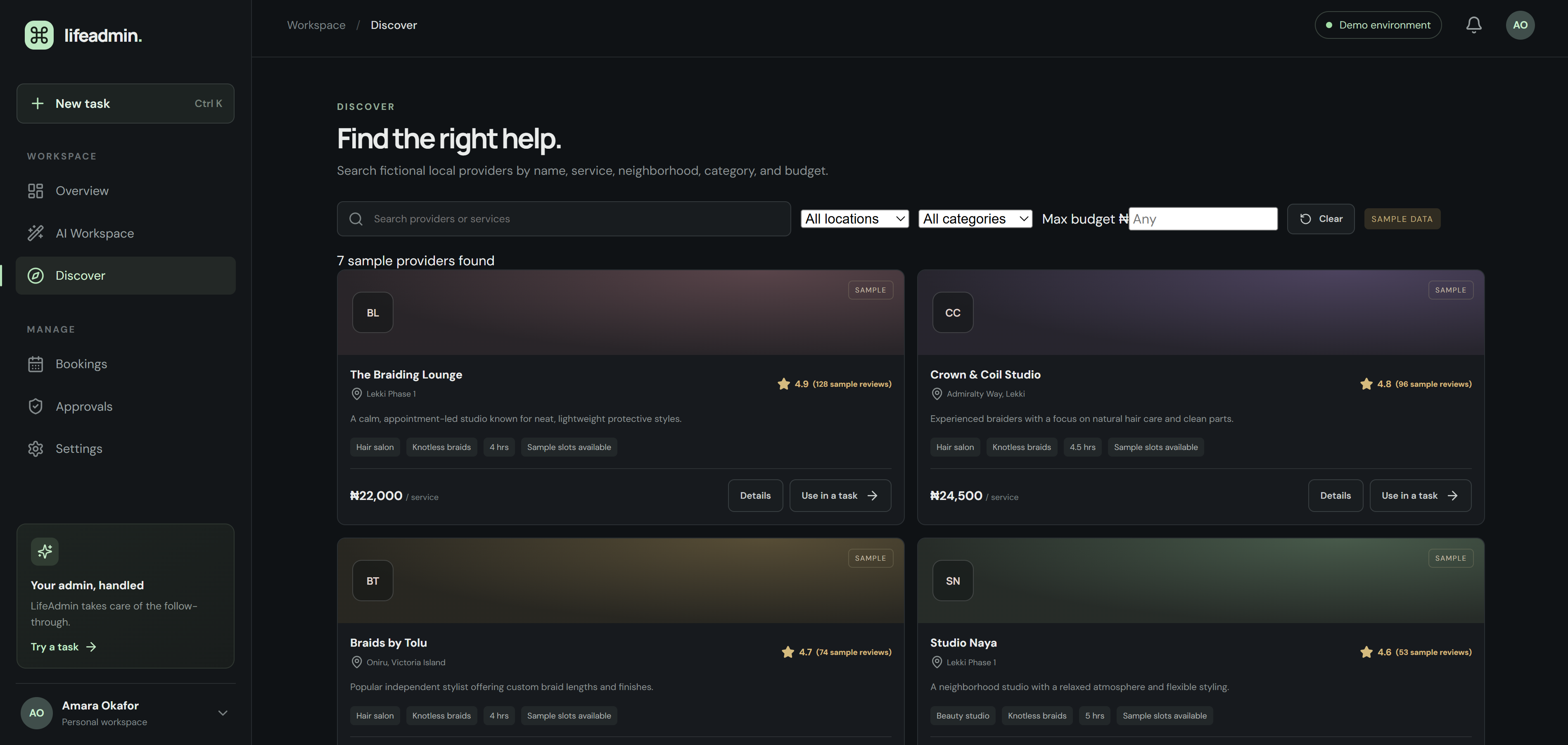
LifeAdmin allows users to describe what they need in natural language. Instead of making users navigate multiple platforms and manage every step themselves, LifeAdmin is designed to understand their request, find suitable service providers, consider constraints such as budget and scheduling conflicts, and coordinate the next steps.
For example, a user could ask:
“Find me a salon in Lekki for knotless braids tomorrow before 3 PM, within ₦25,000, without conflicting with my calendar.”
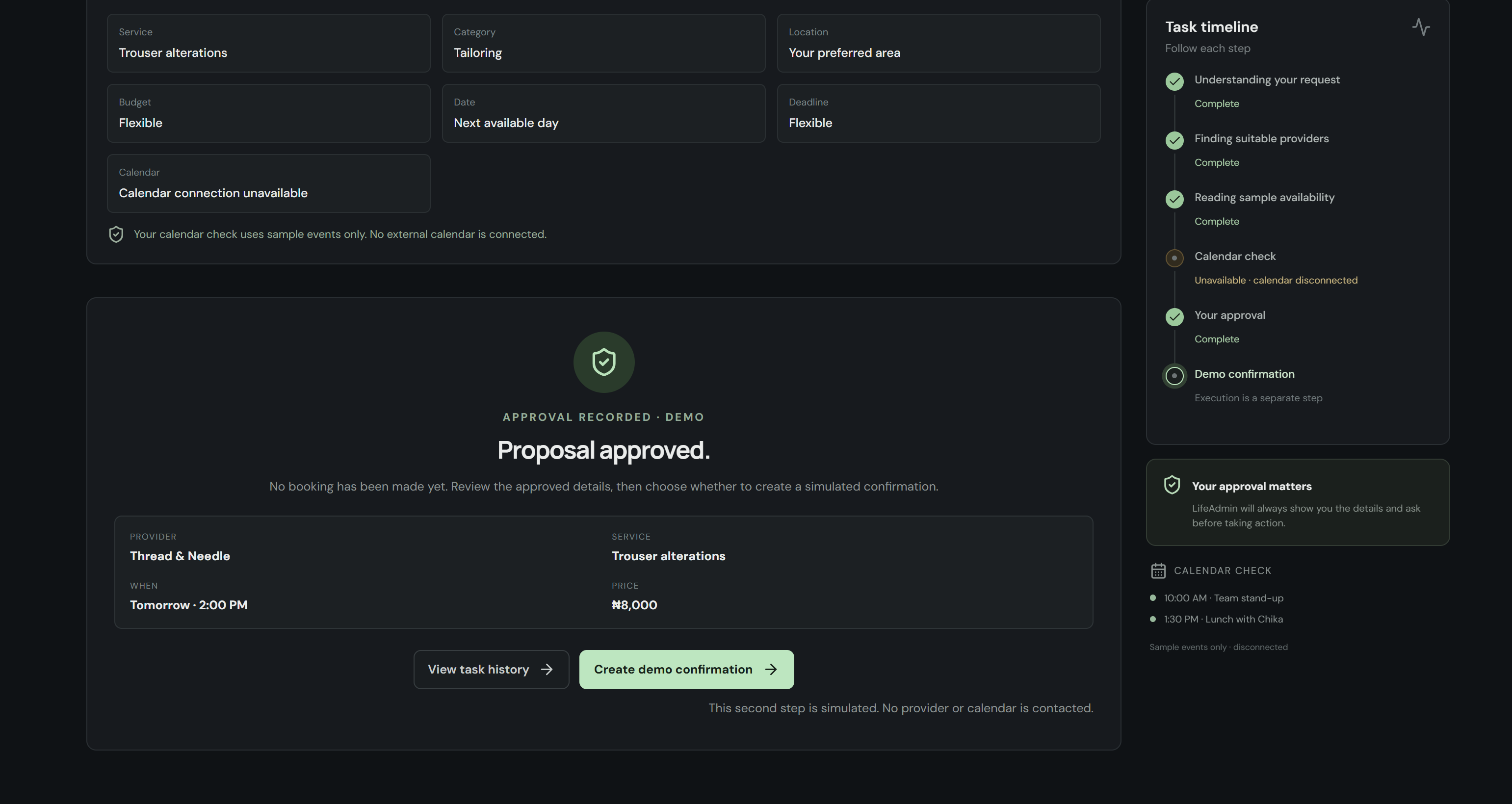
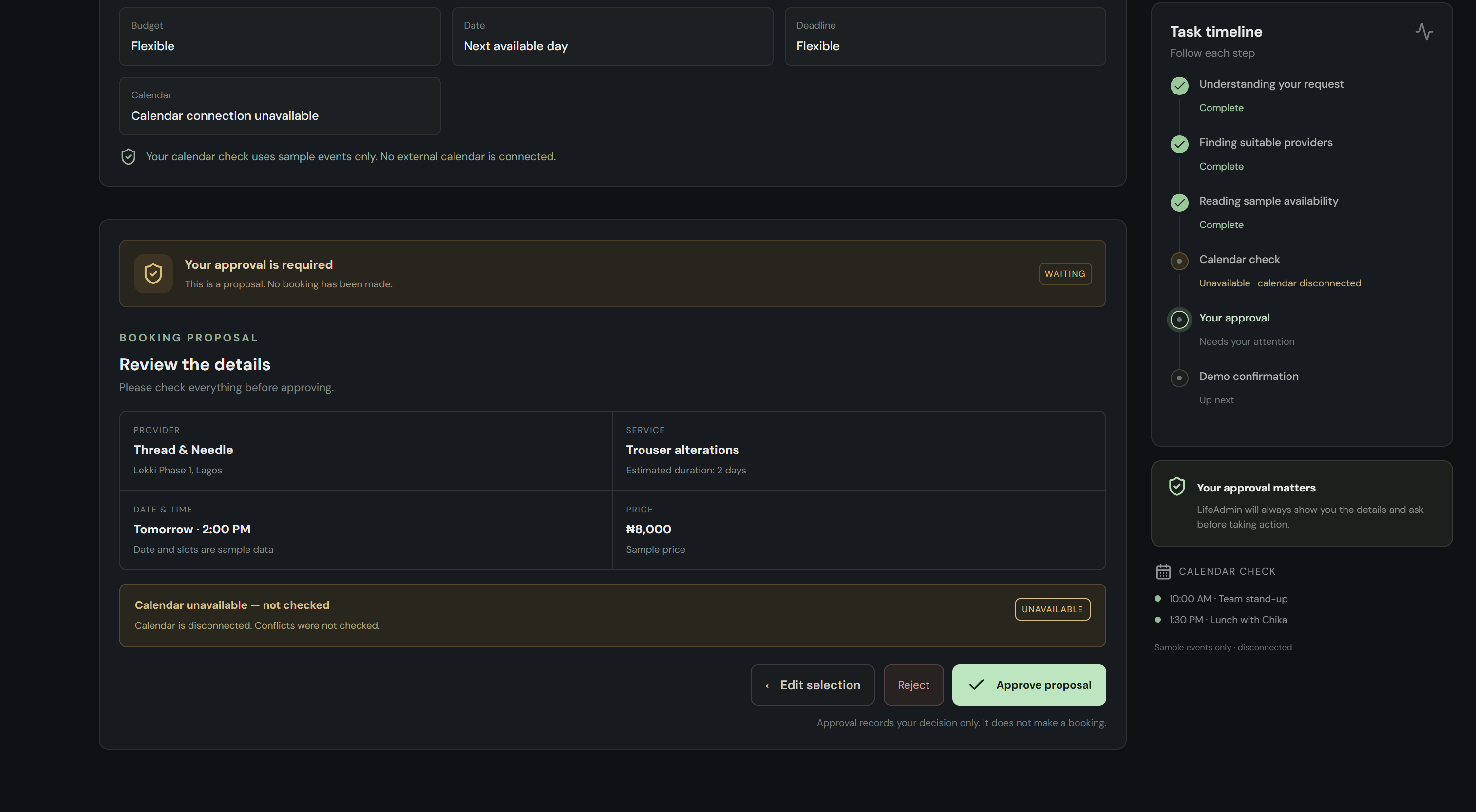
LifeAdmin is designed to break this request into actionable steps, identify suitable options, present a proposal, request the user's approval before consequential actions, and verify the outcome.
Our goal is simple: less time managing life, more time living it.
How We Built It
We approached LifeAdmin as an agentic system rather than a conventional chatbot. The goal is not simply to generate a response, but to connect natural-language requests to tools that can perform useful actions.
Our architecture brings together:
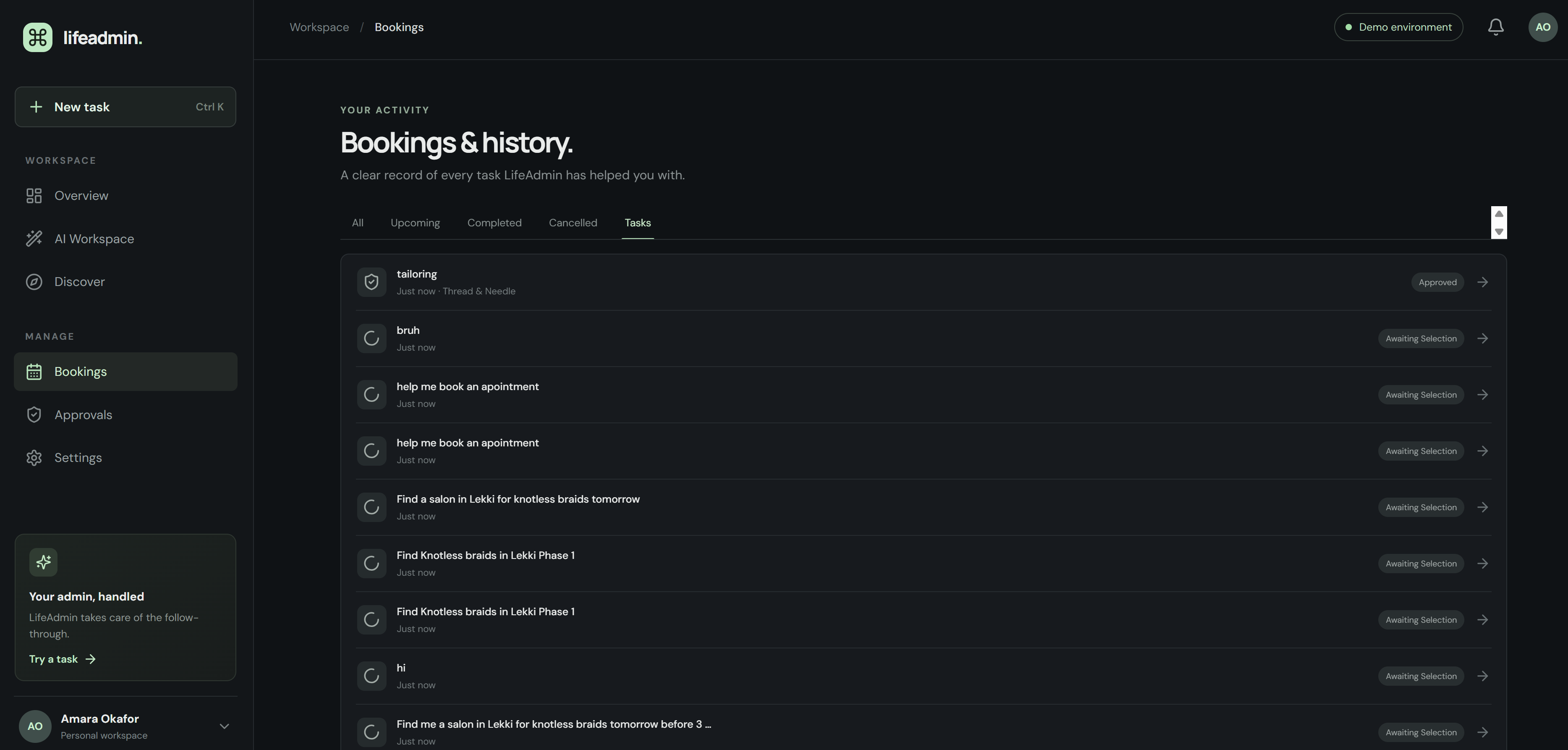
- React and Vite: The frontend provides the dashboard, conversational workspace, provider discovery, booking previews, approval interactions, progress updates, and task history.
- Spring Boot and MongoDB: The backend manages business and service information, availability, bookings, and application data.
- Amazon Bedrock and Strands: These power the planned AI agent layer, responsible for interpreting requests, planning steps, and coordinating tool use.
- Model Context Protocol (MCP): MCP provides a structured way for the agent to access application capabilities through tools, such as provider discovery and booking operations.
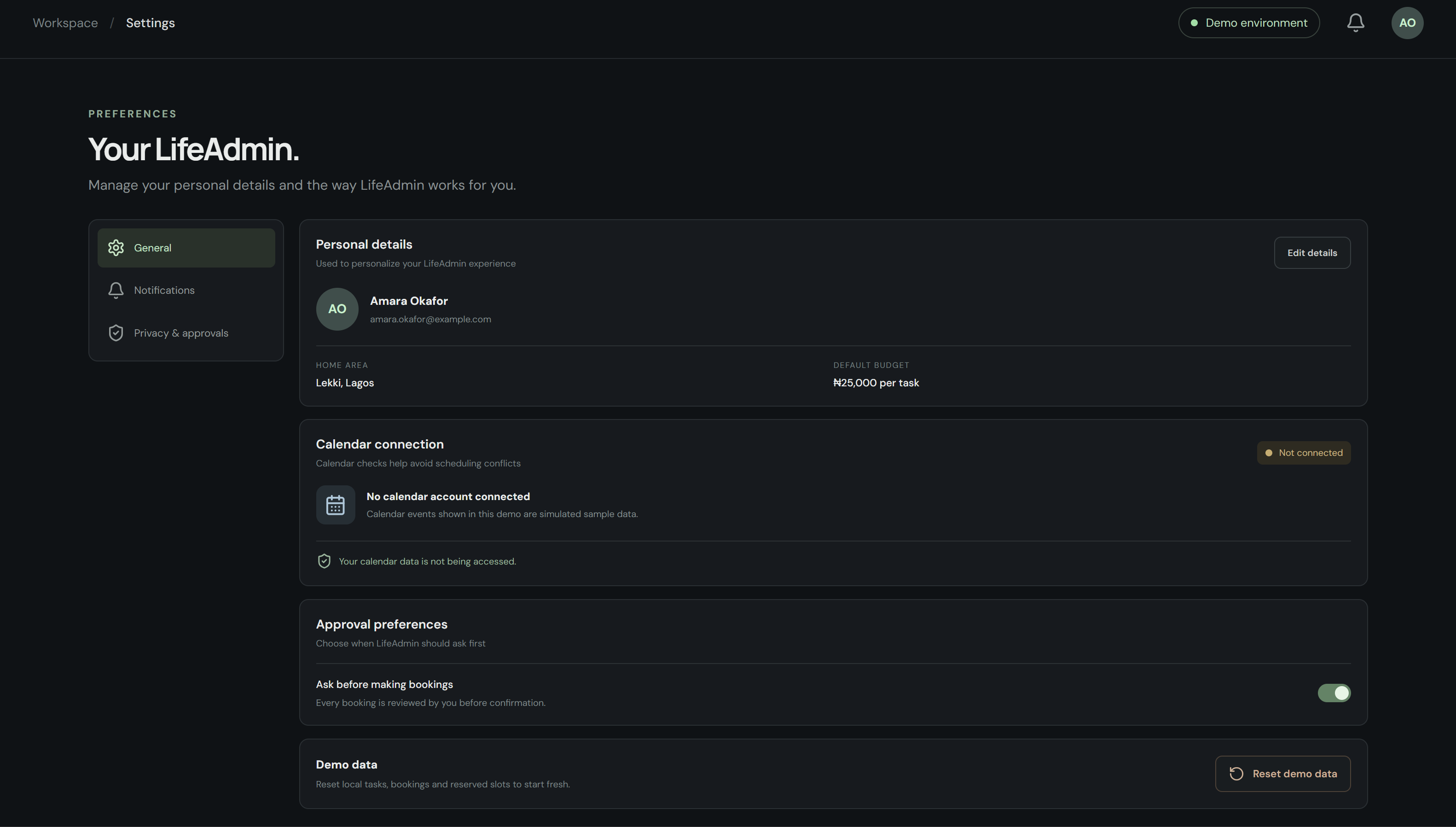
- Google Calendar integration: Planned calendar capabilities allow the workflow to account for scheduling conflicts and authorized event creation.
We divided the work across frontend development, backend services, MCP and security, and AI orchestration. This modular approach allows each part to be developed independently before being integrated into one complete workflow.
Challenges We Faced
One of our biggest challenges was coordinating multiple components being developed in parallel. The frontend, backend, MCP server, and AI agent all have different responsibilities, but they must agree on how requests, approvals, and results move through the system.
We also had to think carefully about trust. An AI assistant should not invent availability, claim a booking succeeded when it did not, or execute consequential actions without appropriate authorization. This shaped our approach to explicit approval, backend validation, and verifying action results.
Another challenge was balancing the ambition of an agentic product with the time constraints of a hackathon. We focused on building a modular architecture and a clear end-to-end workflow rather than treating AI as a decorative chat interface.
What We Learned
Building LifeAdmin reinforced that useful AI systems require more than a capable model. They need well-defined tools, reliable backend operations, clear permissions, good error handling, and a user experience that makes the agent's actions understandable.
We also learned the importance of separating the AI's reasoning from the systems that execute actions. The agent can decide what needs to happen, but application services must validate requests, enforce permissions, and report the actual result.
Most importantly, we began thinking about AI as a way to reduce the work people must coordinate themselves, not simply as another interface for answering questions.
What's Next
We envision LifeAdmin growing into a personal administration layer that connects everyday services and tools into one coordinated experience. From finding and booking appointments to managing schedules and handling other routine tasks, our ambition is to make personal administration feel less like work.
LifeAdmin isn't just about telling you what needs to be done. It's about helping you get it done.
Built With
- ai
- amazon-bedrock
- artificial-intelligence
- javascript
- model-context-protocol-(mcp)
- mongodb
- python
- react
- spring-boot
- vite

Log in or sign up for Devpost to join the conversation.