Inspiration
I have always found origami diagrams surprisingly difficult to follow. At the same time, a 3D canvas is almost invisible to an AI agent because there are no DOM elements or labels to inspect. That combination felt like a perfect way to explore what WebMCP can make possible.
What it does
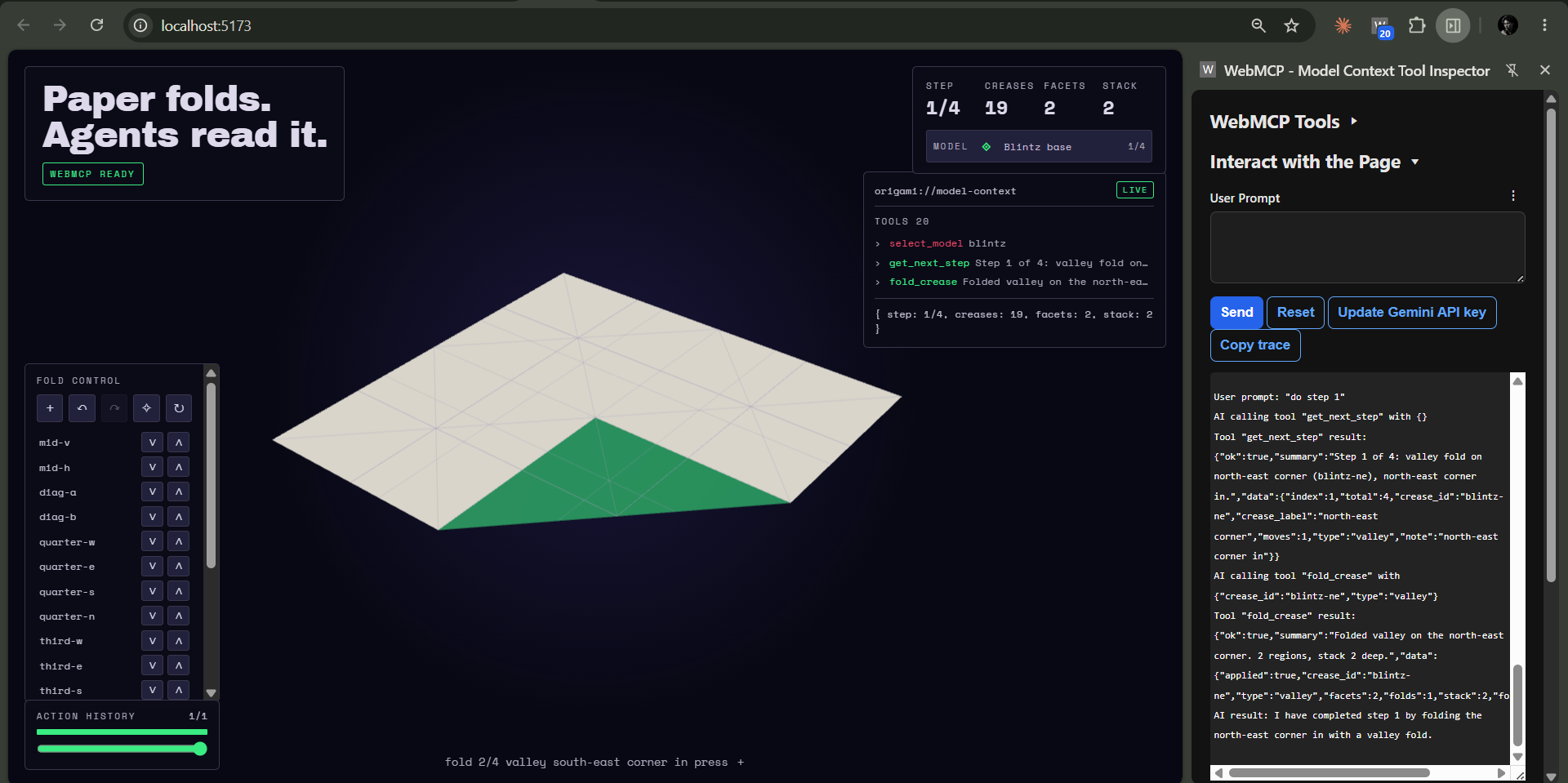
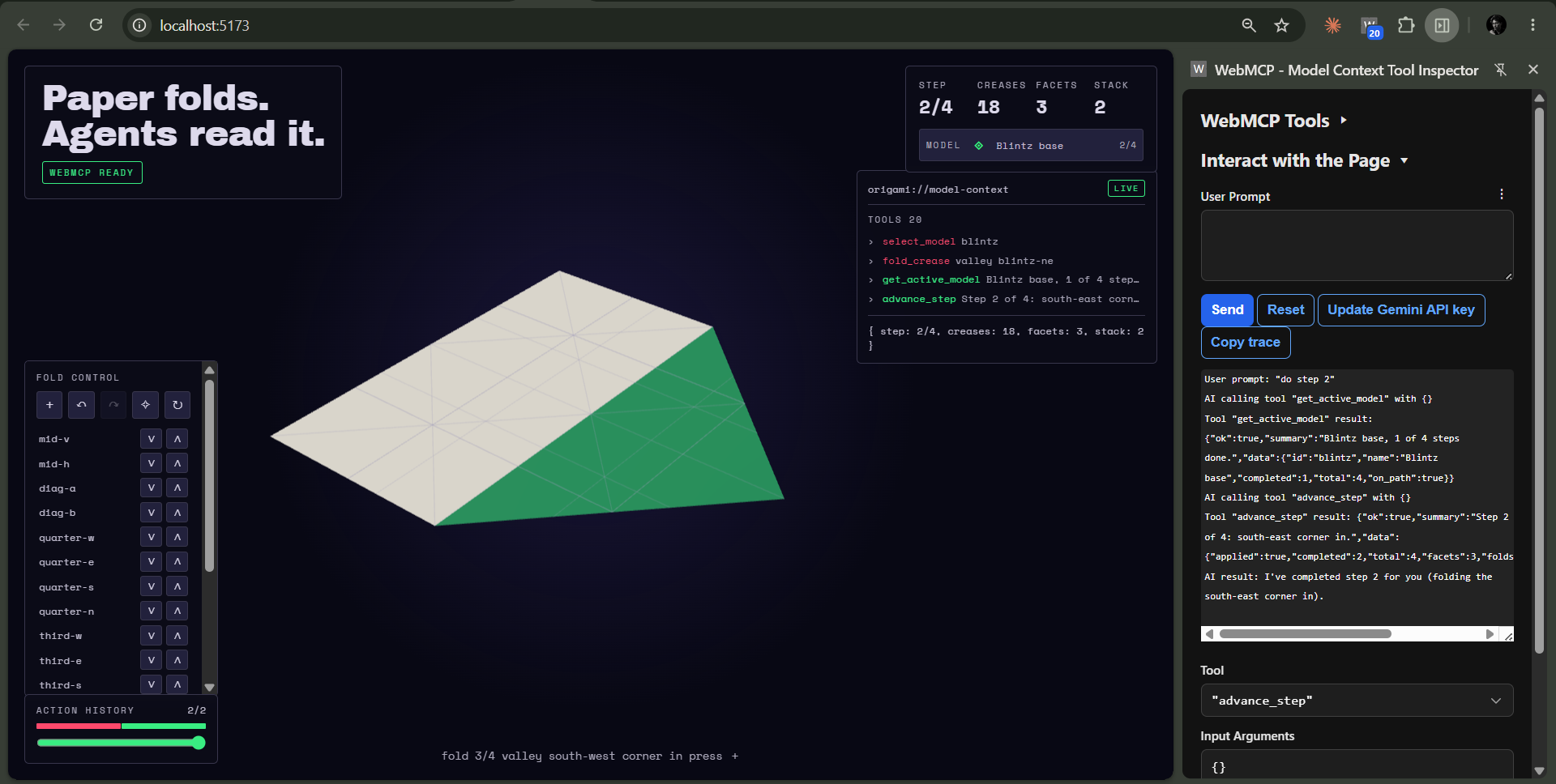
OrigamiWebMCP is a constrained 3D origami studio with authored models. A person can fold the paper manually, while an agent can inspect the real crease, overlap, progress, and history state through WebMCP tools. The agent can highlight the correct flap, apply a validated fold, and continue after the person changes the sheet.
How we built it
I built the studio with Vanilla TypeScript, Three.js, and Vite. The fold engine is deterministic and independent from Three.js or the browser. Both human controls and 20 WebMCP tools use the same engine and shared store, so an agent fold follows exactly the same rules as a manual fold.
Challenges we ran into
The hardest part was not drawing paper, but keeping every result truthful. Folded facets can overlap visually without being connected, and rendering order is not the same as physical stack depth. I also had to keep rapid agent folds queued correctly while making sure animation never changed the actual engine result.
Accomplishments that we're proud of
I am proud that the agent does not guess from screenshots or click around the canvas. It reads structured geometric state and performs real folds that remain visible, reversible, and recorded. The recovery moment also works: a person can undo and refold manually, and the agent continues from the sheet that actually exists.
What we learned
I learned that WebMCP is most valuable when the interface itself is difficult for an agent to understand. I also learned to separate geometry, presentation, and tool handling early. Most importantly, being honest about what the fold system can and cannot solve made the final product stronger.
What's next for OrigamiWebMCP
Next, I want to add more authored models, richer crease systems, and stronger layer-accessibility and collision checks. I also want to test the tools more deeply in WebMCP-enabled browsers and improve the experience through manual accessibility testing, without pretending the studio is a general origami solver.

Log in or sign up for Devpost to join the conversation.