-
-
Origami Rift
-
Origami Rift
-
Origami Rift
-
Origami Rift
-
Origami Rift
-
Origami Rift
Inspiration
I wanted to build a Mixed Reality game you can enjoy from your couch after a long day, with no bulky controllers, no waving your arms around until your shoulders ache, and no clearing half the living room first. Just folding a paper crane between your fingers and flicking it across your own space. Pairing calm Japanese washi paper craft with spinning cross-room portals felt immediately magical: turning an ordinary living room wall into a doorway for flying origami.
What it does
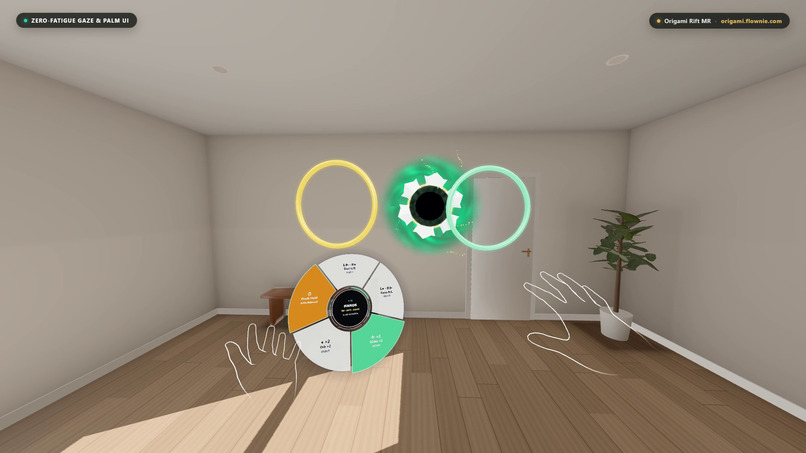
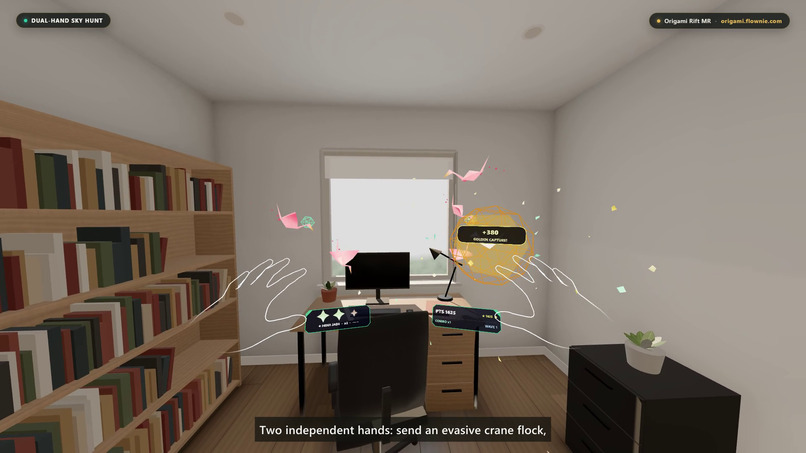
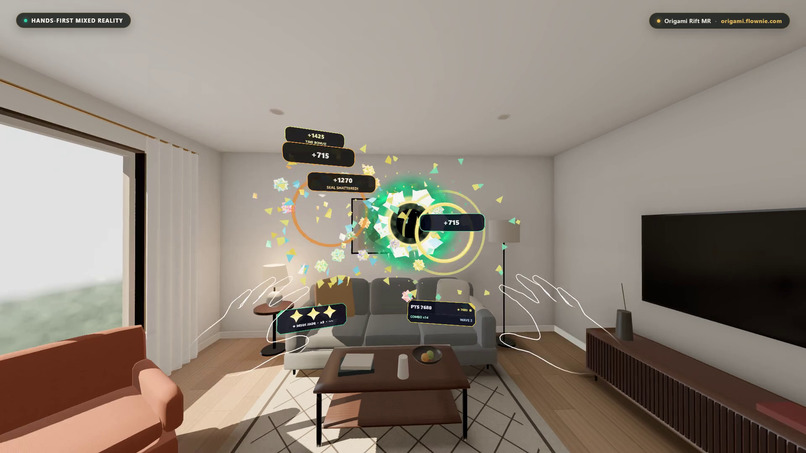
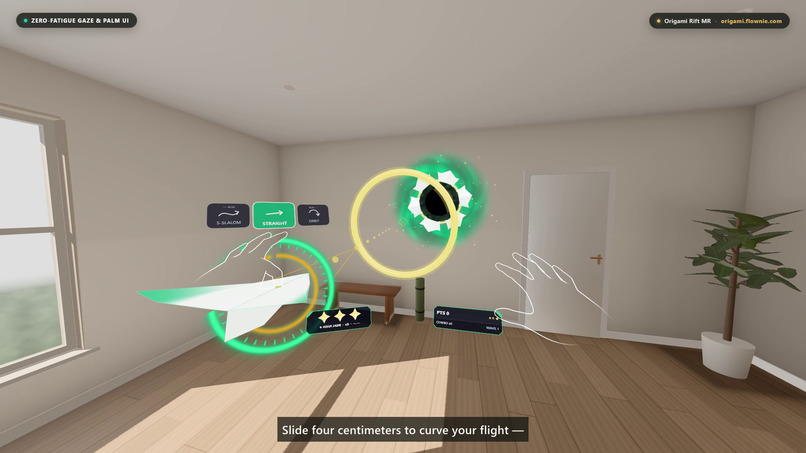
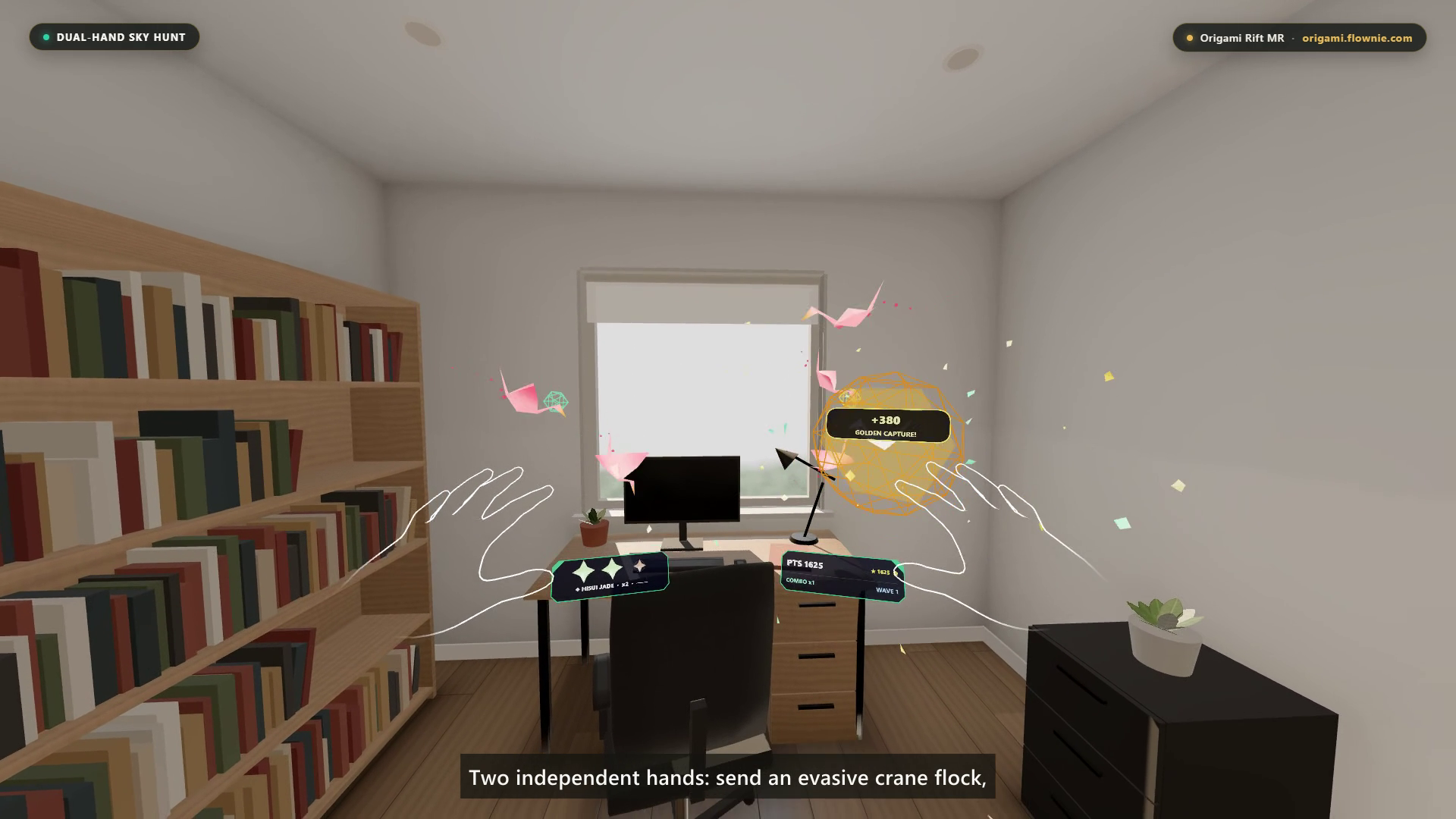
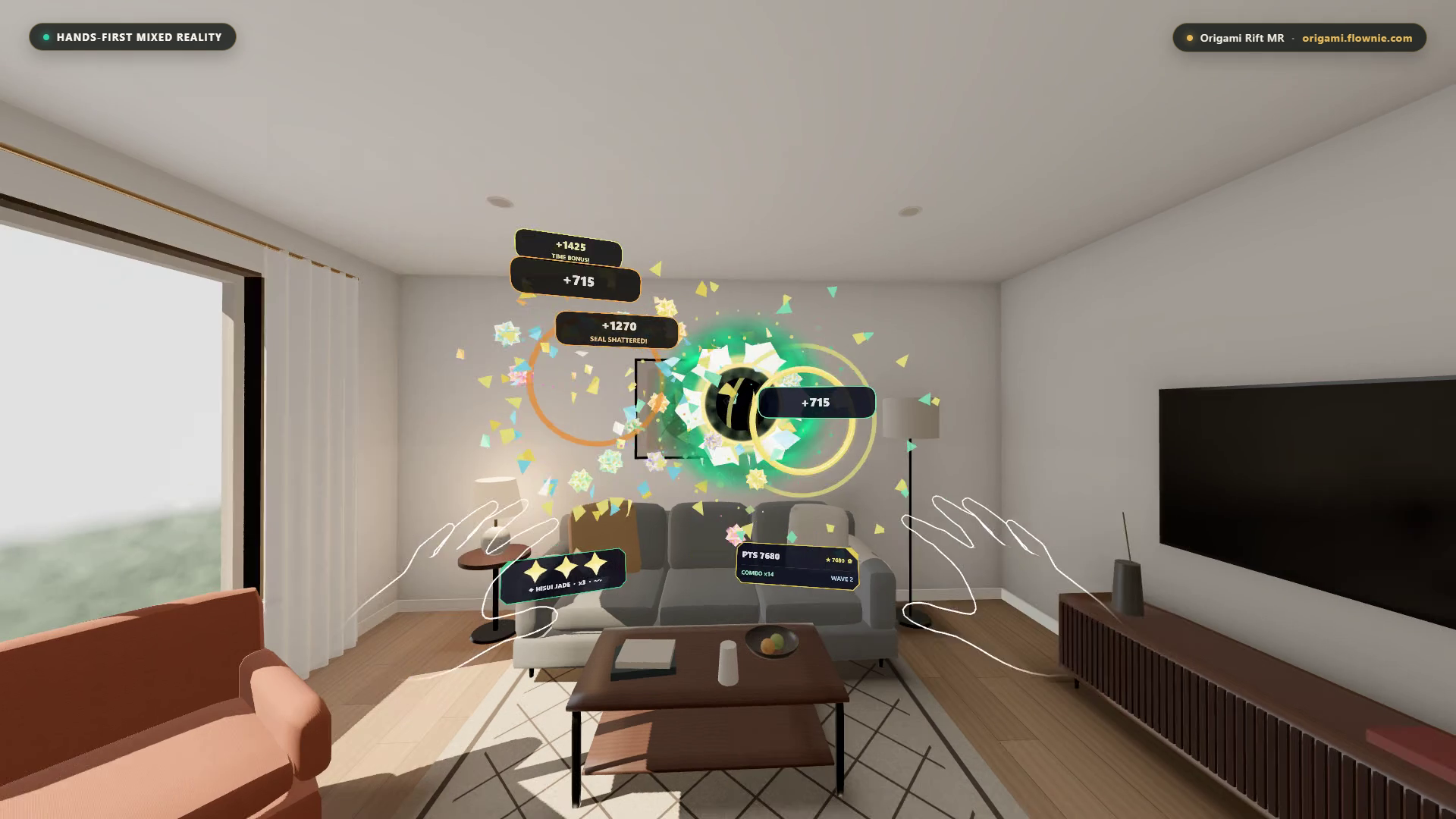
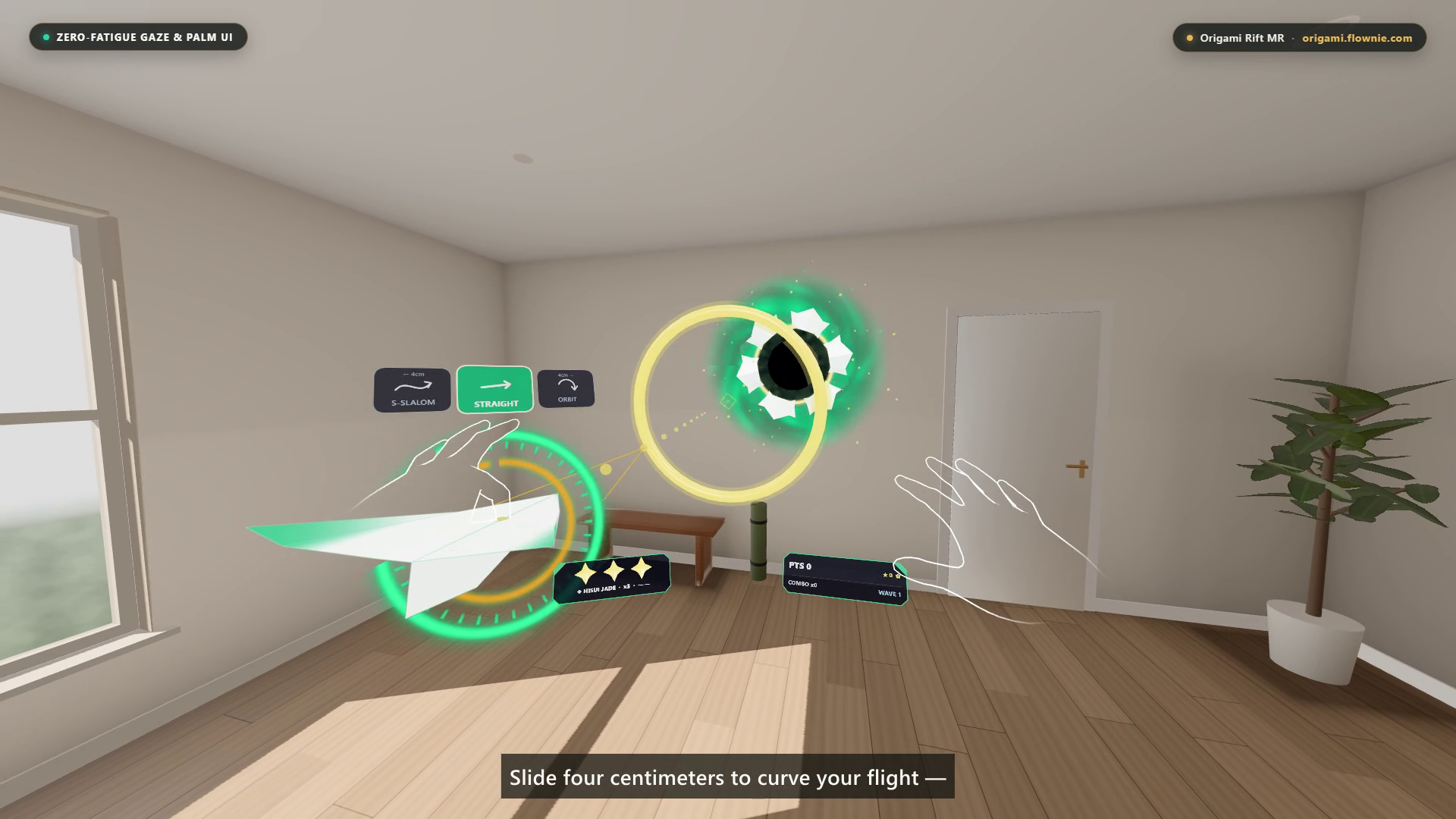
Origami Rift MR runs directly in the Meta Quest browser over live passthrough. When you look toward a floating ring, crane, or portal, a subtle Kintsugi gold glow warms your target so your eyes handle the aiming naturally. Pinch your thumb and index finger to fold a flapping paper glider in your left hand or a 60-facet Kusudama star orb in your right, then release to launch. A second pinch bursts the Kusudama orb mid-air into rainbow clusters that fold evasive crane flocks inside golden origami cages.
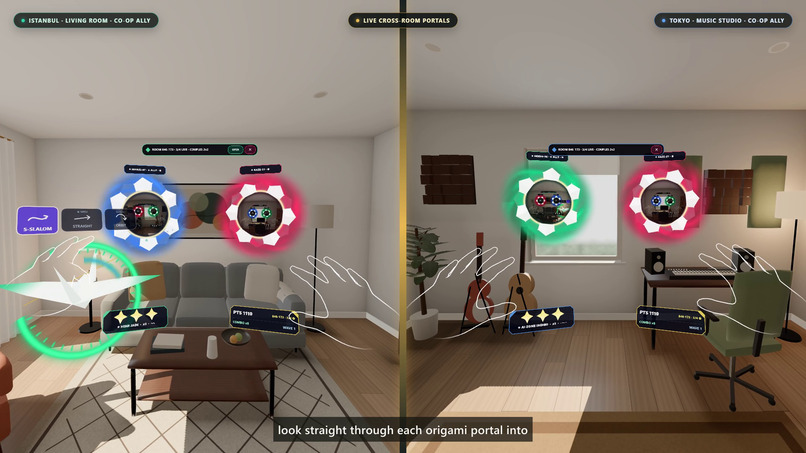
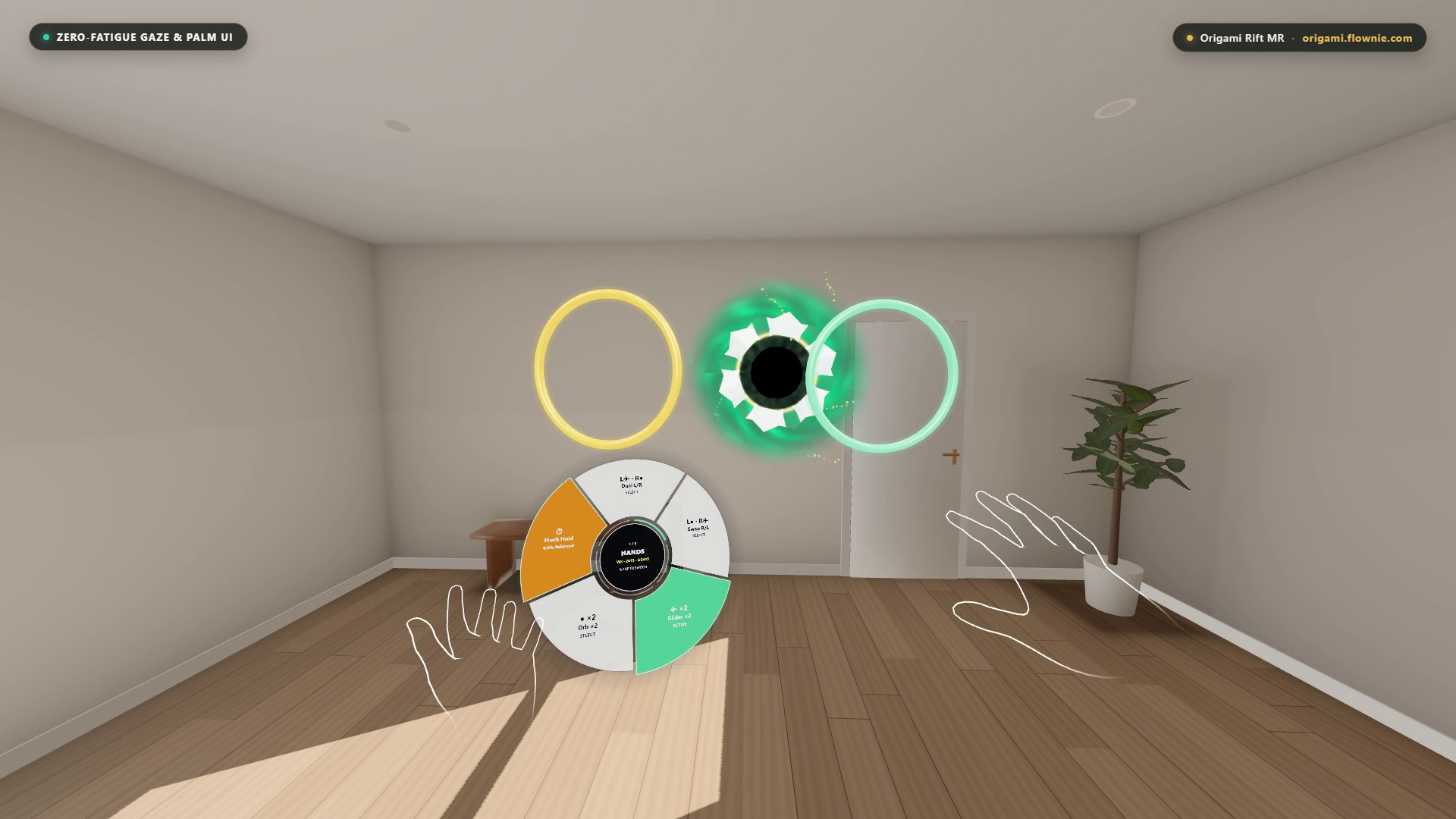
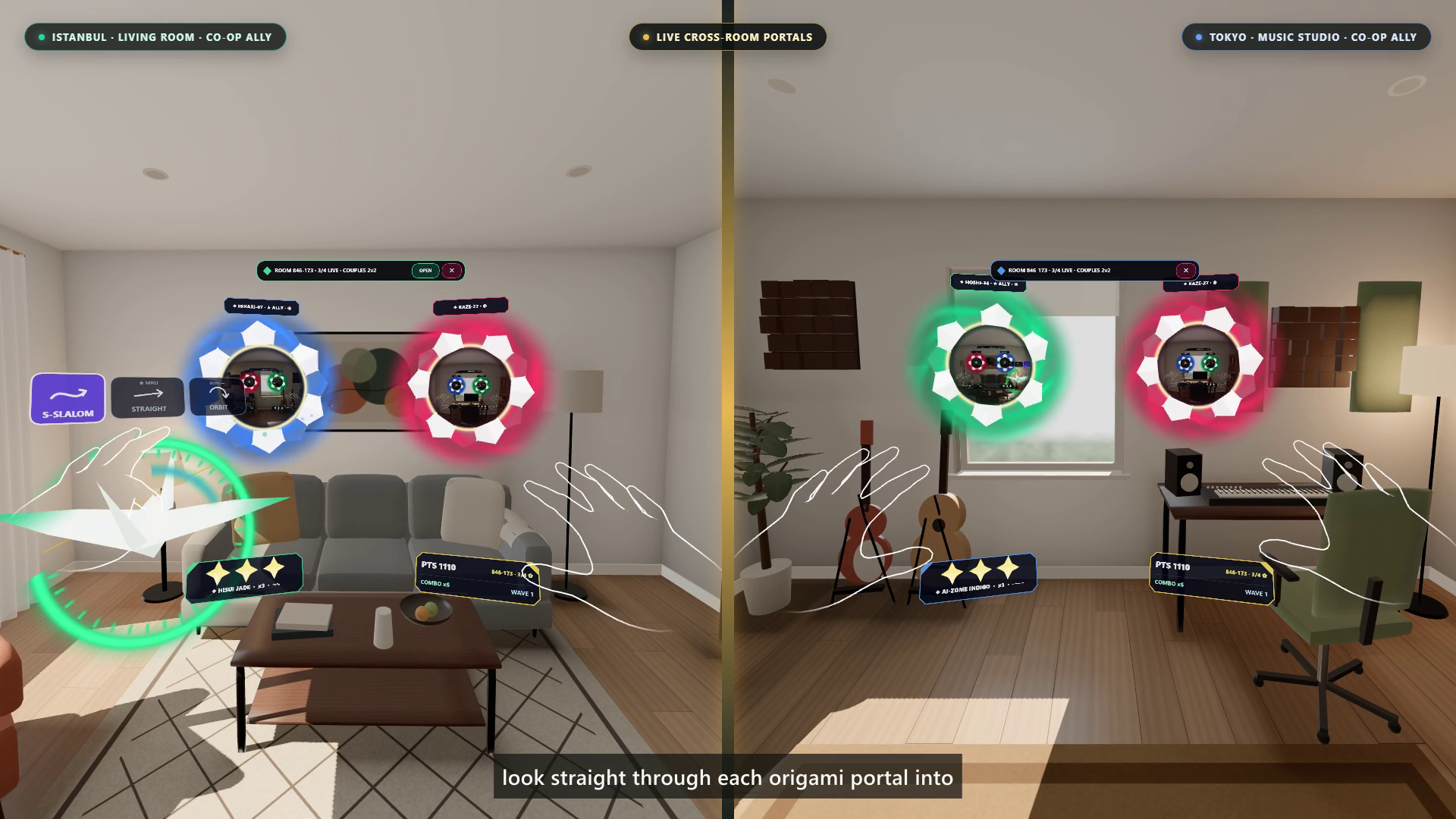
Sliding your pinching hand just four centimeters left or right curves your flight path around chairs and tables, while turning an open palm toward your eyes blooms a 3D radial petal menu above your hand. In cross-room multiplayer for up to four players (Free-for-All or Couples 2v2), connected rooms open as color-coded 12-fold origami portals in your space, complete with live portal glimpses and x1.22 ally tailwind rebounds as cranes dive out of one living room and unfold into the next.
Play live on Meta Quest 3 / 3S Browser: https://origami.flownie.com/
How I built it
I built the entire experience in TypeScript on Meta's Immersive Web SDK (@iwsdk/core), Three.js, and WebXR (ImmersiveAR) with hand tracking, XRMesh room collisions, plane detection, and spatial anchors. Real-world walls and furniture act as physical bank-shot surfaces with localized four-ring impact ripples rather than noisy room wireframes.
To keep Quest 3 and 3S performance effortless, every origami fold, crane flock, and Kusudama burst is procedurally generated and batched under < 25 draw calls per eye, backed by a zero-allocation 120 Hz aerodynamic flight solver and a 0-extra-draw-call GLSL cross-room portal lens. Every koto pluck, pentatonic chord, paper rustle, and wind chime is synthesized live in Web Audio, and desktop emulation is lazy-split away from headset builds so Meta Quest cold-boots a lean ~394 KB entry bundle with 0 emulator requests.
Challenges I ran into
Optical hand tracking gets tricky during fast throws: fingertips briefly drop out mid-flick, and palm menus love popping open right as you follow through. Tuning natural release velocity windows, adding a 360 ms post-throw palm lockout, and animating a wordless 25-joint 3D IWSDK hand silhouette guide took plenty of late-night iteration so first-time players grasp the pinch-and-launch feel in three seconds without reading instructions. Keeping both hands independent without visual clutter also pushed me to move all live telemetry onto compact 3D wrist cuffs and palm petals across four languages (EN, TR, ES, JA).
Accomplishments that I'm proud of
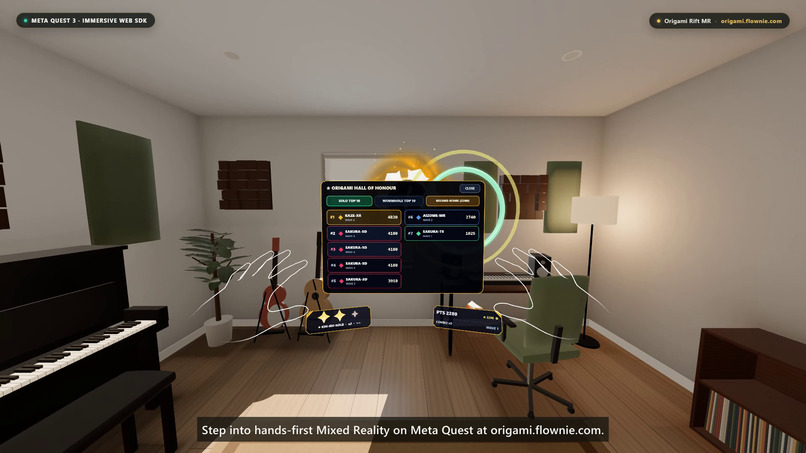
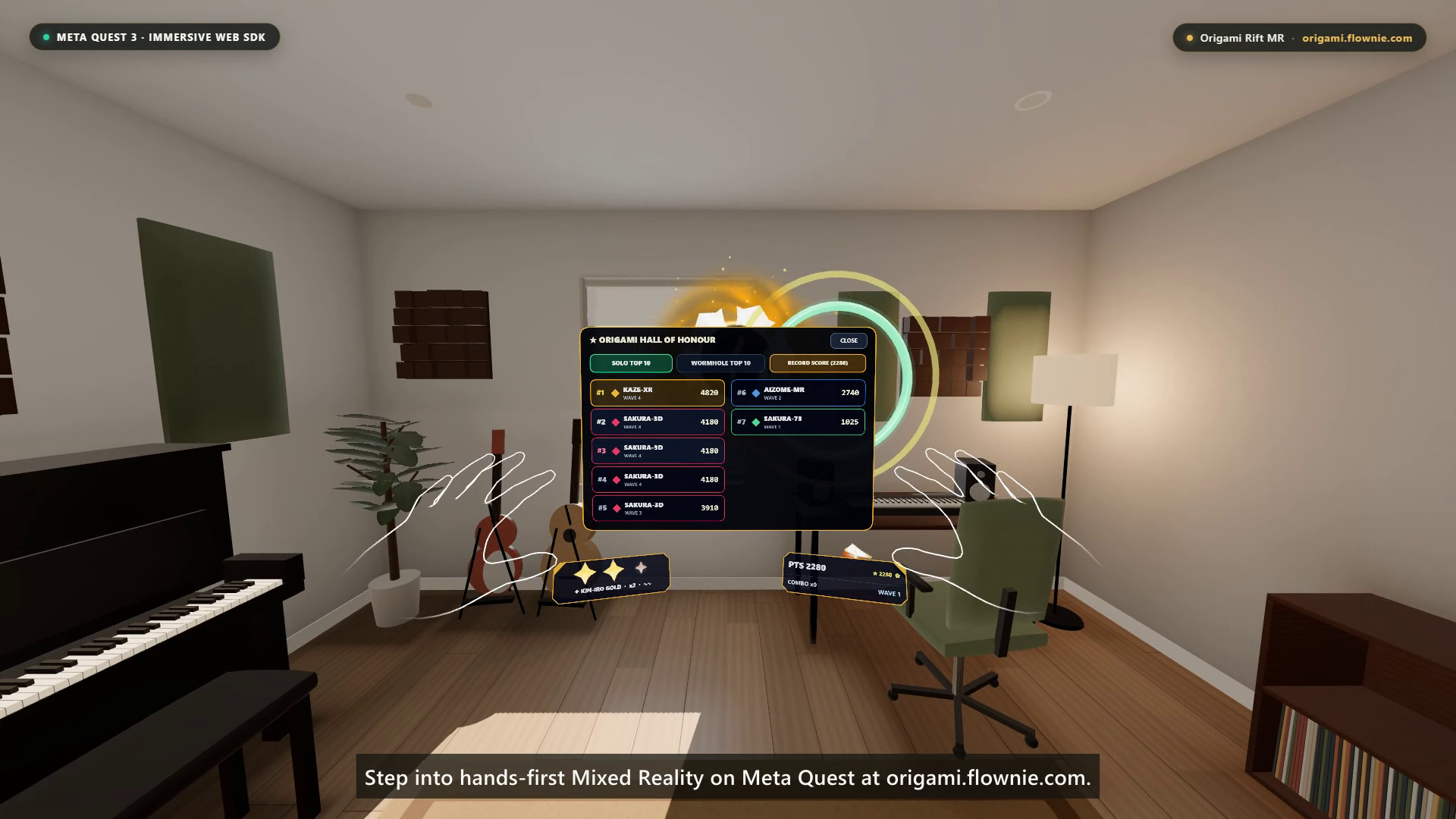
Going from an empty Quest browser tab to banking a folded glider off my real coffee table, then watching another player's crane unfold out of a spinning rift on my wall, still feels surreal. The room stays completely free of 2D HTML popups, even for room codes and the 3D Spatial Hall of Honour leaderboard, and anyone can pick up the gesture within seconds.
What I learned
Comfort beats complexity in Mixed Reality. Small, relaxed finger motions beat big arm swings every time, and letting human gaze lead the throw makes spatial physics feel effortless instead of exhausting.
What's next for Origami Rift MR
Next up is expanding co-op room challenges, adding unlockable seasonal washi paper pigments, and preparing Origami Rift MR for an official Meta Horizon Store release (target launch date: January 2027).
Built With
- glsl
- meta-iwsdk
- node.js
- three.js
- typescript
- vite
- vitest
- webaudio
- websockets
- webxr