-
-
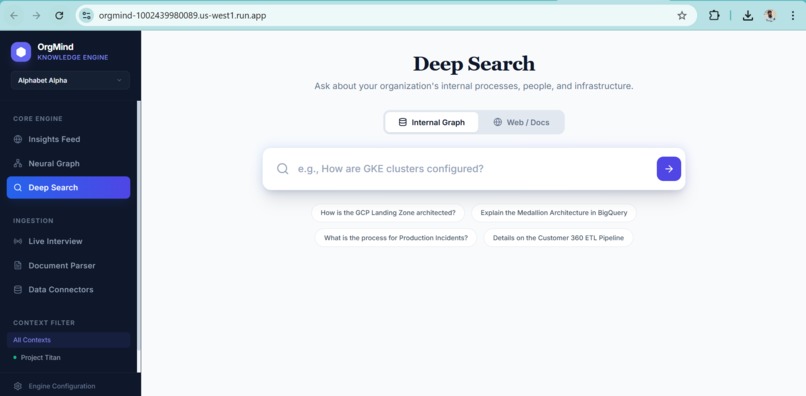
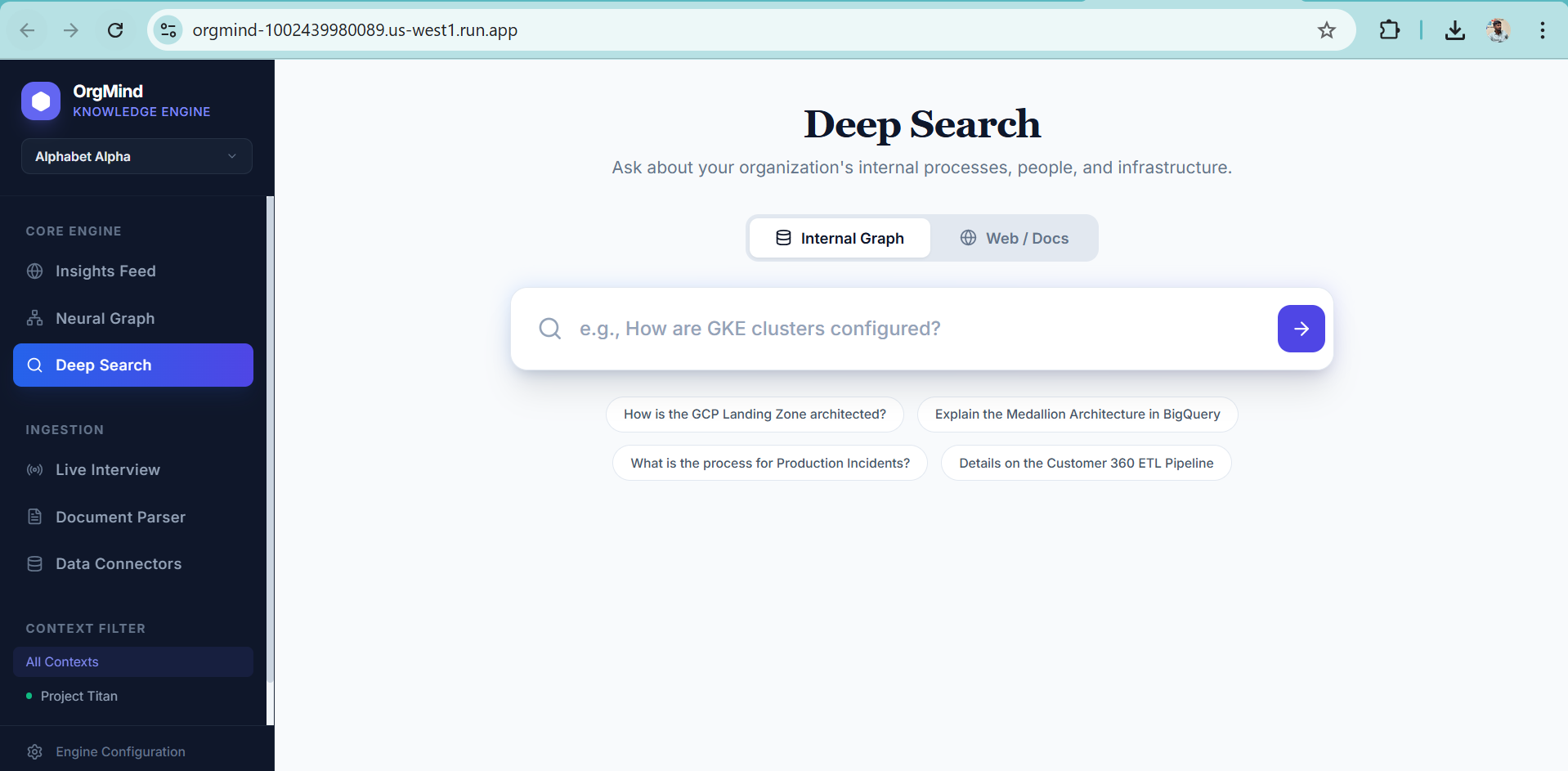
Deep Research Section for Internal & external Documentation extraction
-
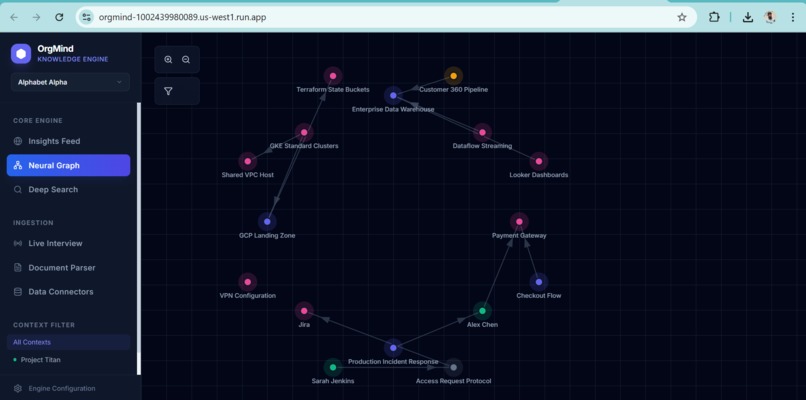
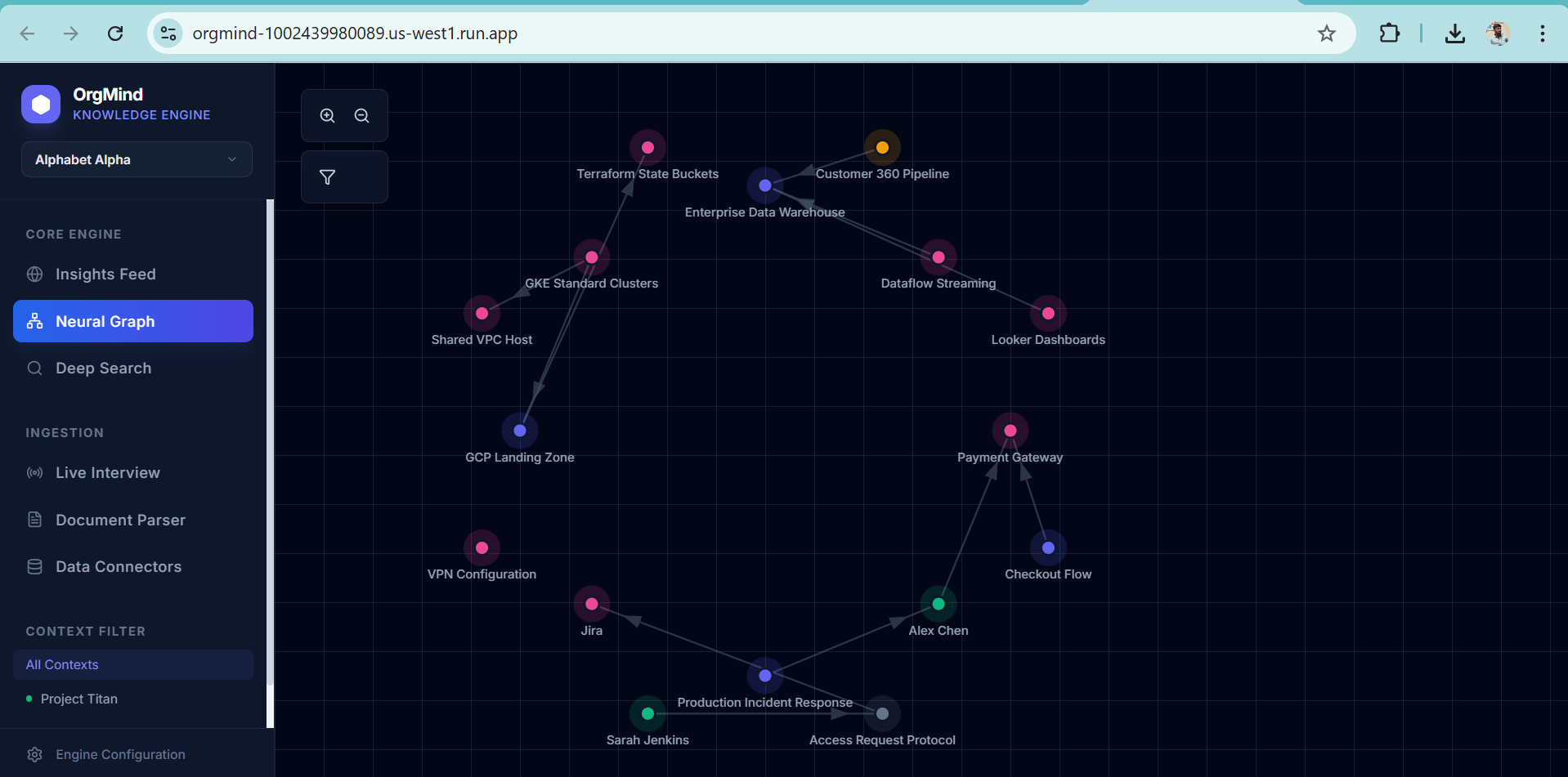
Knowledge Graph of Organizational Infrastructure & Processes
-
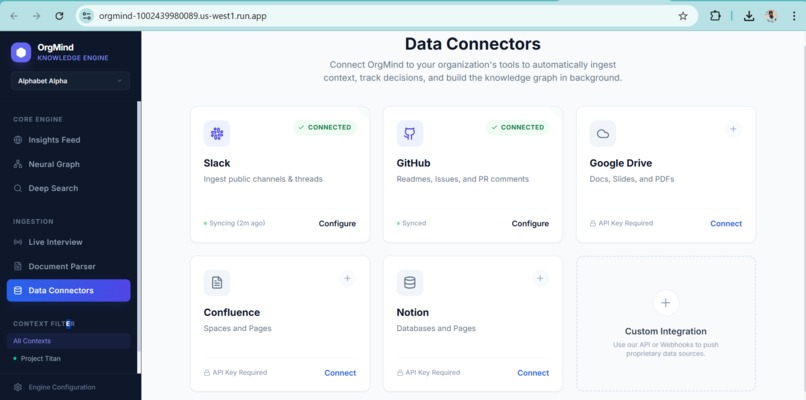
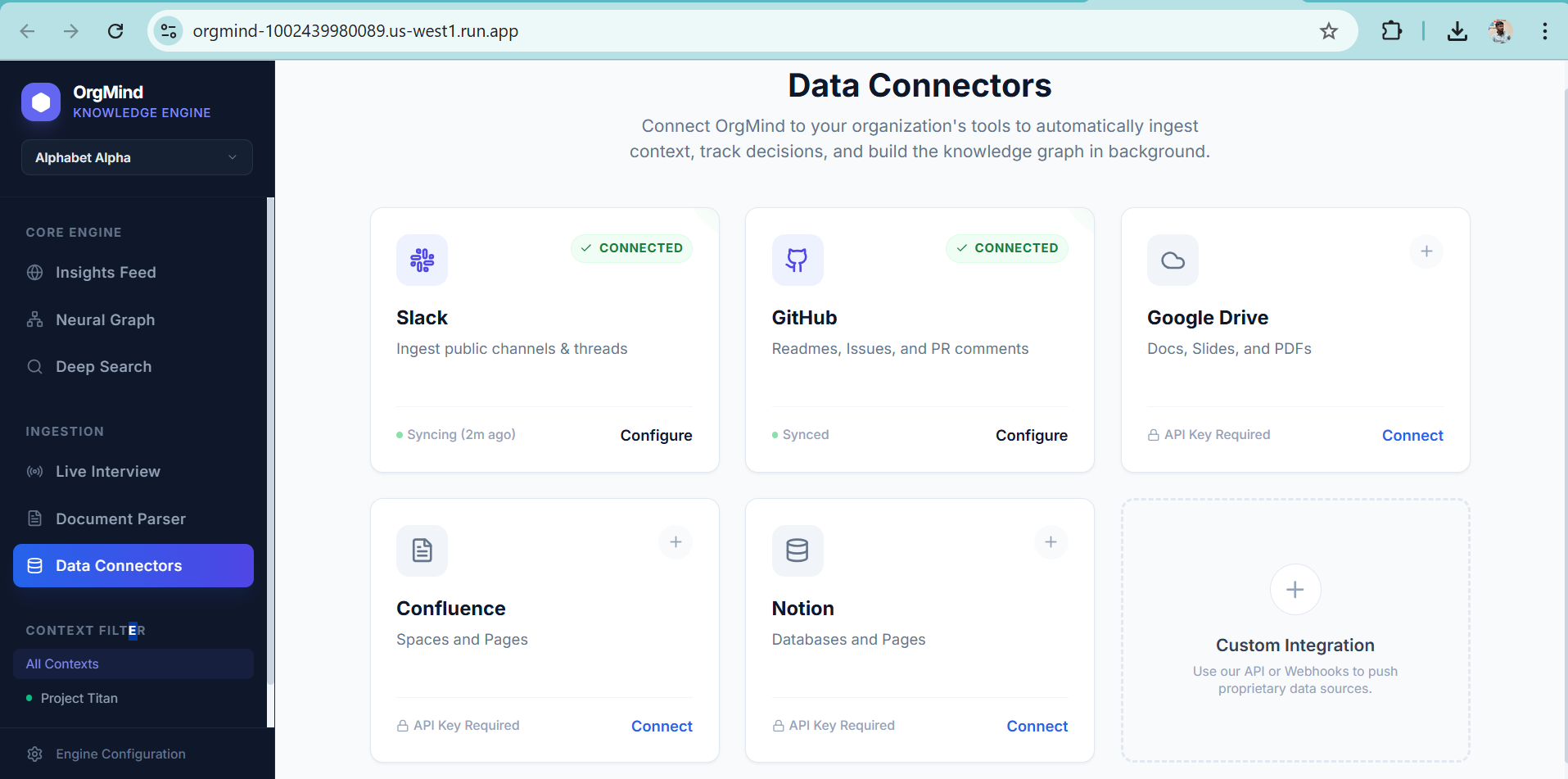
External Connectors like Confluence and so on.
-
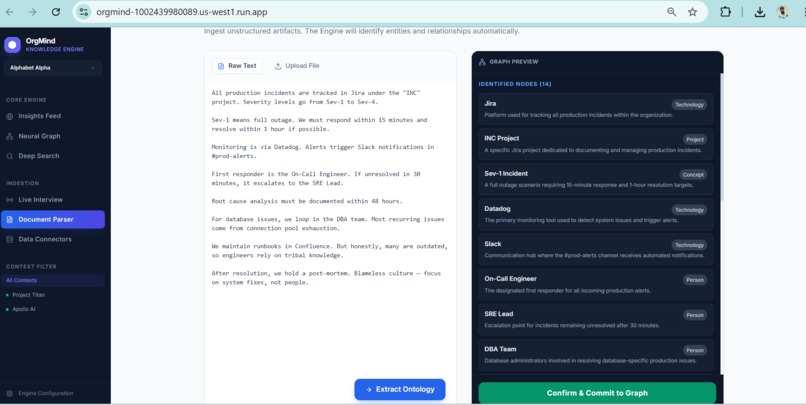
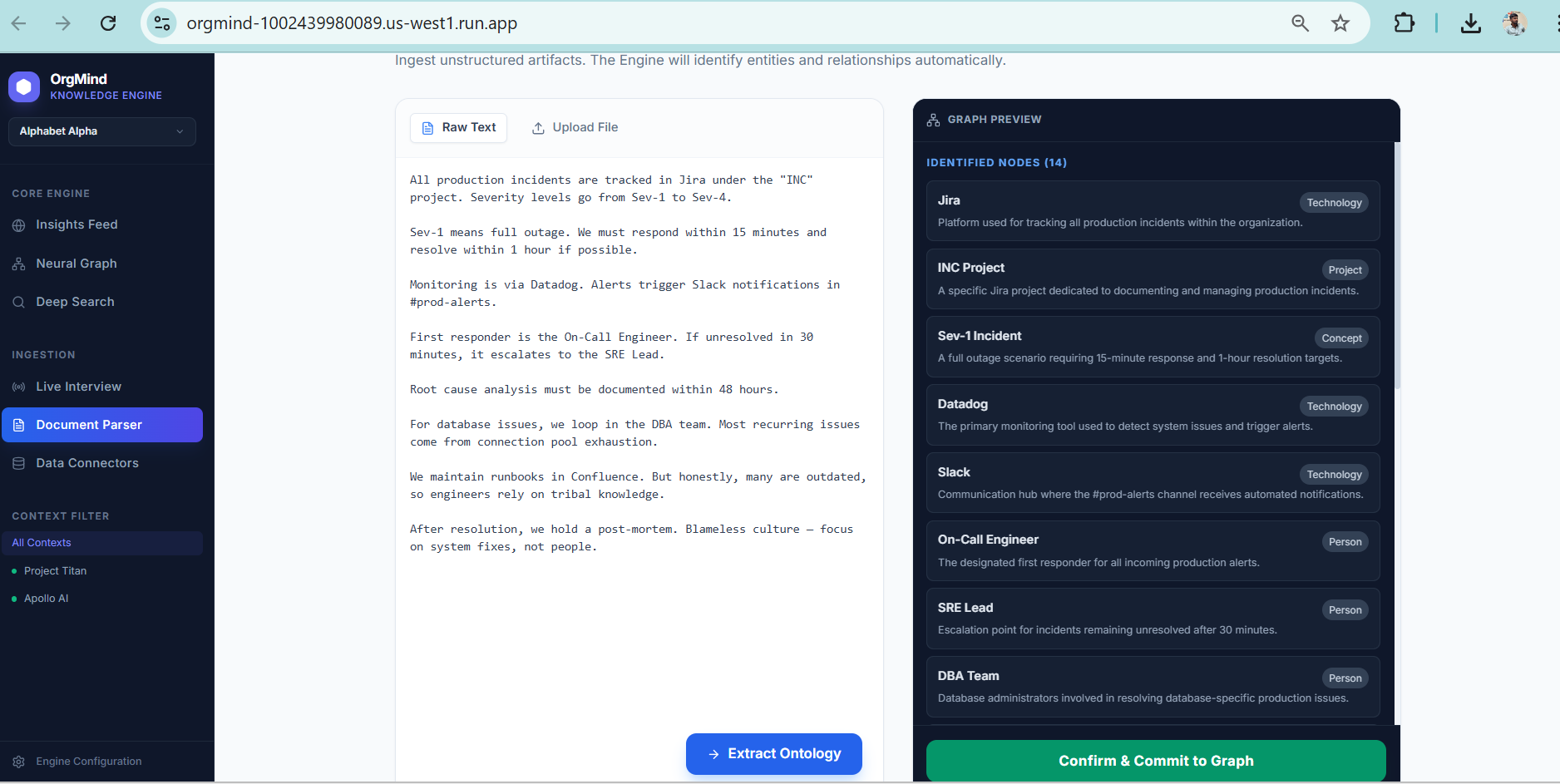
Knowledge Graph builder from Process/ transcript/ documentation
-
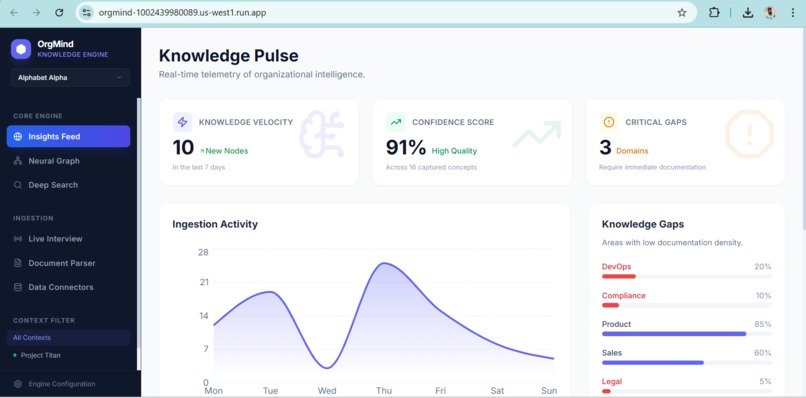
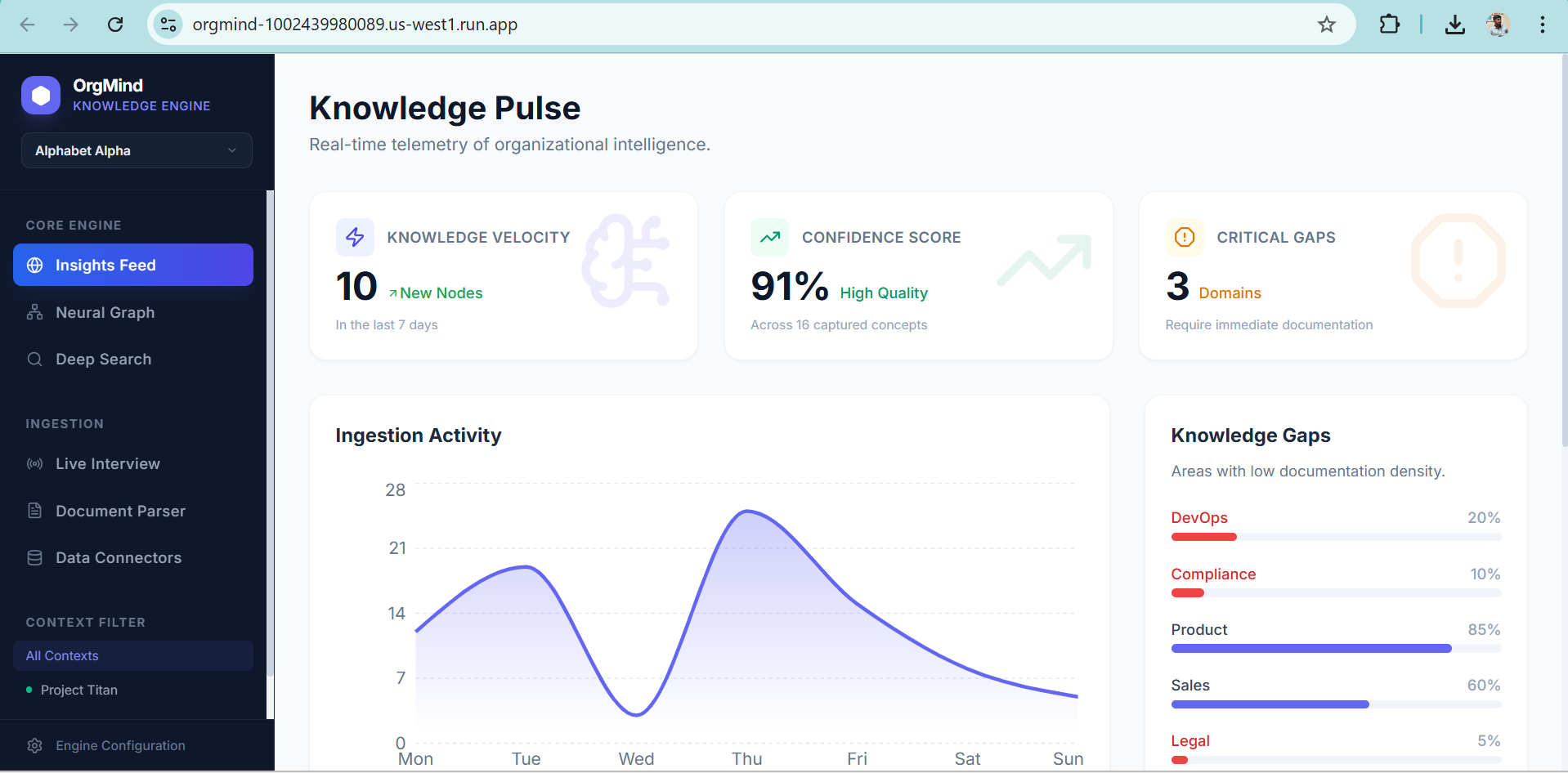
Dashboard with All Knowledge Statuses and Risks
Inspiration
Have you ever been a manager trying to ensure proper knowledge transfer when a teammate leaves?
How often does KT feel “done,” but later no one knows the full picture?
Have you ever faced an issue and wondered:
- Who should I contact?
- What process should I follow?
- Which ITSM form do I even raise?
- Why was this system designed this way?
Most organizations have experienced this silent frustration.
Knowledge transfer is treated as a checklist task, but in reality it’s messy, human, and contextual.
When people leave, knowledge doesn’t just transfer — it evaporates.
This made us realize:
The real problem isn’t lack of documentation.
It’s lack of organizational memory.
That insight inspired OrgMind.
What it does
OrgMind is an Agentic AI Organizational Memory Engine that turns scattered knowledge into a living memory system.
It:
- Captures knowledge from KT sessions, conversations, and documents
- Maps people, processes, systems, and decisions
- Builds a dynamic knowledge graph of how work actually happens
- Answers operational questions with context
- Detects risks like single-person dependencies and undocumented ownership
Instead of returning files, it provides:
Context. Ownership. Process clarity. Risk awareness.
It behaves like an experienced insider who “knows how things work.”
How we built it
OrgMind is powered by Gemini and built as an agentic pipeline combining:
- Natural language understanding for KT extraction
- Ontology generation from conversations
- Knowledge graph construction
- Relationship-aware reasoning
- Deep Search across structured and unstructured knowledge
Flow:
- Ingest KT or operational conversations
- Extract entities and relationships using Gemini
- Build a living knowledge graph
- Enable reasoning-based Q&A
- Surface knowledge risks from patterns
This goes beyond RAG — it models organizational cognition.
Challenges we ran into
Tacit knowledge is unstructured
Real KT includes assumptions, shortcuts, and informal language.
Context matters more than keywords
“Who to contact” requires relational reasoning.
Trust and accuracy
Not all human knowledge is equally reliable.
Modeling human organizations
Organizations are social networks, not databases.
These challenges pushed us toward a graph-first, agentic design.
Accomplishments that we're proud of
- Turning messy KT into structured intelligence
- Enabling insider-level reasoning
- Highlighting knowledge risks automatically
- Framing knowledge continuity as an AI problem
- Designing beyond a simple chatbot demo
Most importantly:
We reimagined AI as organizational memory, not just assistance.
What we learned
We learned that:
- Knowledge loss is a hidden enterprise risk
- LLMs shine when paired with structure
- Graphs unlock deeper reasoning
- Organizations need memory, not just search
- AI can preserve expertise, not just automate work
What's next for OrgMind: AI Organizational Memory Engine
Next steps include:
- Temporal tracking of how knowledge evolves
- Confidence scoring for knowledge trust
- Multi-agent knowledge synthesis
- Proactive knowledge-risk alerts
- Integrations with Slack, Jira, and Drive
- Research into organizational cognition modeling
Long-term vision:
Every organization deserves a persistent AI memory layer.
Organizations forget.
OrgMind remembers.
Built With
- cloudrun
- gemini3
- postgresql
- python
- react

Log in or sign up for Devpost to join the conversation.