-
-
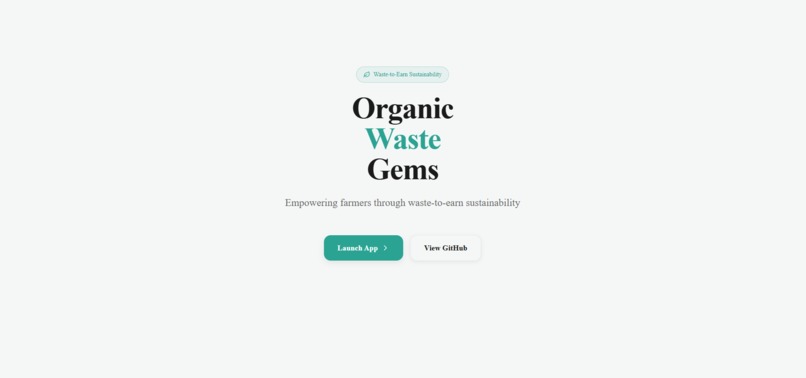
Landing Page
-
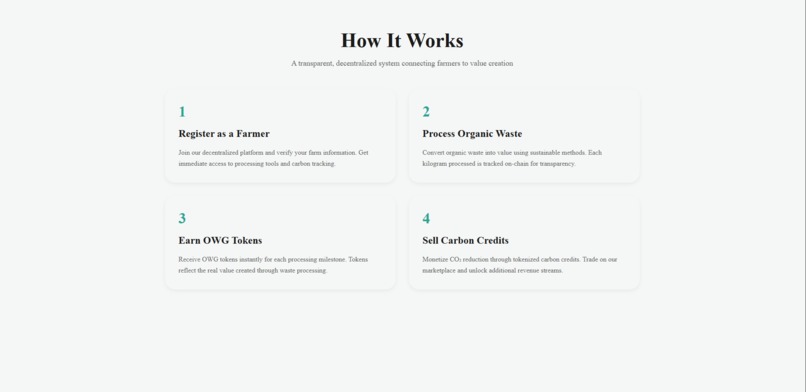
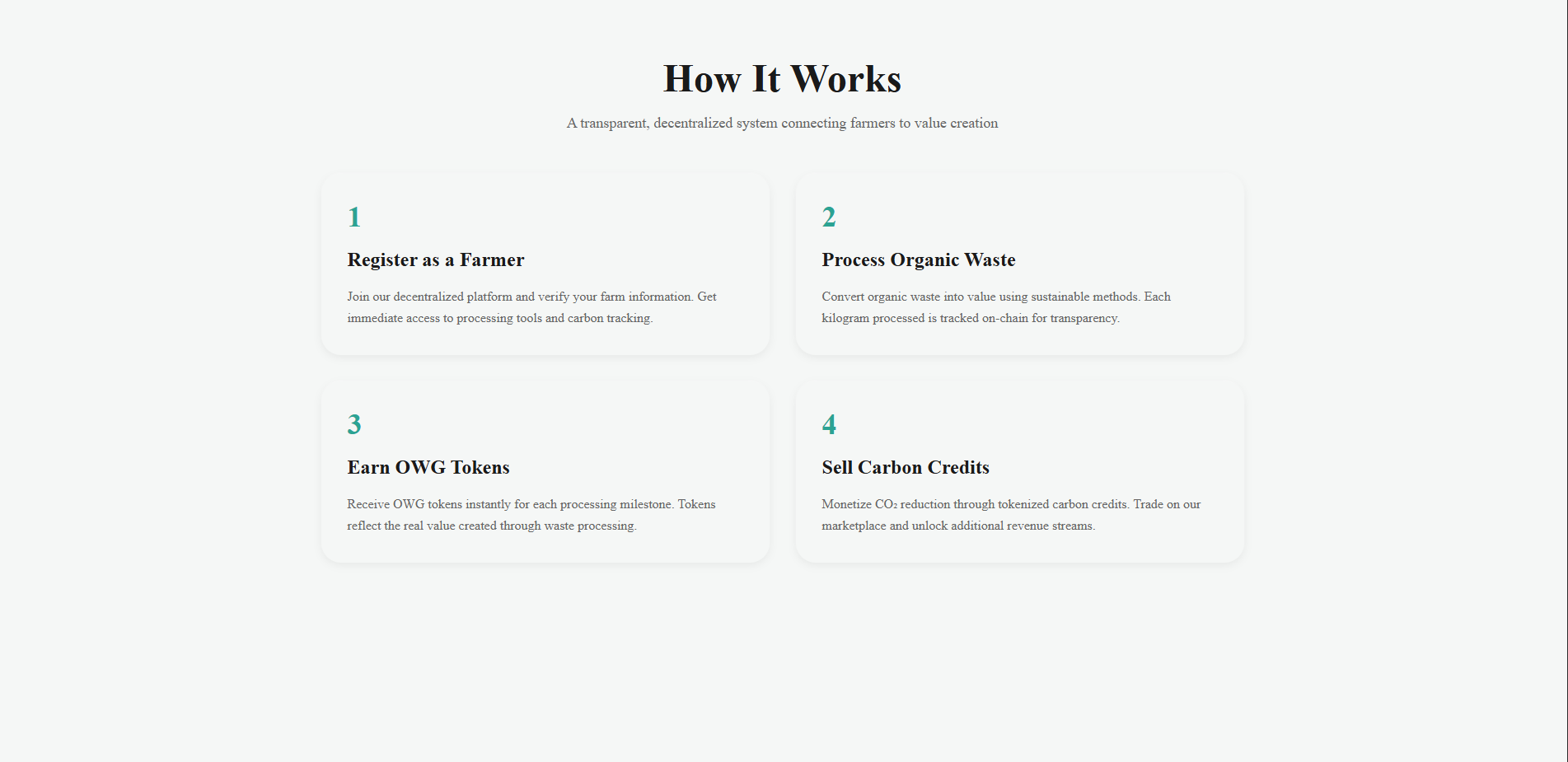
How It Works
-
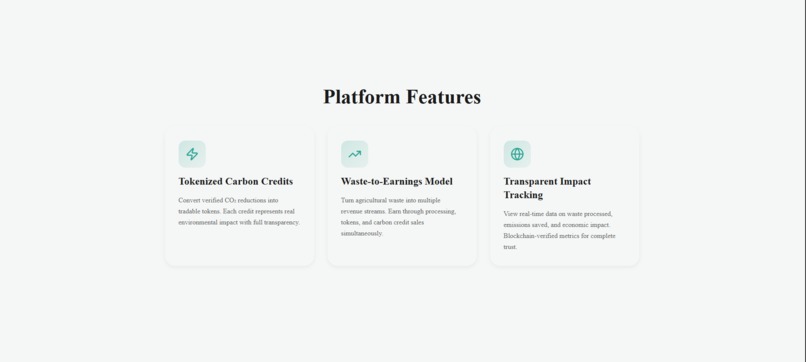
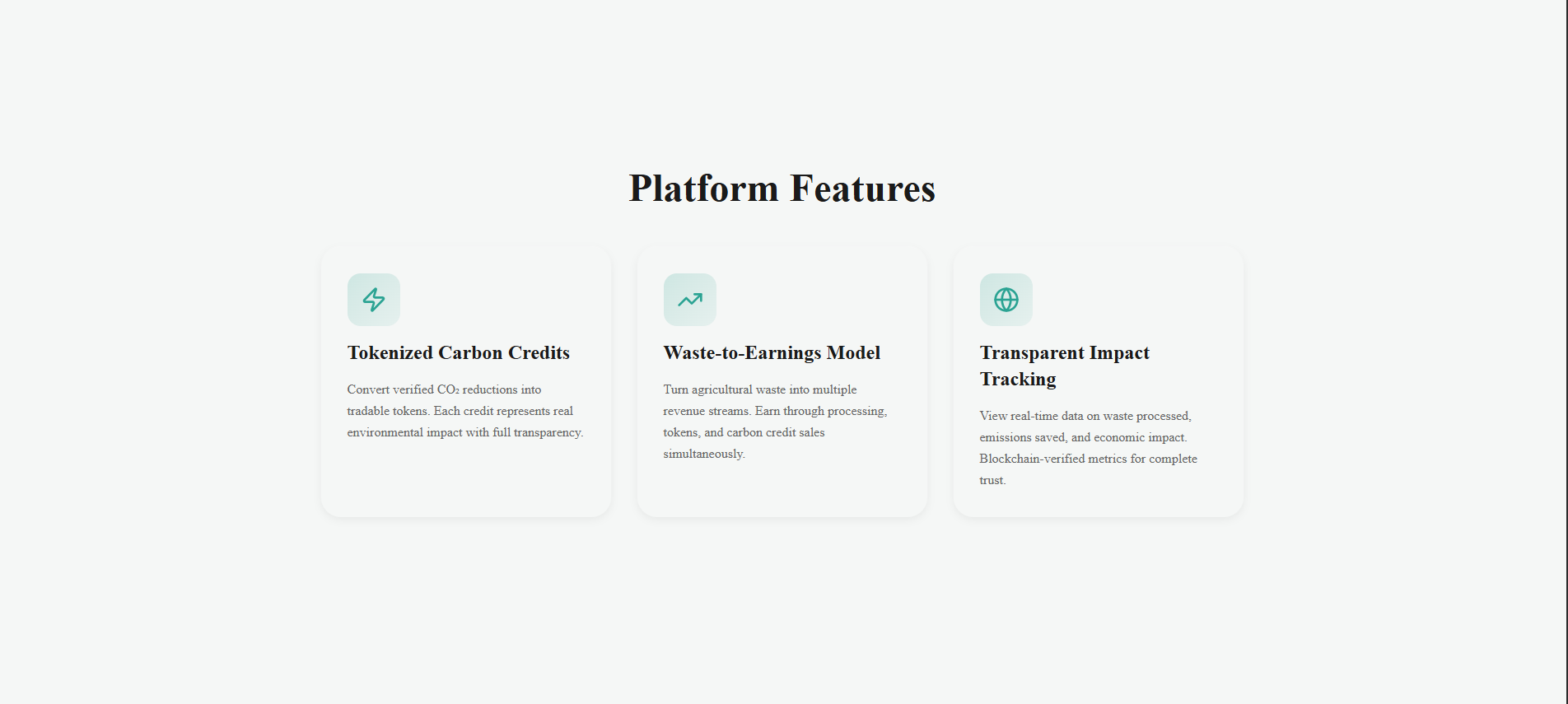
Platform Feature
-
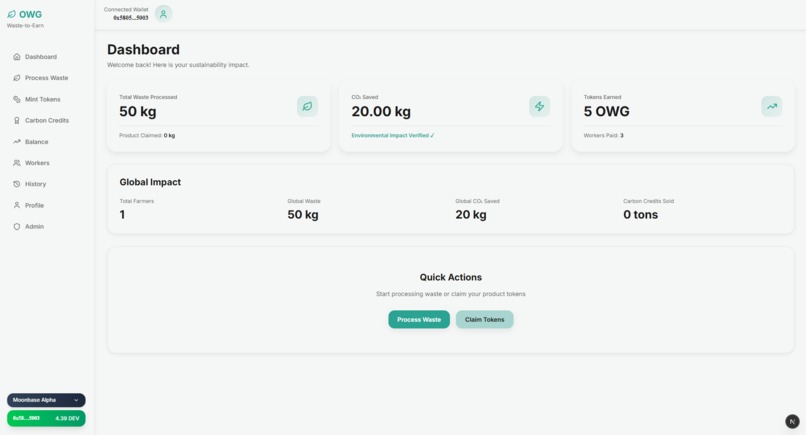
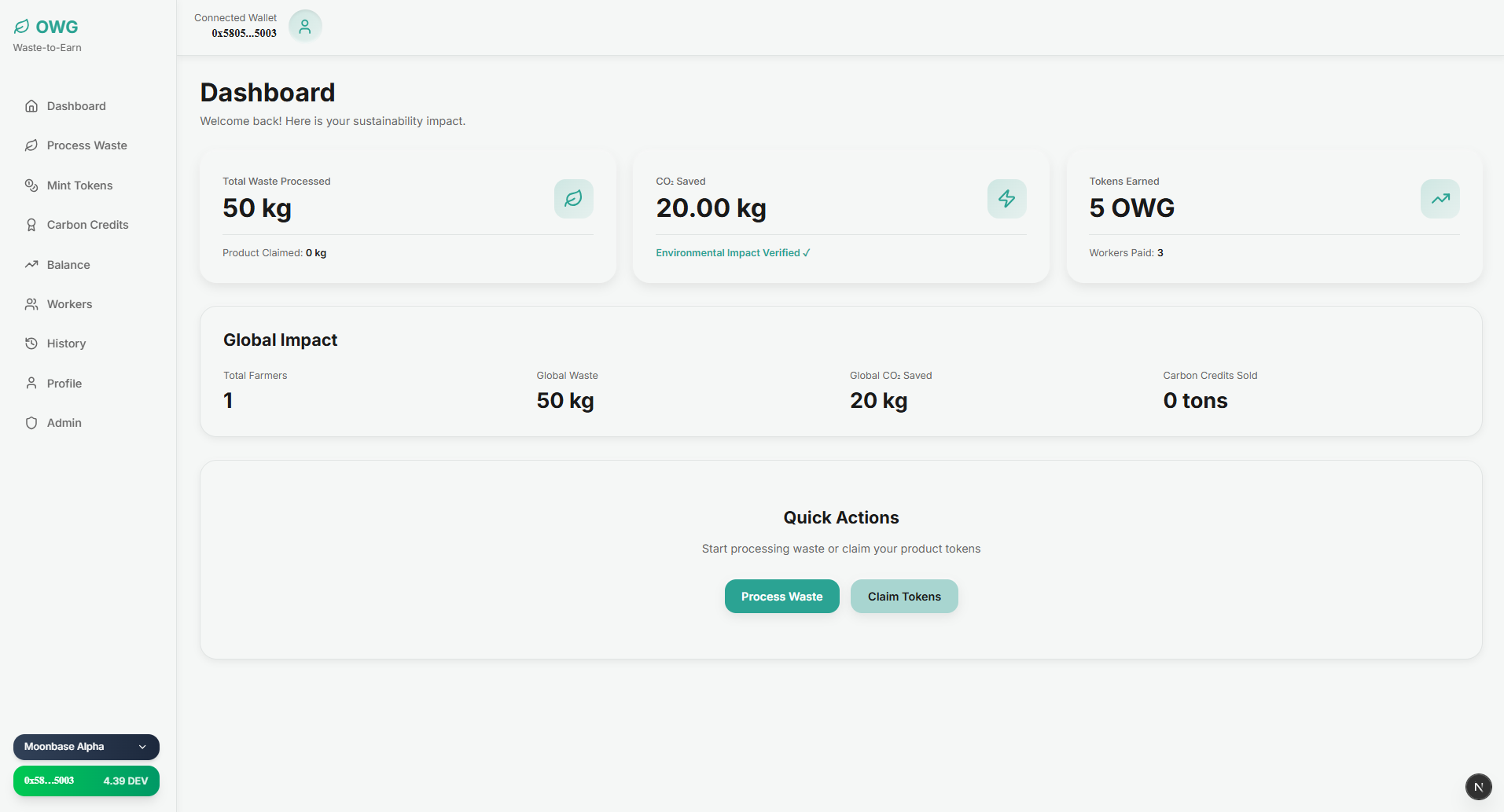
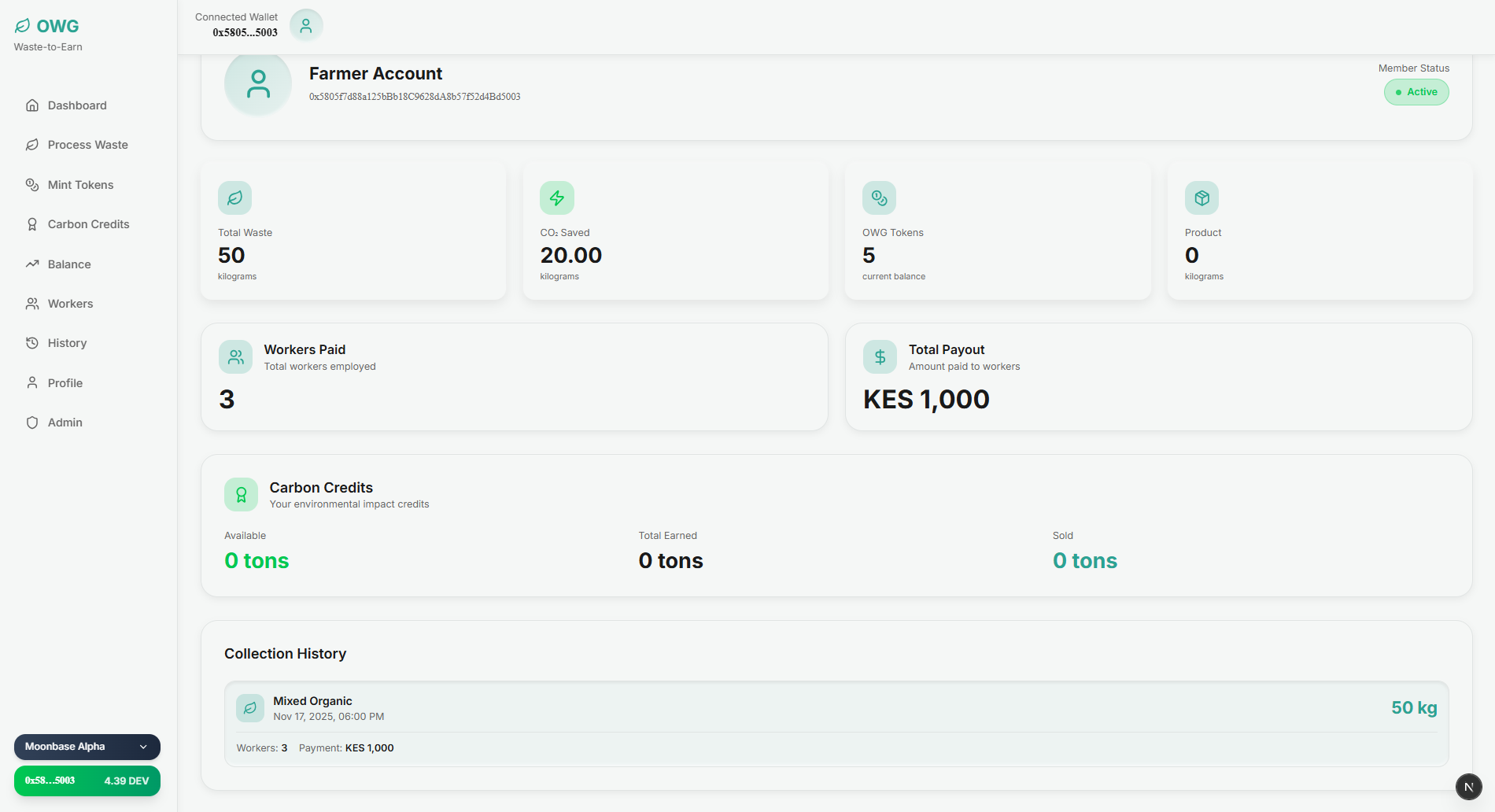
Farmer Dashboard
-
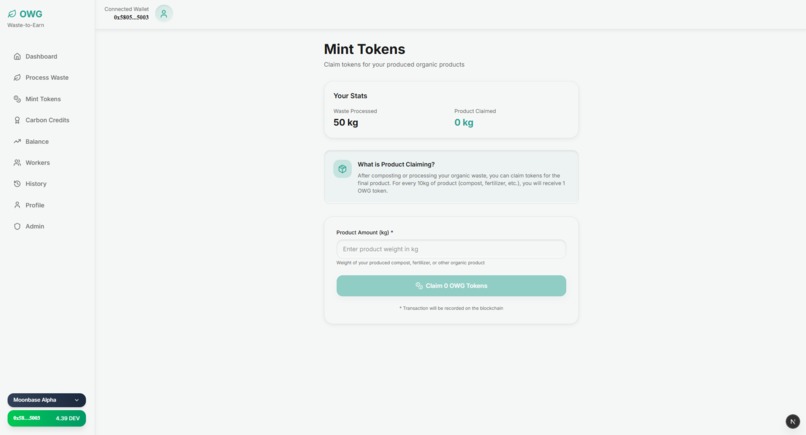
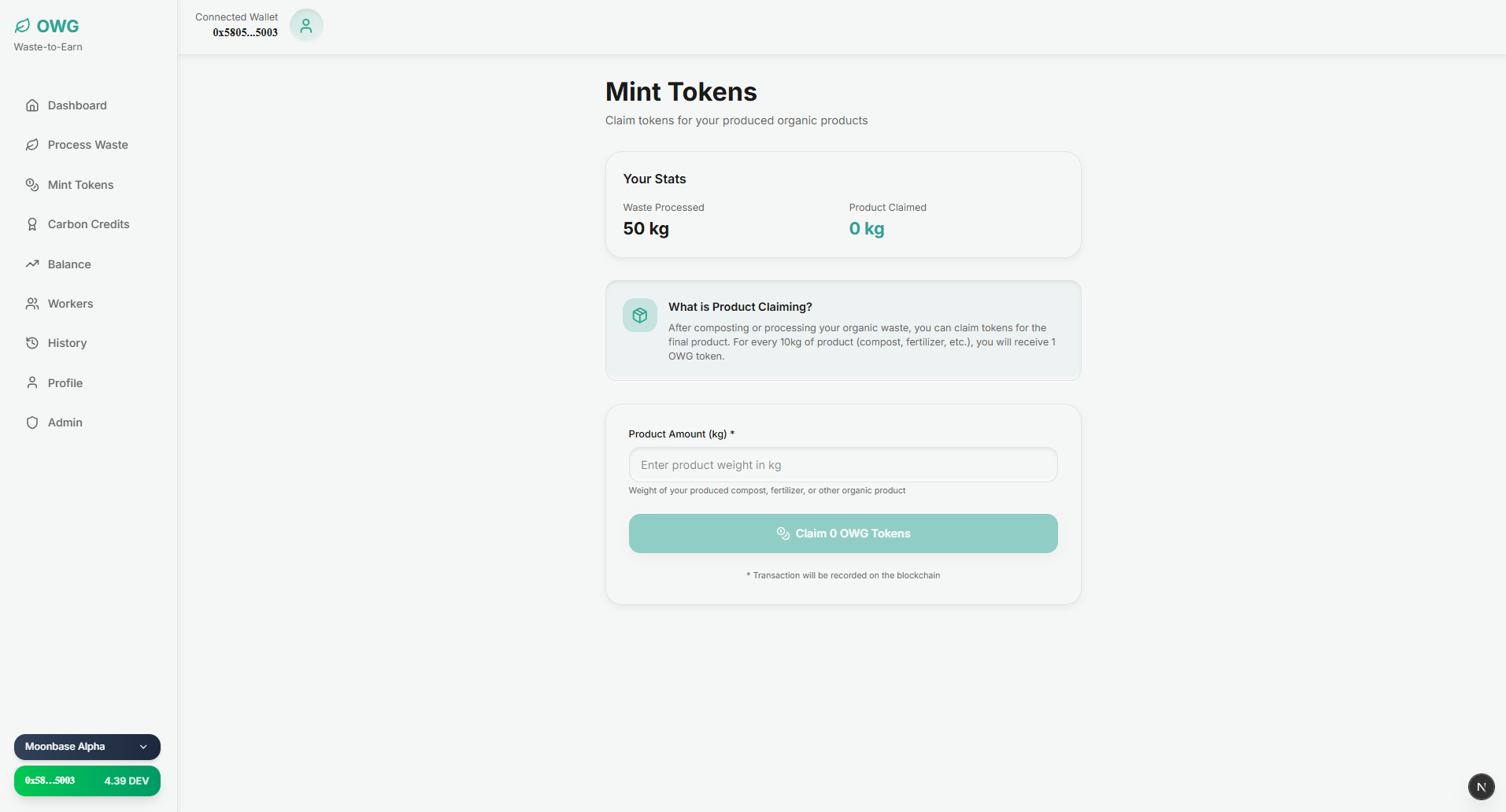
Mint Tokens
-
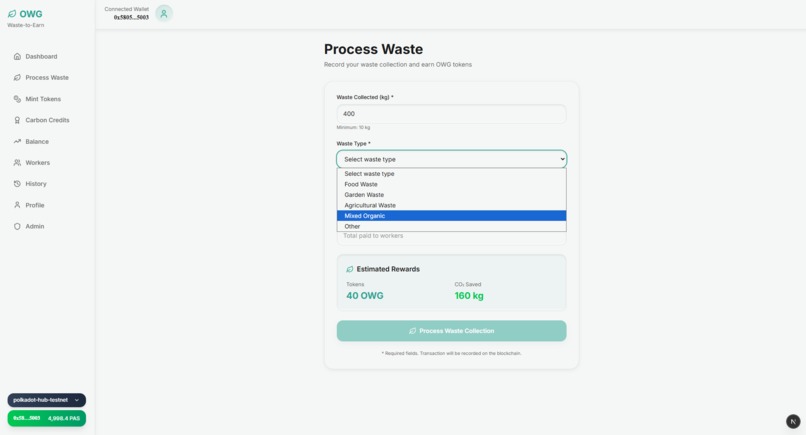
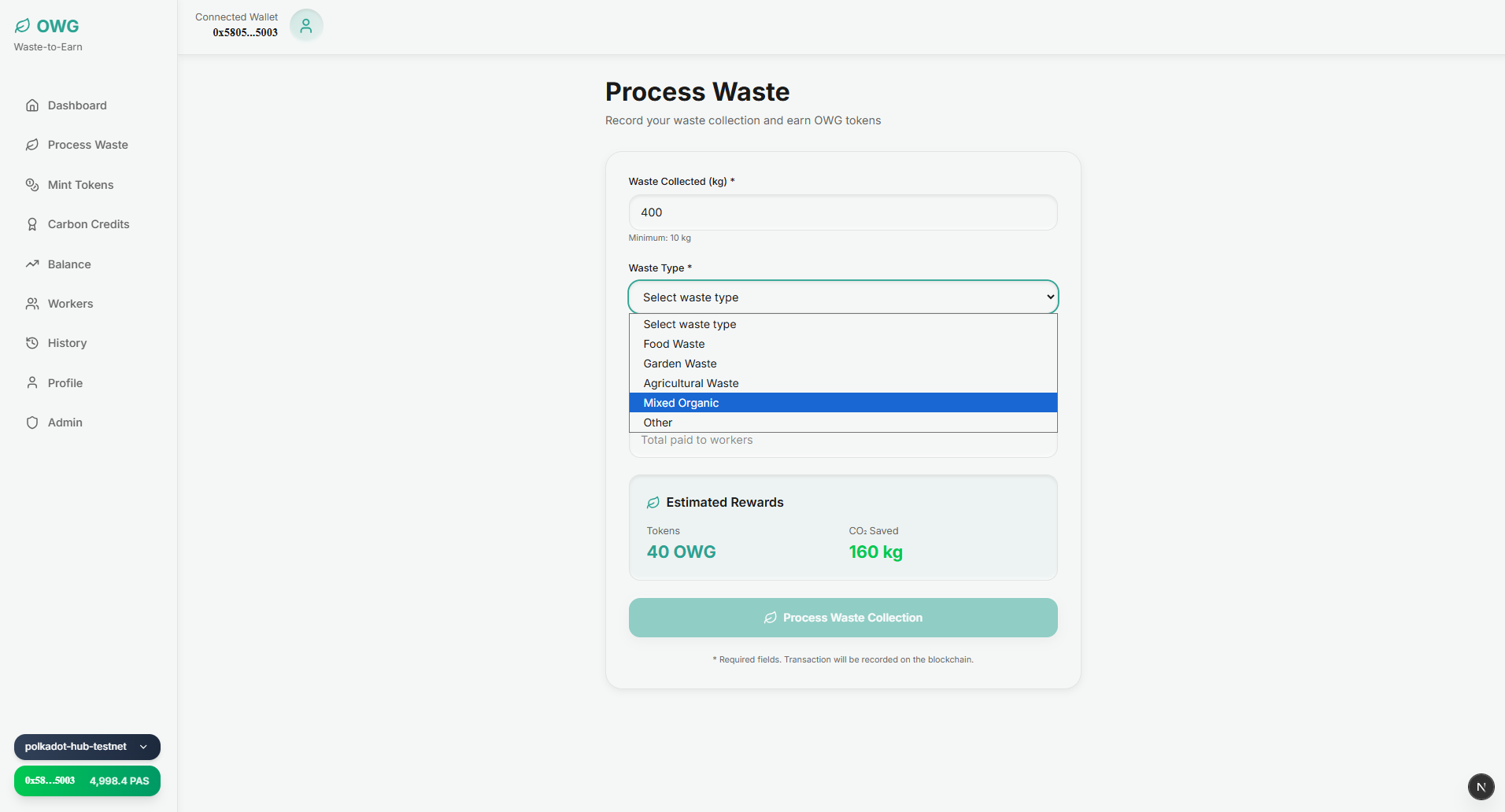
Process Waste
-
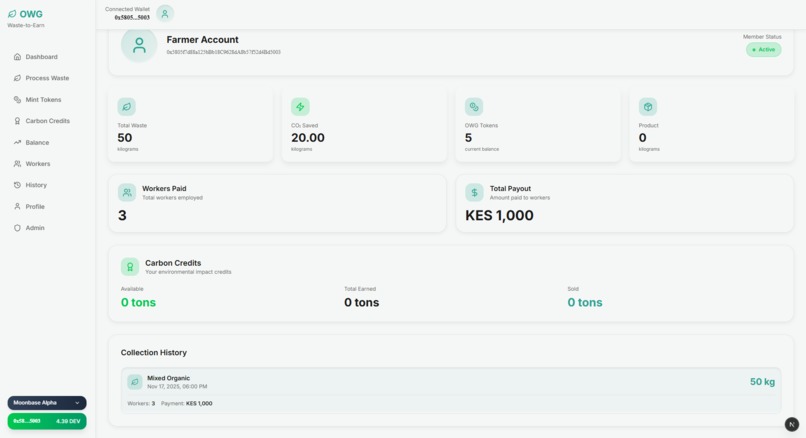
History
Inspiration
Walking through rural Kenya, we witnessed farmers burning mountains of coffee husks and crop residues—releasing methane gas \(25 \times\) more potent than CO₂. Meanwhile, these same farmers struggled with poverty despite their critical role in food production.
The problem:
- 2 billion tons of organic waste generated annually
- 33% improperly managed
- Farmers have zero incentive to process it properly
- Carbon credit markets exclude small-scale farmers
The opportunity:
What if we could turn waste into wealth using blockchain? Connect farmers directly to corporations seeking carbon credits? Make environmental action profitable?
That's why we built OrganicWasteGems (OWG) on Polkadot—to create transparent, decentralized waste-to-value infrastructure for Africa and beyond.
What it does
OWG transforms organic waste processing into profit through blockchain-verified rewards.
Farmers
- Process waste → Earn 1 OWG token per 10kg
- Generate carbon credits (\(1 \text{ kg waste} = 0.4 \text{ kg CO}_2\) saved)
- Sell credits directly to corporations at market rates (KES 8,000–15,000/ton)
- Track impact via real-time dashboard
- Record worker payments on-chain
Corporations
- Purchase verified carbon credits directly from farmers
- Meet ESG compliance with transparent records
- Support local communities while offsetting emissions
- Instant settlement through smart contracts
How we built it
Tech Stack
- Polkadot Asset Hub Testnet
- Smart Contracts: Solidity 0.8.26 + OpenZeppelin + Hardhat
- Blockchain: Moonbeam (EVM-compatible Polkadot parachain)
- Frontend: Next.js 16 + TypeScript + Tailwind CSS
- Web3: RainbowKit + Wagmi v2 + Viem
Development Process
- Research – Interviewed farmers, studied carbon markets
- Smart Contracts – Built, tested, deployed to Moonbase Alpha
- Frontend – Responsive Next.js app with wallet integration
- Deployment – Live on Polkadot Asset Hub testnet and Moonbase Alpha
What we learned
Technical
- Solidity gas optimization patterns
- Moonbeam’s EVM compatibility advantages
- RainbowKit + Wagmi best practices
- Smart contract security fundamentals
Business
- Users care about income, not “blockchain”
- Mobile-first design is essential
- Pilot testing validates faster than theory
- Trust is built through transparency
Domain
- Carbon credit market pricing mechanisms
- Organic waste contributes 5% of global GHG emissions
- Circular economy principles in practice
What's next for Organic Waste Gems
Phase 2 (Q1 2026)
- Mobile app (React Native)
- Multi-language support (Swahili, French)
- Integration with M-Pesa & local payment systems
- QR code verification for waste collection
Phase 3 (Q2 2026)
- IoT sensors for automated waste measurement
- AI/ML for waste type classification
- NFT certificates for carbon credits
- Cross-chain bridge to other Polkadot parachains
Built With
- hardhat
- moonbeam
- nextjs
- polkadot-asset-hub
- rainbowkit
- solidity
- viem
- wagmi

Log in or sign up for Devpost to join the conversation.