-
-
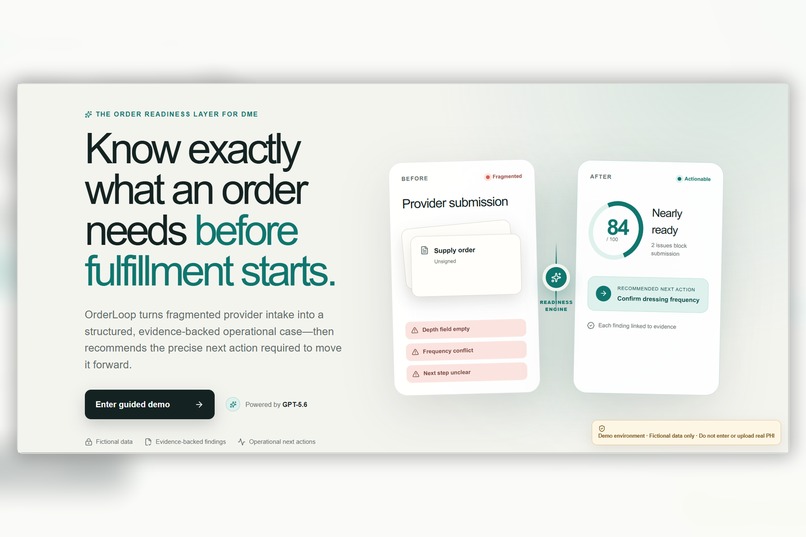
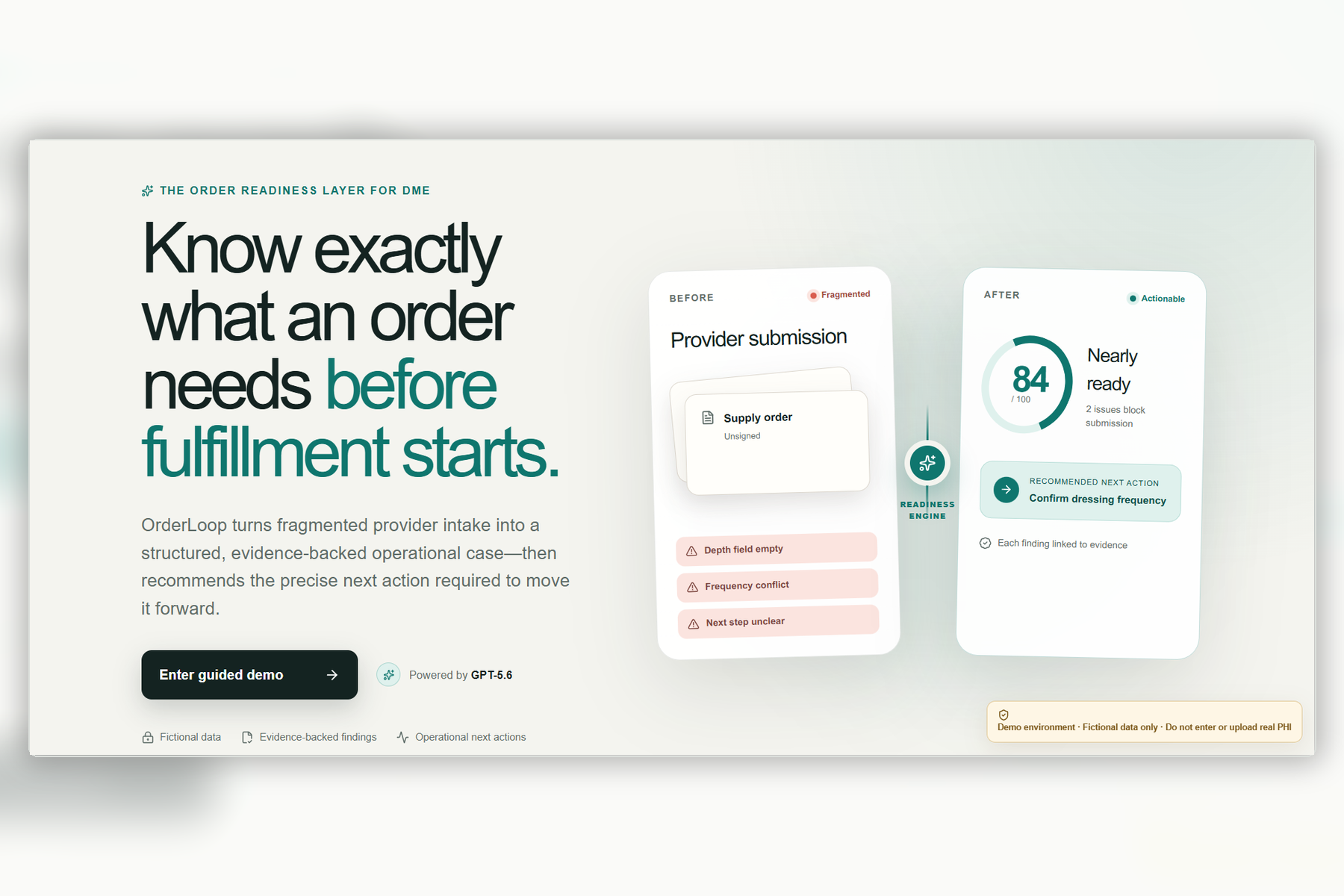
OrderLoop turns fragmented provider intake into an actionable, evidence-backed DME case.
-
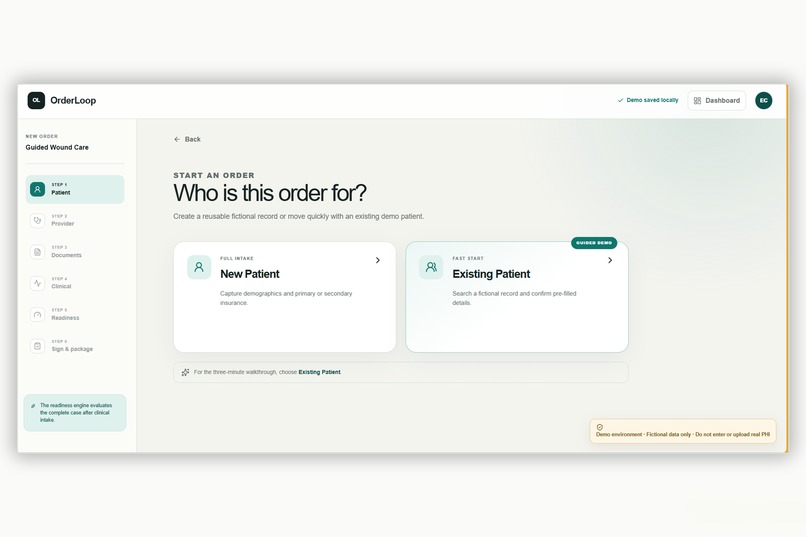
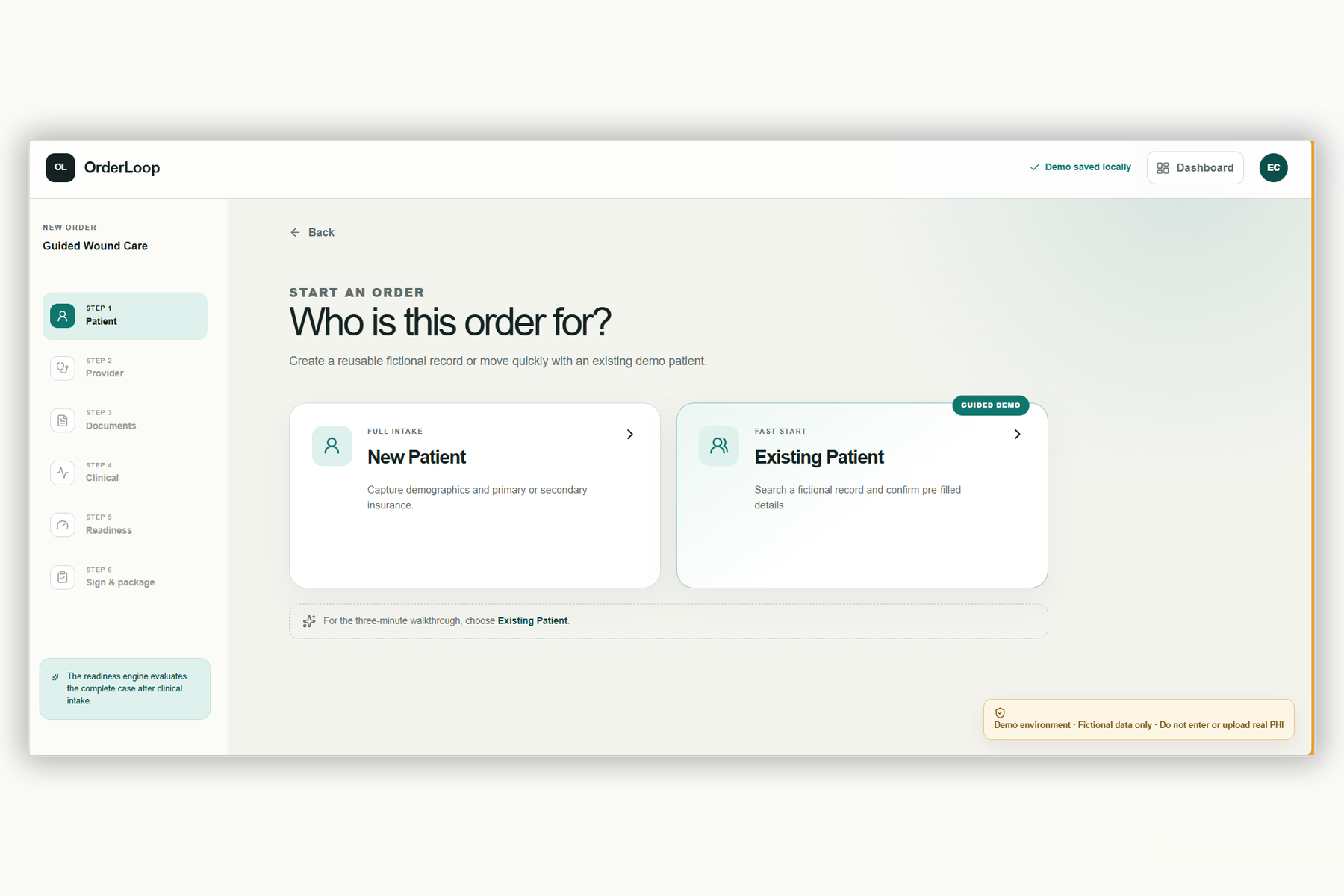
The guided workflow starts with a fictional patient, provider, and order type.
-
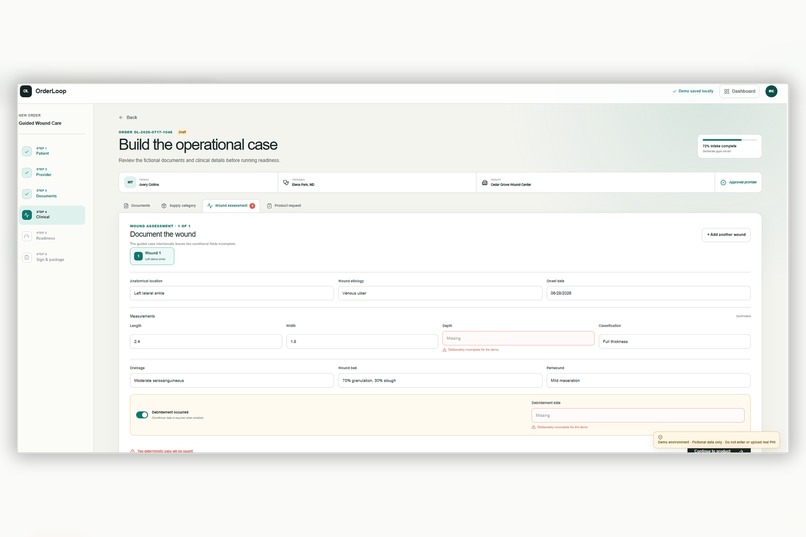
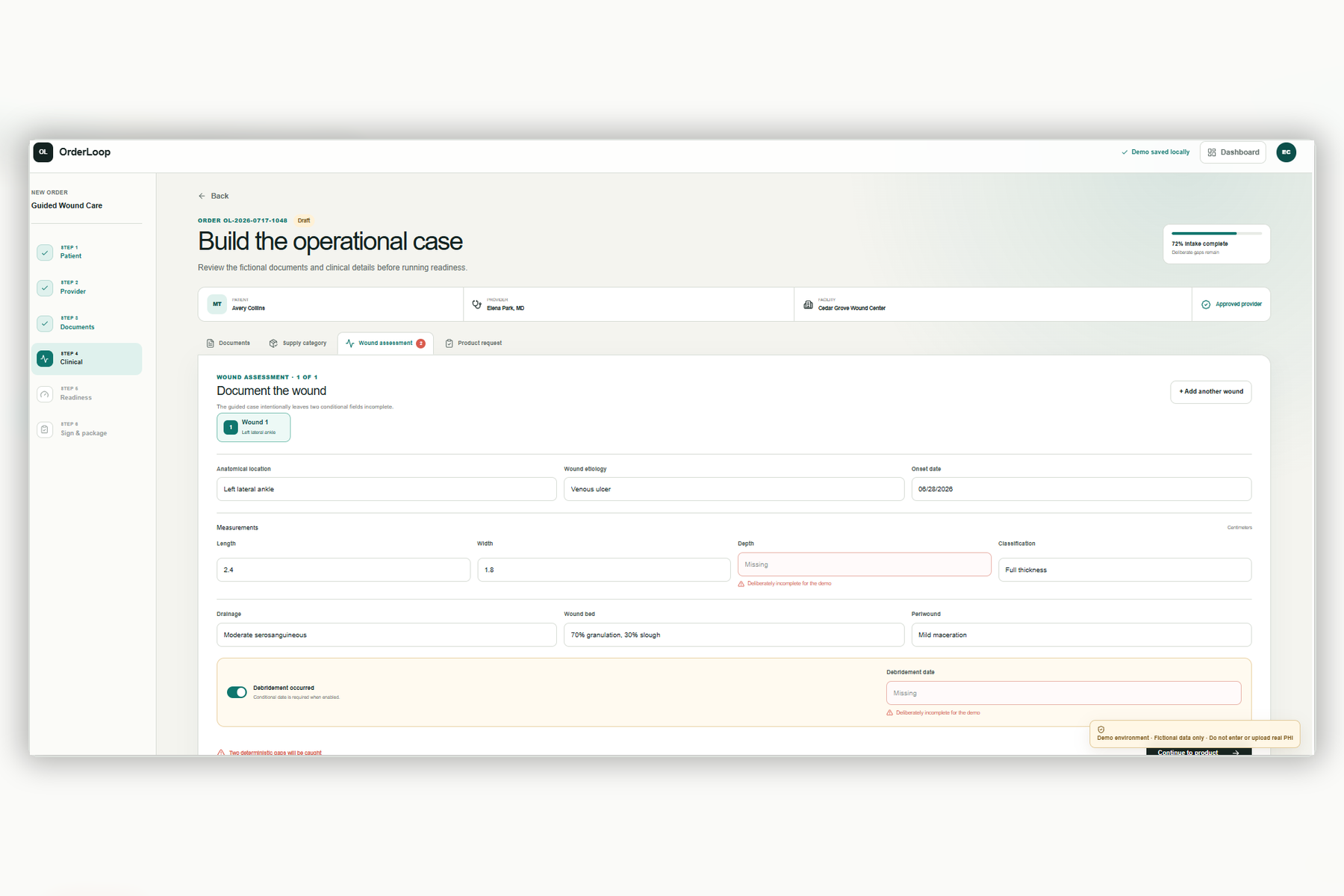
Structured intake captures the clinical and fulfillment details required for review.
-
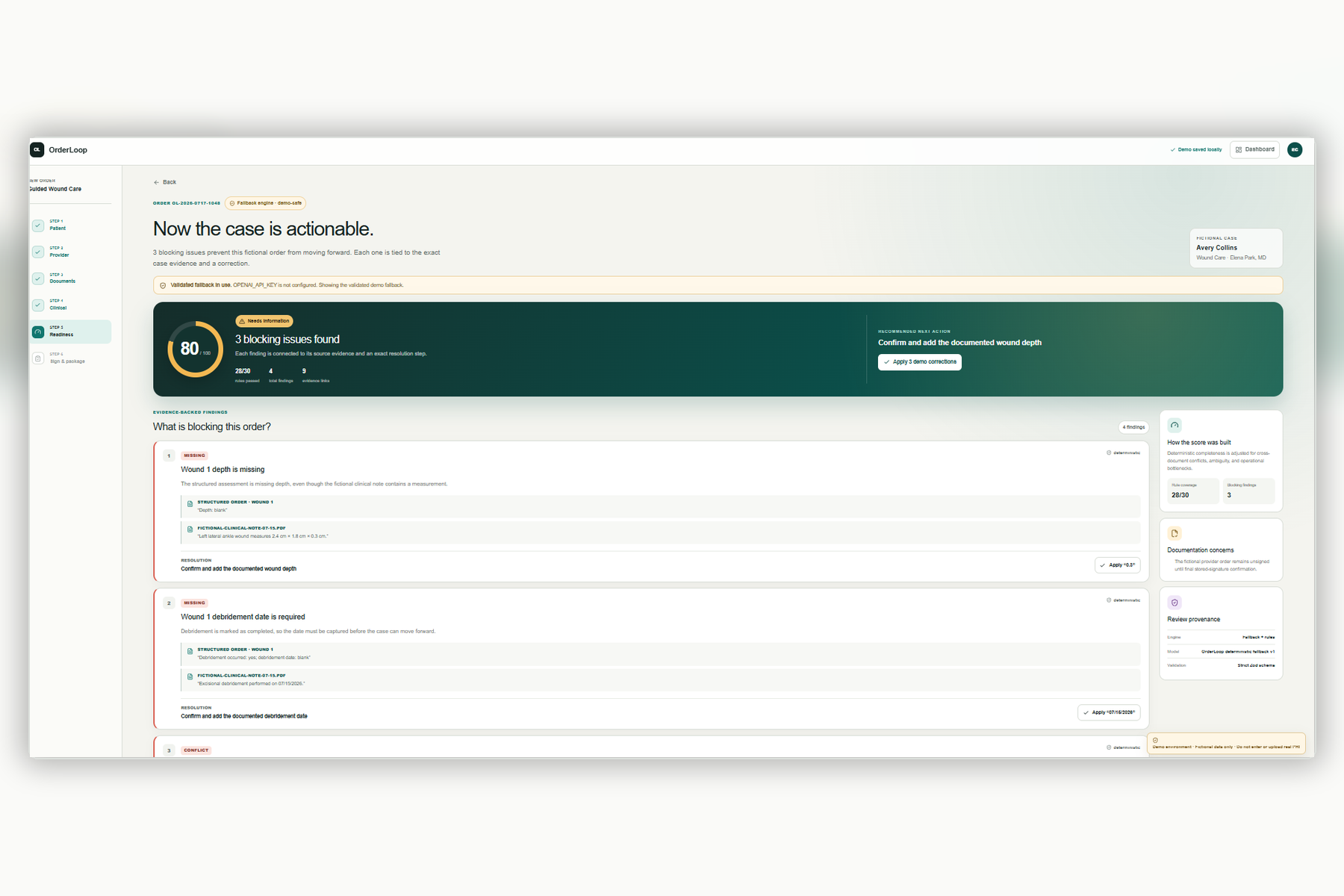
GPT-5.6 reviews the order, identifies blockers, and links findings to supporting evidence.
-
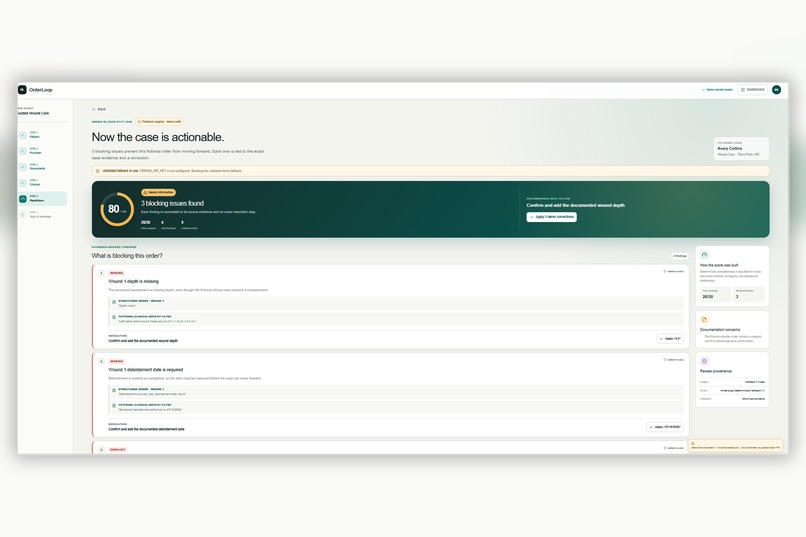
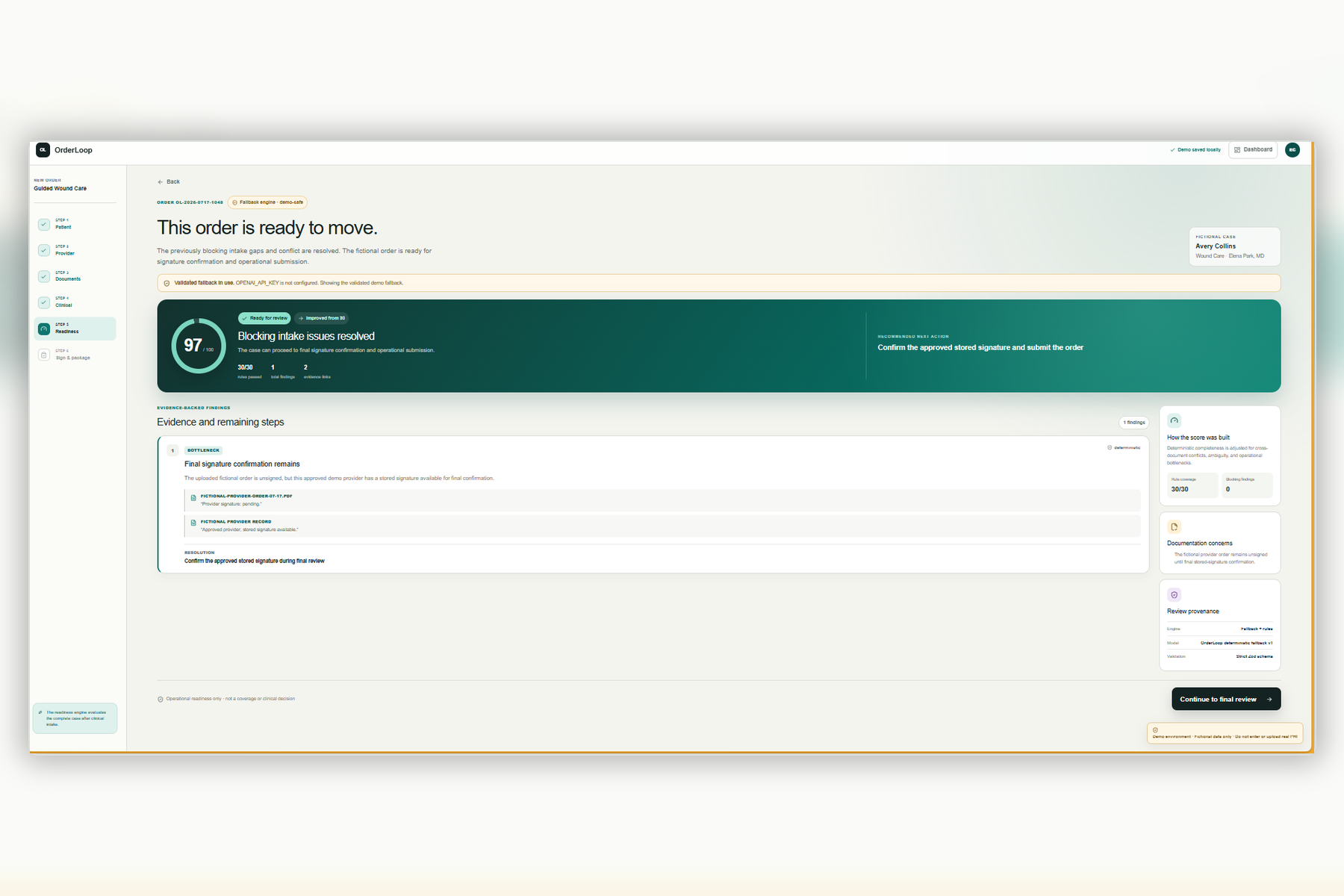
After corrections, readiness improves to 97 with all clinical and order blockers resolved.
-
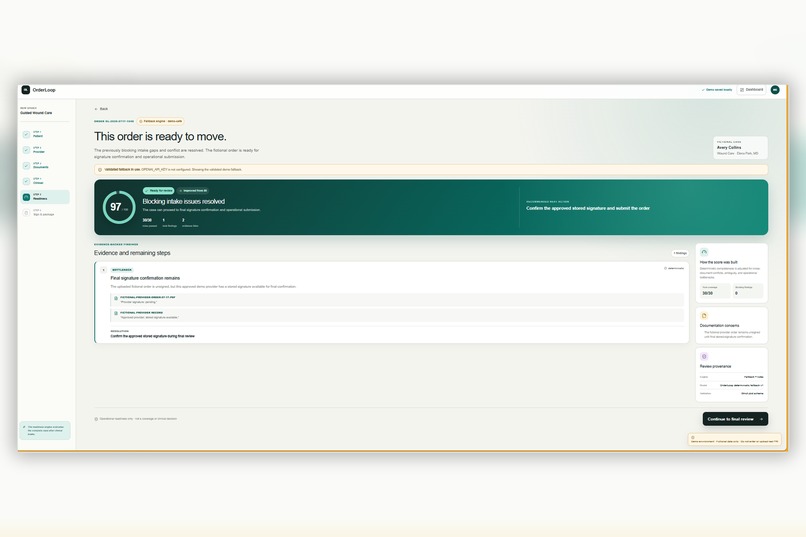
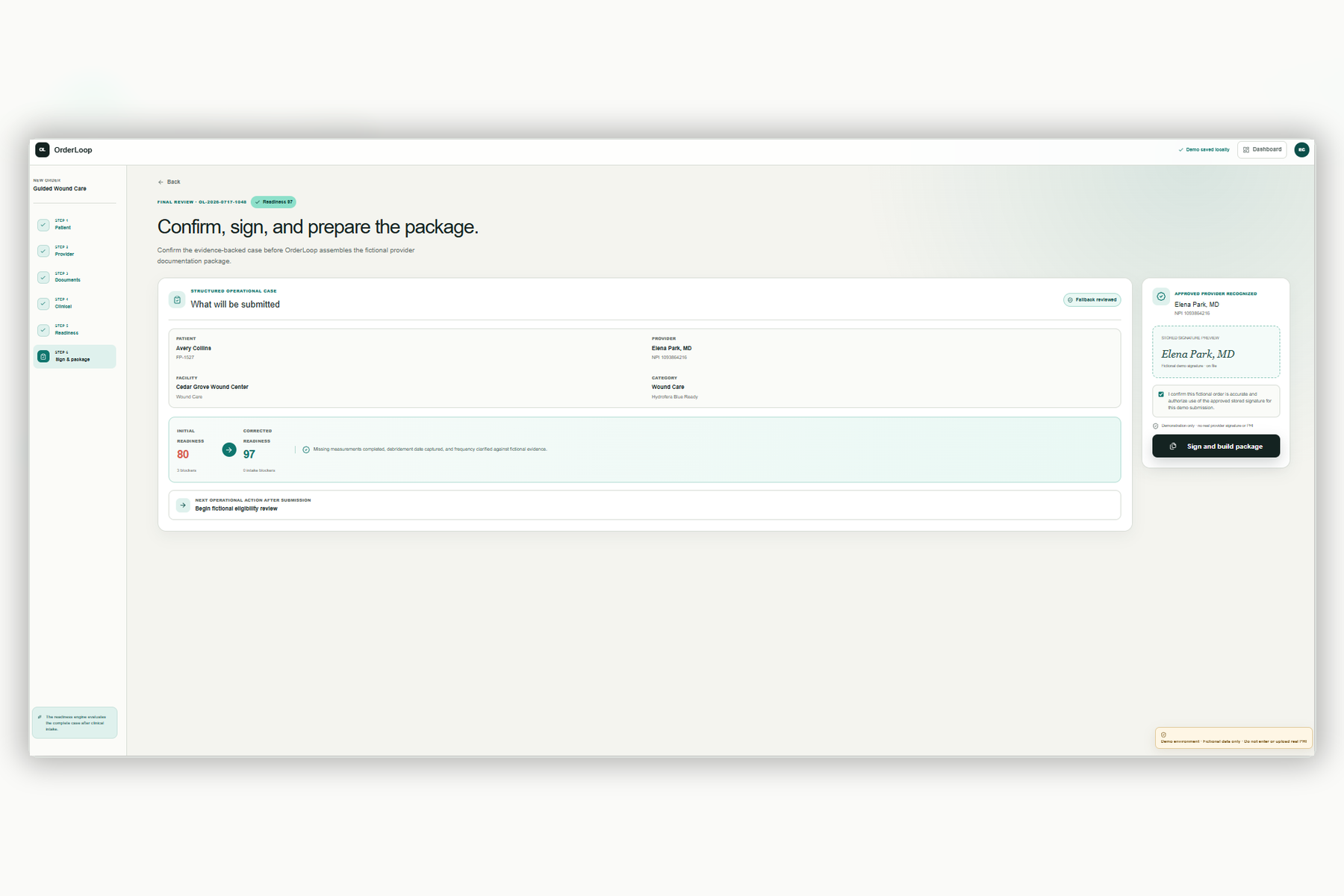
The fictional provider reviews the completed order and confirms the stored signature.
-
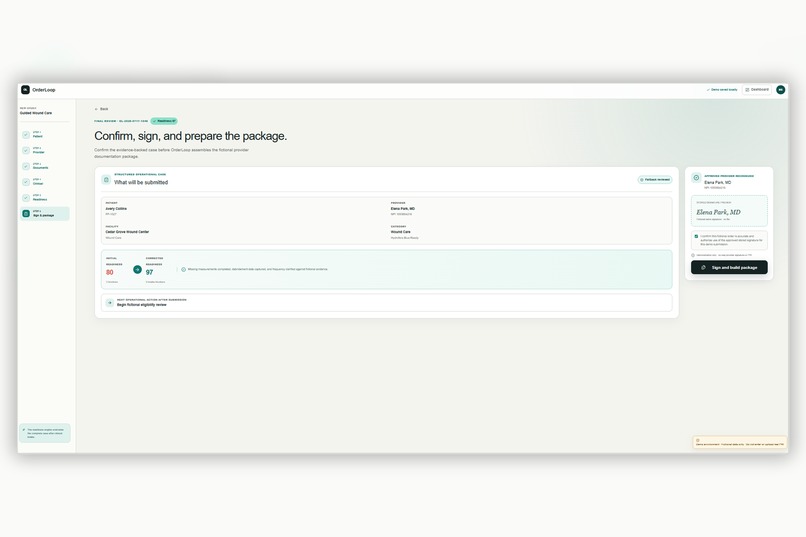
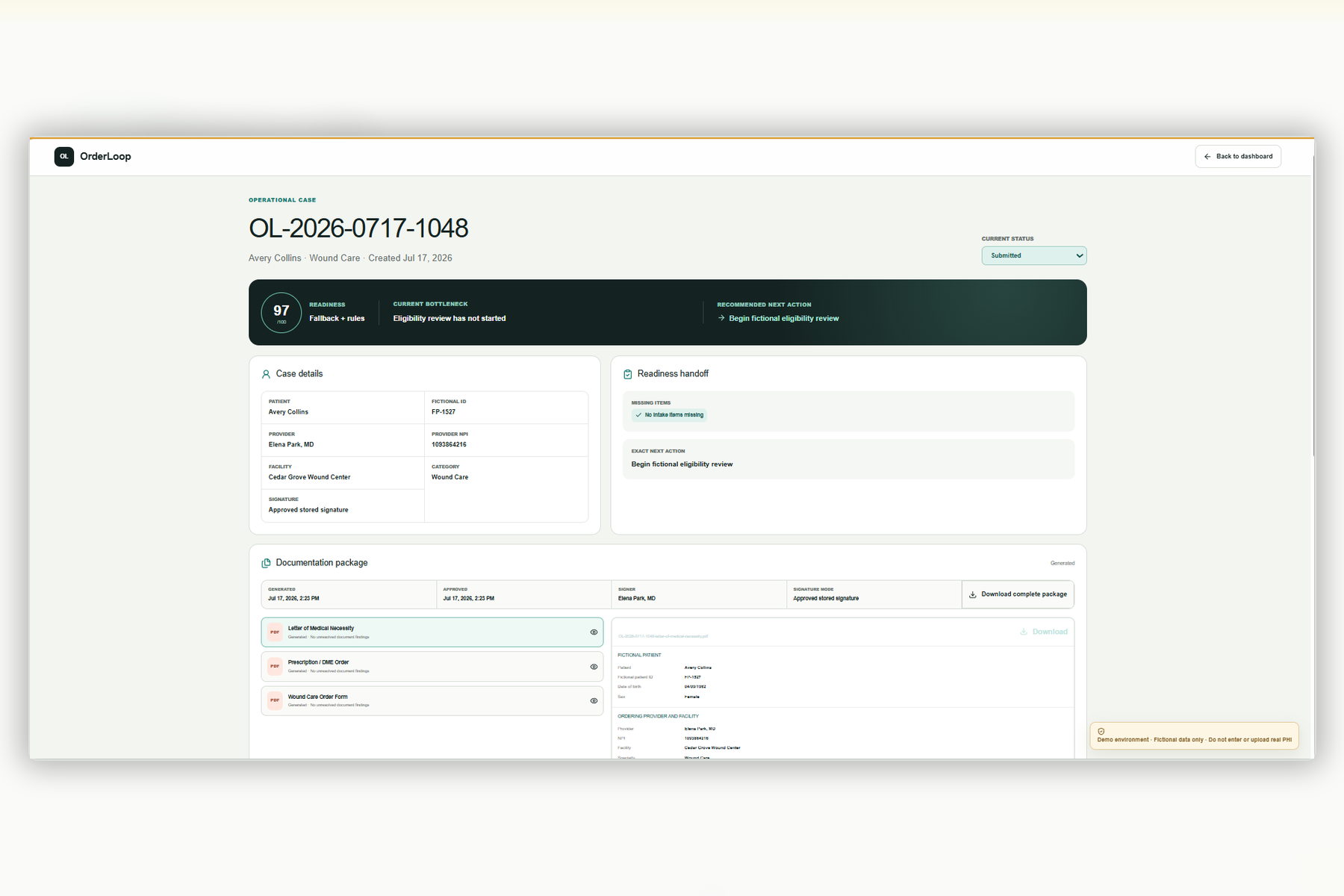
OrderLoop generates the Letter of Medical Necessity, prescription, and wound-care order form.
-
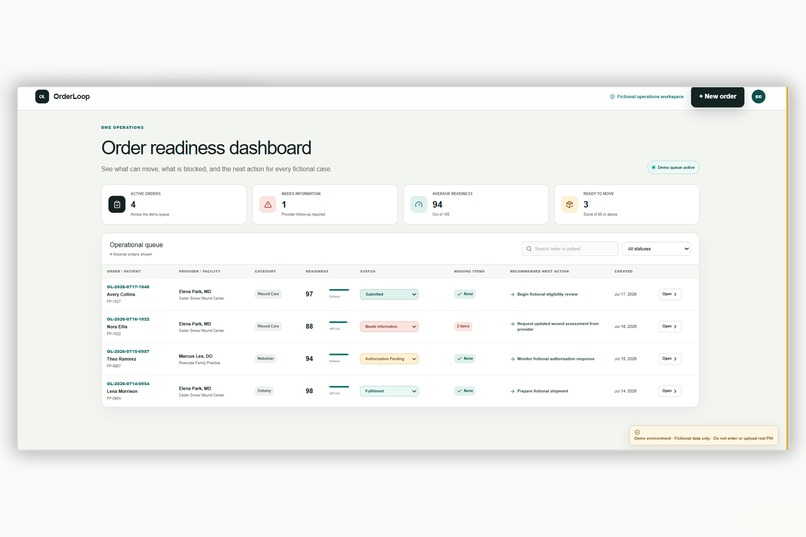
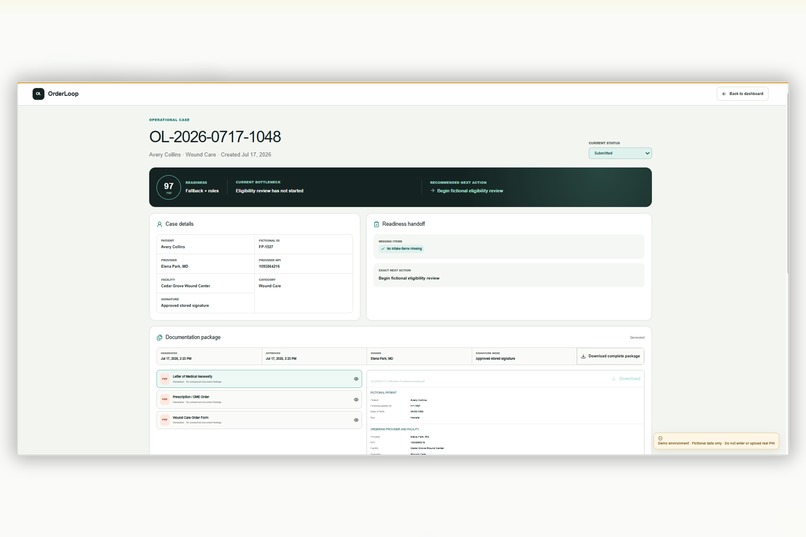
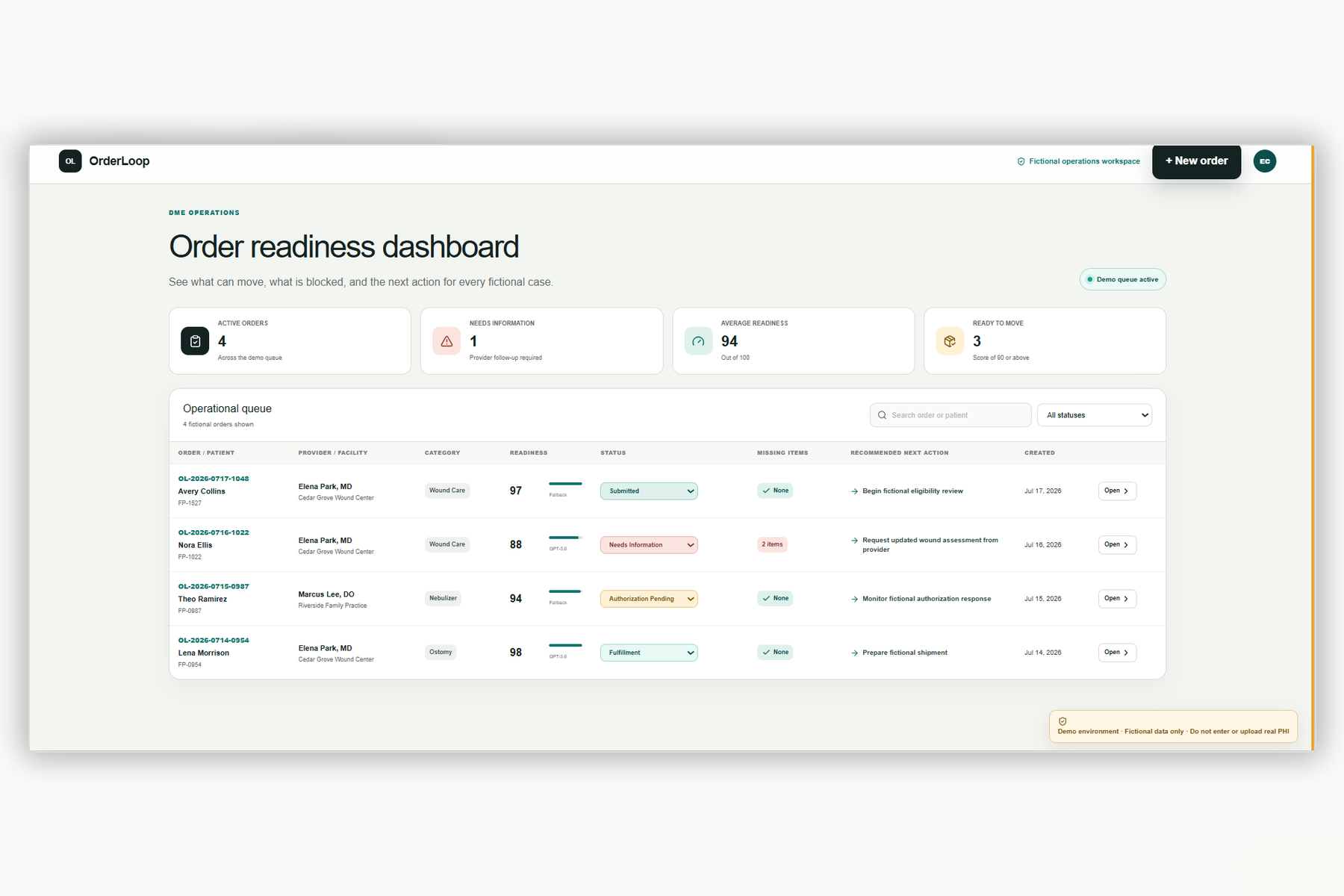
The submitted case reaches the DME dashboard with documents, status, and a clear next action.
Inspiration
I work around durable medical equipment, and I kept seeing the same problem: a provider sends an order, but important information is missing or conflicting. The DME team discovers the problem later, starts calling and faxing for corrections, and the patient waits.
Before Build Week, I created a simpler guided intake workflow for Galaxy Medical Supply. That workflow has received 111 provider submissions and showed me that providers will use a clearer process when they know exactly what information is required.
For OpenAI Build Week, I turned that validated workflow into OrderLoop.
What it does
OrderLoop is an order-readiness system for durable medical equipment.
It guides a provider through structured intake, reviews the order against the supporting documentation, identifies missing or conflicting information, and gives the provider or DME team a clear next action before fulfillment is delayed.
In the fictional demonstration, Maya Thompson needs wound-care supplies. Her order is missing wound depth and a debridement date, and the requested quantity conflicts with the documented frequency.
OrderLoop reviews the case and initially gives it a readiness score of 70 with four blocking issues. After the provider corrects the information, the score improves to 97, all clinical and order blockers are resolved, and the case becomes ready for signature.
The fictional provider then confirms a stored signature, and OrderLoop prepares three documents:
- Letter of Medical Necessity
- Prescription / DME Order
- Wound Care Order Form
The completed case is submitted to the DME operations dashboard with its evidence, documents, status, and recommended next action preserved.
How I used GPT-5.6
GPT-5.6 Terra compares the structured order with the fictional supporting evidence.
It helps identify missing or conflicting documentation, links findings to the relevant evidence, explains why an issue matters, and recommends the next operational action.
Deterministic rules still handle mechanical requirements such as required fields and workflow state. GPT-5.6 does not diagnose the patient, select treatment, or guarantee insurance approval.
How I used Codex
I used Codex throughout the Build Week process to inspect the repositories, plan the architecture, build and repair the workflow, debug readiness-state problems, create tests, validate fictional-data safety, prepare documentation, and package the application for deployment.
Codex also helped verify the complete journey from intake through GPT review, corrections, signature, document generation, submission, and dashboard handoff.
The final project passed 24 workflow and unit tests plus 5 submission-safety tests.
What was built during Build Week
The earlier Galaxy workflow was a guided intake process.
During Build Week, I productized that idea into a working software demonstration with:
- structured patient, provider, and order intake
- evidence-backed GPT-5.6 review
- readiness scoring
- exact blocker and next-action guidance
- provider review and signature
- document generation
- DME operations dashboard
- testing, documentation, deployment, and recovery packaging
Challenges
The hardest challenge was making the workflow behave like a real operational system instead of a simple form.
The readiness review needed to separate true order blockers from later workflow requirements. For example, the provider signature must remain visible, but it should not prevent the corrected order from reaching the signature stage.
I also needed to keep the AI output grounded in evidence, preserve deterministic safety rules, and make the full experience understandable in a short demonstration.
What I learned
I learned that the most useful role for AI in this workflow is not replacing provider or DME judgment. It is helping both sides see what is incomplete, why it matters, and what needs to happen next.
I also learned that a validated workflow can become much more valuable when it is transformed into a complete product with clear states, evidence, documents, and operational handoff.
What's next
The next step is to test OrderLoop with more DME order categories and real operational feedback while maintaining strict privacy and compliance boundaries.
This Build Week version uses fictional data only. It does not accept real PHI, provide medical advice, or guarantee coverage, reimbursement, or fulfillment.
Built With
- codex
- eslint
- gpt-5.6
- netlify
- next.js
- node.js
- openai-api
- react
- typescript
- vitest

Log in or sign up for Devpost to join the conversation.