-
-
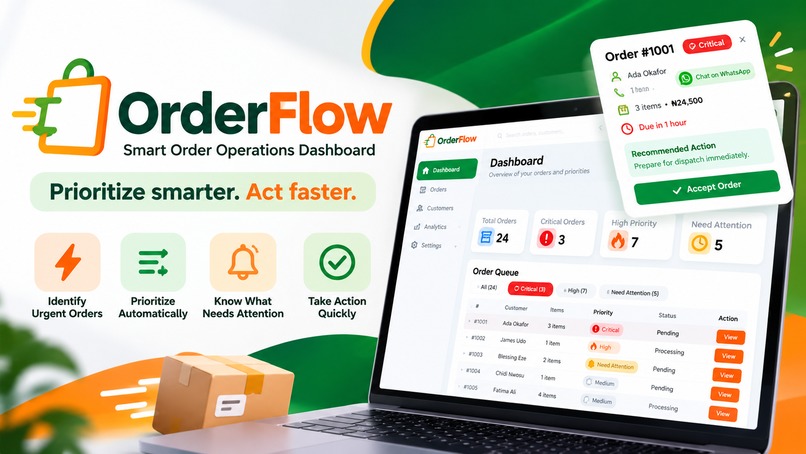
Prioritize smarter. Act faster.
Inspiration
OrderFlow was inspired by a common problem in e-commerce operations: when many orders arrive at once, teams can struggle to identify which orders need attention first. We wanted to create a simple operations dashboard that helps an operator quickly understand urgency, focus on the right orders, and take action without digging through every order manually.
What it does
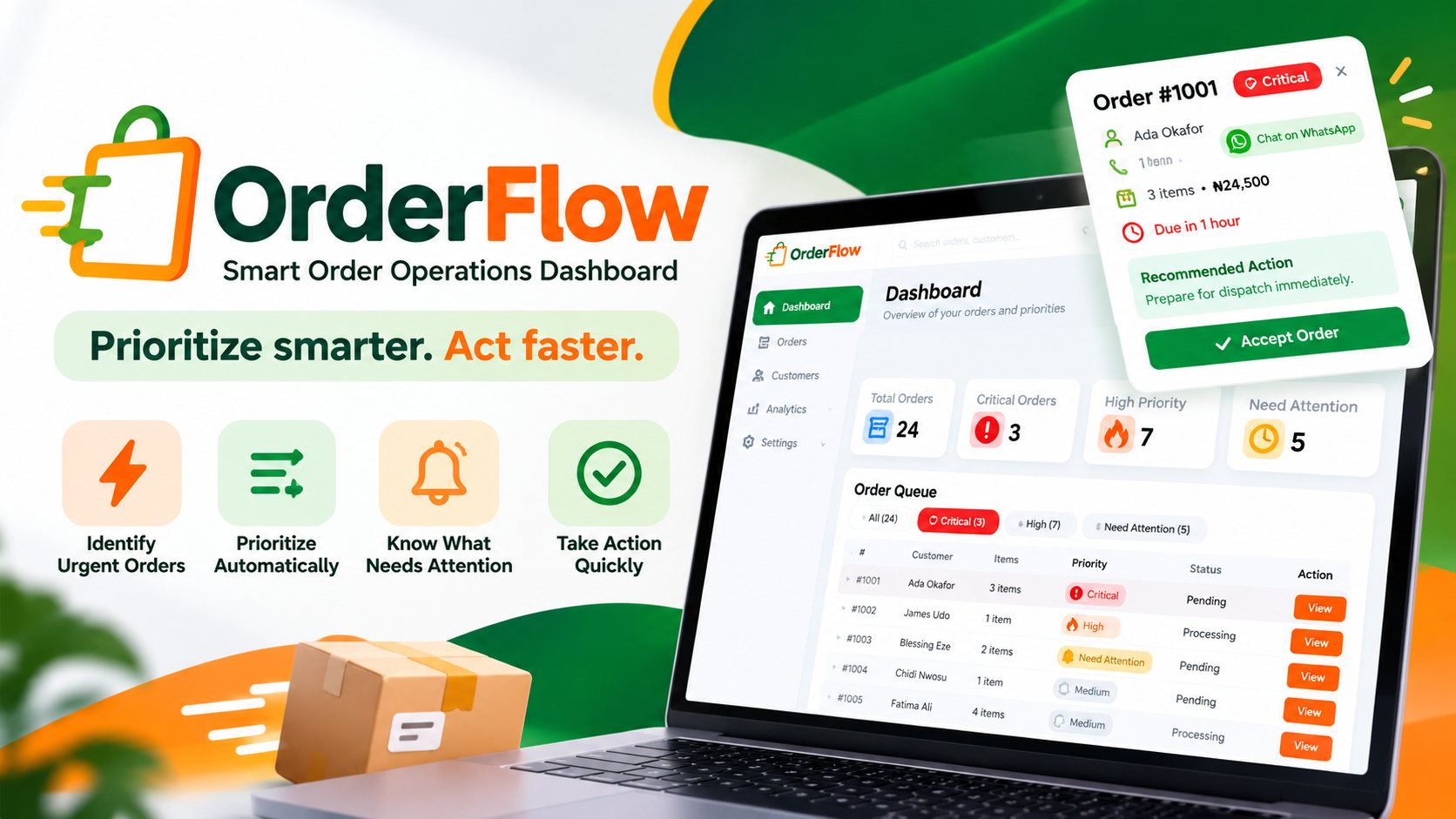
OrderFlow is a smart order operations dashboard that prioritizes orders based on urgency and highlights Critical and High Priority orders. Operators can filter the queue, open order details, see a recommended next action, and accept an order to continue processing.
The prototype uses simulated order data to demonstrate the core workflow and decision-making experience.
How we built it
We built OrderFlow as a lightweight frontend Proof of Concept using HTML5, CSS3, and vanilla ES6 JavaScript modules.
The application separates the priority logic, mock order data, UI components, and application state so the prototype can demonstrate how the system could scale into a production order operations platform.
Challenges we ran into
One of the main challenges was designing a priority system that feels useful rather than simply sorting orders by age. We needed to combine factors such as order status and time to determine which orders should receive attention first.
We also focused on making the dashboard interactive so that actions such as accepting an order immediately update the interface and priority counters.
Accomplishments that we're proud of
We are proud of turning the concept into a functional interactive prototype rather than just a static dashboard design.
The prototype demonstrates priority-based order handling, Critical and High Priority detection, filtering, order details, recommended actions, customer contact actions, and an Accept Order workflow.
What we learned
We learned that good operational tools are not just about displaying information. They need to reduce decision-making time by clearly showing what needs attention and what action should happen next.
Building the prototype also helped us think about how a simple frontend workflow could later connect to real order data, authentication, notifications, and external commerce platforms.
What's next for OrderFlow
The next step is to connect OrderFlow to a real backend and live order sources such as Shopify or WooCommerce.
Future development could include real-time order updates, role-based access, notifications, WhatsApp Business integration, analytics, and integrations with logistics providers.
Built With
- ai-assisted-development
- css
- html
- javascript


Log in or sign up for Devpost to join the conversation.