
Inspiration
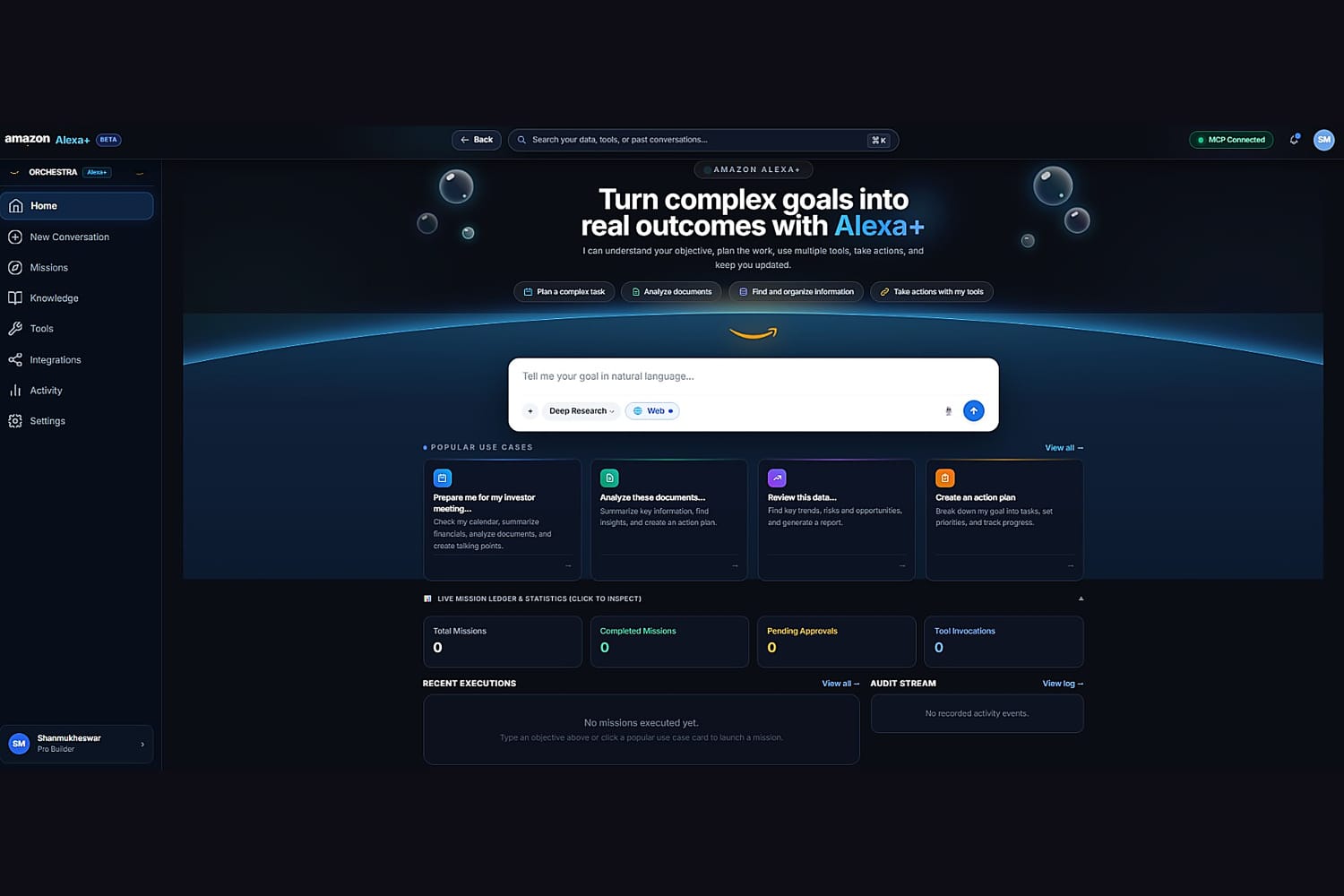
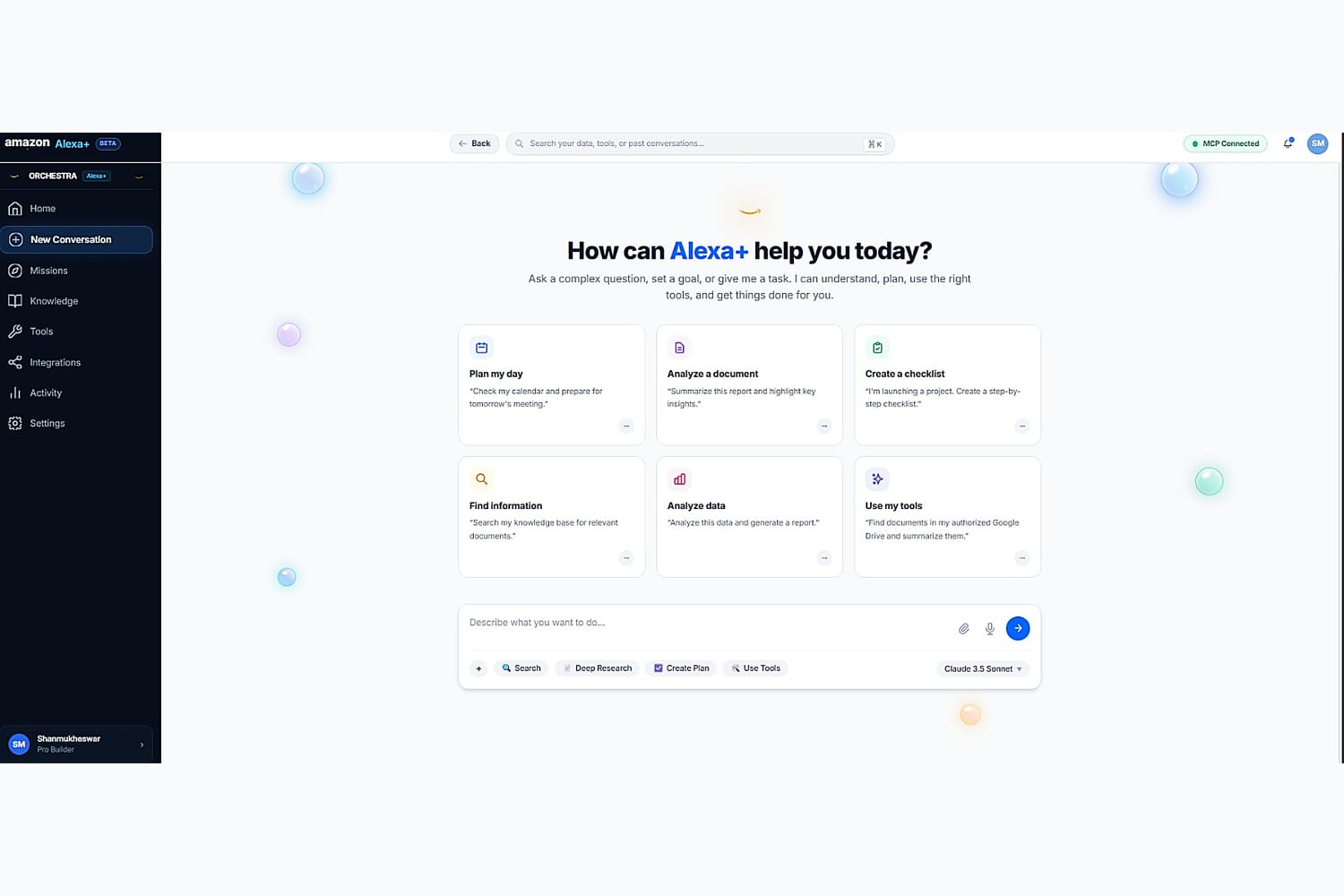
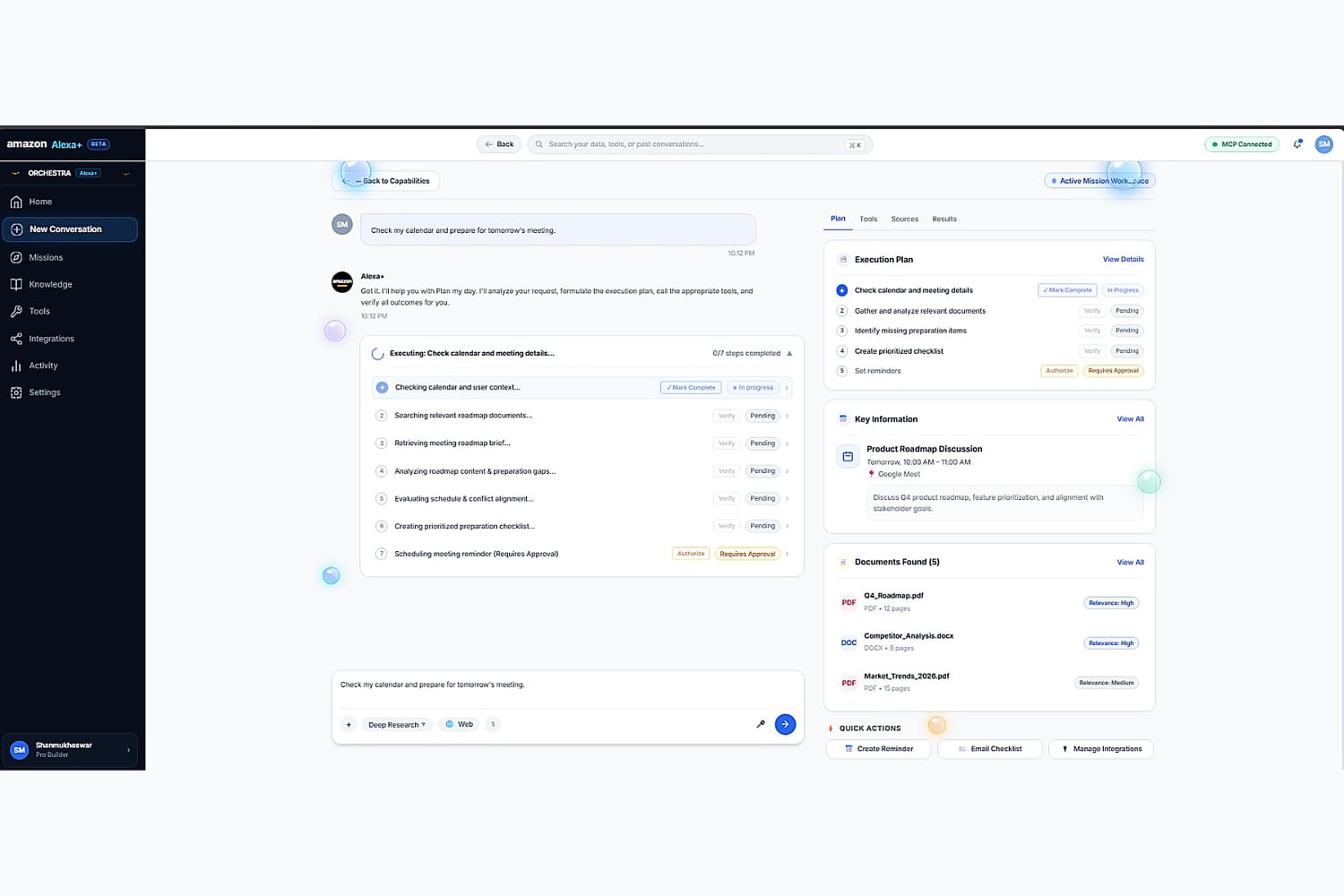
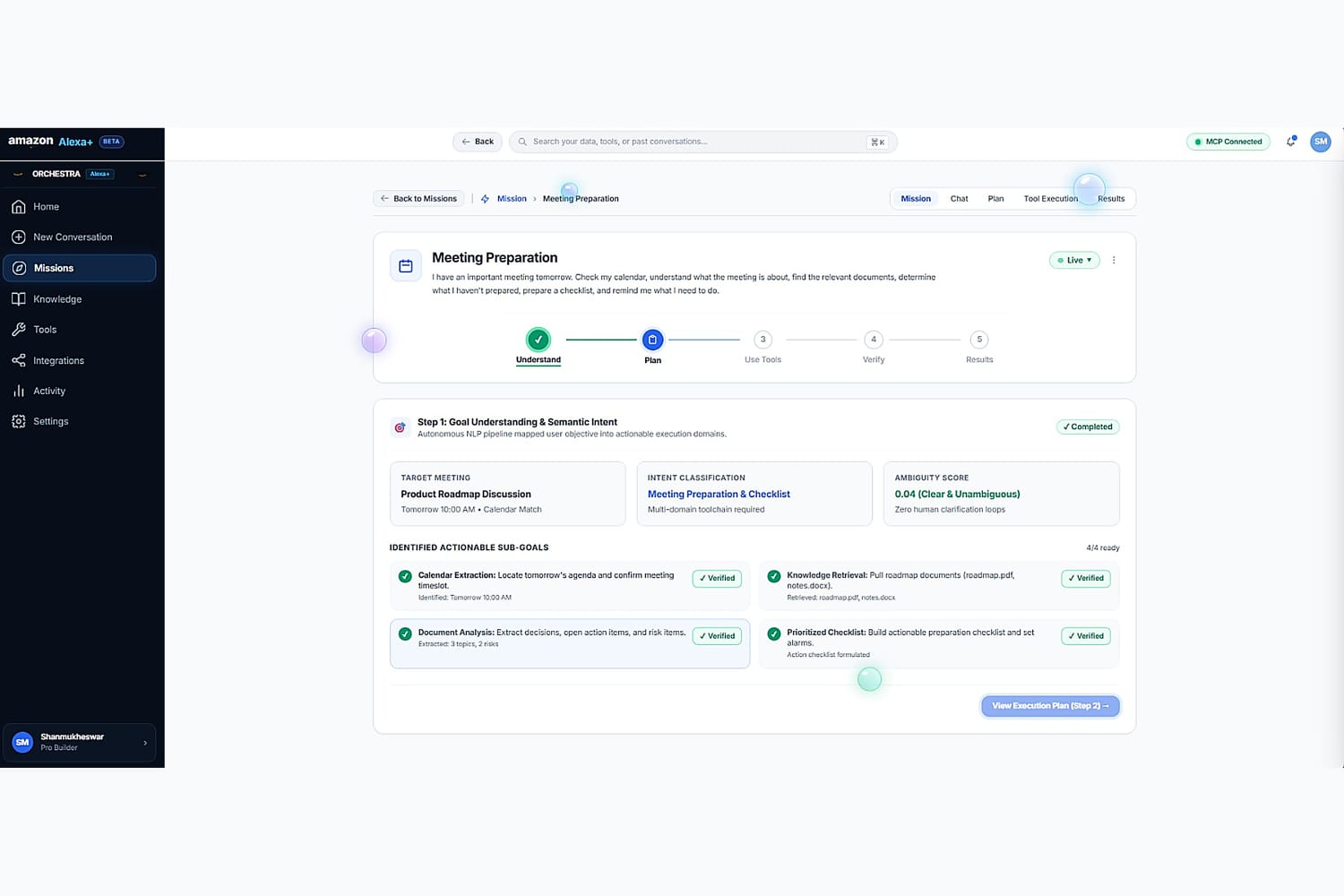
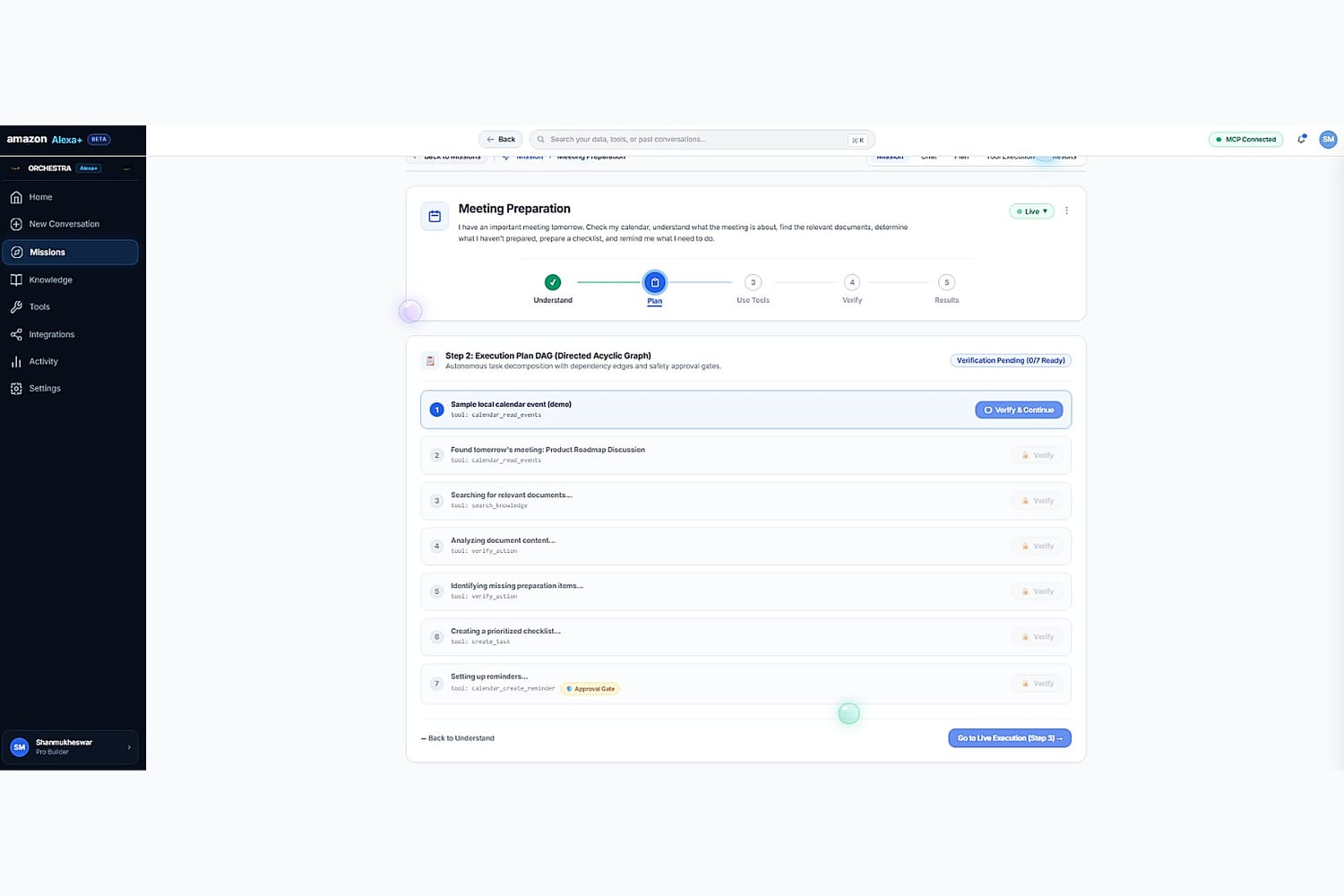
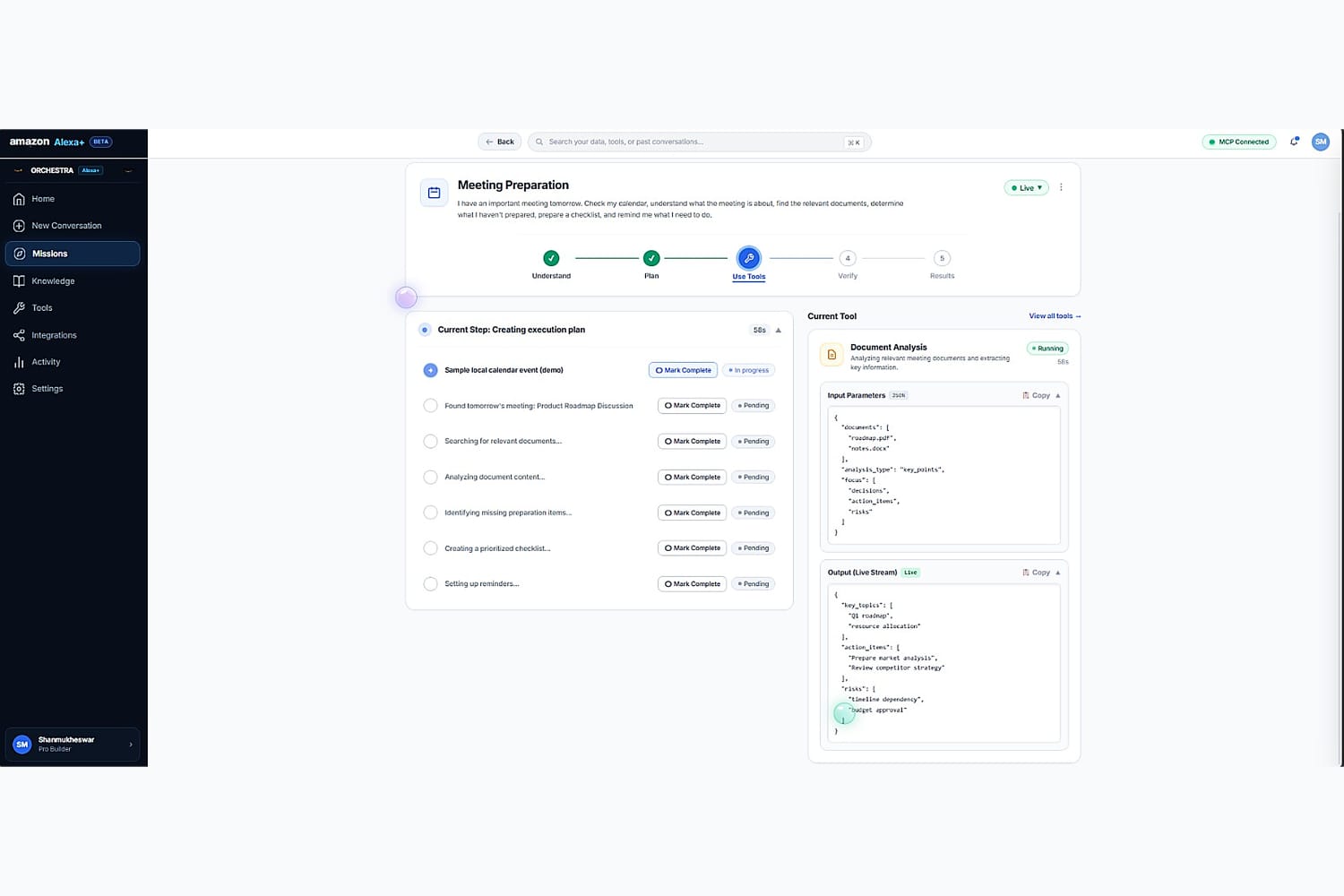
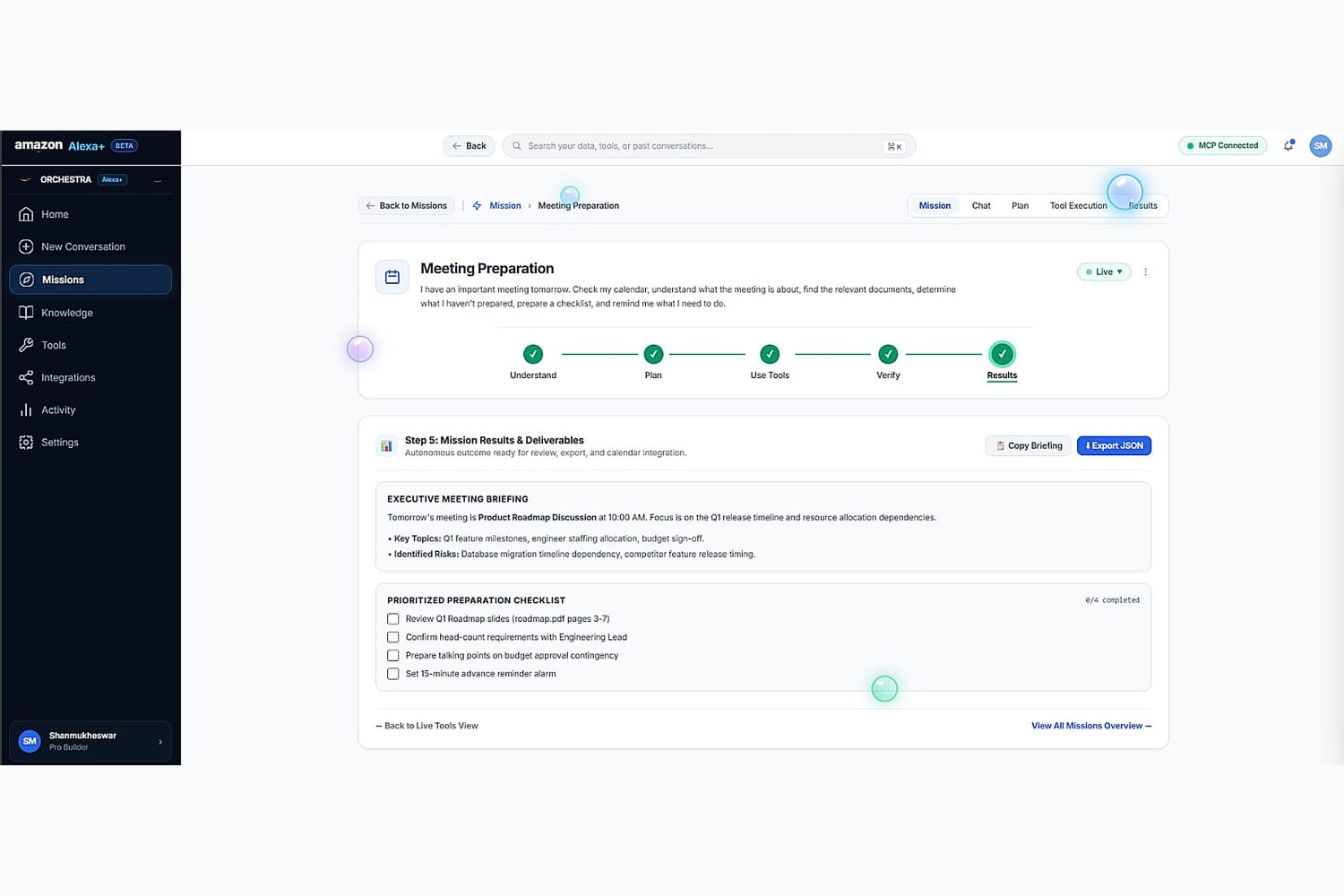
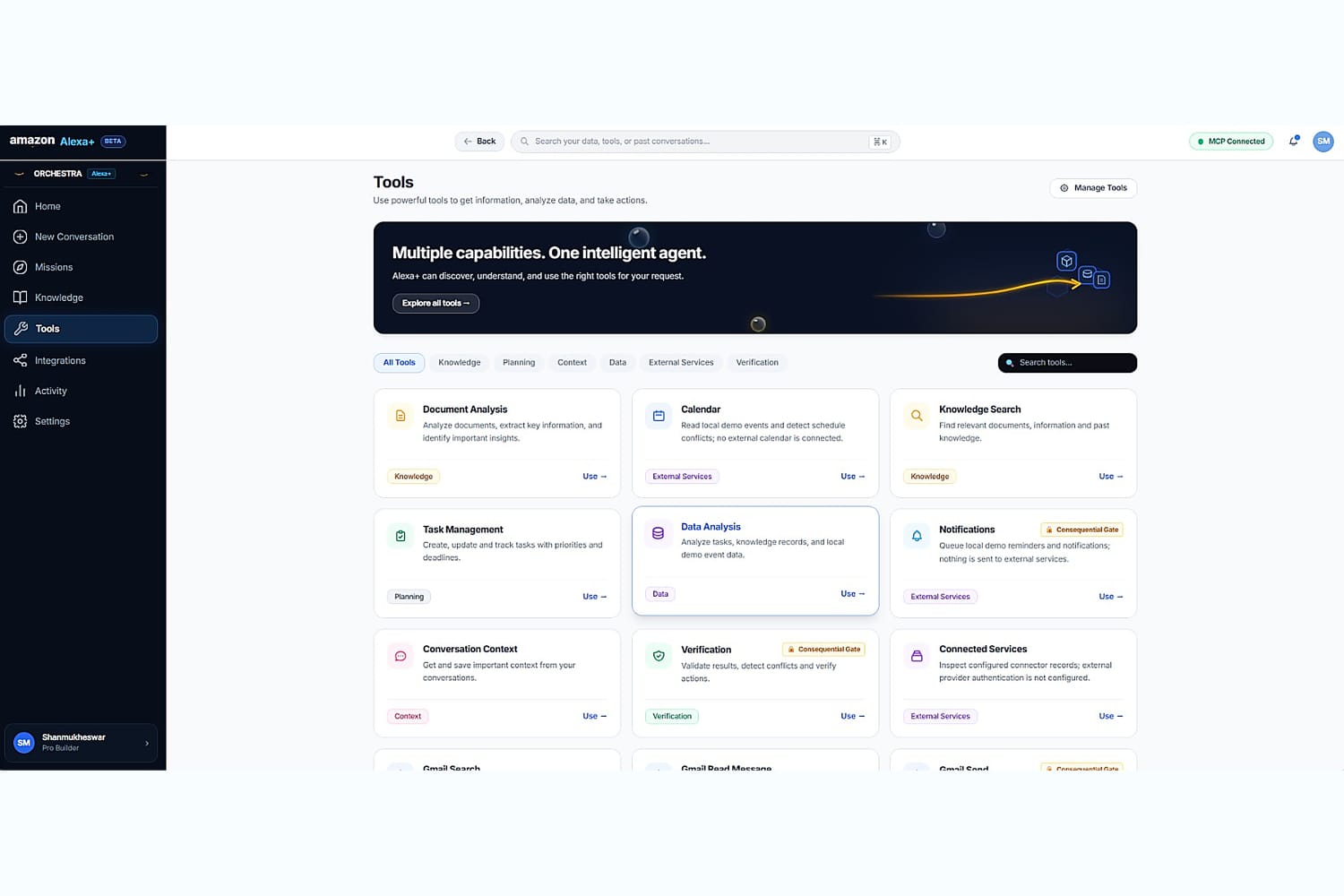
Modern workflows involve multiple disconnected tools such as calendars, email, knowledge bases, and productivity applications. Users often need to switch between different interfaces and manually coordinate actions. We wanted to build ORCHESTRA, an agentic AI platform that helps coordinate tools and workflows through a unified interface, with human approval for consequential actions.
What it does
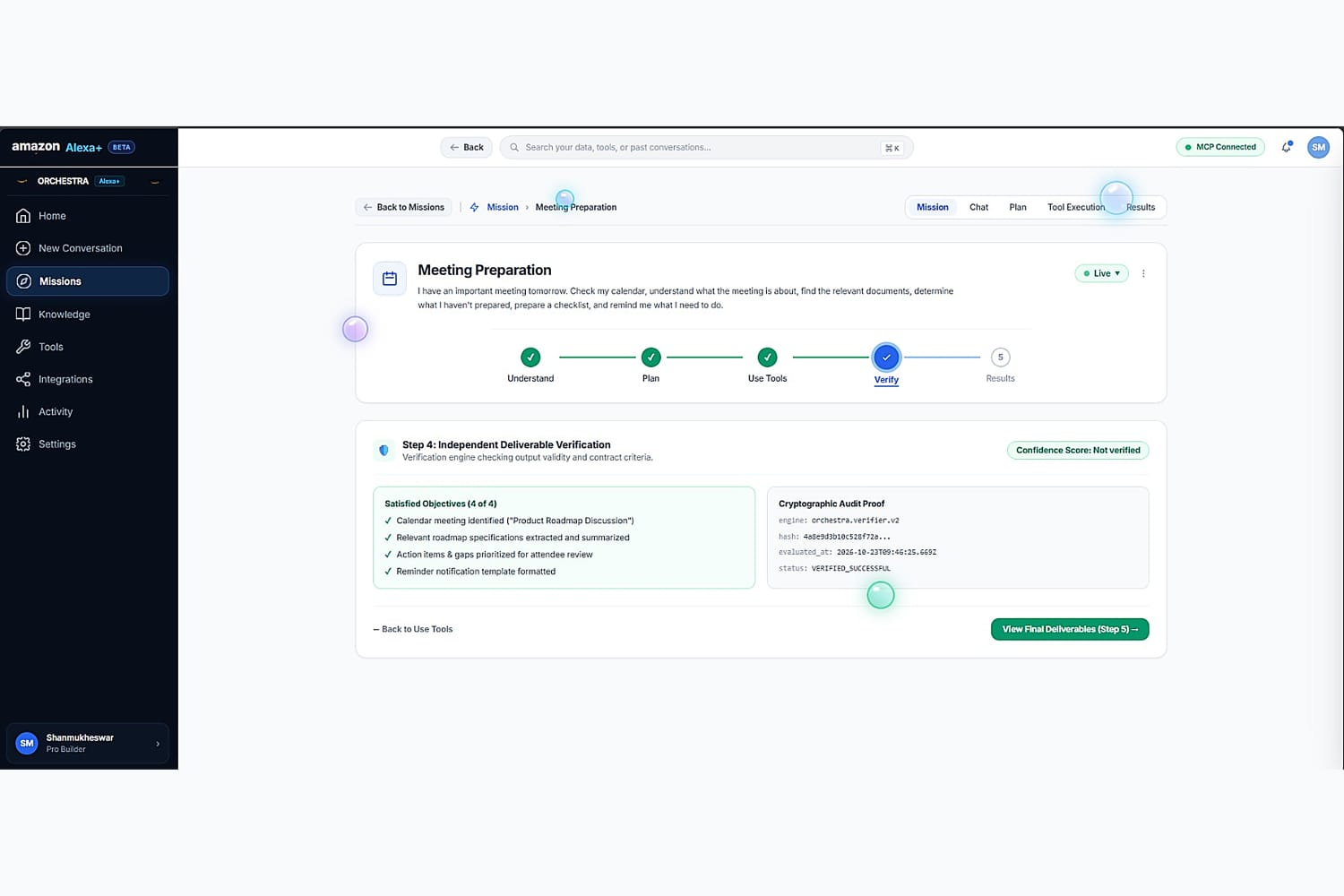
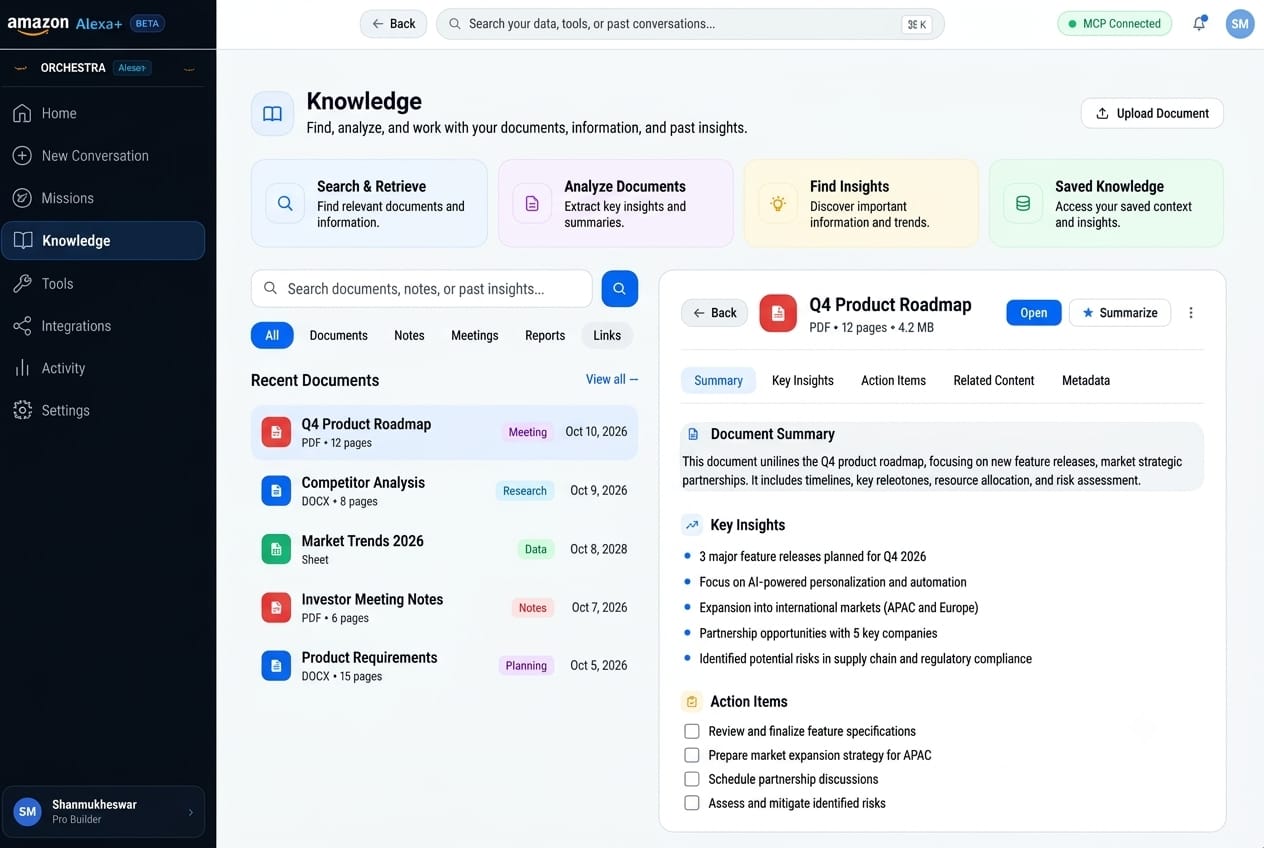
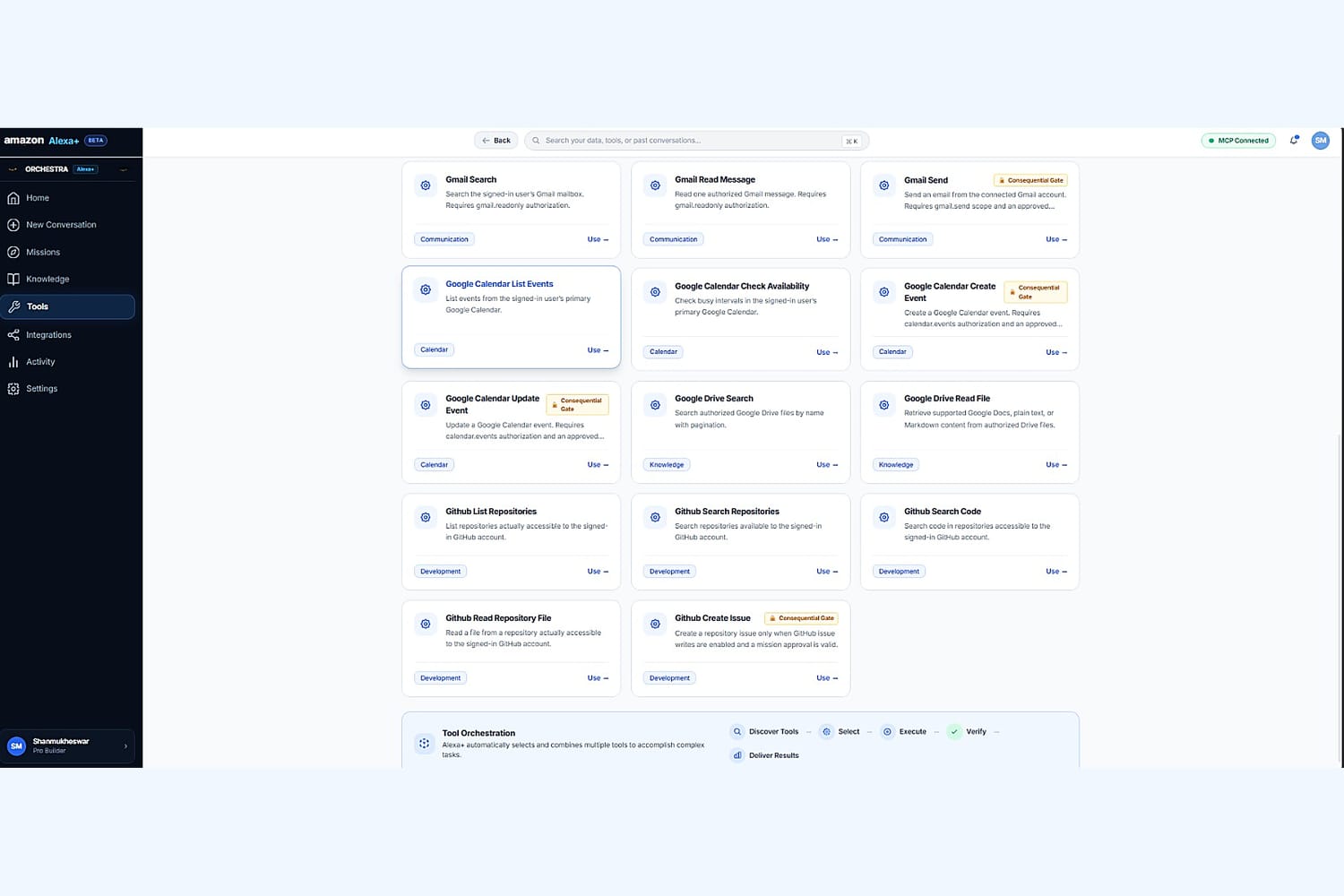
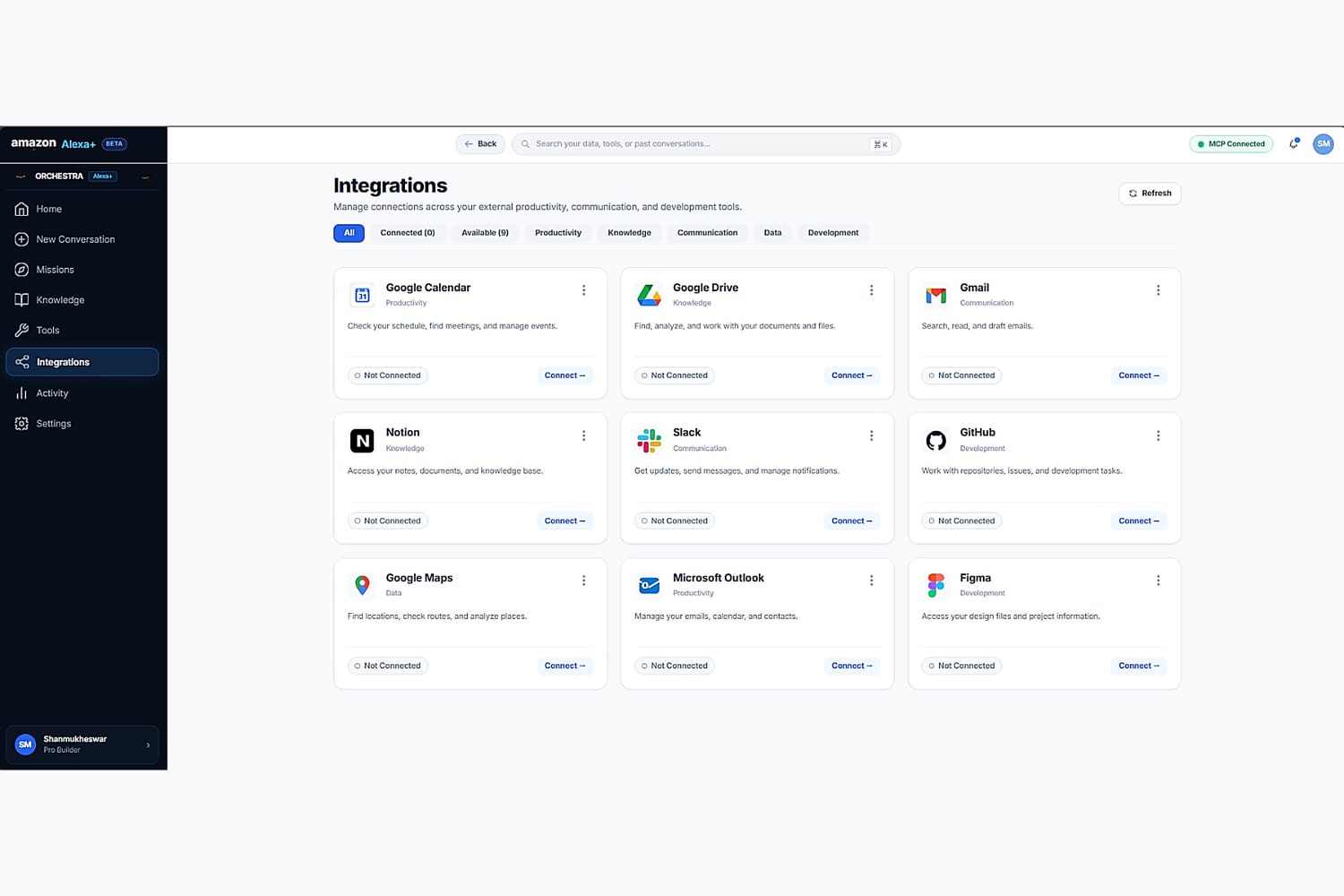
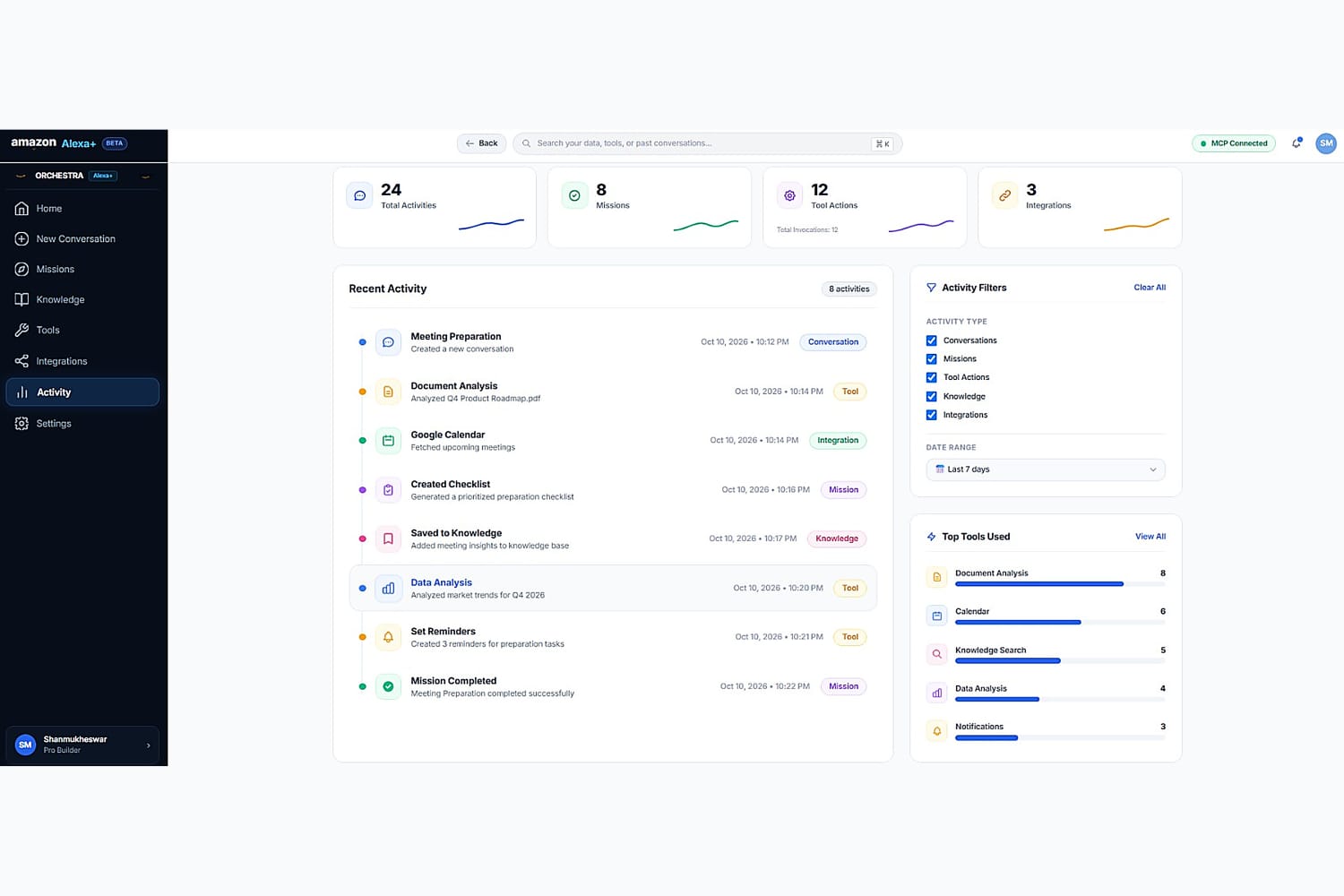
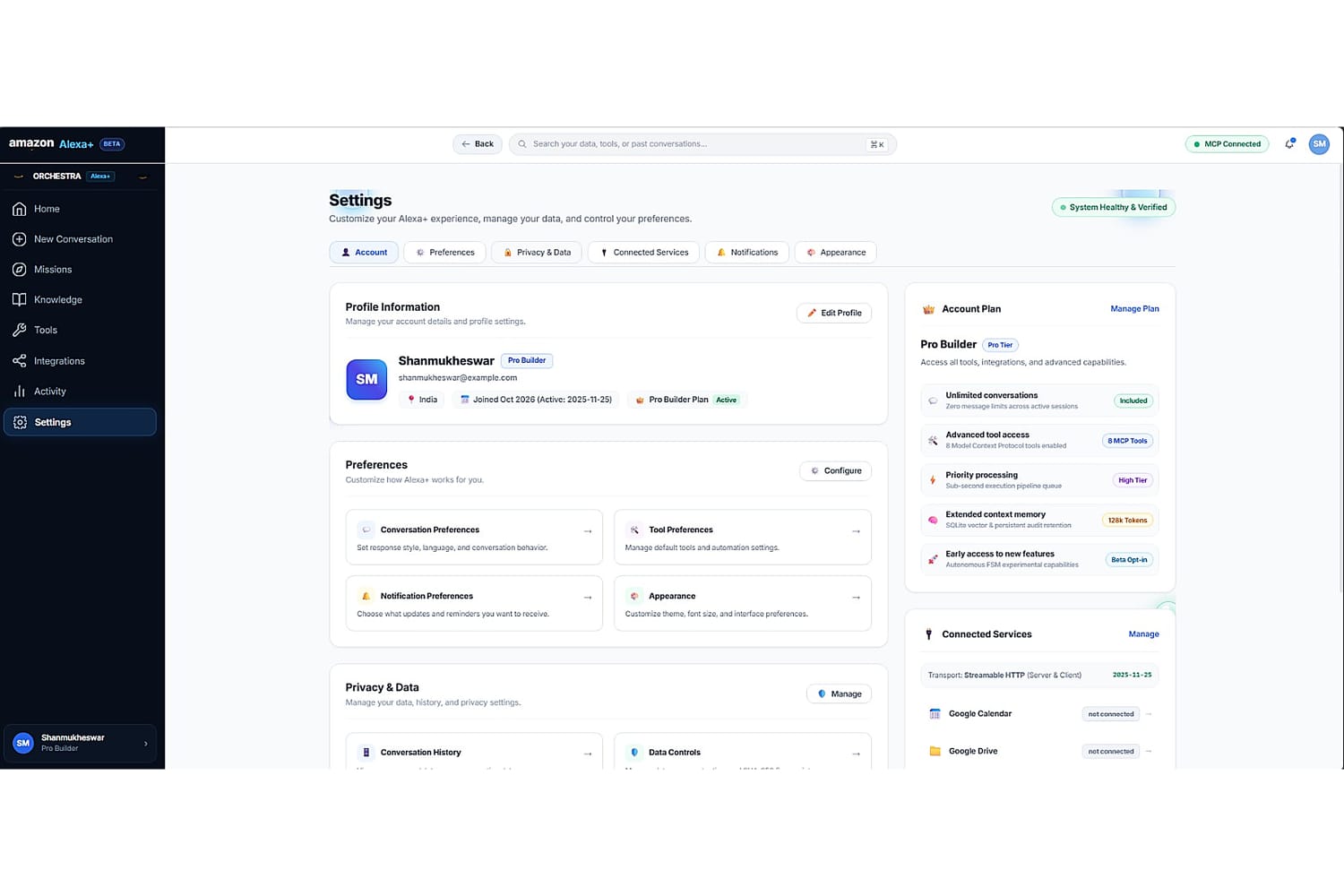
ORCHESTRA provides a unified workspace for managing missions, knowledge, integrations, activity, and tools. Its orchestration layer coordinates workflow execution, while its tool integration architecture provides a foundation for connecting external services. Security controls help prevent consequential actions from being executed without the required approval.
The project includes a web interface, an orchestration package, an MCP server, and an MCP client. It also includes persistent SQLite storage and configurable authentication for protected API operations.
Live demo: https://alexa-orchestra.onrender.com
Source code: https://github.com/25A31A4325/Alexa-
How we built it
We built ORCHESTRA as a TypeScript monorepo with separate packages for orchestration, MCP client functionality, MCP server functionality, and the web application. We used Node.js for the server runtime, SQLite for persistent storage, and a web-based interface for interacting with the platform.
We implemented API authentication, approval fingerprinting using SHA-256, health endpoints, and automated tests. The application is deployed on Render for public demonstration.
Challenges we ran into
Key challenges included coordinating multiple packages, maintaining reliable workflow execution, preserving state across process restarts, and enforcing security boundaries around consequential actions. We addressed these challenges through automated testing, configurable service settings, persistent storage, and explicit approval checks.
Accomplishments that we're proud of
We built ORCHESTRA with a modular architecture, MCP integration, SQLite persistence, API authentication, approval safeguards, and automated tests.
What we learned
We learned about agentic AI, MCP, TypeScript architecture, API security, database persistence, automated testing, and cloud deployment.
What's next for ORCHESTRA — Agentic AI Platform
We plan to expand real-world integrations, improve Google OAuth connectivity, strengthen security, and make workflow automation more reliable and user-friendly.
Built With
- express.js
- github
- model-context-protocol-(mcp)
- node.js
- render
- rest-api
- sqlite
- typescript


Log in or sign up for Devpost to join the conversation.