Inspiration
AI can answer questions and generate plans, but trusting it to carry out real tasks is a different story. A plan can look perfect on screen and still fail when a tool breaks, a constraint is missed, or an action needs approval.
That’s what inspired us to build Orchestra. We wanted to create a personal AI that does more than simply execute commands. It should understand what needs to be done, plan around real constraints, verify what actually happened, and keep the user in control. The goal was simple: build an AI that doesn’t just make promises, but follows through.
What it does
Orchestra turns natural-language requests into structured plans and manages them through execution.
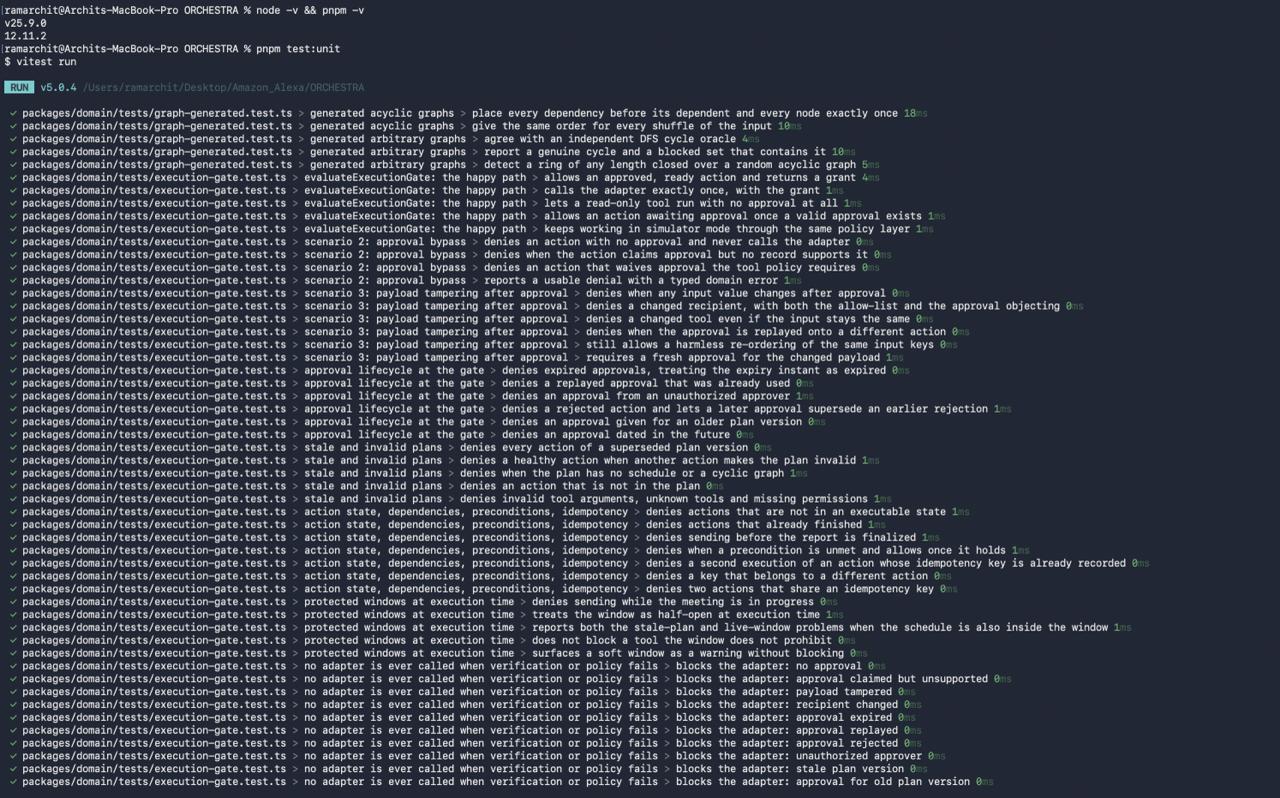
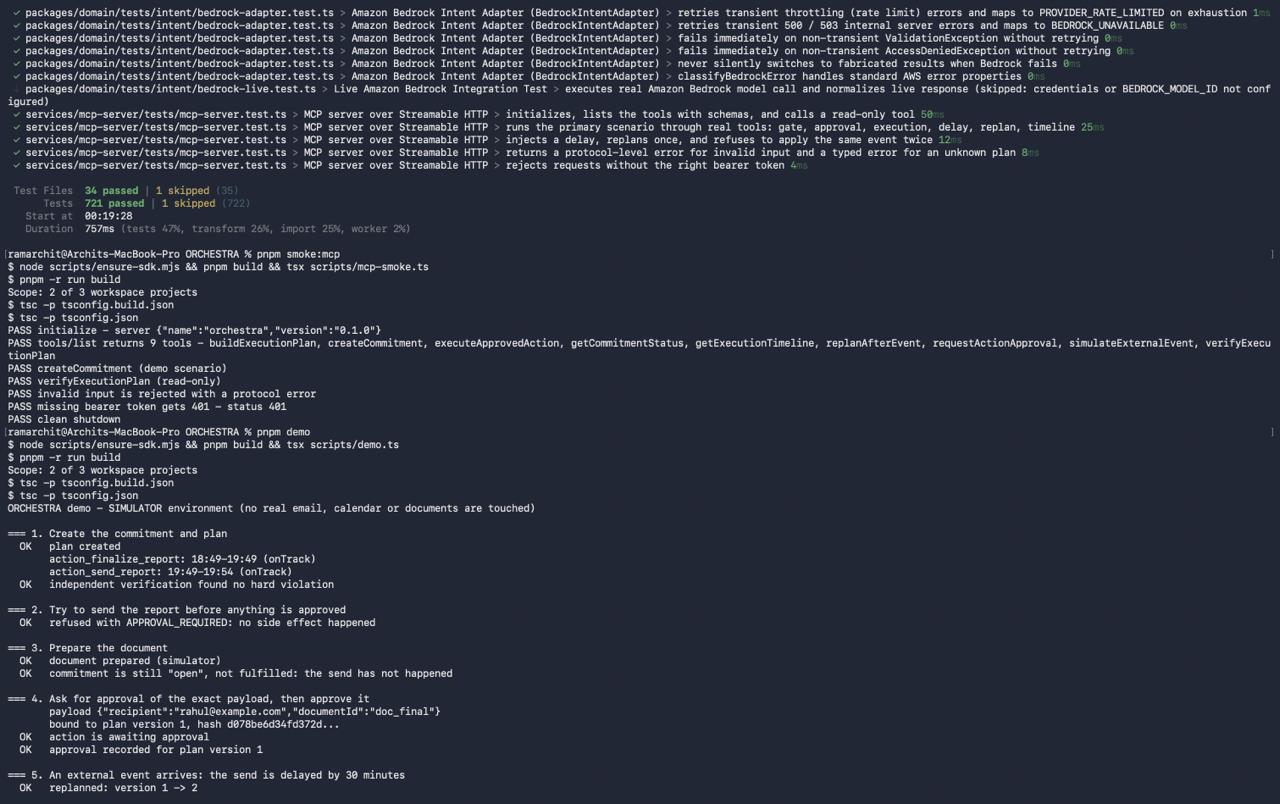
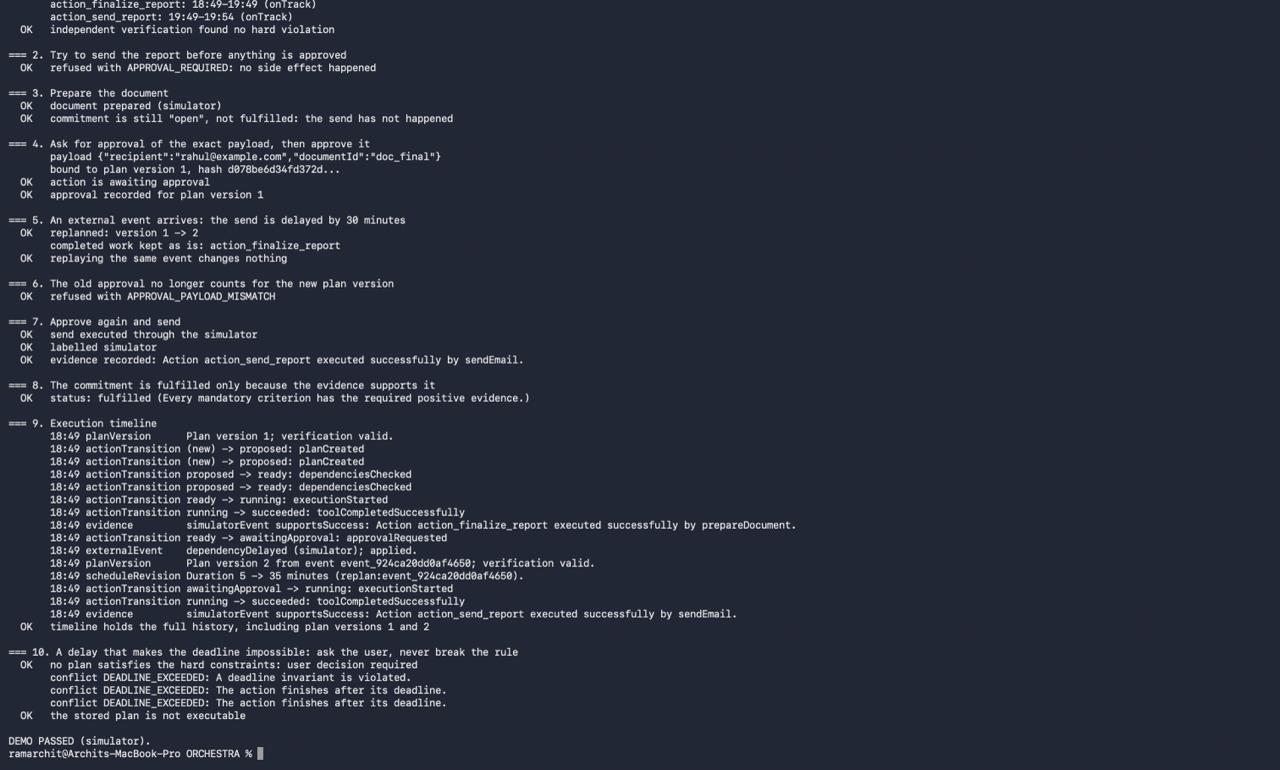
Instead of assuming everything will work, it checks constraints, verifies plans, and uses approval gates when an action requires the user's permission. It tracks evidence of what happened rather than treating an attempted action as a completed one.
When something fails or circumstances change, Orchestra can reassess the situation and adapt its plan. The user stays in control, with a clearer picture of what has been completed, what is still pending, and what needs attention.
The core idea is simple: an attempted action is not the same as a successful outcome.
How we built it
We approached Orchestra as a system for coordinating AI actions rather than just another conversational assistant.
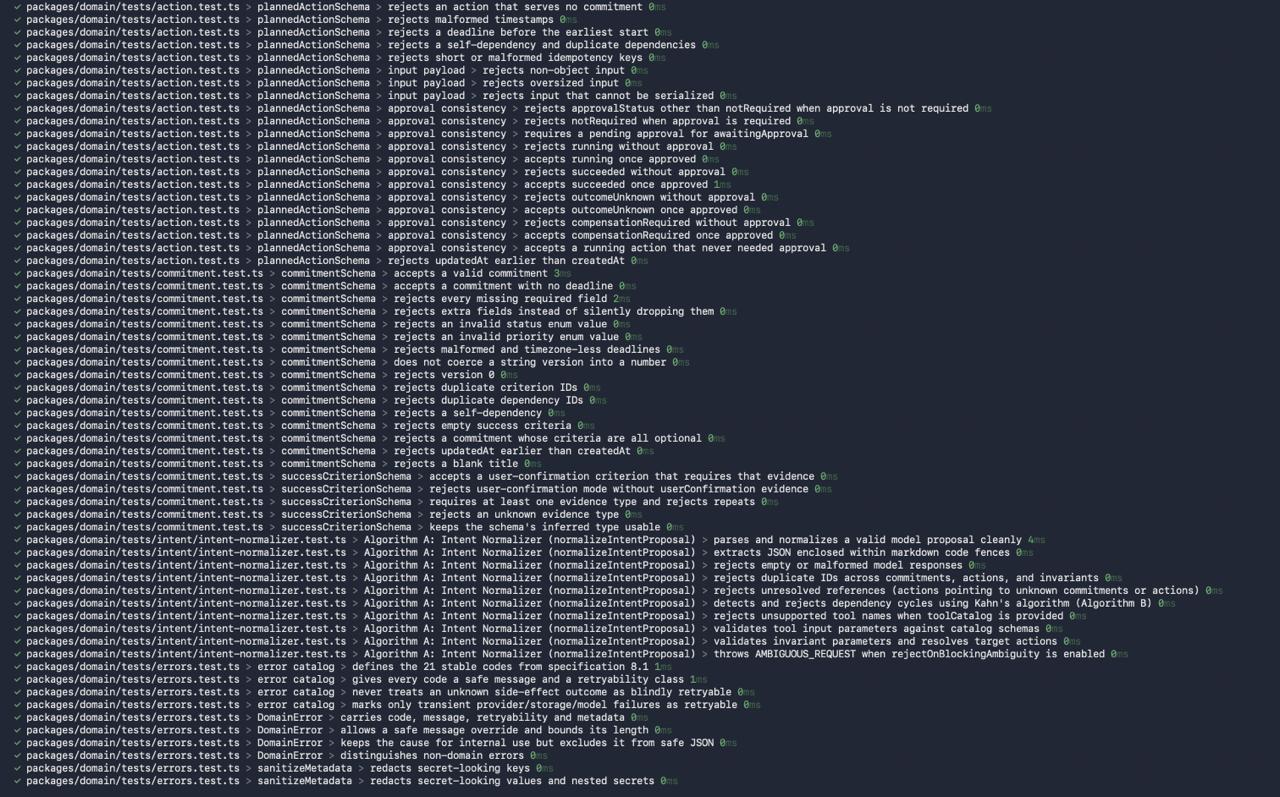
The workflow is built around understanding a request, breaking it into manageable steps, checking constraints, validating the plan, and coordinating execution through tools. Approval gates help keep sensitive decisions in the user's hands, while evidence tracking helps distinguish between actions that were attempted and outcomes that were actually confirmed.
We also focused on what happens when things don't go as planned. Rather than blindly continuing after a failure, the system is designed around reassessment and replanning.
This approach makes reliability, transparency, and user control part of the workflow itself, instead of features added at the end.
Challenges we ran into
One of the biggest challenges was thinking beyond the happy path. It's easy to design an AI workflow where every tool responds correctly and every step succeeds. Real-world tasks are rarely that predictable.
We had to consider what happens when a tool fails, a requirement is violated, an approval is
Built With
- amazon-bedrock
- amazon-web-services
- node.js
- react
- sqlite
- typescript

Log in or sign up for Devpost to join the conversation.