Inspiration
Ophthalmology clinics can be intimidating. Our preliminary survey of 147 participants revealed a staggering truth: 68.1% of patients experience extreme pre-clinic anxiety, and 85% identify "fear of the unknown" as their primary stressor. Most patients spend their waiting time on unstructured web searches, which often leads to medical misinformation and increased distress. We created OrcaX to transform this "idle" waiting time into a structured, calming, and educational journey.
What it does
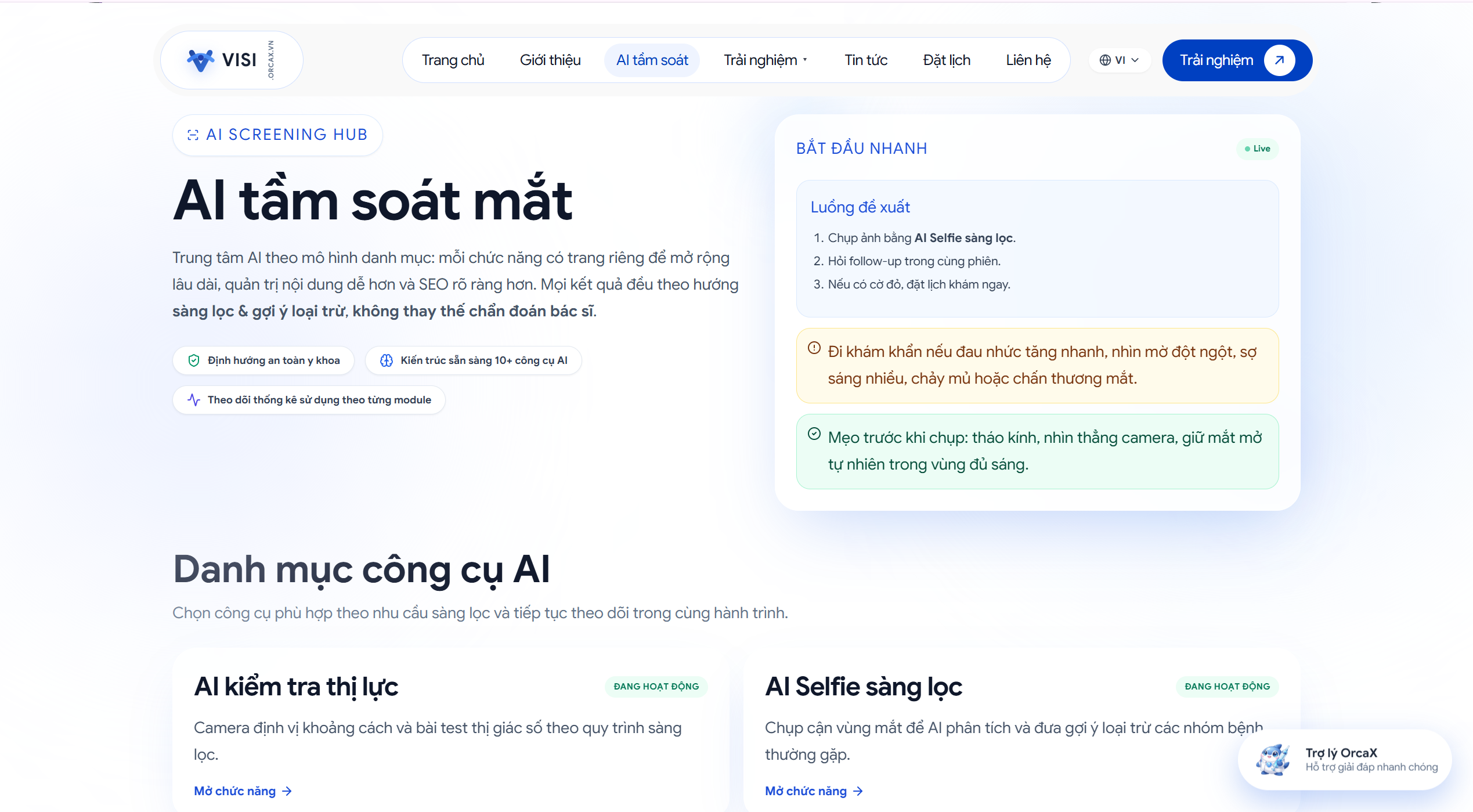
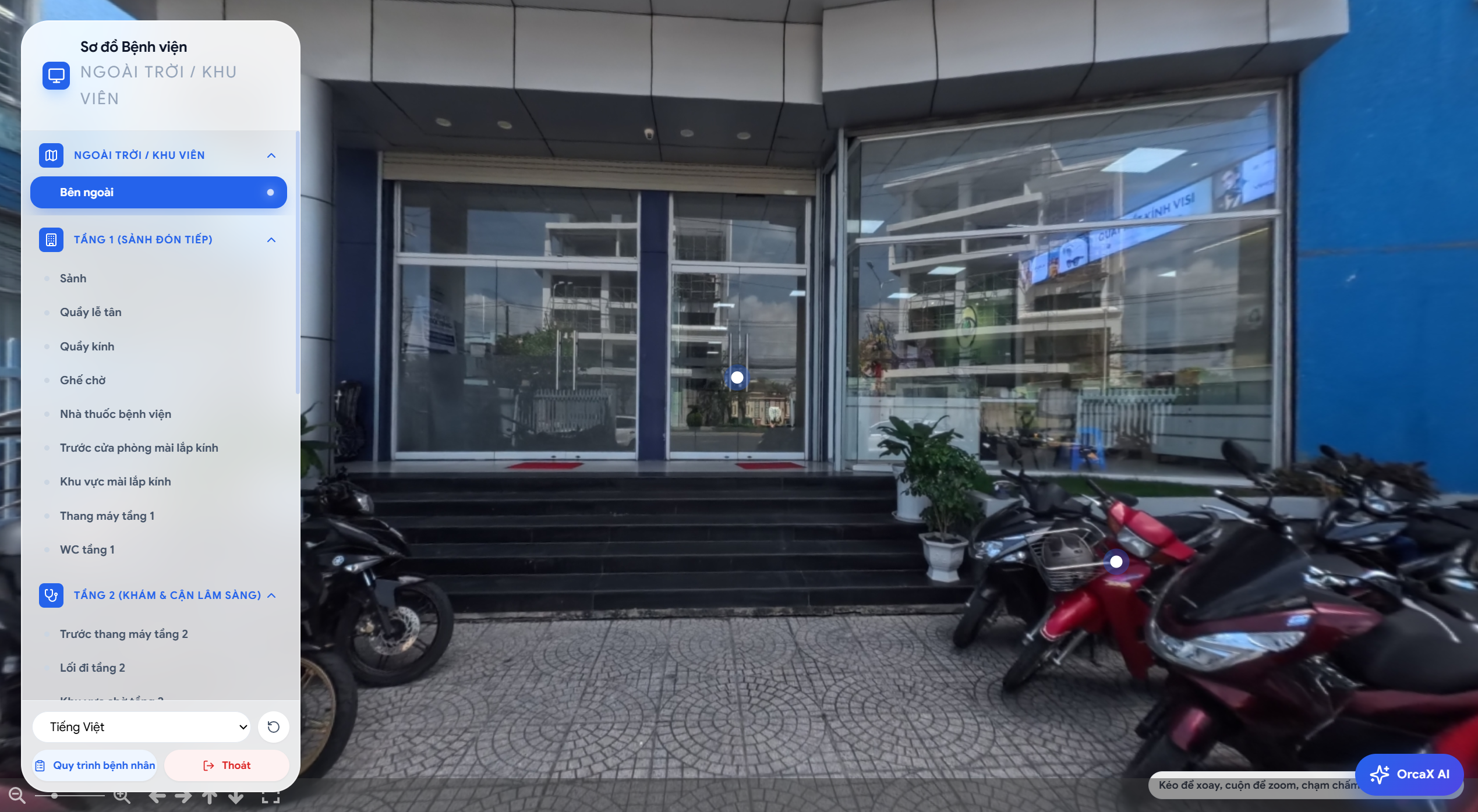
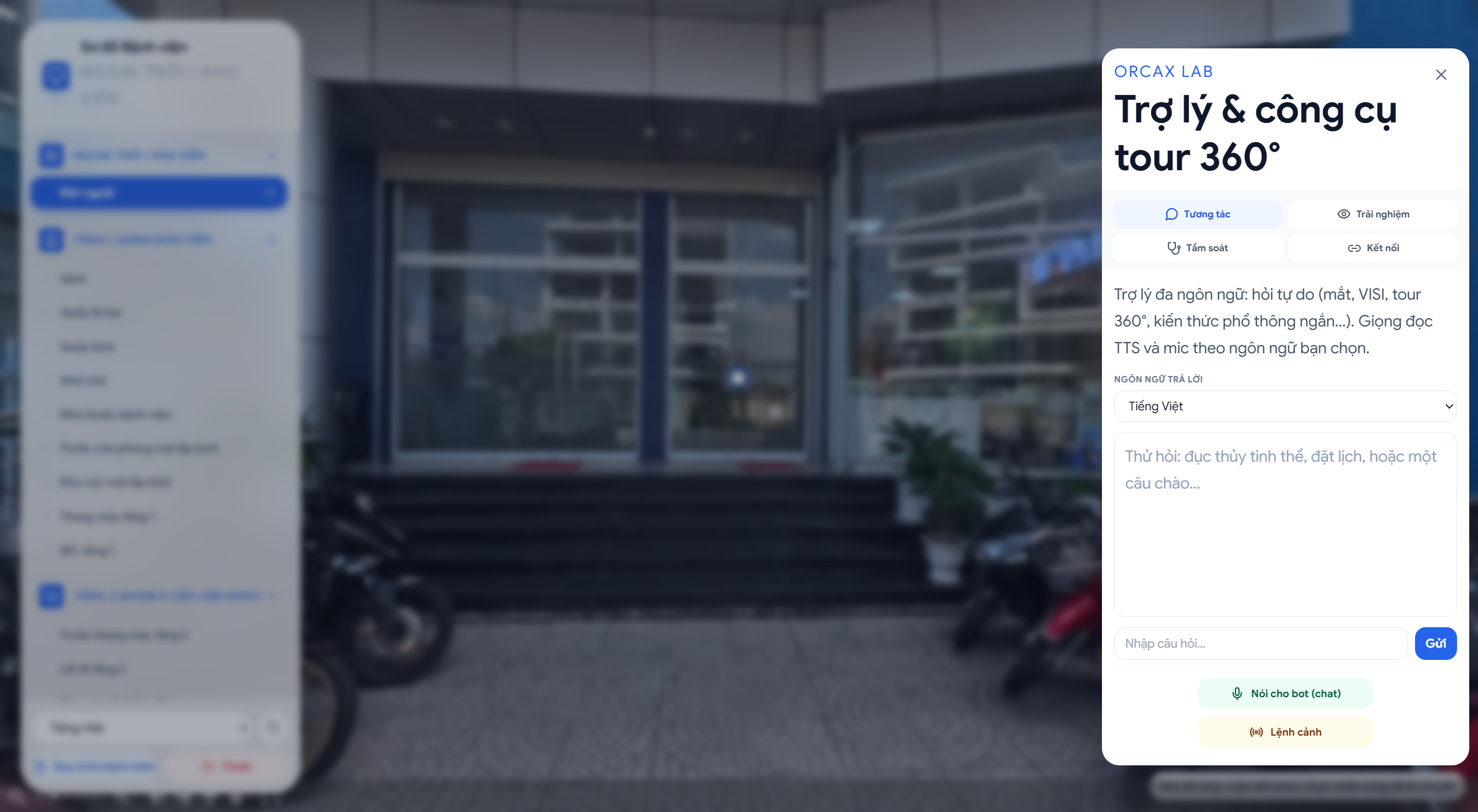
OrcaX is an AI-driven digital health ecosystem designed to bridge the gap between patients and specialized eye care. It features: Immersive 360° Orientation: A virtual "walkthrough" of the clinic with Text-to-Speech guidance to familiarize patients with the environment. Governed AI Chatbot (Gemini RAG): A safe, conversational assistant that answers eye-care questions based strictly on vetted medical data, preventing AI "hallucinations." Empathy Simulations: Visual filters that simulate common eye conditions, helping caregivers and family members "see" through the patient's eyes. Gamified Vision Triage: Calibrated mini-games that provide non-diagnostic vision "hints," encouraging users to seek professional help sooner.
How we built it
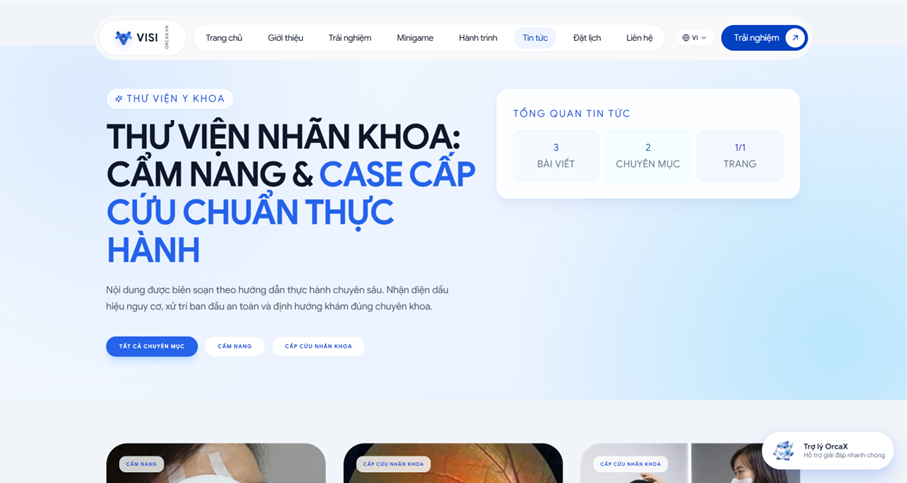
Our team of 2 Software Engineers and 3 Graphic Designers worked in a 48-hour sprint to harmonize clinical precision with a "Zen Clinic" aesthetic: The Brain (AI): We implemented Google Gemini AI using a Retrieval-Augmented Generation (RAG) pipeline. This ensures the AI remains grounded in institutional knowledge (provided by our partner, VISI Medical Group). The Body (Full-stack): Built with Next.js and React Native for a seamless, install-free browser experience. We used TensorFlow.js for client-side vision task processing. The Soul (Design): Our 3 designers crafted a "Minimalist Clinical Premium" UI/UX in Figma, focusing on high-contrast accessibility for users with vision impairments.
Challenges we ran into
AI Safety: Developing a prompt-engineering framework that provides helpful information without crossing the line into unsupervised diagnosis. Hardware Variability: Calibrating vision-style tasks across different screen resolutions and camera qualities. We solved this by designing a "Pre-task Calibration Workflow" to standardize lighting and distance. Integration: Merging the 360° heavy-asset orientation module with a lightweight web framework to ensure fast loading on mobile data.
Accomplishments that we're proud of
Clinical Partnership: Successfully aligned our development with the VISI Medical Group workflow constraints. Community Validation: Showcased the prototype at the "THẤU" Exhibition, where it received overwhelming positive feedback from 100+ visitors. Functional RAG: Achieving a conversational AI that successfully stays within the boundaries of provided medical documents.
What we learned
We learned that in Digital Health, empathy is a technical requirement. A project isn't just about the accuracy of the code; it’s about the psychological readiness of the user. The synergy between our designers and engineers taught us that a beautiful, intuitive interface is what makes complex AI trustworthy for a patient.
What's next for OrcaX
Pragmatic RCT: Launching a randomized controlled trial with 150 participants to quantify the impact of OrcaX on reducing patient anxiety. Hospital Integration: Fully integrating OrcaX into the digital portals of major eye hospitals, starting with VISI Medical Group. Advanced Analytics: Enhancing our triage models to provide more precise longitudinal engagement data for doctors.
Built With
- figma
- firebase
- google-gemini-ai
- next.js
- react-native
- tensorflow.js
- vercel


