-
-
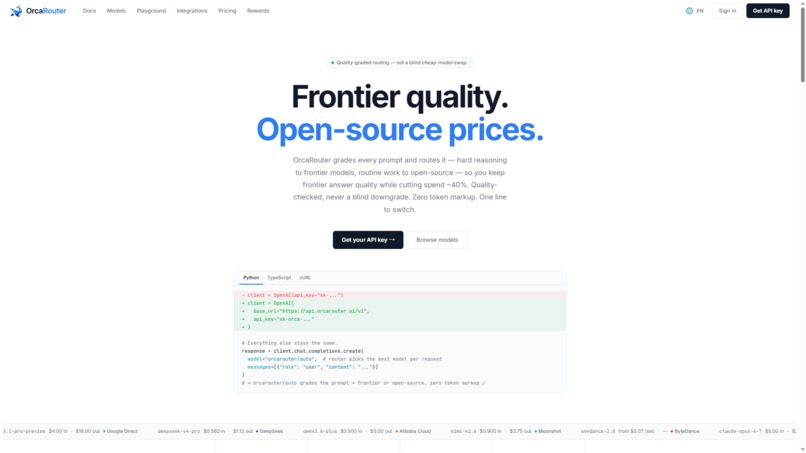
HomePage
-
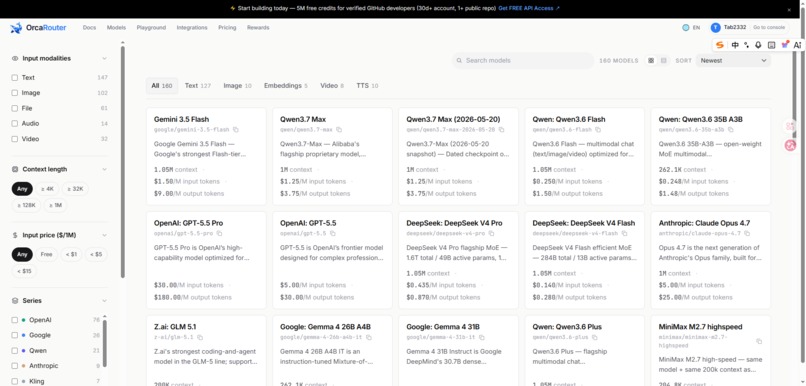
Models
-
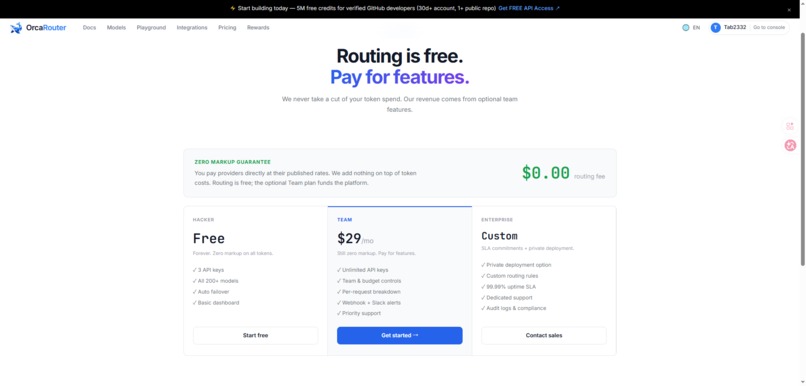
Pricing
-
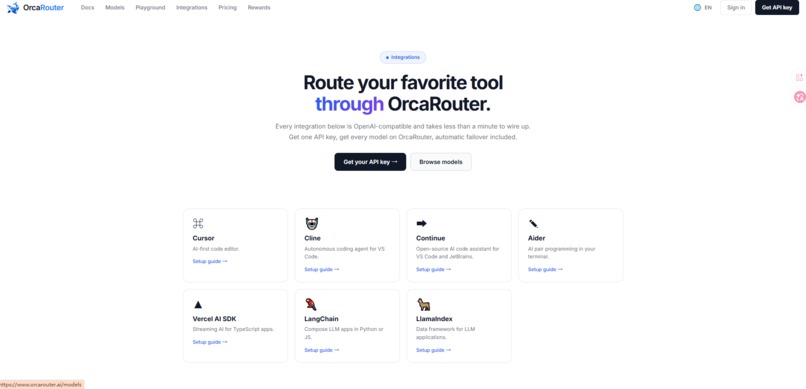
Playground
Inspiration
Building with LLMs today means juggling a dozen providers — OpenAI, Anthropic, Google, DeepSeek, Qwen — each with its own SDK, key, and pricing. You either lock into one provider and overpay for simple tasks, or wire everything together yourself. We kept asking the same question: why send a "summarize this sentence" request to a frontier model that costs 10x more than the job needs? OrcaRouter started from a simple idea — most requests don't need the most expensive model, they need the cheapest one that still answers well.
What it does
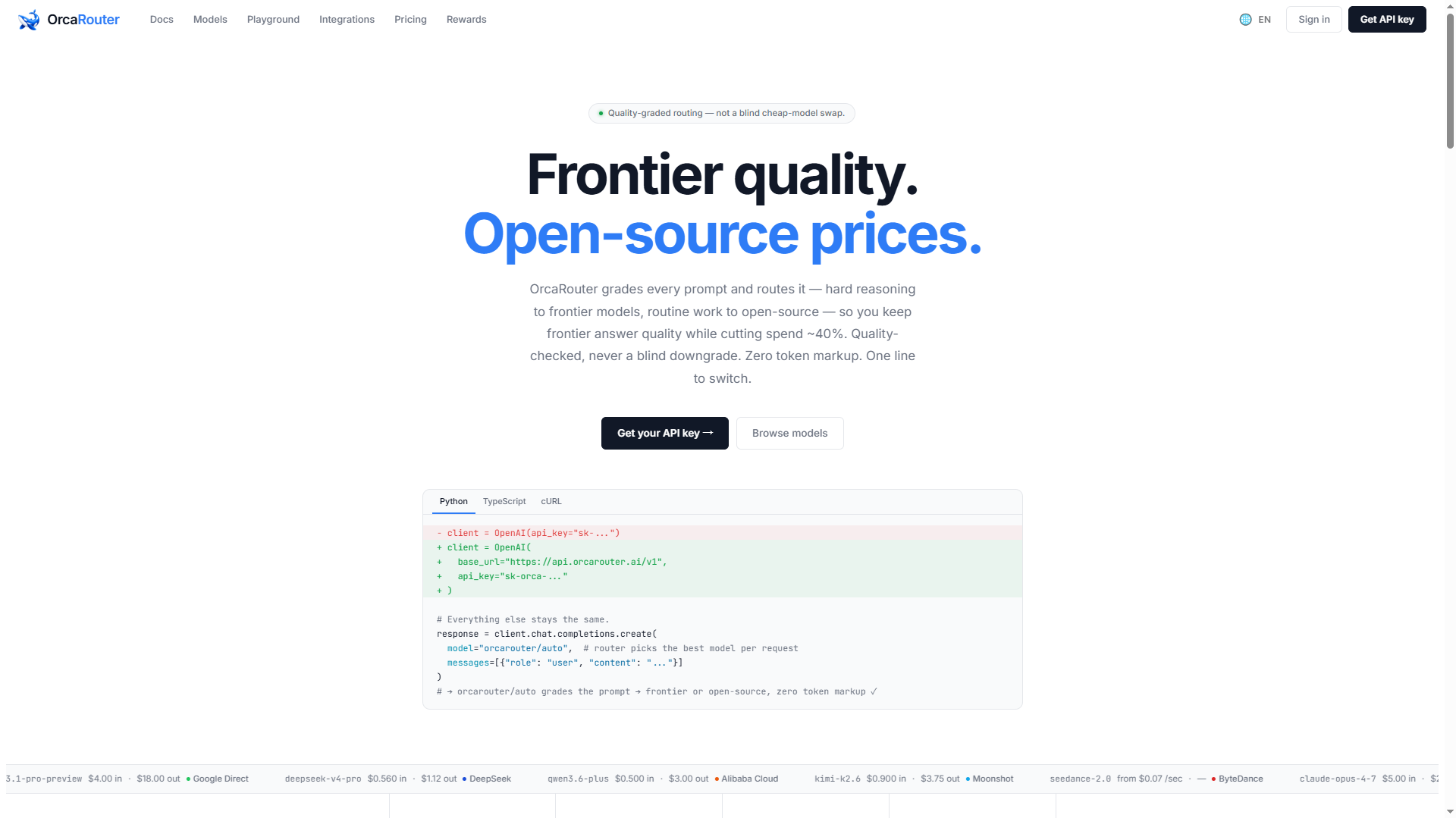
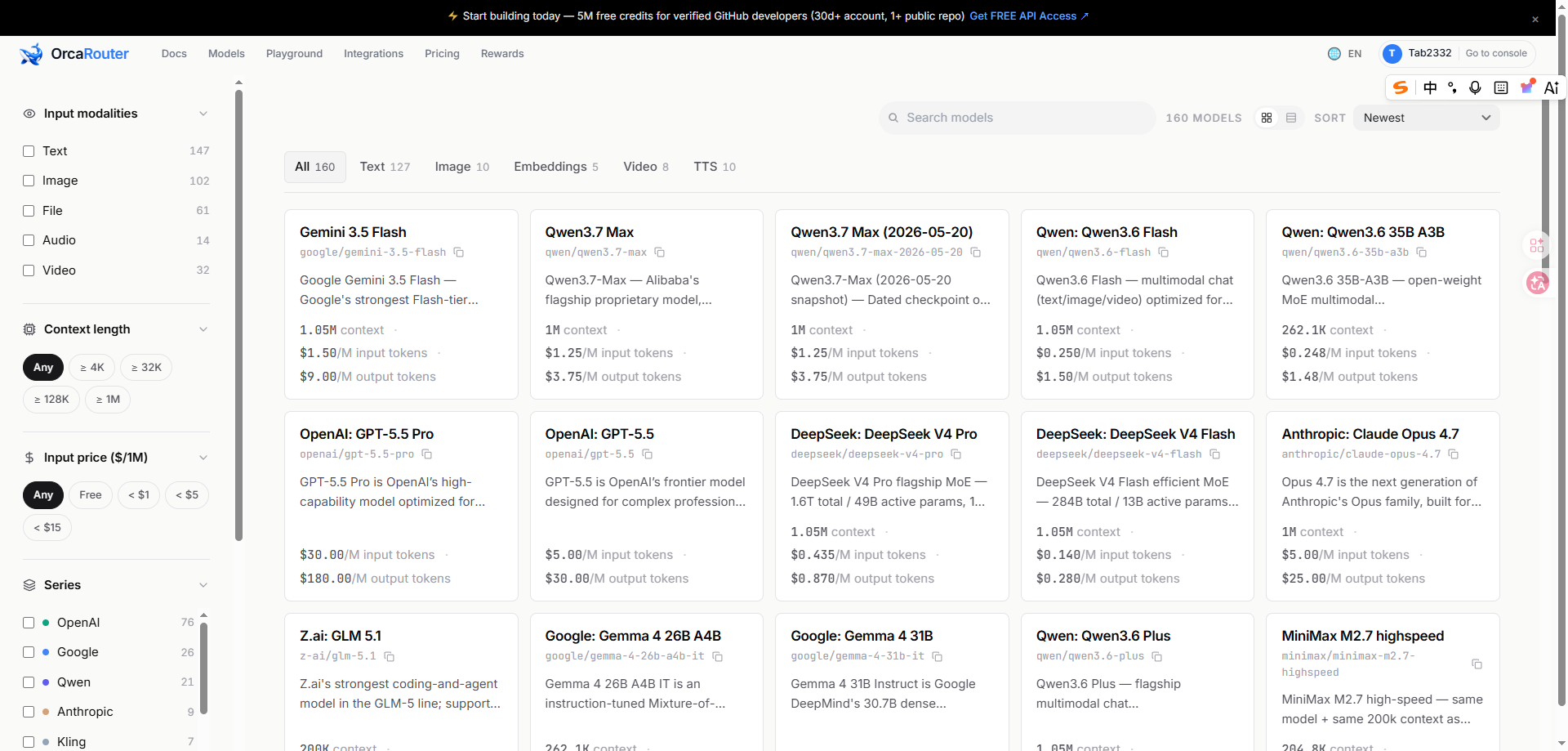
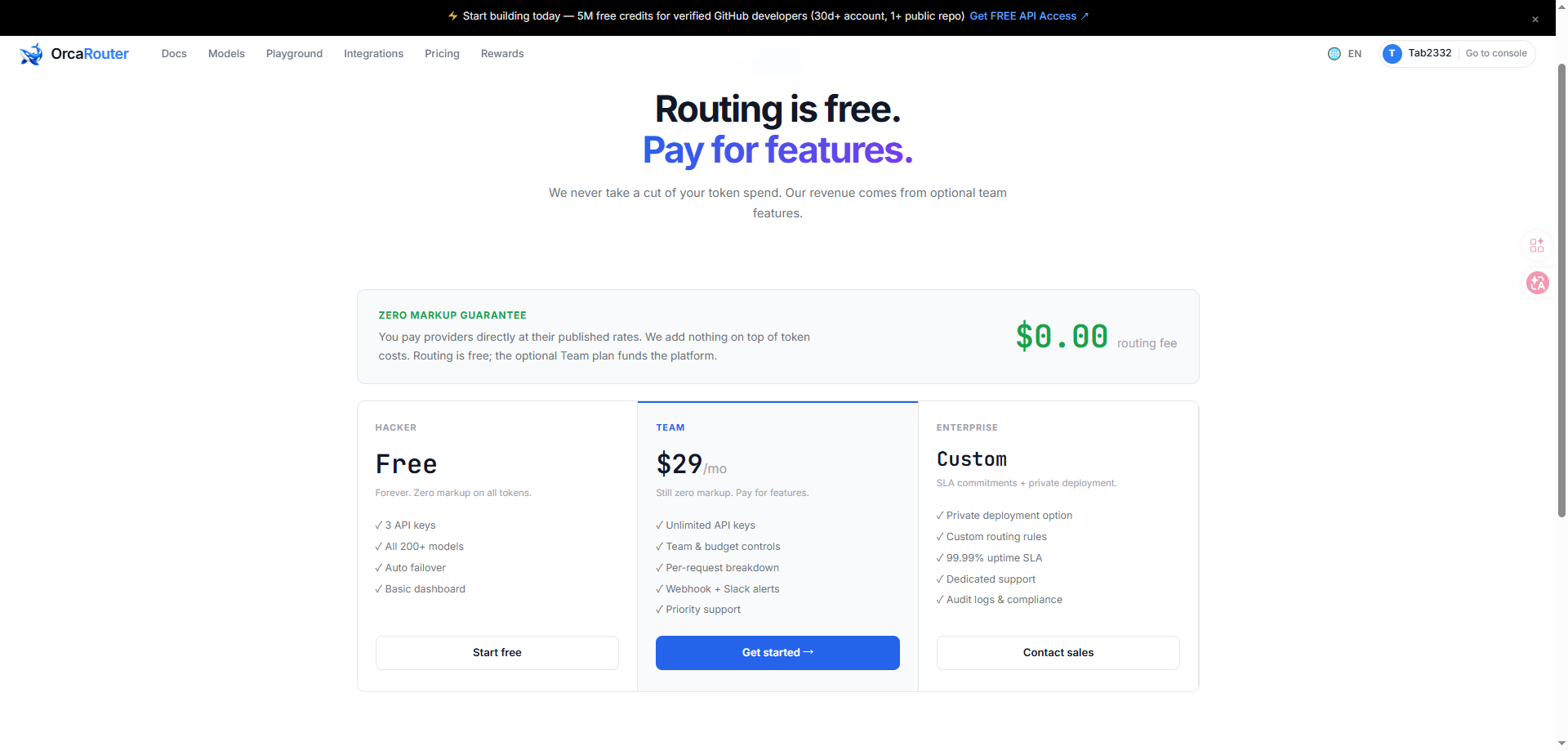
OrcaRouter is an OpenAI-compatible API gateway. Point your app at a single endpoint and you reach 200+ models across providers. Every prompt is scored by difficulty in under a millisecond, then routed to the model that best balances cost, speed, and quality: routine tasks go to lower-cost open-source models, while hard reasoning goes to frontier models. It adds no markup on provider token prices, shows the difficulty score, chosen model, and provider for every request (glass-box), and fails over to another provider in under 50ms if one goes down. The result is roughly 40% lower spend at the same answer quality.
How we built it
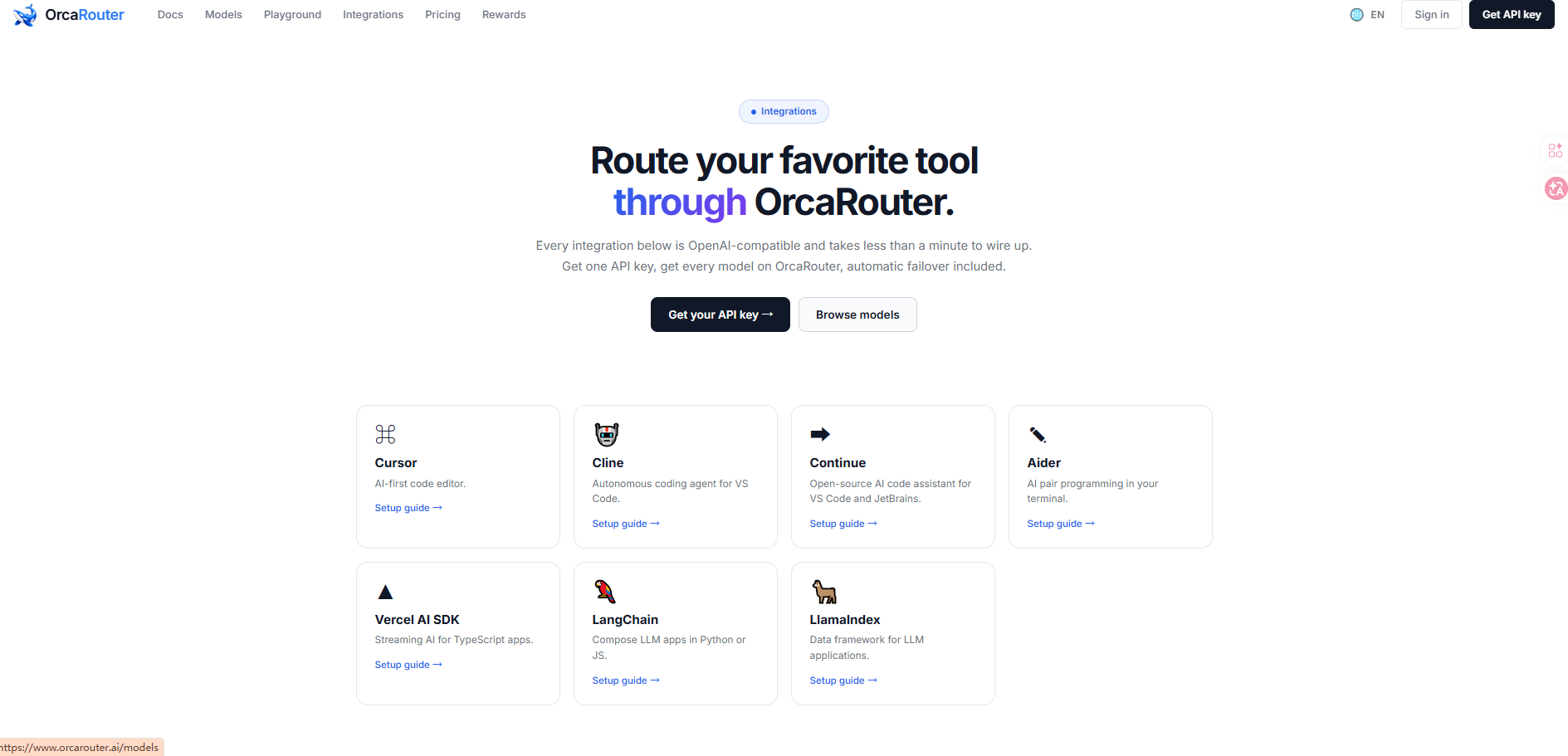
The core is an OpenAI-compatible REST layer, so existing SDKs work after changing just one base_url and key — streaming, tool calling, vision, and reasoning all behave as expected. A lightweight difficulty classifier scores each prompt, and a routing engine maps it to candidate models with configurable fallback chains. The open-source edition, OrcaRouter-Lite, is built with Python and FastAPI, uses SQLite by default (Postgres optional) and optional Redis, and runs with a single docker compose up. Cross-provide
Built With
- anthropic
- css
- deepseek
- docker
- fastapi
- gemini
- html
- javascript
- litellm
- openai-api
- postgresql
- python
- redis
- sqlite
