Inspiration
Marine and fisheries decisions often depend on rapidly changing ocean and weather conditions, while the available information is scattered across different sources. We wanted to build a system that could bring these inputs together and turn them into a clear, explainable recommendation for fishermen and marine decision-makers. ORCA was inspired by the need for safer fishing decisions without sacrificing fishing potential.
What it does
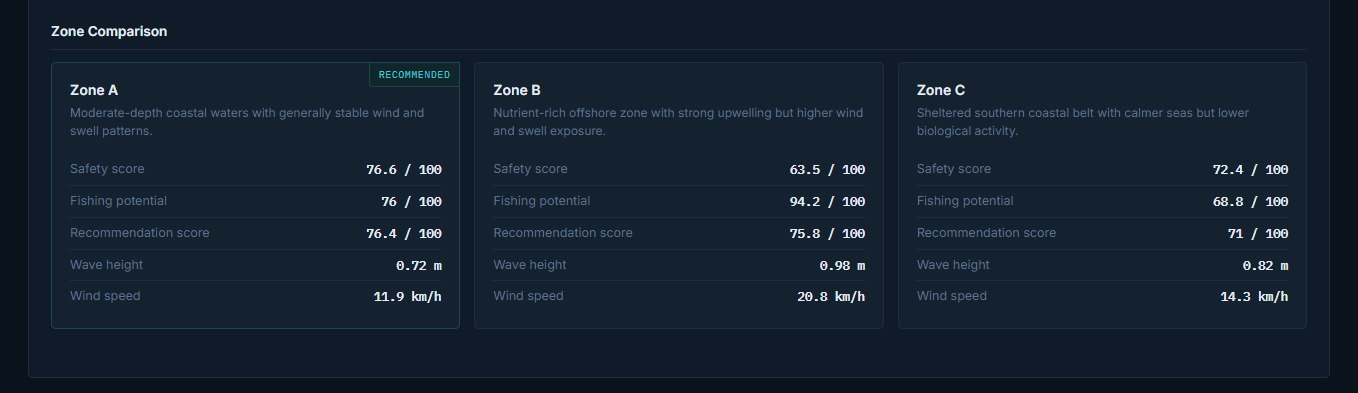
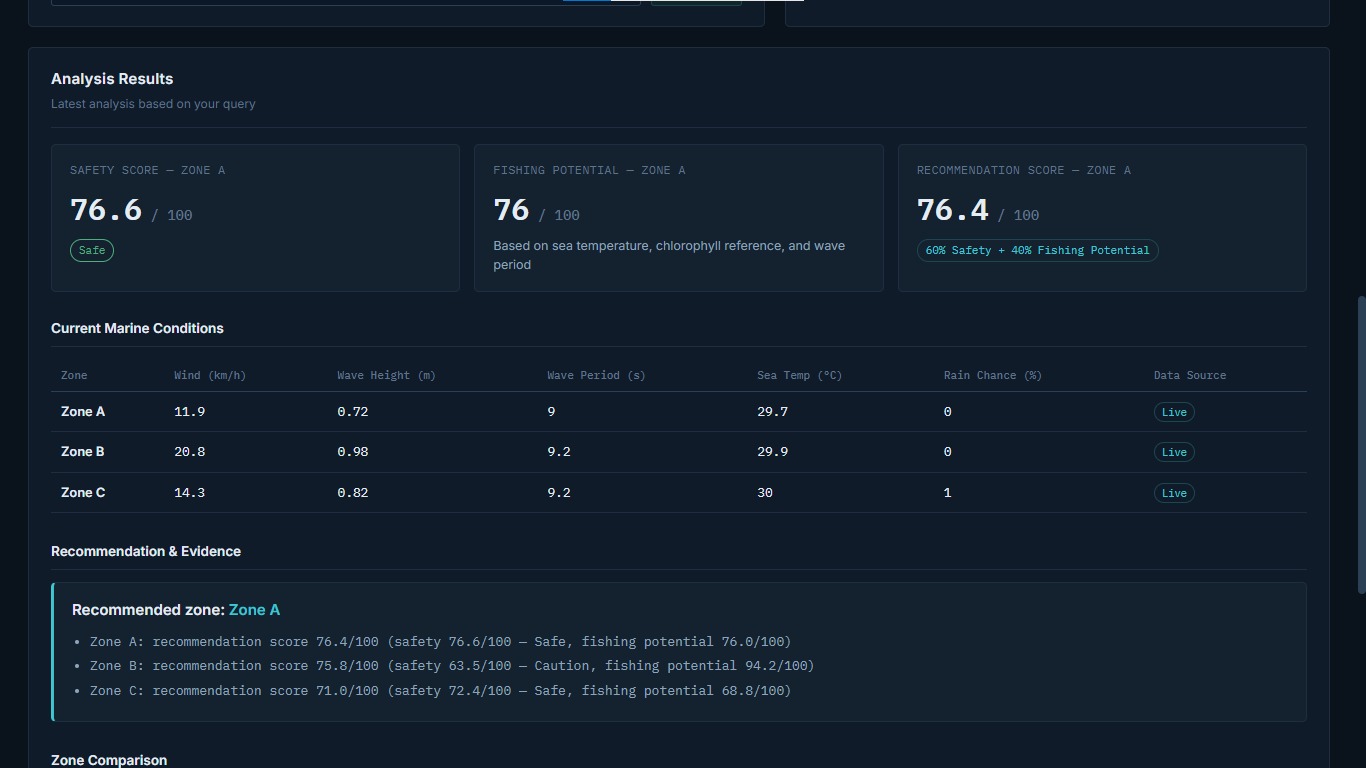
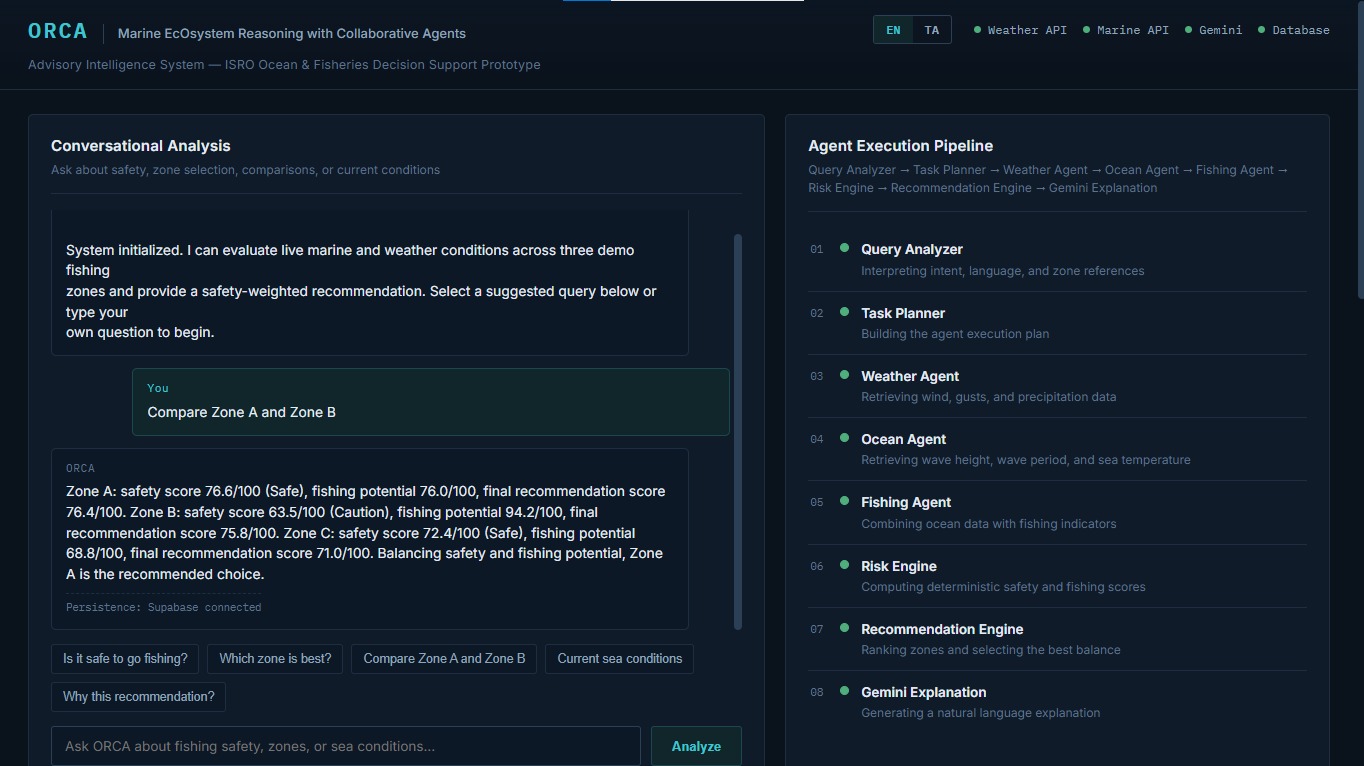
ORCA is a marine intelligence and decision-support dashboard that analyzes weather, ocean, and ecological indicators to answer practical questions such as whether it is safe to fish, which zone is preferable, and why a particular zone was recommended.
It uses multiple specialized agents for weather, ocean, and fishing analysis, followed by a deterministic risk and recommendation engine. The final results are presented in a simple, explainable format, with Gemini used only to narrate the computed results.
How we built it
We built ORCA using Python and Flask for the backend and HTML, CSS, and JavaScript for the dashboard. Open-Meteo Weather and Marine APIs provide weather and ocean conditions, while Supabase PostgreSQL handles optional persistence.
The system follows a multi-agent pipeline: the query is analyzed, tasks are planned, specialized agents collect and process relevant data, and a deterministic scoring engine calculates safety and fishing-potential scores. Recommendations are based on a 60% safety and 40% fishing-potential weighting. Gemini converts the final results into natural-language explanations without modifying the underlying scores.
Challenges we ran into
One of the main challenges was combining different types of marine and weather information into a consistent decision-making process. We also had to ensure that AI-generated explanations did not introduce unreliable or fabricated values.
Another challenge was making the prototype resilient to unavailable APIs or external services. We addressed this through deterministic fallbacks, demo data, and offline operation so that the core system remains functional even when external services are unavailable.
Accomplishments that we're proud of
We are proud of building a working multi-agent marine decision-support prototype that combines real-time environmental data, deterministic risk analysis, and AI-powered explanations in a single dashboard.
A key accomplishment is keeping the scoring system transparent and reliable: every score displayed by ORCA is calculated using explicit Python logic, while the AI is restricted to explaining those results.
What we learned
We learned that effective AI systems do not need to leave every decision to an LLM. Combining deterministic algorithms with specialized agents can make an AI system more reliable, explainable, and easier to validate.
We also learned the importance of designing for real-world failures, including unavailable APIs, missing services, and incomplete data.
What's next for ORCA – Marine EcOsystem Reasoning with Collaborative Agents
We plan to expand ORCA with richer satellite and oceanographic datasets, dynamic fishing-zone analysis, improved ecological indicators, more advanced predictive models, and broader geographic coverage.
Future versions could also incorporate historical data and forecasting to move from reactive recommendations toward predictive marine intelligence, helping users identify safer and potentially more productive fishing areas before heading out to sea.
Built With
- css
- flask
- google-gemini-api
- html
- javascript
- open-meteo-marine-api
- open-meteo-weather-api
- python
- supabase-postgresql

Log in or sign up for Devpost to join the conversation.