-
-
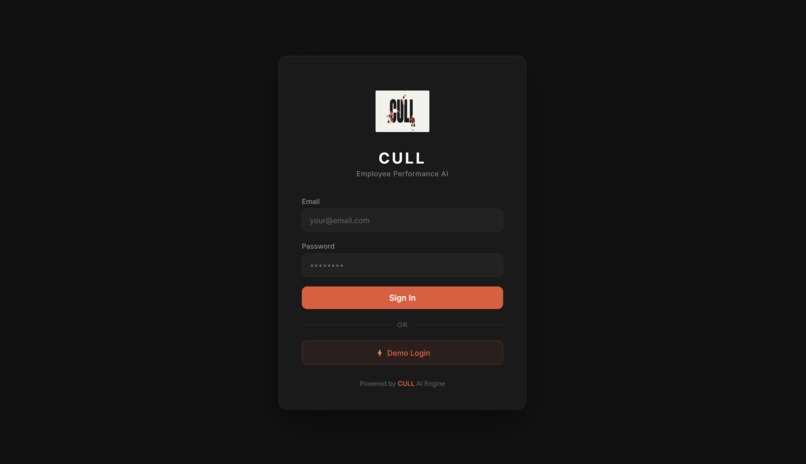
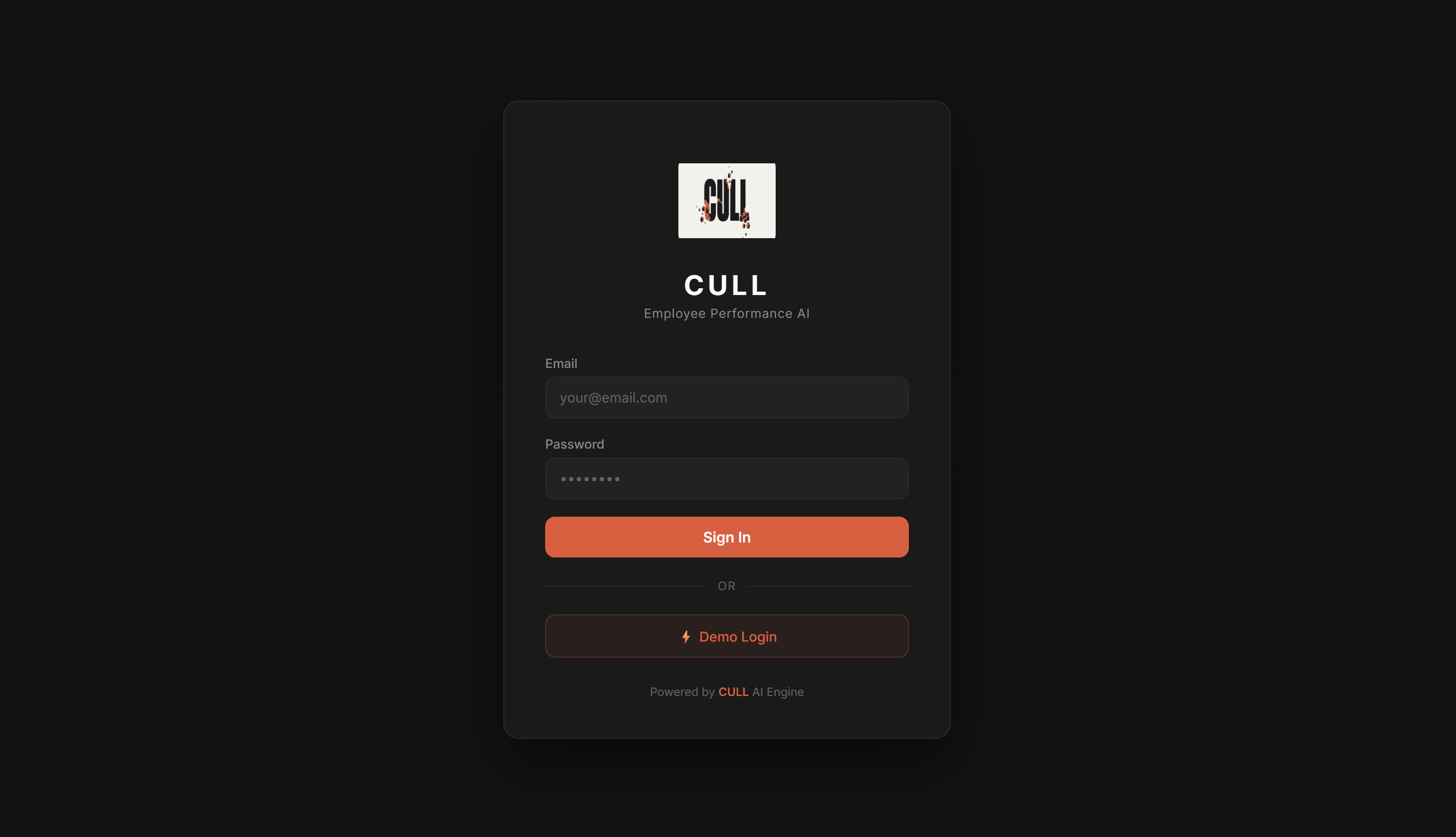
login page
-
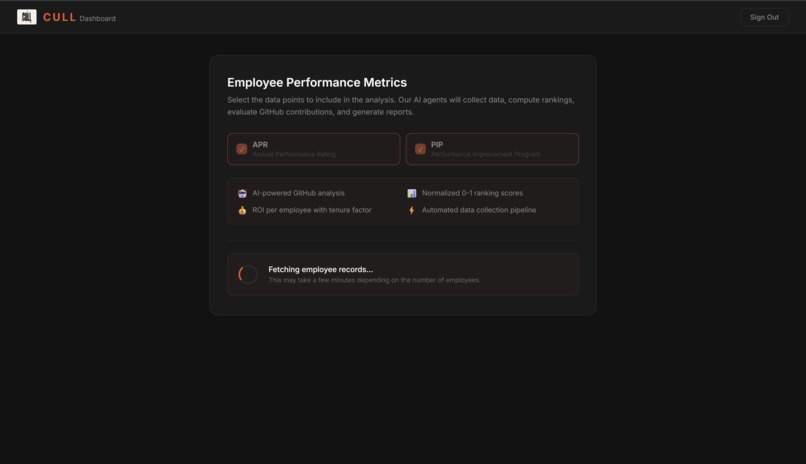
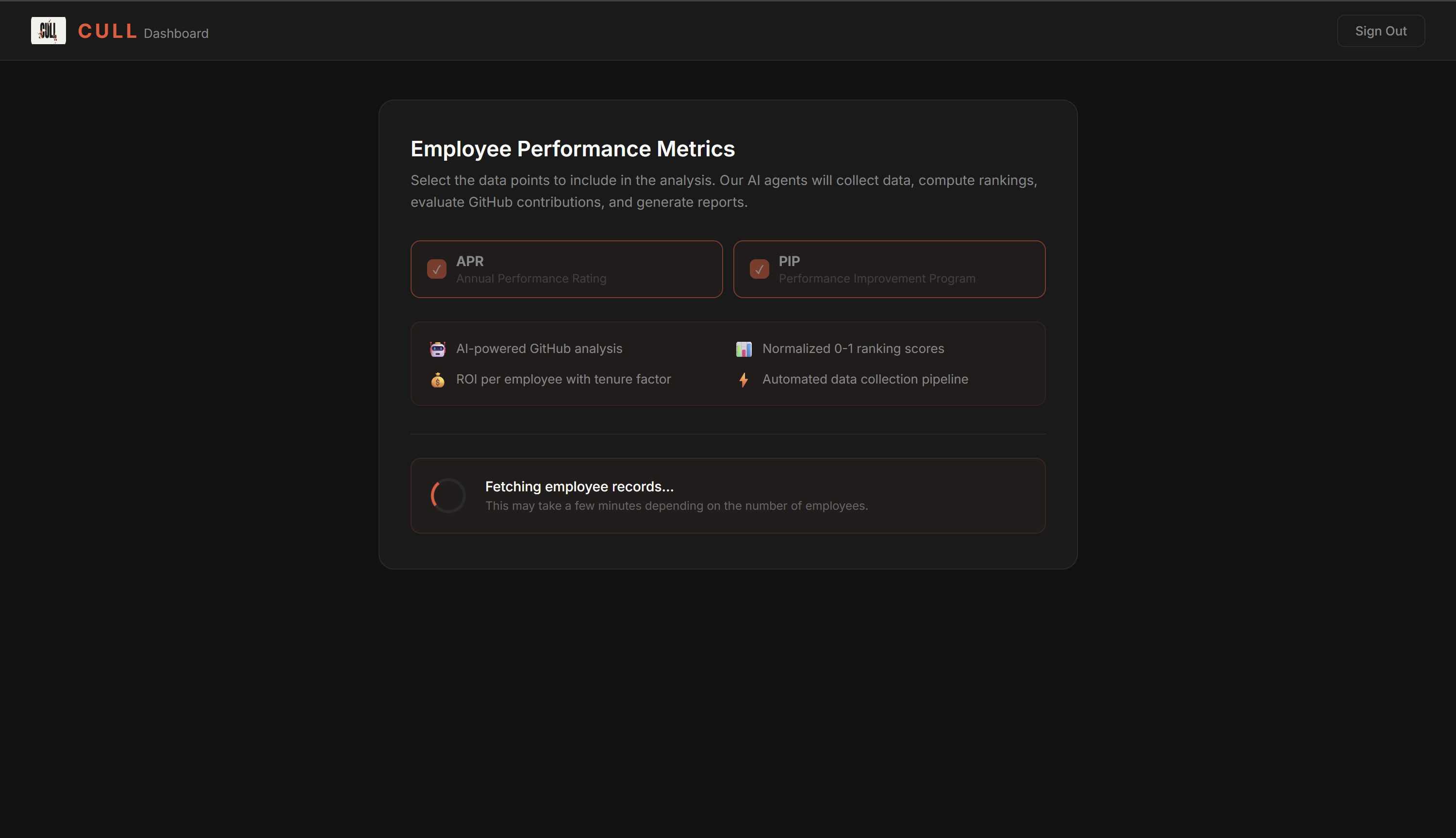
gathering information
-
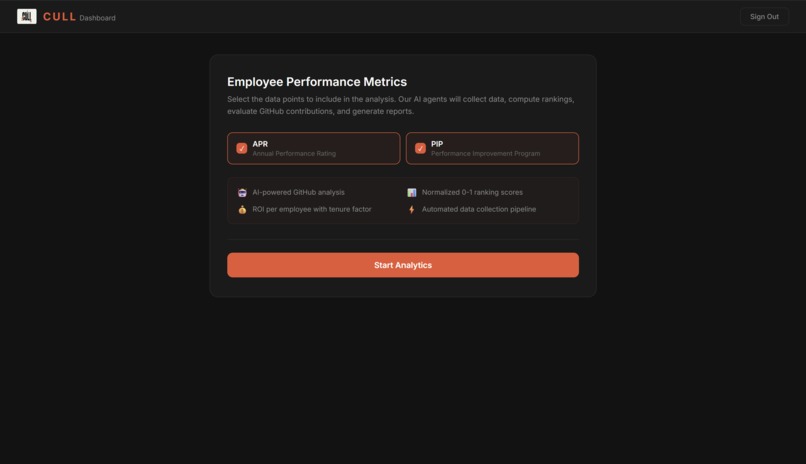
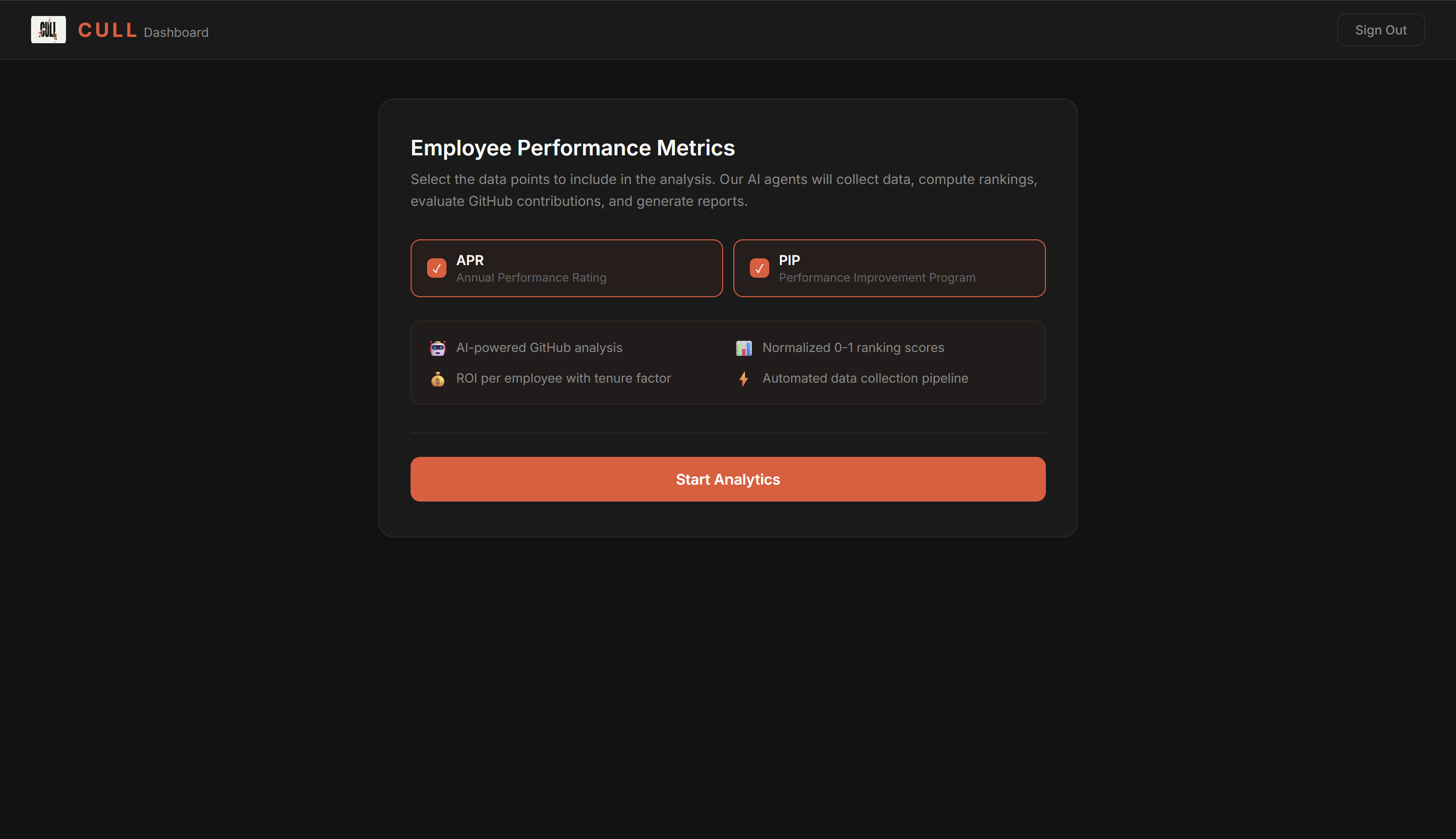
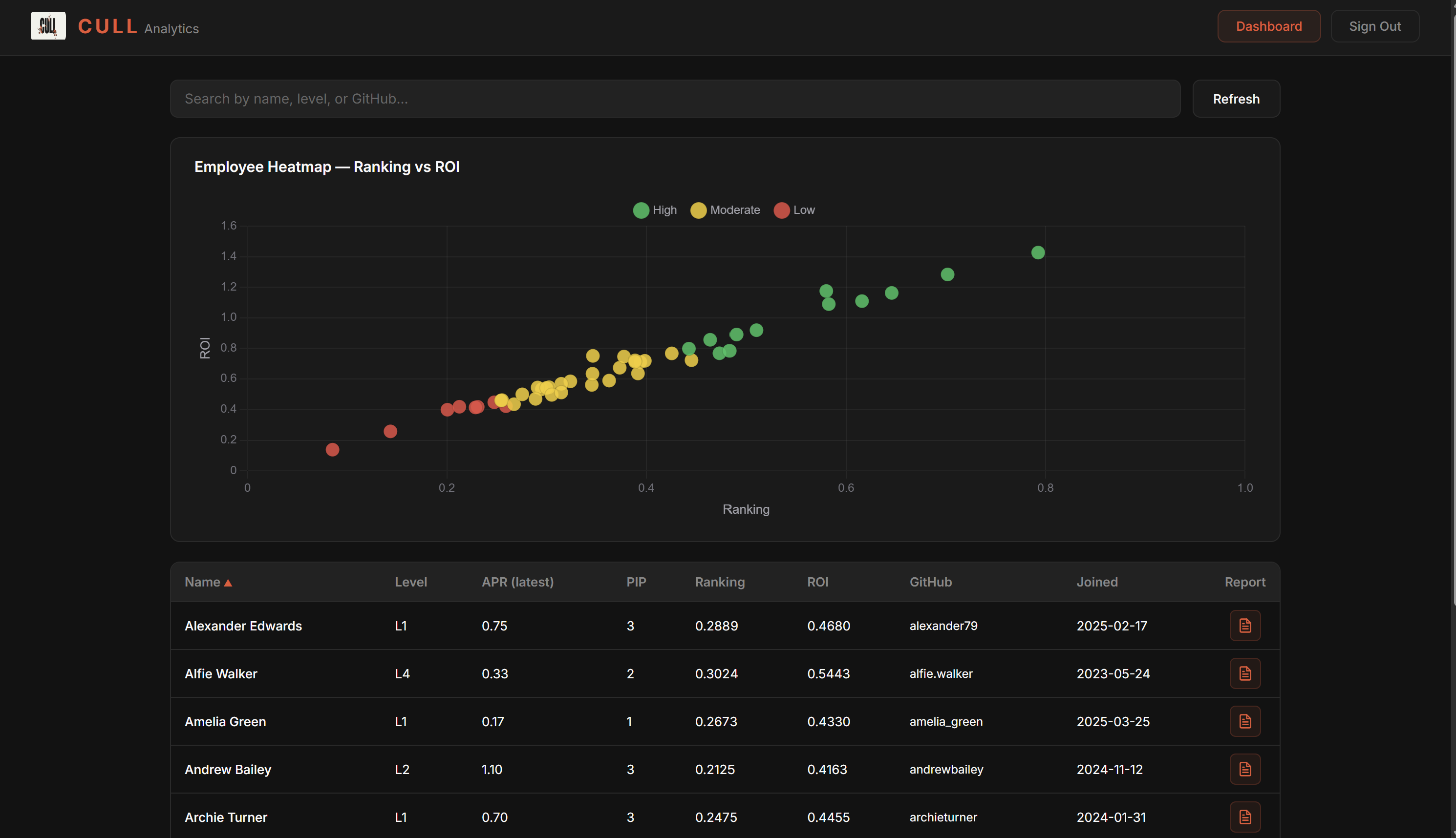
selected metrics- annual performance report/ performance improvement program
-
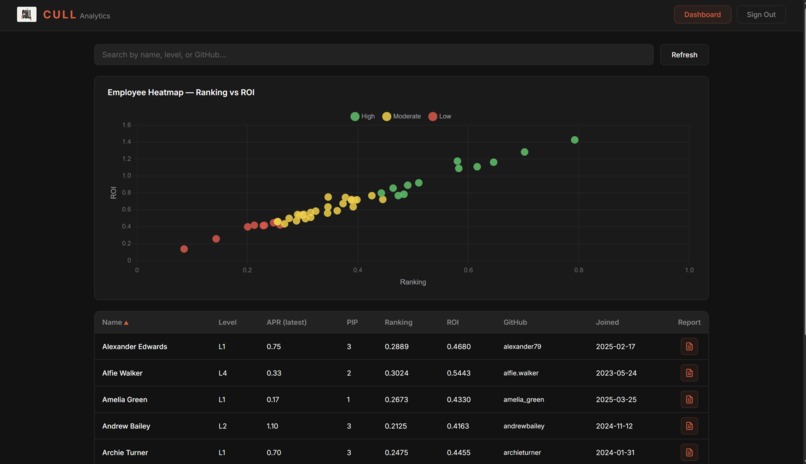
graph
-
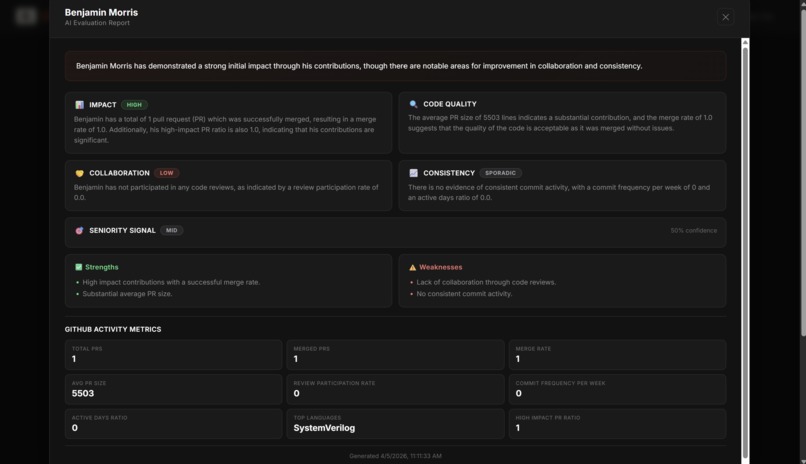
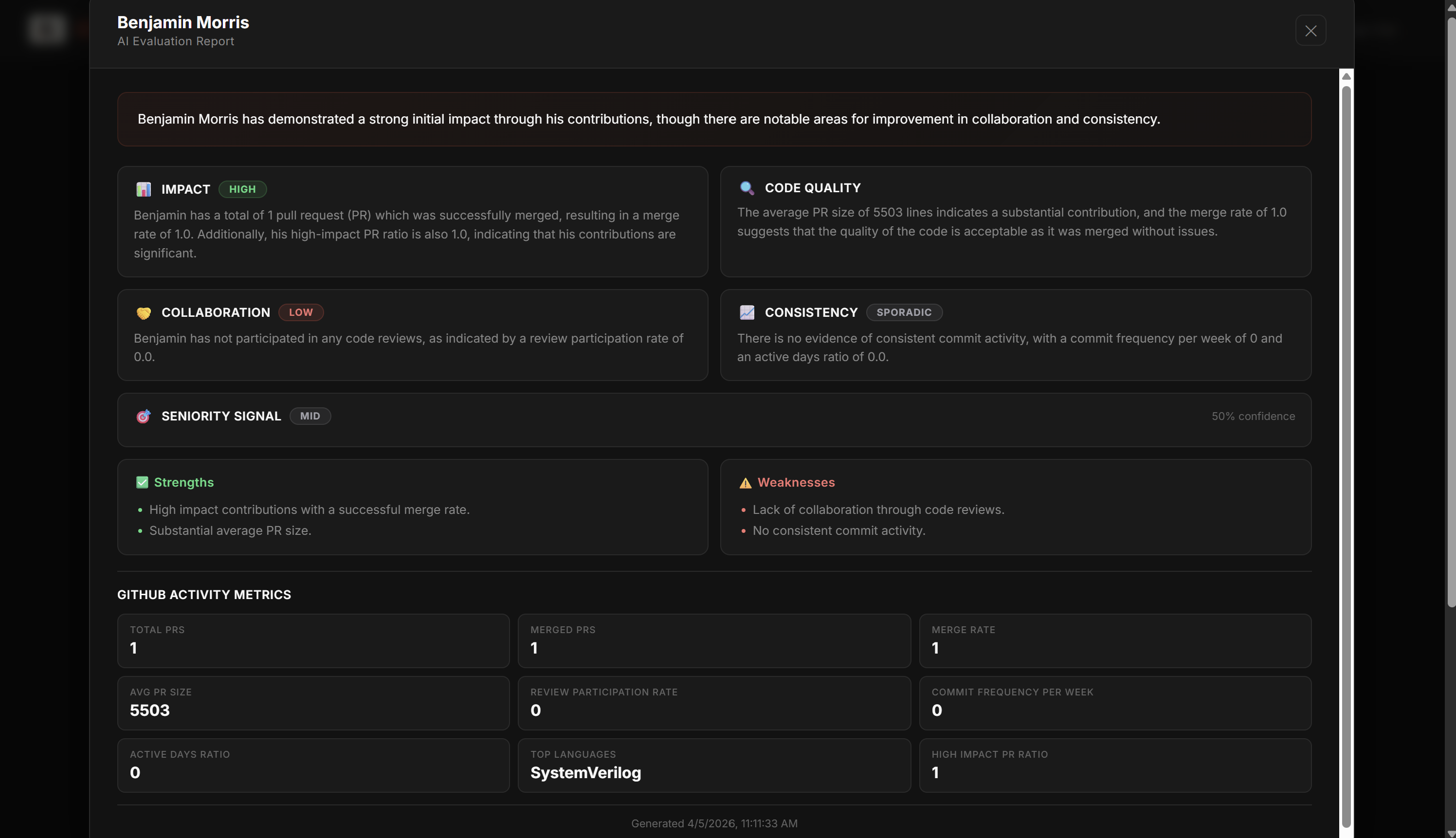
Individual performance report
Cull - Preventing Invisible Job Loss Through Fair Impact Intelligence
Inspiration
The Social Problem Mass layoffs are not just business decisions - they have real human consequences: financial instability, mental health strain, and disrupted careers.
Today, these decisions are often made using incomplete and biased signals:
- High-impact but low-visibility employees get overlooked
- Quiet contributors are disproportionately affected
- Managers rely on subjective or short-term metrics This creates systemic unfairness at scale.
Cull reframes workforce decisions as a social impact problem: We believe that every employee deserves to be evaluated fairly, transparently, and based on real impact not perception.
We were inspired to rethink this process: What if companies could understand real impact before making irreversible decisions? Instead of reactive layoffs, we envisioned a system that enables proactive, precise, and fair talent management.
Cull acts as a fairness layer for organizations, ensuring that:
- High-impact employees are not silently lost
- Underperformance is addressed early with support—not punishment
- Layoff decisions are backed by transparent, explainable data
What it does
Our platform helps companies make smarter workforce decisions by measuring true employee impact instead of relying on surface-level metrics. It analyzes daily work signals and collaboration patterns to identify high-impact talent, support underperformers early, and avoid costly layoff–rehire cycles.
Why This Is Social Impact
Cull directly contributes to:
Job Stability Prevents avoidable layoffs by identifying true value early
Economic Resilience Reduces churn cycles that destabilize both individuals and companies
Workplace Fairness Removes bias introduced by visibility, communication style, or manager subjectivity
Mental Well-being Transparent evaluations reduce uncertainty and anxiety among employees
How we built it
We built the system using following core layers:
- Data Capture (MCP): Collects secure, contextual signals from everyday work activities.
- Deterministic Employee Assessment Rank, considering factors like contribution impact, work history, work ethics, technical skills, etc., provides a better evaluation criterion for executives and the company to assess employees.
- Insforge-powered database layer to persist user metadata and their progress reports being generated on the go with AI, incorporating an employee's git contribution, ethics etc
- Jac-Builder and Jaseci language for rapid code development.
These components work together to transform raw activity into meaningful, decision-ready insights.
Challenges we ran into
- Defining impact: Capturing a fair and accurate measure of “impact” beyond simple output metrics.
- Data noise: Filtering meaningful signals from large volumes of unstructured activity data.
- Privacy concerns: Ensuring responsible and ethical use of workplace data.
- Bias mitigation: Preventing the system from reinforcing existing workplace biases.
Accomplishments that we're proud of
- Built a working prototype that maps real workplace interactions into a graph model.
- Developed a deterministic scoring approach that incorporates collaboration and influence.
- Transparency over Black-Box decisions so users understand what data was used and what was missing.
- Created a system that shifts decision-making from reactive layoffs to proactive talent management.
- Designed with a strong focus on fairness, transparency, and practical usability
What we learned
This project pushed us to deeply explore:
- Graph-based modeling: Understanding how relationships between people, tasks, and outcomes reveal deeper insights than isolated metrics.
- Multi-agentic AI systems: Designing AI that doesn’t just analyze data but actively reasons about performance and context.
- Workplace dynamics: Realizing that “impact” is multi-dimensional, combining output, collaboration, and influence.
We also learned that measuring productivity is not just a technical challenge, but a human and ethical one.
What's next for CULL
To generalize the capability to non-technical roles


Log in or sign up for Devpost to join the conversation.