-
-
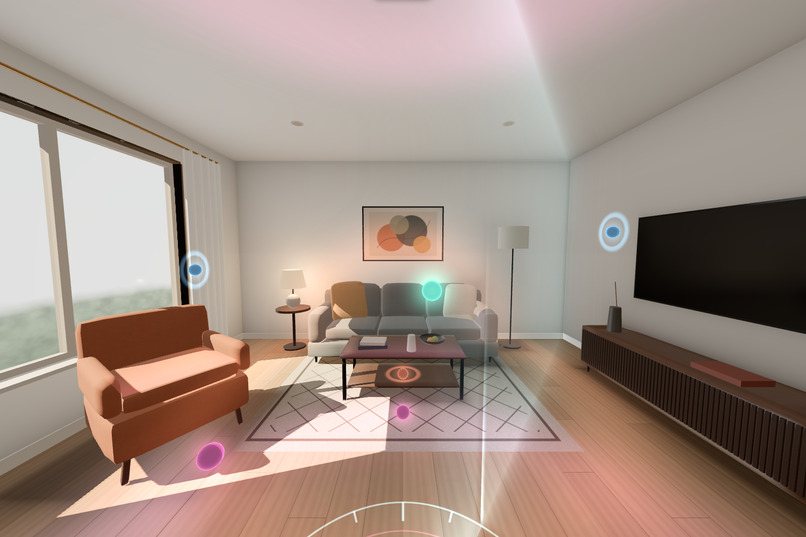
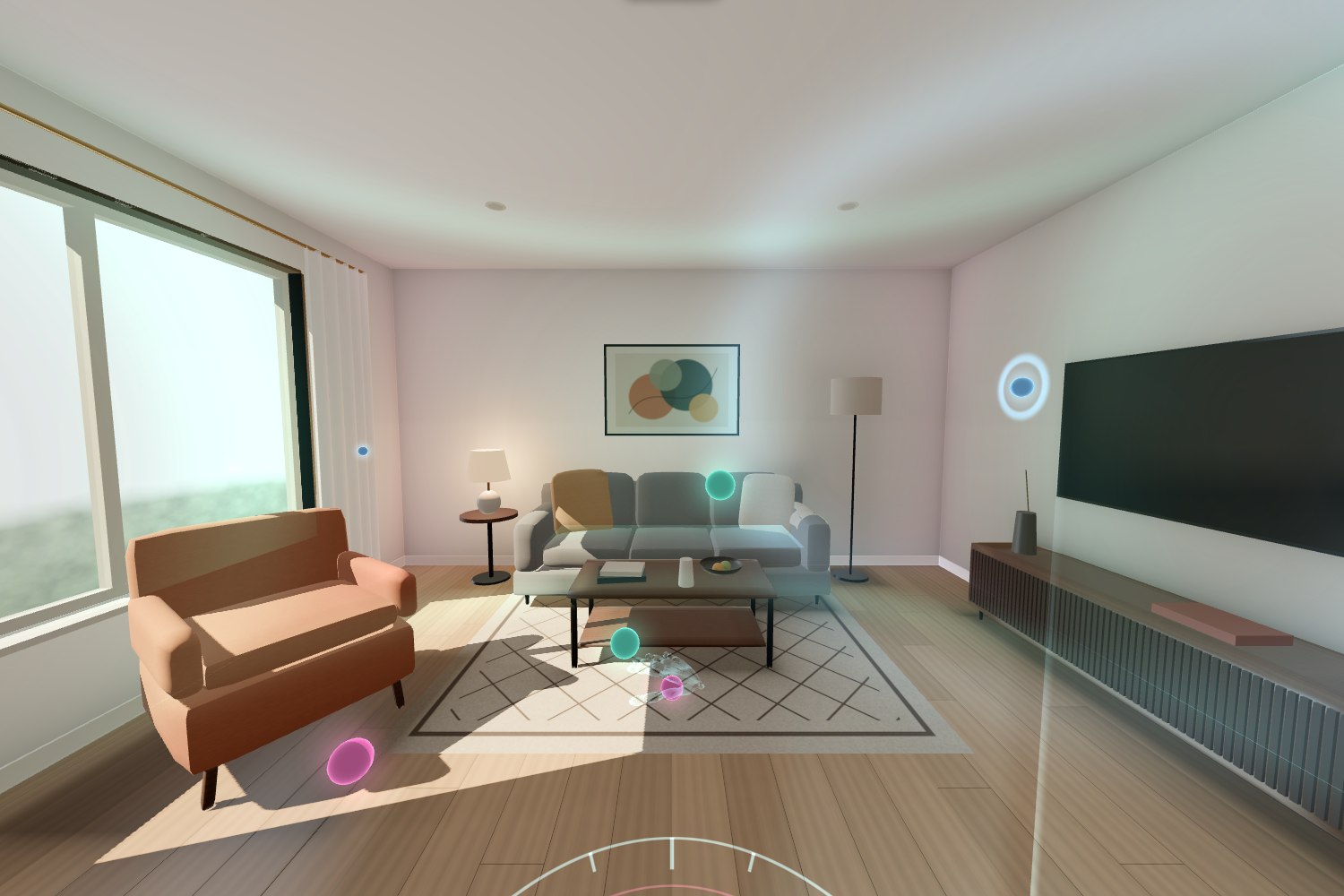
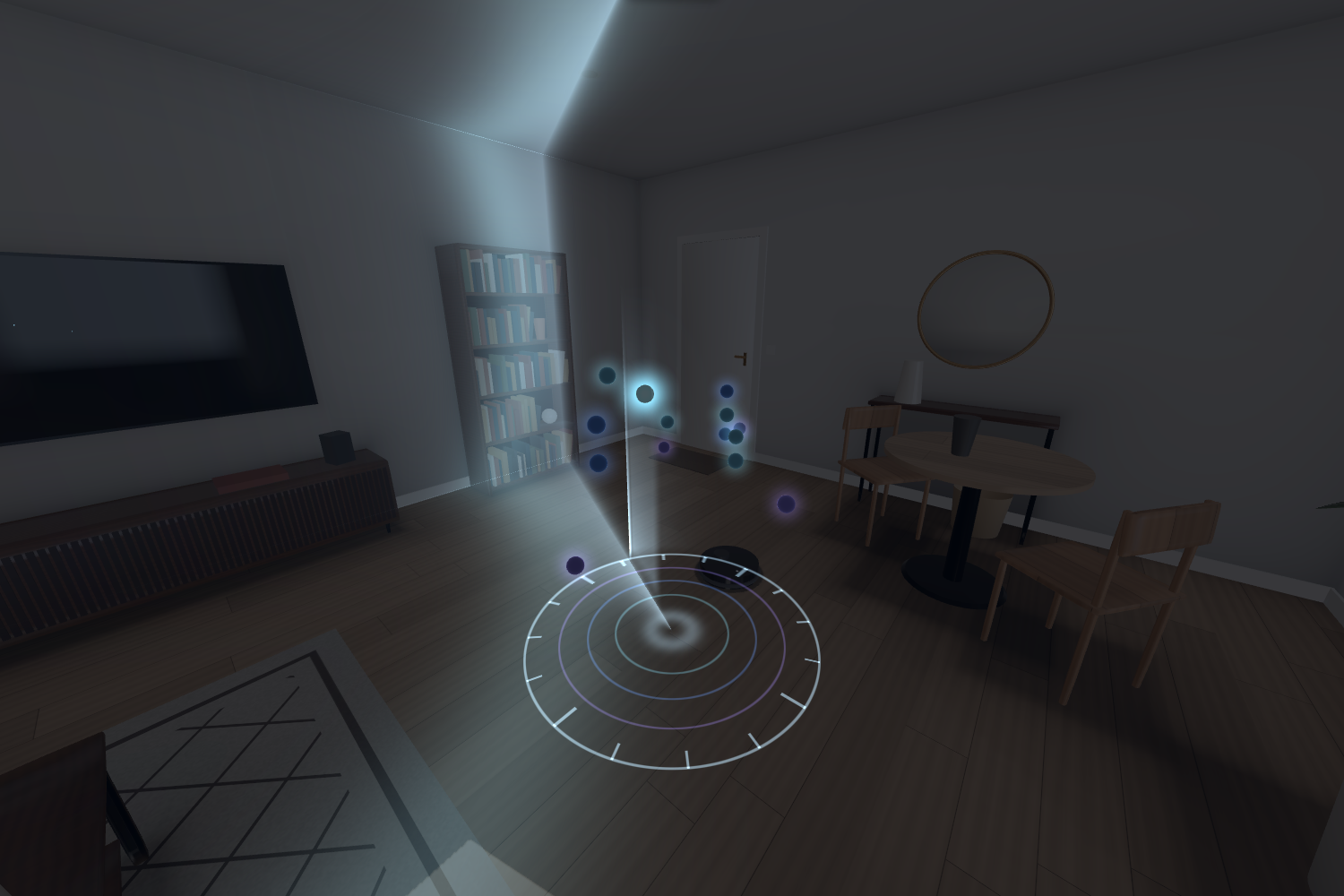
Orbs thrown at the walls play as the beam sweeps past them. (IWER emulator, simulated room)
-
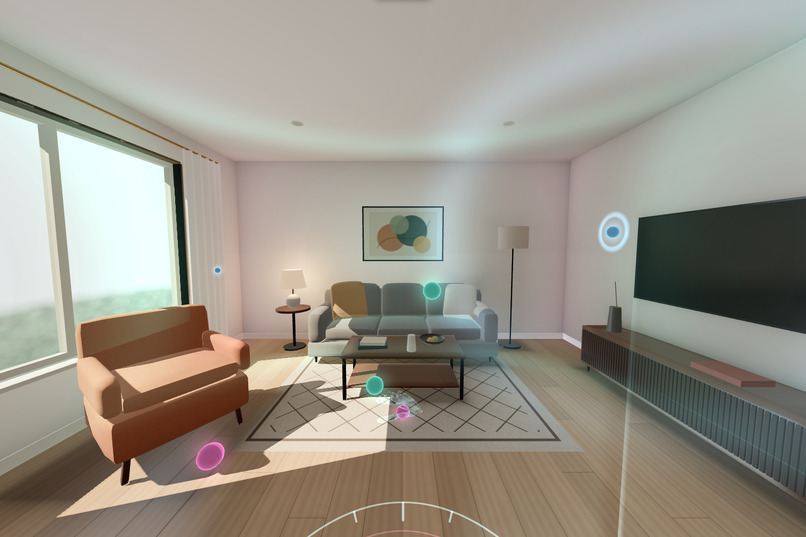
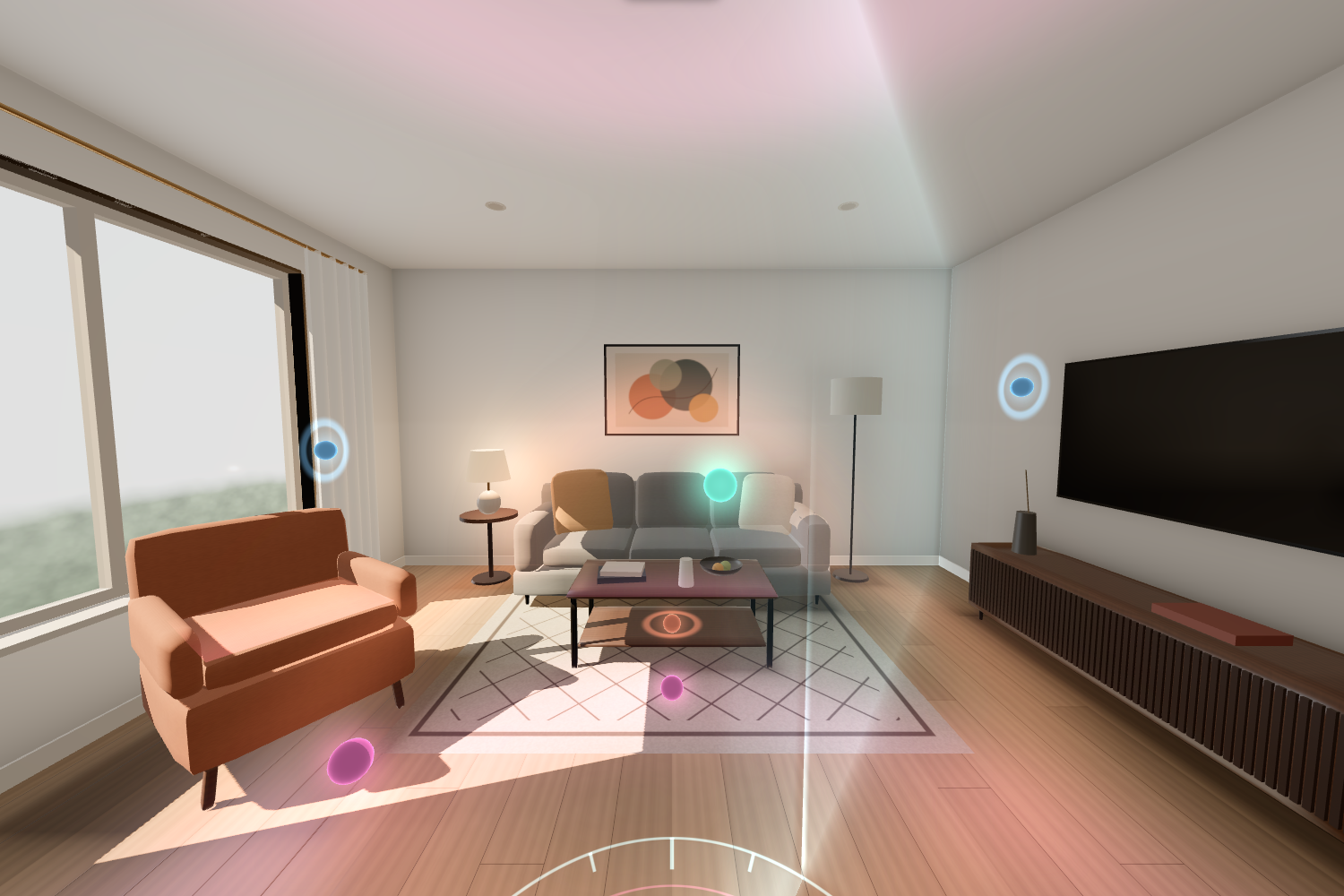
Each throw sticks where it lands, and that surface becomes an instrument.
-
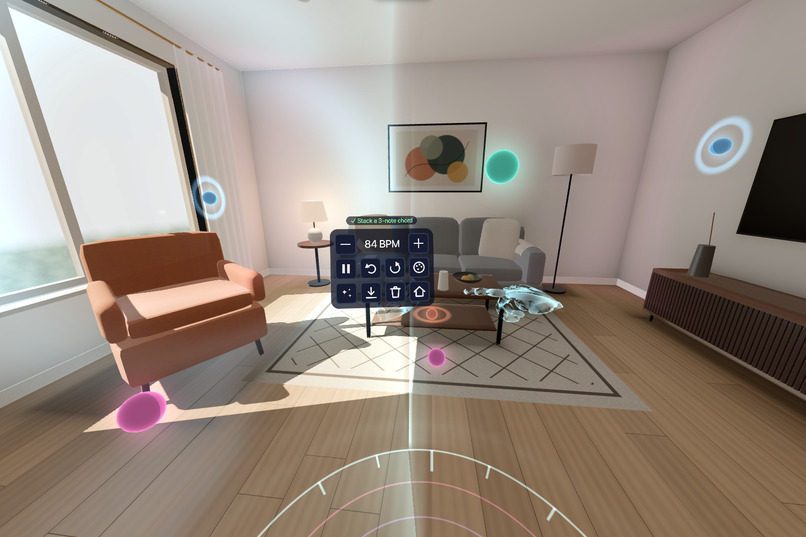
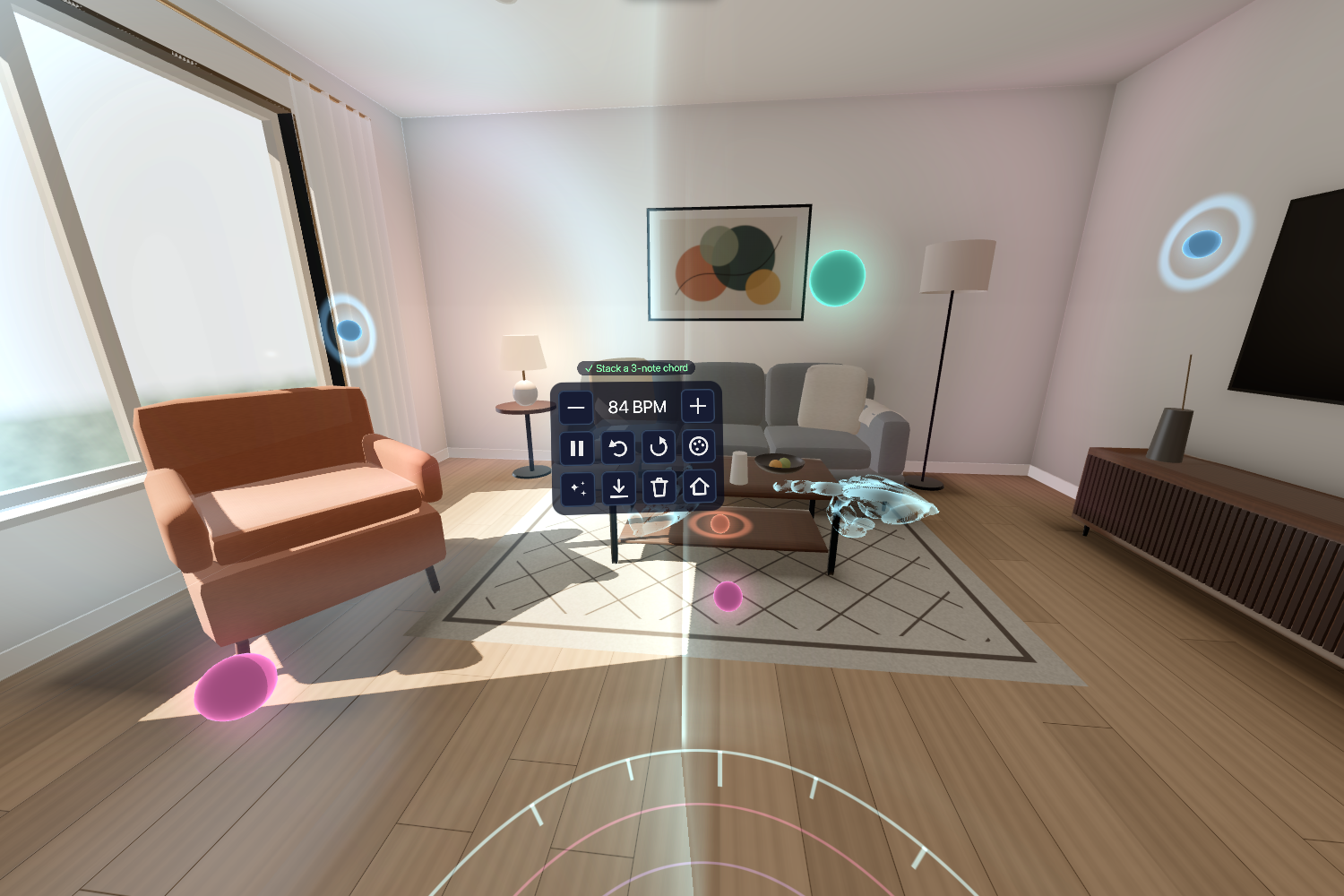
Turn your palm up and the menu opens on your hand.
-
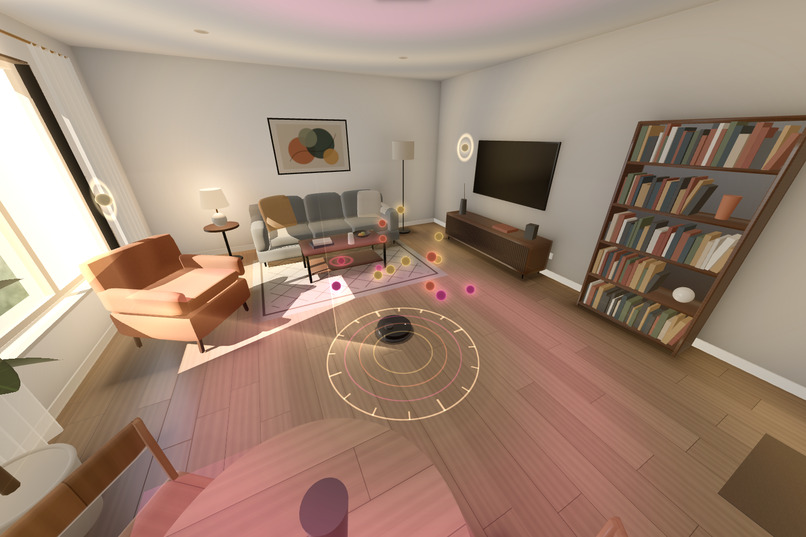
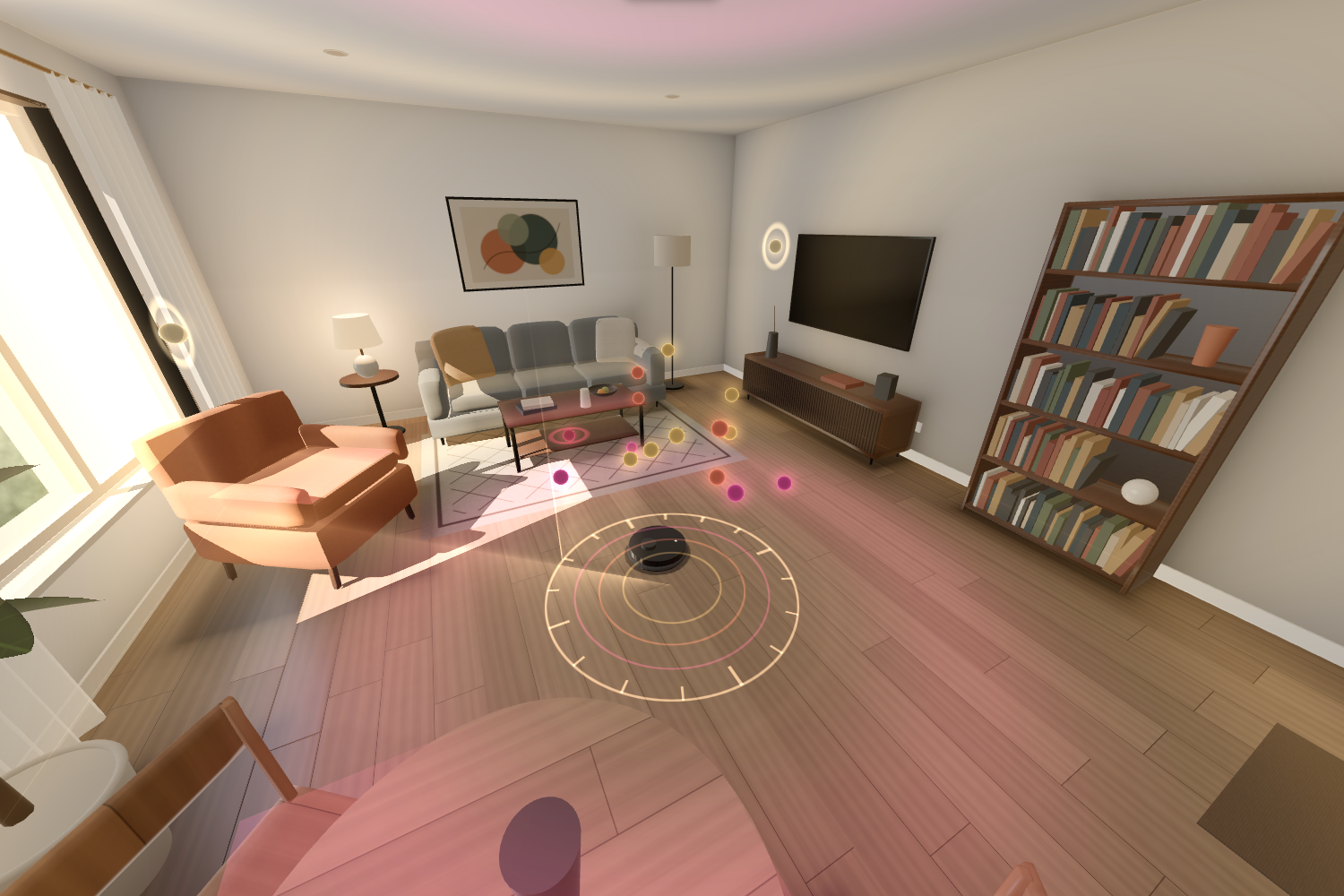
A finished song around the seat.
-
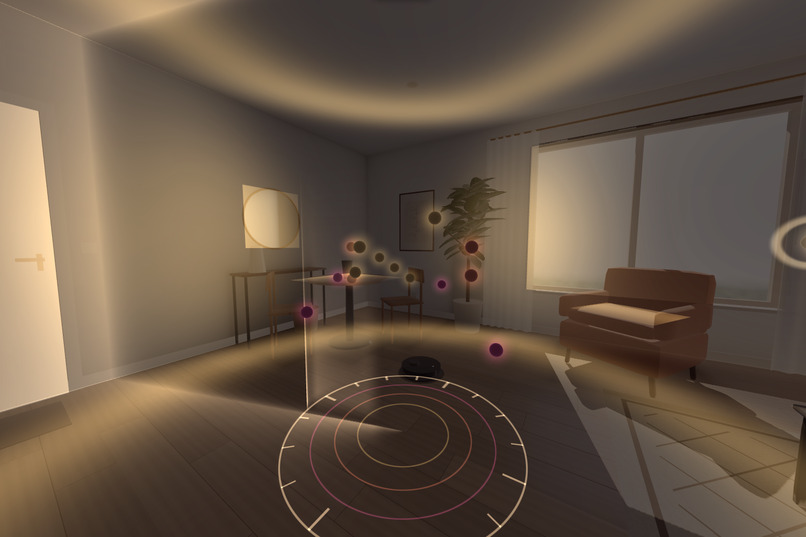
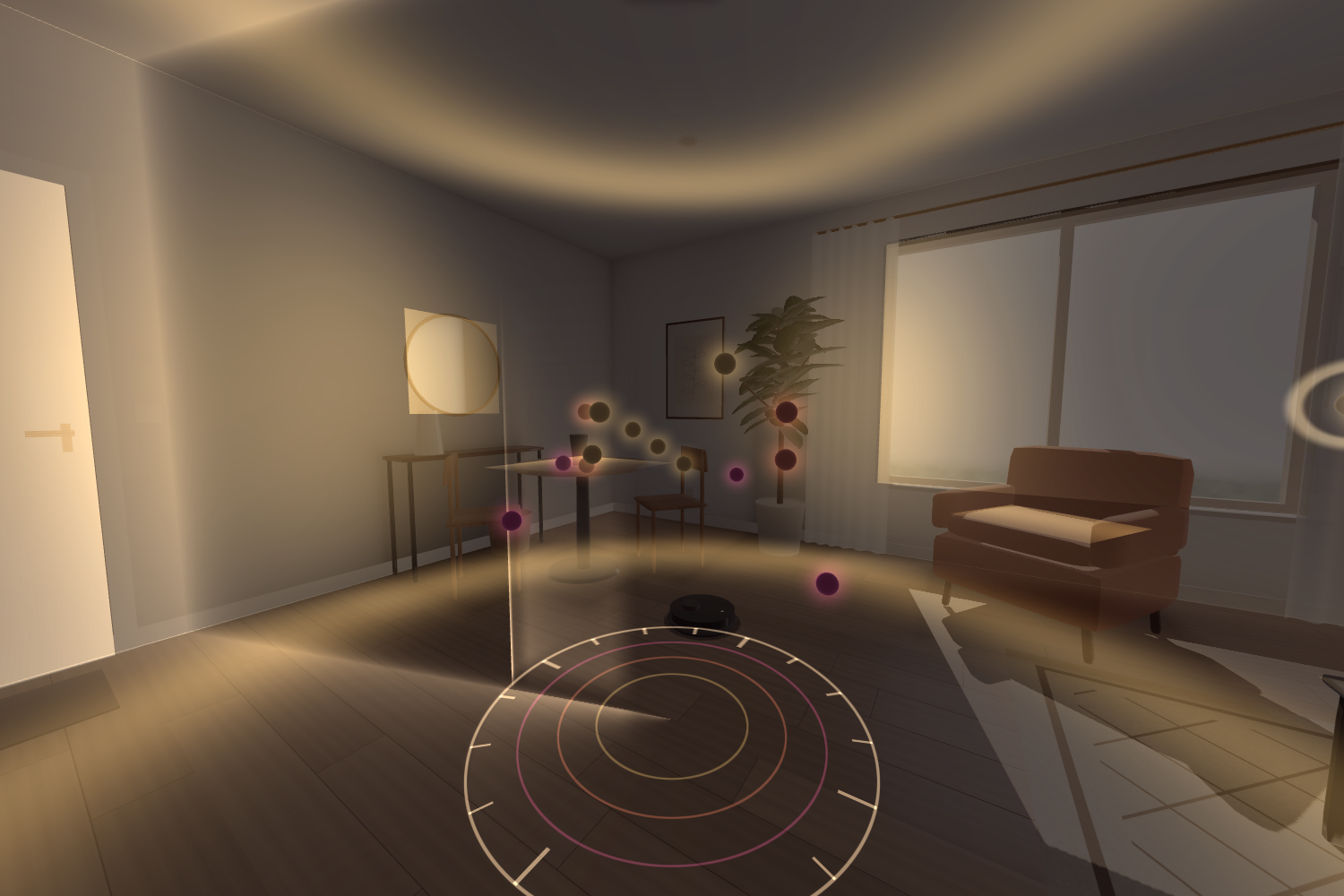
Lower your hands and the house lights fall: the concert begins.
-
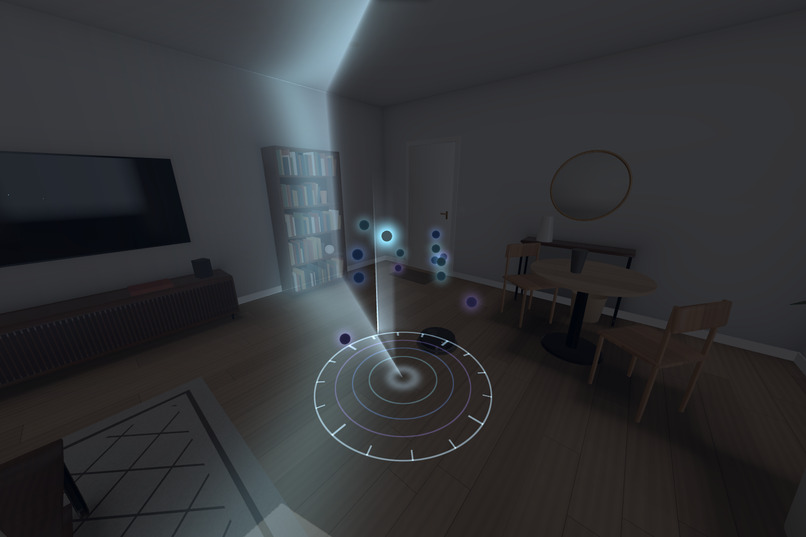
Each mood brings its own scale and color.
-
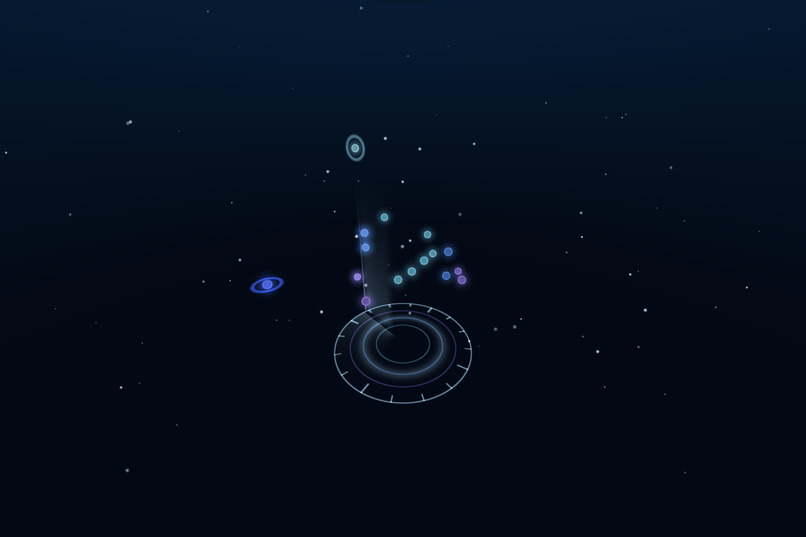
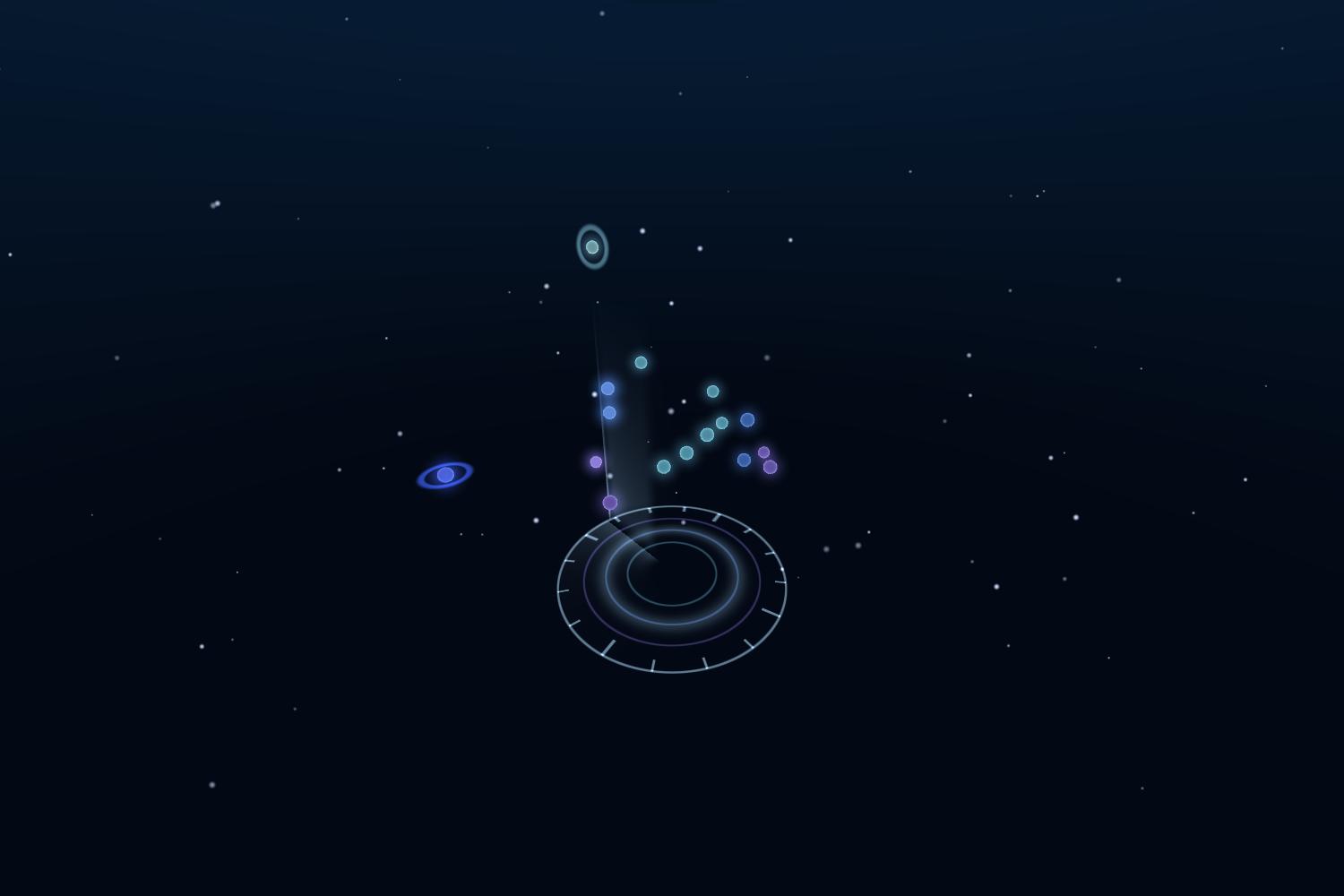
The same song under the stars.
Inspiration
Most people who say they are not musical have never had an instrument that could not play a wrong note. And most mixed reality apps would play the same if you turned your room off.
I wanted both problems gone at once: an instrument you cannot play badly, made out of the room you are actually sitting in.
What it does
orbly is played seated, with hands alone. Pinch the air and an orb of light appears. Flick your wrist and it flies across the room and sticks to whatever it hits, and that surface starts to sing. Walls ring like bells, tables knock like a marimba, the floor is a soft drum, the sofa hums.
A beam sweeps your real walls like a lighthouse, and each orb sounds as it passes. Its angle sets when it plays and its height sets the note, always on a pentatonic scale, so nothing can sound wrong. Point at a far orb to call it back to your hand, or keep some on a ring within reach.
Then sit back. Lower your hands and the house lights fall: chords and a soft pulse grow around your song, sections rise and ebb, and the melody draws itself across the dark room. Raise a hand and it is yours again.
Your room remembers. Come back tomorrow and your song is still on your walls. Open it elsewhere and it lands on that room's surfaces, as a different band. Daily challenges unlock new moods, each with its own scale.
How I built it
orbly runs in the browser on the Immersive Web SDK and WebXR, in TypeScript. Detected planes become a model of the room: throws are simulated ahead of time against it, then snapped to the beat so the beam meets each orb exactly as it sounds. A persistent anchor pins each song to its room. All audio is synthesized live, with eight instruments and HRTF spatialization per orb. There are no samples.
Rendering stays small for a standalone headset: orbs are instanced and the room's light is a single merged mesh. The logic runs under more than 200 unit tests on simulated hands and rooms.
Challenges
I built orbly without a headset; it has not yet run on one. The IWER emulator provided scripted, anatomically shaped hands and a detected room, so gestures were tested end to end.
Hands were the hard part. The point between your fingers jumps the moment they open, which bent every throw upward and dropped orbs a note too high. Measuring from a knuckle fixed both. Pointing was subtler: anyone pinching in the air is also pointing at a wall, so calling an orb back had to become deliberate.
What I learned
Polish in a hands-only experience is forgiveness: hysteresis, a slight aim assist towards your gaze, and resting hands that never do anything.
What's next
Sharing a song by link, so it lands in a friend's room as their own band.
Built With
- github
- immersive-web-sdk
- meta-quest
- three.js
- typescript
- vite
- web-audio-api
- webxr


