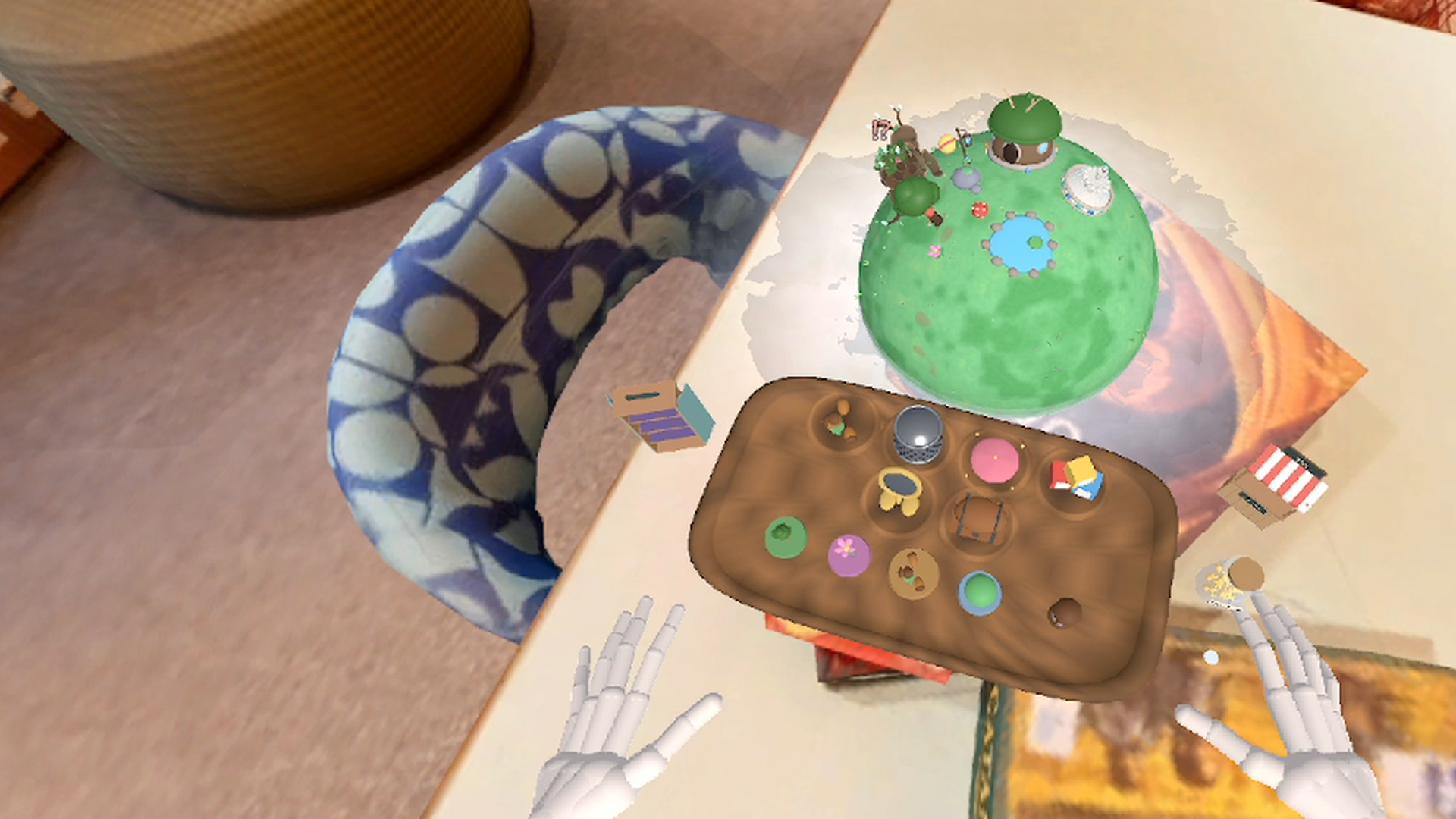
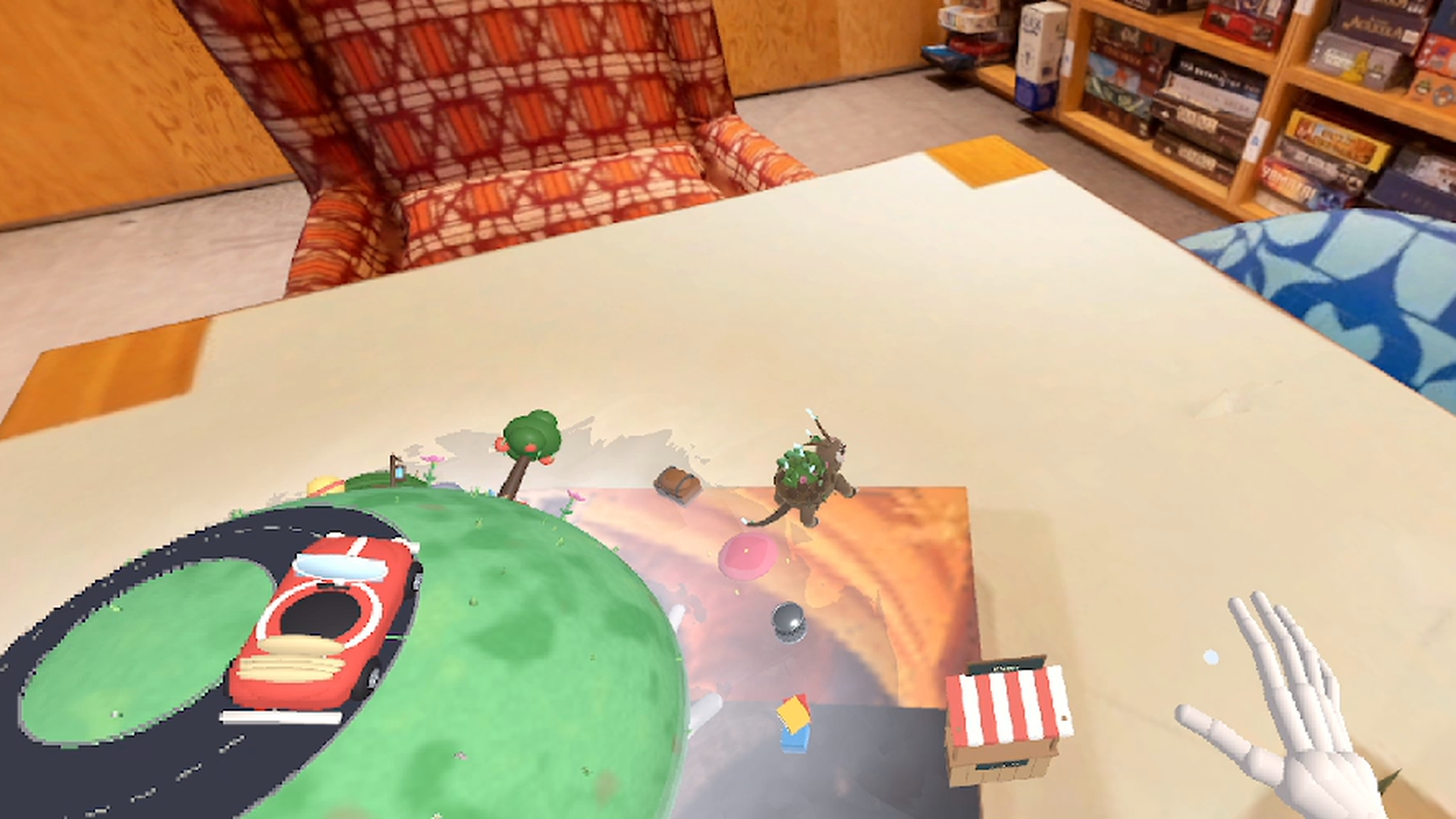
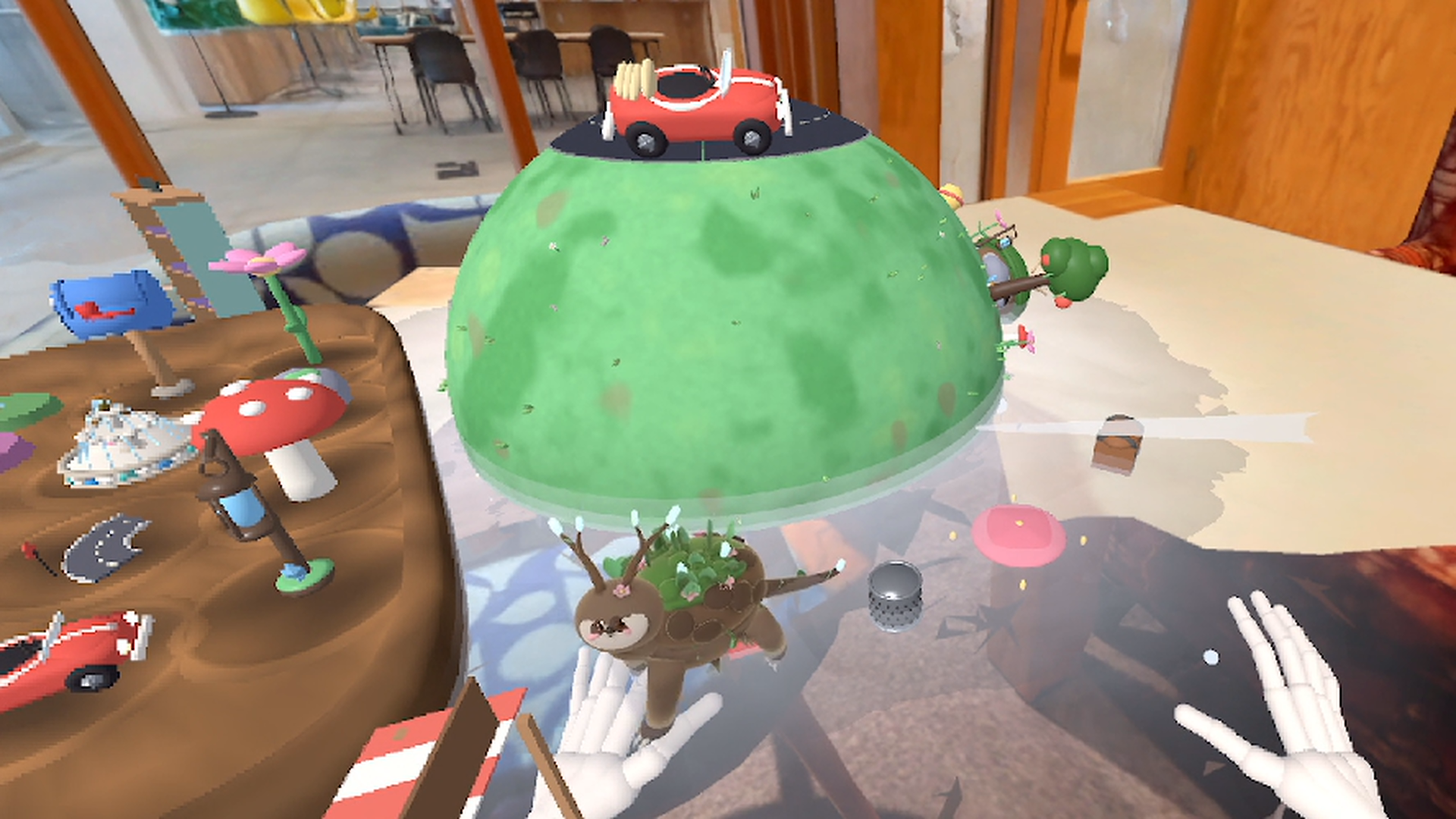
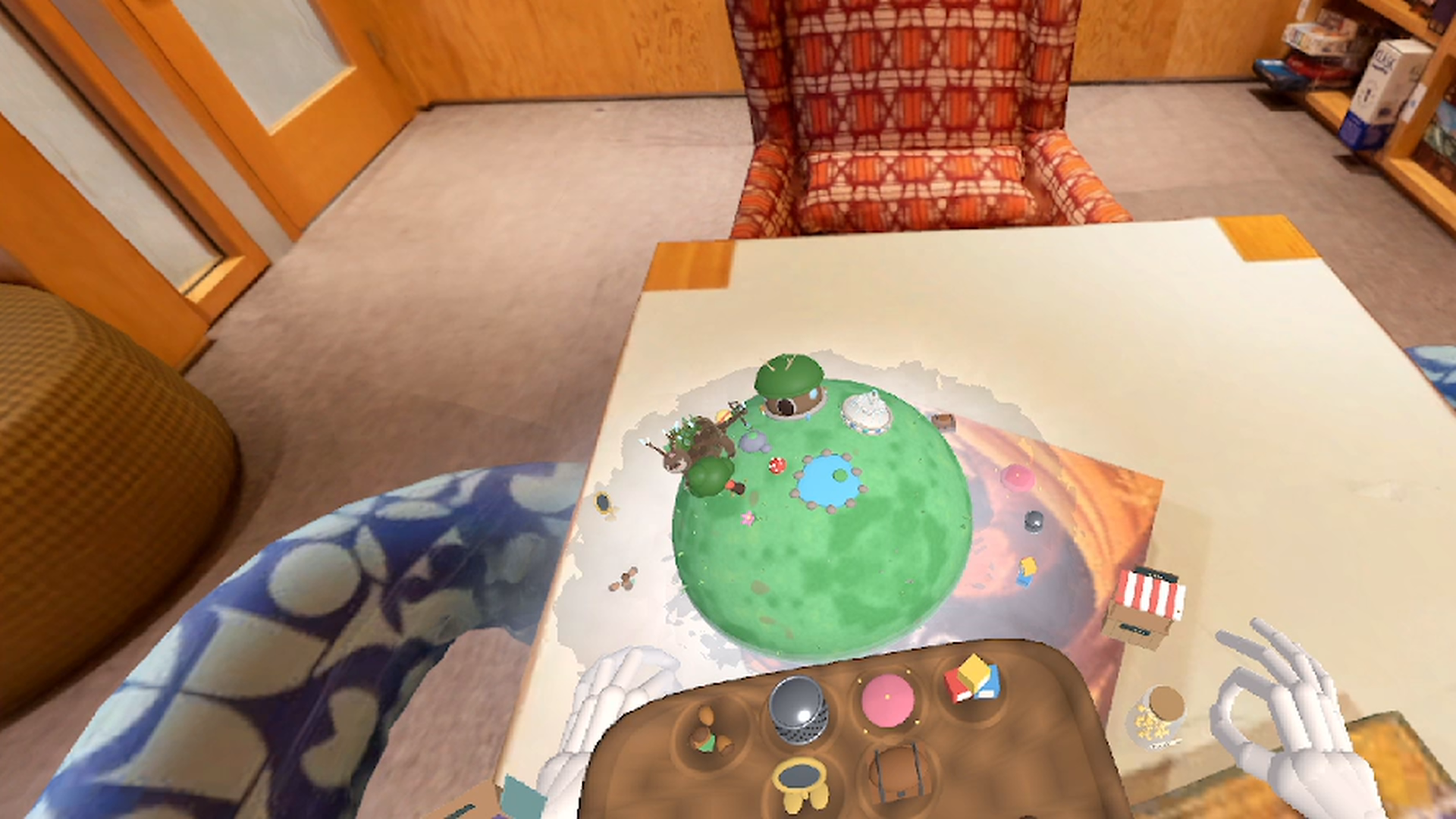
Inspiration We wanted a pet that could only exist in mixed reality. A tamagotchi lives in a screen; ours lives on your desk. A tiny planet sinks into the table you are sitting at, its shadow falls on the real wood, and the mist around its waist hides where it meets the surface. You care for it with your bare hands, the way you would tend a bonsai, and after a while it starts to care back: it notices you watching.
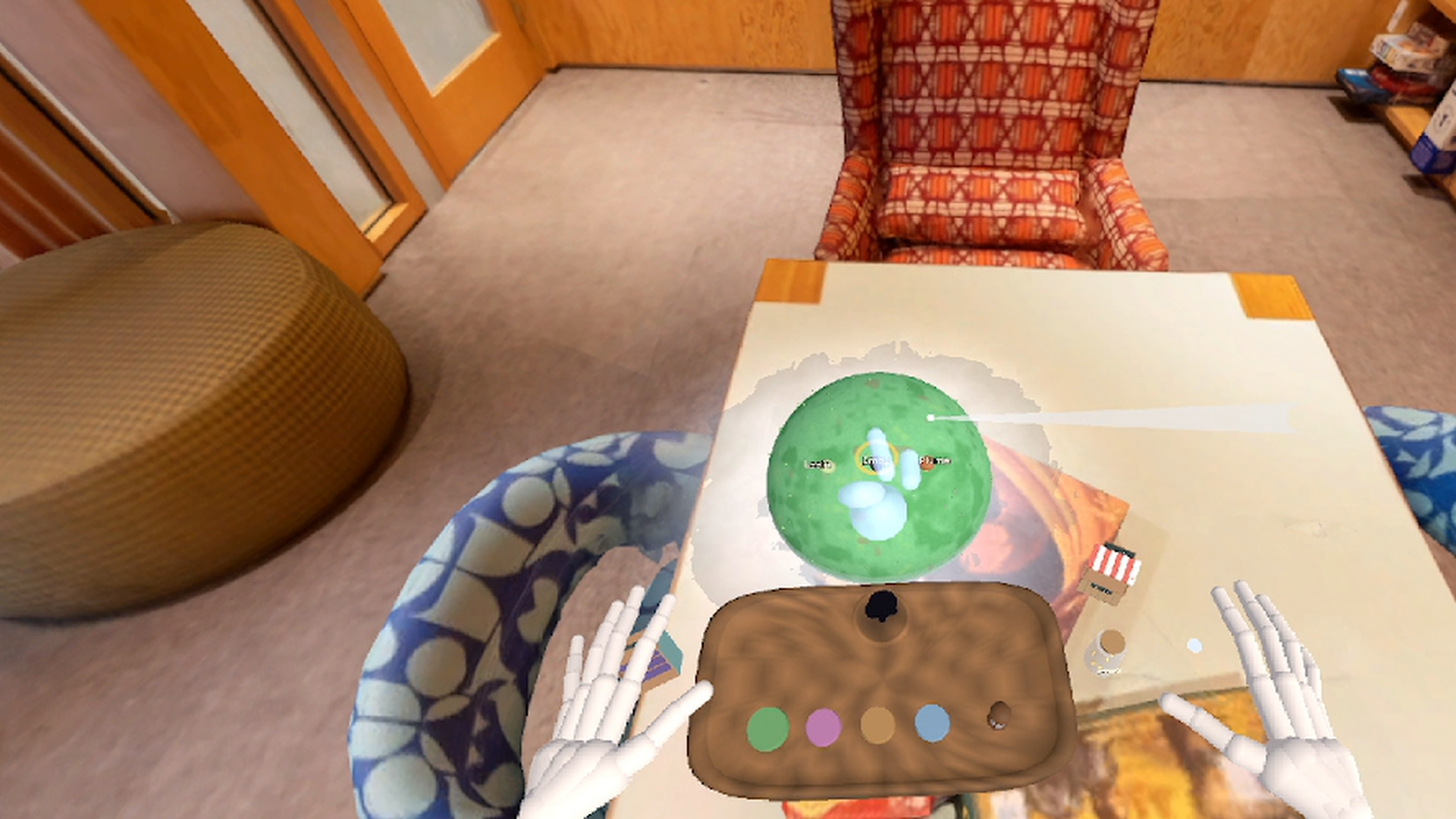
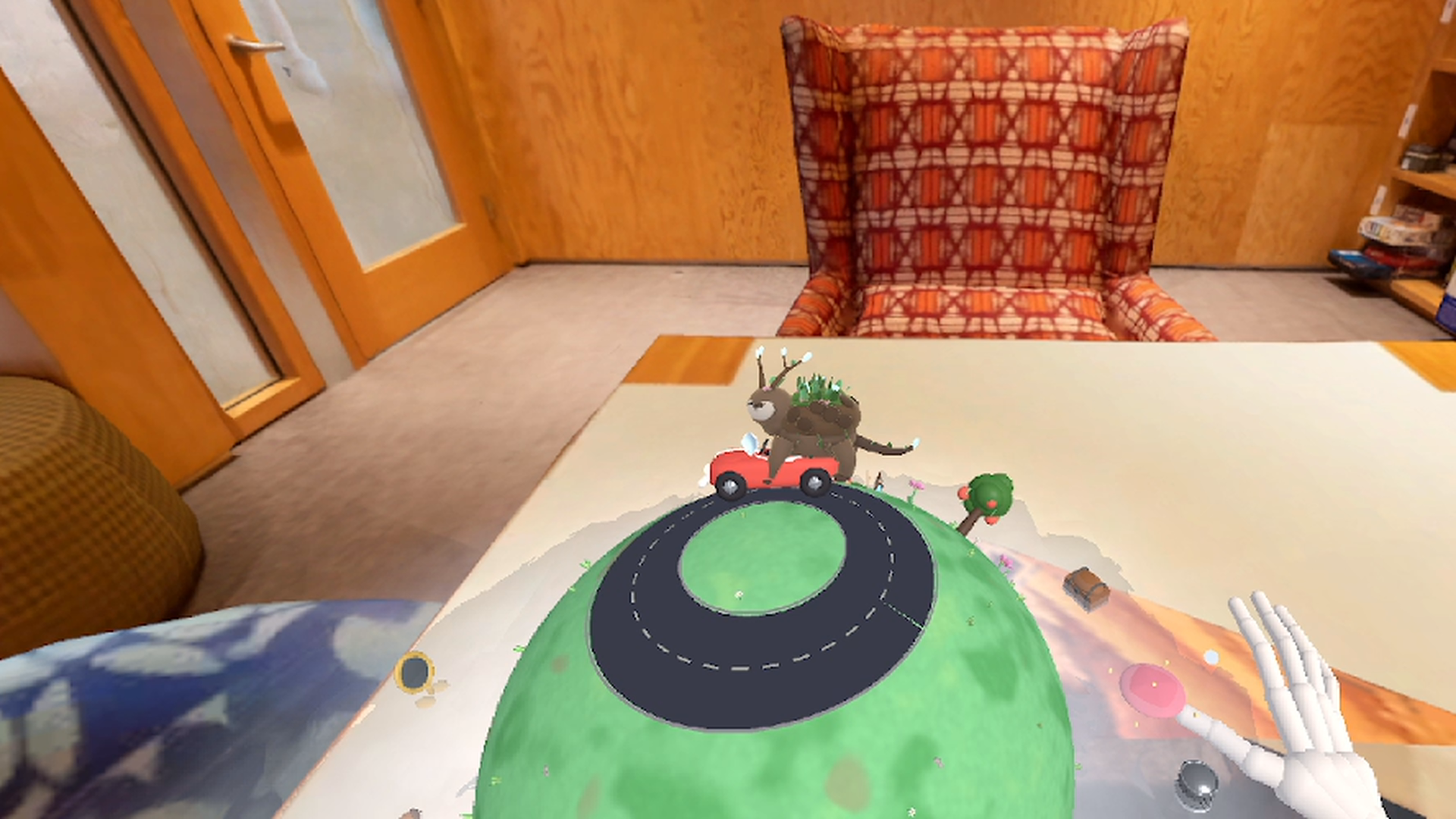
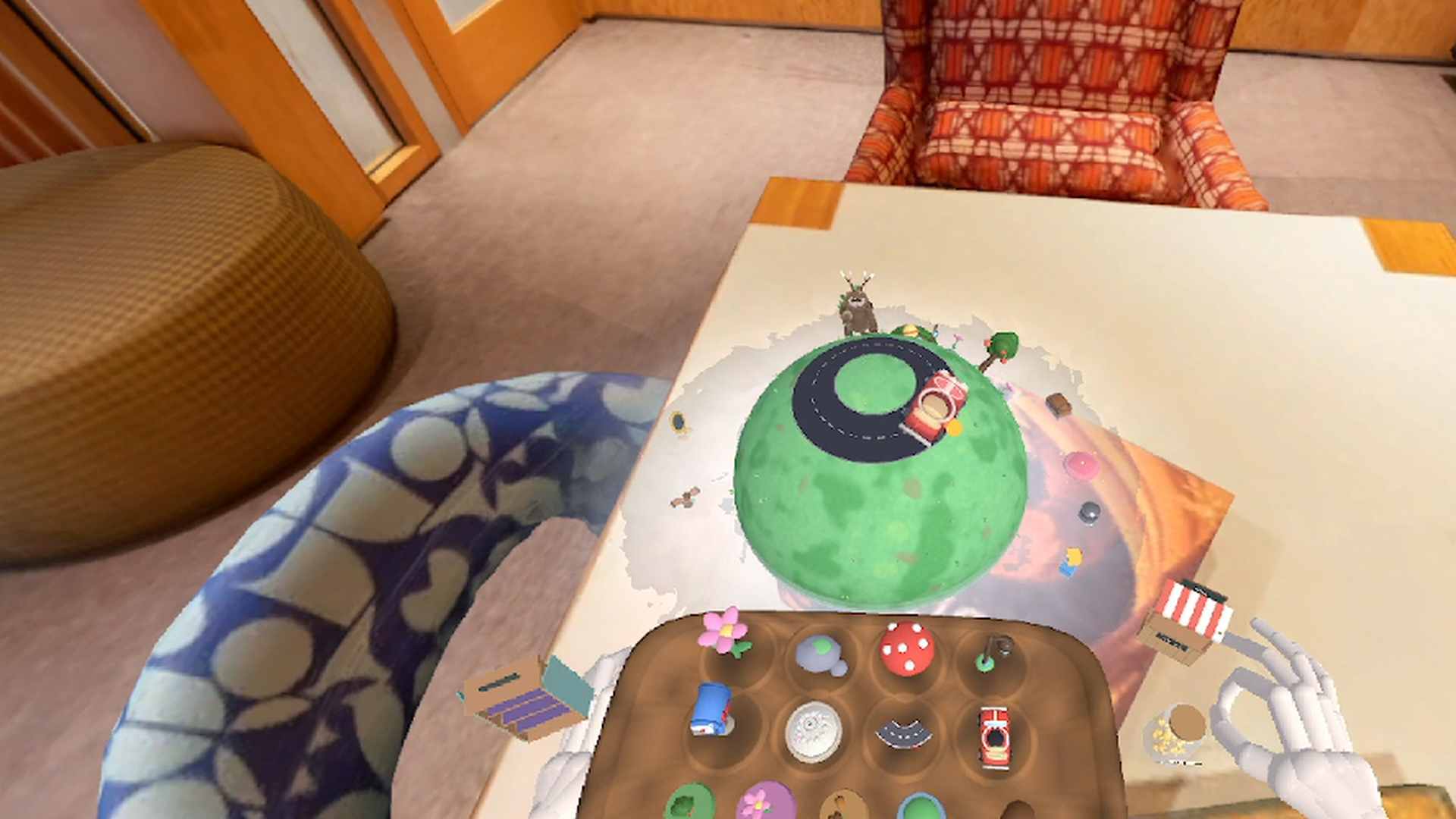
What it does Three critters, each a different game. Hatch Leafo (a sprout), Emby (a fire pup) or Plume (a chick). Each has its own world to build (a pond or a hot spring, a mushroom hut or a nest), its own voice and two ways to grow up: twelve grown forms to discover. It grows into who you raised. How you care for it decides its route: Bloom or Roam for Leafo, Bravery or Spite for Emby, Kindness or Flow for Plume. Neither route is a punishment, and the first evolution comes within a ten-minute session. A living creature, not a script. It decides for itself from its needs, its temperament and its memories: it explores, eats, drinks, plays and sleeps, goes back to the tree where it ate well and plays less with a toy it was told off for. Two quirks drawn at hatching make each one its own. Your hands are the whole interface. Pinch a miniature from the wooden board on your table and set it on the planet. Pinch the planet to turn it like a ball; use both hands to move it. Pinch the critter to pet it, wave to say hello, boop its nose and it sneezes. No controllers needed. It knows you are there. It follows your fingertip, slow-blinks when it trusts you, and breaks the fourth wall: it knocks on the "glass" between you, mimes it, whistles as if it had done nothing, and gets bashful when you stare. A newborn is shy; a best friend runs to greet you and leaves you presents. A planet to make your own. Paint grass, sand, snow or moss with a fingertip, raise hills, stretch rivers and bridges. Later: a fountain, a mailbox where it posts you little letters about its day, a statue of itself that it goes to admire, a Ferris wheel, a ring round the planet, and a road with a convertible that only a fully grown critter is big enough to drive. Tap the car and it runs over to hop in. Dress-up. Hats, a crown, headphones, a cape, a backpack, an incognito disguise. Clothes fit every form and never change behaviour; it shows them off in its own way. The room matters. The planet finds your real table and sinks into it, and a spatial anchor keeps it where you left it. Grown critters climb (or fly) down to explore the real table top and the props you put there. It remembers. The planet, the critter, its memories and what it wears are saved. Nothing goes wrong while you are away: you come back to a welcome and to what it got up to. Built for a seated, short session. A first visit with no wall of text: a ghost hand acts out each gesture where it is done. Everything is within arm's reach, and an hourglass on the board pauses time.
How we built it Godot 4.7 with its built-in OpenXR and the open-source Godot OpenXR Vendors plugin: hand tracking, passthrough, Meta scene data to find the table, and spatial anchors. A utility AI scores every option (needs, traits, distance, repetition and memory) and can explain its reasons in a developer panel. Critical needs always win over old habits. Walking on a sphere uses its own steering along great circles, with no navmesh. The half of the planet under the table line is unreachable, and the critter climbs out of the mist if you turn the planet over it. Art made by code. Every model is generated by our own Blender Python scripts, the critters included (rigged, fifteen forms), then shaded in Godot with a small skin shader: a rim of light so a dark critter still reads against any table in passthrough, and a made-up sky for gold to mirror, since passthrough gives metal nothing to reflect. Sound from recorded instruments. Each critter speaks through one recorded instrument (a clay ocarina, a harmonica, a soprano recorder) bent into little phrases by our own scripts; the theme is a quiet piano and harp loop. The recordings are public domain (VCSL, CC0). Sounds without a recording are synthesised in code. A PC test bench runs the same core with a mouse standing in for hands, and 259 automated tests cover behaviour, memory, evolution, saving, progression and simulated hand gestures. Scripted play sessions tune the pacing. A render budget we measure. A worst-case scene (every item twice, a grown critter dressed up, tray, presents and props) is rendered at Quest 3's per-eye resolution: about 245 draw calls and 340k triangles per frame, inside Meta's guidance of 300 and 1M.
Challenges we ran into Alive, not random. Hysteresis, repetition penalties, and errands it will not drop unless a need turns critical. Needs that pull without nagging. Early builds had it running to eat, drink and sleep all the time. We slowed them until it had time to be itself. One body, fifteen forms. Every animation is written once and drives every skeleton: a sprout, a four-legged beast, a long-legged bird. Passthrough is a hard backdrop. Nothing to reflect, any table colour behind. Shading had to carry the form on its own. Draw calls creep. One Ferris wheel cost more than the whole planet until we fused its colours into one material. Building it without a headset. Everything was built and tested on the PC bench and in the Meta XR Simulator. Recording there taught us things no test did: a box on the table lifted the planet off it, and the simulated hands could not reach far things, so we fixed placement on cluttered tables and made far pinches more forgiving. Accomplishments that we're proud of It feels like someone is in there: it looks back, and it has habits of its own. Its choices are explainable: every decision has visible reasons. No controllers, no menus floating in the air: the whole interface is things on your table. The same planet is a tabletop toy on PC and a mixed-reality object on Quest. What we learned Behaviour is cheaper than content: a new habit costs nothing on screen and gives more life than a new model. Measure the frame, do not guess it. Our worst case doubled without us noticing until we measured again. Test the shipping path early: the first upload to the release channel failed on a target SDK level that no test of ours could have caught. What's next for Orbkin More critters, more routes, and route versions of every building. More to do together: feeding from your hand, a high five, climbing onto your palm. A photo album of its rare moments. More clothes. Cosmetics only, never anything that changes behaviour. Target launch date: March 2027
How to test it Sit at a clear table in a lit room, with room setup done so the headset knows the table. No controllers needed: the app is played with bare hands (controllers also work). Three eggs appear on the planet; pinch one to hatch your critter, then follow the ghost hand. Pinch miniatures from the wooden board to place food and water, pet the critter with a pinch, and wave at it. The first evolution comes within about ten minutes of play.
