-
-
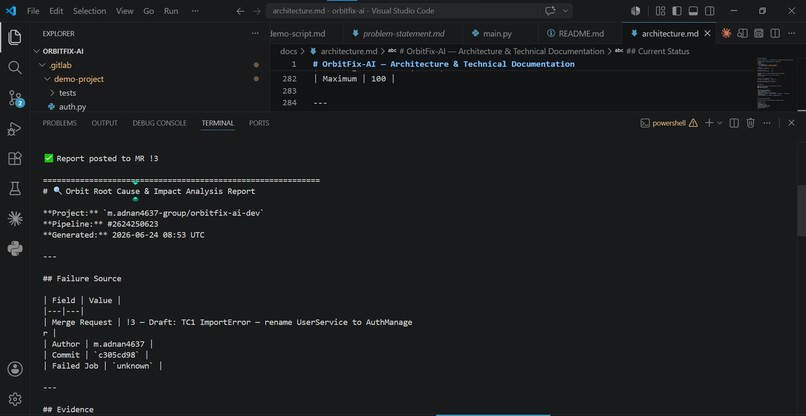
Automated Root Cause Analysis Report
-
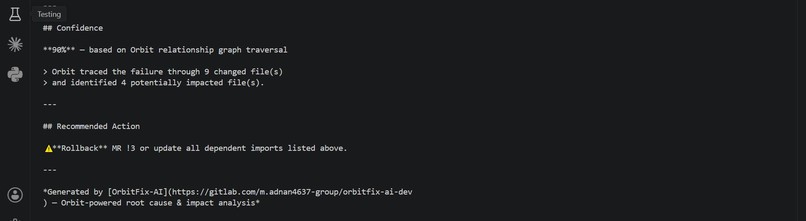
Impact Analysis and Recommended Action
-
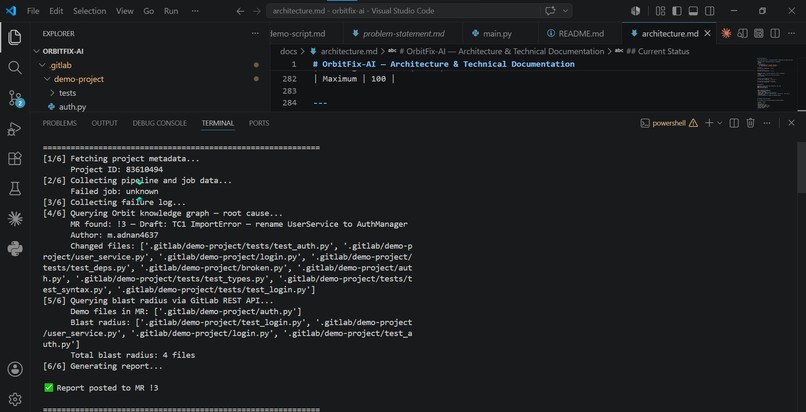
End-to-End Pipeline Failure Investigation
-
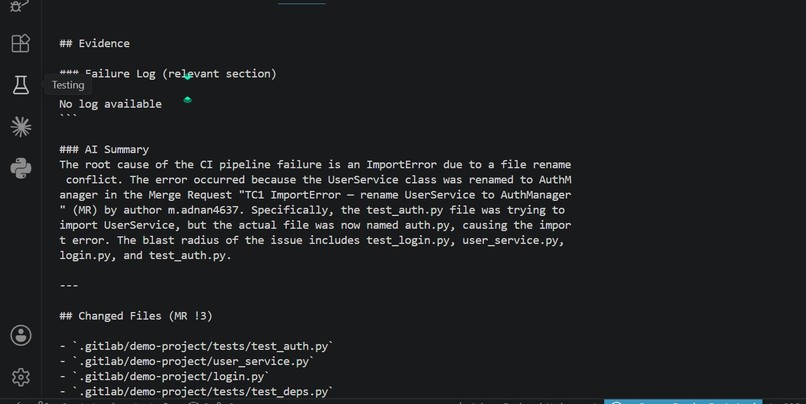
Summry of the Failure
-
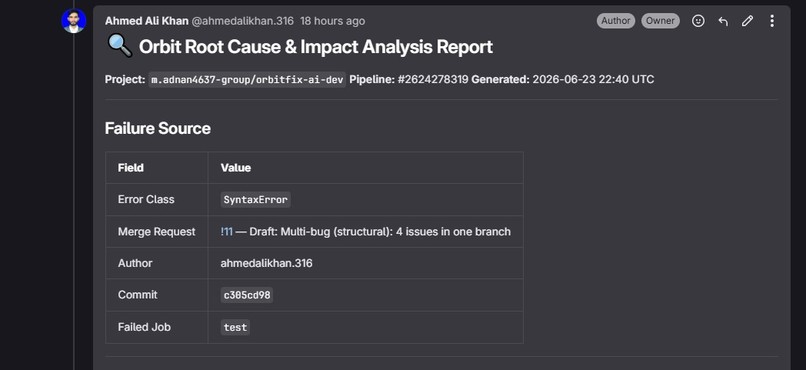
Automated Root Cause Analysis Report on gitlab
-
-
-
Inspiration
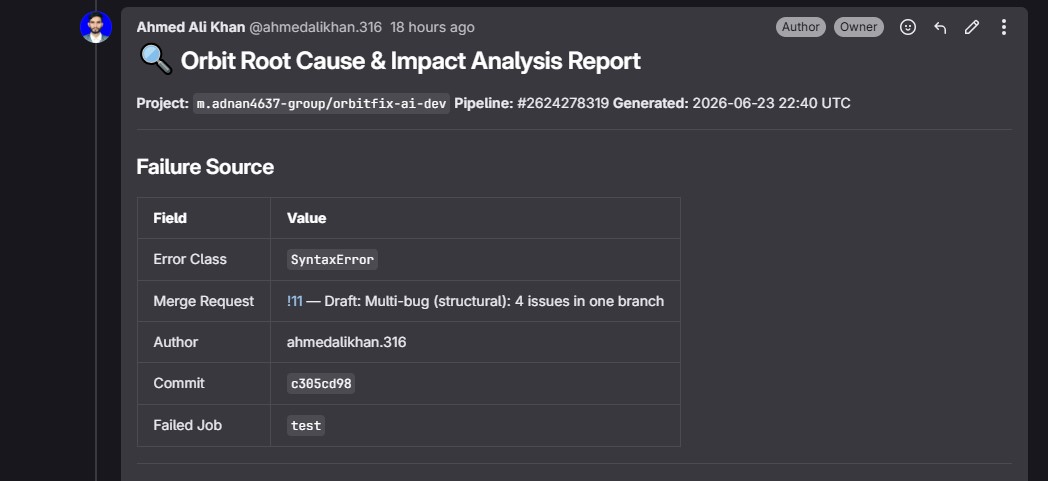
CI/CD pipelines are excellent at detecting failures, but they often leave developers to perform the investigation manually. A failed pipeline usually raises questions such as: Which change caused this? Which merge request introduced the regression? Who made the change? What other parts of the codebase are affected?
While exploring GitLab Orbit during the Transcend Hackathon, I realized that Orbit's graph-based understanding of repository relationships could be used to answer these questions automatically. Instead of simply analyzing logs, I wanted to build an agent that understands the context behind a failure and helps developers move directly from detection to resolution.
This idea led to OrbitFix-AI.
What it does
OrbitFix-AI is an AI-powered CI/CD failure investigation agent built on GitLab Orbit.
When a GitLab pipeline fails, OrbitFix-AI:
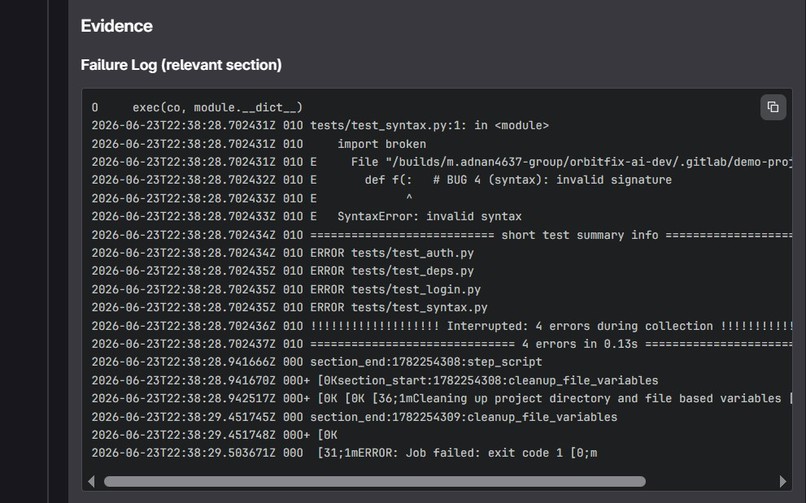
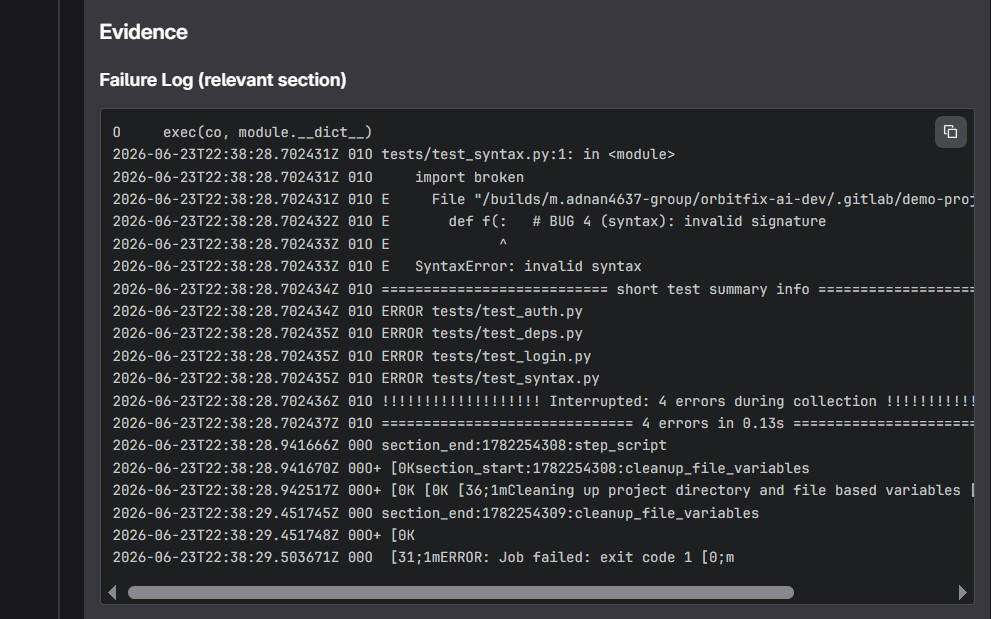
- Collects pipeline metadata and failing job logs
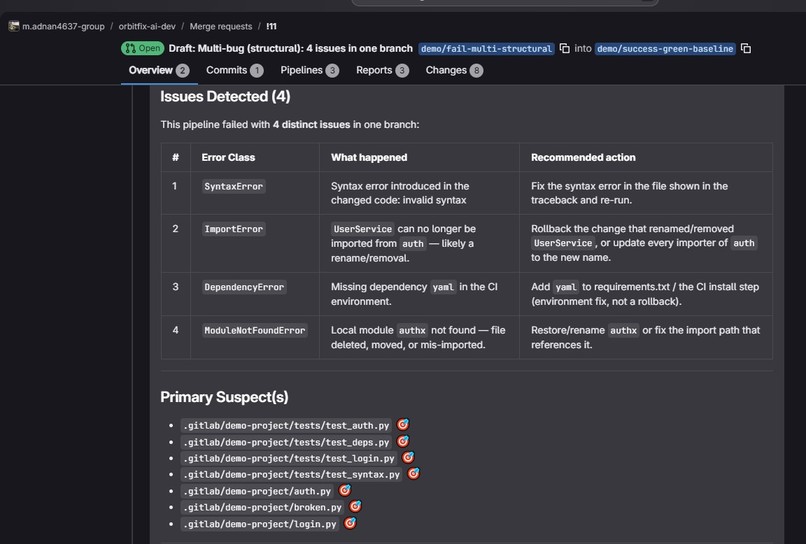
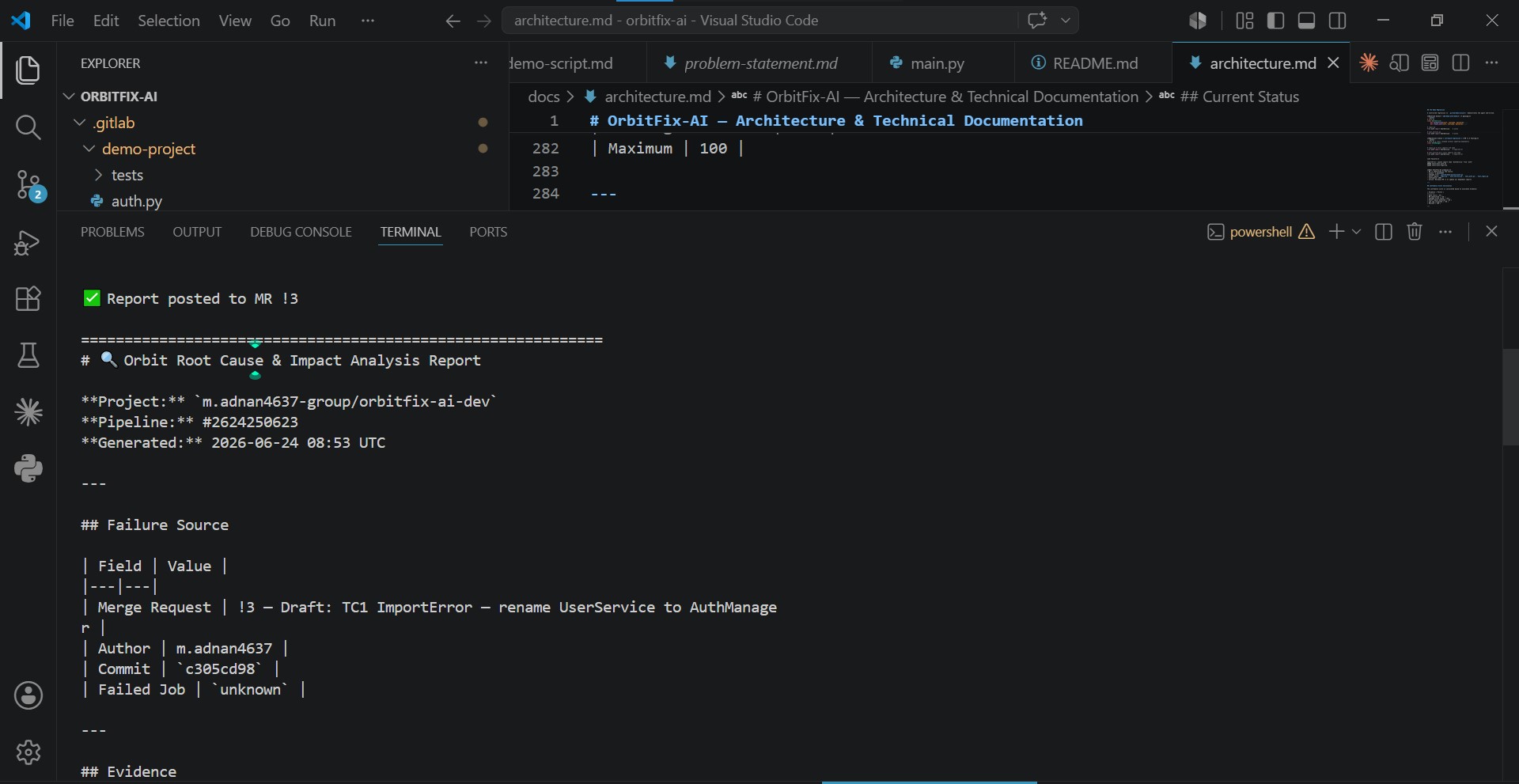
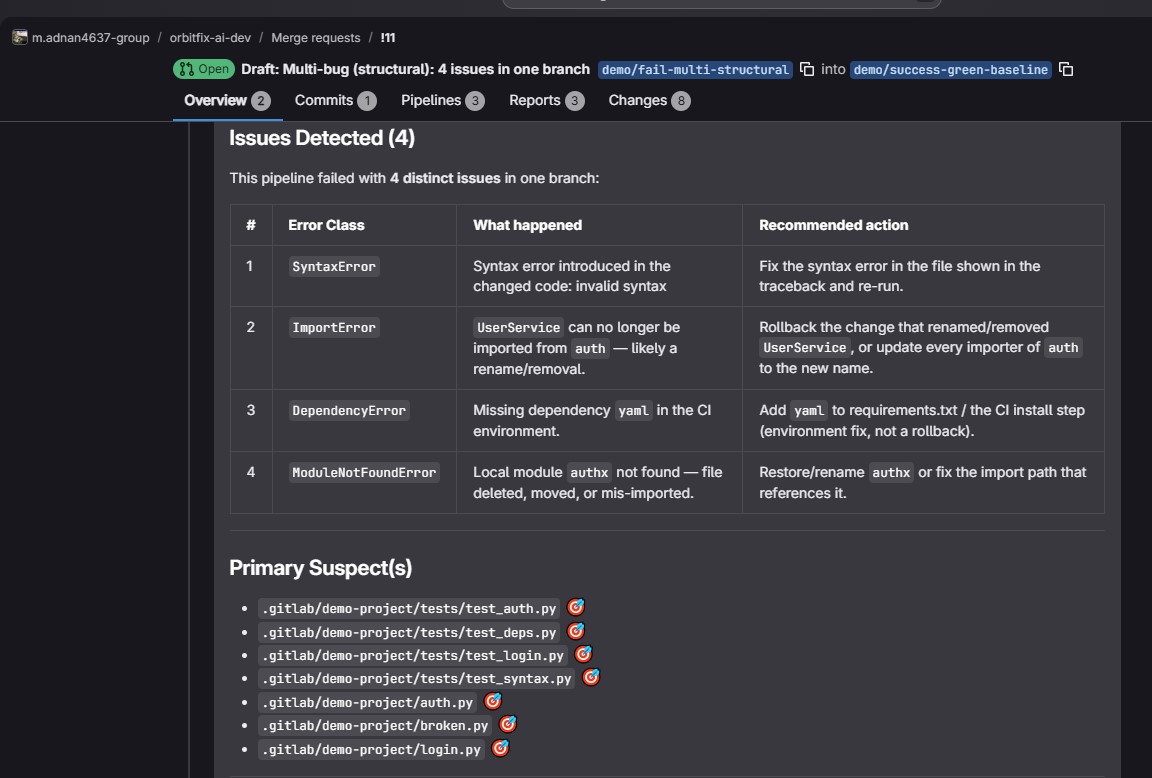
- Identifies the merge request most likely responsible for the failure
- Determines the author of the change
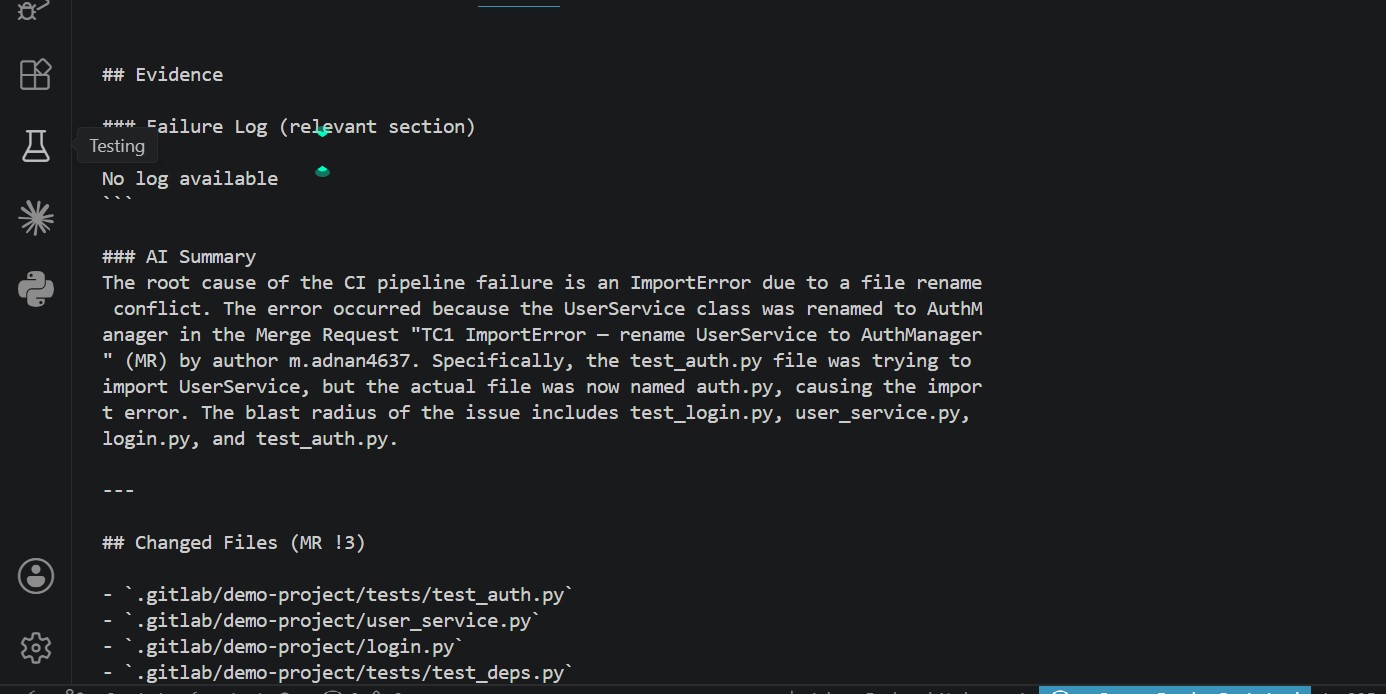
- Lists the files modified in the responsible merge request
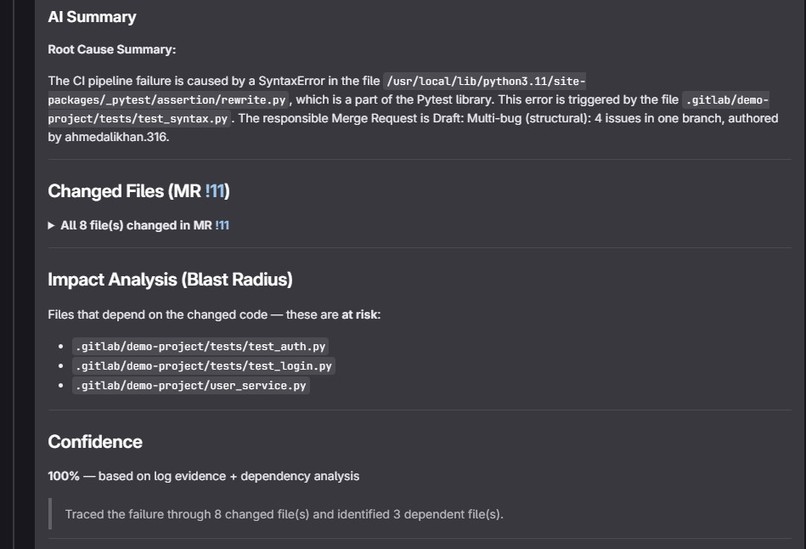
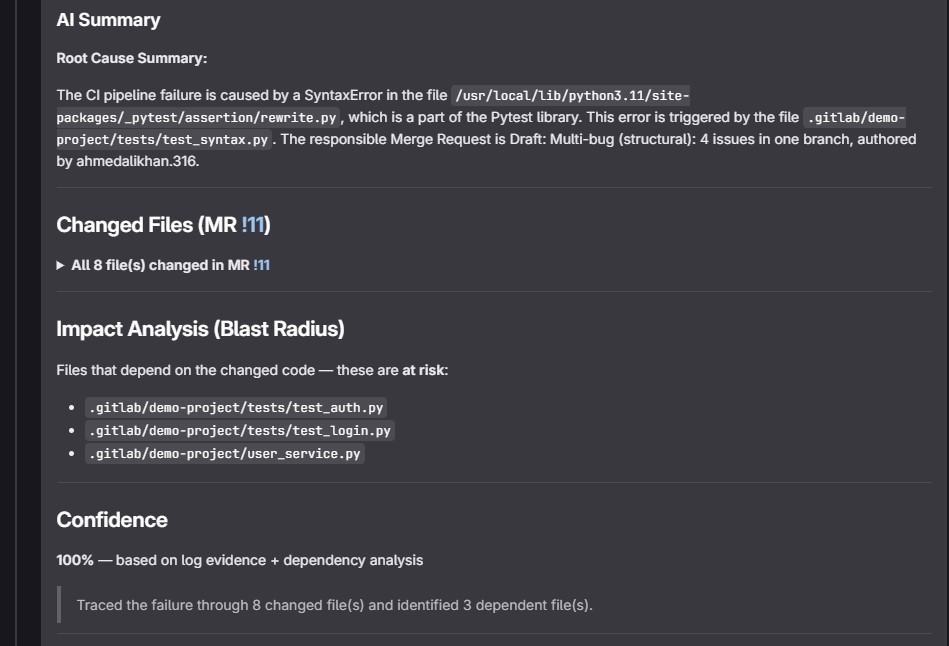
- Analyzes the potential impact and blast radius of the change
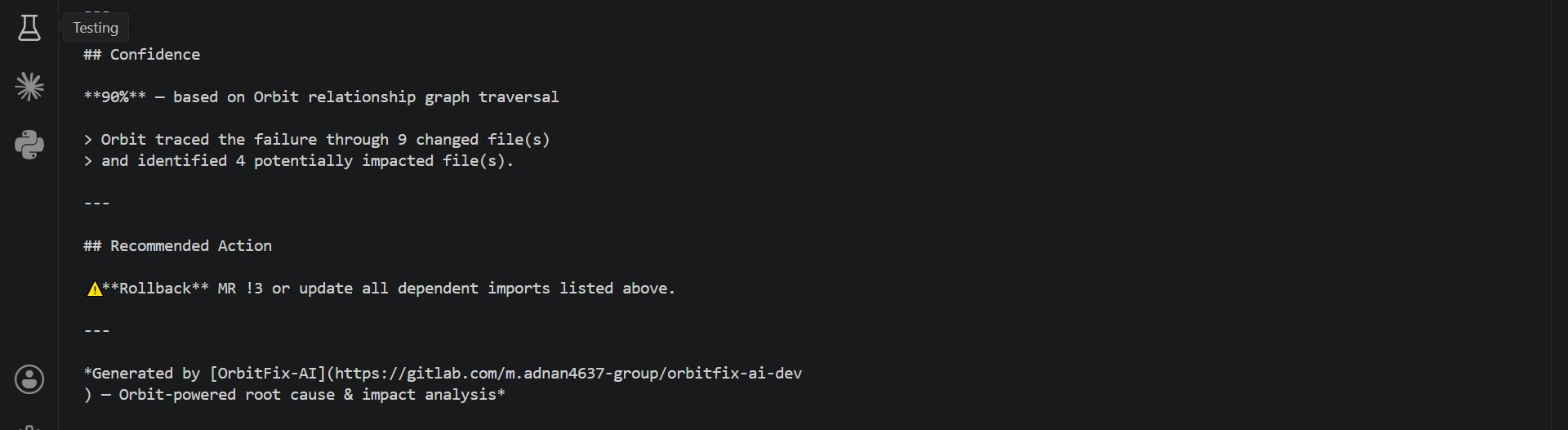
- Generates a structured Root Cause and Impact Analysis Report
- Posts the report directly to the merge request
The goal is to reduce the time developers spend investigating failures and provide actionable information immediately.
How we built it
OrbitFix-AI was built using Python, GitLab APIs, GitLab Orbit, and Groq's Llama 3.1 model.
The workflow is:
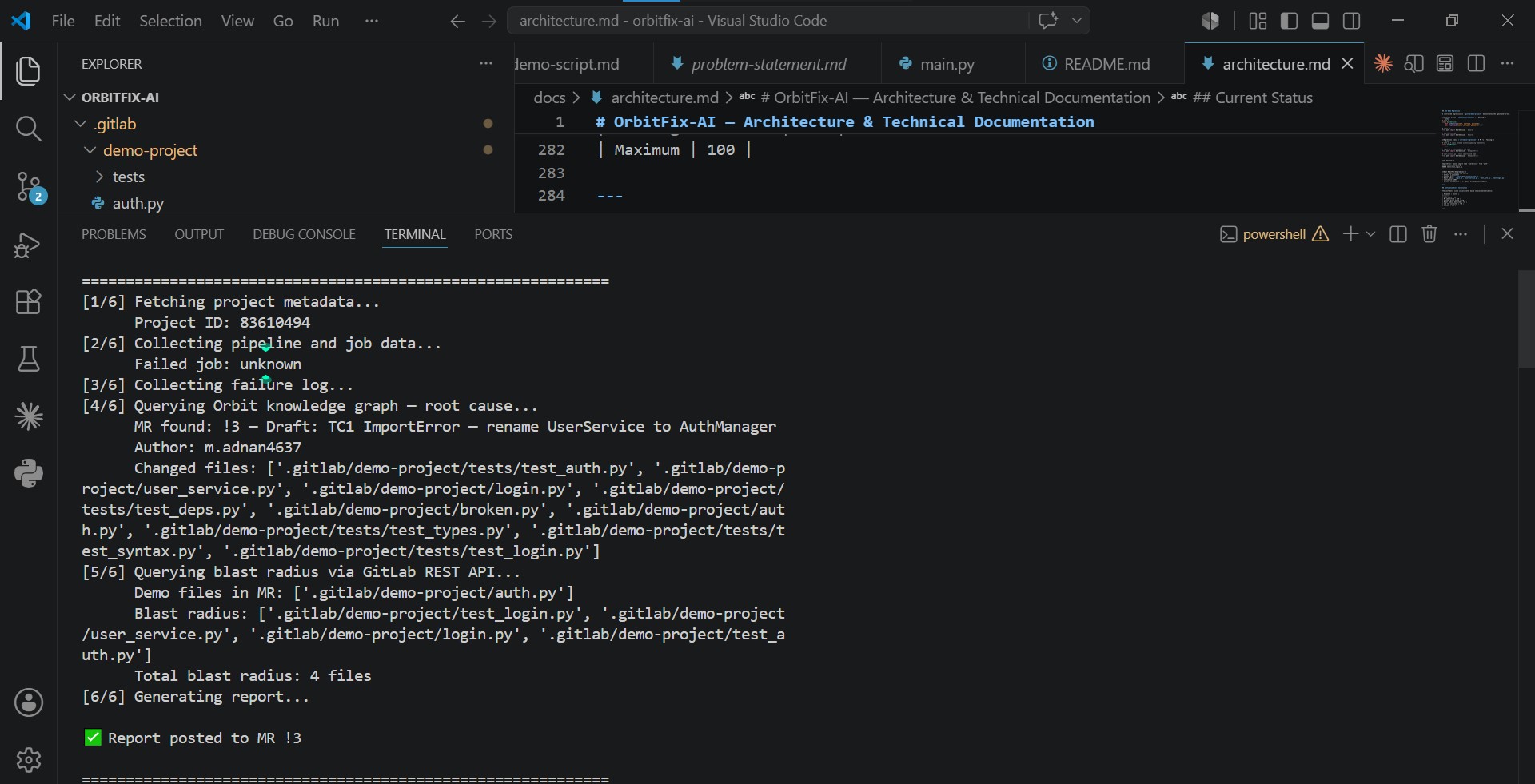
- Retrieve pipeline details and failing job logs using the GitLab REST API.
- Query GitLab Orbit to identify related merge requests, changed files, authors, and repository relationships.
- Analyze affected files and determine the likely blast radius of the change.
- Generate a concise human-readable explanation using an LLM.
- Build a structured markdown report.
- Post the report back to the merge request so developers can review it directly within their workflow.
The system combines deterministic graph-based analysis from Orbit with AI-generated explanations to provide both accuracy and usability.
Challenges we ran into
One of the biggest challenges was understanding and effectively using GitLab Orbit's graph-based data model. Unlike traditional repository analysis, Orbit represents relationships between projects, merge requests, files, definitions, and developers as a connected graph.
Another challenge was ensuring that the AI remained grounded in factual evidence. Rather than allowing the LLM to perform the analysis itself, the investigation is driven by Orbit and GitLab data, while the LLM focuses on presenting the findings in a concise and readable format.
Balancing accurate analysis with useful explanations was an important part of the project.
Accomplishments that we're proud of
- Successfully integrated GitLab Orbit into a real-world developer workflow.
- Built an end-to-end agent capable of moving from a failed pipeline to a root-cause report automatically.
- Implemented merge request attribution, author identification, and impact analysis.
- Generated structured investigation reports instead of simple error summaries.
- Published OrbitFix-AI as a public AI Catalog agent.
- Demonstrated how GitLab Orbit can be used for contextual debugging rather than traditional log analysis.
What we learned
This project showed us the value of repository context in software development workflows.
We learned that understanding relationships between code changes, merge requests, and affected files often provides more useful debugging information than logs alone. We also gained hands-on experience working with GitLab Orbit, GitLab APIs, AI agents, workflow automation, and integrating graph-based analysis with large language models.
Perhaps the biggest lesson was that AI becomes significantly more useful when it is given structured context instead of relying only on text inputs.
What's next for OrbitFix-AI
Future development plans include:
- Supporting additional programming languages and frameworks
- Improving dependency and impact analysis using deeper Orbit relationships
- Generating automated fix suggestions and code patches
- Supporting multi-project and monorepo investigations
- Integrating with more GitLab Duo Agent Platform workflows
- Expanding confidence scoring and evidence tracking
Our long-term vision is to evolve OrbitFix-AI from a failure investigation assistant into a comprehensive AI-powered incident response companion for software development teams.


Log in or sign up for Devpost to join the conversation.