-
-
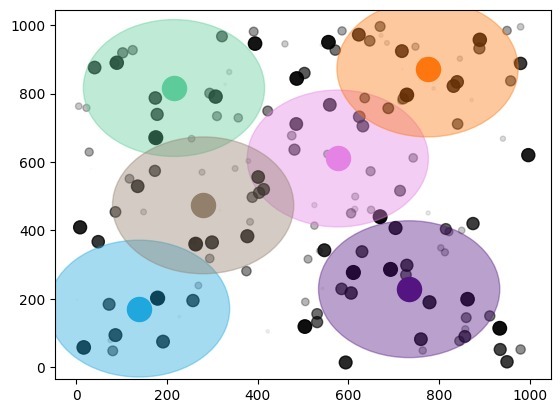
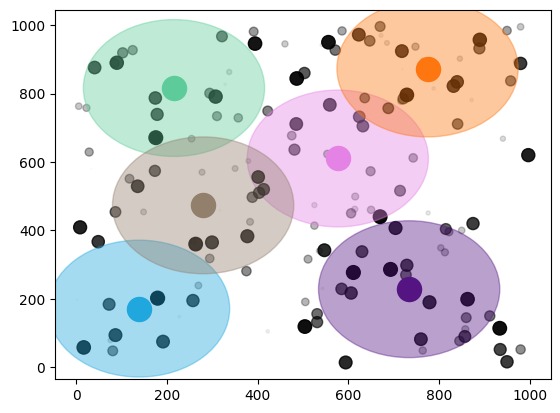
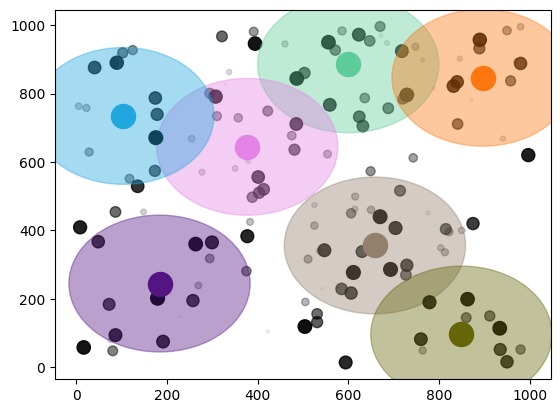
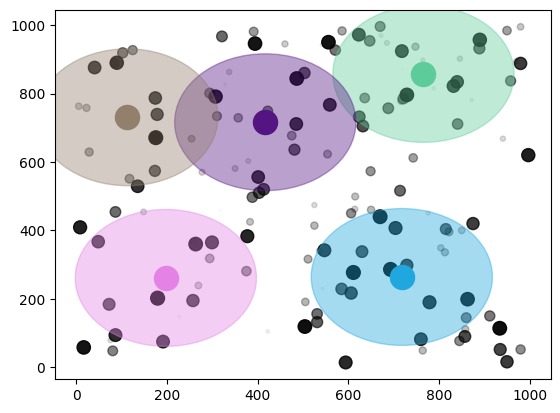
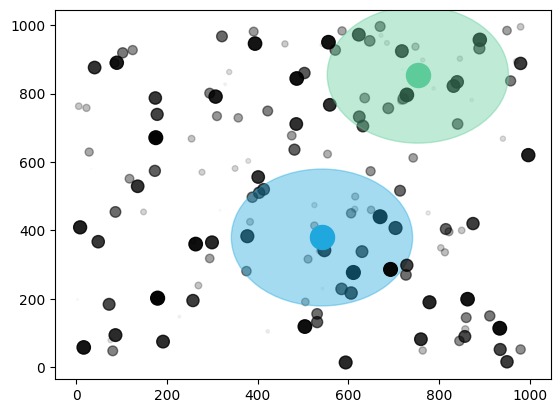
1. Starting with 6 satellites in our network
-
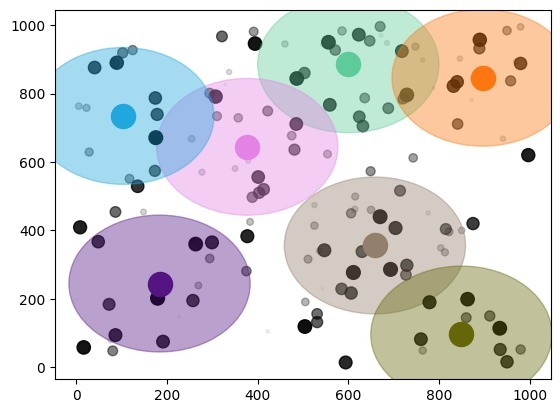
2. Adding 1 satellite
-
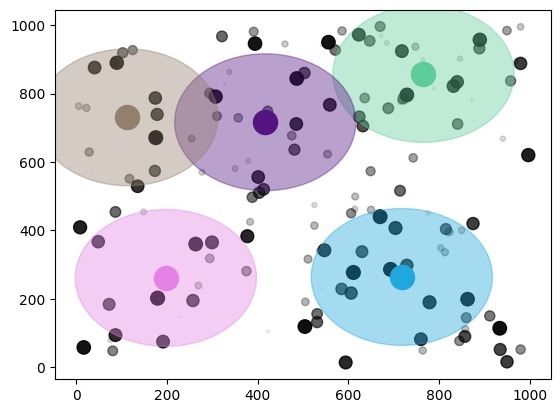
3. Two satellites go out of commission
-
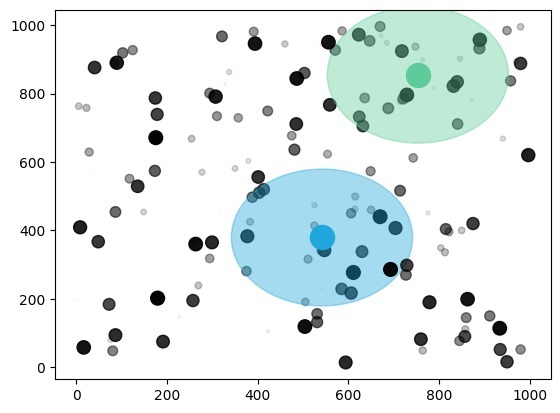
4. Only two satellites remain
-
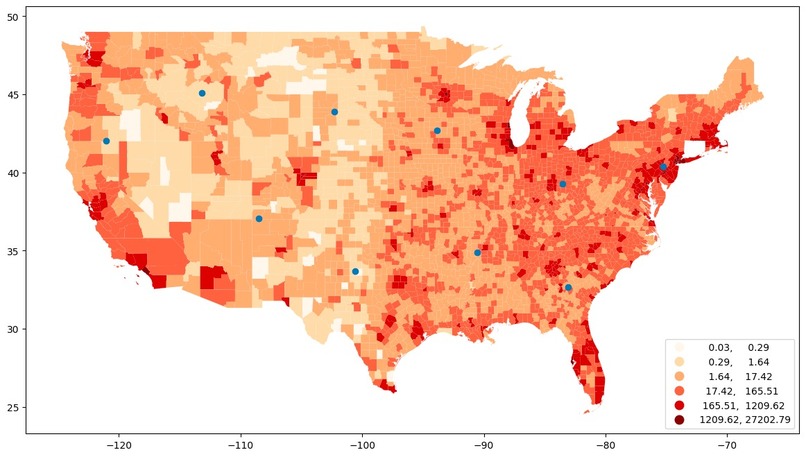
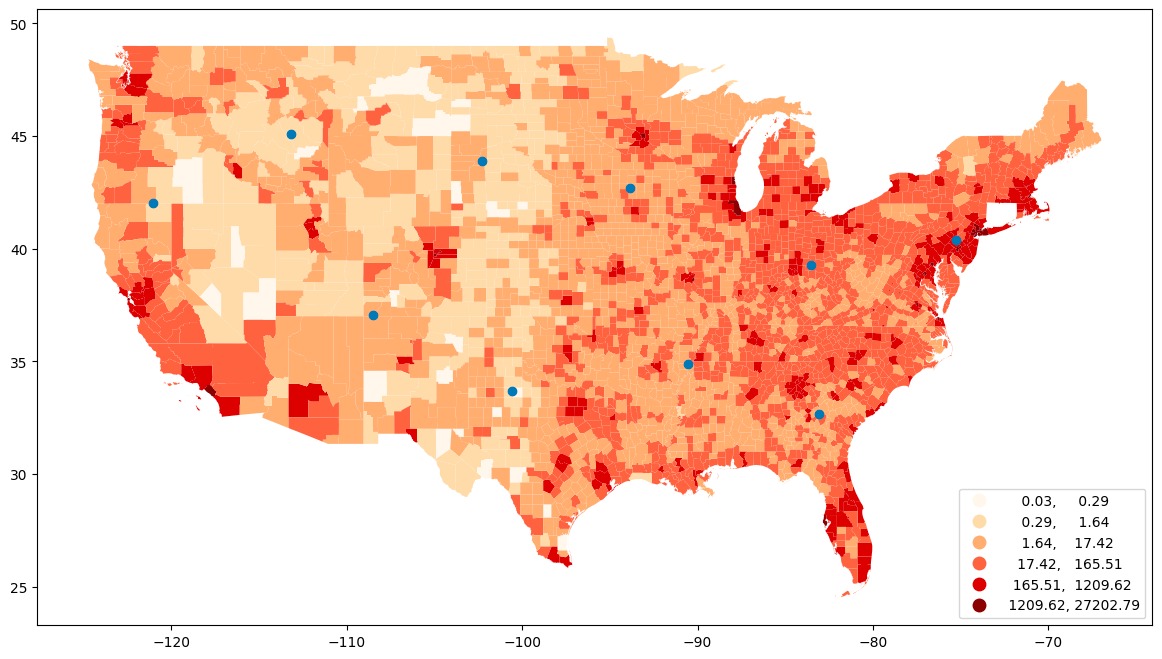
An illustration of how satellites would cover counties in the US
Inspiration
Satellite networks are the lynchpin of modern day communications, and an impact on them results in an impact on critical infrastructure. In addition to regular problems that can come up, in an increasingly unstable world, space is becoming the new frontier for conflict. We are motivated to coming up with the means to make our satellite networks resilient to failure, at reduced costs.
What it does
Rather than depending on redundancy, we aim to re-orient the satellites in the network to ensure that areas of high priority will remain reliably covered. The priorities can be set as required - high population density, important infrastructure, national security, etc.
How we built it
The updated satellite positions are determined by using an extension of the classic K-means problem and is often referred to as K-means with constraints and weighted points. We factored in constraints like the number of satellites available, and the range of those satellites, to determine the clusters. It was developed using python, numpy and matplotlib.
Challenges we ran into
Determining the optimal layout for the satellites, based on the desired priorities, required taking into account the following constraints:
- Satellite range
- Limited number of satellites
- Efficiently cluster data points into k groups while ensuring that each cluster contains the maximum number of data points with the highest weights
It was important to ensure that data points with greater weight received uninterrupted coverage. Our problem thus becomes one of K-means with constraints on the distance between the centroid and cluster points, while also trying to maximise a score using weights for each data point. This is generally considered NP-hard.
Accomplishments that we're proud of
Our algorithm represents a significant contribution in the field of satellite network management, with several noteworthy achievements. We've successfully integrated constraints into the K-means framework, allowing for the precise modeling of complex satellite network requirements. This breakthrough ensures that satellite configurations adhere to critical operational constraints, enhancing the reliability of our satellite systems. Moreover, our algorithm exhibits exceptional adaptability, making it capable of optimizing satellite configurations across diverse scenarios and mission profiles. We are particularly pleased with its ability to enhance network resilience, enabling satellites to gracefully respond to challenges in an increasingly dynamic and contested space environment.
What we learned
The functioning of satellite networks and the challenges they face. Identifying and implementing a heuristic machine learning algorithm for solving an NP-hard problem.
What's next for Orbitech
Dynamically updating the weight of data points (cities, counties, etc). Support a functionality for dynamically updating the number of data points.
Built With
- matplotlib
- python

Log in or sign up for Devpost to join the conversation.