-
-
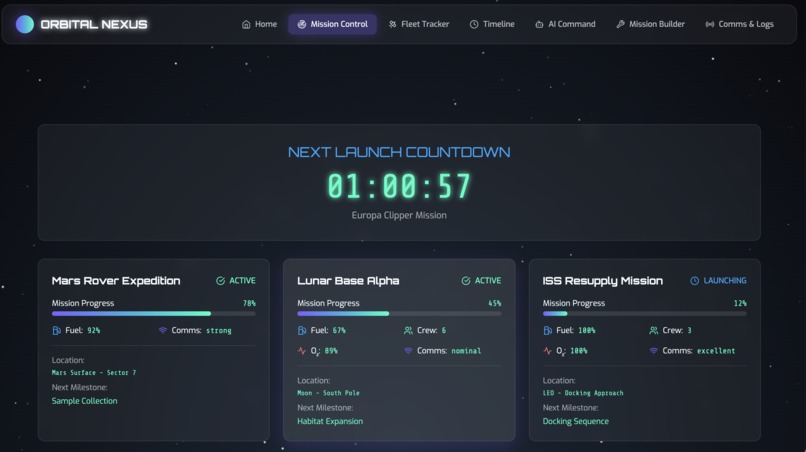
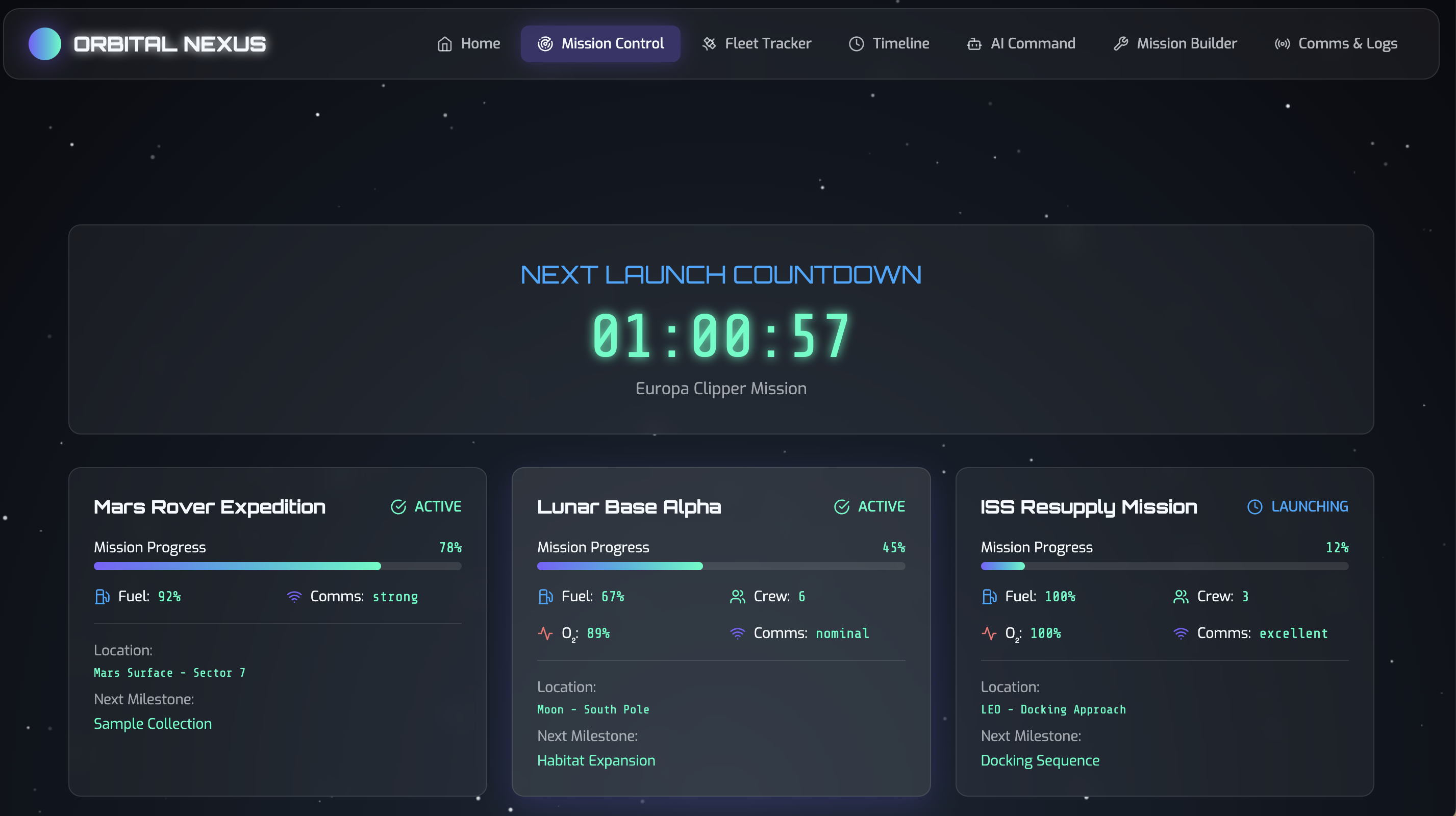
Countdown clock to next mission
-
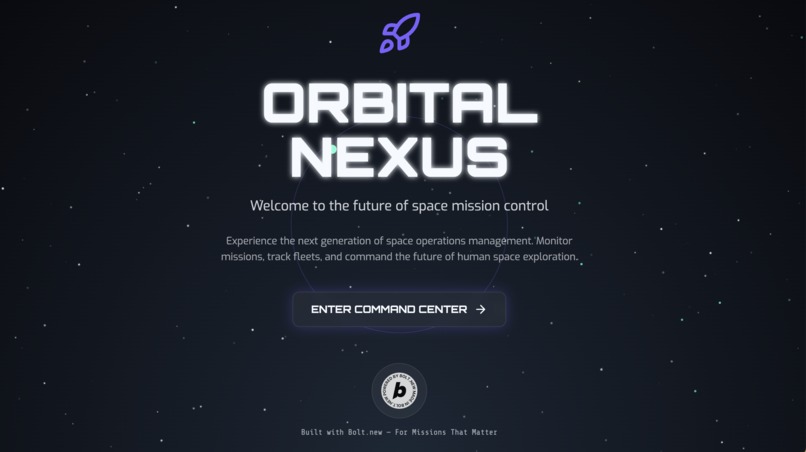
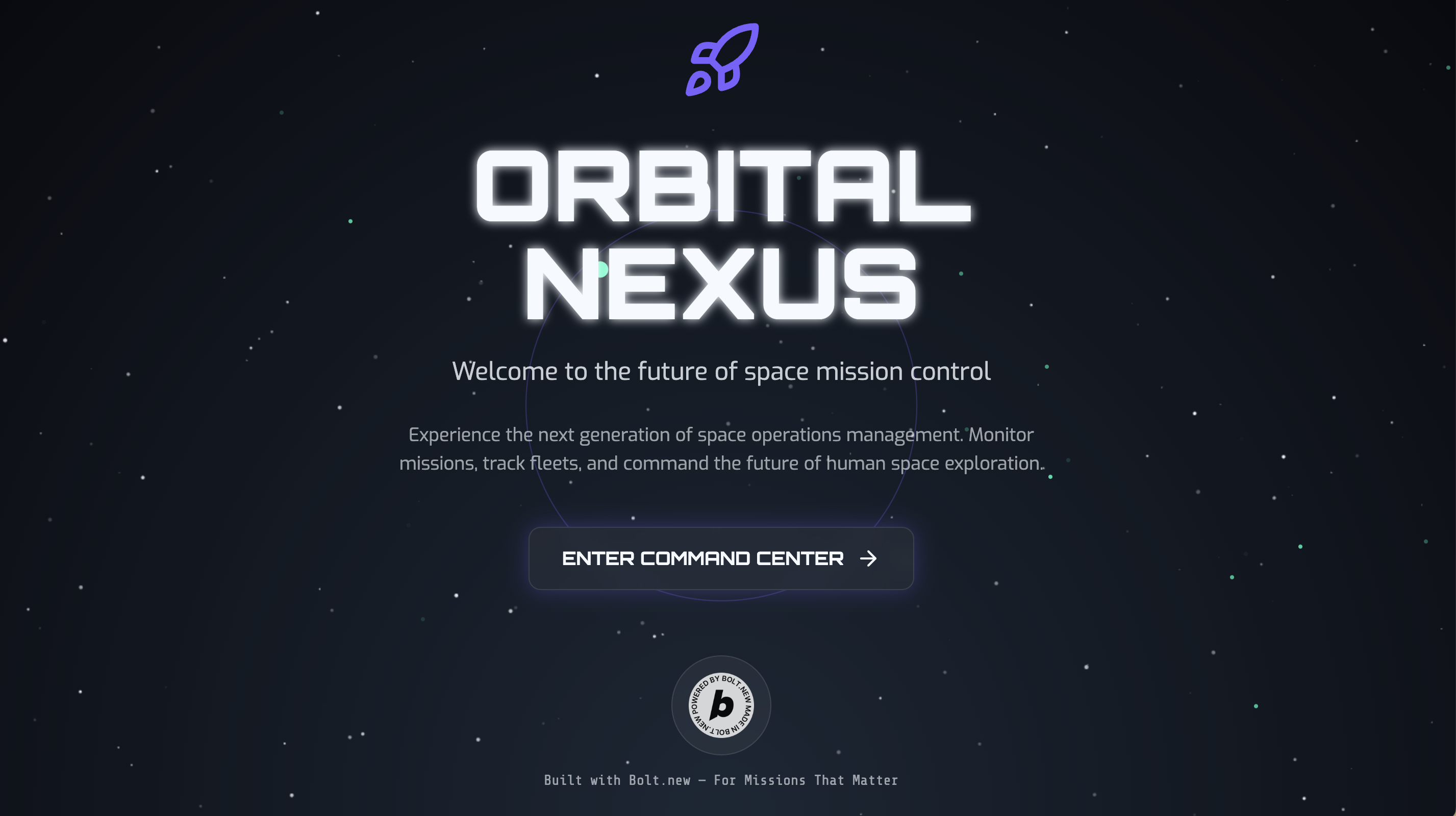
A beautiful splash page
Inspiration
Space has always captured our imagination, from Apollo missions to Mars rovers. We wanted to create something that makes people feel like they’re inside a live mission control room, without needing a VR headset or expensive setup. Orbital Nexus was inspired by the idea of merging cinematic storytelling, real-time systems thinking, and sci-fi UI into one seamless web experience. We imagined: what if NASA had a control OS designed by a film director and built by an AI?
What it does
Orbital Nexus is a fully interactive space mission simulator presented as a futuristic web interface. Users can:
- Launch missions to planets and moons
- Interact with an intelligent AI assistant (Nexus.AI)
- View spacecraft fleet details with real-time telemetry
- Explore a galaxy-based timeline of past and future events
- Build custom missions through an animated, modular builder
- Browse repair logs, system pings, and simulated astronaut voice entries
- It’s a cinematic, educational, and deeply engaging digital experience — all in a single web interface.
How we built it
We used Bolt.new and crafted a detailed one-shot prompt to generate the entire experience, from layout to interactivity to design. We pushed the AI to think visually, using layered panels, motion transitions, and component-based interactions. The site uses mock telemetry, glowing effects, and sci-fi-inspired UI to simulate the feeling of operating within a live command system.
Glassmorphism, neumorphism, and animated SVG elements were key to the layered interface. The space theme allowed us to incorporate timelines, AI text generation, and modular mission control views, all using Bolt’s visual generation capabilities.
Challenges we ran into
- Designing an immersive space UI without defaulting to a dashboard layout
- Balancing visual complexity with performance and readability
- Describing interactions and design intent precisely in a single prompt
- Creating tactile experiences like hover effects, glitch animations, and mission feedback using only descriptive language
- Ensuring each section felt alive and purposeful, not static
Accomplishments that we're proud of
- Built a fully functional, visually immersive simulator using only one AI prompt
- Created a cinematic space interface that is intuitive, reactive, and emotionally engaging
- Designed and animated custom mission logic and timelines using mock data and simulated telemetry
- Developed a system that can be expanded into education, gaming, or real-time space storytelling
What we learned
- The more vivid and intentional your language, the better Bolt.new performs
- One-shot prompts can deliver not just structure, but narrative and emotional tone
- Animation and interactivity can be described successfully when layered with specificity and spatial thinking
- It's possible to blend sci-fi design with modern web technologies in a way that feels fresh, educational, and fun
What's next for Orbital NexusWe plan to:
- Add voice-based AI interaction with real-time feedback
- Integrate real space mission data from open NASA APIs
- Expand the Mission Builder to allow for more complex, multi-phase operations
- Build a student/teacher mode for classrooms to explore orbital mechanics and mission planning
- Launch Orbital Nexus as an open-access educational tool that inspires future explorers
Built With
- html5
- javascript
- react.js
- tailwindcss


Log in or sign up for Devpost to join the conversation.