-
-
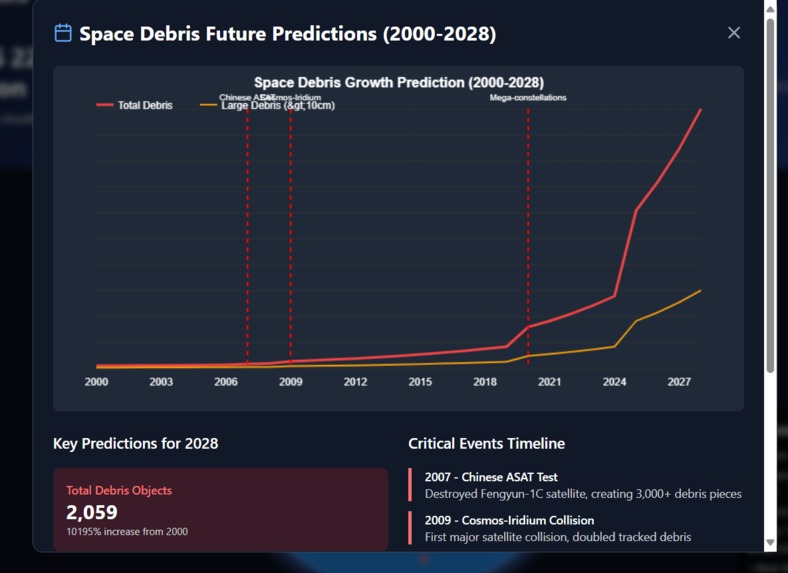
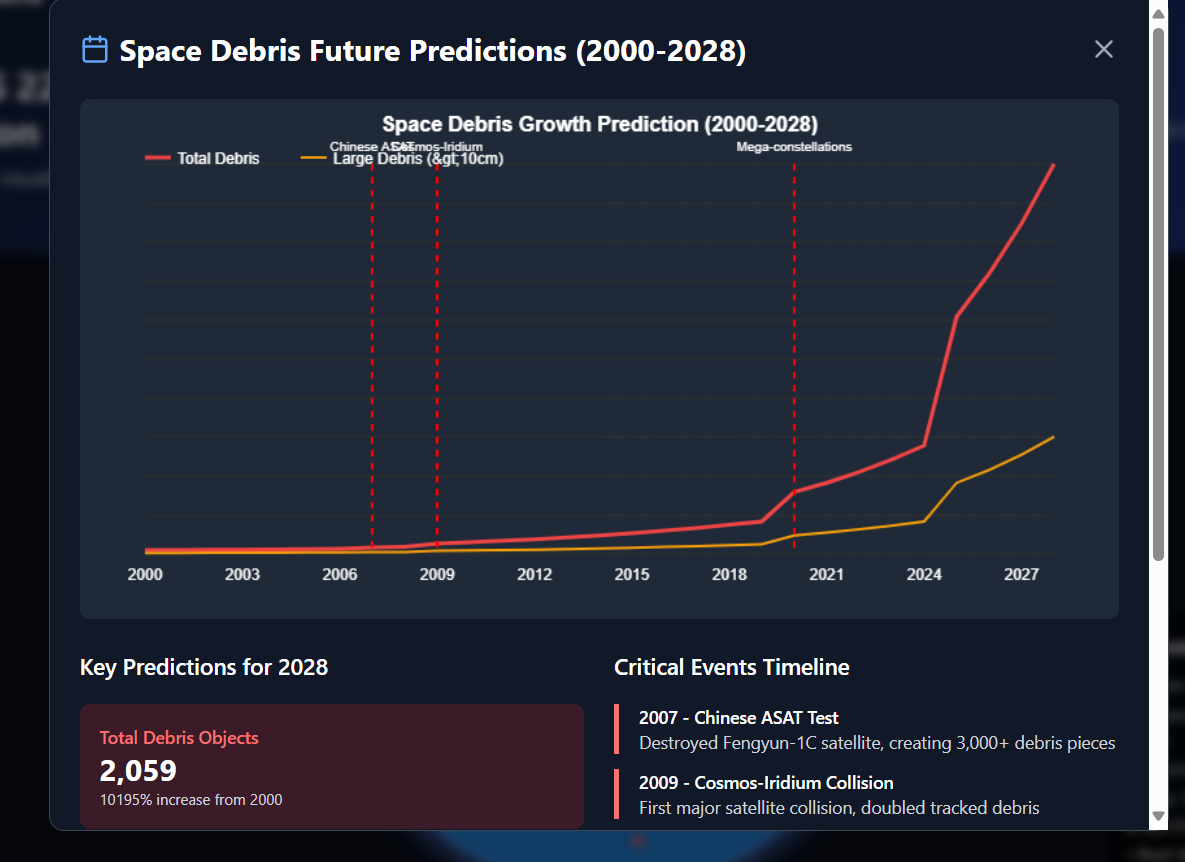
Future Prediction
-
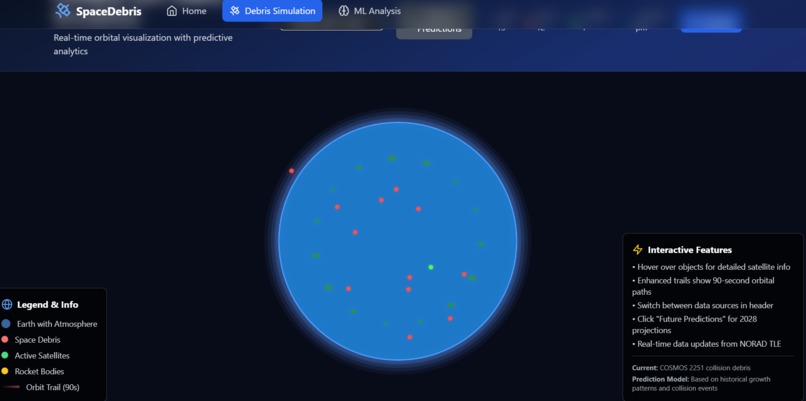
Debris Visualisation from NORAD
-
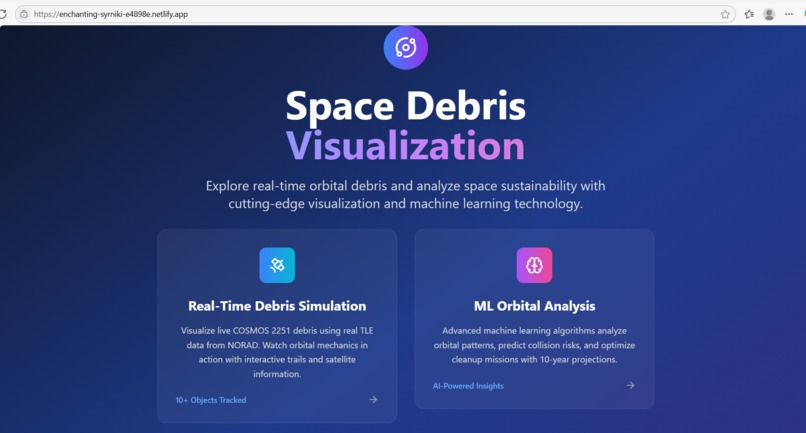
Home
-
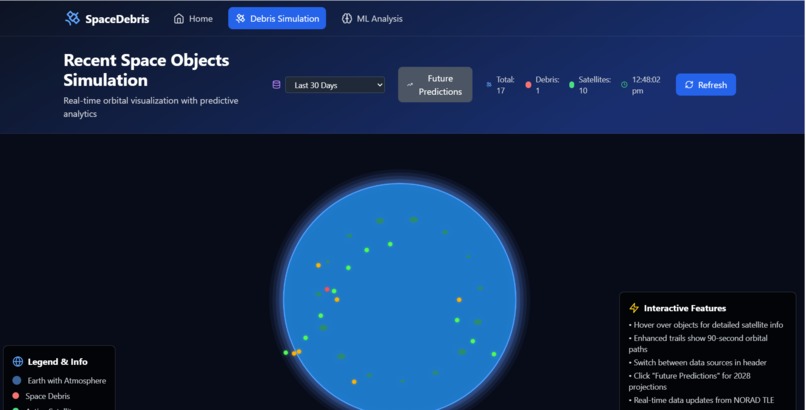
Celestial Bodies
Inspiration
The increasing risk of orbital congestion and the Kessler Syndrome, as warned by NASA and ESA, inspired us to create a platform that makes space debris data visually accessible and educational. With thousands of satellites and fragments circling Earth, we saw the need for a real-time, intuitive tool to promote awareness and sustainability in space.
What it does
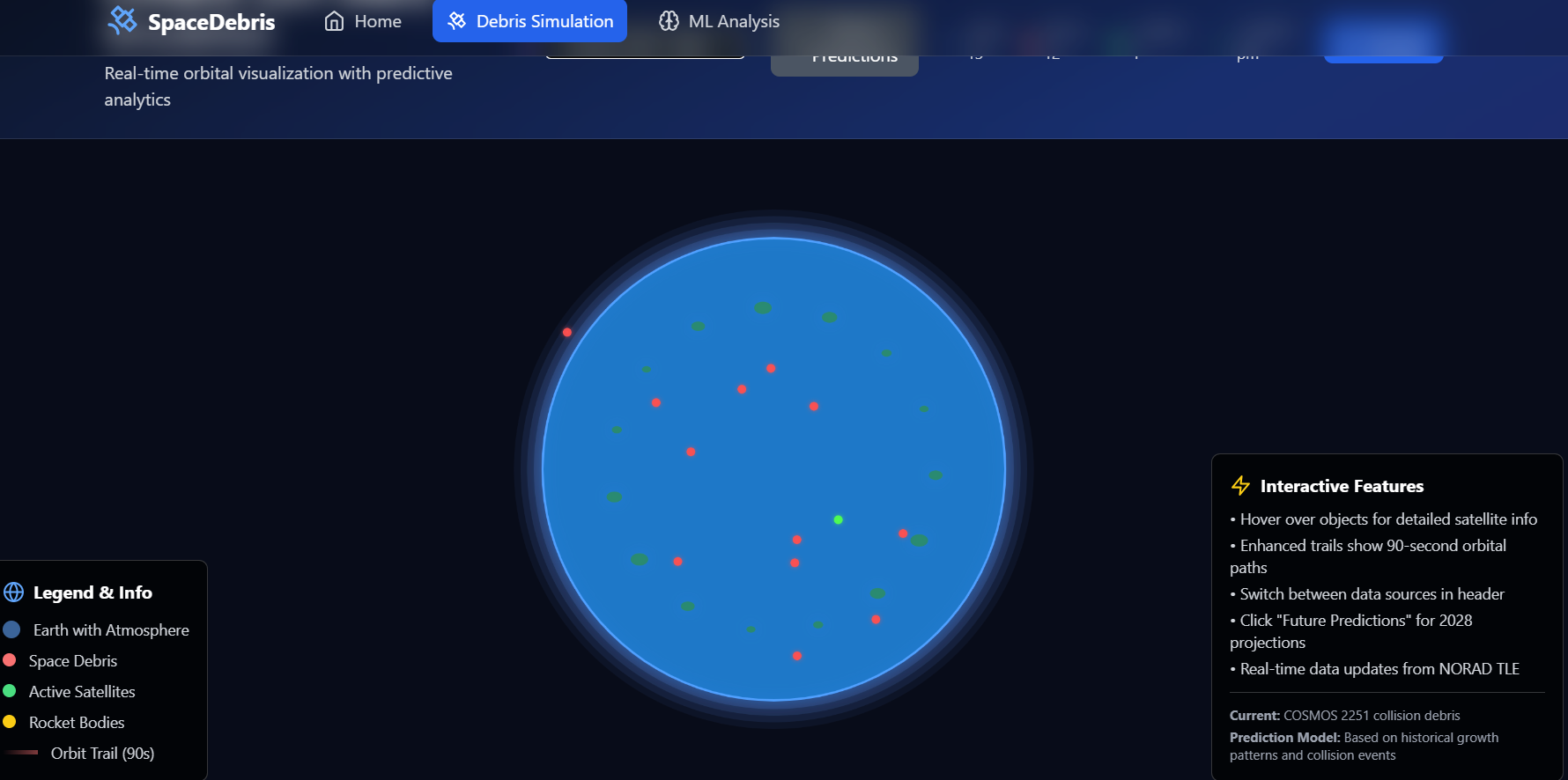
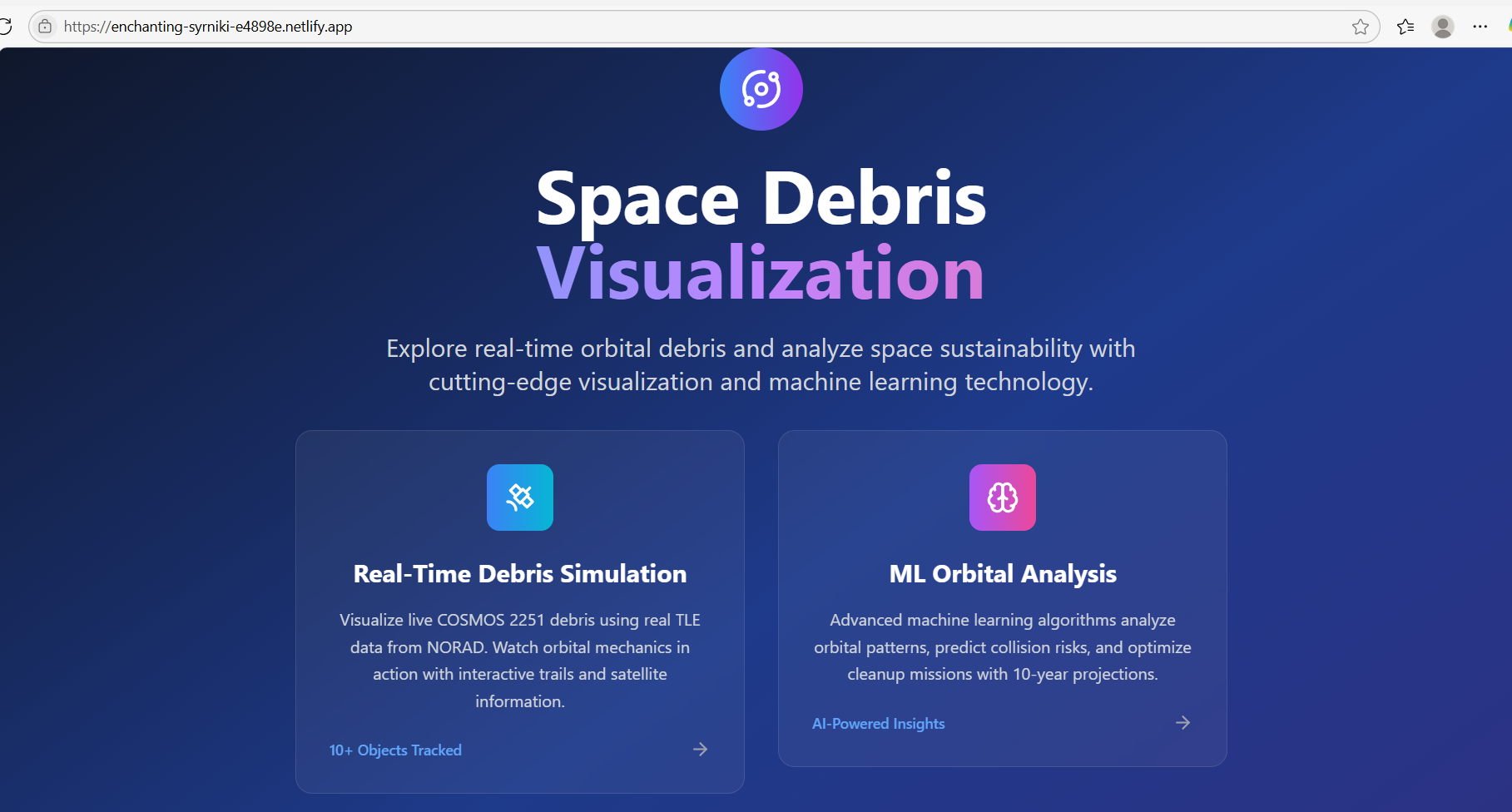
Orbital Guardian visualizes real-time space debris using NORAD TLE data, simulates orbital mechanics, and uses machine learning to predict future growth in debris. It provides interactive graphics, collision risk analysis, satellite metadata on hover, and educational insights to help users understand the urgency of space sustainability.
How we built it
We built the frontend with React 18, TypeScript, and Tailwind CSS for responsive UI. For real-time orbital visualization, we used p5.js and the satellite.js library to implement SGP4/SDP4 propagation models. Machine learning models were used for debris growth prediction. Live NORAD TLE data was integrated via CORS-enabled APIs.
Source
TLE Data Sources (CelesTrak)
Active Satellites https://celestrak.org/NORAD/elements/gp.php?GROUP=active&FORMAT=tle
Iridium Debris https://celestrak.org/NORAD/elements/gp.php?GROUP=iridium-33-debris&FORMAT=tle
Weather Satellites https://celestrak.org/NORAD/elements/gp.php?GROUP=weather&FORMAT=tle
Earth Resources https://celestrak.org/NORAD/elements/gp.php?GROUP=resource&FORMAT=tle
Communication Sats (GEO) https://celestrak.org/NORAD/elements/gp.php?GROUP=geo&FORMAT=tle
COSMOS 2251 Debris https://celestrak.org/NORAD/elements/gp.php?GROUP=cosmos-2251-debris&FORMAT=tle
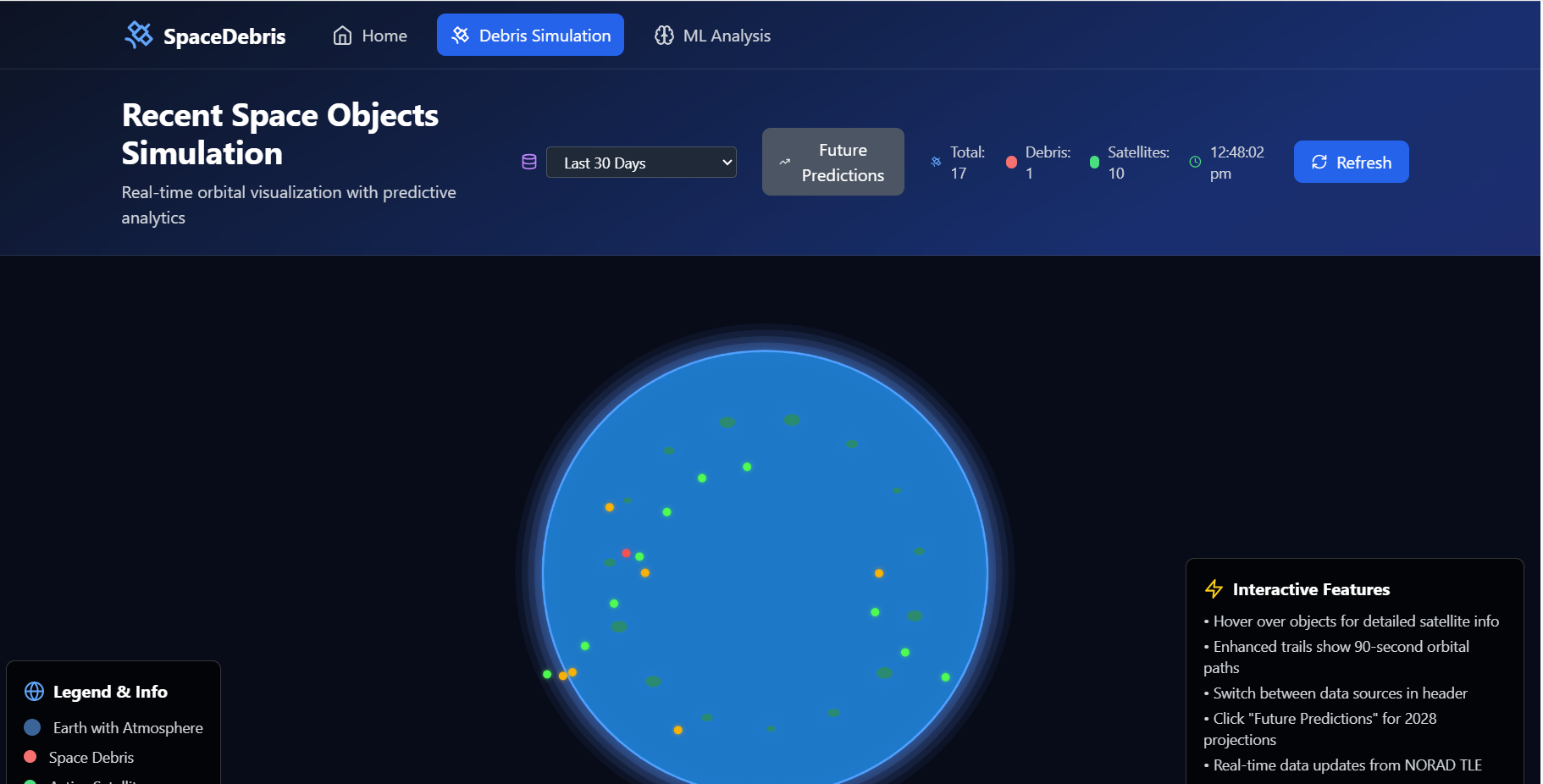
Recent Launches (Last 30 Days) https://celestrak.org/NORAD/elements/gp.php?GROUP=last-30-days&FORMAT=tle
Challenges we ran into
**- Handling large real-time TLE datasets efficiently without performance lag
Implementing accurate SGP4 propagation with smooth rendering
Designing a mobile-responsive UI while maintaining advanced 3D visualizations
Predictive modeling of orbital growth required extensive dataset cleanup and tuning**
Accomplishments that we're proud of
**- Successfully visualized real-time orbital debris from live CelesTrak data
Built a fully functional predictive model for 10-year debris growth
Delivered an educational, user-friendly interface with interactive tooltips and chart overlays
Enabled toggling between different satellite groups and debris clouds**
What we learned
**- The complexity of orbital mechanics and propagation models
How to integrate live aerospace data streams into frontend visual systems
The power of combining education, data science, and visual design to promote global issues
Techniques for optimizing performance in data-heavy interactive apps**
What's next for Orbital Guardian: Real-Time Space Debris Simulator
**- Add alert systems for potential satellite-debris collisions
Expand the ML model with reinforcement learning for debris mitigation simulations
Integrate with external satellite APIs like Space-Track or OpenSpace
Build a classroom mode for educators to use this tool in space science lessons
Release as an open-source tool with contributions from the space and data science community**
Built With
- bolt.new
- canvas-api
- celestrak-norad-tle-data
- cors
- custom-ml-models
- github
- javascript-(es6+)
- netlify
- p5.js
- react-18
- satellite.js
- tailwind-css
- typescript
- vercel
- vite


Log in or sign up for Devpost to join the conversation.