-
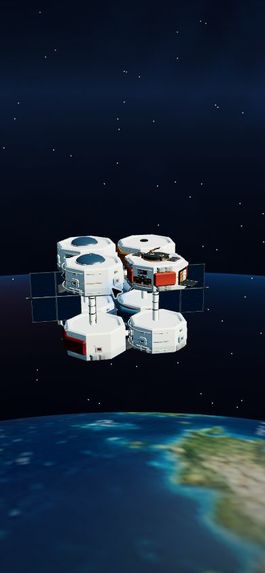
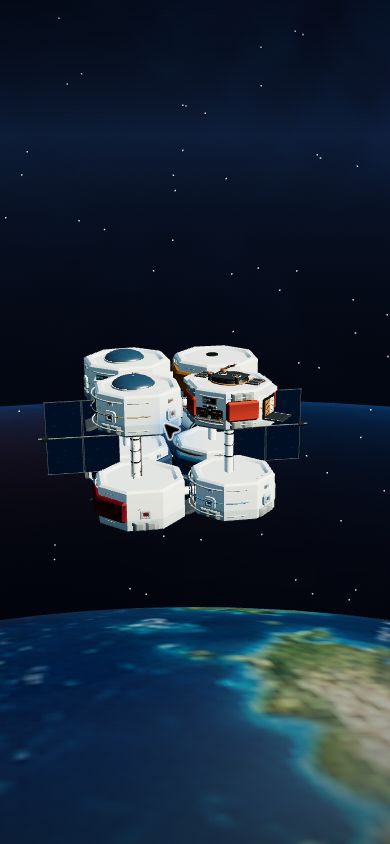
Your modular station above Earth, shown with the in-game interface hidden.
-
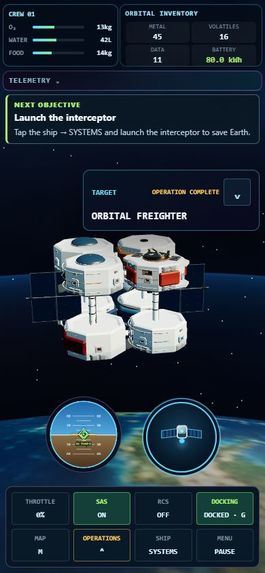
Expand your station with solar power, life support, storage and manufacturing modules.
-
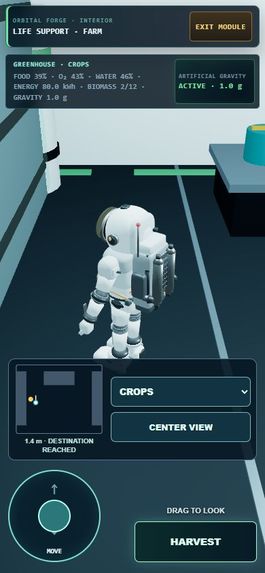
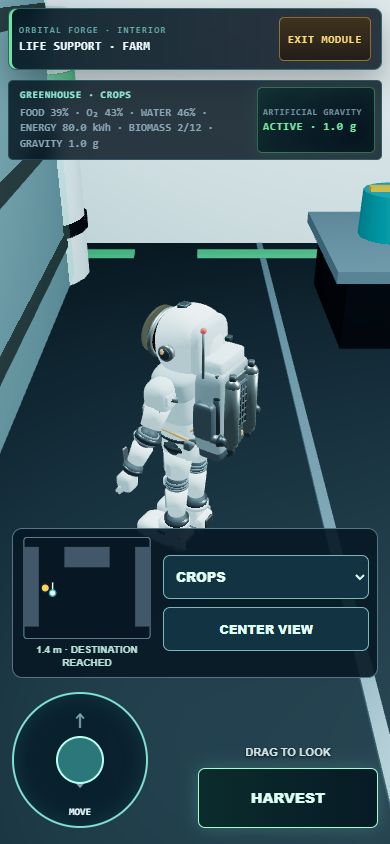
Control your astronaut with touch controls, follow the minimap and harvest biomass to prepare food.
-
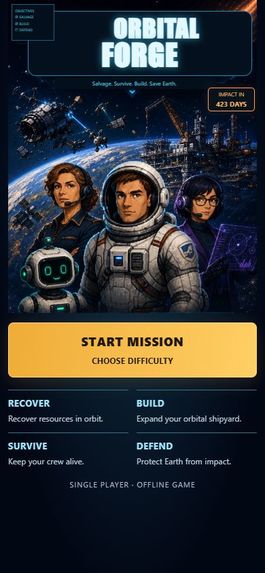
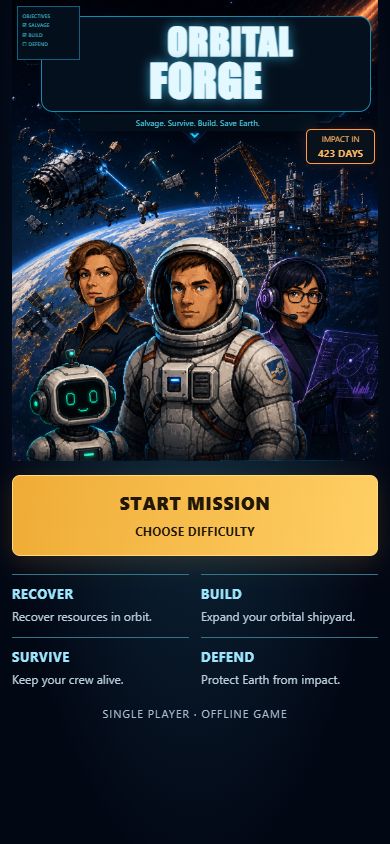
Orbital Forge: turn abandoned space debris into humanity’s chance to survive.
-
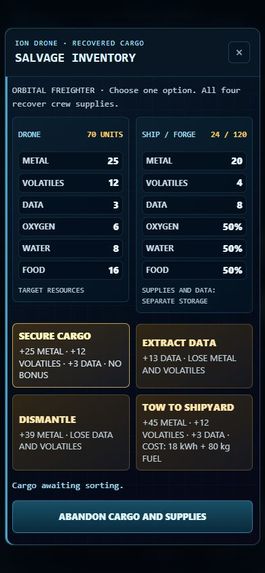
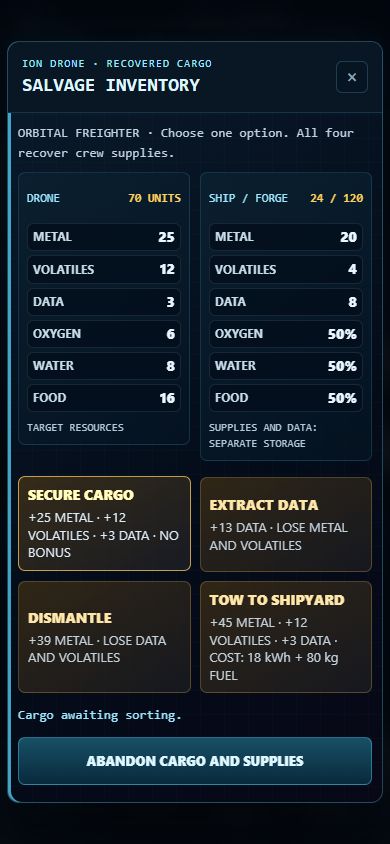
Choose cargo, data, metal or towing. Compare rewards and costs before committing to a salvage strategy.
-
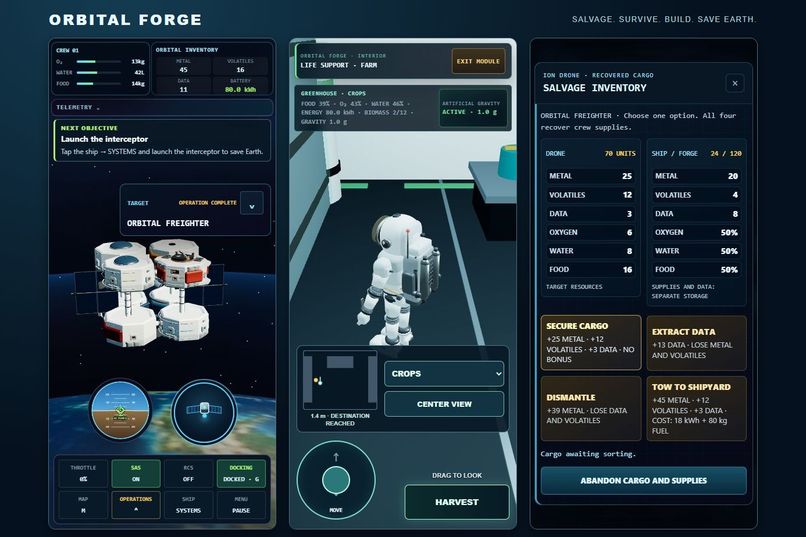
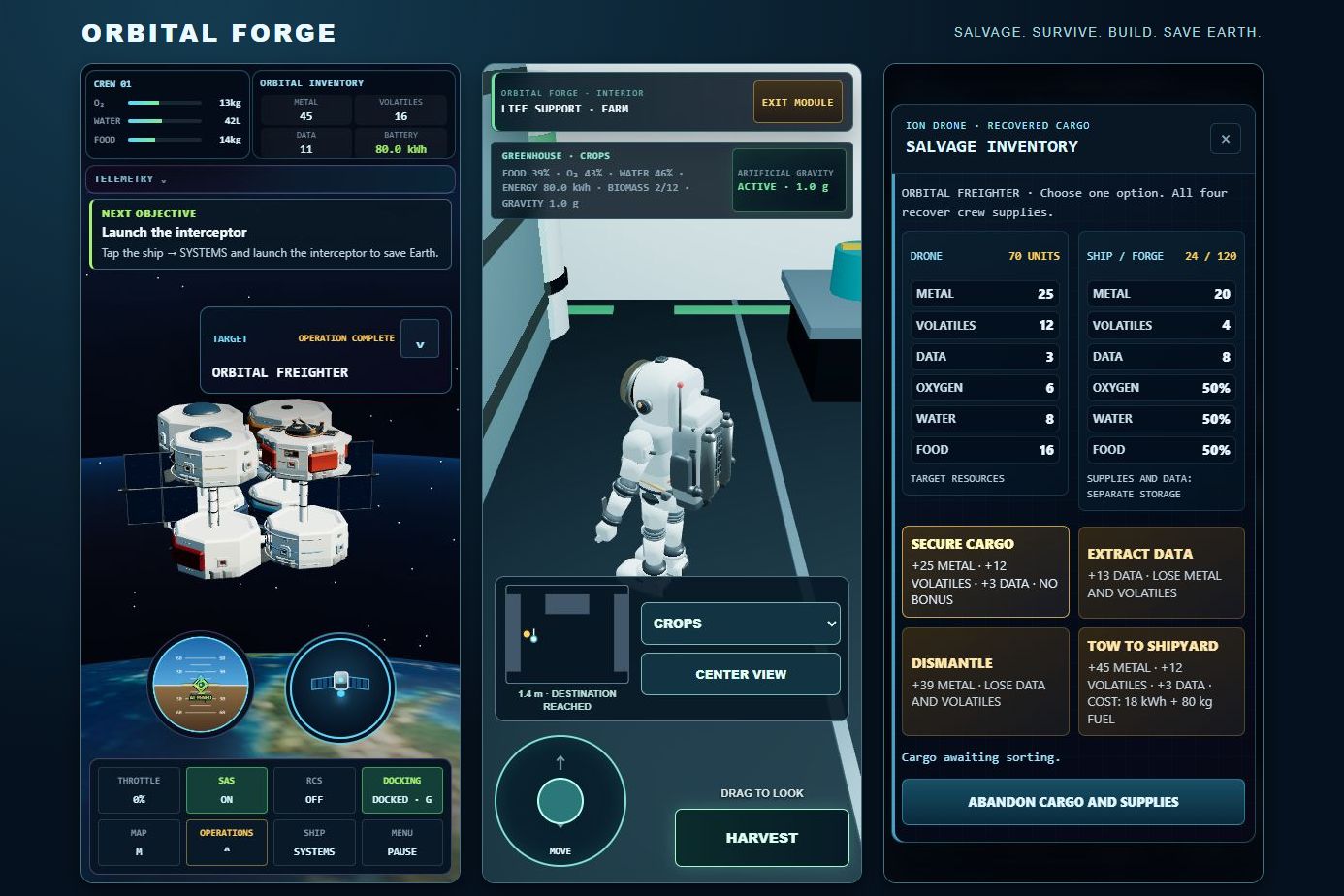
Salvage, survive and build: three connected systems in one portrait game.
## Inspiration
Orbital Forge began with a question: could abandoned space debris become the infrastructure that saves Earth? The idea combines orbital exploration with survival decisions, making every recovery useful for both the crew’s immediate needs and a larger mission.
## What it does
Orbital Forge is a single-player Survival & Resource Management prototype designed for portrait play.
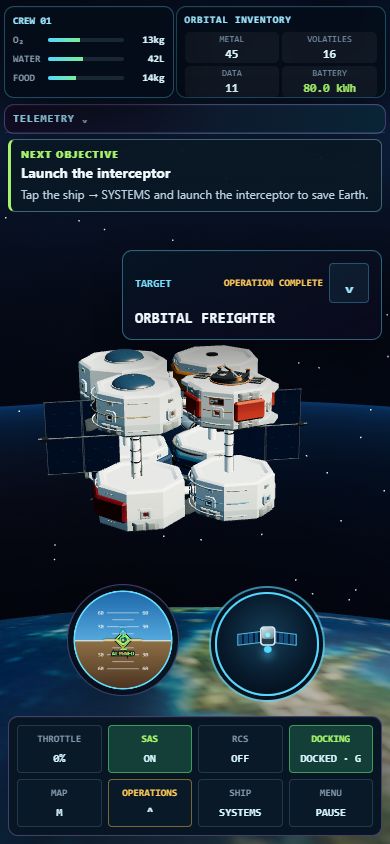
An asteroid is approaching Earth. Players recover orbital debris, manage energy and crew supplies, research technologies and construct a modular space station. Inside the station, they control an astronaut to harvest crops, prepare food and process resources.
Salvage involves a choice: secure existing cargo, extract additional data, dismantle for metal or spend fuel and energy to tow the target. Each option supports a different priority.
The goal is to build and launch an interceptor before the asteroid strikes. Running out of vital supplies or losing the spacecraft can also end the mission.
## How it was built
The prototype was developed through iterative AI prompting with OpenAI Codex, using JavaScript, HTML5, CSS and Three.js. AI generated and revised gameplay systems, interface code and fixes based on playtesting.
Development sources were assembled into one readable index.html. Third-party libraries and assets are bundled locally, producing a self-contained build that requires no external network requests during gameplay.
## Challenges
The main challenges were making third-person interactions accessible through touch controls, navigating around machinery, preserving production orders through save/load and balancing physical cargo capacity against progression costs.
Playtesting led to a movement joystick, contextual actions, a destination minimap, camera recentering, clearer supply warnings and production orders of up to five batches.
## What we learned
A survival system needs clear feedback as much as resource pressure. Players need to understand what they can do next, what an action costs and why one choice might help more than another.
Testing also revealed how small navigation and interface problems can interrupt an otherwise playable loop.
## What's next
The next steps are physical-phone testing, further full-session balancing and more varied salvage encounters. The longer-term vision is to rebuild the core experience with Meta’s Early Access creation tools.


Log in or sign up for Devpost to join the conversation.