Inspiration
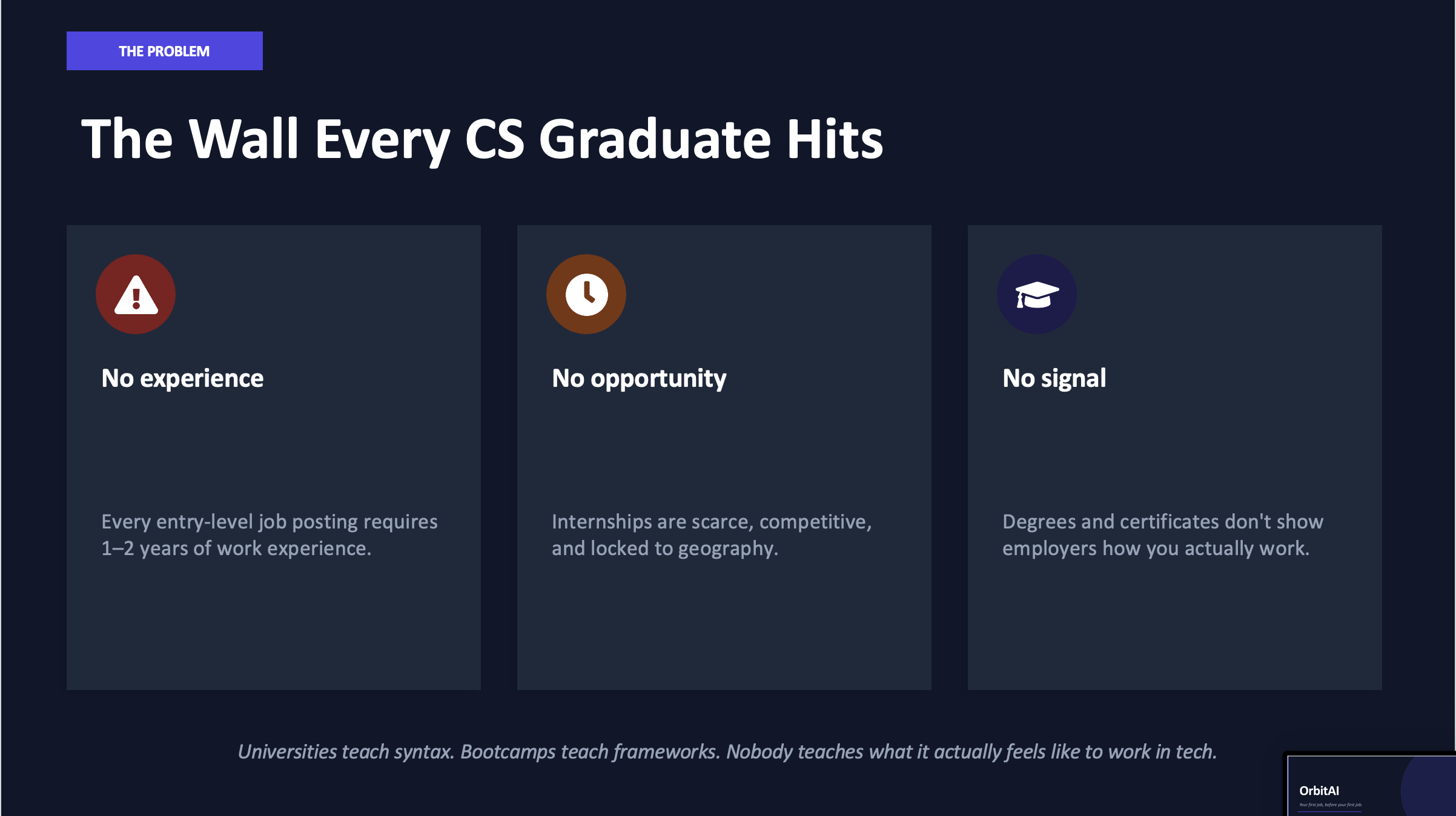
Every CS student hits the same wall. You finish university, you know how to code, and then every job posting says "2 years of experience required." You can't get experience without a job, and you can't get a job without experience. That loop is what inspired OrbitAI. We wanted to break it, not with another course or certificate, but by letting students actually work before they ever get hired.
What it does
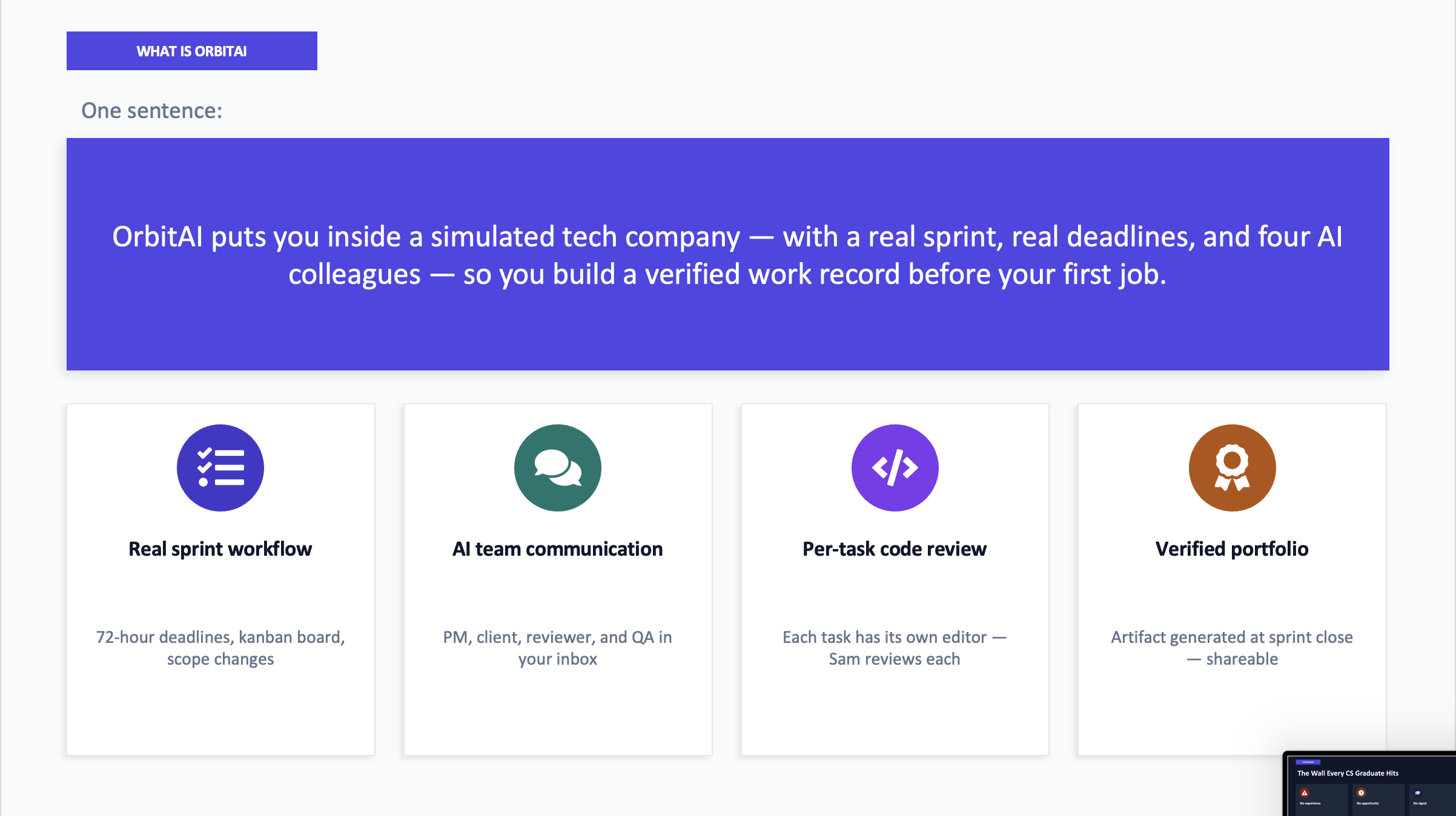
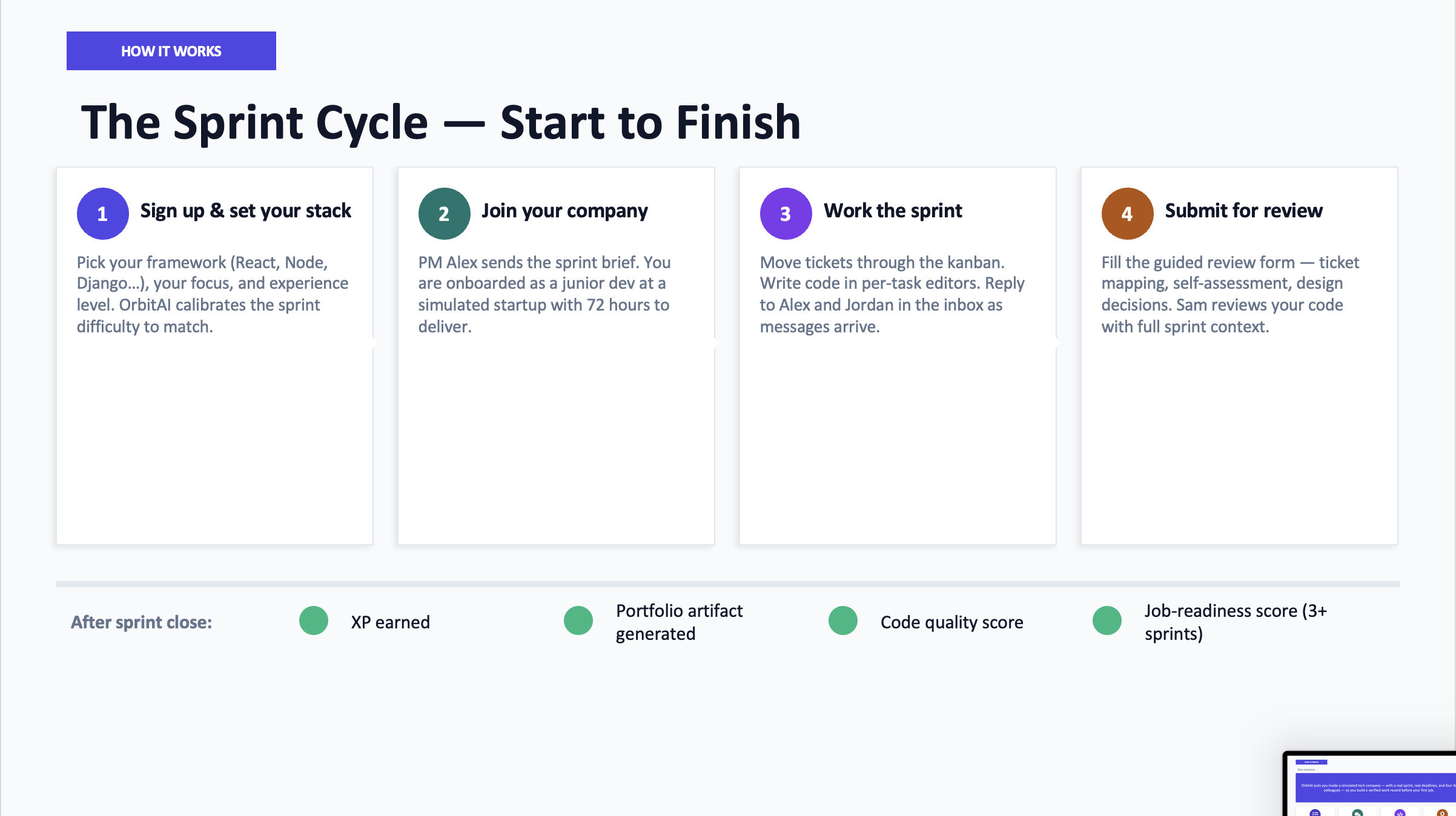
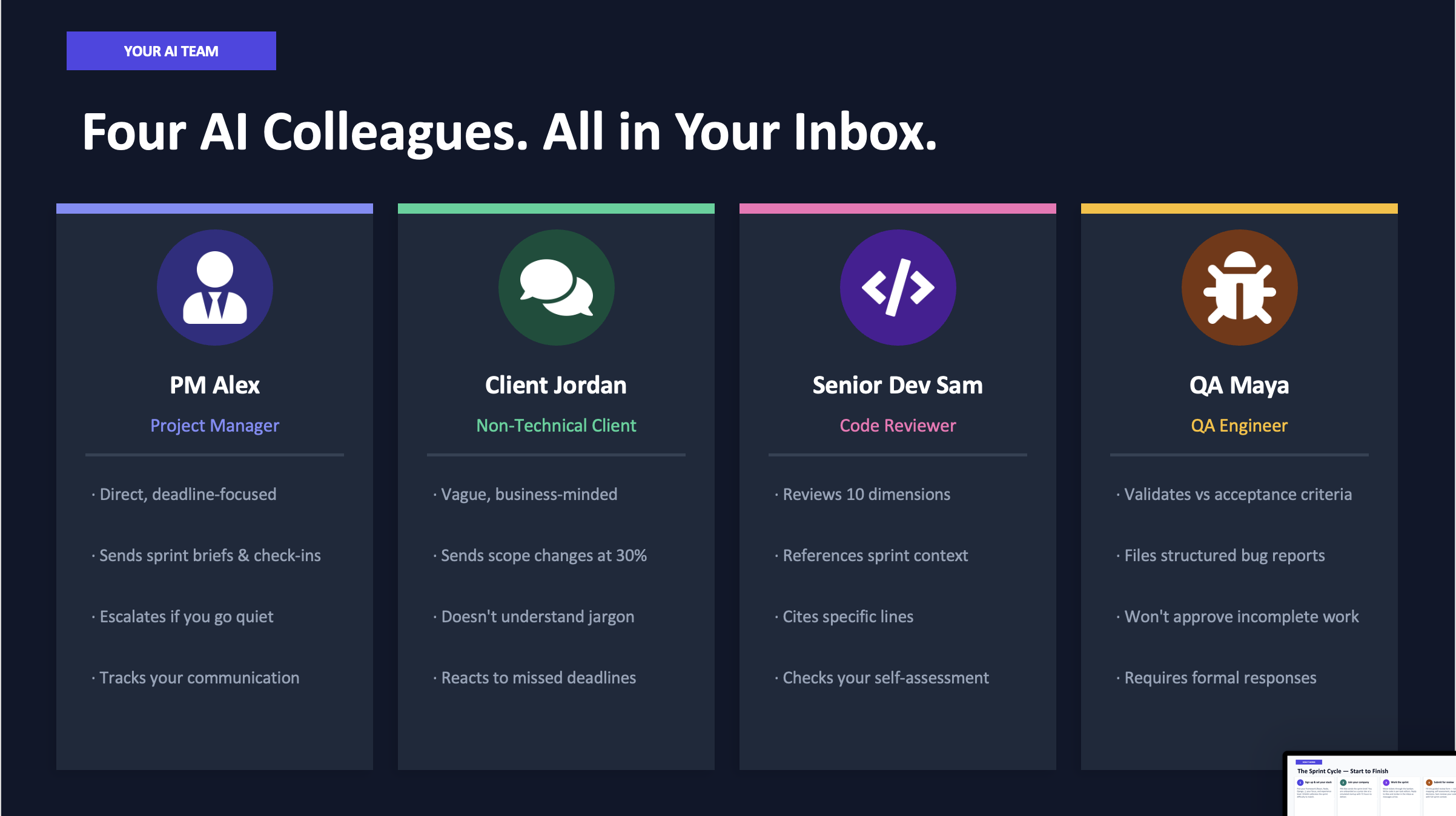
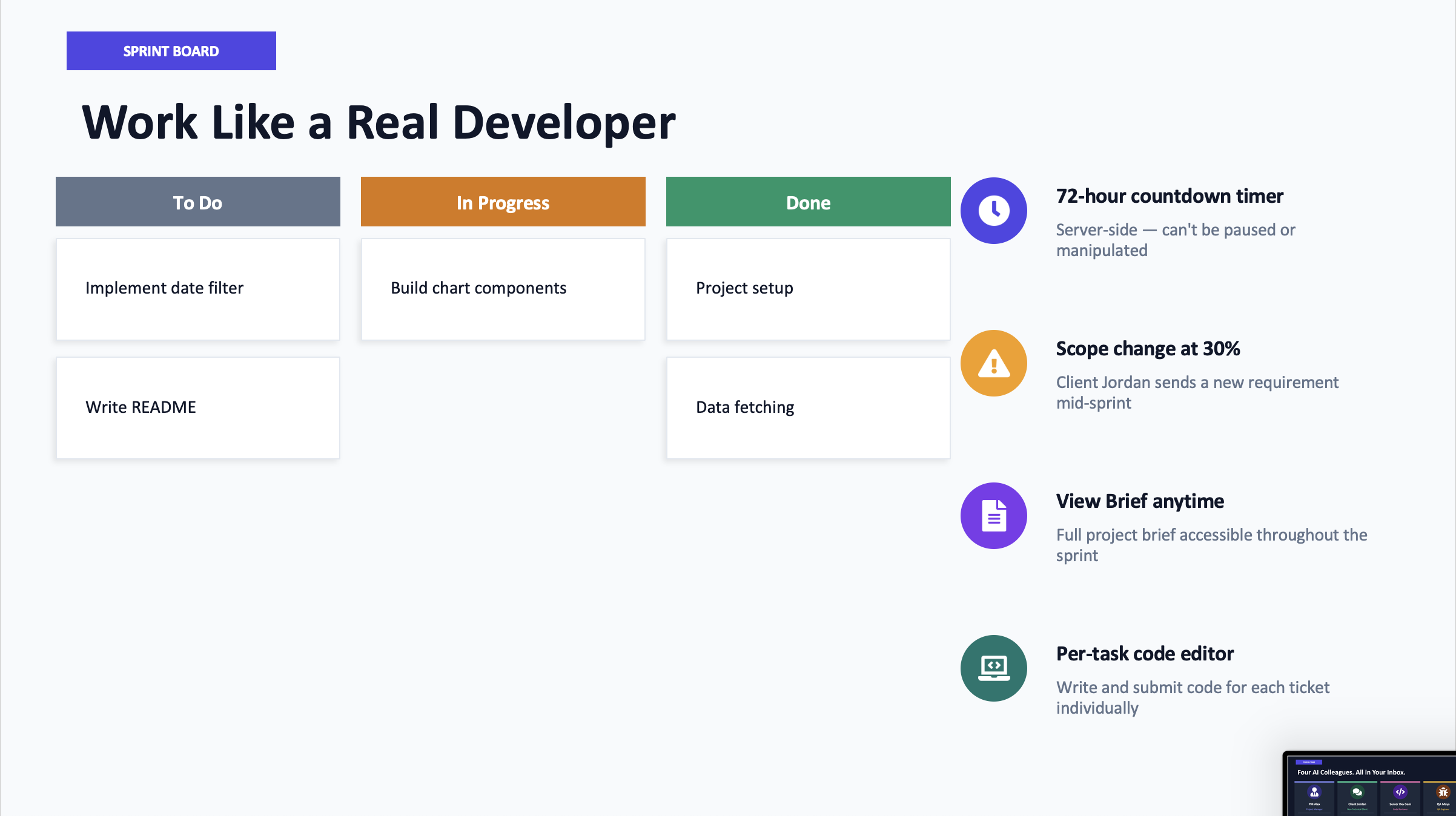
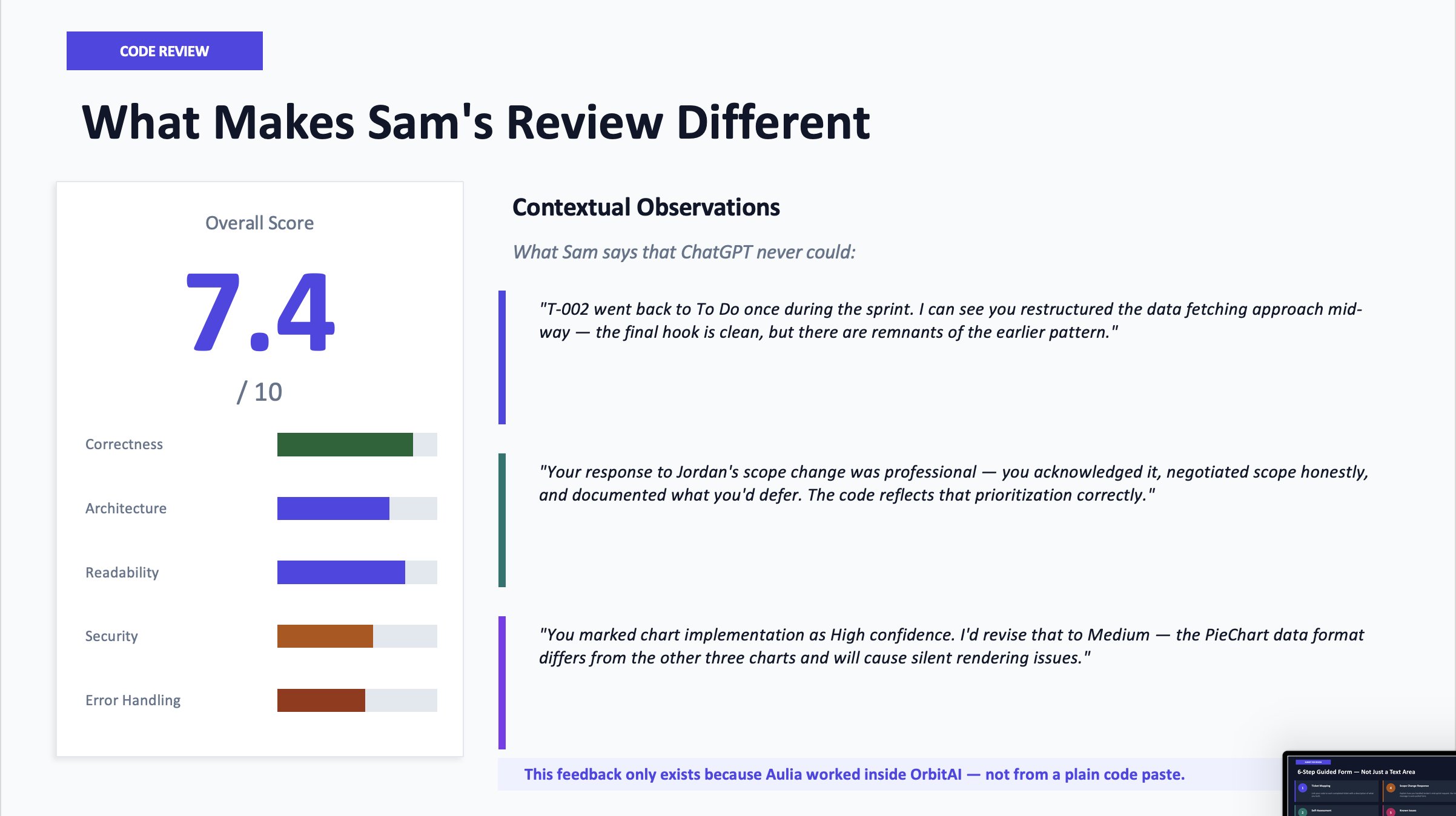
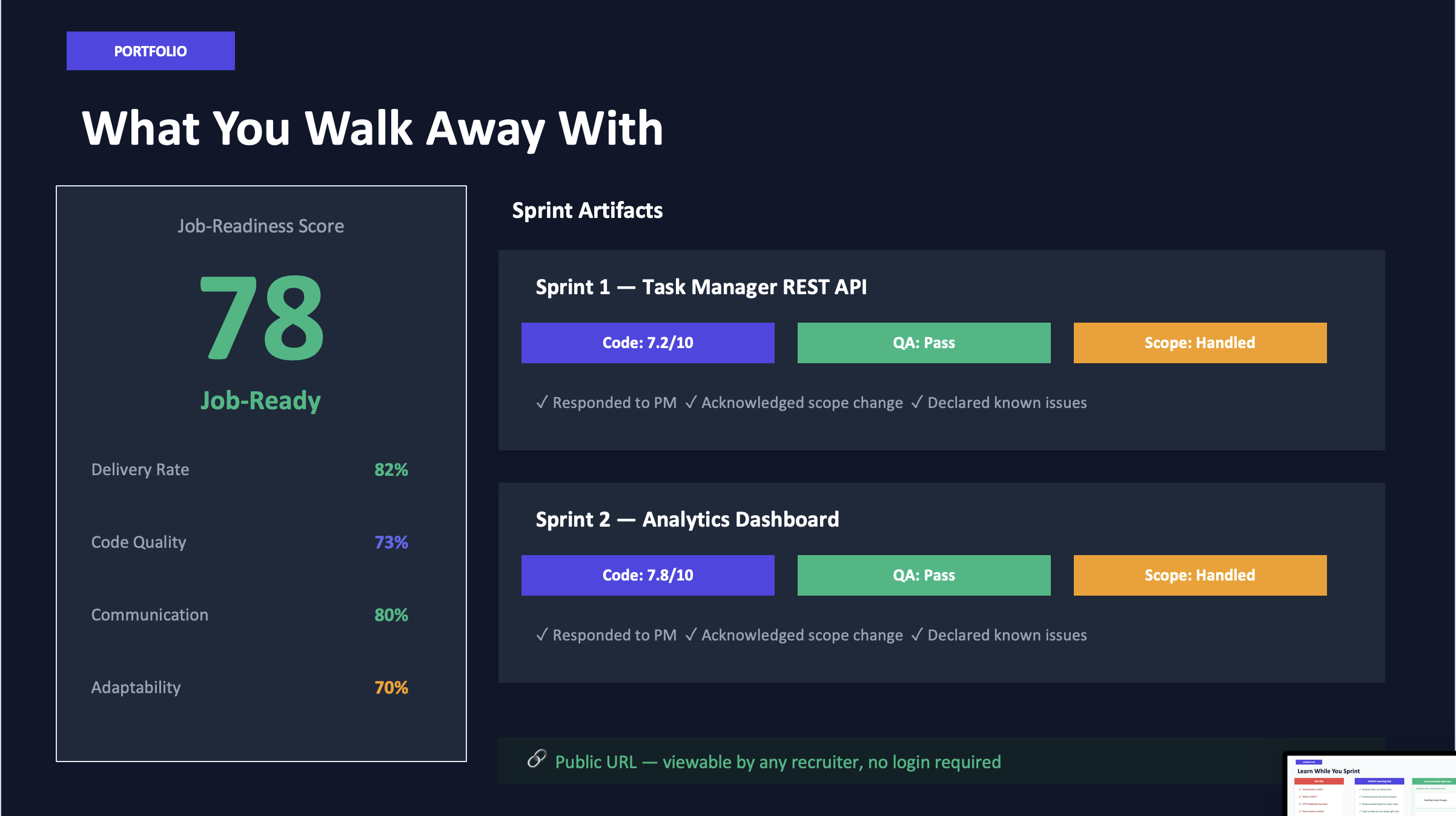
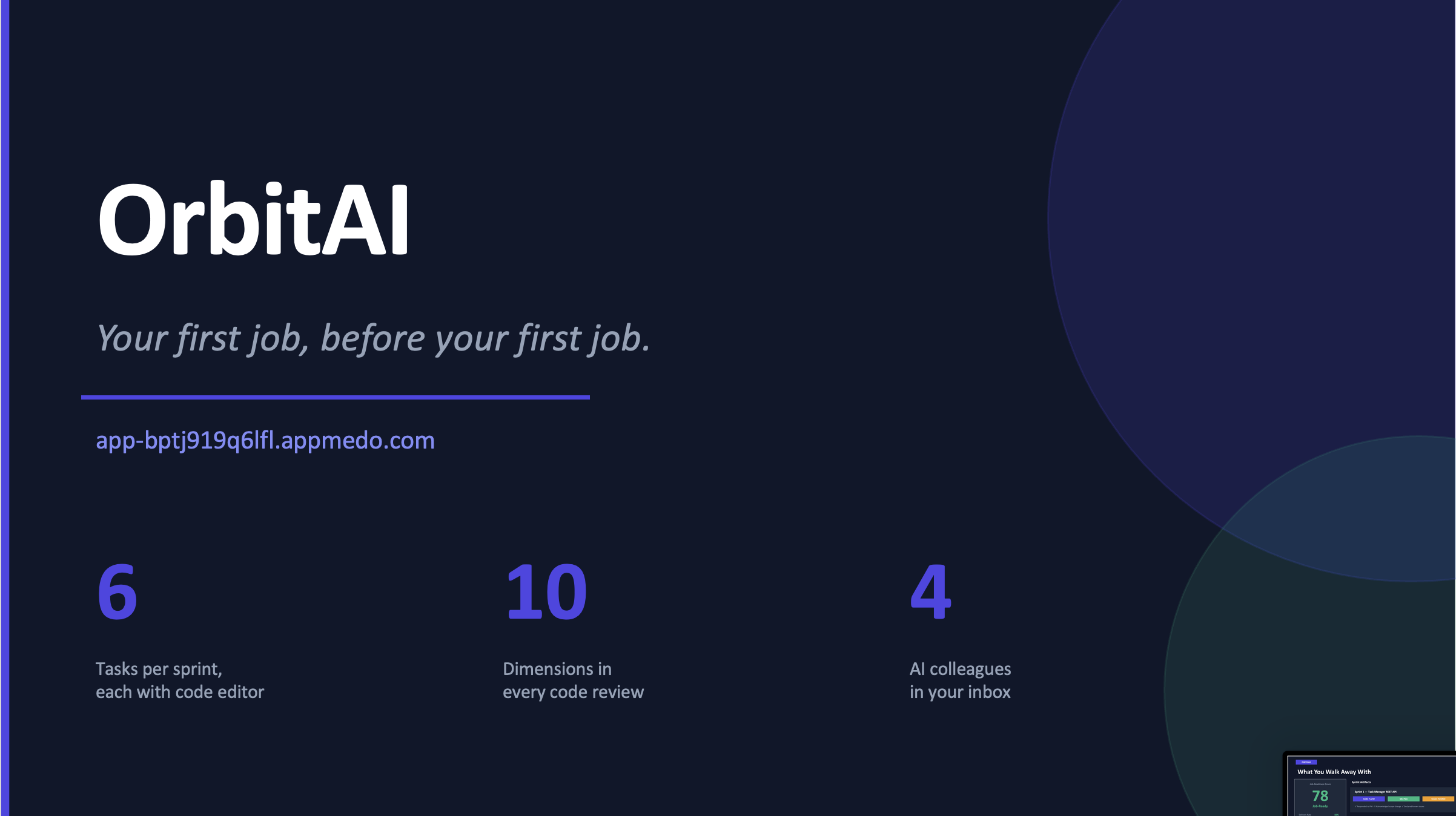
OrbitAI puts you inside a simulated tech company. You get a real project brief, a 72-hour deadline, and four AI colleagues, a Project Manager who follows up when you go quiet, a Client who changes requirements mid-sprint, a Senior Developer who reviews your code across 10 professional dimensions, and a QA Engineer who won't let you ship broken work. When you're done, you walk away with a verified portfolio artifact that shows recruiters not just what you built, but how you worked.
How we built it
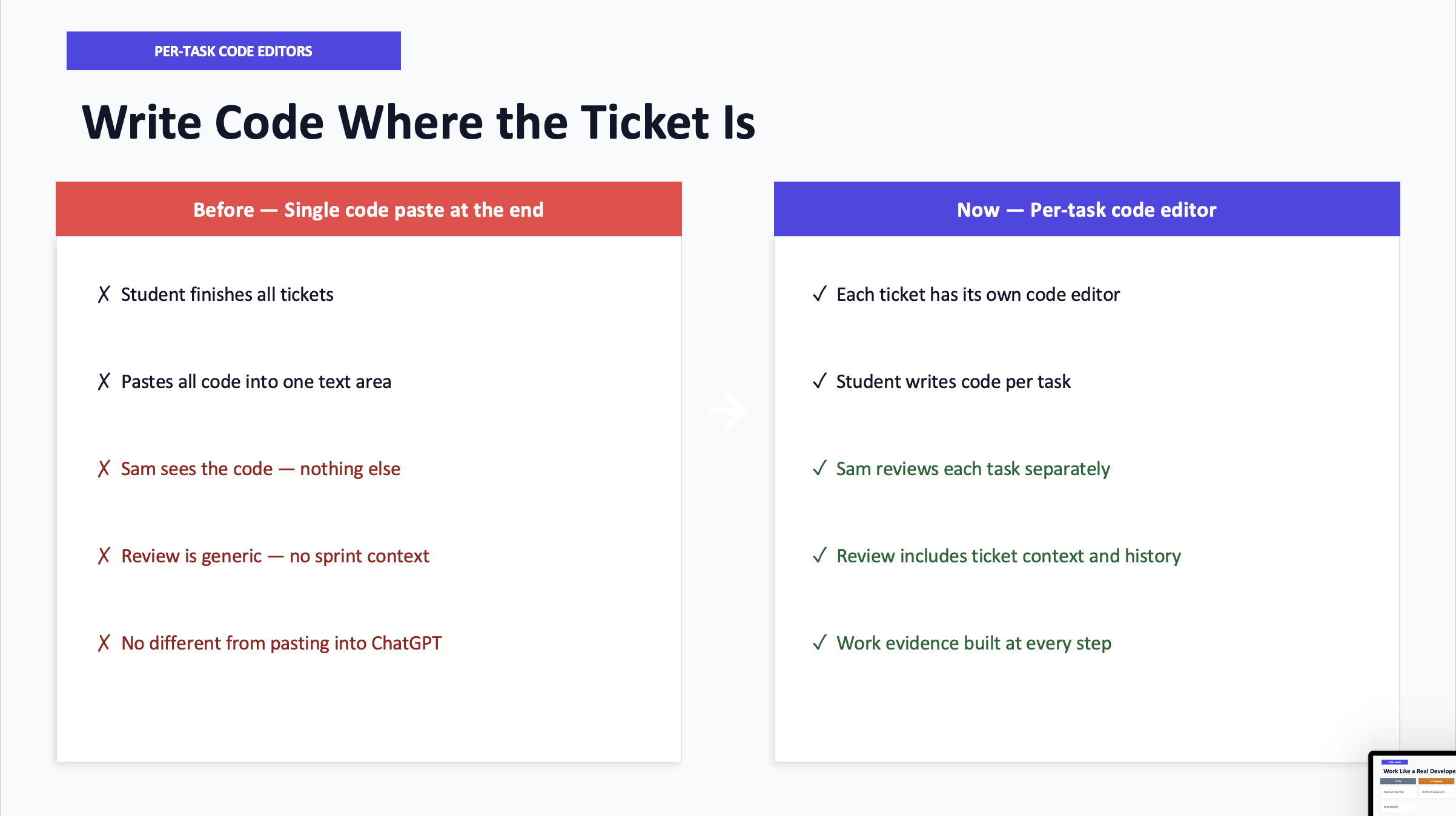
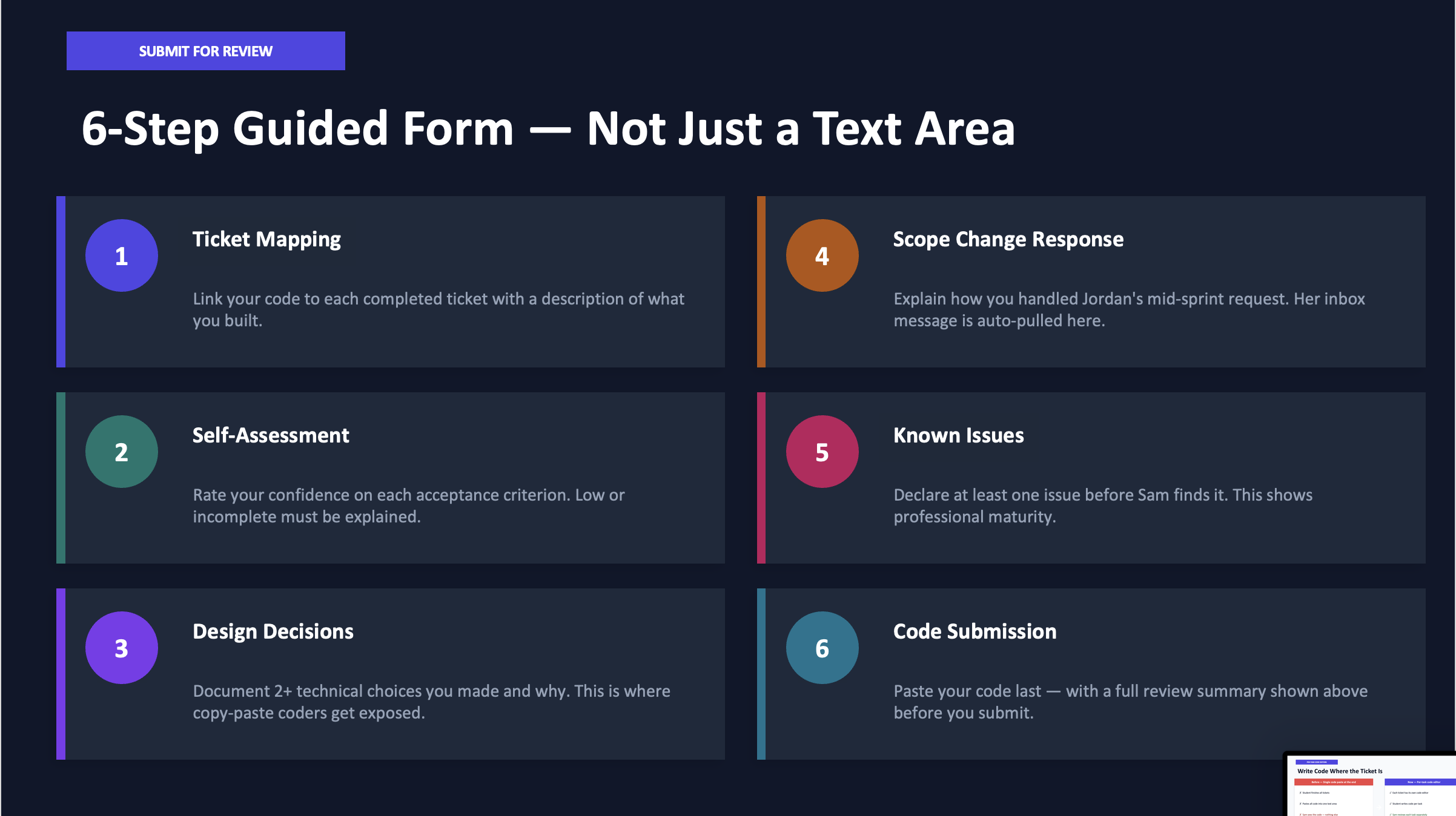
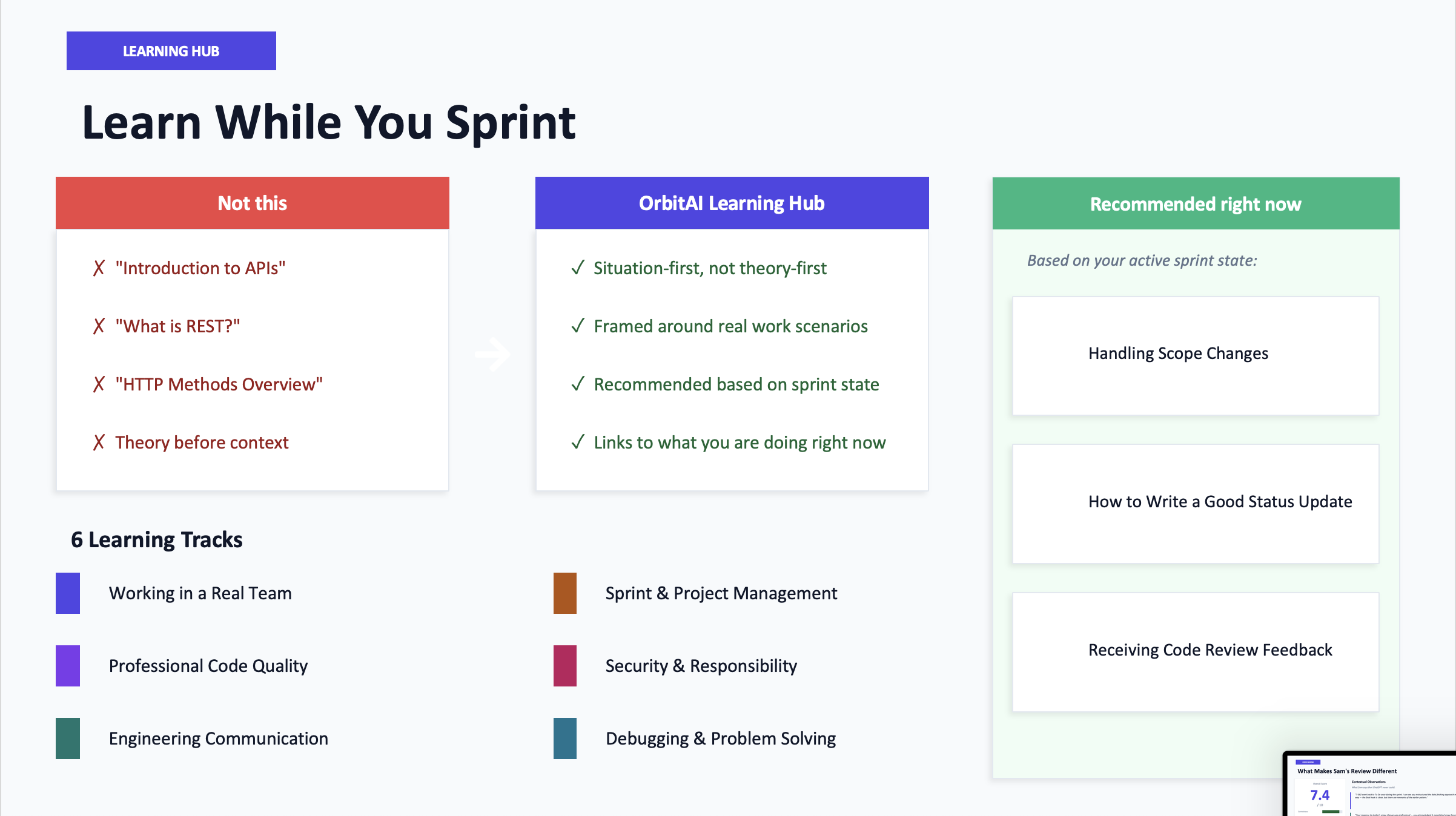
I started by writing five detailed specification documents, product requirements, AI persona designs, database schema, UI layout, and API spec and uploaded all five to MeDo at once. That gave MeDo enough context to build the full application coherently without me re-explaining things in every session. After the initial build, I used focused upgrade prompts to add specific features: the guided code review form, the per-task code editors, and the Learning Hub. Each prompt was a targeted brief, not a vague request.
Challenges we ran into
The hardest part was making the AI personas feel like real colleagues and not like chatbots with name tags. Getting PM Alex to stay direct and deadline-focused, Client Jordan to stay vague and non-technical, and Senior Dev Sam to give feedback that actually referenced the student's sprint context, not just the code required a lot of prompt refinement. The other big challenge was making the review process impossible to game. The solution was building the guided form that forces students to map their code to tickets, declare known issues, and document their decisions before Sam even sees a single line of code.
Accomplishments that we're proud of
The code review output. When Sam gives feedback, he doesn't just comment on the code, he references what the student told the client, how they handled the scope change, whether their self-assessment was honest, and what their ticket history looked like. That level of contextual feedback genuinely cannot be replicated by pasting code into any AI tool. That's the thing I'm most proud of building.
What we learned
That the hardest problem in career education isn't teaching knowledge, students can get knowledge anywhere. The hardest problem is simulating professional context: the pressure of a deadline, the ambiguity of a client request, the accountability of having your code reviewed by someone who holds a high bar. Once I framed the product around context rather than content, every feature decision became obvious.
What's next for OrbitAI
Two things. First, video explanation materials, short, situation-based videos inside the Learning Hub so students can watch, code along, get their work reviewed, and build real skills progressively rather than just reading. Second, a smarter portfolio, instead of just showing scores, the portfolio will analyze user behavior throughout the sprint: how they communicated under pressure, how quickly they responded to blockers, whether they self-identified issues before being told. The result is a profile that tells recruiters not just what a candidate built, but how they think and work. That's the signal hiring actually needs.
Built With
- medo

Log in or sign up for Devpost to join the conversation.