Inspiration
Every major outage begins as a signal hidden in noise.
A deployment changes a dependency. A service starts behaving differently. A small anomaly appears in telemetry.
Nobody notices.
Hours later, customers report failures, engineers begin searching dashboards, leadership demands answers, and revenue is already at risk.
The problem isn't a lack of monitoring.
The problem is a lack of intelligence.
Today's platforms tell teams what already happened.
We wanted to build a platform that could predict what happens next.
That vision became Orbit Foresight.
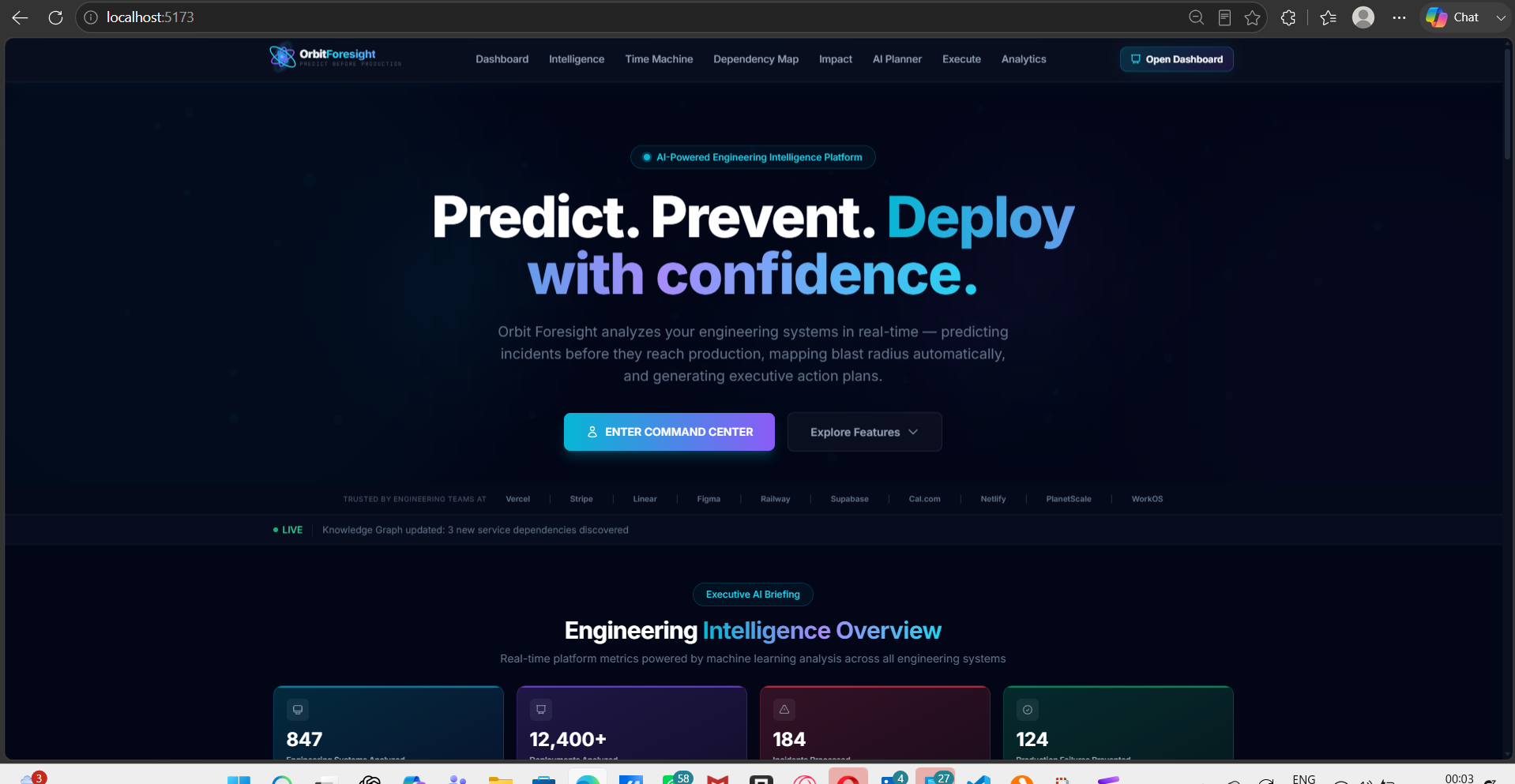
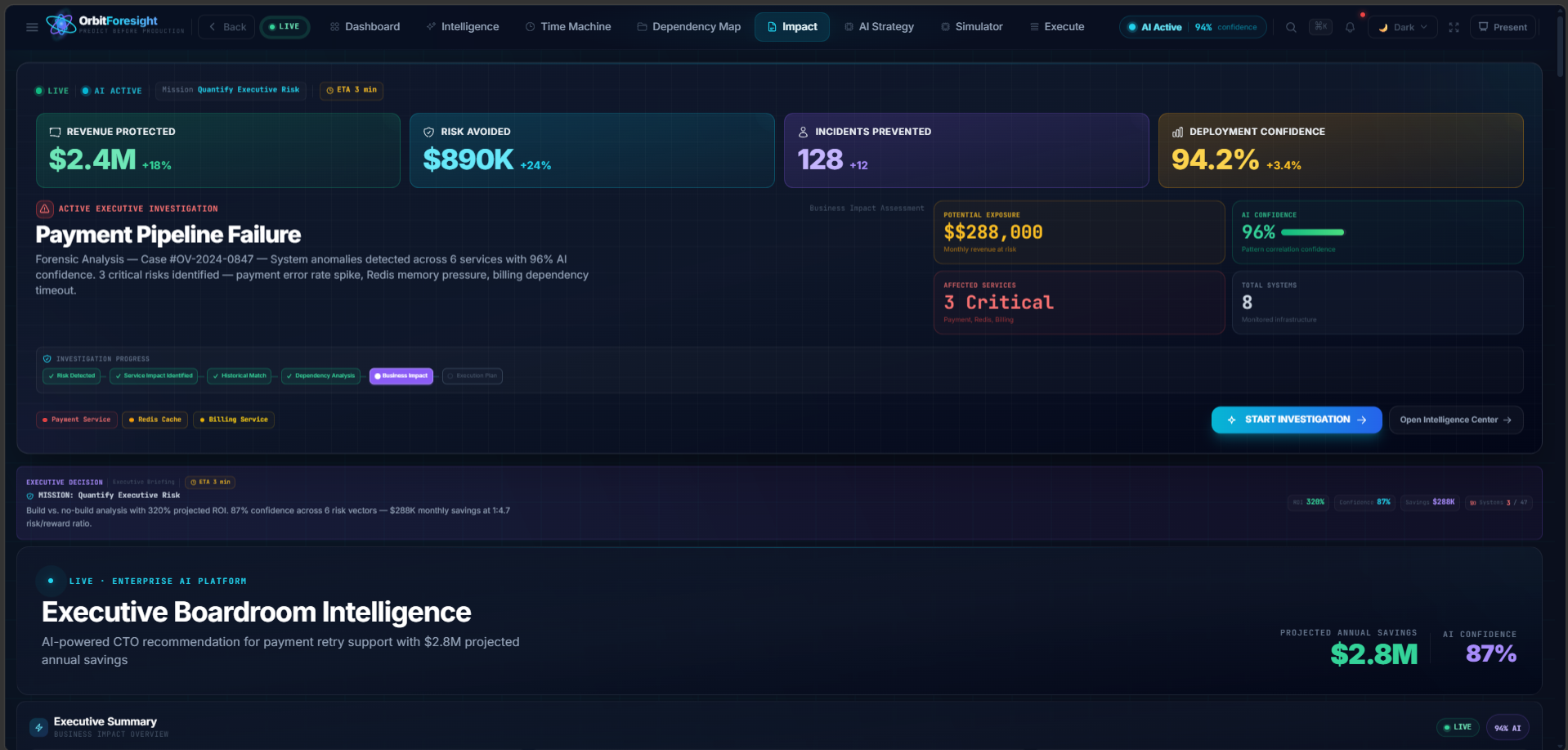
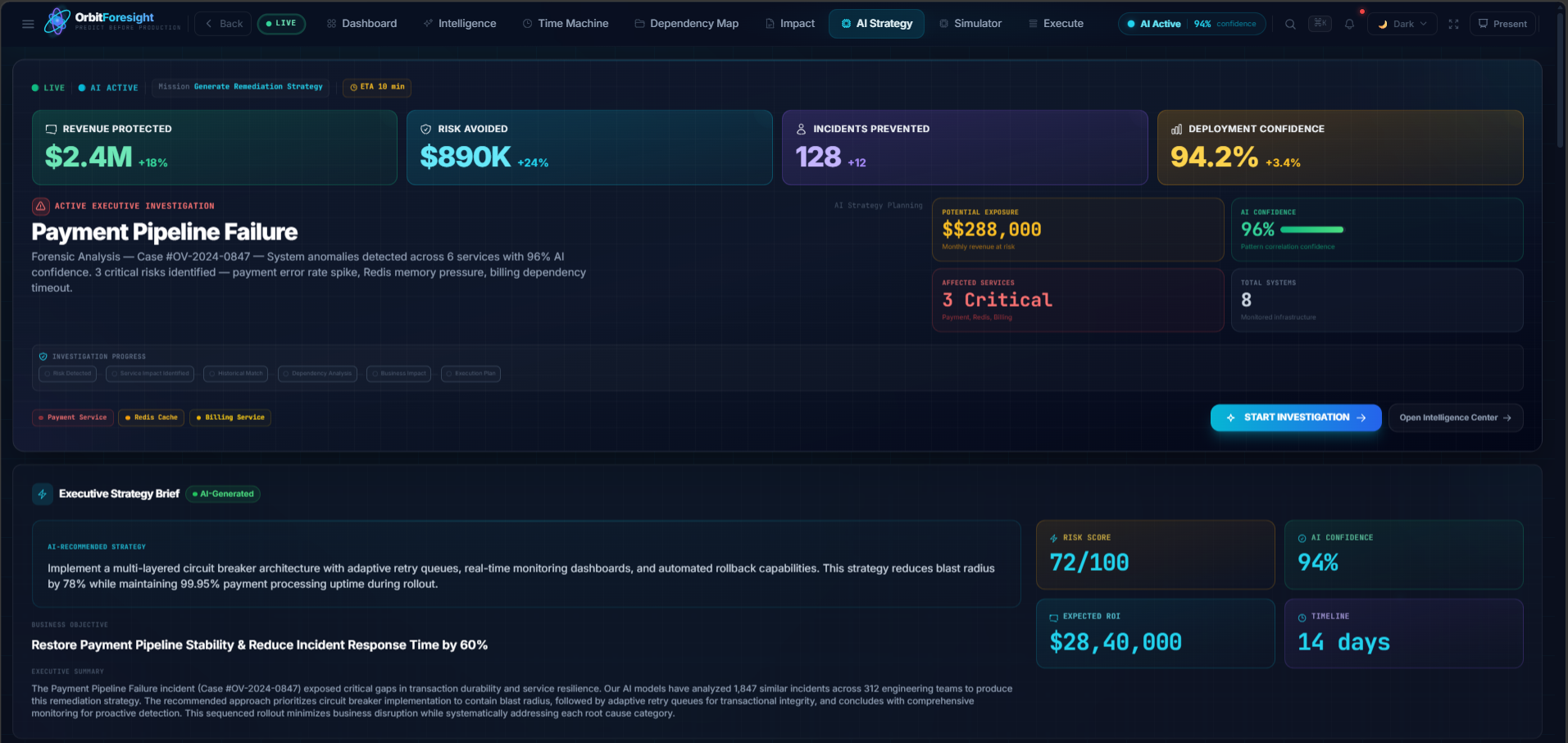
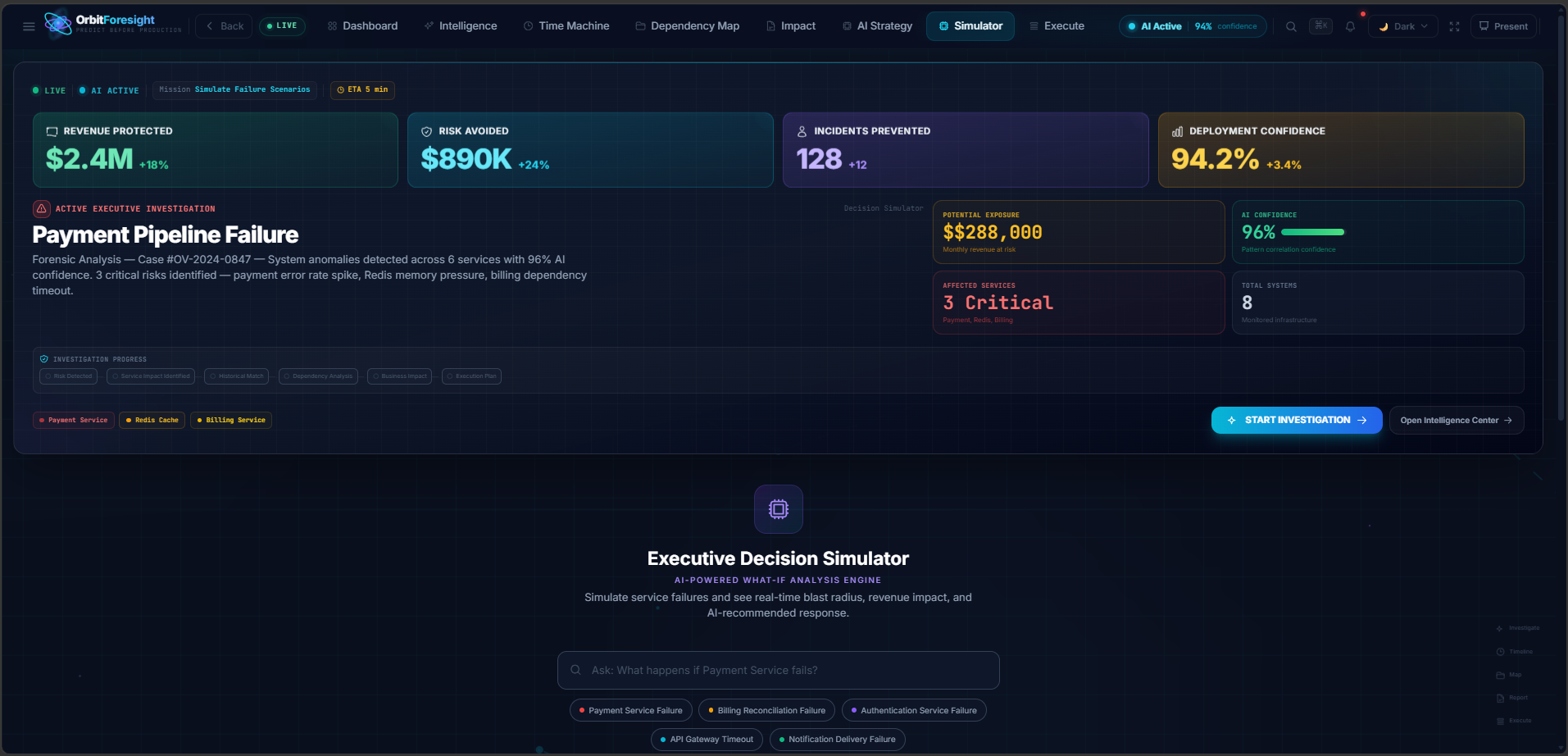
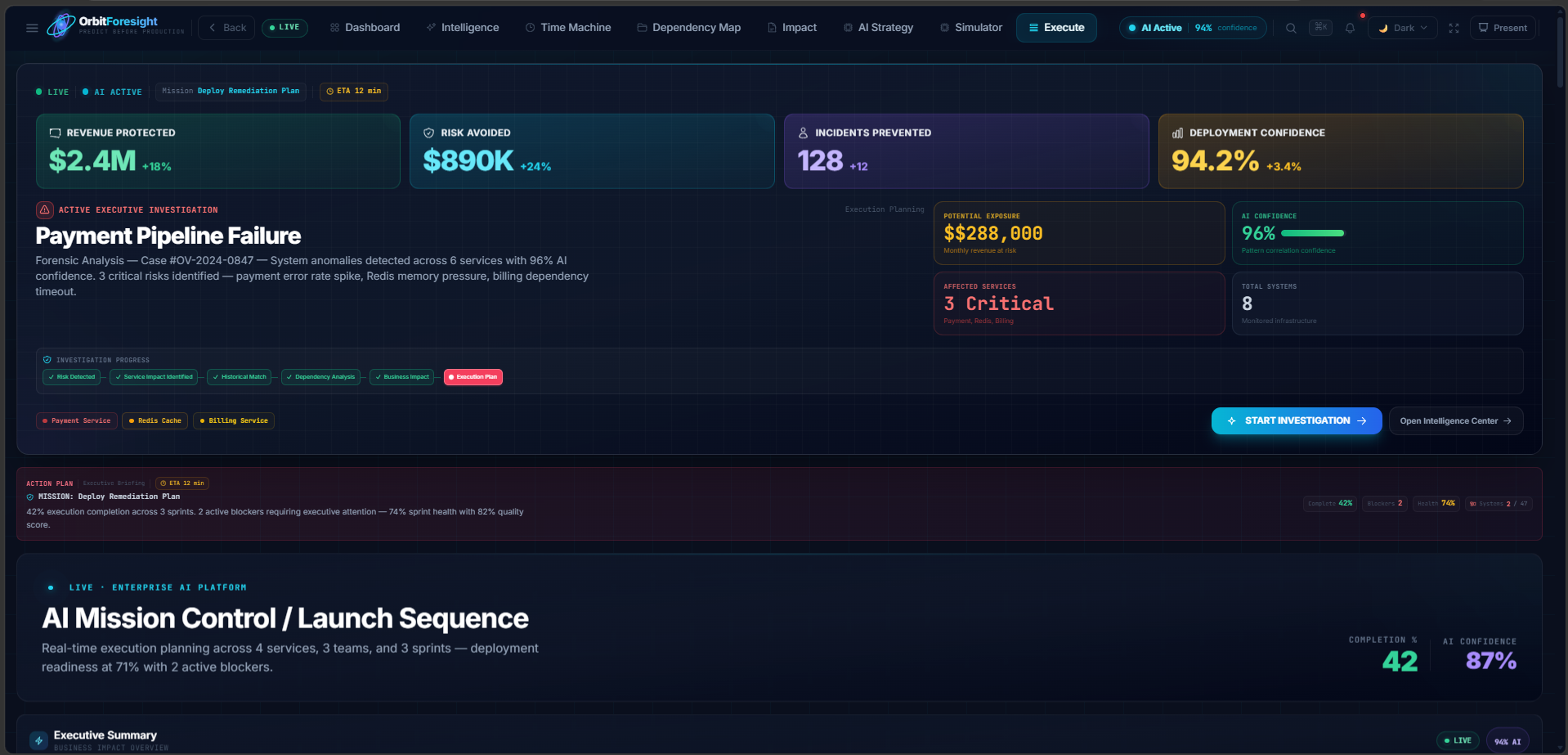
An AI-powered engineering intelligence platform that transforms engineering telemetry into executive decisions before production incidents occur.
What It Does
Orbit Foresight continuously analyzes deployments, incidents, metrics, dependencies, and historical patterns to identify operational risks before they become business problems.
The platform:
- Predicts incident impact
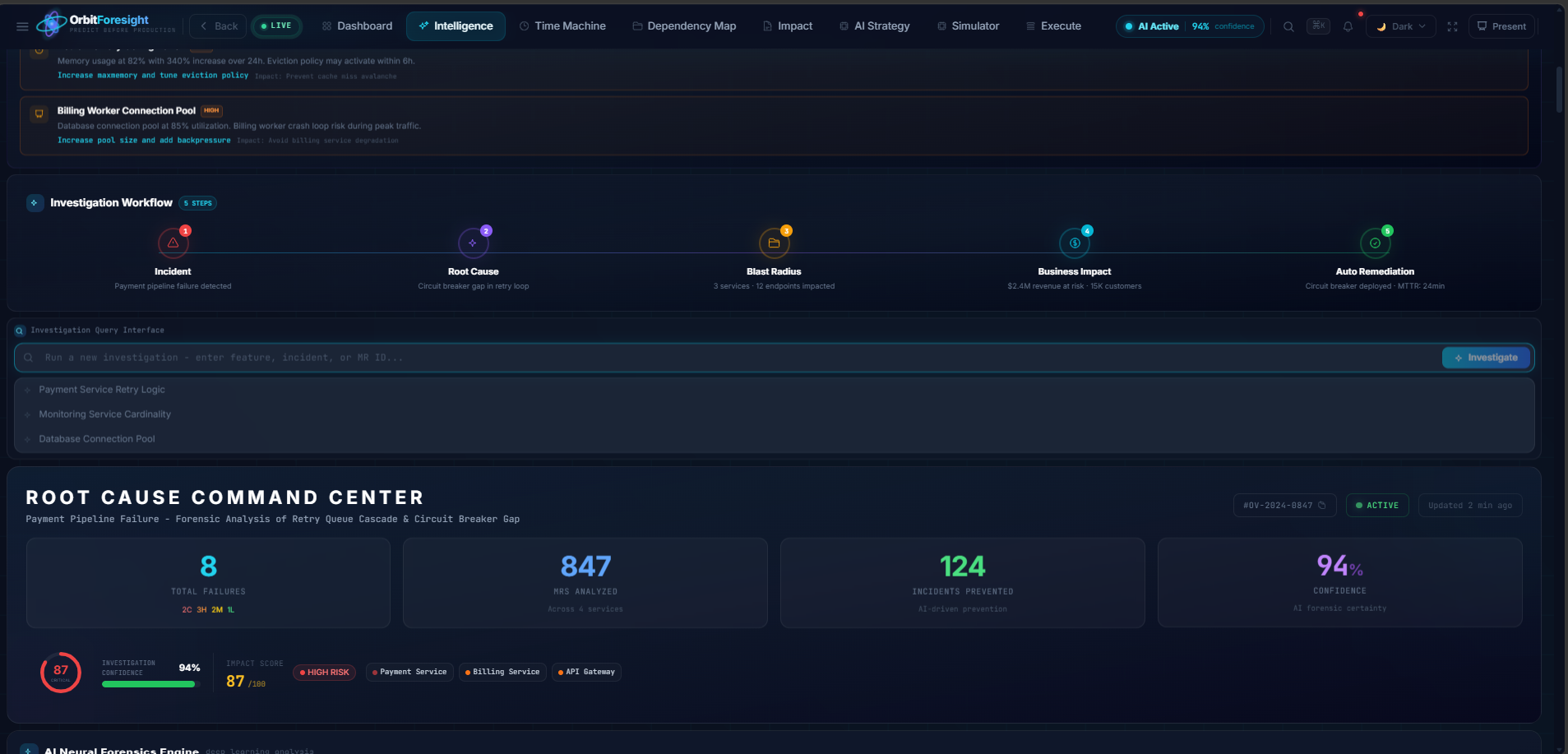
- Identifies likely root causes
- Simulates blast radius propagation
- Builds a living digital twin of production systems
- Quantifies business impact
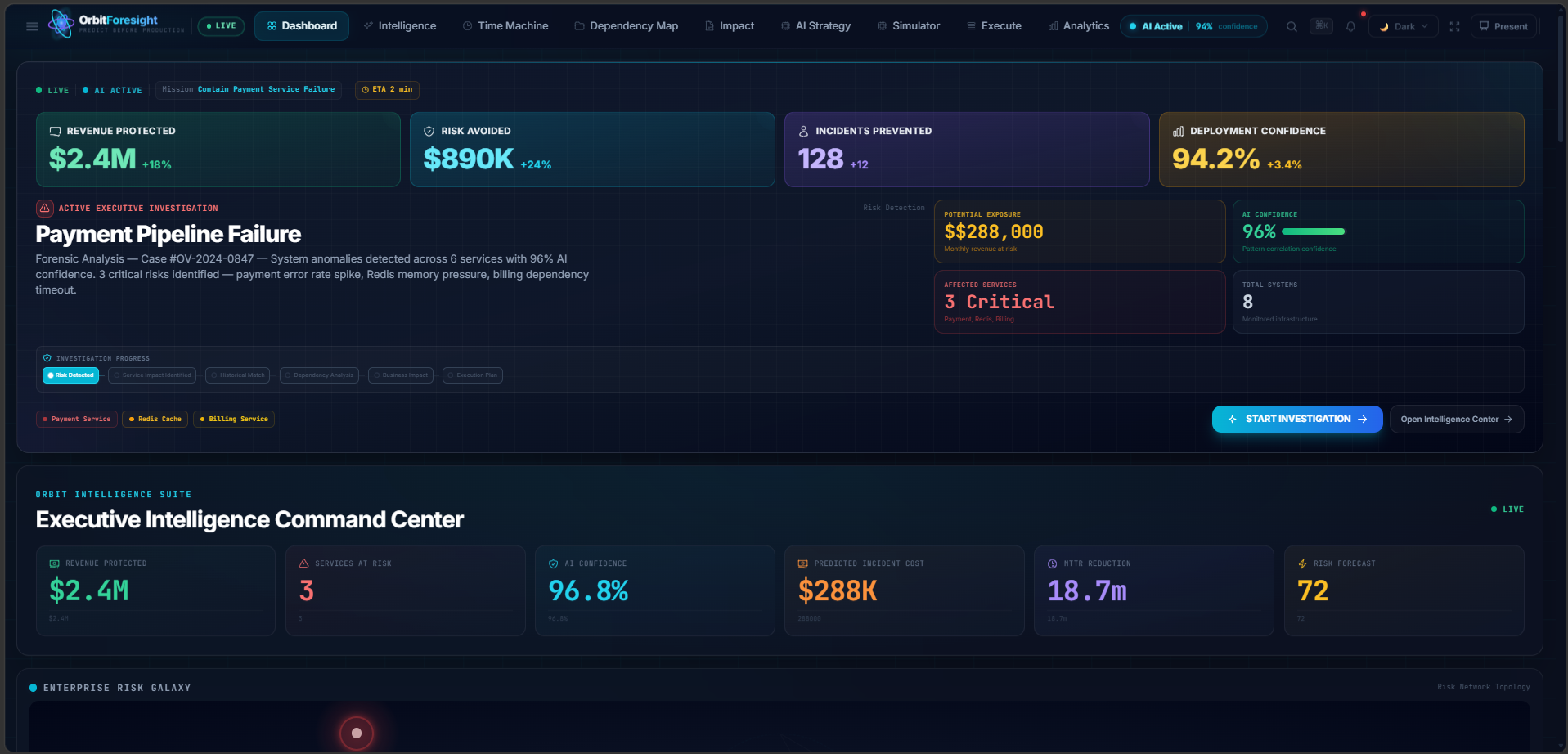
- Generates executive-grade intelligence reports
- Creates remediation plans automatically
Instead of reacting to outages, teams gain the ability to anticipate them.
How We Built It
Orbit Foresight combines modern frontend engineering, AI-powered analysis, and graph-based system intelligence.
Frontend
React 18, Vite, TailwindCSS, Framer Motion
Backend
FastAPI, Python, Pydantic
Intelligence Engine
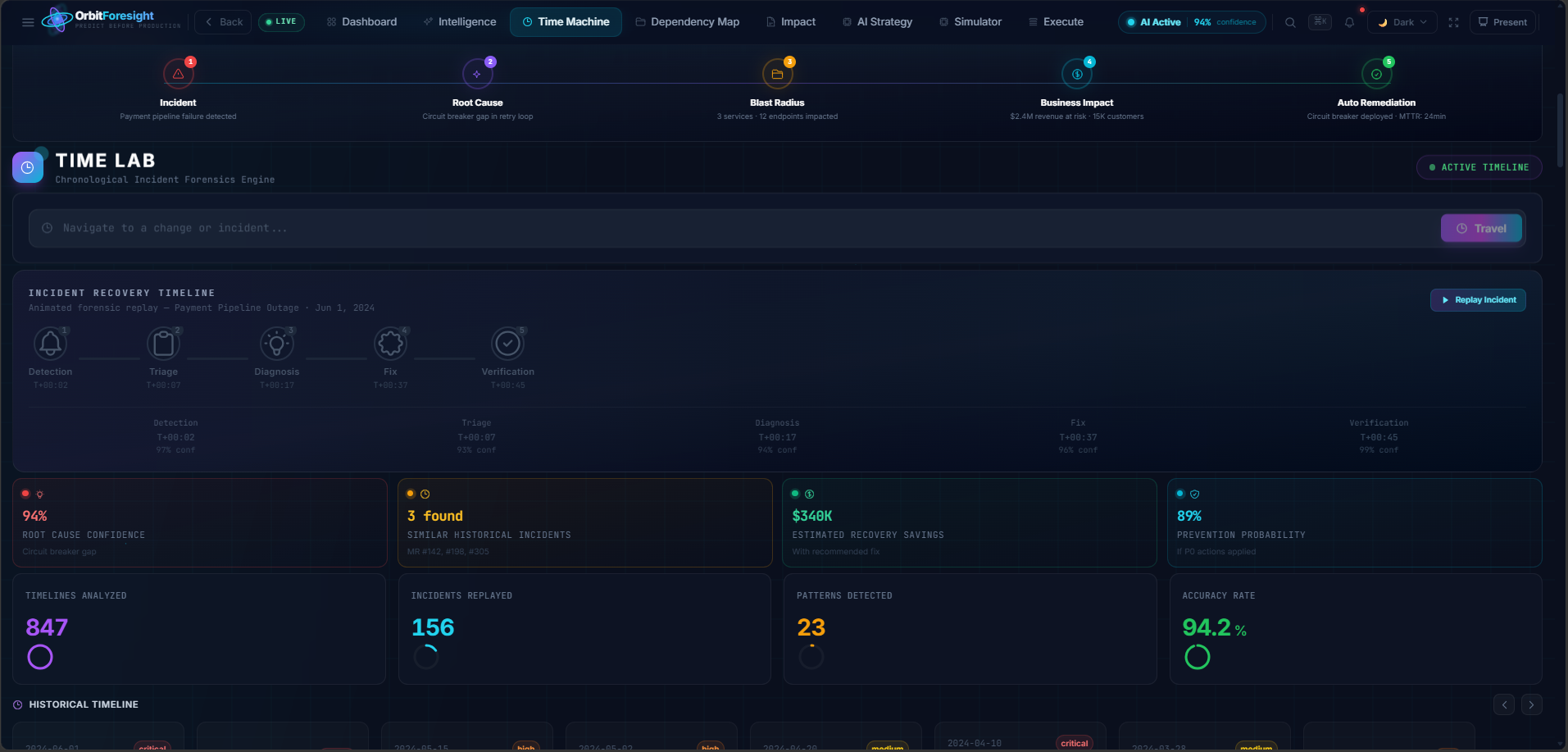
Risk prediction, anomaly detection, pattern correlation, confidence-weighted reasoning, historical event analysis
Knowledge Graph
847+ service nodes and 1,200+ dependency relationships used to model production systems and simulate failure propagation
Executive Layer
Business impact intelligence, CTO reporting, remediation planning, operational decision support
The result is a complete workflow:
Signal → Intelligence → Digital Twin → Business Impact → Executive Action
Challenges We Ran Into
The hardest challenge wasn't technical.
It was translation.
Engineering systems generate technical data.
Executives make business decisions.
Connecting these worlds required building a platform capable of translating deployments, dependencies, incidents, and telemetry into revenue exposure, customer impact, operational risk, and strategic recommendations.
We also wanted every page to feel like a premium enterprise product rather than a traditional dashboard.
Creating that experience while maintaining performance and usability was a major design challenge.
Accomplishments That We're Proud Of
- Built a complete AI-powered engineering intelligence platform
- Created a production digital twin capable of blast radius simulation
- Developed a knowledge graph with hundreds of interconnected services
- Generated executive-grade intelligence reports automatically
- Delivered a live production deployment for immediate evaluation
- Built the project from concept to deployment as a solo founder
What We Learned
Monitoring is no longer enough.
The future belongs to systems that can reason.
Organizations don't need more dashboards.
They need platforms that can explain what is happening, predict what will happen next, quantify the consequences, and recommend actions automatically.
The most valuable use of AI isn't automation.
It's decision intelligence.
What's Next For Orbit Foresight
Future development includes:
- Live GitLab Orbit integration
- Real-time telemetry ingestion
- Multi-agent investigation workflows
- Predictive deployment scoring
- Enterprise collaboration features
- Advanced business forecasting
- Autonomous incident prevention
Orbit Foresight represents a future where engineering teams no longer react to incidents.
They predict them.
Built With
- ai
- css
- fastapi
- framer
- gitlab
- graph
- javascript
- knowledge
- learning
- machine
- motion
- orbit
- pydantic
- python
- react
- rest
- tailwind
- vercel
- vite

Log in or sign up for Devpost to join the conversation.